6-8 July 2026
The first question was actually whether I would get there and whether it would be by air as planned or by ferry. The weather was misty with a low cloud base. The early flight was cancelled – this was a fully booked flight including the shortest scheduled flight in the World between Westray and Papa Westray. As it turned out for me, with the flight cancelled, I was fortunate that it had been full when I made my booking. I have been on the shortest flight before back in 2005 when I visited Papa Westray on a day trip so that was already ticked off on my bucket list.
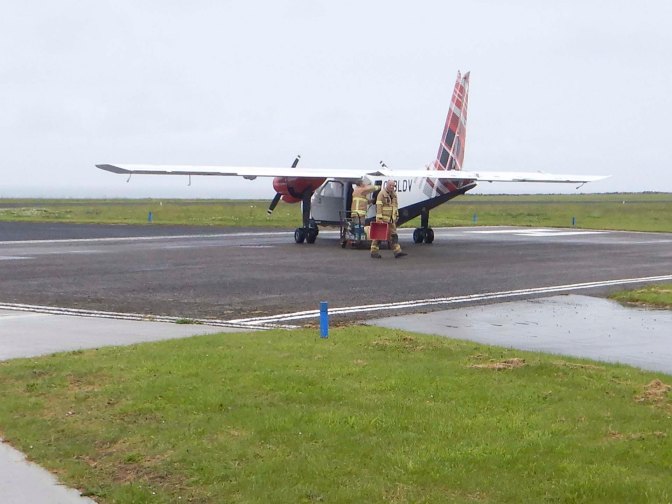
A flight to Stronsay was cancelled and it was touch and go whether the flight I was booked on would be attempted. However, a window of opportunity arose around 11.45. The pilot explained that he would attempt the flight and landings but that it was possible we would return to Kirkwall without landing on the destination islands of North Ronaldsay and Papa Westray. Only four passengers plus the pilot were in the eight passenger plus crew Islander plane. As I was the sole passenger for Papa Westray, I was on my own in the back four seats. We ended up flying between the islands at only about 500 feet above the sea. The other three passengers left at North Ronaldsay and three new passengers arrived on the plane. We went on to Papa Westray, where the pilot was able to land the plane. I got off and five passengers got on so the plane was full for the return journey directly to Kirkwall.
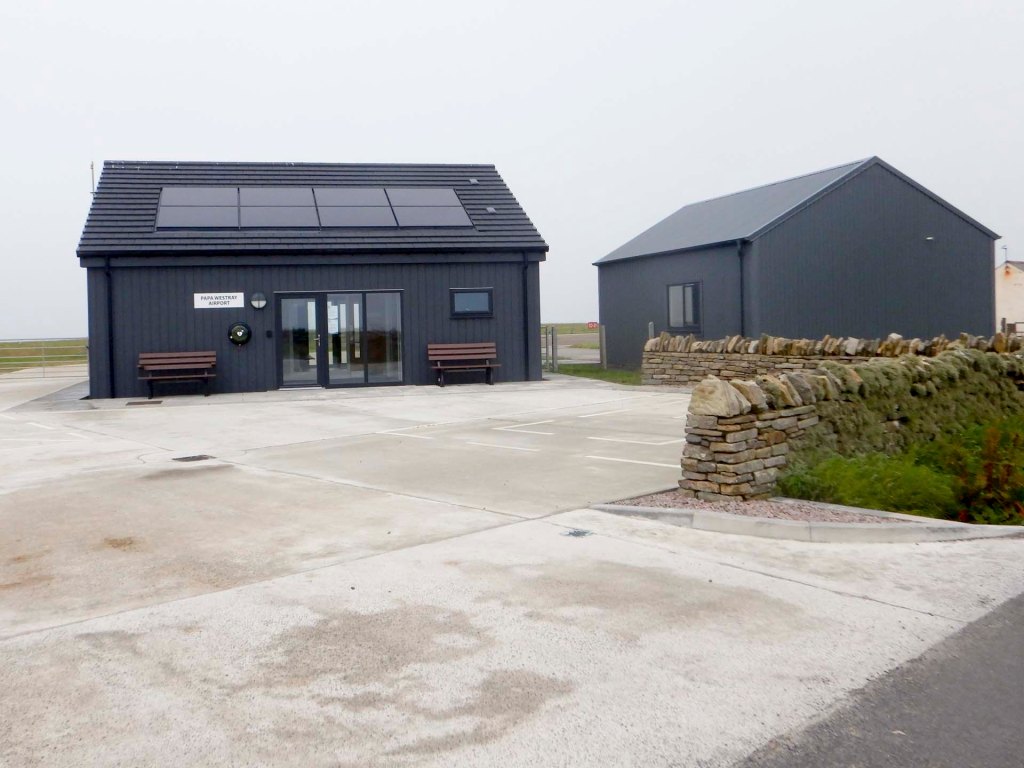
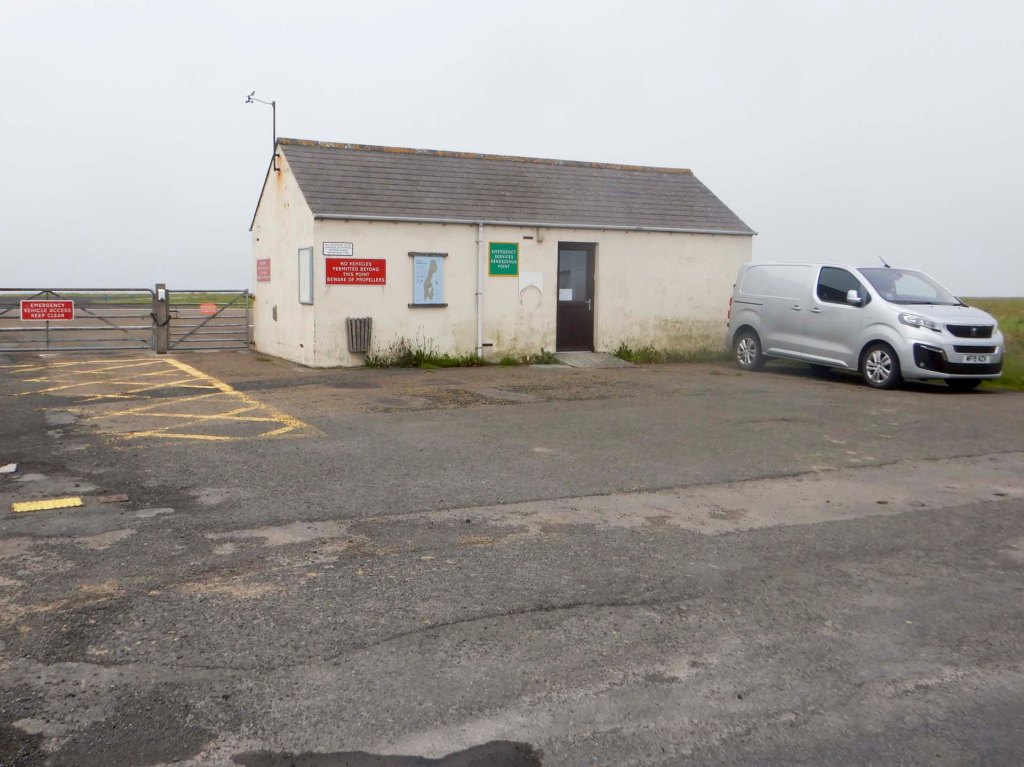
I walked in the drizzle the short distance to the hostel where I had booked to camp in the garden but with full use of the communal kitchen, lounge, dining area and bathroom facilities including showers. The hostel also serves as a community space for the islanders – there’s a community kitchen and the hostel dining area can be used by the islanders.
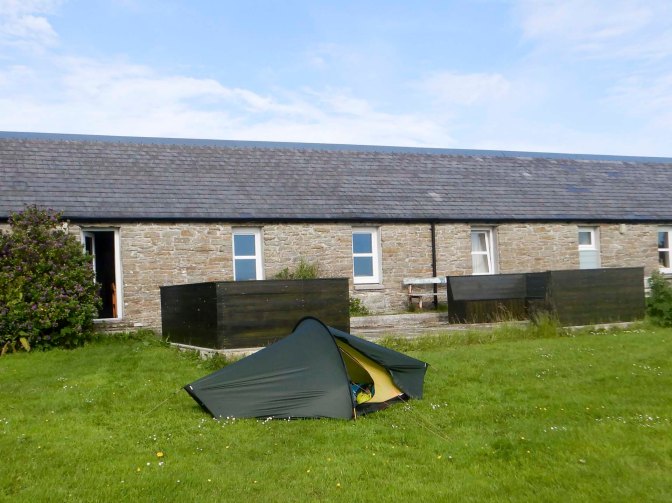
Having pitched my tent, eaten lunch and spoken to Jonathan the Papay Ranger about the best window of opportunity for the trip to Holm of Papa (it would be the next morning), I began my exploration of the island which is only about seven kilometres from north to south and two kilometres from west to east at its widest point. The current resident population is eighty-four people including children.
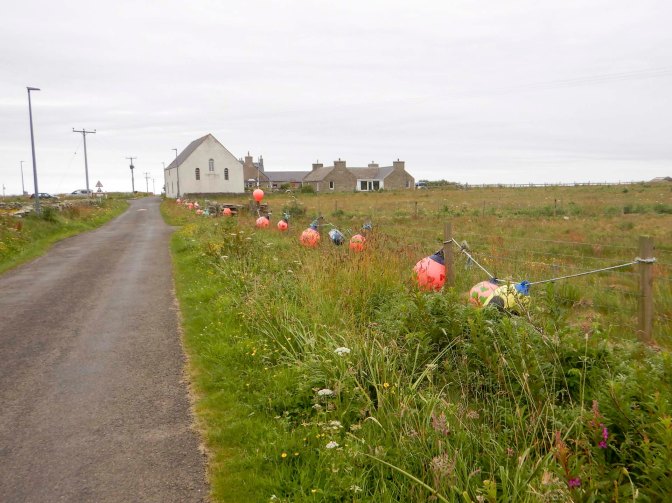
I began by walking past the island primary school towards the pier on the east coast. The multiple buoys adorning one of the nearby gardens had been put there by the seven children attending the school as a surprise for the headmaster on the occasion of his wedding about a year earlier in 2025. I learned later that the wedding had been an enormous community event with a big reception and dance in a room above the barn at Holland Farm.
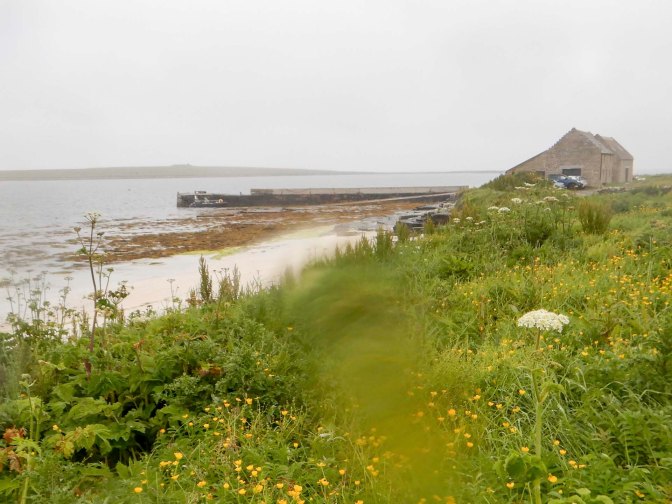
I reached the kelp store built in the eighteenth century to store kelp before it was exported. Nowadays this serves as a community area for islanders and visitors also housing exhibits and archives outlining the history of the island. This includes, the kelp industry which dominated the Orkney economy during the late eighteenth and early nineteenth centuries although production continued until the 1930s. Seaweed was burned to create kelp for the soap and glass-making industries and later kelp was used in the production of iodine. Papay had the highest kelp production per head of population for any Scottish island. Islanders worked in harsh conditions to pay their rent in kelp, the sale of which generated substantial profits for the Laird (members of the Trail family who bought Papa Westray in the seventeenth century and the family owned the island until the end of the nineteenth century). The Laird also owned a sloop which was stored by the pier and used to ship the kelp south. Much of the kelp was exported to Newcastle and the boat would return loaded with coal, seed and other merchandise.
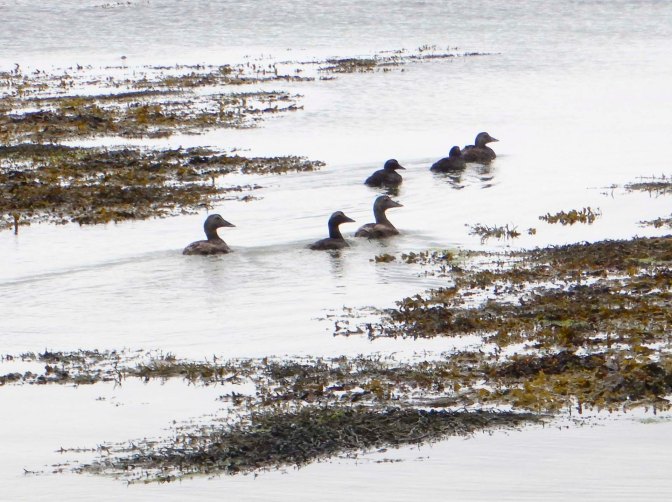
I returned to the hostel as I needed to buy some food for my stay from the Community Shop next to the hostel open for a couple of hours that afternoon. I was even able to buy some local Orkney beer – actually brewed at Birsay on the Orkney mainland. Its apt name was “Burn the Boats” – stories suggest that Vikings burnt their boats as they then had no way to leave but had to succeed in conquering wherever they had landed; for the owners of the brewery, it means that they committed fully to building a World class brewery on Orkney.
The weather was continuing to be a mix of dry and cloudy or cloudy with light rain. However, I wanted to make the most of my time so I set off again to follow footpaths on the east coast up to the RSPB bird reserve in the north of the island.
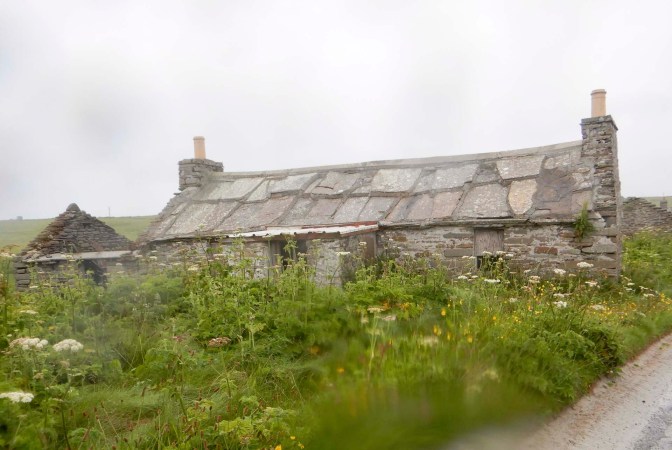
I headed along the coastline past some traditional houses with massive flagstone roof slabs – local stone splits into large thin slabs which form an excellent building material.
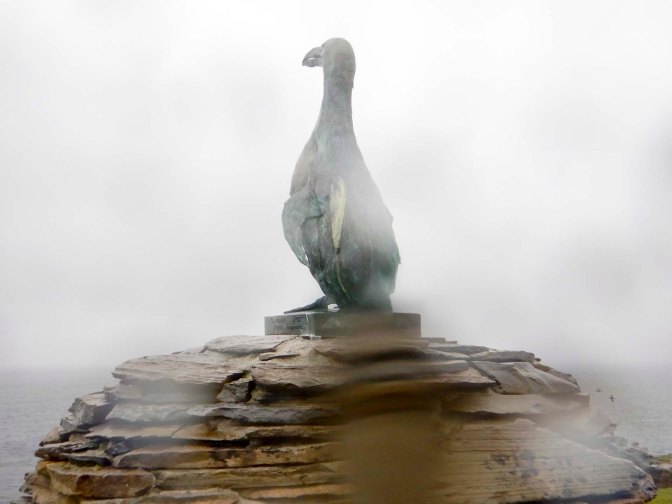
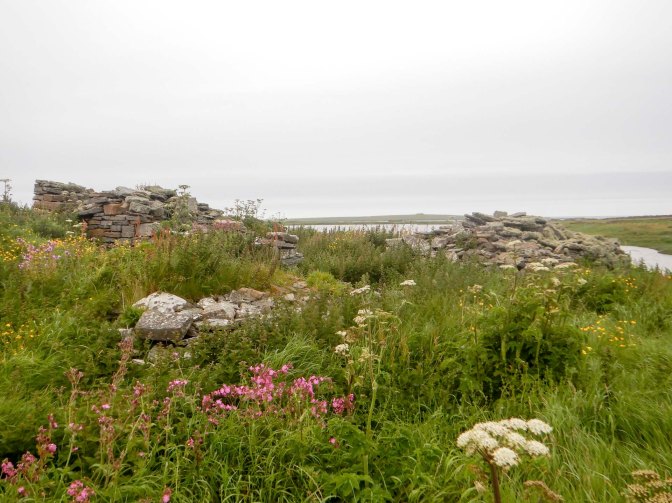
I reached North Hill Nature Reserve. A statue commemorates where the last great auk in UK, an extinct relative of the puffin, was killed in 1813.
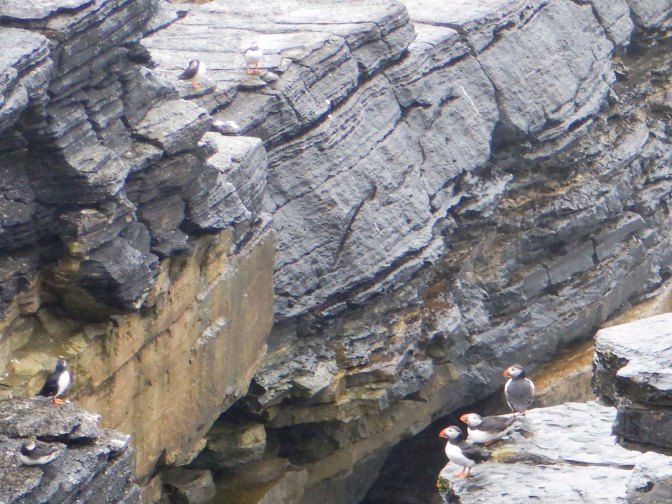
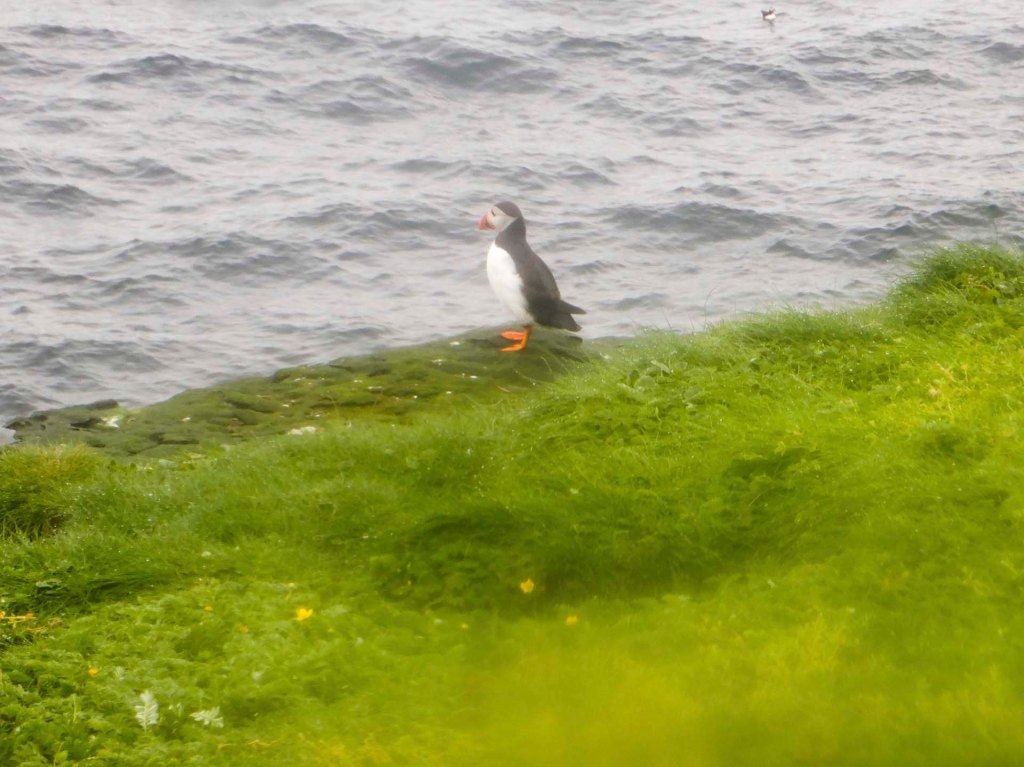
I was fortunate to see some puffins on the cliffs.
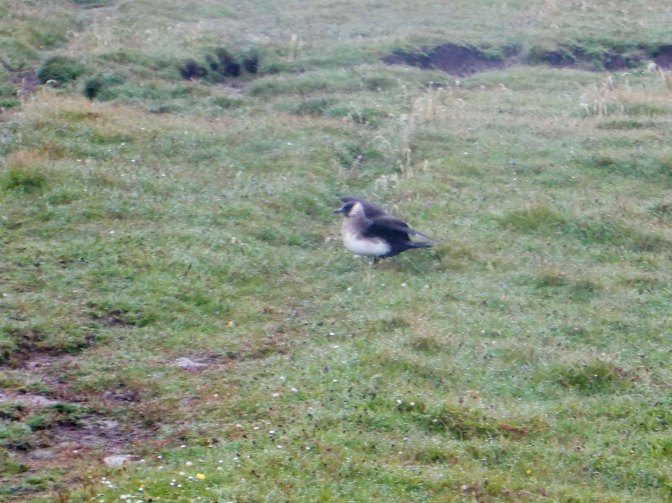
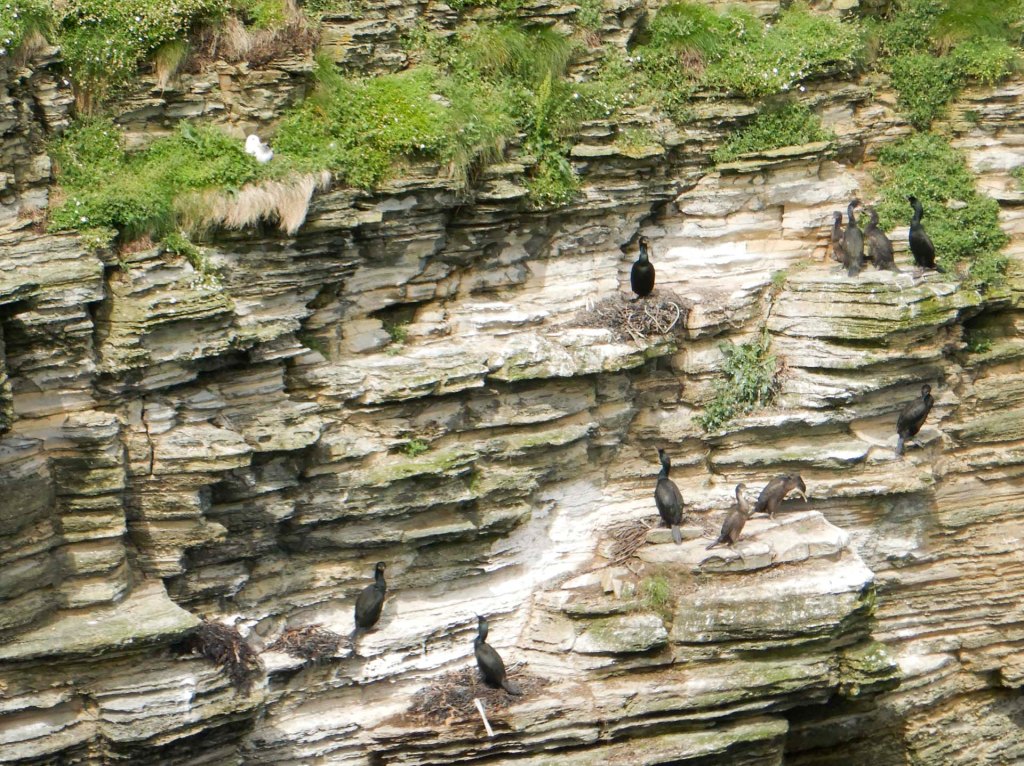
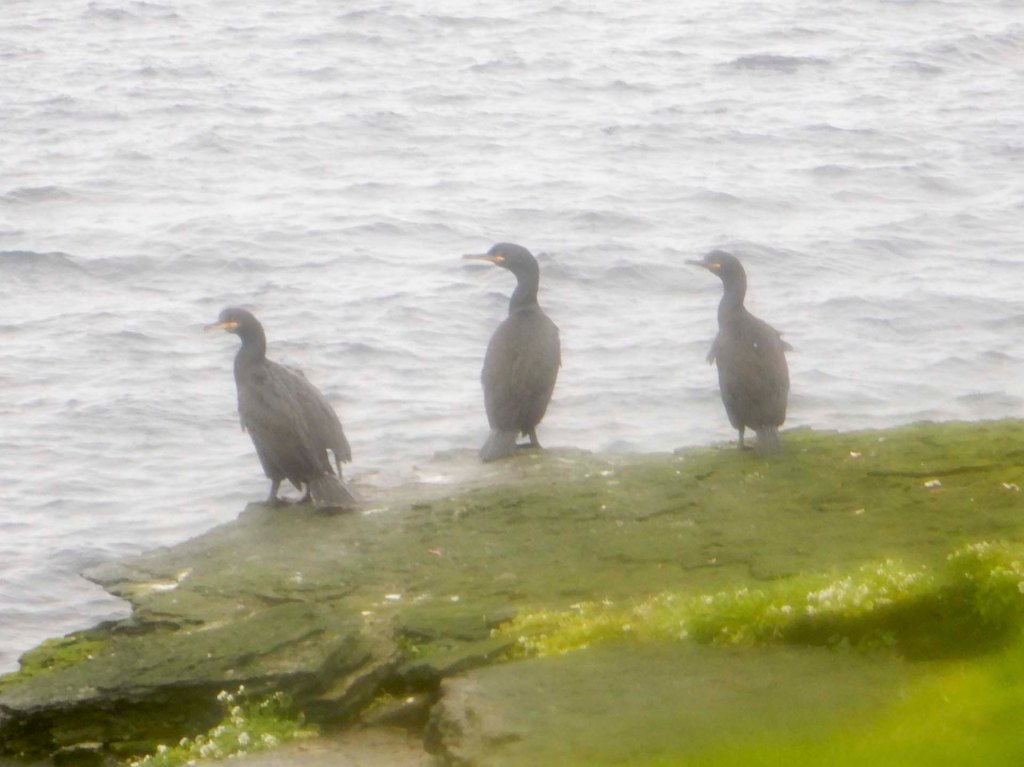
I spotted a number of Arctic skuas, great skuas and Arctic terns, all ground nesting birds and fiercely protective of their eggs and chicks. Notices explained the importance of remaining on the footpath close to the coast to avoid disturbing these birds on their nests. A number of gannets were flying over the sea and occasionally diving to catch fish; they really are magnificent and powerful birds. I also saw multiple oystercatchers, guillemots and greater black backed gulls as well as some shags standing in lines on the rocks and spreading their wings to dry.
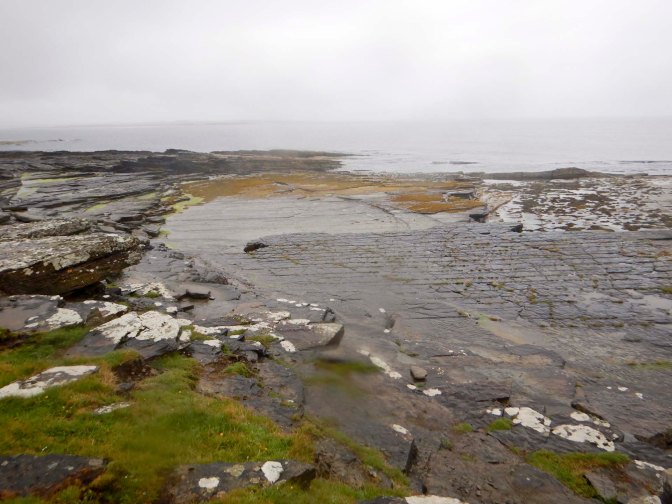
By the time I had rounded the north of the island and walked south to St Boniface Kirk looking at all these birds as well as the picturesque coastal scenery it was too late to spend time looking at the church and I returned to the hostel past a field of apparently very aggressive cattle with calves. They charged at the fence and I was certainly relieved that I was separated from them by an adequate barrier.
The next morning, the weather had changed completely. Of course Jonathan had been quite correct and this was a superb day to make the crossing to Holm of Papay, a small uninhabited island less than one hundred metres east of Papa Westray.
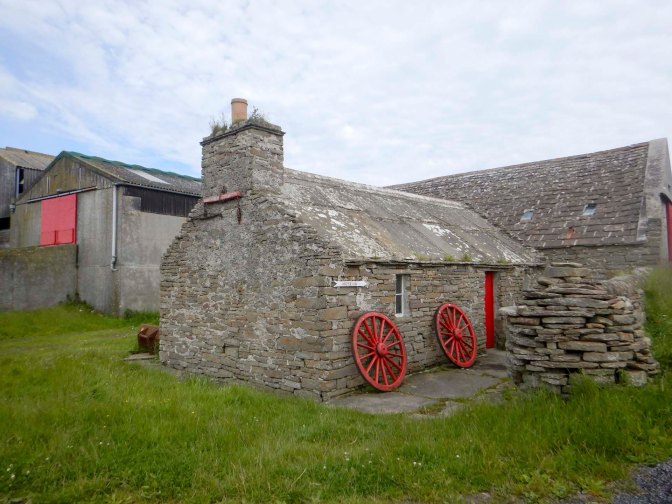
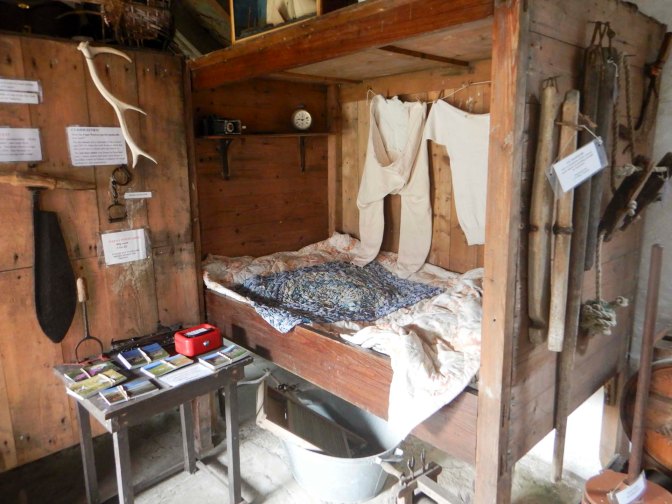
As Jonathan would be taking me in the small boat with five other people including two who were visiting Papa Westray for the day, there was time for me to explore another part of the island before we met. Unfortunately my plan to visit Knap of Howar wasn’t successful as I could see cattle on the path in the field I needed to cross. After those charging cattle the previous day, I wasn’t keen on trying to walk there on my own! However, I discovered an interesting small museum in the traditional slab-roofed bothy of nearby Holland Farm. This was the building where the farm hands had lodged in the past. The artefacts on display included kitchen implements, furniture and clothing as well as farm tools from bygone ages.
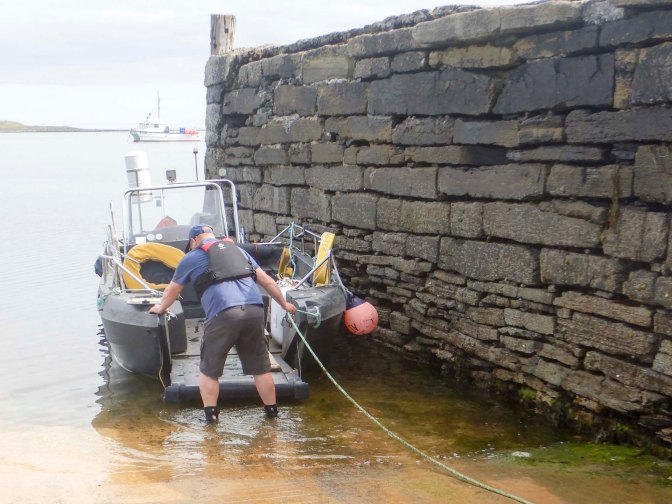
I met Jonathan and the other people who had booked to travel to the Holm of Papay. We donned our life jackets and boarded the small motor boat. Jonathan was a superb tour guide and immediately started to point out sights of interest. He explained that even at low tide the Holm is cut off from mainland Papa Westray. There is a partial causeway which was used in the past for horses to be taken over to graze on the Holm and a building on the Holm had been their shelter.
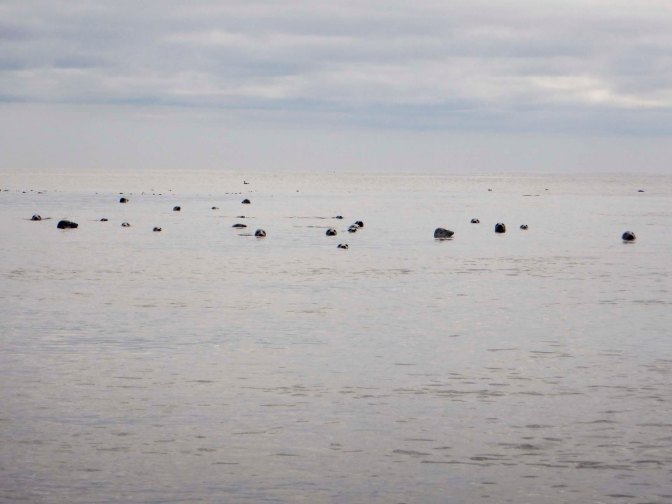
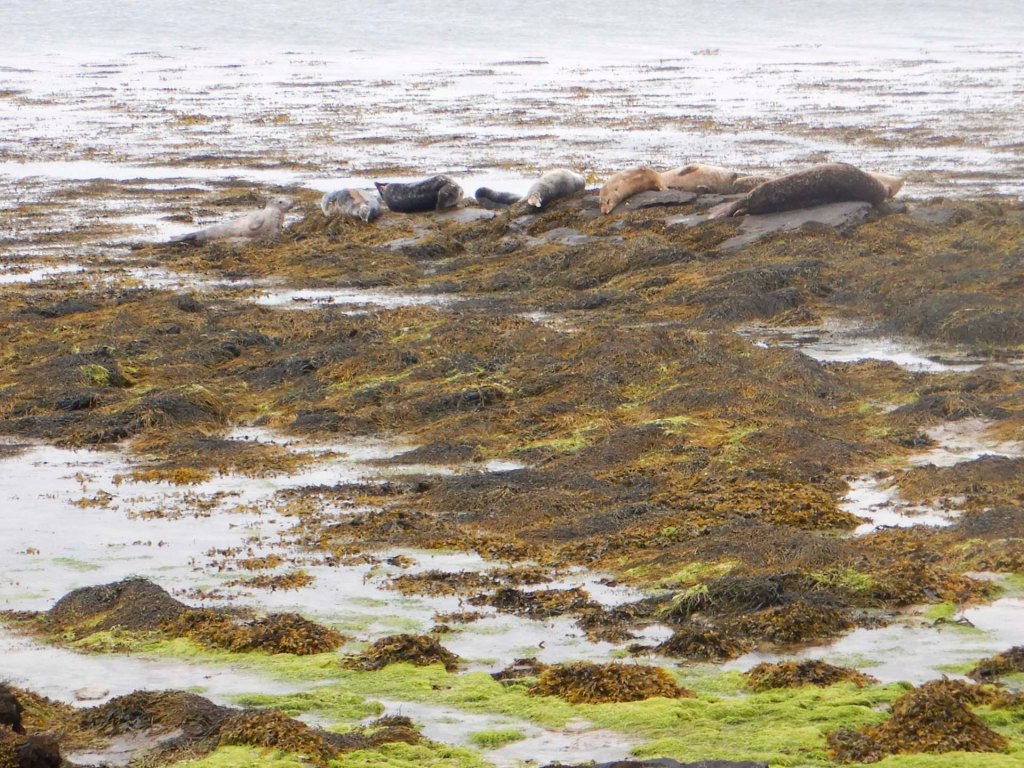
We didn’t make a direct crossing but deviated to view seals swimming in the shallow water
We saw many birds including gannets, eider ducks, guillemots and shags. One member of the group was a keen and knowledgeable birdwatcher, happy to share his expertise, which was very helpful.
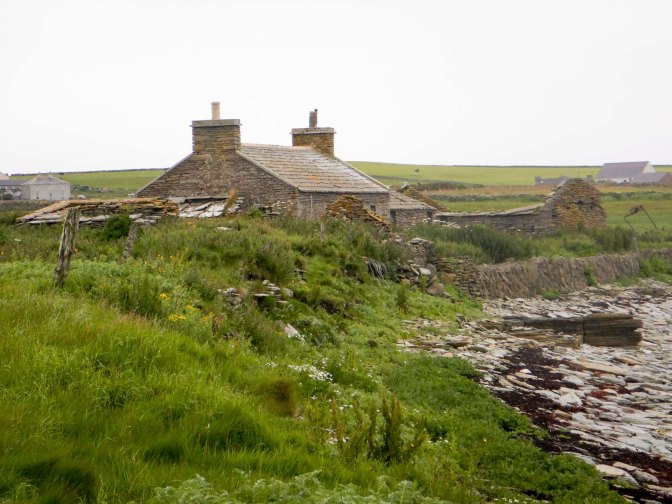
As we crossed in the boat, Jonathan pointed out a disused mill on Papa Westray. Next to it was a croft house which had been in danger of falling into the sea as the coast eroded. Island residents had worked together to save the croft by building a sea wall as a voluntary community project.
A single fishing boat was moored in the bay – there’s only one professional fisherman on Papa Westray nowadays.
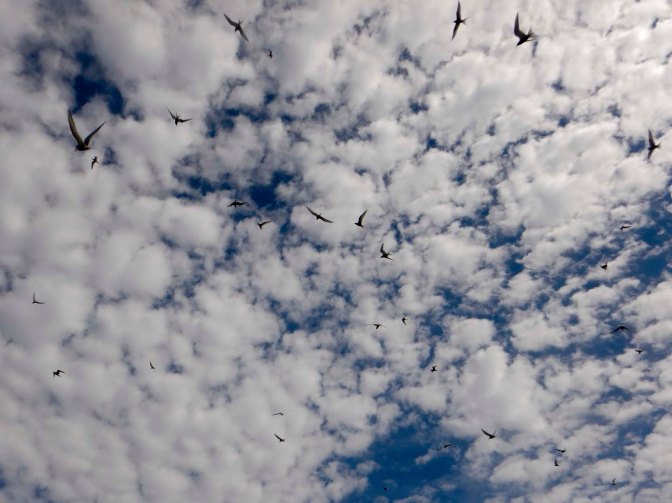
We landed on the Holm and were “greeted” by terns loudly defending their territory.
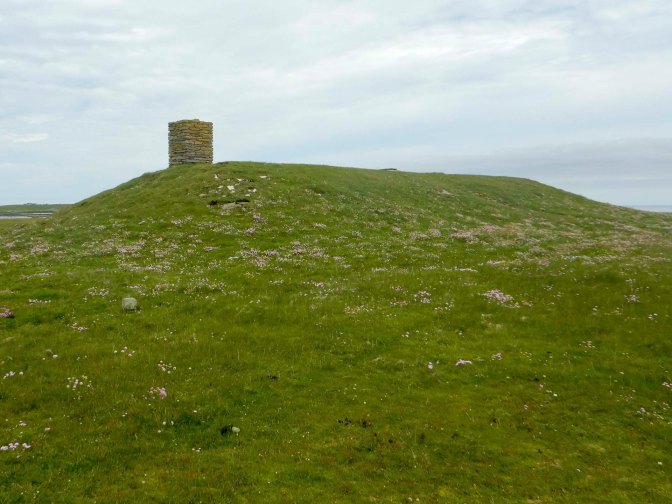
We walked up to the prominent south cairn on the highest point, first excavated in 1849 when no human remains were found. Nowadays the entrance is via a trapdoor in the roof and then it’s necessary to climb down a ladder into the chambered cairn. The central passage has cells on each side. Notably there are carvings in the form of cup marks and simple incised designs on several of the stones forming the walls of the internal chambers.
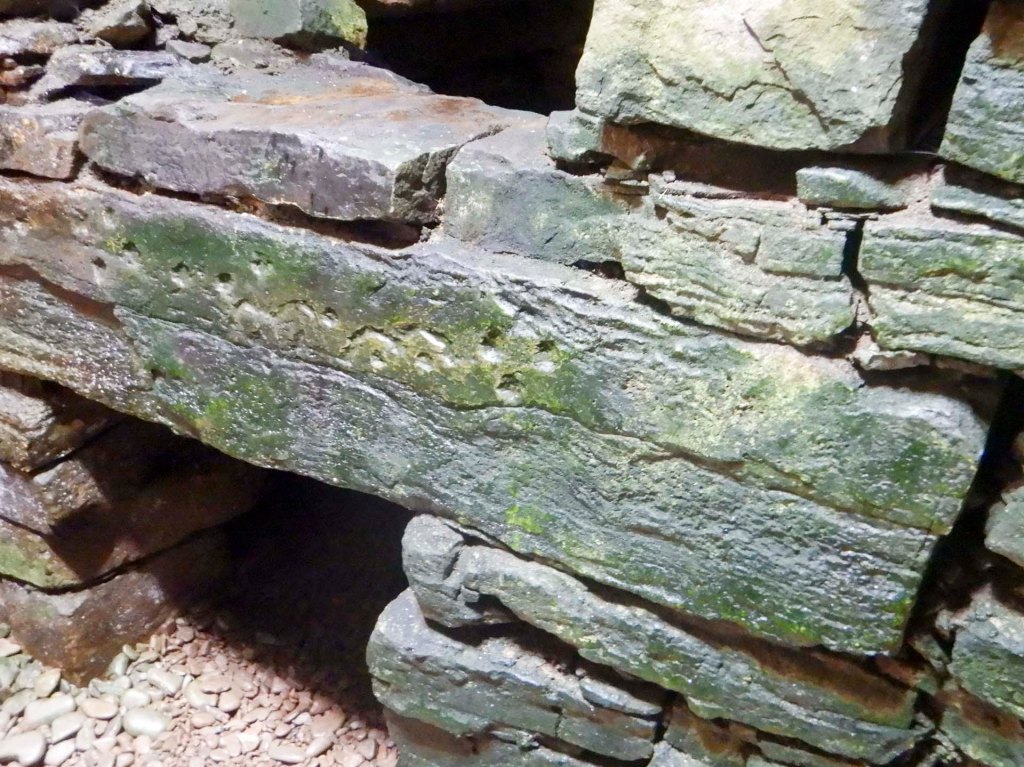
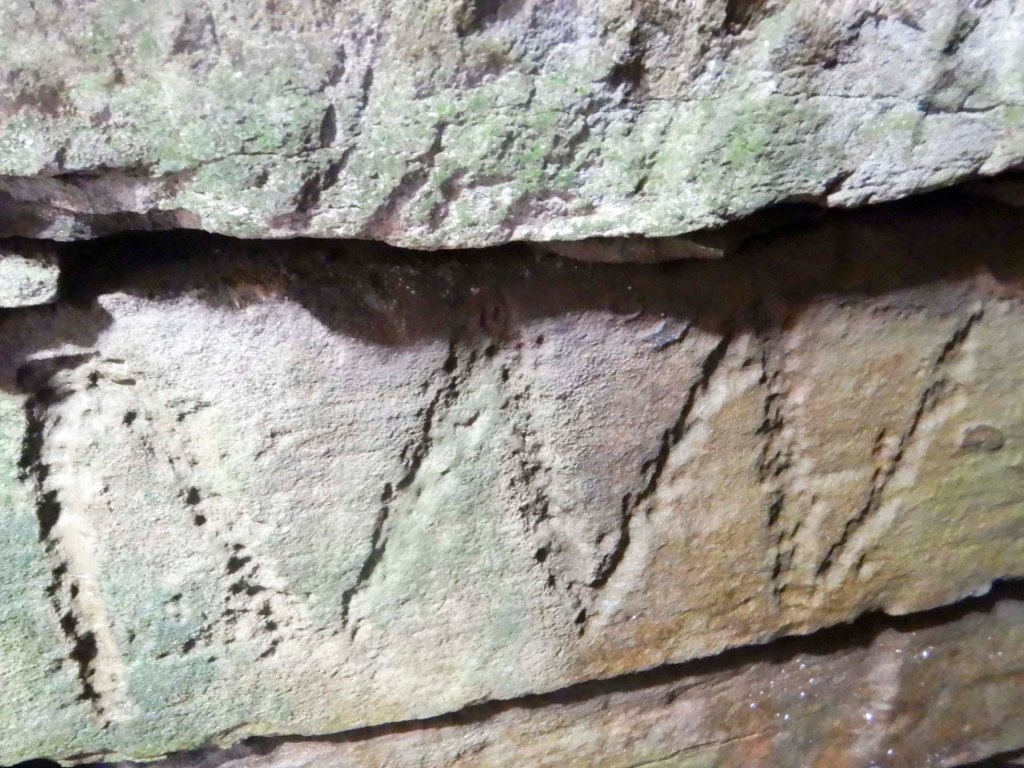
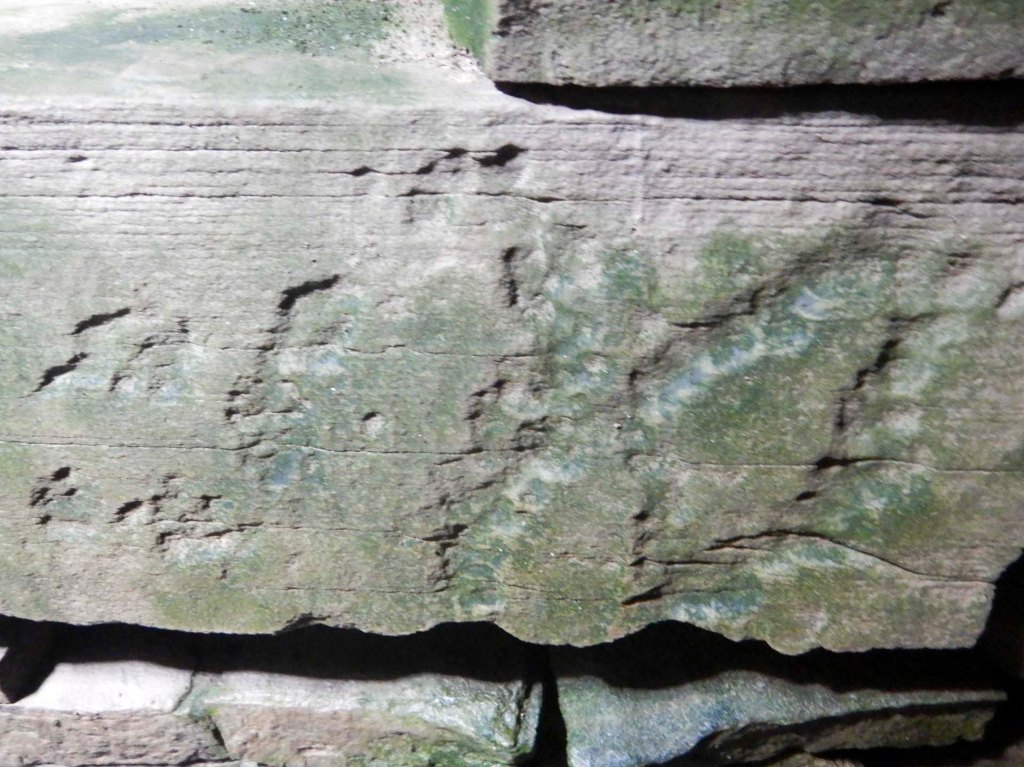
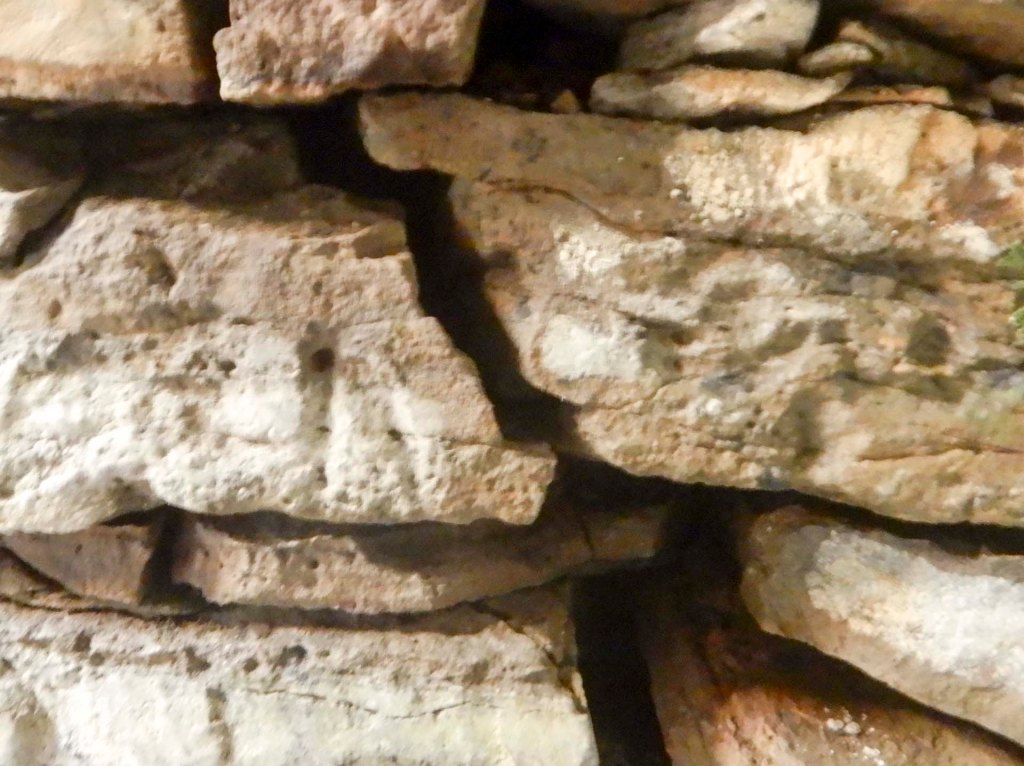
After climbing out of the chambered cairn, we walked north past some cliffs with puffins and shags.
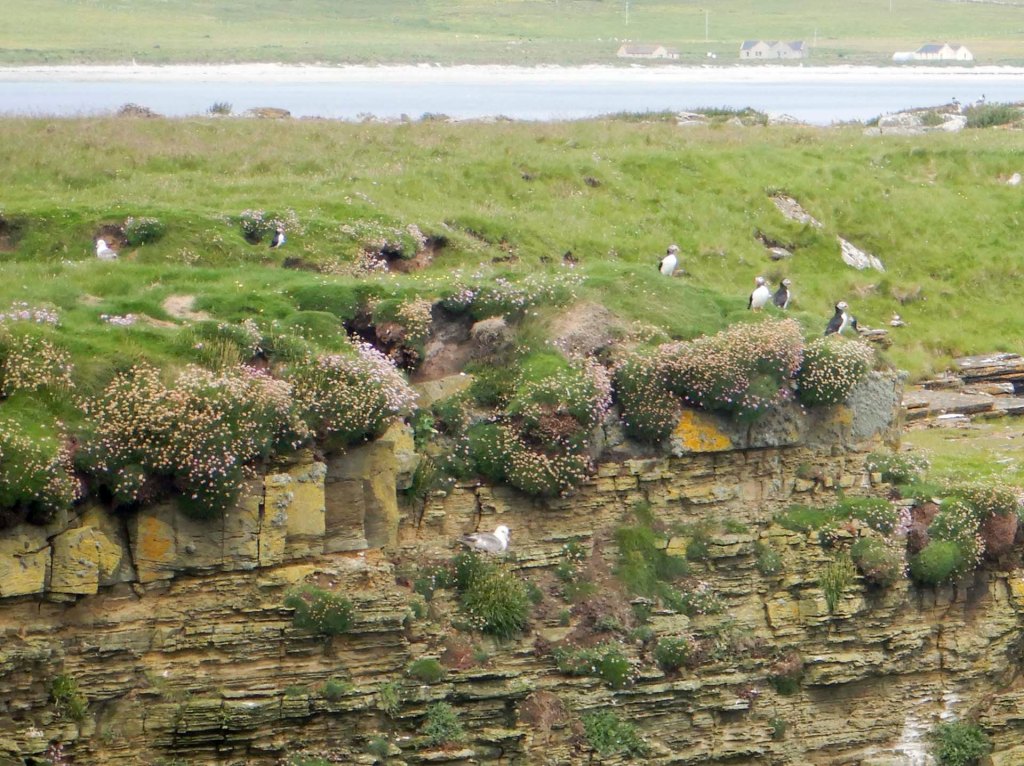
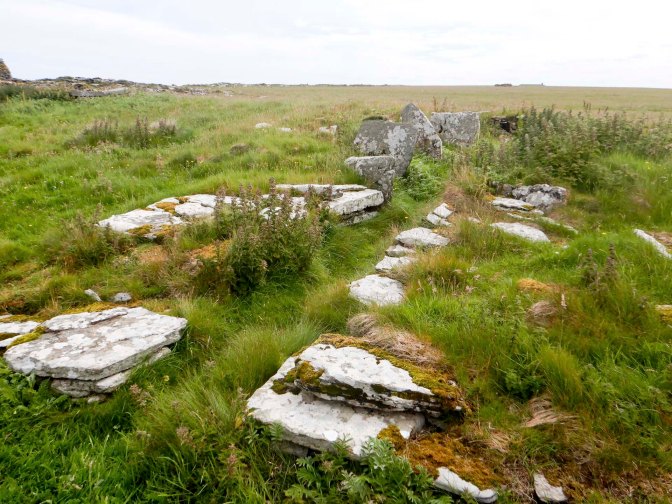
We reached the north of the Holm where we saw a Neolithic stalled cairn where human bones have been found. Radio carbon dates activity at this cairn to around 3520BC to 2900BC, contemporary with when the Knap of Howar was in use.
We returned by boat to mainland Papa Westray and ate our packed lunches at the Kelp Store. The next stop for the tour was Holland Farm and to walk from there across the fields to Knap of Howar. As Jonathan had been such an informative and helpful guide, I asked whether I could pay the additional fee to join the tour for the afternoon, also explaining about my failed attempt to walk to Knap of Howar because of the cattle in the field.
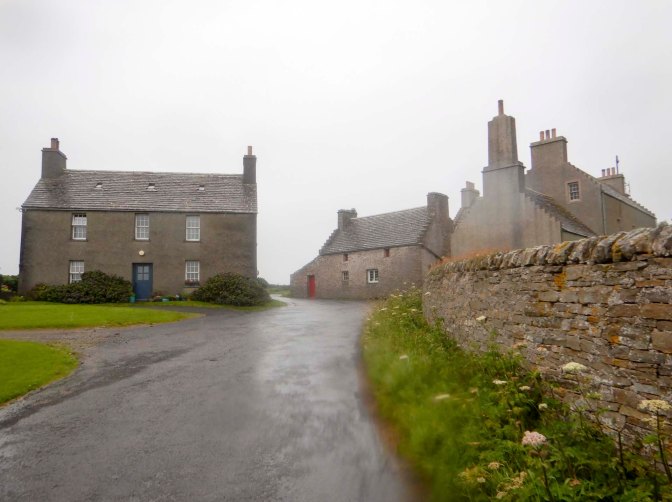
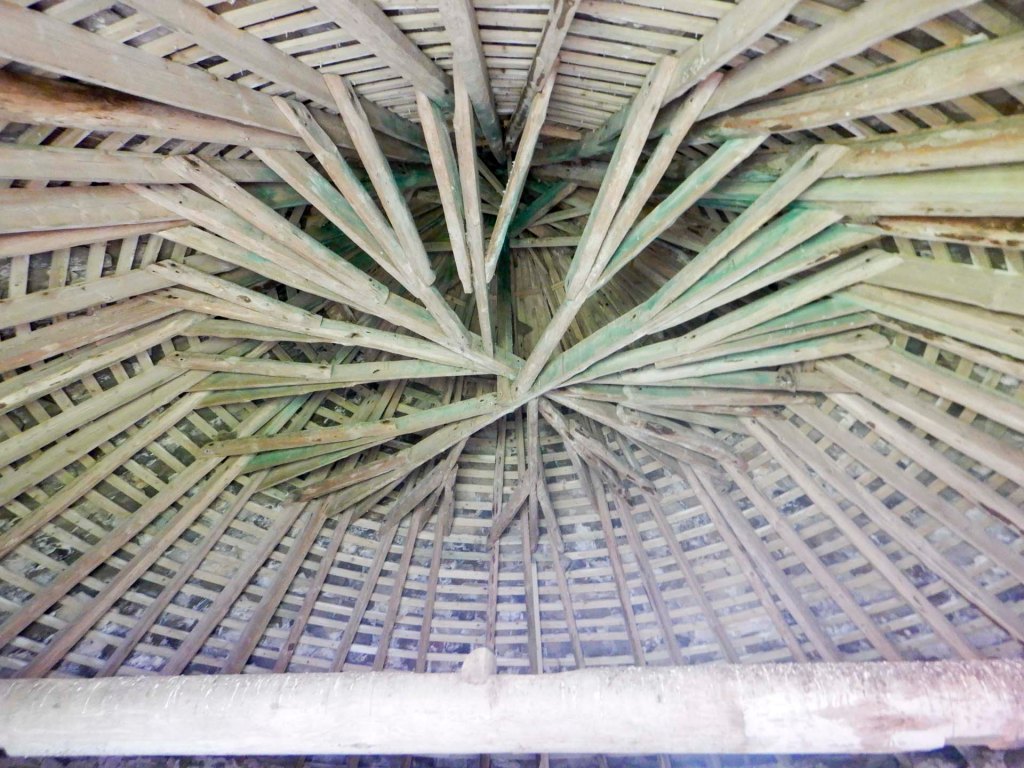
Holland Farm is one of the five farms still actively used on the island and has been farmed continuously since the seventeenth century. We saw the nineteenth century horse driven mill tramp with intricate internal roof timbers, designed to be worked by harnessed horses walking in circles to power the milling machinery inside the adjacent barns. In its heyday, the farm had up to a hundred employees but nowadays is worked by a single farmer.
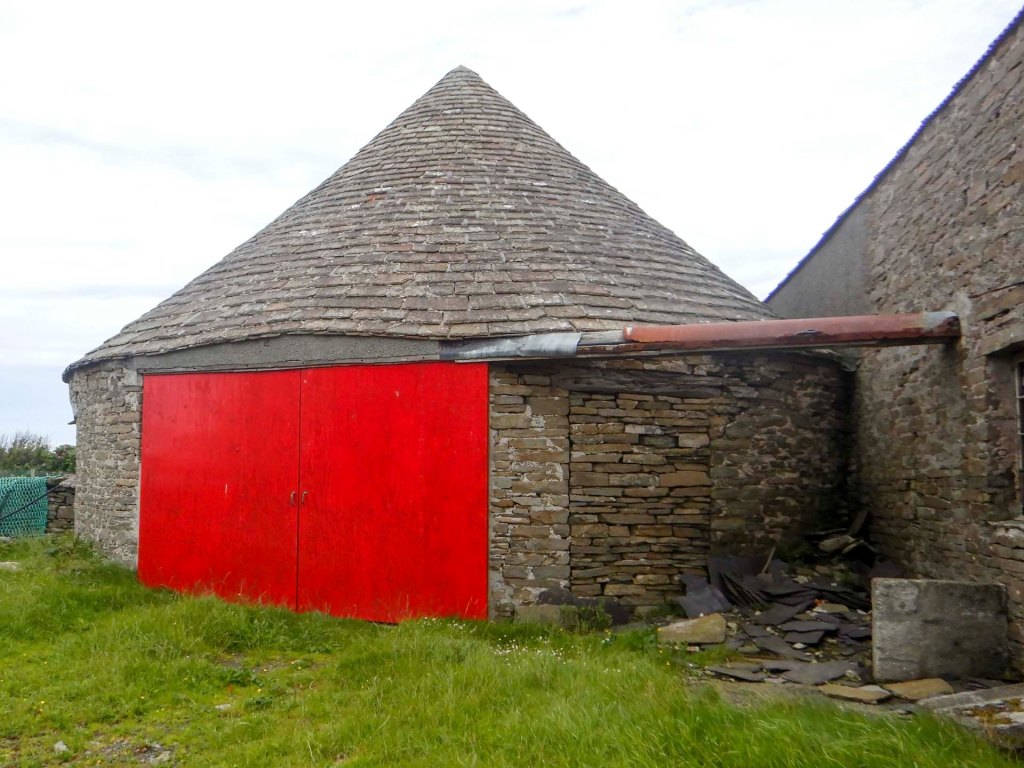
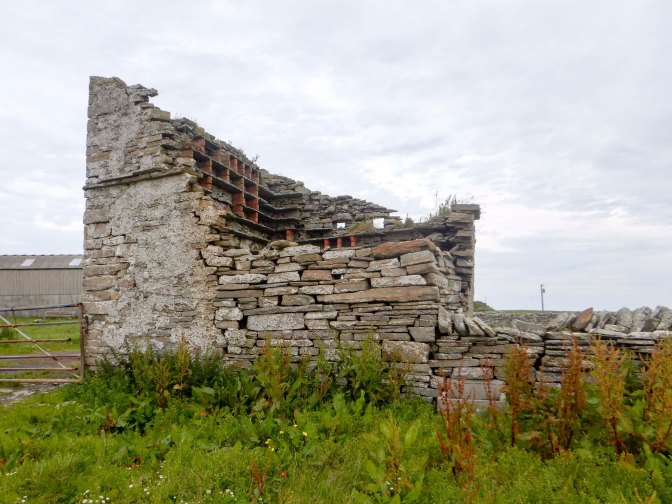
We were shown the old doocott.
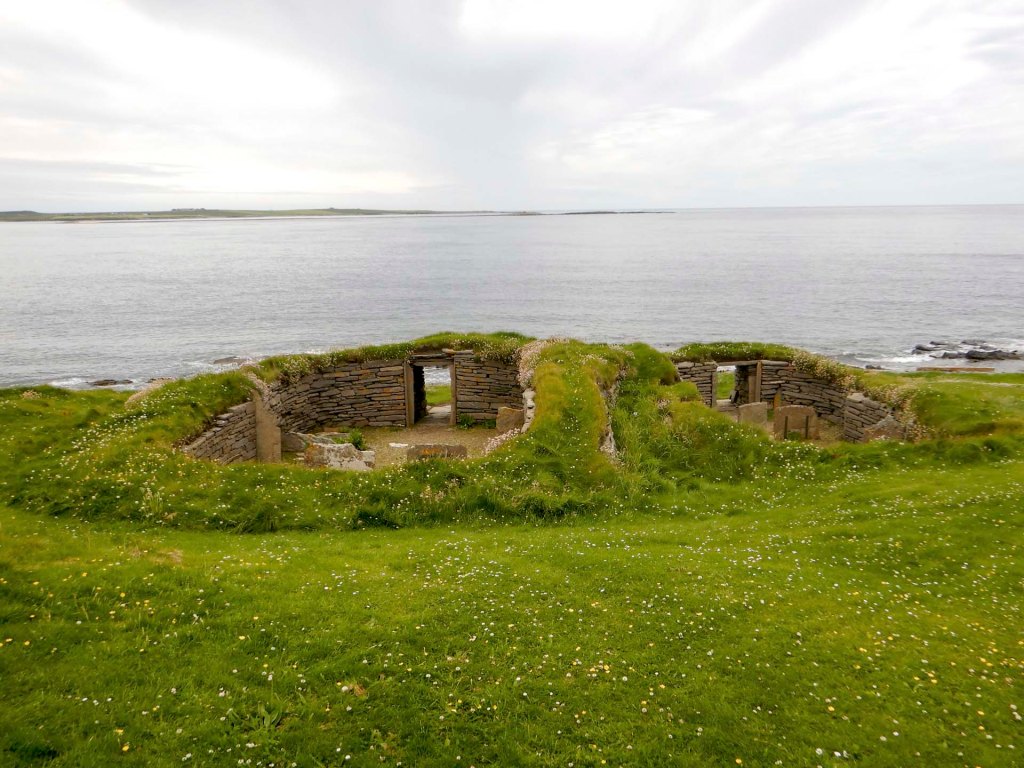
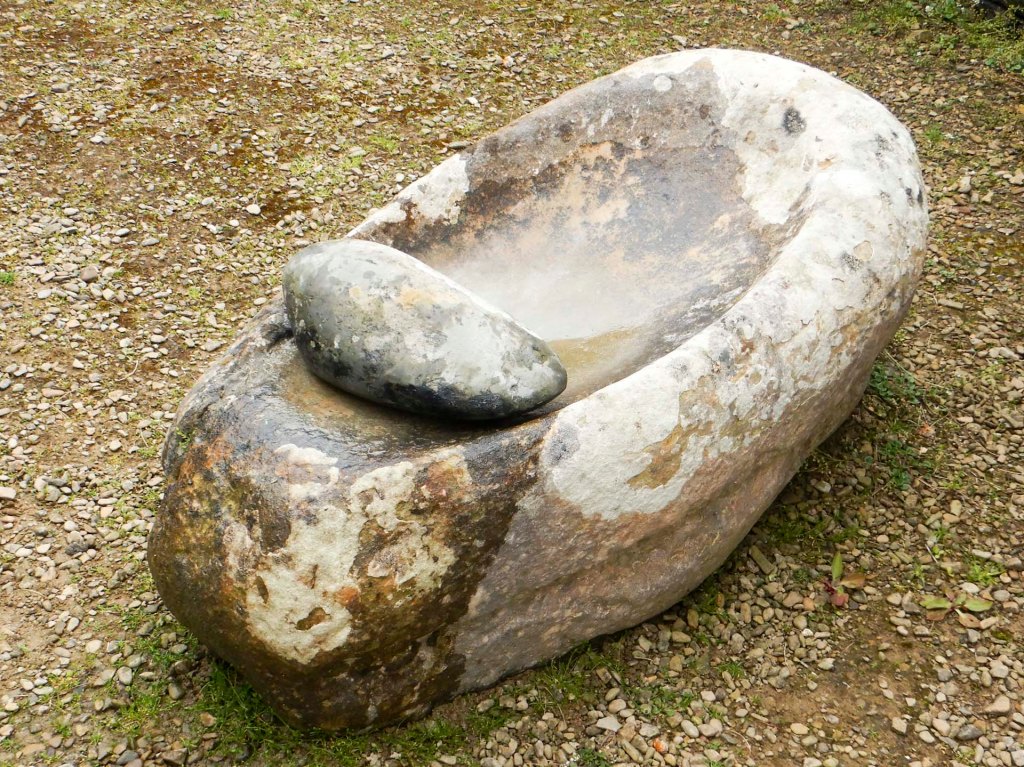
We walked through the field of cattle (ironically the cattle had migrated to the part of the field furthest from the path), to reach Knap of Howar. The stone built ruined houses date from 3,500BC or possibly as early as 3,800BC making them the oldest known North European dwellings. There’s even what is believed to be an original grinding stone.
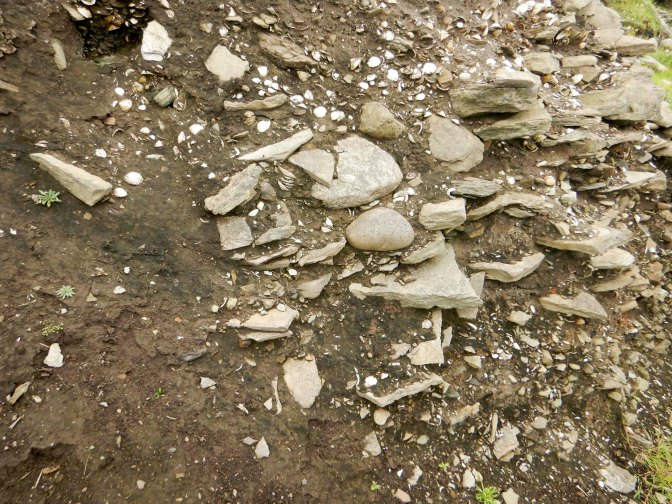
Next Jonathan drove us to St Boniface Church. There were numerous artefacts that I would have missed without the benefit of a guide. Outside the church we saw what is effectively a two thousand year old rubbish mound as well as the remains of a broch at the sea edge.
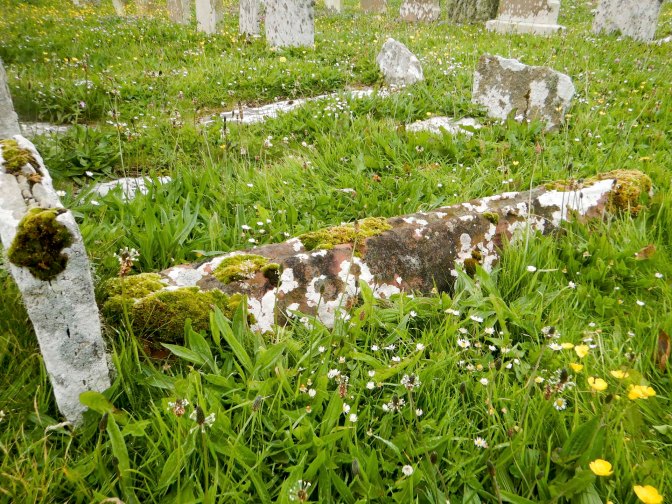
In the churchyard the oldest marked grave is an eleventh or twelfth century Viking hogback tombstone with a just about visible shingle pattern carved into the sloping sides. Pictish cross slabs were discovered in another part of the churchyard but transferred to museums in Kirkwall and Edinburgh.
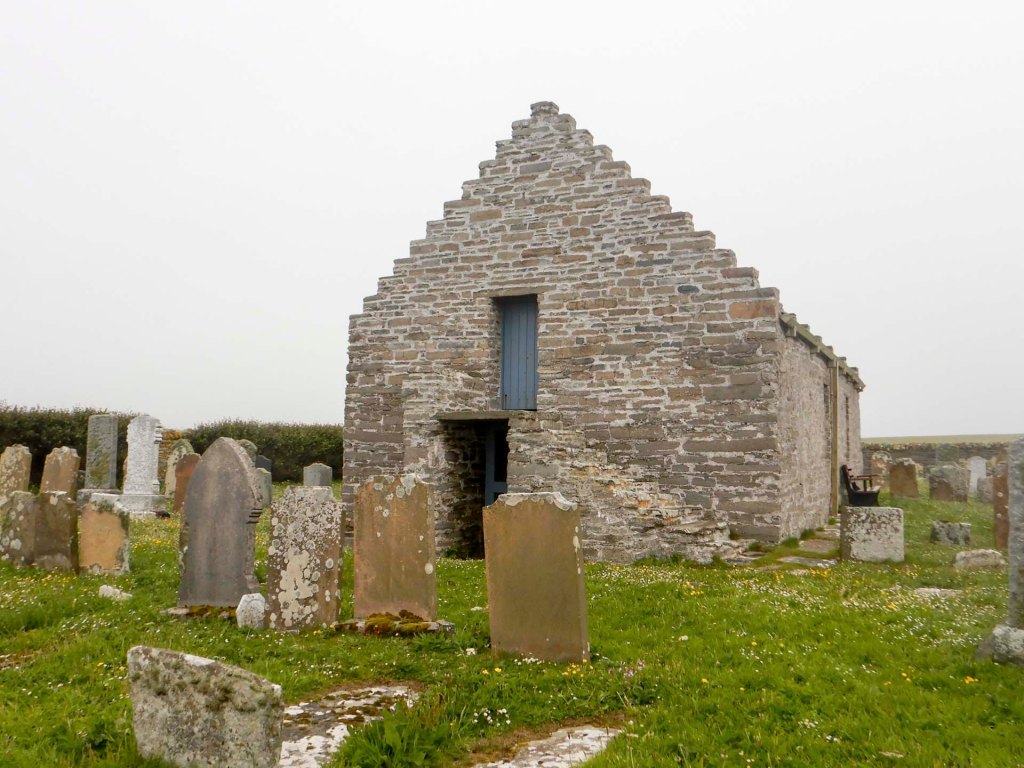
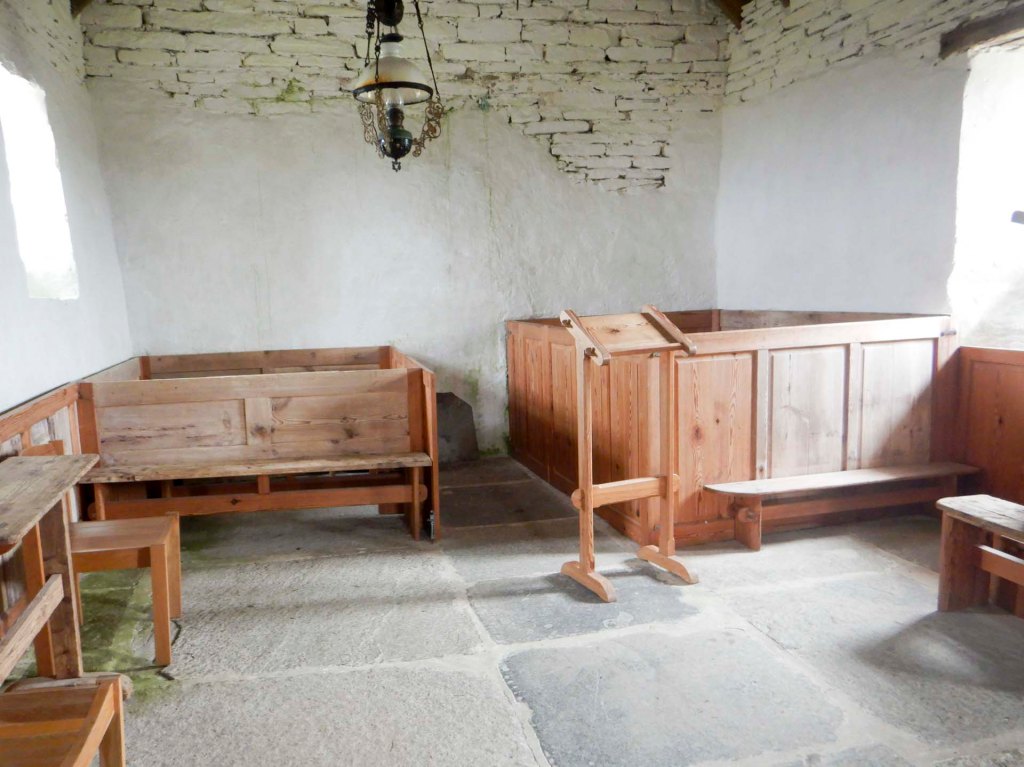
The present church was built in the twelfth century (St Olaf’s) then expanded west in 1710. The building was repaired in the 1840s and the most recent restoration in 1993 created a shared community space.
After the guided tour had finished, I went out for another walk past the Loch of St Tredwell where I struggled over a tussocky and overgrown area to St Tredwell’s Chapel on a small peninsula above the loch. It was a renown place of pilgrimage particularly associated with miraculous cures for eye problems.
I continued to walk south along the coast, despite a shower of rain, seeing shags, puffins and other seabirds as well as some seals on the rocks.
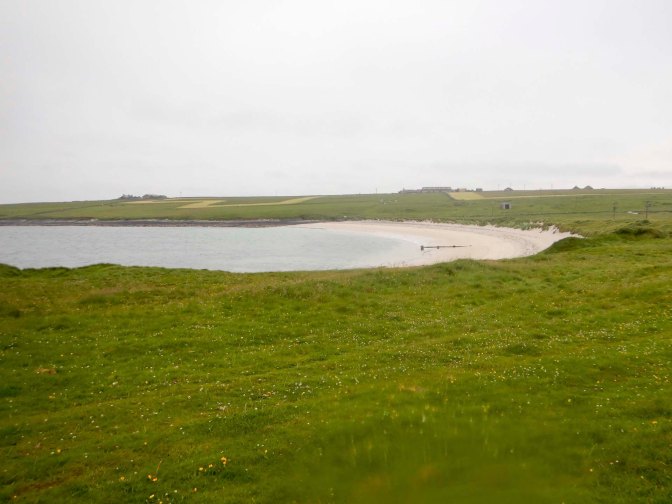
I reached the ferry pier then returned to the hostel along the road, past a sandy bay and area of machair (sandy grassland), cattle in fields and the community fire station. I spent the evening chatting with guests at the hostel who told me about a coffee morning the next day at the church meeting room giving the opportunity to meet some islanders. The church is also where the doctor / nurse consulting room is located.
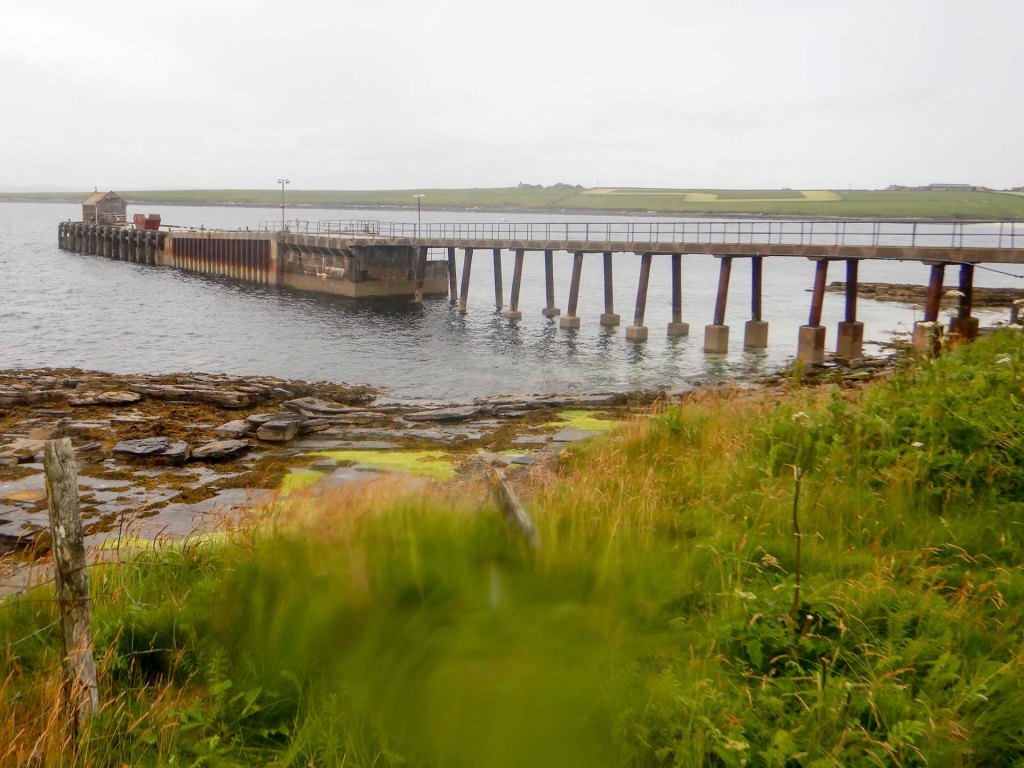
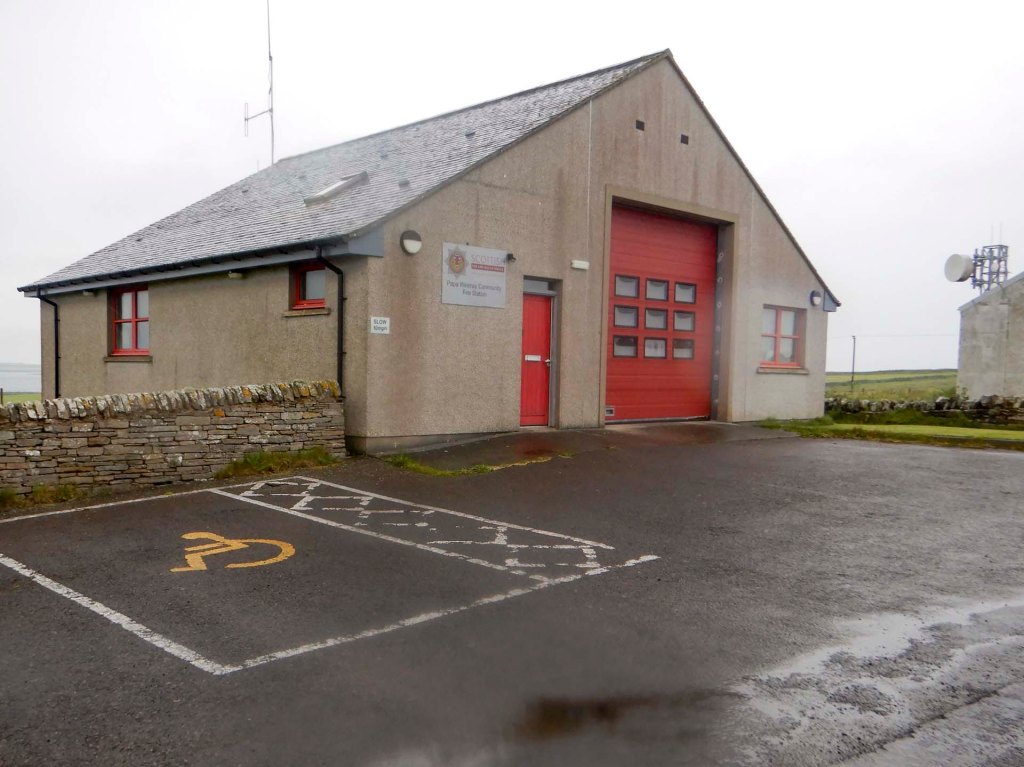
The next day was misty again so the discussion at breakfast revolved around whether the plane would land and hence the possibility of needing to book a ferry crossing to return to Kirkwall. I still had time to walk to the machair and beach near the main ferry pier, where I spotted a seal swimming. As I walked back along the road, I was offered a lift by one of the islanders so I arrived early at the coffee morning.
Apart from the coffee and delicious home bakes, it was an excellent opportunity to meet some of the extremely friendly and welcoming residents who extolled the benefits of island life – safety, freedom for children to roam and a very self-sufficient community organising numerous social events with everybody who is able volunteering to help in whatever ways they can.
After eating lunch at the hostel, I arrived in plenty of time for my booked flight. We heard the plane approaching and everything was in place for landing – the fireman ready and waiting, the luggage weighed, labelled and on the trolley etc. Sadly after a couple of attempts, the visibility was deemed inadequate and the plane continued to Kirkwall without landing.
I booked as a foot passenger on the ferry to Westray and then the onward ferry to Kirkwall and set off to walk to the pier. I had plenty of time but was waylaid by phone calls and messages about the cancelled plane flight. Apparently in order to receive a refund, I had to contact the Loganair team at Kirkwall within a time window – otherwise I would be rebooked on the next available flight, probably on the following day. Of course, they were probably being inundated with phone calls and it took longer than I had expected to get through. After successfully cancelling the plane, I realised that I was in danger of not reaching the pier in time for the ferry. I began to jog, which wasn’t easy in my walking boots and carrying a 65 litre rucksack including all my camping equipment. Fortunately, I was saved by a very helpful islander who was “going to the ferry pier anyway” and I got my second lift of the day! By this time the weather was sunny with few clouds and hence probably eminently suitable for the plane to land.
The small ferry from Papa Westray can only take twelve passengers so it was doing a double run as the time-tabled later crossing was already full. If I had been late for my booking, I would not have been able to get on the later crossing and would have been stranded on Papa Westray until the next day. Once the second group arrived on Westray, a minibus transported us all across the island to the pier for the bigger ferry crossing to Kirkwall.
On arrival at Kirkwall, I discovered that the final plane of the day to and from Papa Westray had managed to land on the island and fly back to Kirkwall. Almost unbelievably, it had plenty of space too (only two passengers for the eight seats) as it seemed that most people who had booked on it had been concerned that it wouldn’t fly and had opted for the certainty of the ferry.
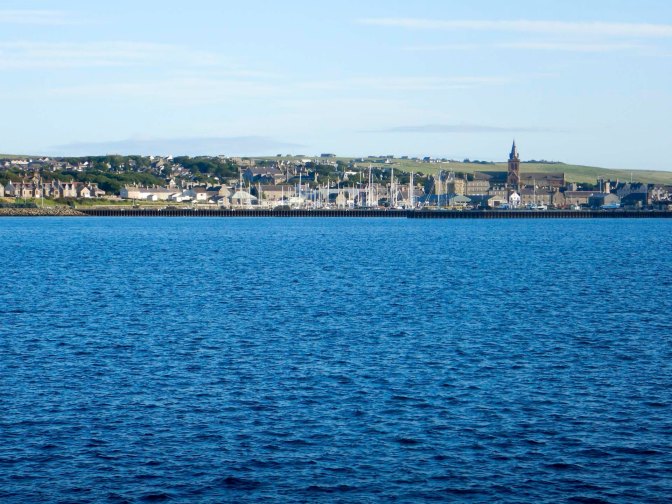
It had definitely been worth visiting the island and staying for longer than a day in order to have more time to explore including crossing to the Holm of Papay and the opportunity to meet some of the islanders. The main challenges turned out to be both getting there and getting back!


