1 July 2026
It was my second attempt to reach Noss on this trip. I’d tried to go on 28 June: ferry from Lerwick to Bressay, hour walk across Bressay but then arrived at the departure point to see a large swell in the Sound. Unfortunately I hadn’t followed the advice to check the Noss Ferry phoneline before leaving. The sea had seemed so calm! Several people were standing at the departure point – so clearly others hadn’t checked either!
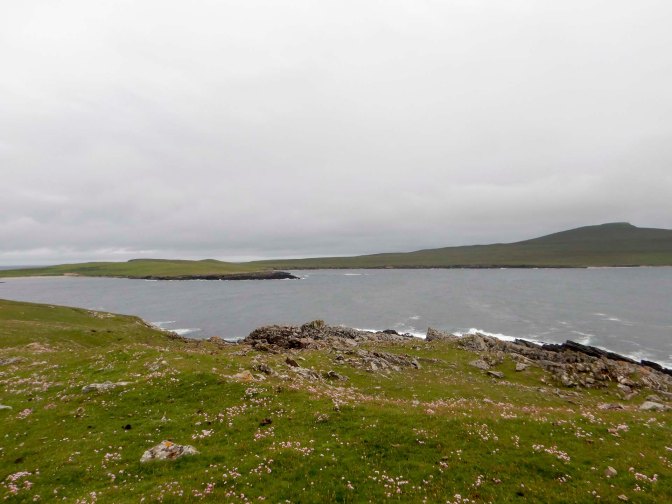
The official message was that it might get calmer later and more advice would be put on the phone message at lunch time.
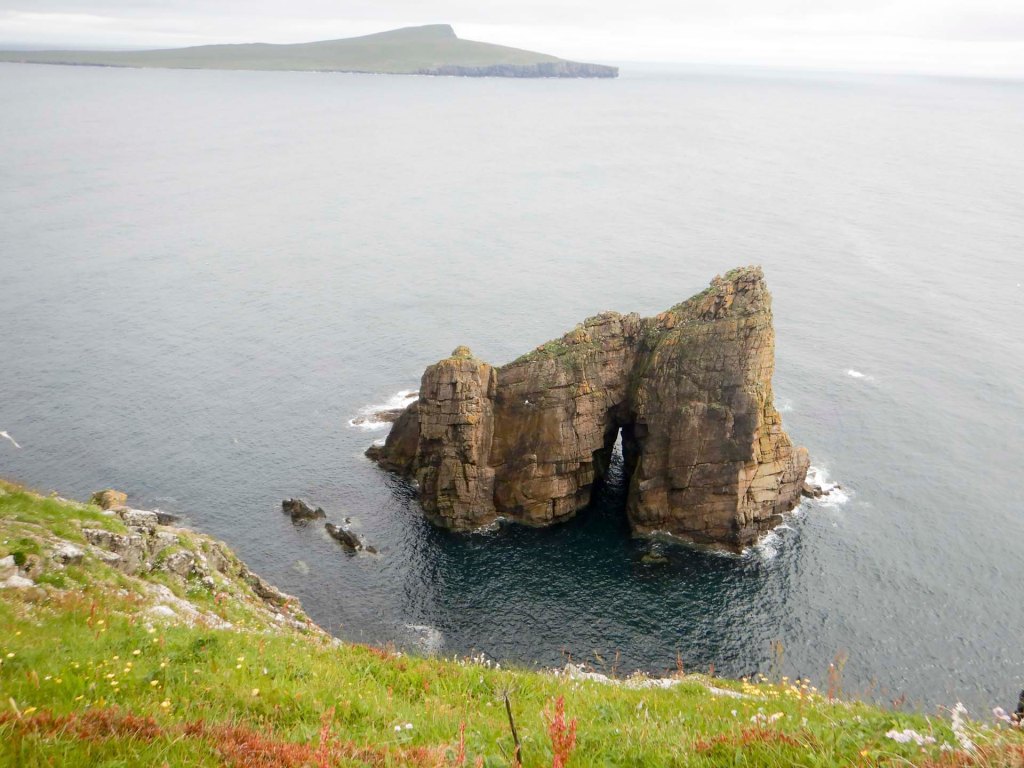
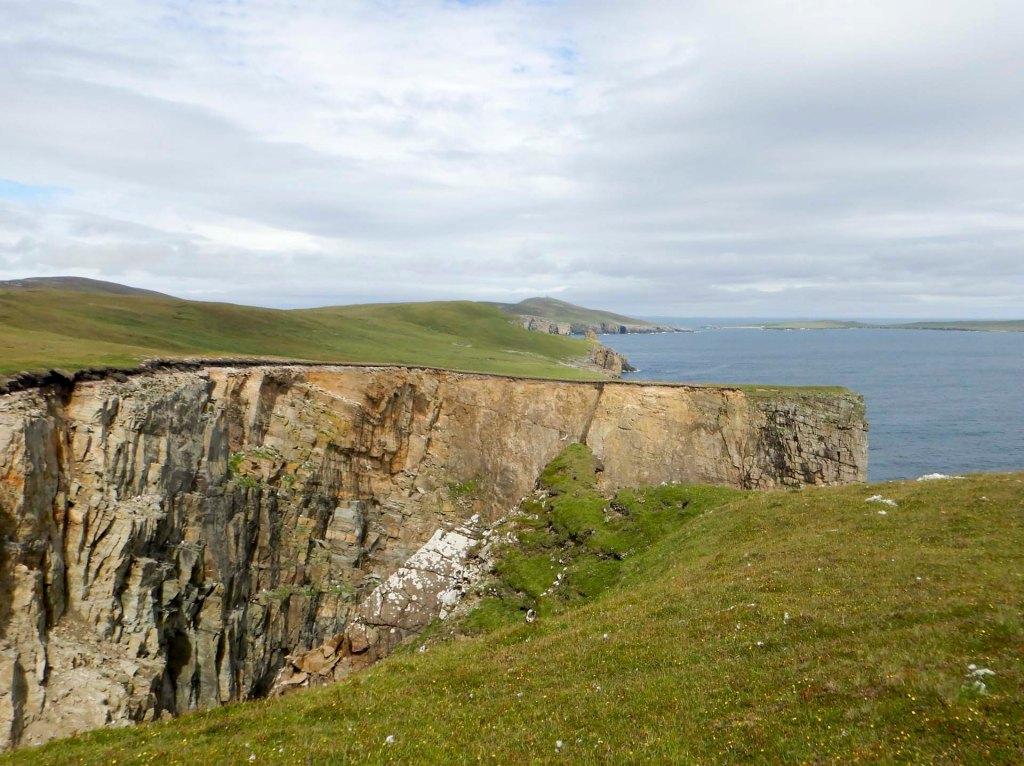
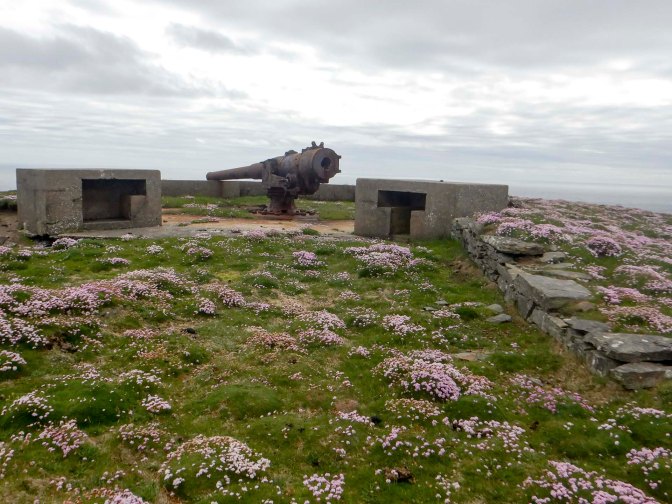
I decided to start “plan B” and walk round the south end of Bressay – slowly to start with in case the ferry to Noss would run in the afternoon. In fact it didn’t and I enjoyed a fine walk to the south point (Bard of Bressay), where there’s an impressive WW1 gun.
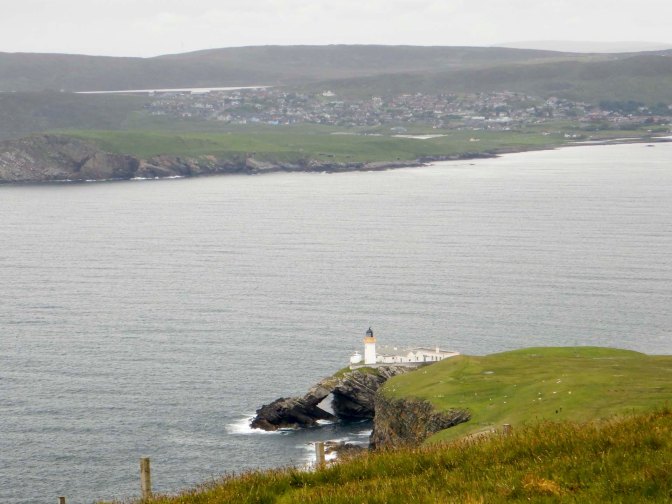
I continued round the high cliffs then descended to the lighthouse before heading back along the road to catch the ferry back to Lerwick.
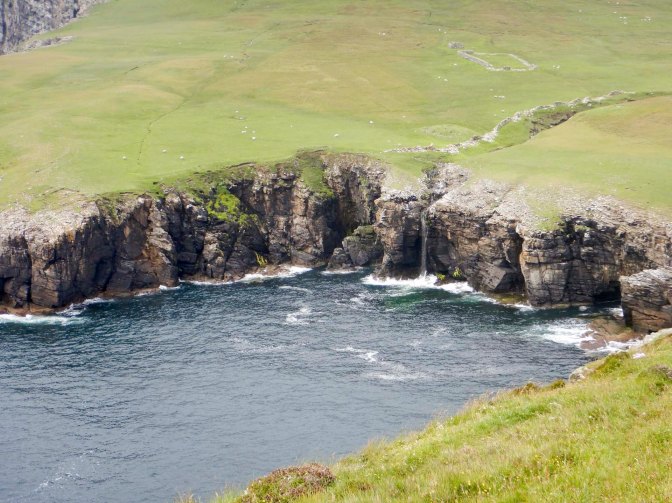
I saw gannets, fulmars, oyster catchers, different gull species, shags, Arctic terns and great skuas as well as stacks, arches and towering cliffs. This would have been an amazing adventure anyway.
However, I had unallocated time during the trip so I made a second successful attempt later in the week. Of course, having learned my lesson, I phoned the advice line before leaving Lerwick!
I arrived at the end of the road near the departure point just as the inflatable boat was making its way across the sound for the first departure of the day to Noss. I rushed down the cliff path but there were five people already waiting so I had to wait for the second crossing, while watching Arctic terns diving and fishing in the sound. Two more visitors arrived so we were another three visitors transported in the boat.
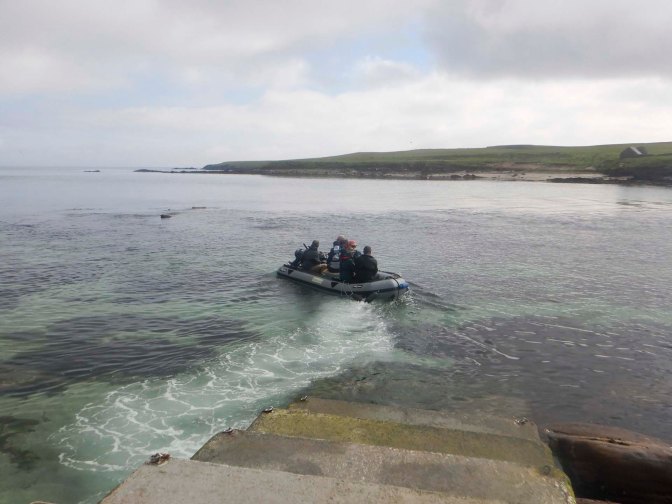
The first group waited by the building for us to arrive and we had an introductory talk, explaining the best way to walk depending on the time we had – and where not to walk because it would be boggy and we’d risk disturbing the ground nesting great skuas.
It was quite misty as we walked towards the main cliff nesting sites. A row of shags was standing on some rocks and we also saw gannets and possibly some puffins in flight.
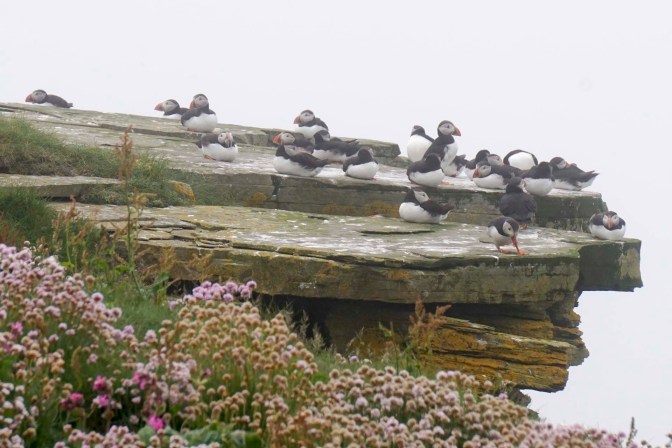
I arrived near a natural arch and enjoyed my first sight of puffins on the ground. More and more puffins appeared and seemed to be posing for photographs.
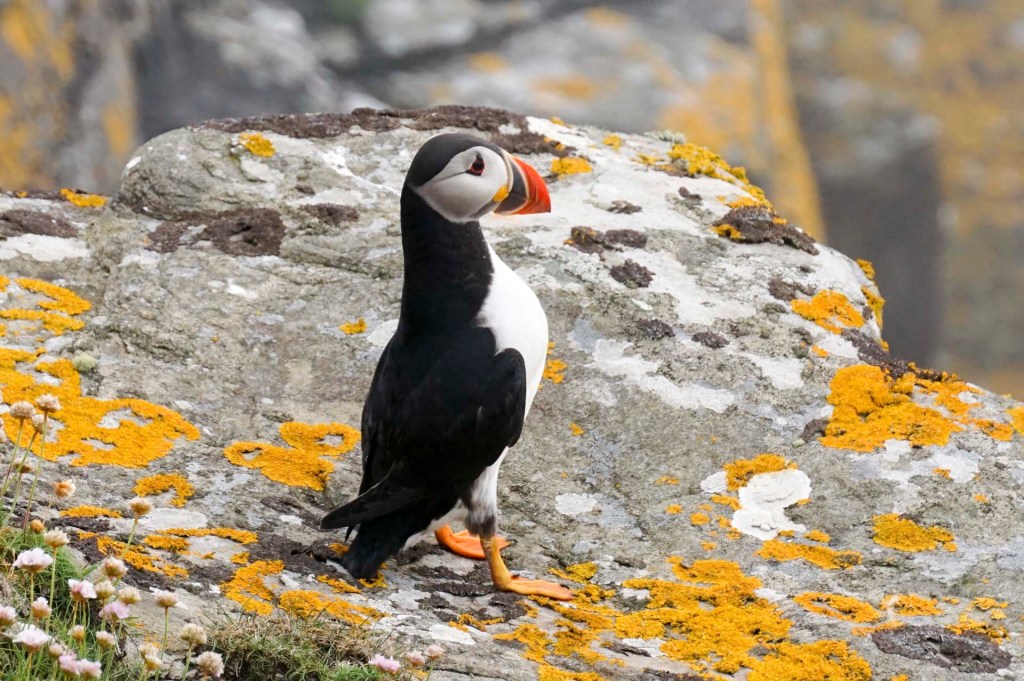
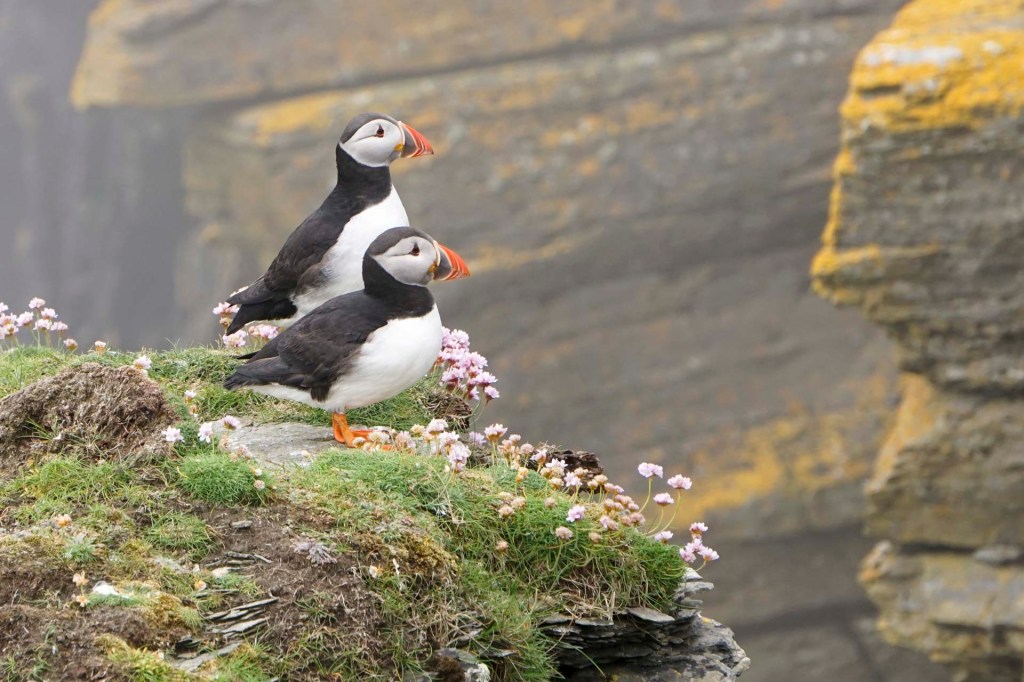
There were even puffins with sand eels grasped tightly by their beaks. One of these birds suddenly ran within inches of my walking boot then disappeared down a burrow. The sound of an excited young bird followed – presumably the chick as it ate the sand eel that the parent bird had delivered to the burrow.
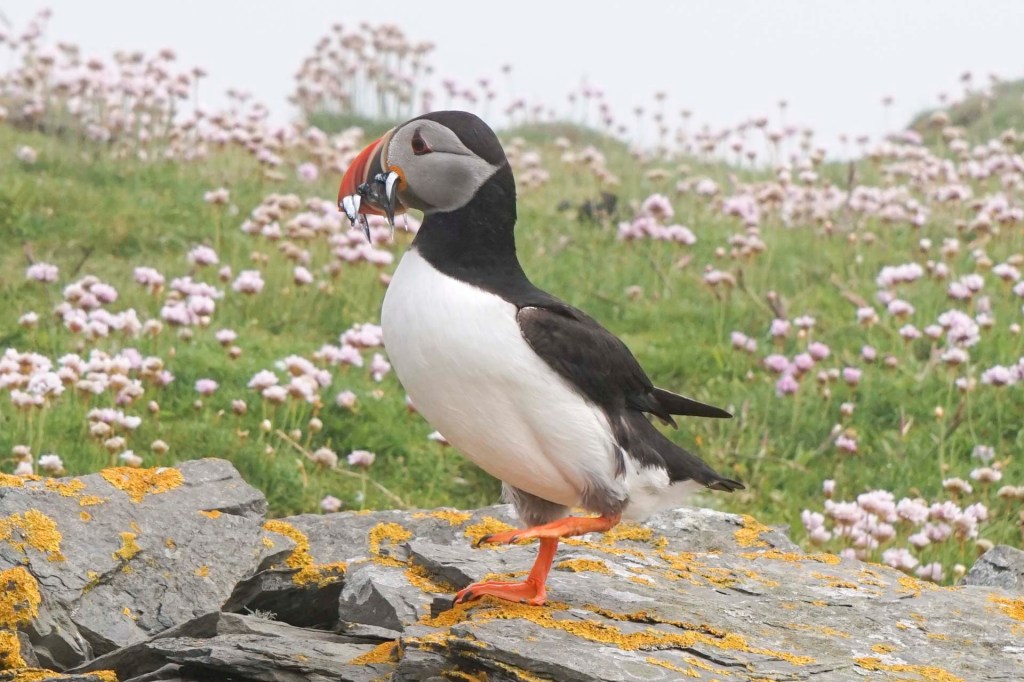
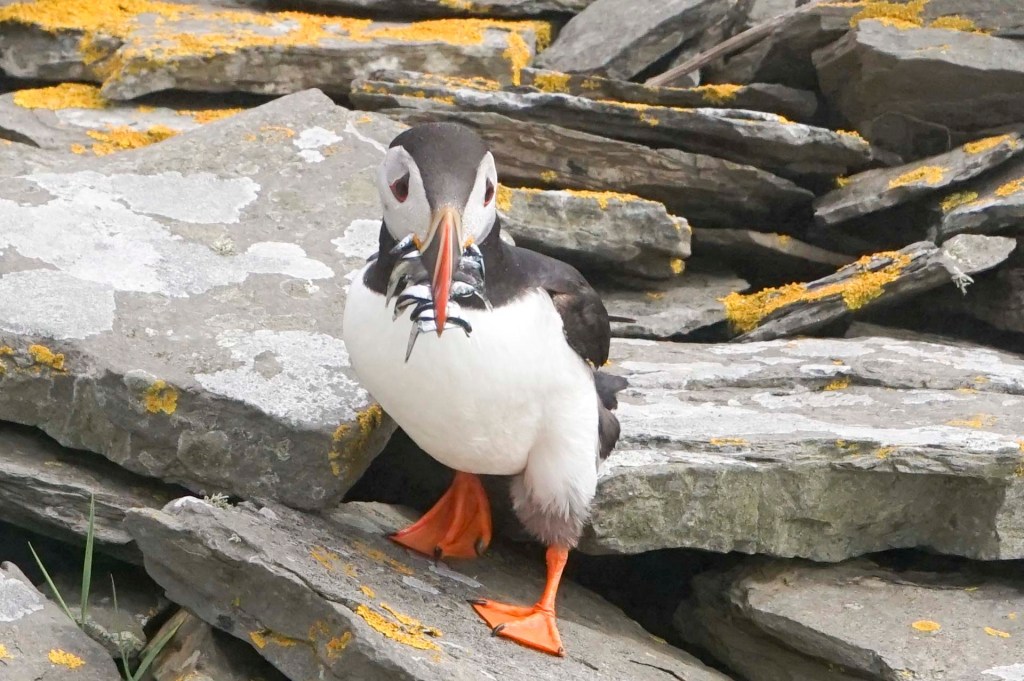
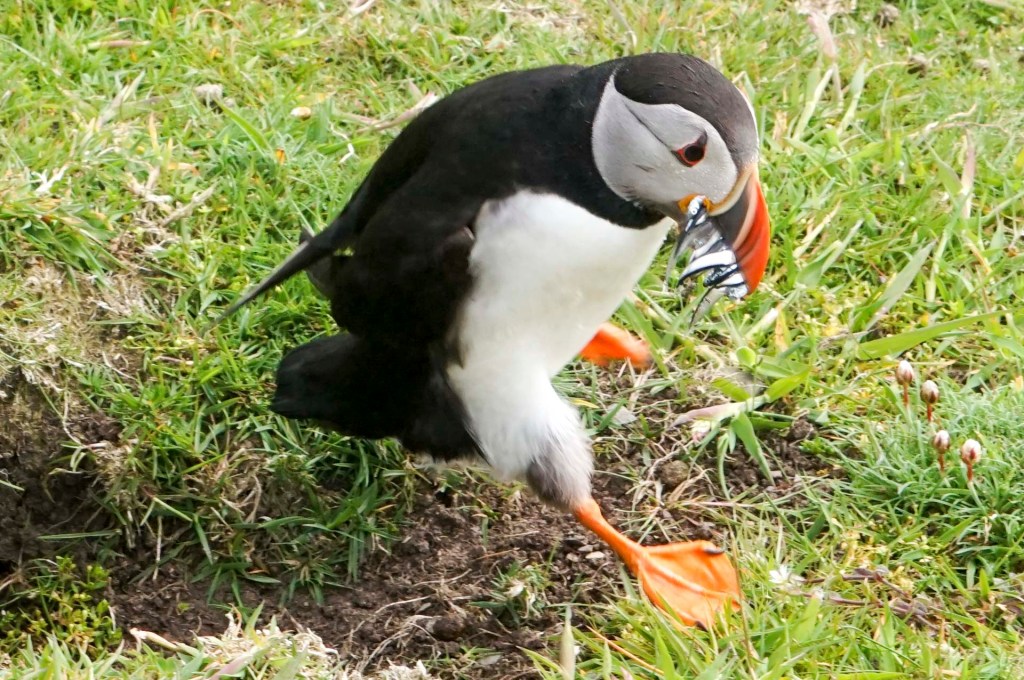
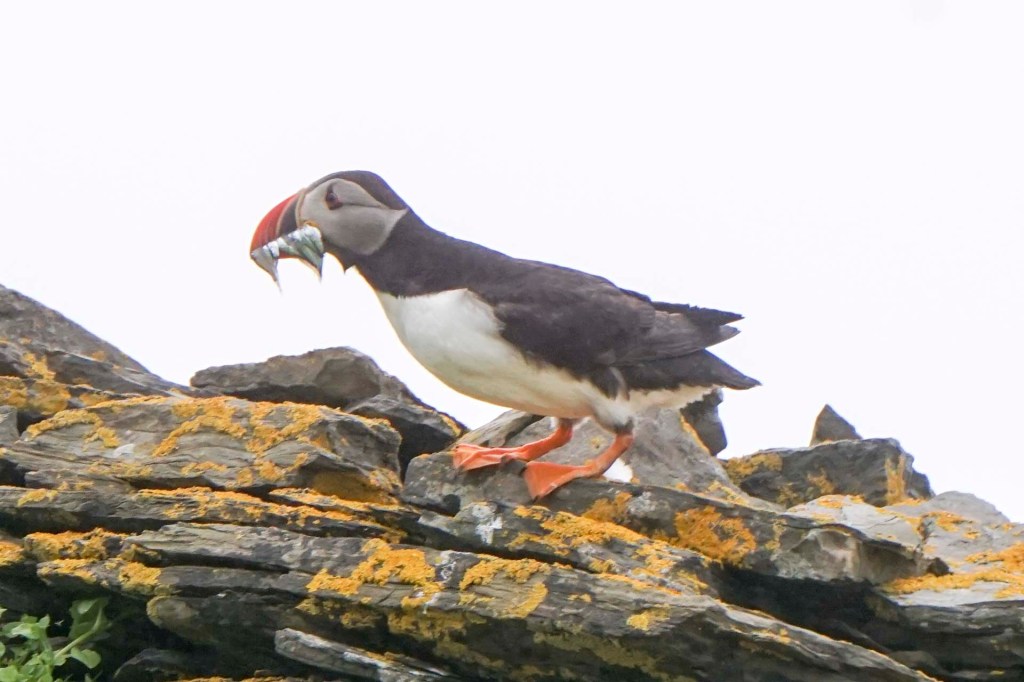
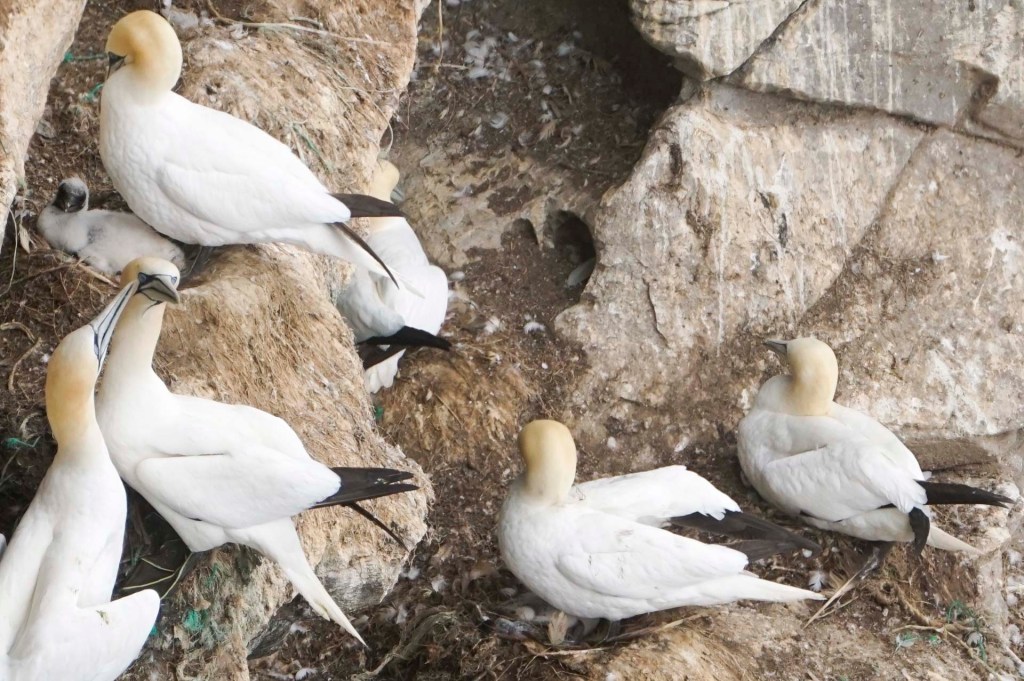
Eventually I dragged myself away from the puffin burrows to the nearby high cliffs to see the nesting gannets and their chicks.
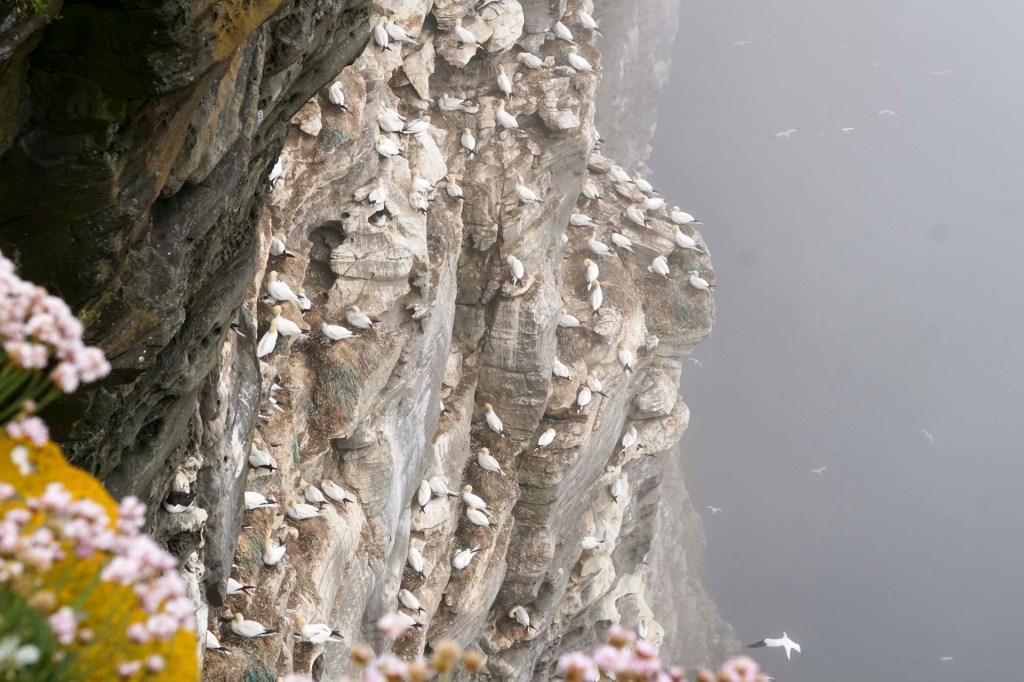
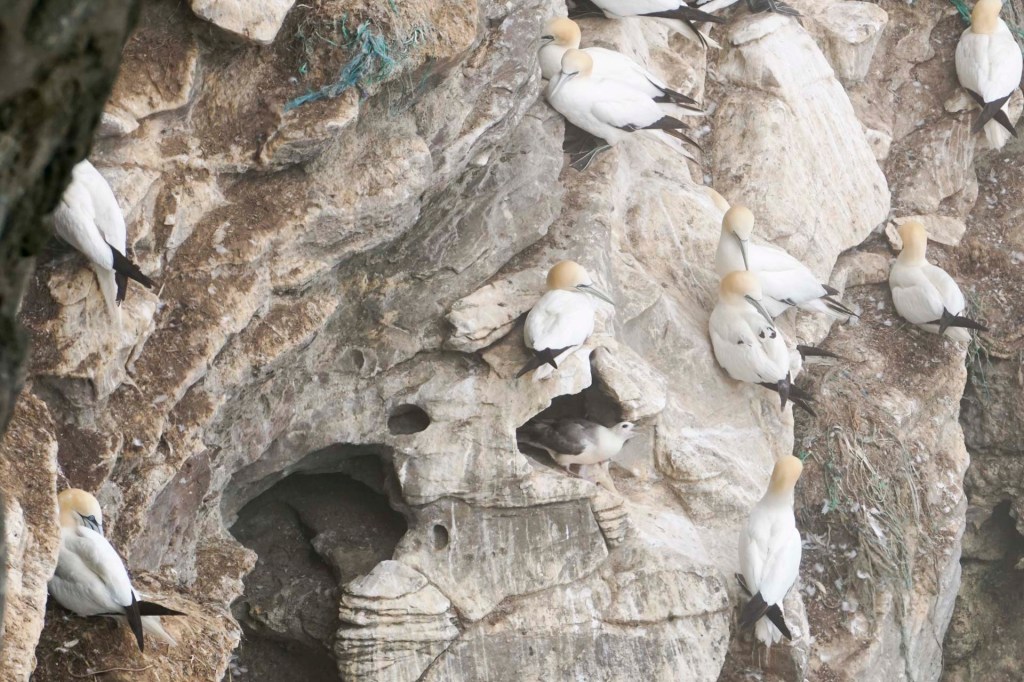
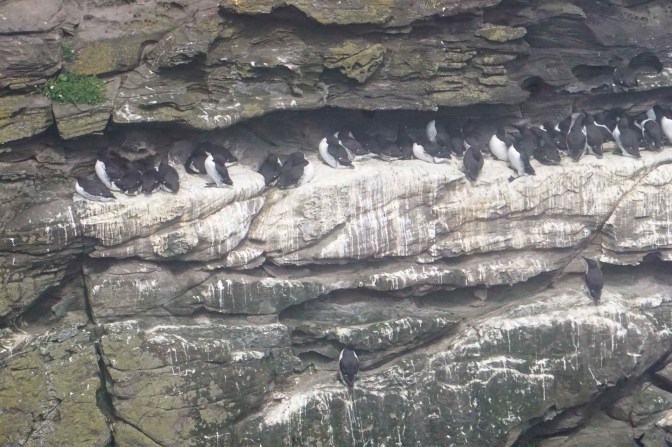
Most of the guillemots were on a further section of cliff.
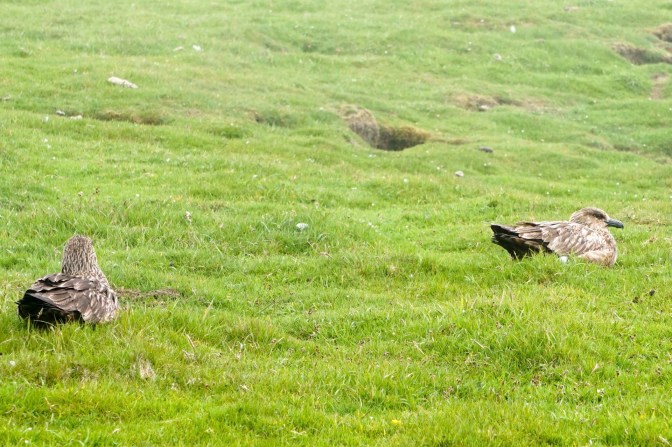
A few great skuas were nearby – the “pirates” of the sky – and possibly up to no good looking for easy pickings.
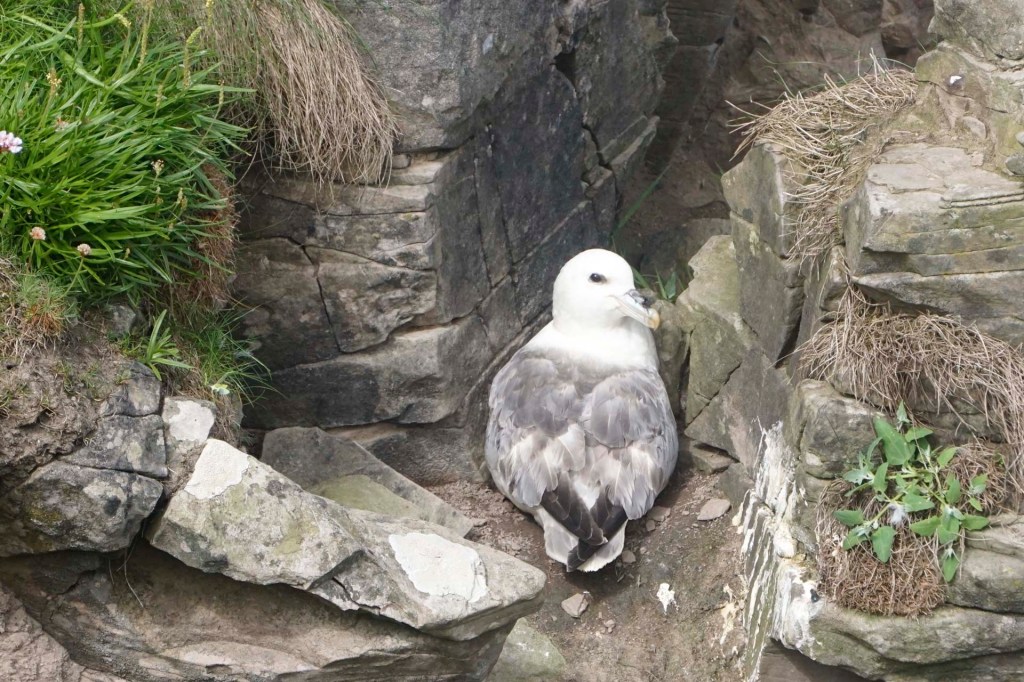
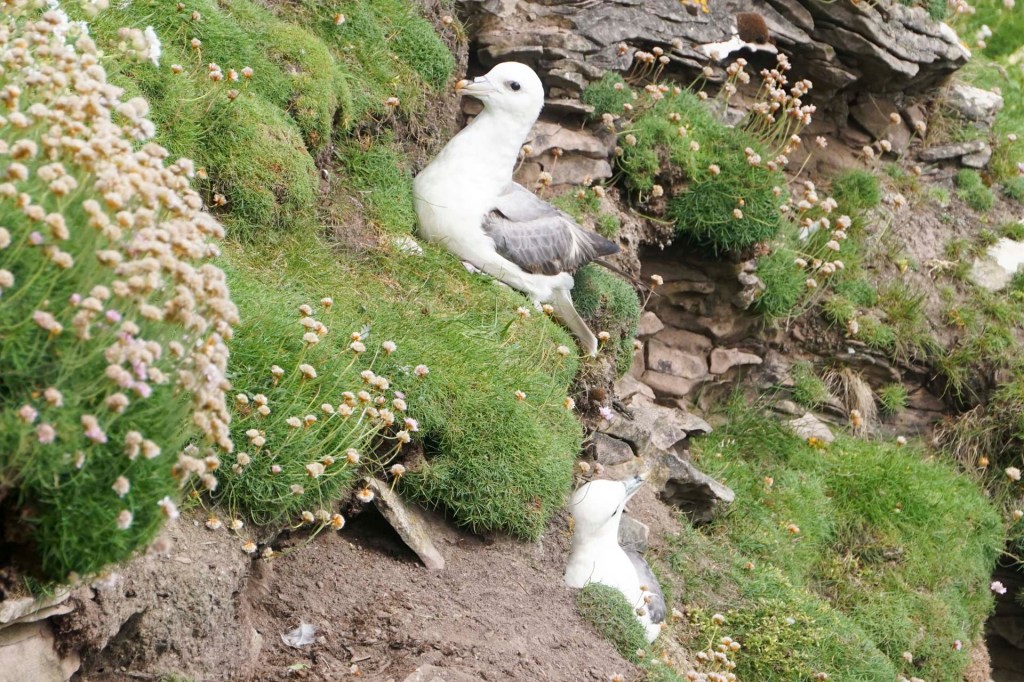
Colonies of kittiwakes and fulmars followed on another section of the cliff.
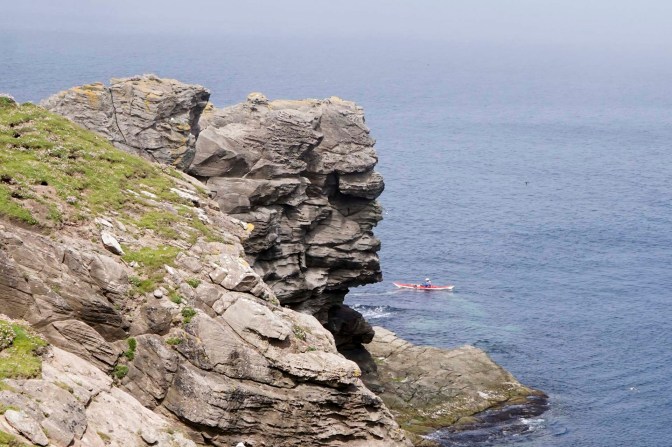
A person kayaking round the island was of course seeing these birds from a different perspective.
I descended on the path away from the cliffs to reach a rocky shoreline where there were many empty crab shells, perhaps left by birds but possibly by otters. It’s always good to keep an eye out for otters although they are usually seen more easily near to dawn and to dusk rather than in the middle of the day.
Suddenly, despite following what I thought was the diverting line away from the Arctic tern nests, these ferocious birds, zealously protecting their chicks in their ground nests, were swooping down towards me.
I seemed to have the threat of attack by Arctic terns on one side of me and by great skuas nesting further inland on the other side of me. I was pleased to reach the stone wall and climb over the stile back into the field near the visitor centre. There weren’t any birds nesting on the ground in this area.
I had enjoyed a superb day watching the nesting birds on Noss – it had definitely been worth returning for a second attempt after my first was aborted by the sea conditions.

 Where's Kathryn?
That was amazing, you are so lucky to be up there.
LikeLiked by 1 person
Actually it was at the beginning of July – I’ve been enjoying too many adventures over the summer and become very behind with my writing! Shetland is definitely a wonderful place and I was fortunate enough to live and work there too for a year long sabbatical in 2004-5. There definitely seems to be more tourism now than there was over 20 years ago but it’s far off the “beaten track” so it’s still not at all crowded. I think the puffin population has grown since I lived there as I remember that in the early 2000s there was concern about a shortage of sand eels which was affecting them.
LikeLike