22-23 May 2023
We landed off the ferry at Tarbert, Harris in the late afternoon and were soon booked into our four star accommodation at Hotel Hebrides. However, as I explained to the very professional but somewhat bemused receptionist, I was planning to head straight off to an overnight wild camp and leave my husband to enjoy the room for two on his own – until the next afternoon.
Six years previously, I completed my own version of the Hebridean Way. The waymarking for the “official” route had only just been completed and I had a copy of the new Cicerone Guide, which I had ordered and received in the post as soon as it was published: https://www.cicerone.co.uk/the-hebridean-way. It was so new that my copy was the first one seen by the Tourist office in Stornoway as it hadn’t been distributed to them. Hence I had planned my route before I saw the full “official” waymarked route and had based it partly on Peter Clarke’s account: https://www.waterstones.com/book/the-outer-hebrides/peter-clarke/9780955069604
After reading Peter Clarke’s book, one of my “must-do” routes on my Hebridean Way was The Postman’s Path between Tarbert and Rheinigidale. In the end I walked around seventeen miles from Horgabost to Tarbert in sunny weather then continued my walk the same day on to Rheinigidale in pouring rain. I had promised myself that I would return with the hope of completing the iconic Postman’s Path in better weather, but also take the diversion to the remote old settlement at Moilingeanais with a view to a wild camp. This latest visit was my opportunity! Until the road to Rheinigidale was opened in February 1990, the postman walked the return journey at least three times per week in order to collect and deliver post for the village.
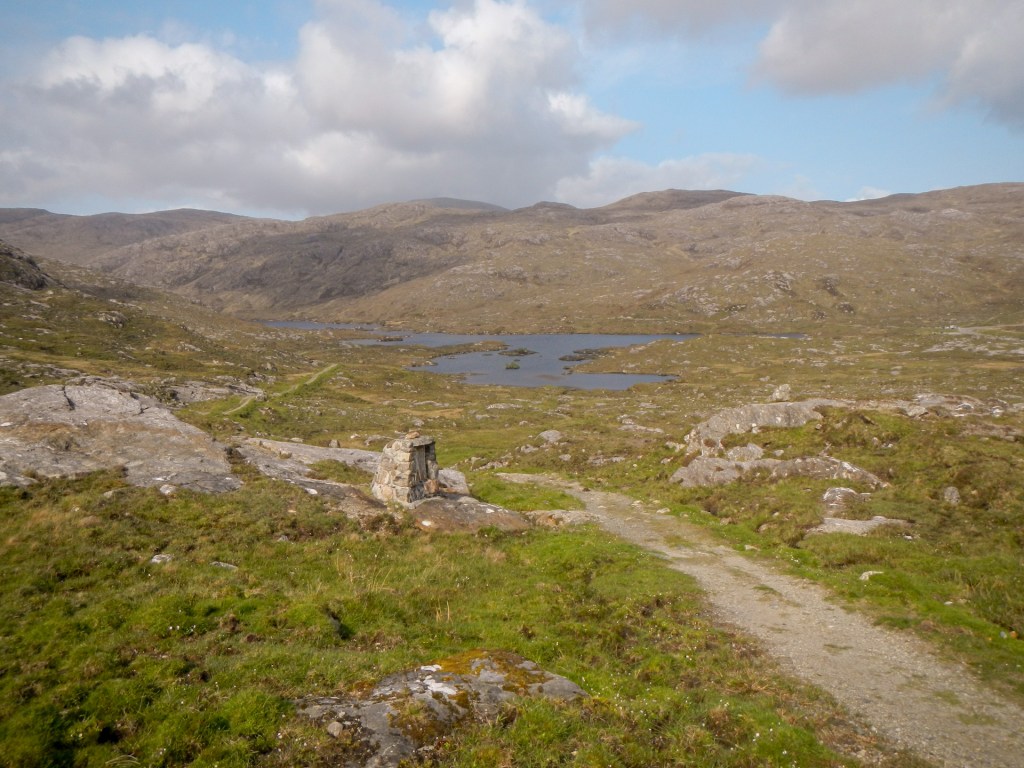
I was only camping for one night so I had a relatively light pack as I strolled along the quiet road towards Urgha Beag. It was a lovely dry and sunny evening, although windy. I noted the main Hebridean Way path signposted up Gleann Lacsadeil, some cattle grazing nearby, before I turned up the clear marked path towards Rheinigidale. As I climbed steadily uphill, a walker with dogs and carrying a few deer antlers, came the opposite way. This was the last person I would see until I was almost at Rheinigidale the next day.
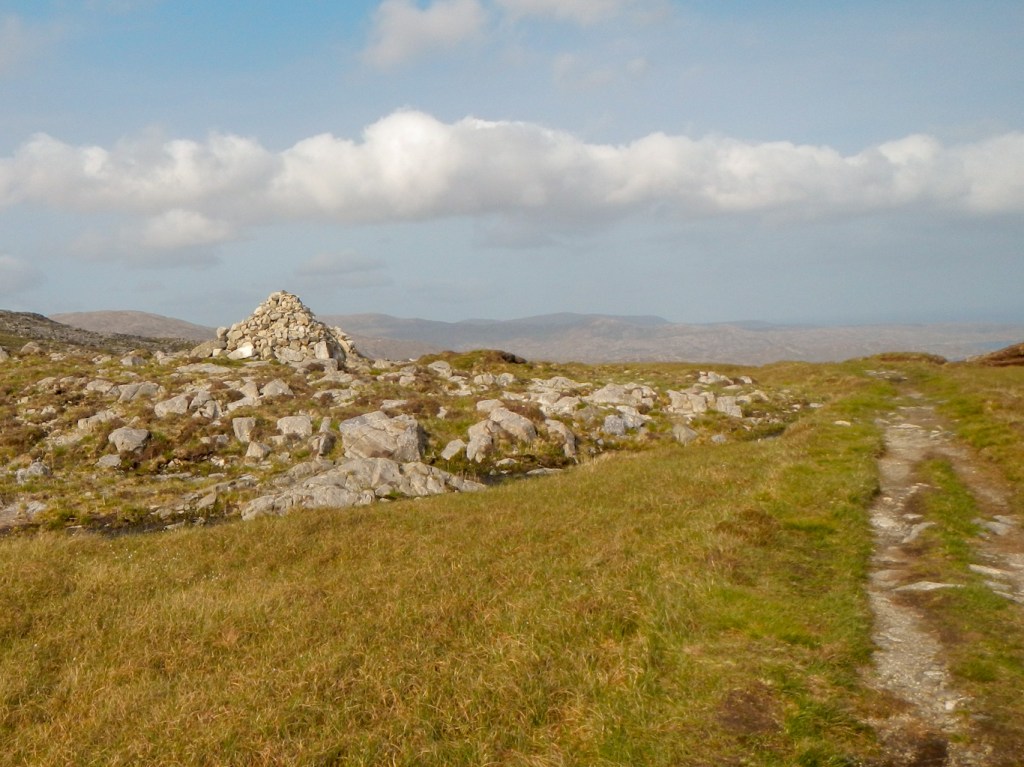
A cairn marks the highpoint on the pass and soon after that I reached a fork off the path towards Moilingeanais. I realised that as I started to descend, I lost both data and phone signal (except emergency phone signal). There was a possibility of a message from Seumas at Sea Harris regarding travel to St Kilda later in the week so it was important to be connected as long as possible. I returned to the top of the pass, finding a relatively wind free hollow, added some more layers of clothing and pulled out my stove to make dinner and a brew.
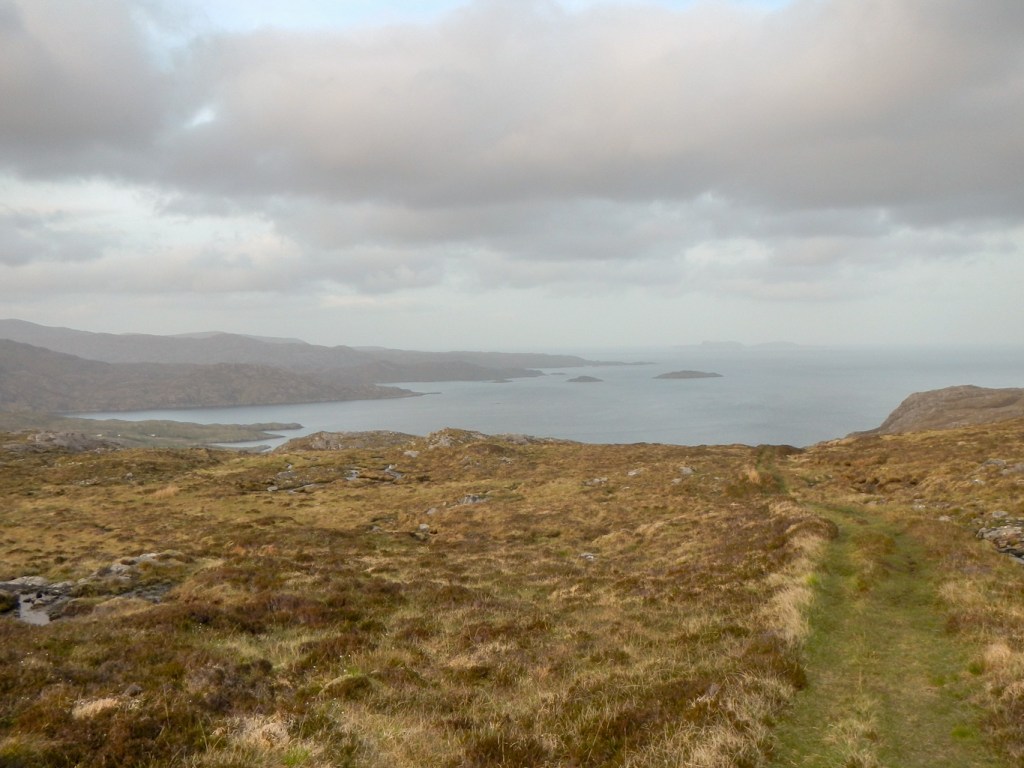
It was 8pm when I decided that I was unlikely to receive any message that would lead to the need to return to Tarbert that evening and so I continued my walk, mainly downhill, to Moilingeanais. Eventually I spotted the shielings hidden in a gully close to the shore. North Harris is one of the largest community owned estates in Scotland; a sign erected on the path near Moilingeanais by the trust advised that the onward path to Rheinigidale should not be used as there has been subsidence leaving two gullies that have become dangerous to cross. I would have to return to the top of the pass in the morning to continue on to Rheinigidale.
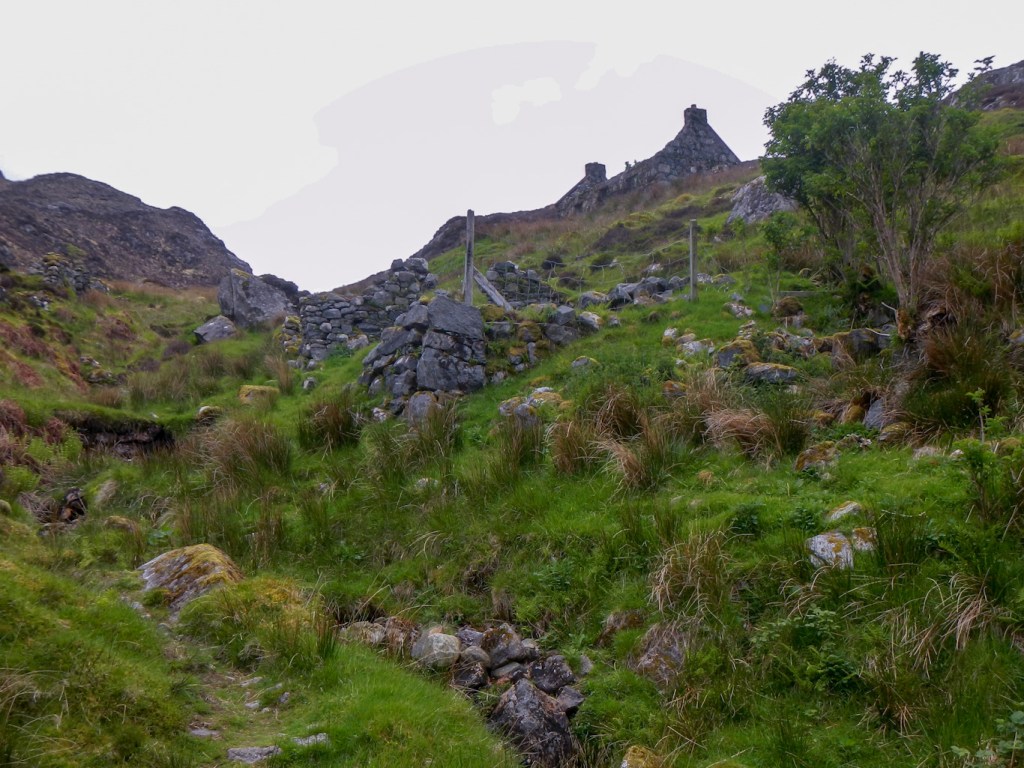
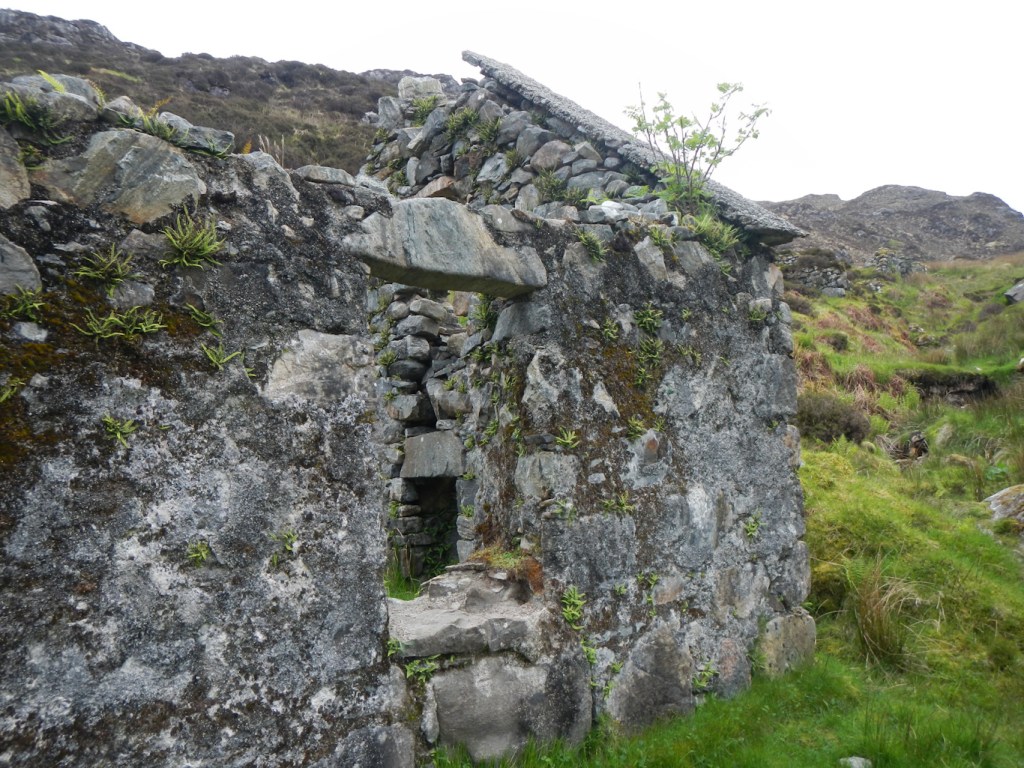
The village was sparsely populated until the clearances in the 19th century when the population grew to around 40 people in the 1880s. A school was open here between 1921 and 1935, after which the children had to travel each week to Tarbert. The population continued to decline until the last occupants left in the sixties.
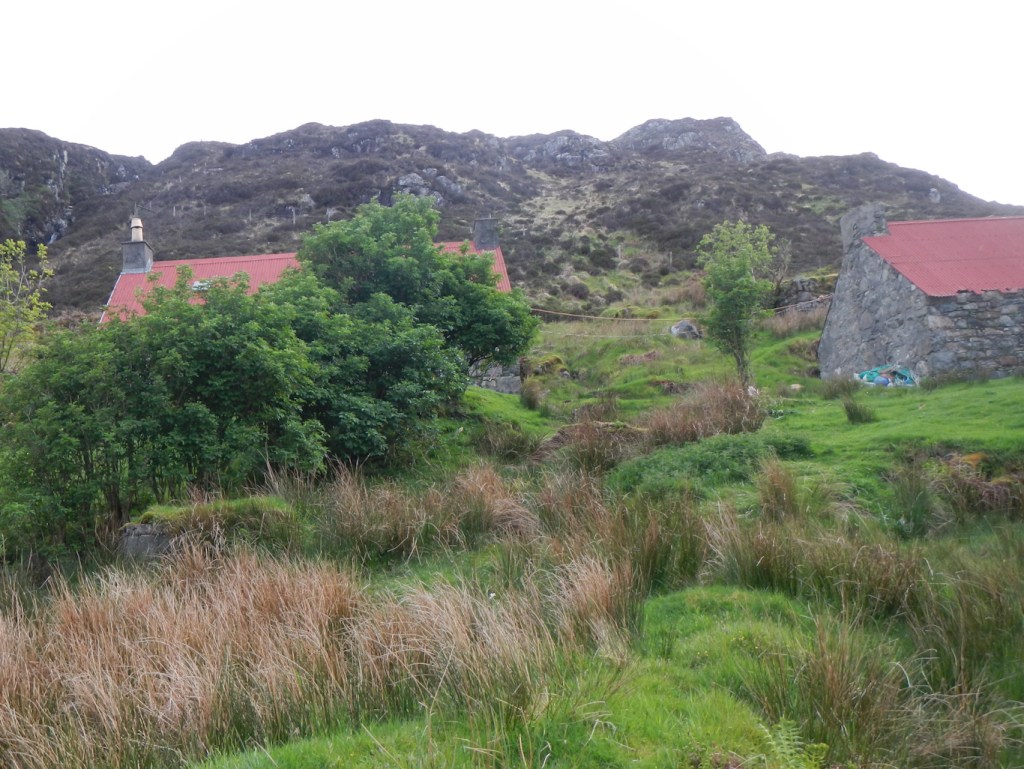
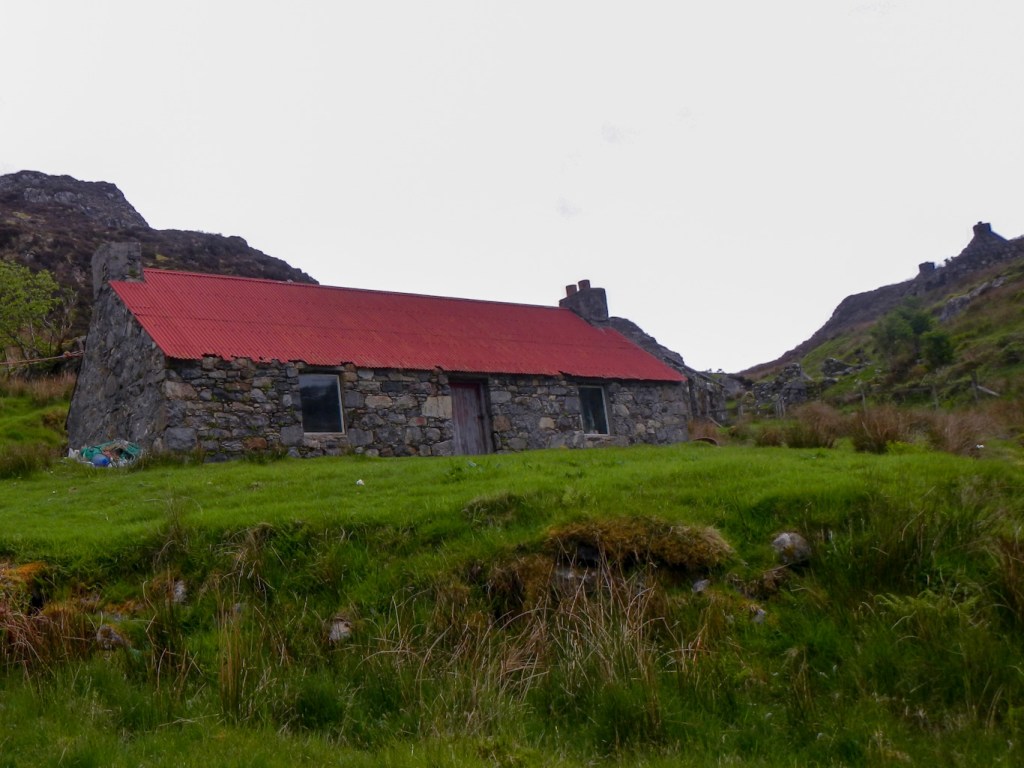
Two of the buildings appeared to have been at least partially restored. As I passed, I checked that they appeared to be uninhabited at the moment. Hence I was able to erect my tent on a fairly flat grassy area near the small pebbly beach. I could see buildings on the other side of the loch at Rheinigidale. I paid a small penalty for being in a sheltered area as there were a few midges.
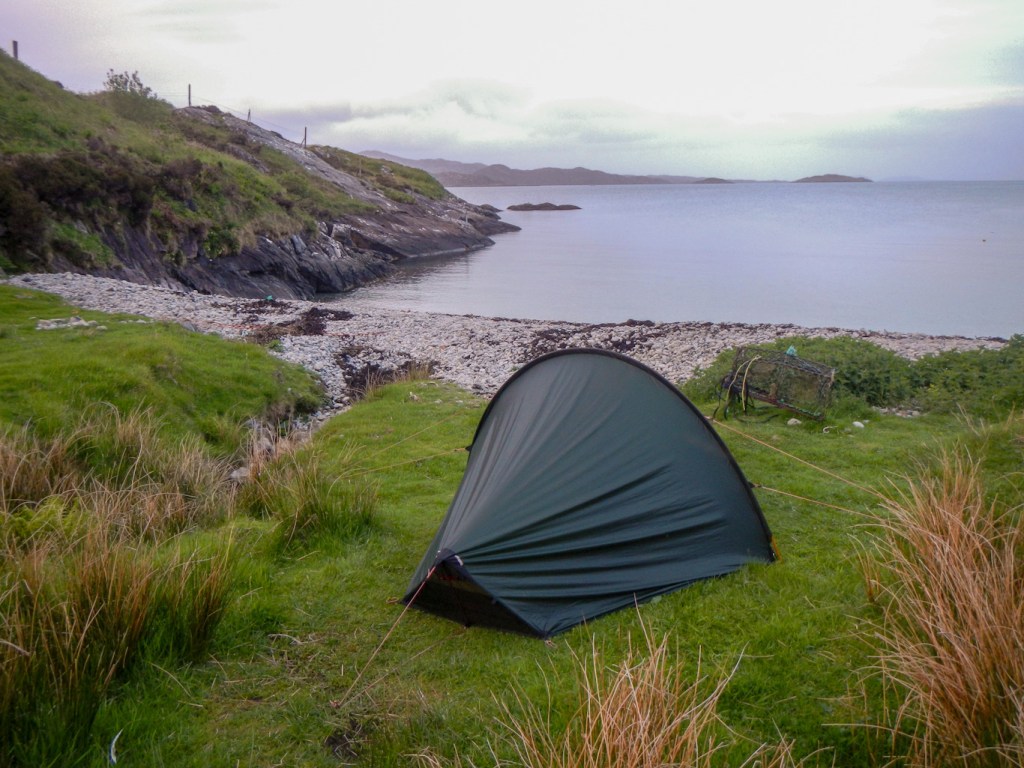
The night barely became dark. There was certainly light at 04.00am. I heard a cuckoo calling. The sound of some drizzly rain on the tent kept me inside my sleeping bag and tent until 07.00am. When I emerged from the tent, the midges were out again but not in force. I saw a seal swimming and diving in the loch as I ate breakfast.
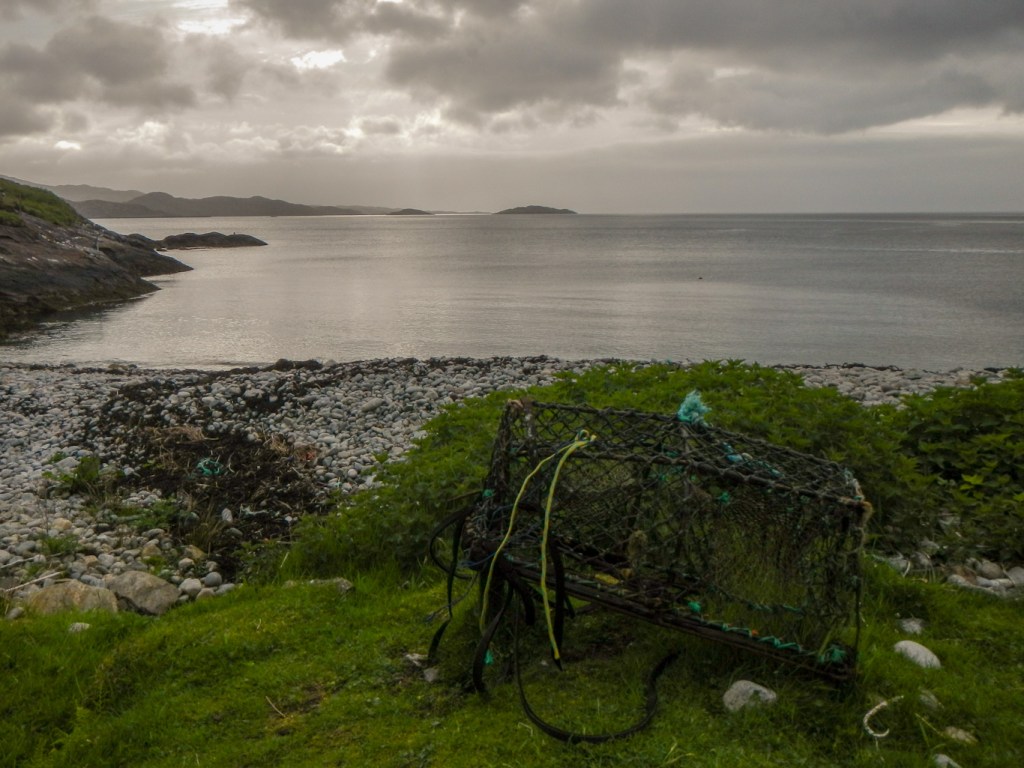
I was on my way at 09.00am after a relaxed breakfast and pack. I knew that I wasn’t being met until mid afternoon and an earlier start would just mean that I would start walking up the road earlier – the plan was that my husband would drive along the Rheinigidale road until he met me. The grass was flattened where I had camped but I left no other “evidence”.
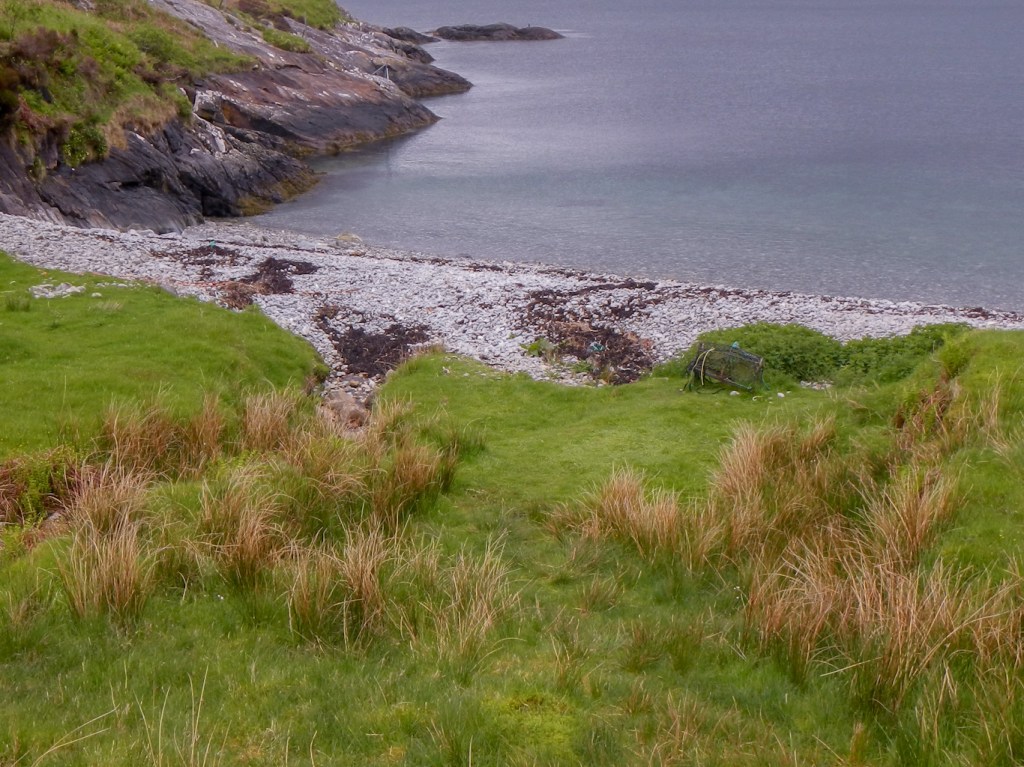
Rain started as I climbed back to the top of the pass. However it didn’t last long. The path has been improved by the North Harris Trust. From the pass, it descends to a grassy area which would have been a good campsite. That’s where the “closed” path joins again.
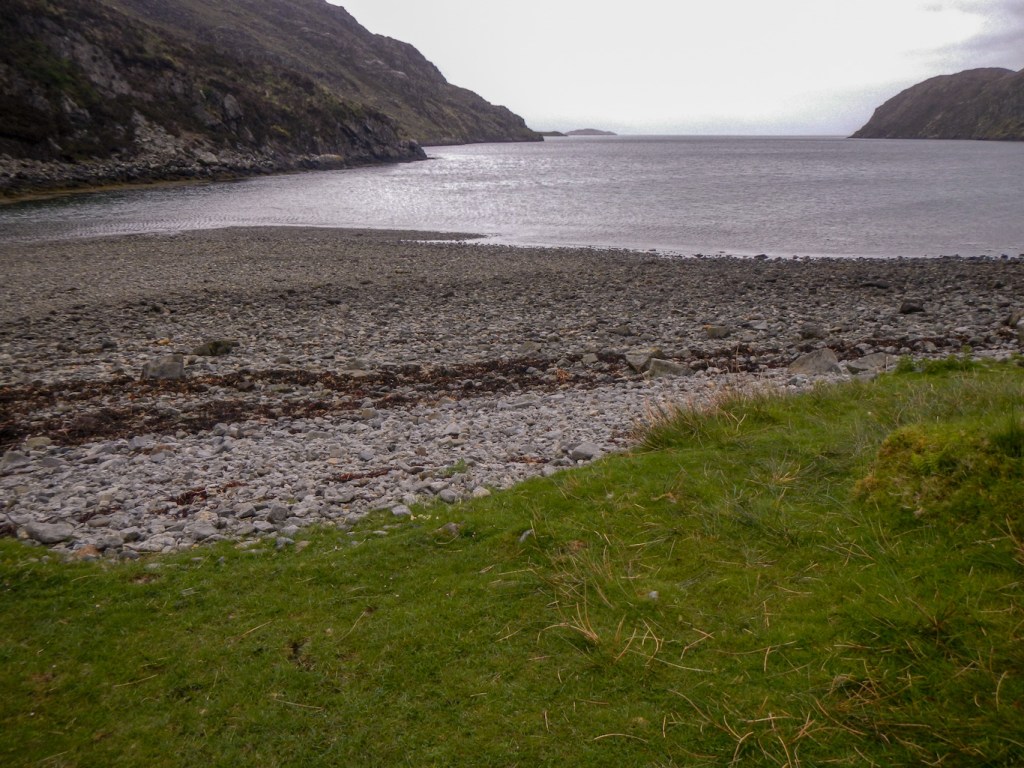
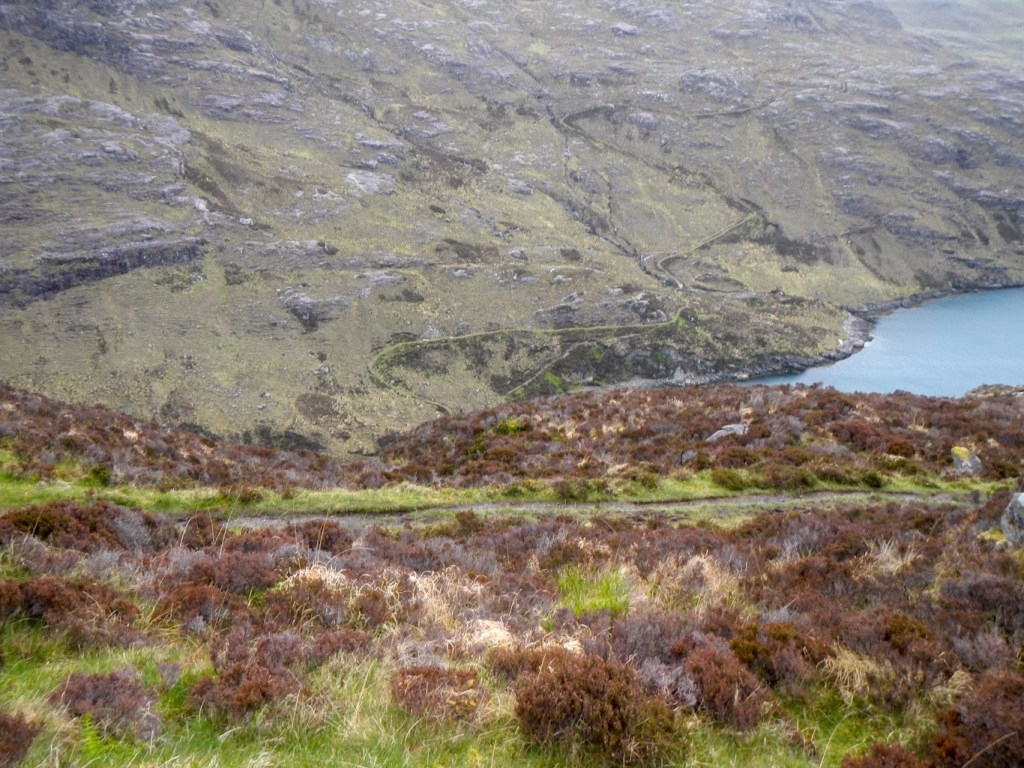
From here the path ascended on a path zig-zagging to ease the ascent. I passed a further deserted settlement. All the houses are roofless.
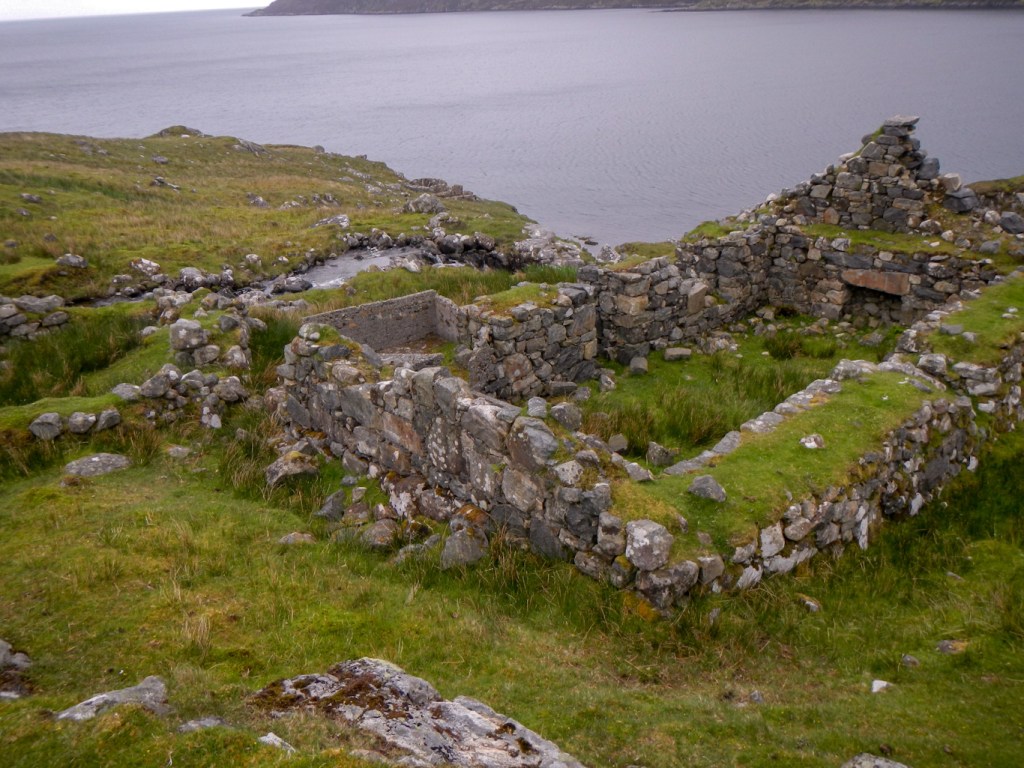
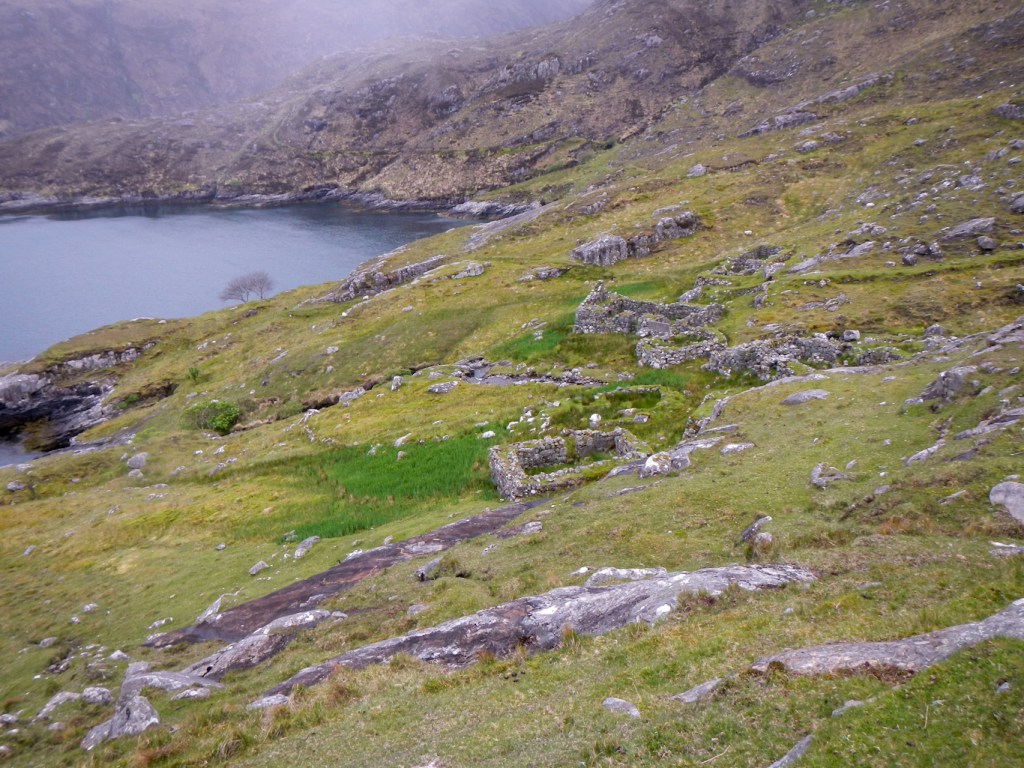
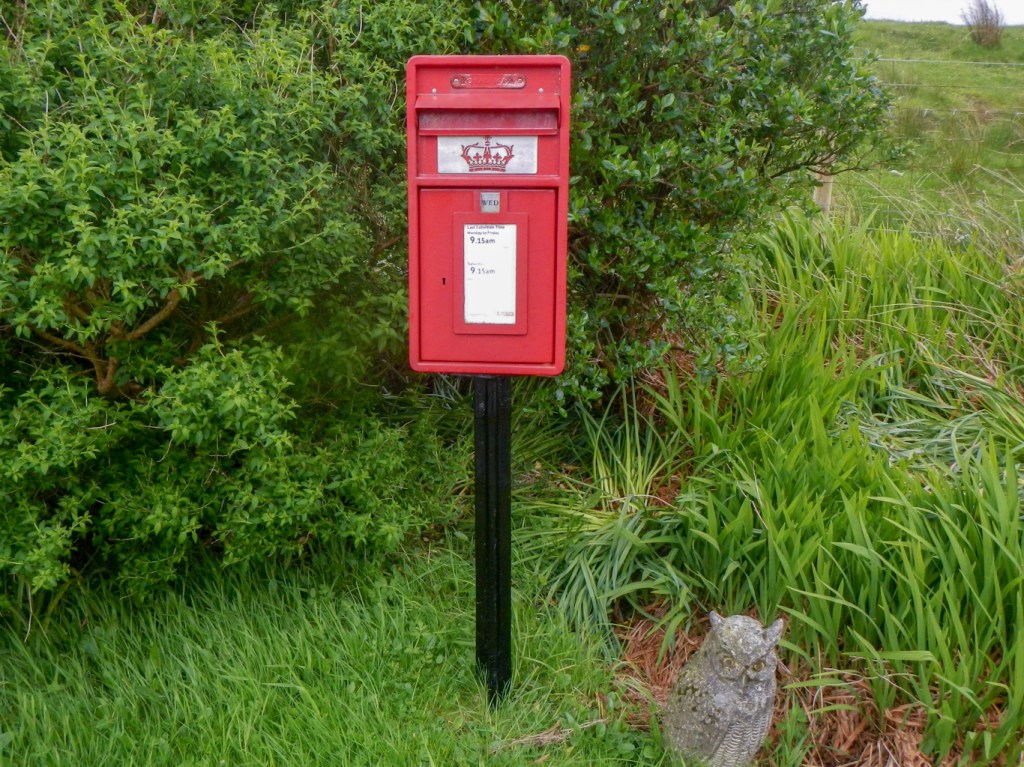
As I approached the end of the path near Rheinigidale, an off-road cyclist came the other way. I walked down to the village. There’s even a public defibrillator there now and the post is collected at 09.15am every day except Sunday.
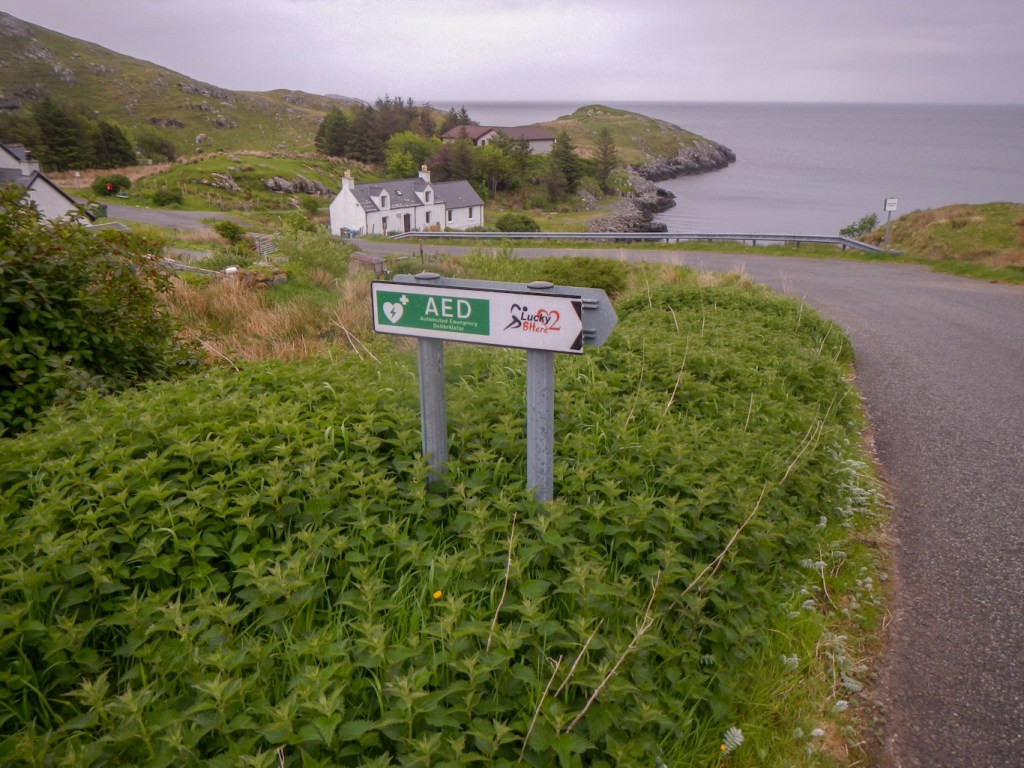
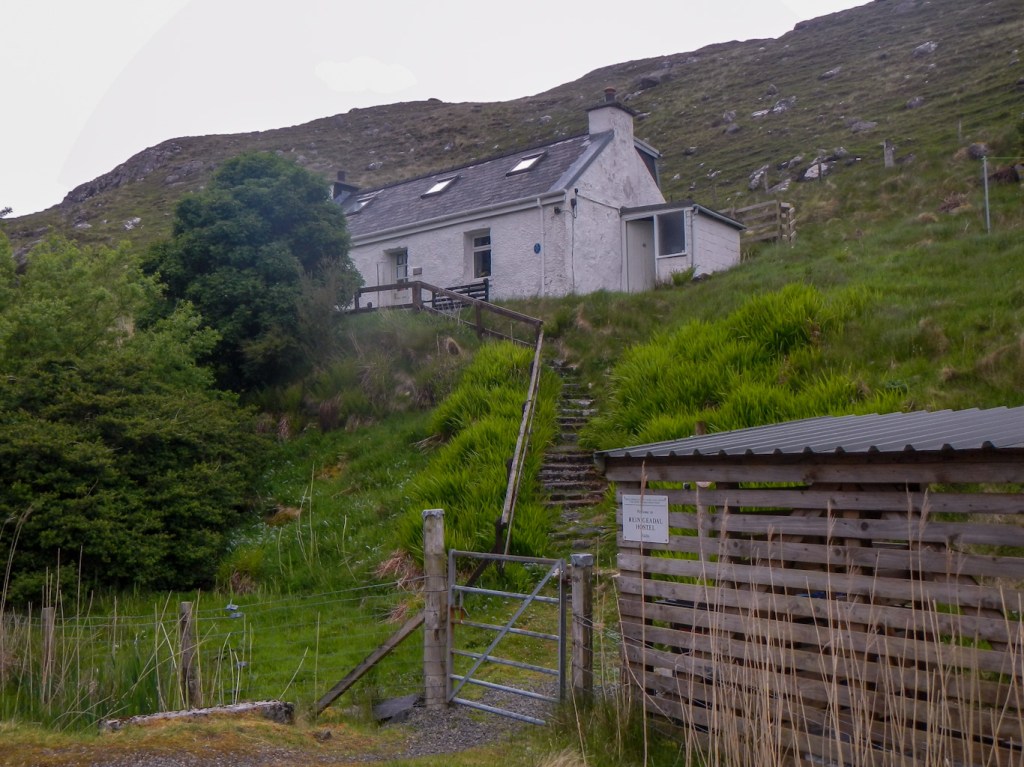
I saw the hostel where I had stayed for a night six years previously https://gatliff.org.uk/?page_id=11.
I sat on a bench at the side of the quiet road to eat my lunch. A delivery driver (Woodys Express Parcels) interrupted the silence, racing into the village, making a rapid delivery and rushing out again. I packed up my lunch remains and started my trek up the scenic road, which, in places, has been engineered by cutting through rock. The road has proved to be a lifeline for the village, which could otherwise have become abandoned just like the other two settlements I had seen.
The walk along the scenic Postman’s Path and the visit to the isolated deserted village at Moilingeanais with the wonderful overnight camp had certainly proved to be a superb micro-adventure to mark the start of my visit to Harris.


