16 January 2022
My plans for this walk started with a three day wild camping adventure, making use of the “new” train service from Exeter to Okehampton. However various other commitments led to me having only one day to go walking and I ended up driving to the moor. I spotted a car park on the map near Lydford and this looked like a perfect start and end point. What I hadn’t realised was that I would have to drive up an incredibly rutted and muddy track – fortunately my car survived the ordeal, but it was near the limits of its off road capability.
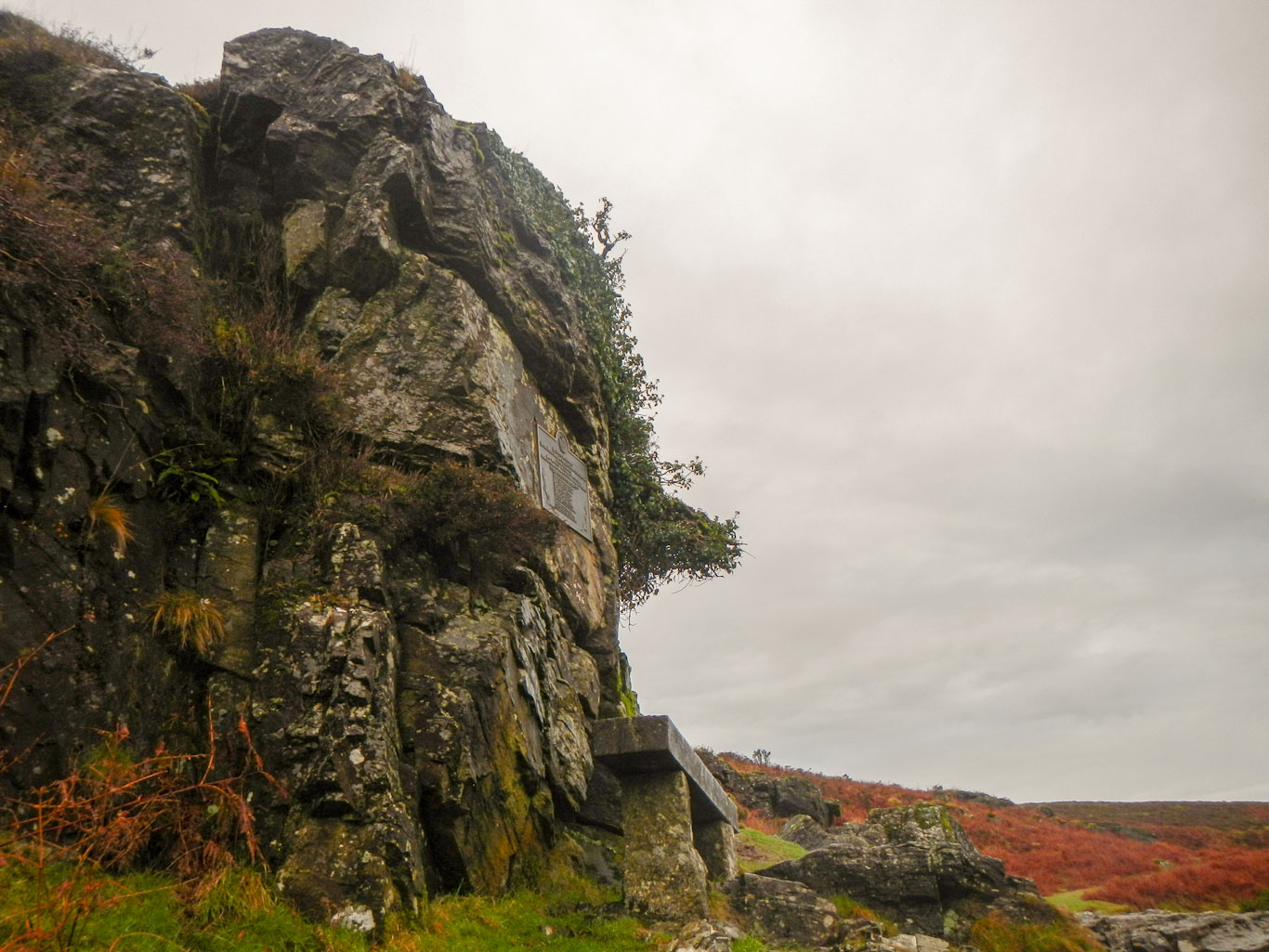
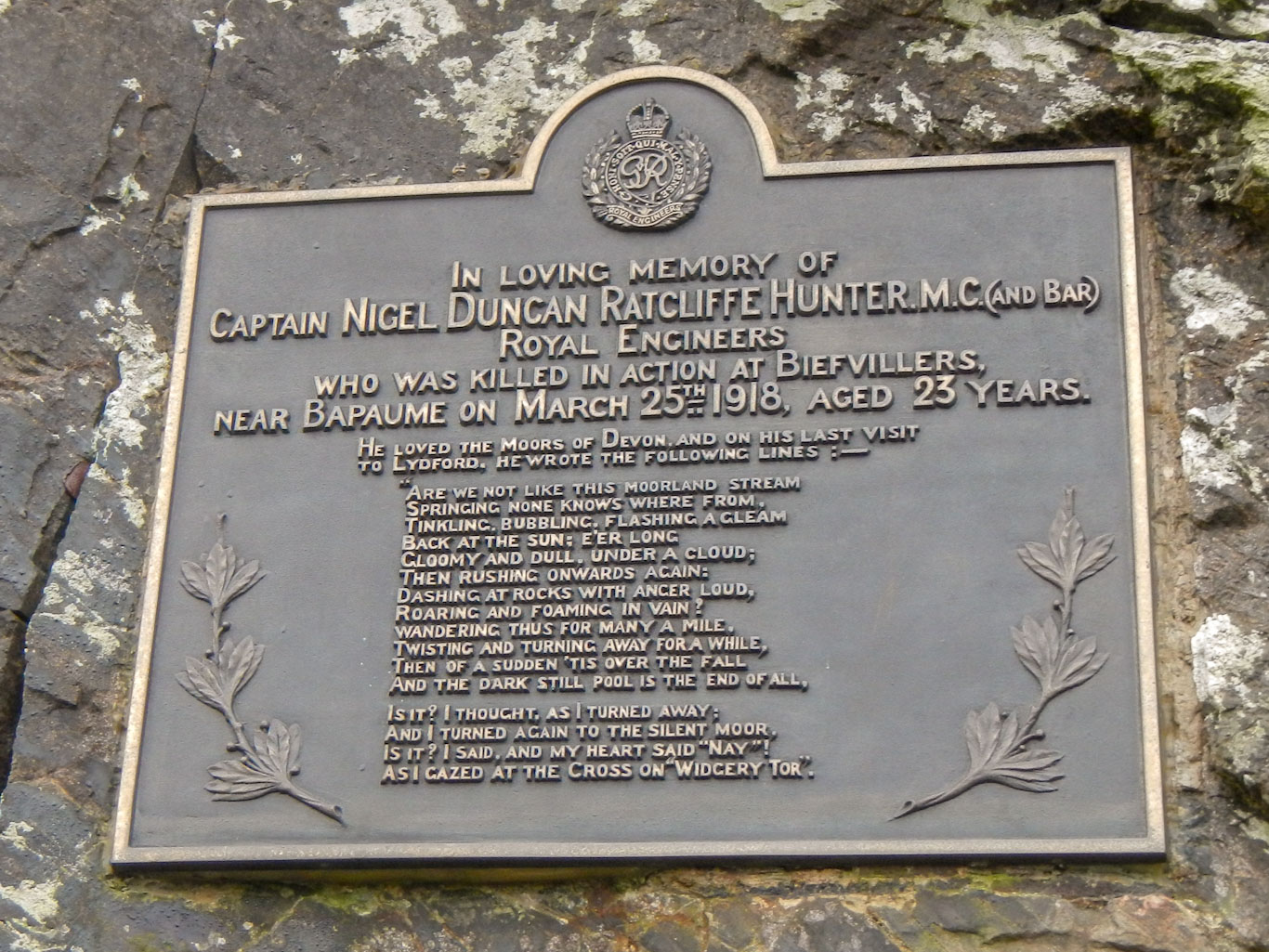
I wasn’t expecting rain but, as I arrived, there was a heavy shower so I set off in full waterproofs to reach Black Rock perched on the steep banks of the River Lyd. This prominent rock overlooks the large tor on the other side of the river with Widgery Cross at its summit – a prominent monument commemorating Queen Victoria’s Golden Jubilee in 1887. This tor is variously known as Brat Tor, Bray Tor and Widgery Tor. The memorial plaque on Black Rock in memory of Captain Nigel Hunter, who was killed in 1918, includes a poem written by him with a reference to Widgery Tor. Even with the poor visibility of the day, I could make out the huge cross in the distance.
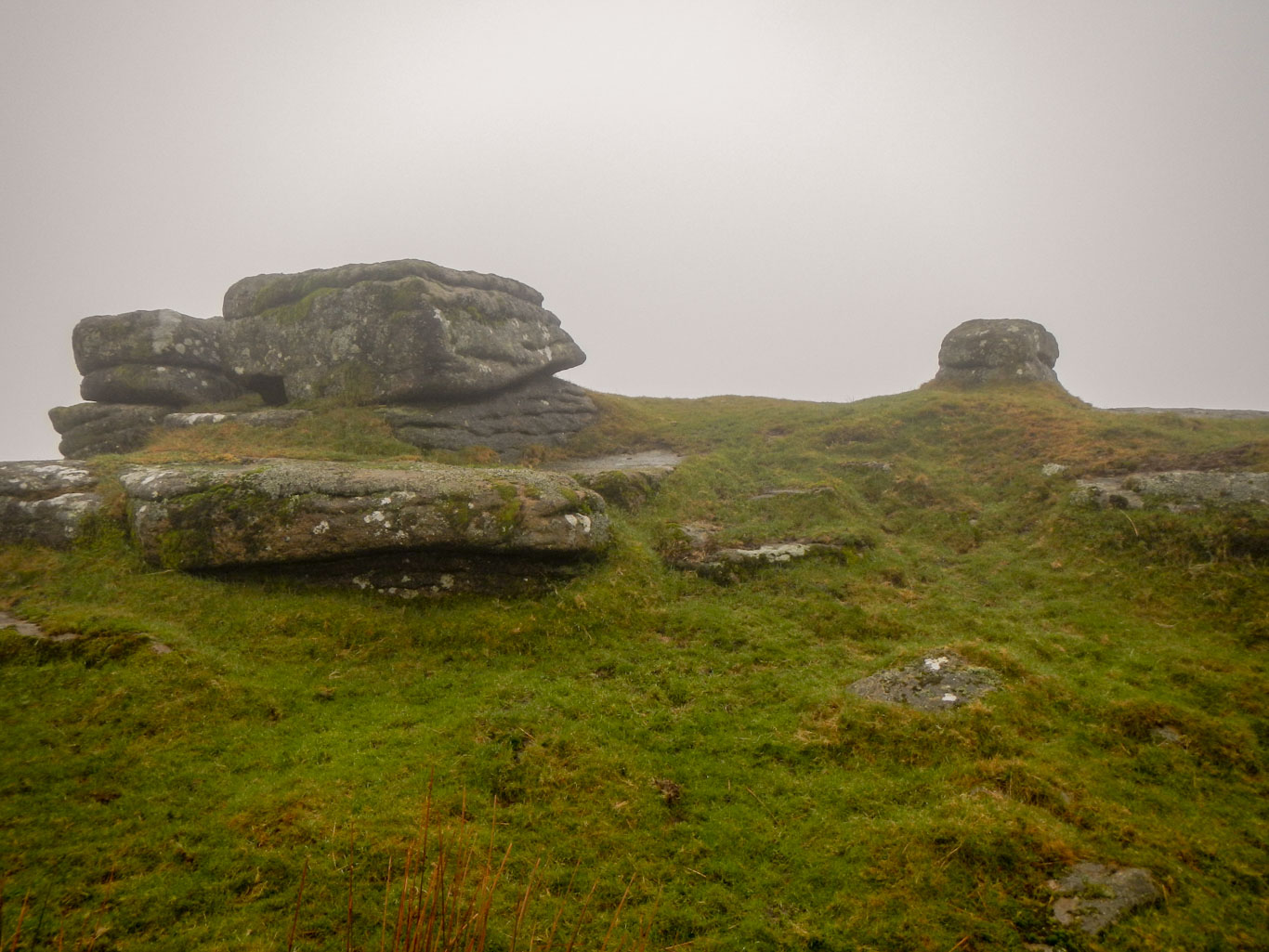
Despite the recent rain, it was easy to ford the river without walking down to the bridge. I’d already been to Widgery Cross in November 2020, so I headed south towards Little Hare Tor and Hare Tor. The rain settled so I removed waterproofs. Unfortunately as I ascended to the pair of tors, I also ascended into cloud. At 531m, Hare Tor was my high point for the day. The tor is within the Willsworthy Army Range and there is a flagpole at the summit.

Unfortunately if I had been a few minutes later then I would have seen the view. As I walked further south towards Ger Tor the view appeared both behind me looking at Hare Tor and over the rural landscape to the south and west. Ger Tor is also an impressive big tor crowning a summit. There were views towards the complex of tors above Tavy Cleave, where I would be going later.

However first I was going further south to Nat Tor. Here I was delighted to find a Dartmoor Box, its edge just visible under a protruding rock. There were two stamps and a notebook which appeared to be little used. Having signed my name in the book and stamped my notebook, I spotted a small group of walkers on the path below me – the other side of Mine Leat to me.
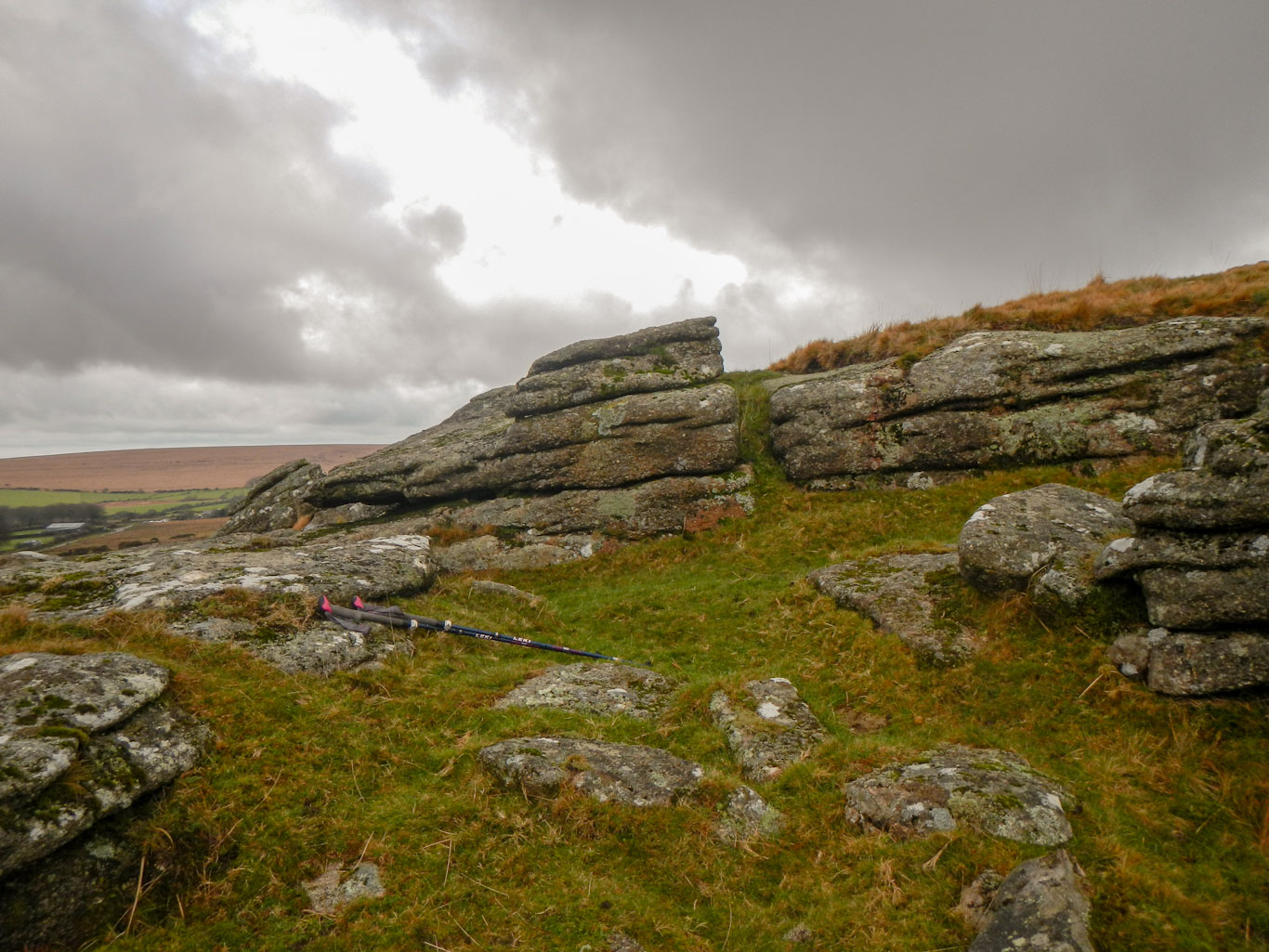

I headed off towards the leat but couldn’t see a crossing point so I ended up walking along vague animal tracks, struggling through vegetation and clitter, passing below Ger Tor and heading to Tavy Cleave. This consists of an impressive collection of five prominent outcrops. Collectively they are the Tavy Cleave Tors. The one with a steep vertical east face dominating the River Tavy below is named Sharp Tor. This really is an amazing valley, which I have only previously looked at from a distance as I have walked down the east side of Rattlebrook. William Crossing (1847-1928), recognised as the leading authority on Dartmoor and its antiquities during his lifetime, fittingly chose it as one of his ‘Gems in a Granite Setting’. The sight of these five huge outcrops was certainly one of the highlights of my day.
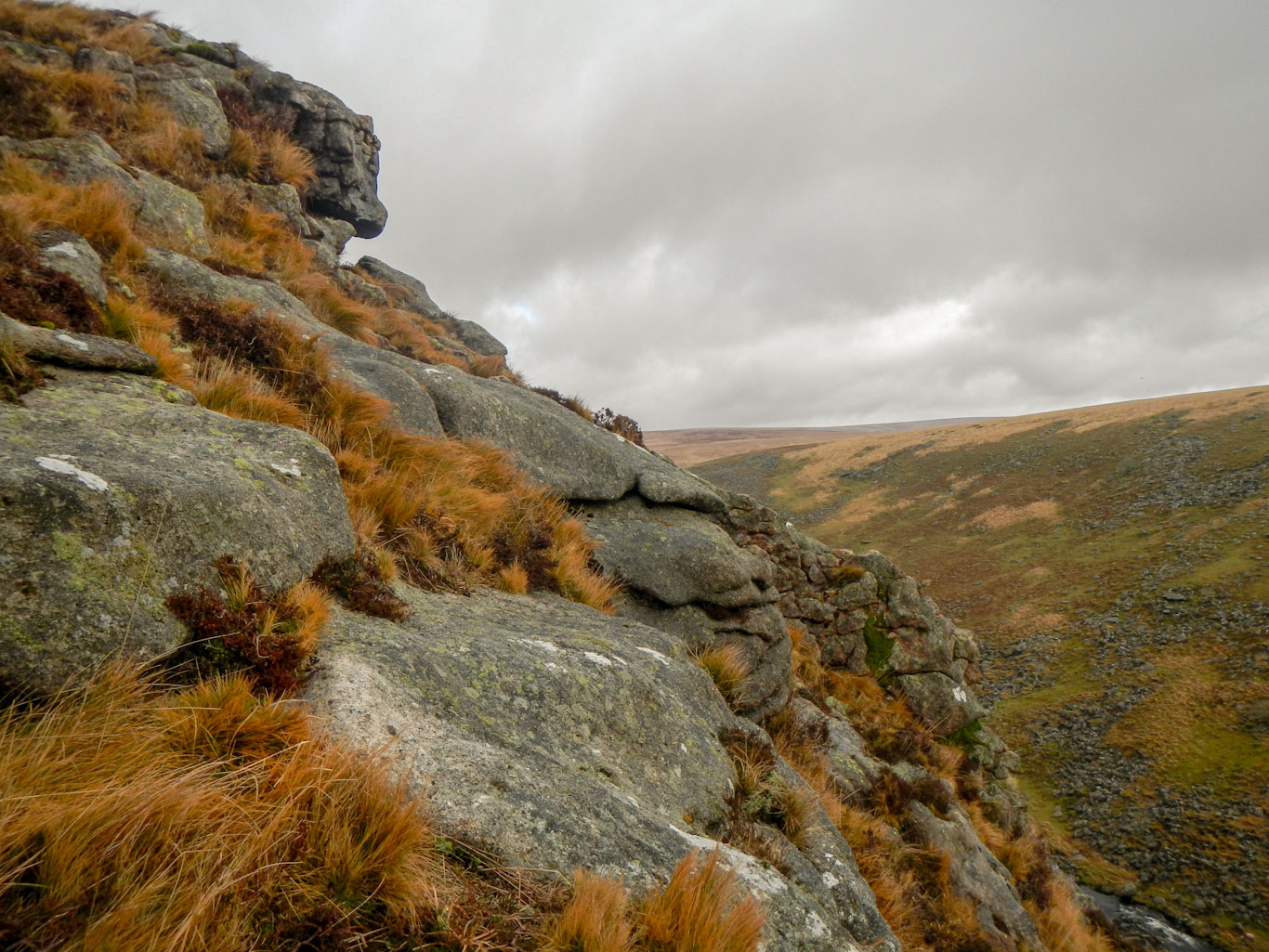
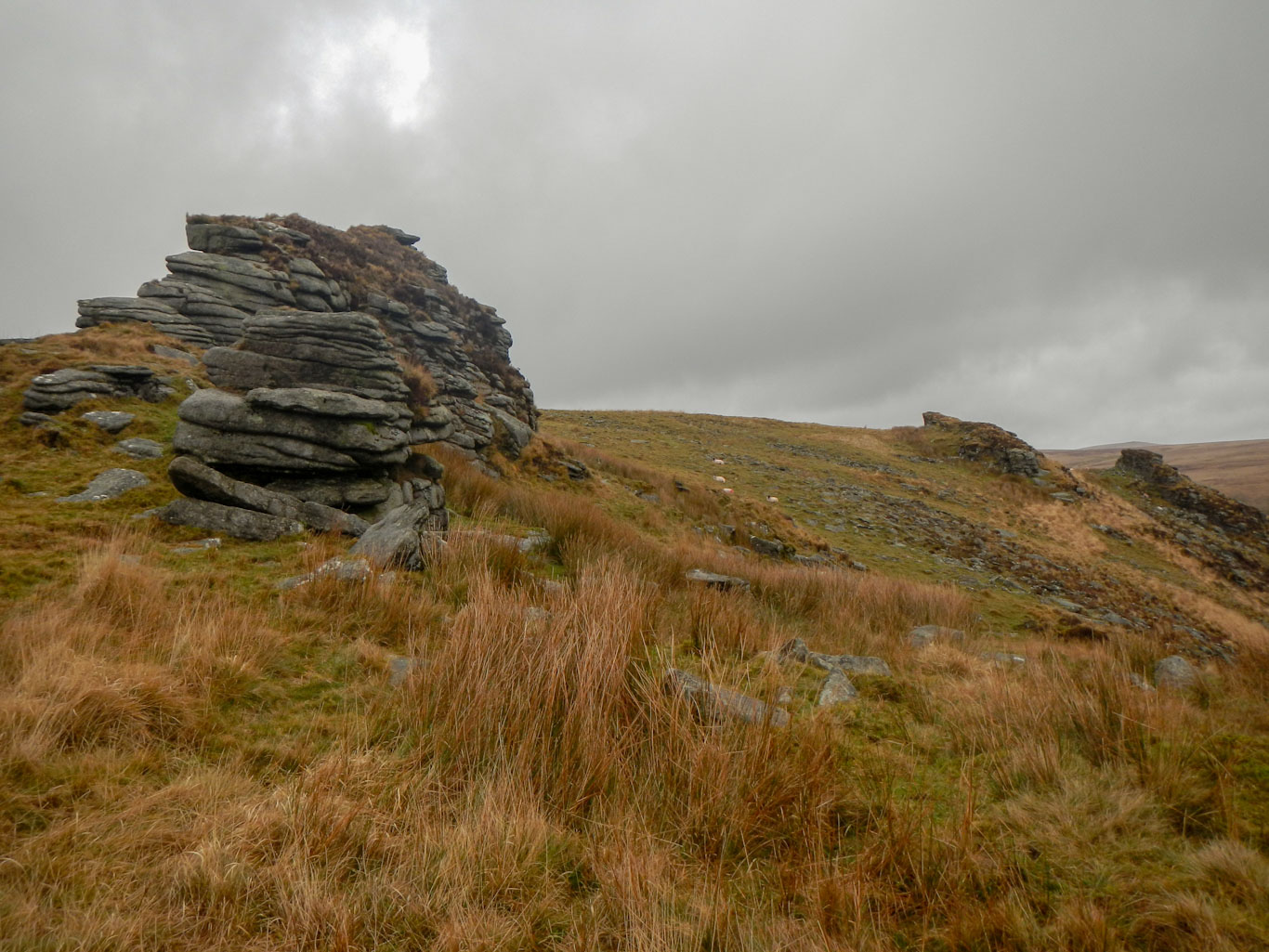

However my adventure continued with some previously unfinished business. Back at the end of 2020, I had an adventurous walk to find Cranmere Pool Letterbox – successfully. However, while I was in this bleak and somewhat featureless area, the mist came down. I managed to navigate and find Great Kneeset but had been unable to find Little Kneeset as I searched in the wrong place at the hill top rather than to the south west of the summit plateau. I was concerned on that occasion about the hours of daylight remaining and had returned to Belstone, promising myself to return another day – this was that day.
I headed north east initially and managed to cross Rattlebrook near the boundary stone at Deadlake Foot. I’m familiar with that stone as it’s one of the boundary markers on the Dartmoor Perambulation Ancient Boundary Walk following the 1240 route of Henry III’s twelve knights. I did the walk in June 2020 near the time of the summer solstice.
The ground here is pathless apart from animal tracks and a few wheel ruts which always seem to go a different way to the one I want, marshy in places and tussocky in patches – typical North Dartmoor Army range area. It’s easy to deviate off a compass bearing as there’s little to focus on and it’s difficult to walk in a straight line. I meandered around a little but didn’t quite go round in a circle. Once I had walked far enough to see and identify Fur Tor, it was fine as I knew I had to head for the elevated area to the left. Amicombe Brook was relatively straightforward to cross, trying to avoid the most boggy areas. I decided that I needed to turn back if I didn’t get to Little Kneeset by 14.30 (short daylight hours in January!). However I was not happy with the thought of a second failed bag for this tor. I walked as briskly as possible, seeking out the springy grass wherever possible – and bagged the tor at 14.07 (according to my camera which records the time I take the photo). It was worth it, including for the views across to the gigantic Fur Tor.

Now I just had to get back to my car. I had considered going past Broad Amicombe Hole which isn’t on the LDWA tor list but I’d noticed on the Tors of Dartmoor website. However there wasn’t much daylight time left and the cloud had come down again so visibility was poor. Once more, my trail over the relatively featureless moor looked like a drunken wobble rather than a straight line. I managed to re-cross Rattlebrook, without going as far north as the ruins of Bleak House. After that, having reached the marked bridleway, the going was much easier although it wasn’t always completely clear where the path went. Having crossed the footbridge over the River Lyd and just a short distance of broad track to walk on back to my parked car, I was surprised to see several small groups out for what appeared to be short walks with or without a dog. They were the first people I had seen since spotting two walkers approaching Tavy Cleave as I left. I thought everybody else had already gone home!
This was a fabulous walk, particularly the spectacle of the Tavy Cleave Tors and the overdue conquest of Little Kneeset. This part of the moor is wonderfully open and isolated, although it’s always important to check shooting times for the ranges.

 Where's Kathryn?
Think of the two spots Great Kneeset has it over Little Kneeset, I’ve always tried to bag the Little one alongside Cut Hill and Fur Tor coming up from Lane End and through Tavy Cleave. You have to love Tavy Cleave, such a gem of a place and this is a long old walk on a short daylight day. I’ve been stuck the wrong side of that leat the same as you and ended up jumping it below Nat Tor, just made it!
LikeLiked by 1 person
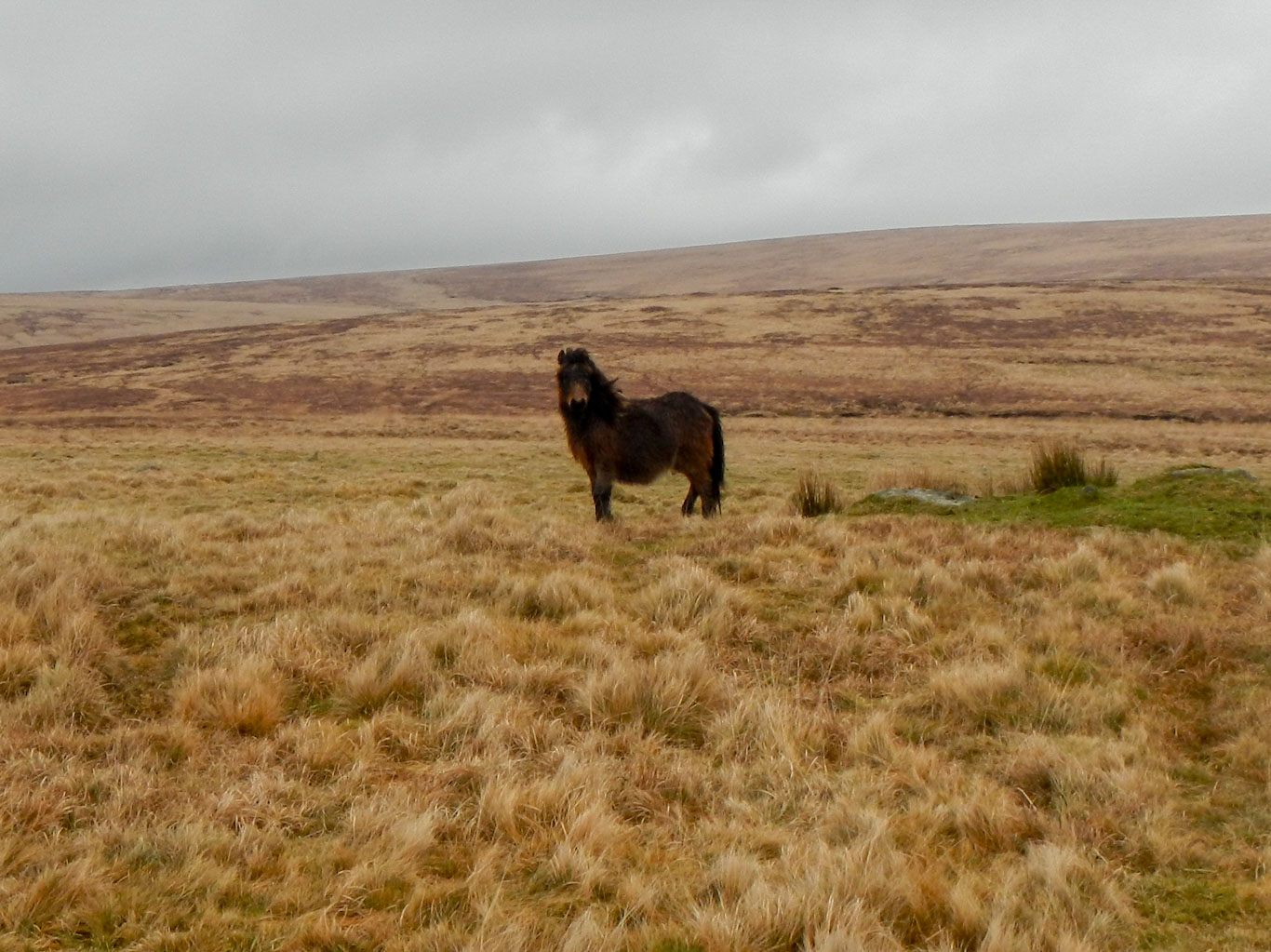
You must have longer legs than me and be more confident to jump that leat! I’m sure you’re right about Great Kneeset, but on the day I went in November 2020 the only view was of bedraggled ponies in the fog. I will have to return on a better day. The day I went to Fur Tor I walked from Two Bridges visiting tors on the east side of the West Dart on the way and the west side of the river as I returned. That was a long day and I had my head light on to walk the last bit back to Two Bridges.
LikeLiked by 1 person