26 February 2026
I’ve walked from Two Bridges in the past, notably including a tough day when I bagged all the main tors to the east of the West Dart, eventually reaching the huge and remote Fur Tor. I proceeded to return to Two Bridges walking to the west of the West Dart and bagging the tors in that area as I returned to my start point. However, unusually in view of it being such an iconic Dartmoor destination, I had never visited Wistman’s Wood. My main aims for this walk were to visit the smaller tors (un-named on the OS map) that I had missed previously and to look at Wistman’s Wood. I became fascinated about Wistman’s Wood when I read Guy Shrubsole’s superb book: “The Lost Rainforests of Britain” and realised that one of the most famous temperate rainforests in this country is literally almost on my doorstep. His book is so good that, carried away with my enthusiasm, I extolled its virtues to a friend and lent them the book; I think I will have to buy another copy as it appears to have made a permanent move!
The weather wasn’t great so there was plenty of space in the small car park in the disused quarry opposite Two Bridges Hotel. The forecast had promised rain later but it was already very damp in this part of the moor. However, a rainforest by definition needs rain and so a rainy day seemed to be appropriate for this expedition. I opted for full waterproofs straight away as well as ensuring I was wearing my gaiters to try to keep my feet dry under my waterproof over trousers.
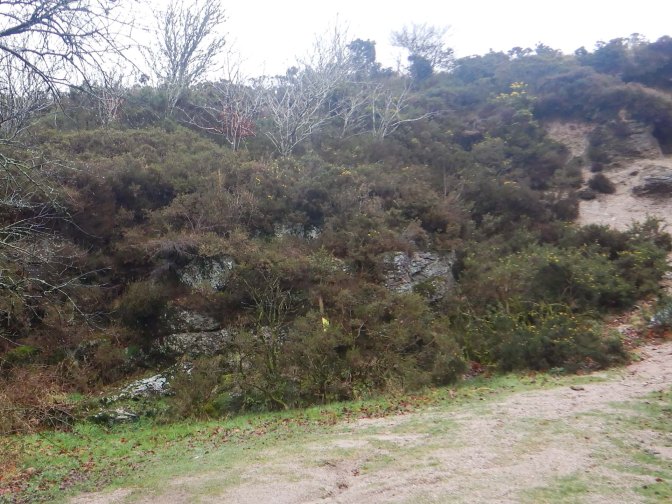
The first point of interest was the quarry itself. I learnt from https://www.torsofdartmoor.co.uk/tor-page.php?tor=two-bridges-quarry-tor that the “tor” here is visible only following exposure as a result of quarrying. This has been important to help in the formulation of a theory regarding tor formation which suggests that weathering occurs before exposure to the atmosphere. For this reason Two Bridges Quarry is said to be one of the most important geomorphological sites in south-west England.
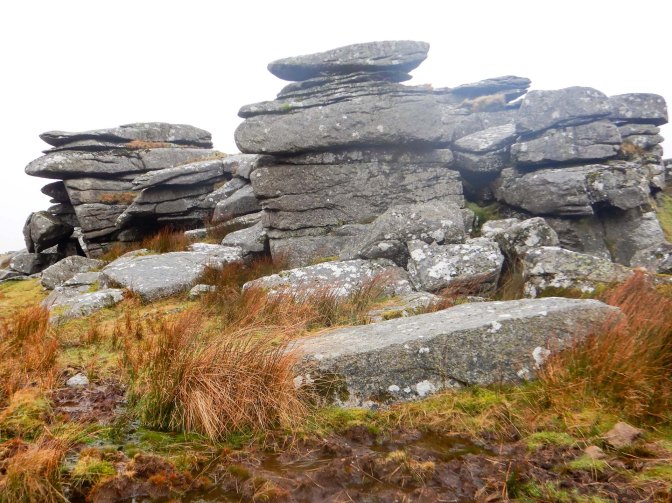
Fully clothed against the elements, I was on my way along a well made track towards Crockern house and then a muddy path. My first waypoint was Little Bee Tor. I’m sure I visited it when I bagged all the big tors and probably just thought it was an outlier of the Littaford Tors above it. However this was the first time that I had specifically visited the tor. It has two main outcrops and on a fine day there would be superb views across the West Dart valley to the Beardown Tors as well as to Bellever Tor in the east.
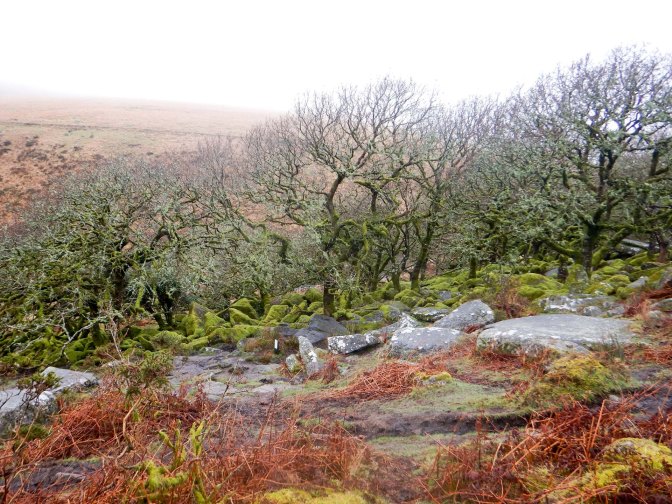
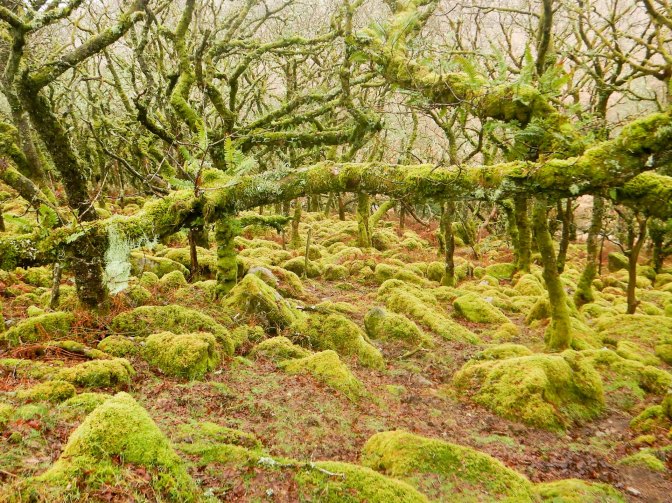
My next objective was Wistman’s Wood so I descended towards the valley, reaching the wood near its south end. Some small notices explain that this is a fragile environment and ask that visitors follow the path round the wood rather than walking on boulders covered with delicate mosses and lichens. The wood is home to the rare Horsehair lichen (Bryoria smithii) which is found nowadays at only two sites in Britain. Certainly on a damp and dreary day the unique atmosphere of the wood can be appreciated from the footpath and there is definitely no need to take risks walking between the trees and potentially destroying the unique ecosystem as well as slipping on damp mossy boulders. I was gazing at gnarled and twisted branches of stunted ancient oak trees each possibly up to five hundred years old. Fronds of lichen hang over the branches, moving with the wind (over one hundred species of lichens are found in the wood)and the ground is carpeted with immense moss covered boulders. The wood is only around 8-9 acres in size but is likely to be a remnant of the vast forest which covered most of Dartmoor around 9,000 years ago.
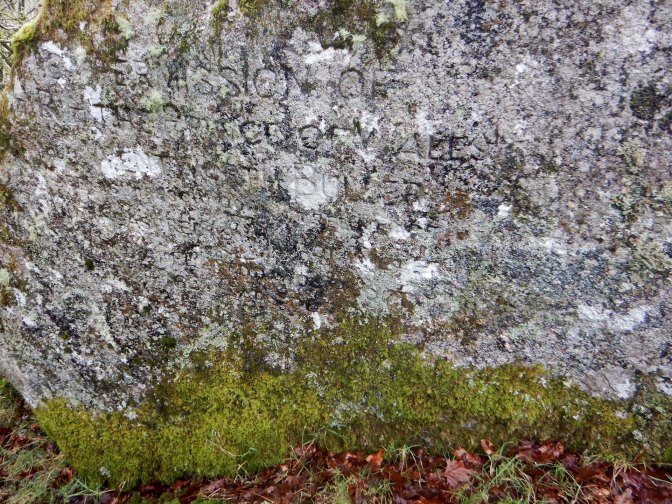
I had been keen to find the Buller Stone, a huge triangular slab bearing an inscription to mark the felling of an oak to estimate its age by the botanist Wentworth Buller in 1868. However, I fully appreciate the advice not to walk between the trees so assumed I wouldn’t find the stone. I walked further along the perimeter path and arrived at a clearing in the wood. Amazingly I spotted a large triangular slab and wondered if that was the stone I was looking for. It certainly fitted the position that I had plotted on my GPS device. Even so, it took me some time to spot the inscription – when the light fell on it in a certain way. I was delighted to have been able to find the inscribed stone.
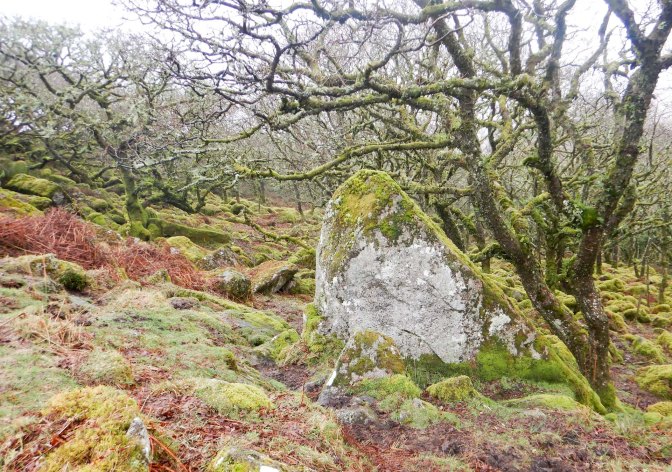
I also saw a large number of what appeared to be newly planted saplings with plastic protection surrounding them as well as some fenced exclusion plots. Partner Moor Trees collected acorns from Wistman’s Wood in 2023 (under licence from Natural England); the acorns had been taken to the company’s nursery in Dartington to germinate. Amazingly a lot of the planting out had been carried out by volunteers within the last couple of weeks. The hope is that eventually the woodland will double in size.
I left the shelter of the valley to climb on to the ridge. The weather was worsening with poor visibility, wind and increasingly heavy rain. Having already “bagged” the bigger tors in better weather conditions, I was looking for subsidiary tors. The first was Little Longaford Tor, consisting of several masses of granite and I picked a prominent one in the right location before moving swiftly on.
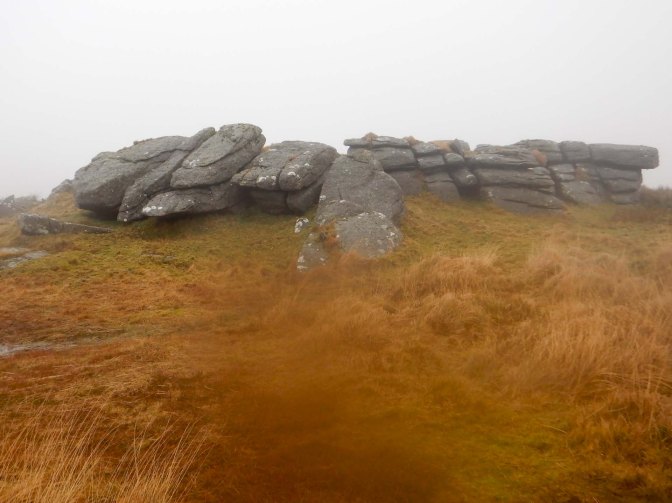
My next objective was Cherrybrook Rocks, passing the large outcrops of Higher White Tor and Lower White Tor on my way. I descended towards Cherry Brook noting that in better weather this could make a superb wild camping spot as there are flattish grassy areas to pitch and a pleasant stream as water supply. It’s also just within the permitted wild camping zone.
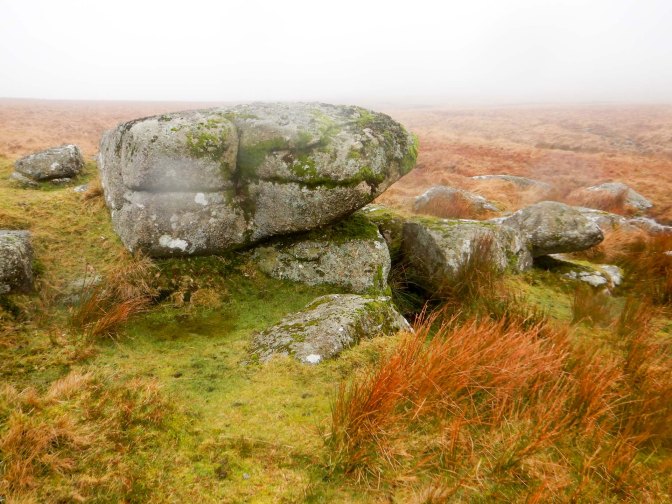
I crossed the brook and climbed up to Braddon Rocks (also going by the name Row Tor (Dart) used on the LDWA list).
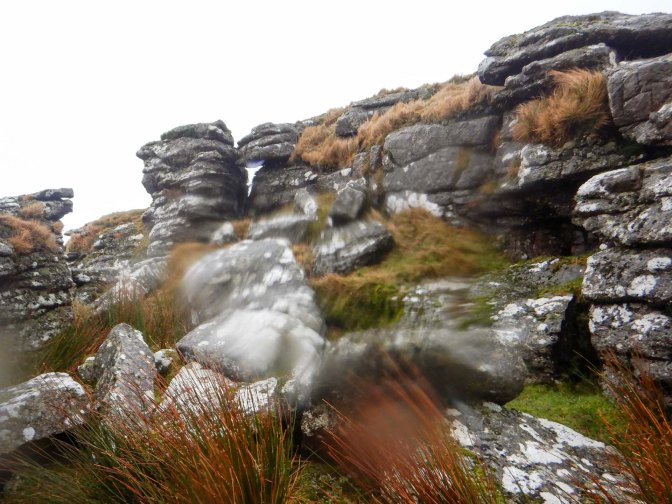
The rocks didn’t appear to provide shelter for me to stop for lunch so I returned to the Cherry Brook, crossing it a little higher than on my way out. I lost concentration and headed in the wrong direction over pathless terrain, ending up at the ruins of Brown’s House. Fortunately I came to my senses and changed direction to reach Wildbanks Rocks, north west of Higher White Tor. This wasn’t sheltered either but I found a relatively less windy spot to eat a hurried lunch. According to the Tors of Dartmoor website, the top stone rocks (but I didn’t try it) – https://www.torsofdartmoor.co.uk/tor-page.php?tor=wildbanks-rocks
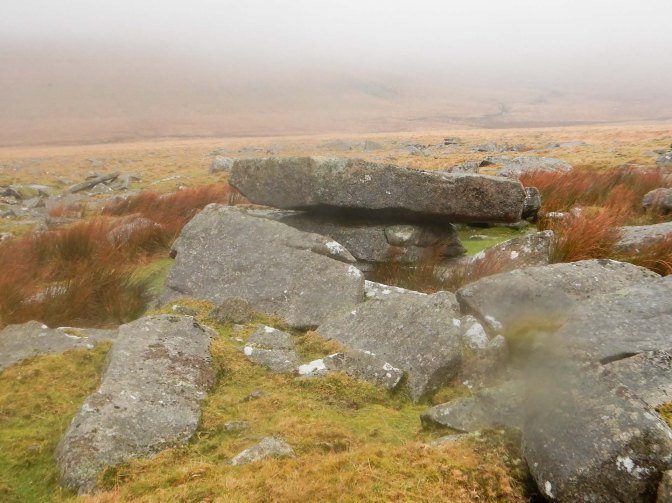
I proceeded on to Little Whiten Tor where, on a better day, there are fine views of the Beardown Tors.
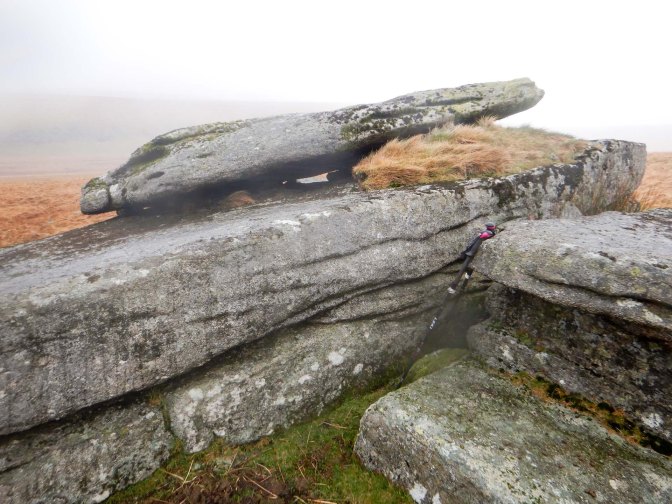
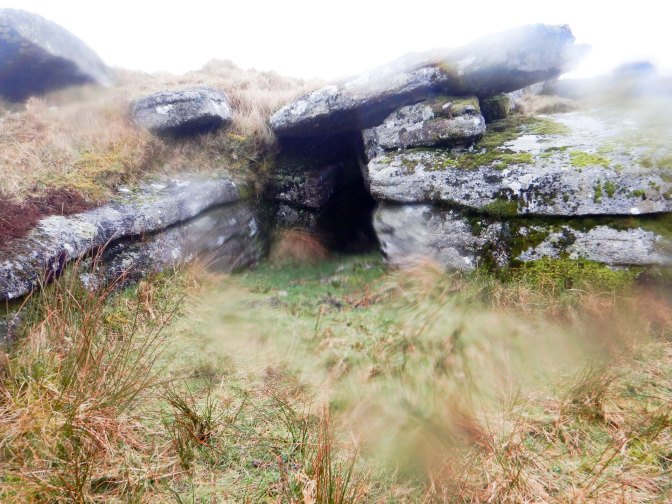
From there I descended back towards the West Dart Valley to reach Whortleberry Cave. The cave may provide shelter but it also looked very wet and muddy.
My planned route crossed the West Dart to walk over Beardown Tors and descend to a path past Beardown Farm, with a deviation to visit Cowsic Tor soon after passing the farm. However the weather forecast predicted worsening rain so I decided merely to retrace my steps past Wistman’s Wood and back to my start point.
Despite the weather, I had enjoyed my visit to Wistman’s Wood which certainly wasn’t over-run with visitors; finding the Buller Stone was a bonus. I had also visited a few tors that were new to me, including two on the LDWA list and had discovered a potential future wild camp site.

 Where's Kathryn?