30 April – 2 May 2025
I’d decided to follow the Fens River Way from Cambridge to Kings Lynn. By the day I set out, I’d already been staying for two nights at Jesus College. Even during full term, the college offers hotel standard accommodation in its West Court.

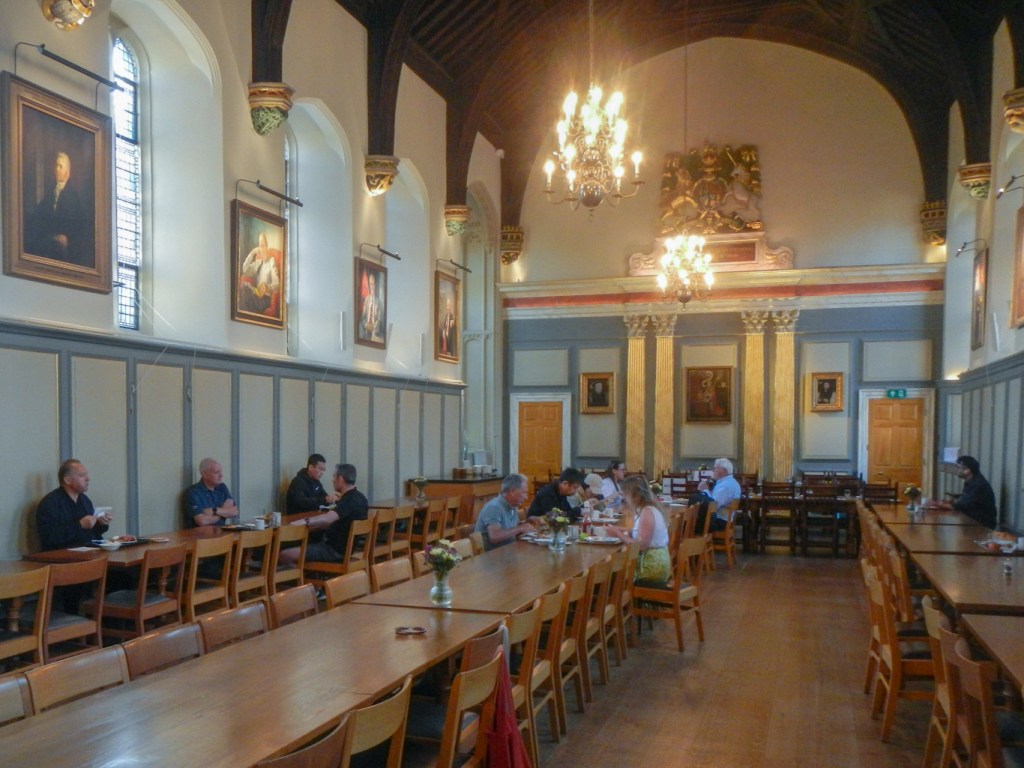
Breakfast is provided in the Great Hall, a magnificent room with tall windows and high vaulted ceilings; on the walls there are portraits of previous Masters and students of the College, as well as the Royal Arms of Queen Anne. The Great Hall has been used for dining and been the heart of College life since its foundation in 1496.
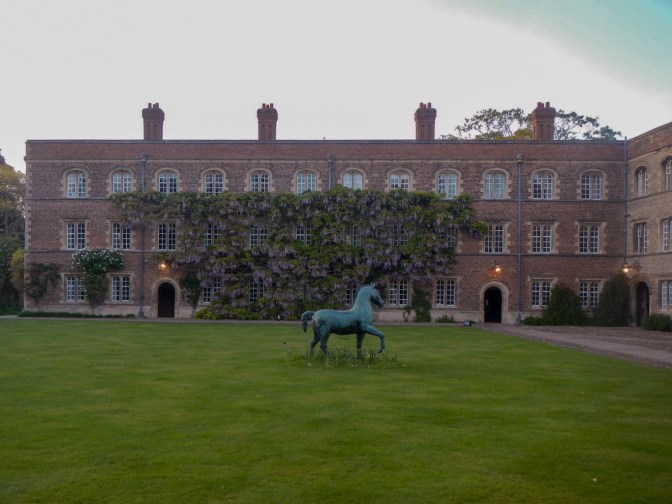
The receptionist who showed me to my room explained that it was fine to spend time wandering round the College. I walked round the outside of most of the huge courts. Wisteria was in full bloom climbing on some of the walls of the buildings. The famous Barry Flanagan sculpture of a bronze horse stands in First Court.
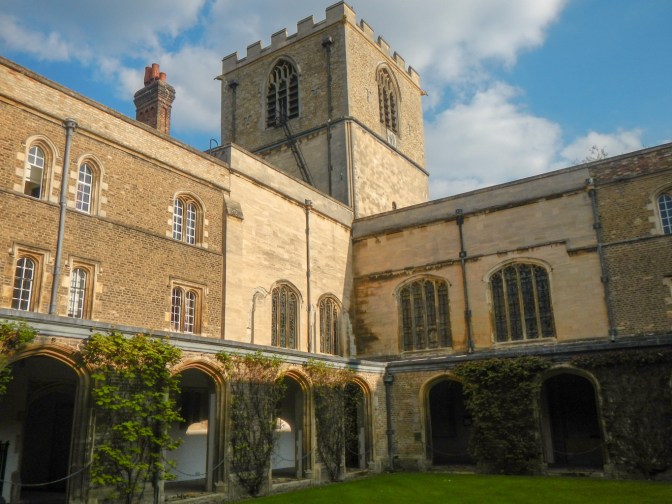
I walked around the cloisters and visited the college chapel. The chapel is unique amongst Cambridge Colleges not to have been built originally as a college chapel. It was instead a large Norman church dedicated to St Mary, serving the 12th century Benedictine convent of St Mary and St Radegund and existed for 350 years before the foundation of the College, and for half a century before the creation of the University. In 1496, when the college was founded, the building underwent extensive modification and was reconsecrated as Jesus Chapel.
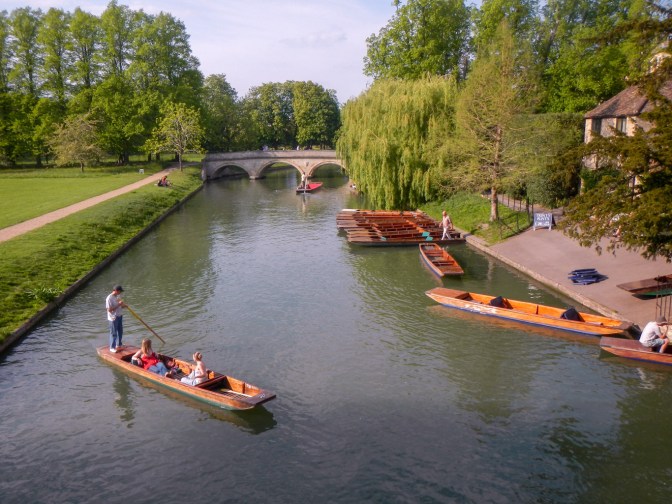
During my stay in Cambridge, I visited The Backs where some of the colleges back on to the river and students as well as tourists enjoy punting.
However the Fens River Way starts officially at the railway station and doesn’t reach the banks of the River Cam until it is downstream of the colleges. I actually reached the river bank before that in Jesus Meadow after leaving the college. It seemed as though it was rush hour on the river bank with many people walking, lots of runners and loads of bicycles of all descriptions and speeds including several with child carriers. The river itself was busy with rowers.
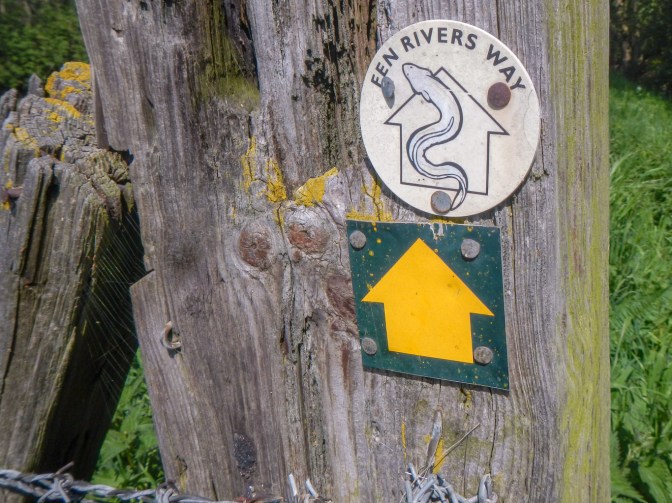
I reached the award winning foot and cycle bridge originally called Riverside Bridge but renamed the Equiano Bridge in 2022 in memory of Olaudah Equiano who was sold into slavery as a child but managed to earn enough to buy his freedom, coming to prominence in the late 18th Century as a leading black campaigner for the abolition of the transatlantic slave trade.

Eventually near Cambridge North Station I had to make the decision about following the path on the west or on the east bank – the path runs on both sides all the way to Ely. I opted for the west, soon reaching the limit for rowers from Cambridge just before Baits Bite Lock. The lock and the river crossing here are both closed at the moment so there was no option to change my mind and proceed on the east side.
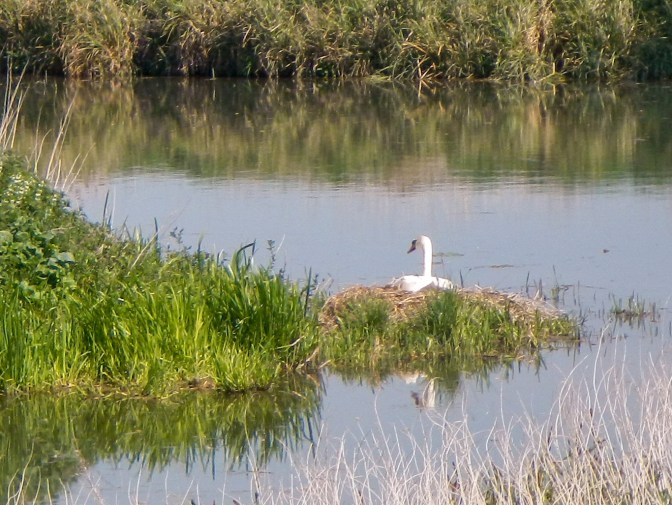
The path continued to follow the riverbank. There were canal boats and other boats on the water. I saw swans including nests, geese with goslings, and ducks. Calling cuckoos seemed to be ubiquitous – always heard and never seen!

The fens are an important farming area both for arable crops and for grazing. In places the path was overgrown with stinging nettles reaching well above my knees. I was relieved not to be wearing shorts but some of the nettles even stung through my trousers. In one place I had to walk off the track to avoid a group of cattle lying in the shade of some trees on the path. The stinging nettles off the path seemed to be particularly aggressive!
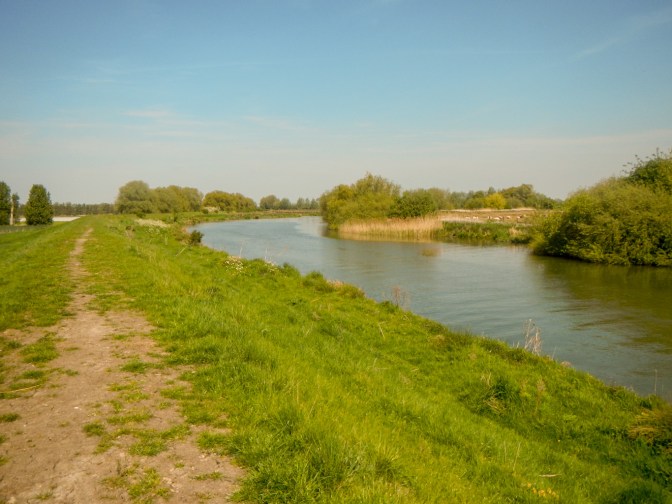
I passed a few country pubs but they were always on the other side – perhaps I had made a bad route choice!
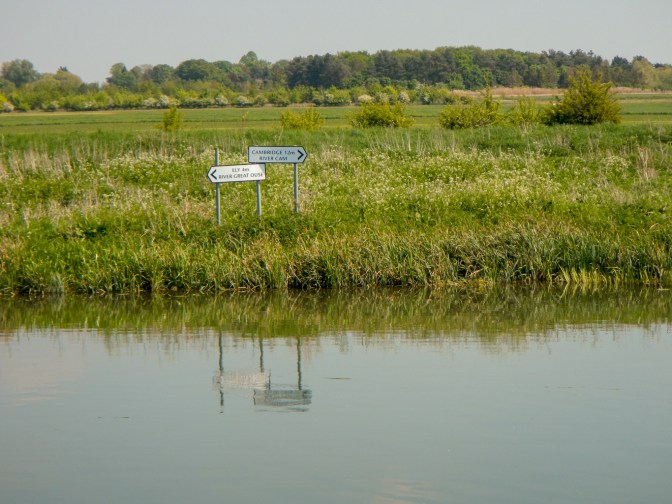
Eventually I reached a large marina and the confluence of the Great Ouse with the Cam.
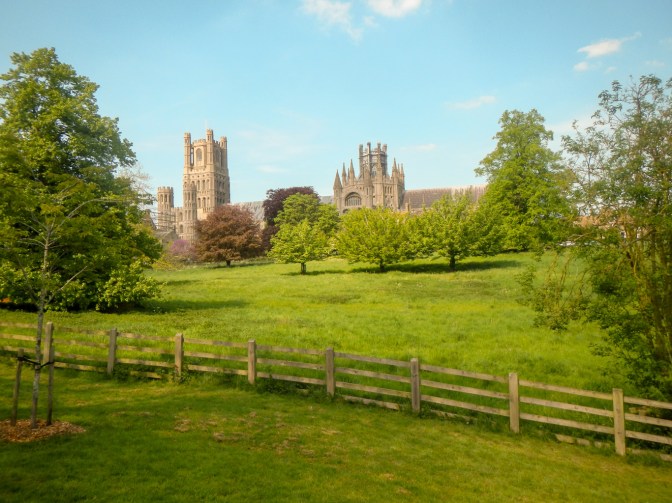
I could see the towers of Ely Cathedral from that point rising up above the flat fens as if on an island or even like the masts of a ship ahead of me. Actually unsurprising as Ely was an island until 400 years ago, when work started to drain the Fens. Gradually the towers became closer and I arrived at the city, the second smallest in England.
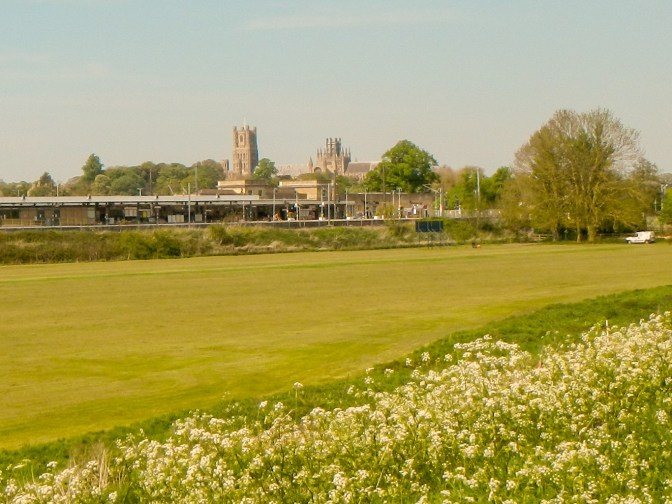
I climbed a hill in a park leading to the centre.
I headed for Toppings bookshop https://www.toppingbooks.co.uk/ which was very easy to find in one of the main shopping streets near the cathedral. Obviously I wasn’t on the lookout for a pile of books as I was carrying all my luggage for the expedition in my rucksack. In order to avoid any temptation to add to my luggage, I headed straight for the counter to ask whether there were any tickets left for the talk by Robert Macfarlane that evening. Miraculously I had found information about it the previous evening in the process of searching the Ely Cathedral website. I own and have enjoyed reading some of his previous books which embrace topics including landscape, nature, place, people and exploration; not surprisingly these are incredibly well-written as he’s Professor of Literature and the Environmental Humanities at the Faculty of English in Cambridge University. It is even more appropriate, given my current adventure on the Fens River Way, that his new book, the subject of the talk, is entitled “Is a River Alive?” I am already fascinated by this question having travelled to New Zealand in 2023 and visited the Whanganui River plus an exhibition in the local museum. This superb multi disciplinary display about the river centred on the fact that it has legal rights as a person – a status conferred in 2017 – in line with Māori values and principles. The good news is that there were tickets for the talk available – and the fee included a signed copy of the book.

I found my guesthouse, checked in and scrubbed up following my sweaty walk in what were unseasonably hot conditions for the end of April. I found a pleasant hostelry serving all-day meals then used the time remaining before the talk to wander round the city and enjoy the ambience.
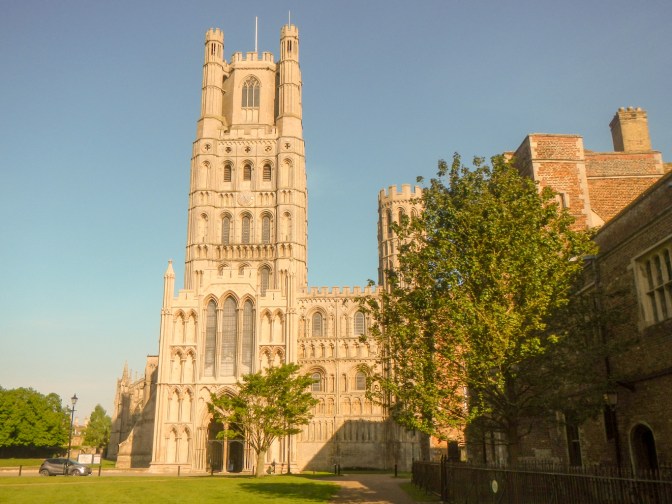
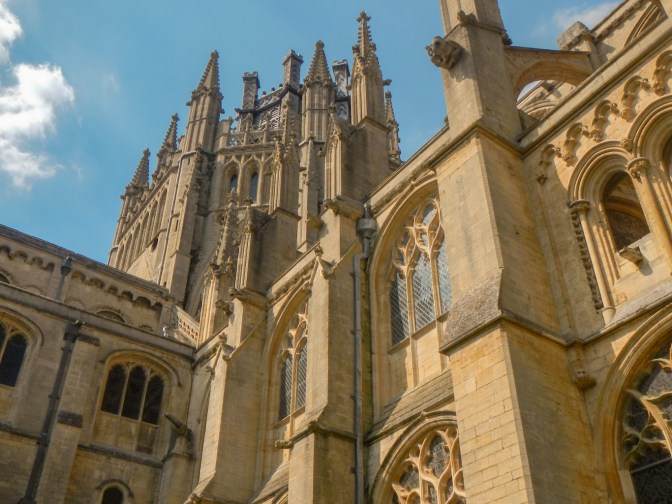
Fortunately I arrived at the main cathedral entrance when the doors opened at 18.45 as there was already a sizeable crowd waiting. I found a seat very near the front and discovered that I was sitting next to a couple in their 80s who were amongst the biggest fans of Robert Macfarlane and had nurtured a friendship over the years as well as attending all his book launches. They were delightful people and the wait for the start of the talk seemed to pass quickly. There was of course also the stunning environment, sitting as I was with an amazing view of the interior of the medieval Octagon Tower as well as the fabulous painted nave ceiling installed during the Victorian restoration.
Robert’s talk was incredible. He read passages from the book and recounted some of the experiences and adventures he had undertaken whilst preparing this latest masterpiece. I realised that one day I will have to return to Cambridge as I missed visiting Nine Wells Nature Reserve to see the fresh water springs which flow into Hobson’s Conduit, built in the early seventeenth century to bring fresh water into the city. He mentioned it in his talk. That would have been an appropriate and impressive start point for this adventure along the Fens River Way.
There were salutary messages. Our rivers in UK have undoubtedly been abused and are at risk of death both in terms of chemical pollution and decreasing ecological biodiversity. Some of the blame for this appears to lie with the privatisation of water supply and sewage treatment. However, hope remains. There are many groups campaigning and acting; in a landmark initiative Lewes District Council has passed a motion seeking to declare a Rights of River Charter for the Sussex Ouse, the first UK council to pass such a motion. It isn’t too late to do something as long as we act promptly!
Not only a great writer and speaker as well as an adventurer, Robert was also kind enough to stay after the end of his talk and write personal dedications in all the books of those who requested them He had a conversation with each person too! It was almost 10pm by the time I left the cathedral with my precious signed book complete with dedication.
The book fitted in my rucksack if I put it right down the bottom of the main compartment in a dry bag for protection, although it did add just over 600 grams to my load; it’s not ideal packing the heaviest items low down in the bag, but it was the place where the book was least likely to get damaged. Anyway it seemed very appropriate to carry this book “Is a River Alive?” for the remainder of my riverside walk across the fens.
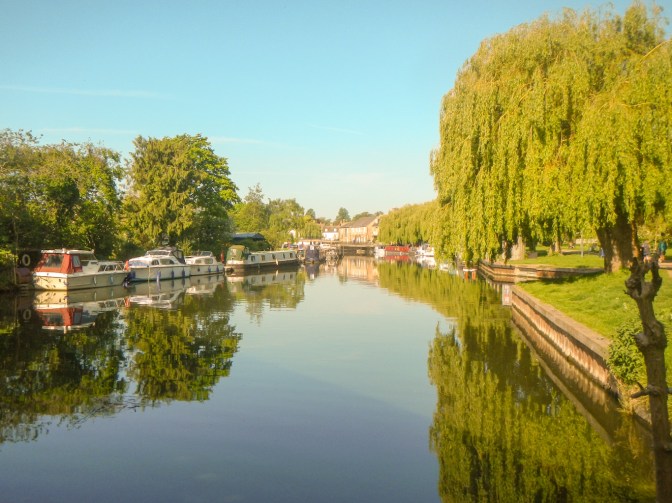
I rejoined the walk near The Maltings, where I had left the path the previous day, on the riverside walk through Ely. It wasn’t long before the manicured walk near the city was behind me and I passed close to a water meadow and lily pond – with SSSI status due to breeding birds and the plant ecology.

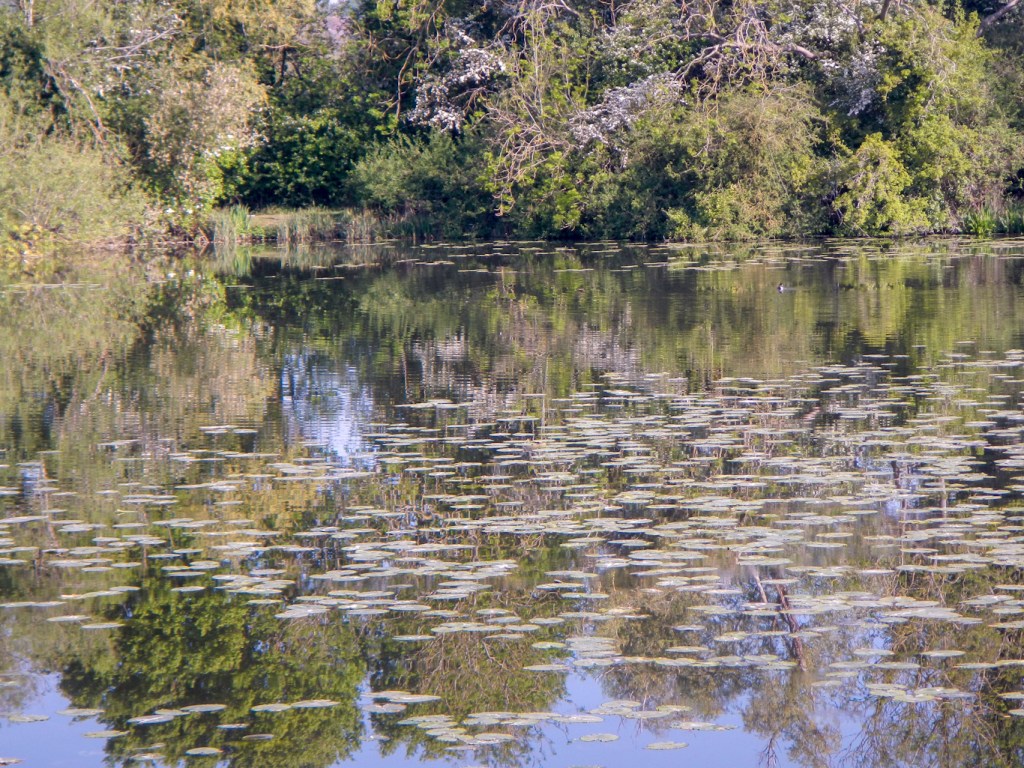
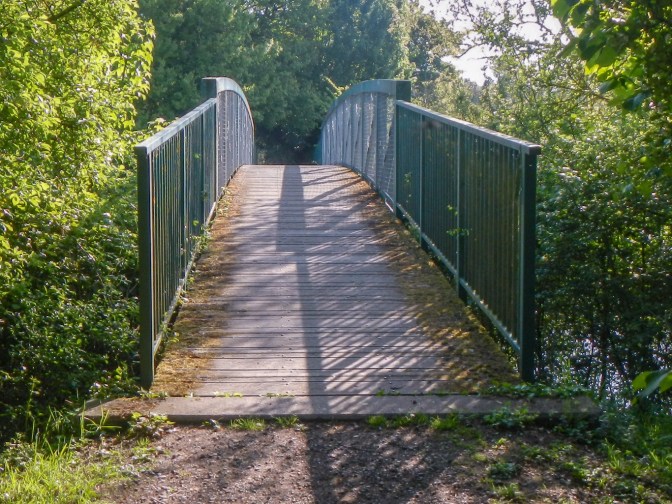
I reached Cuckoo Bridge, where appropriately I heard a cuckoo for the first time that day.
A man walking towards me warned me that the road was busy. The map shows a short stretch of path adjacent to a “C” class road. I arrived at the road and noticed what seemed to be a rather overgrown footpath running between the road and the river. I followed it to keep off the road. Unfortunately the path soon disappeared into nothing and I found myself on what was indeed a very busy road with traffic moving at speeds up to (or over?) the National speed limit. I positioned myself to walk along the road facing oncoming traffic and kept hopping up on to the overgrown and rutted verge as traffic approached. Unfortunately a large lorry travelling in the same direction as me was overtaken by a car that seemed to be moving very quickly. As the car was coming from behind me, I didn’t notice it until I felt the air disturbance when it sped past me at frighteningly close range. That the lorry shouldn’t have been there rapidly became obvious as it stopped just before a railway bridge with height restriction and, with great difficulty, the driver managed to turn it round by reversing into a trackway. However, the overtaking manoeuvre by the car had definitely been unsafe and the driver should have been able to see a pedestrian on this very straight road – it was a bright day and I was carrying a rucksack in a garish colour.
Fortunately I had almost reached the corner where I crossed the river on a bridge and moved on to a footpath on the top of a dyke. More problems: I had two herds of cattle to get around by walking off the path through stinging nettles to give them a wide berth. What with the traffic and the cattle as well as temperatures of 29 degrees centigrade – unexpected for the first day of May – it was tempting to walk to the nearest station and catch the train!
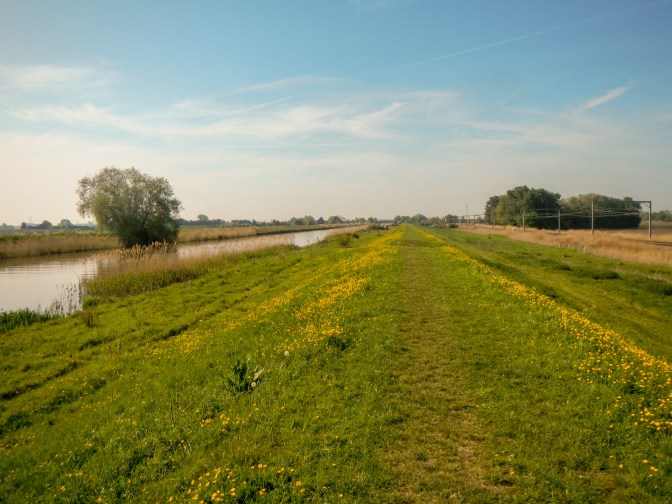
However, if I’d caught the train I would have missed seeing many birds on the river – heron, swans, ducks, geese and grebes, as well as hearing all the birds hidden amongst the reeds.
I walked close to Littleport, home of Harley Davidson motor bikes and Burberry clothes. The Littleport Riots in 1816 influenced the passing of the Vagrancy Act in 1824. I also read about the legend of Black Shuck (the sign said “Especially if you are walking the Fens River Way”), the demon hellhound said to roam the fens on dark, moonless nights and whose favourite hunting grounds were the banks of the River Great Ouse. The sound of its panting would strike fear and terror into those who heard it. It was said that to look into its blood red eyes would mean certain death within twelve months. However, the last recorded sighting was in 1906 when W.H. Barnett accidentally ran into it in his car and it disappeared in front of him. I decided that traffic and cattle were far more likely dangers for me!
The route ran across the back of residents’ gardens – and no I hadn’t gone the wrong way as a lady sitting with her dog in the garden helpfully informed me that I was on the path.

Fortunately the grass had been mown recently on top of the long section of dyke running by the side of the A10 as that is definitely not a road for walkers. Indeed “recently” probably meant that morning as I saw a big mower near the lay-by with the very welcome A10 Pitstop refreshment van. Thank you to the really friendly team – it is really service with a smile. https://www.facebook.com/a10pitstop/ All I bought was a cup of coffee as I was carrying plenty with me for lunch.
Minutes later I passed The Ship Inn adjacent to the confluence of the Little Ouse with the Great Ouse. However, I had only just stopped so I walked on.
The walk continued on the top of dykes although with some road walking too. It was so hot but at least the way was flat!
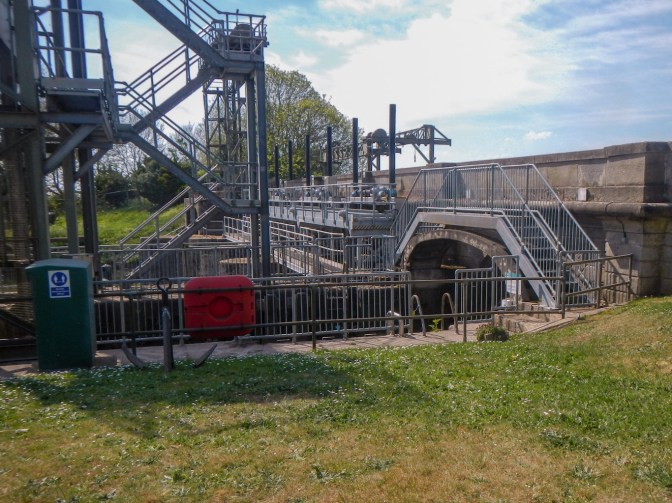
Eventually I reached Denver Sluice. I was so hot that if the pub had been open I would have stopped for a cold drink – but it has been closed since 2021. The first sluice was built across the river here by Cornelius Vermuyden in 1651. The area is the confluence for five water courses. The main role for the complex is in flood defence but it is also balancing other key roles including river navigation, conservation, water abstraction, agricultural and land drainage and fisheries.

I trudged on along the path between the Great Ouse and the Relief Channel. Both looked like huge rivers although the relief channel is of course man-made.
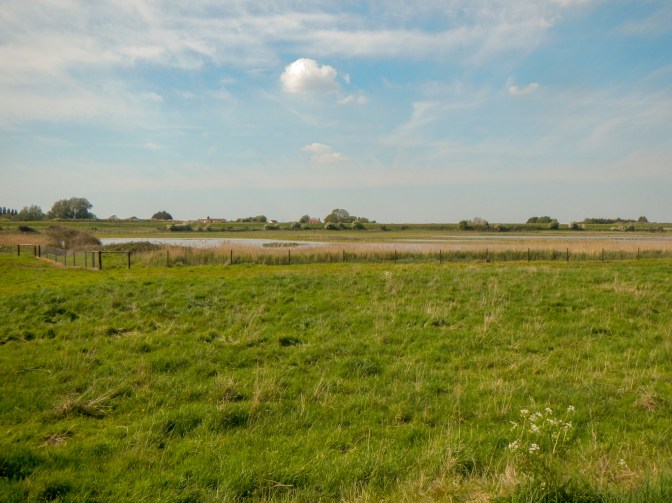
Fortunately I didn’t have far to go to arrive at the pleasant market town of Downham Market where I was booked to stay overnight.
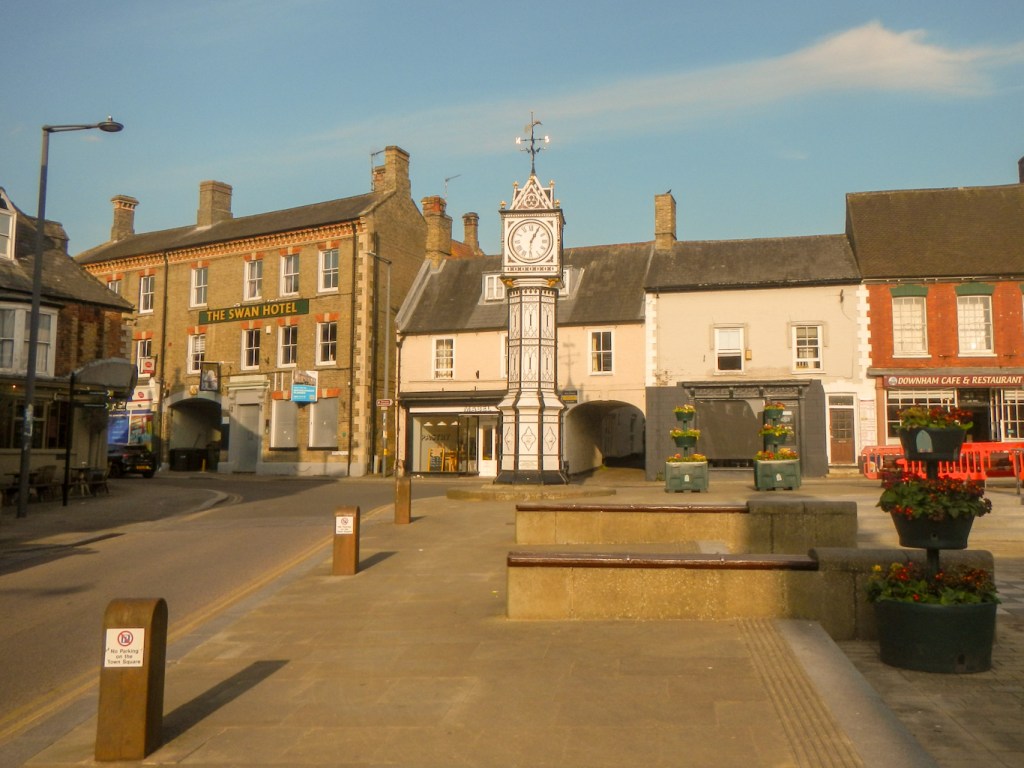
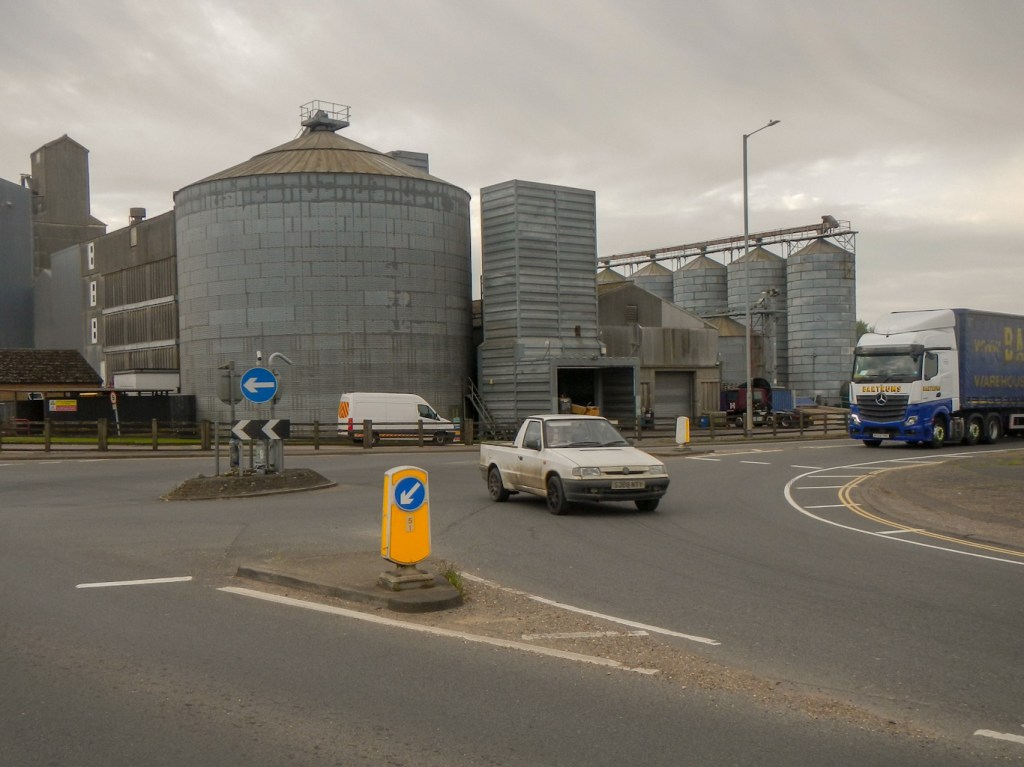
There wasn’t breakfast provided so I woke early to take advantage of being able to leave and walk most of the remaining distance before it became too hot.
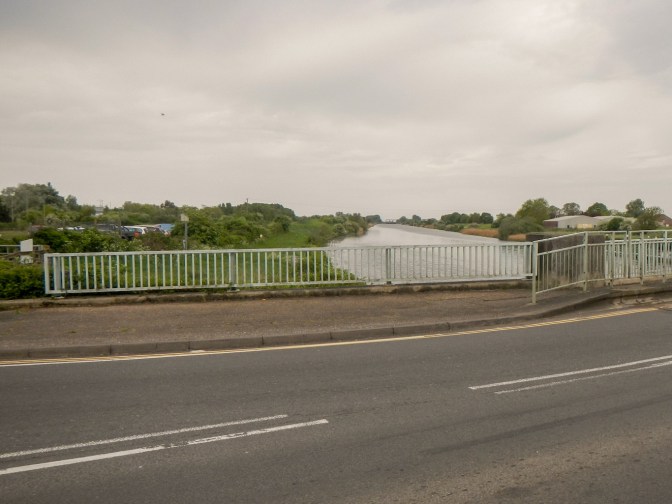
I was more fortunate than on the previous two days as the entire walk from Downham Market to Kings Lynn was along pleasant dyke-top paths with only short grass, much of it nibbled by grazing sheep. I heard a cuckoo again as well as birds hidden in the reeds. I saw more swans, grebes and terns. The tide was coming in so quickly that it looked as if the river was flowing the wrong way.
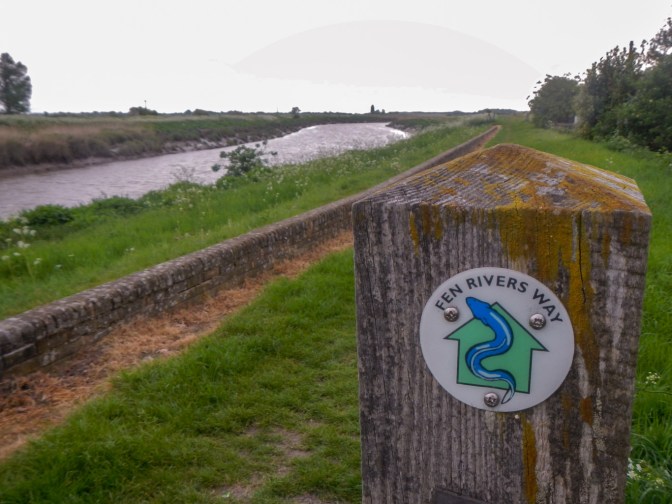
I passed the ruined church at Wiggenhall St Peter.

I visited the church at Wiggenhall St Germans and was invited to join the parishioners at their coffee morning.
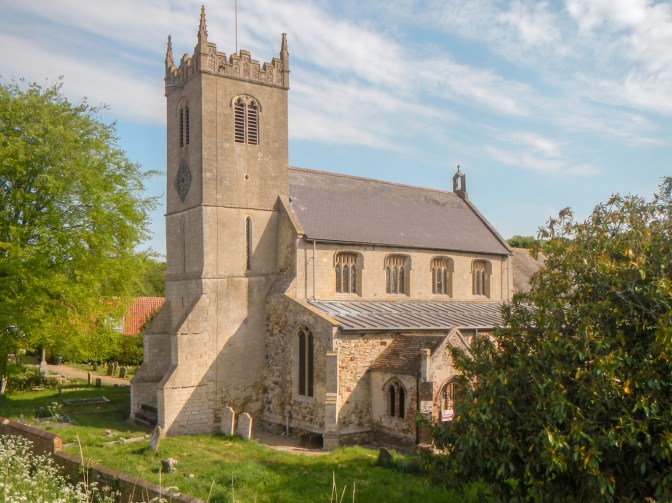
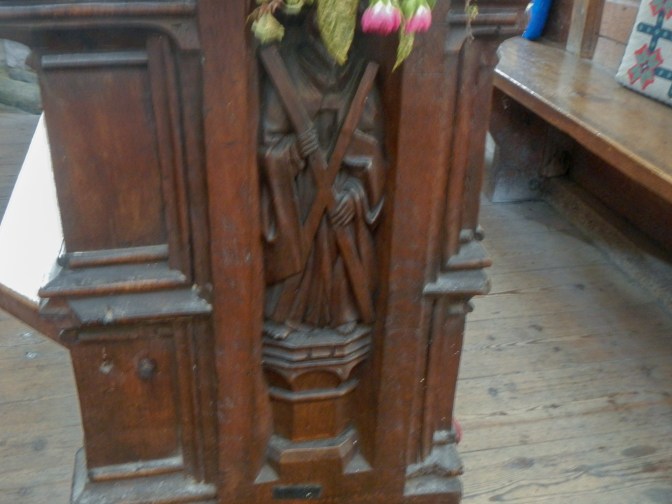
However, I was keen to keep walking so I merely looked at the carvings of the seven deadly sins on the pew ends and then left. The helpful verger explained that the carvings are the main attraction in the church.
I crossed the River Great Ouse Relief Channel on a bridge adjacent to the huge sluice gates at Saddlebow Tail. There’s lots of CCTV and a disembodied voice reminded me to keep to the path!
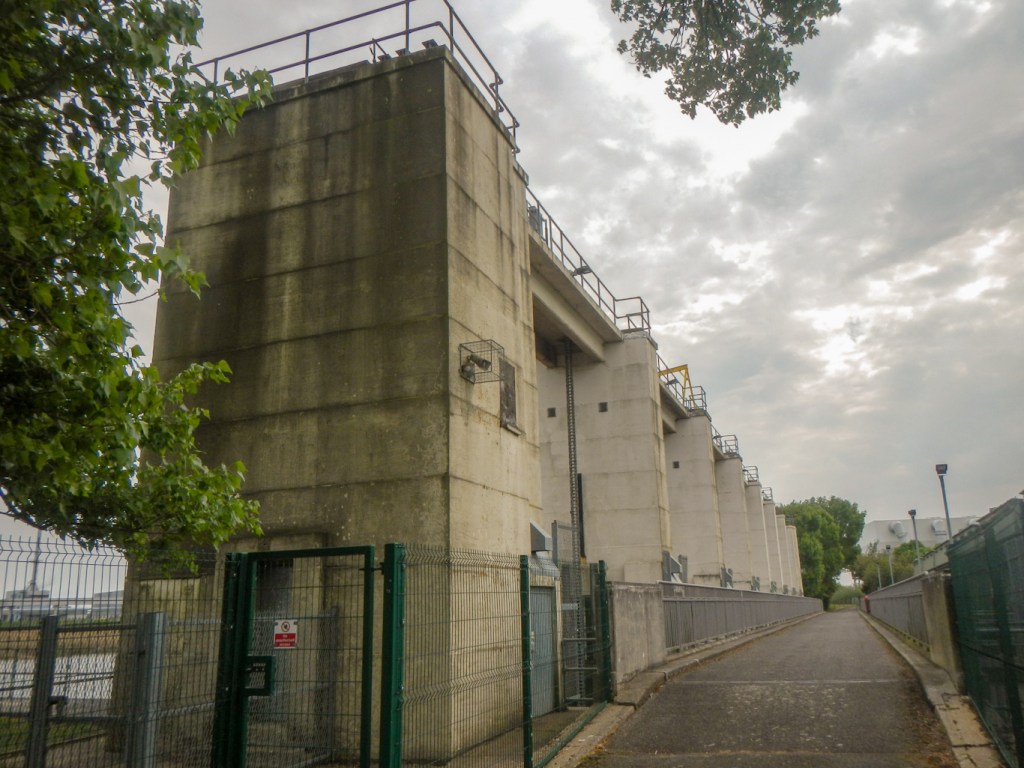

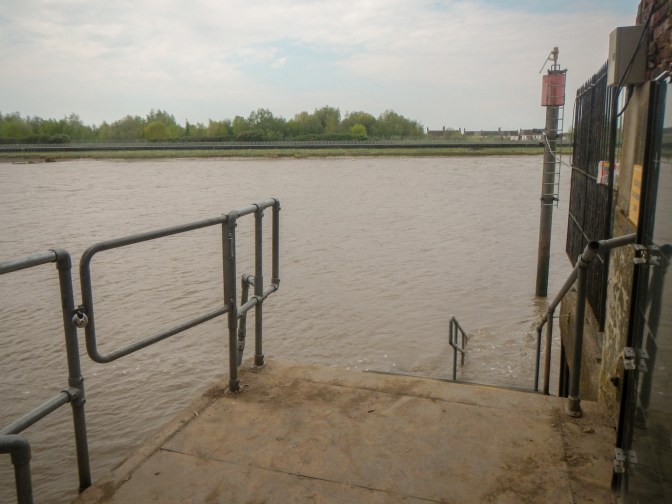
I had arrived in Kings Lynn, medieval England’s most important port, at the end of the Fens River Way. Actually between Wiggenhall St Peter and Wiggenhall St German I had left map 143, but of course I wanted to complete the route which ends on the quayside at Kings Lynn.

 Where's Kathryn?