5 April 2025
The Magna Carta is undoubtedly one of the most celebrated documents in history and has enduring worldwide influence as recognised by its inclusion on UNESCO’s Memory of the World Register. On 15 June 1215 King John and the barons met at Runnymede to agree a charter of liberties which enshrined the principle that the King had to act within the rule of law. There are only four surviving original 1215 copies, one of which is kept on public display in the specially built David P. J. Ross Magna Carta vault at Lincoln Castle, on permanent loan from Lincoln Cathedral.
In 1217 Magna Carta was re-issued by the young Henry III under the regency of William Marshall with some of the original clauses incorporated into a second charter: Charter of the Forest. This document, one of only two surviving copies, is also on loan from Lincoln Cathedral and displayed in the vault. Currently there is a further engrossment of the Forest Charter from 1225 on display.
No photography is allowed in the vault as the documents need to be kept under strict low lighting conditions.
The visit to view the documents is preceded by a wrap round cinematic experience explaining the historic events around the signing of the Magna Carta and the subsequent and ongoing worldwide influence of the document. Magna Carta lays down the principle that ‘No free man shall be arrested, or imprisoned, or deprived of his property, or outlawed, or exiled or in any way destroyed, nor shall we go against him or send against him, unless by legal judgement of his peers, or by the law of the land’. This became the fundamental principal of English justice including the right to trial by jury, the basis of the United States Constitution and part of the law of most modern democracies. The Magna Carta also contains clauses which are precursors to today’s inheritance tax laws.
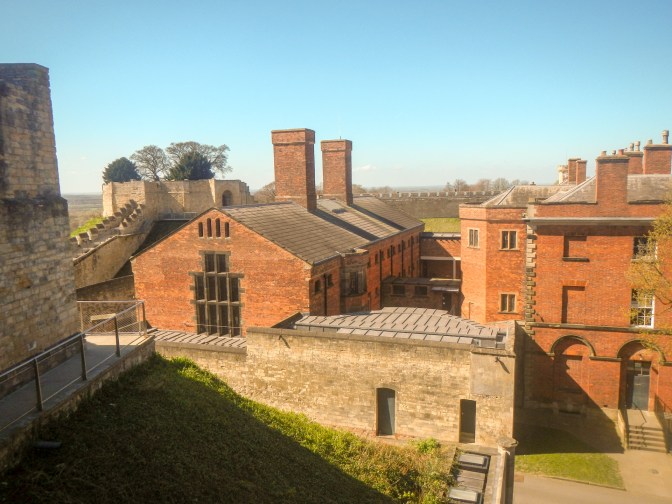
The visit to see these documents is undoubtedly the highlight of a visit to Lincoln Castle. However there is more to see. There is evidence that the castle included a gaol from the mid 12th century, becoming one of the principal crown gaols in the 14th century and used as a county gaol from the 18th century. The Victorian Prison modifications opened in 1848 were designed to implement the ‘separate system’ – a regime intended to keep prisoners separate from the corrupting influence of their fellow inmates, and bring about their moral reform. The building at Lincoln is one of the most complete and least altered survivors of this prison system.
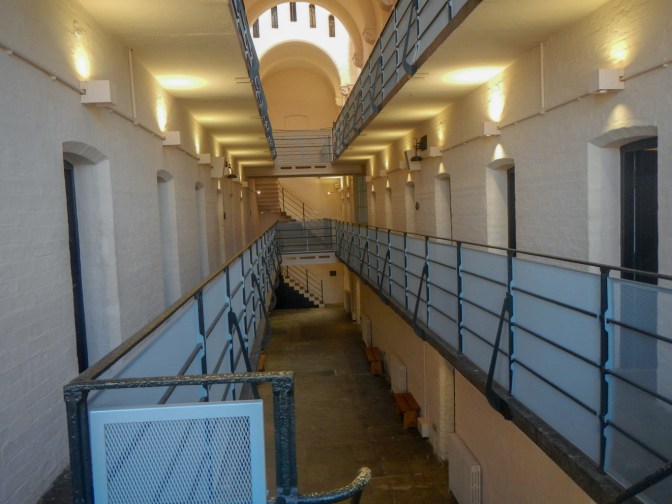
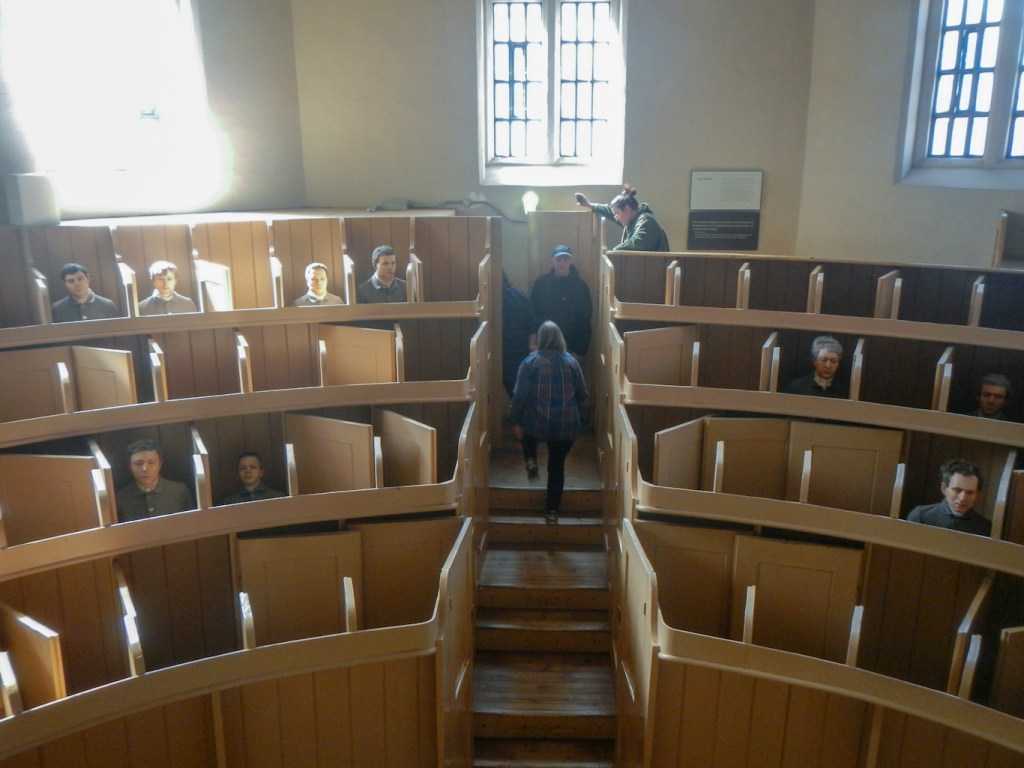
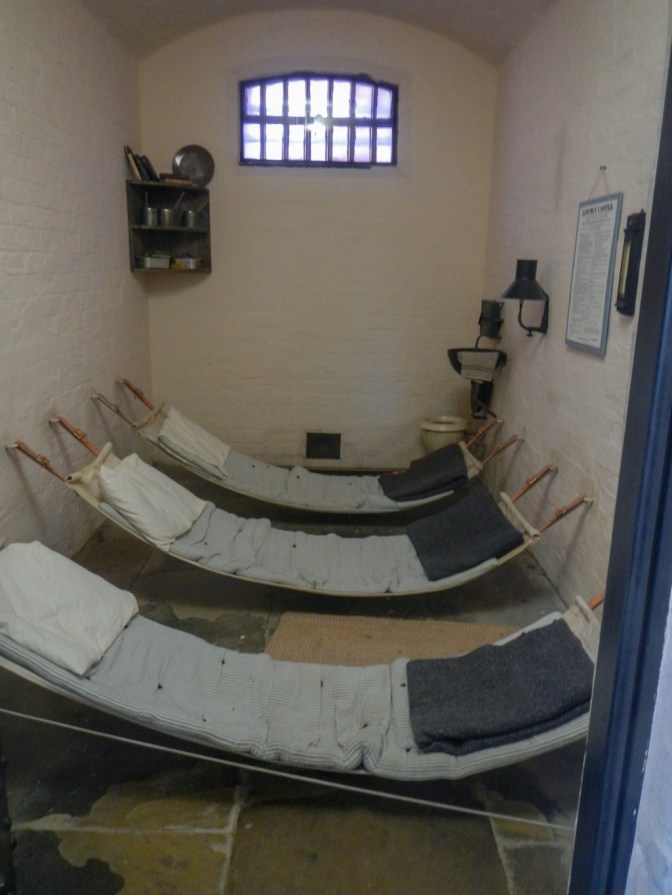
Separate cells were provided with a sink, toilet and hammock so that there was no need for prisoners to leave them except for exercise and fresh air in the exercise yards, and the daily chapel service led by the prison’s chaplain. We were informed that the chapel is the only example of its type still in existence and we didn’t tell them that we have visited a very similar example in Tasmania at Port Arthur.
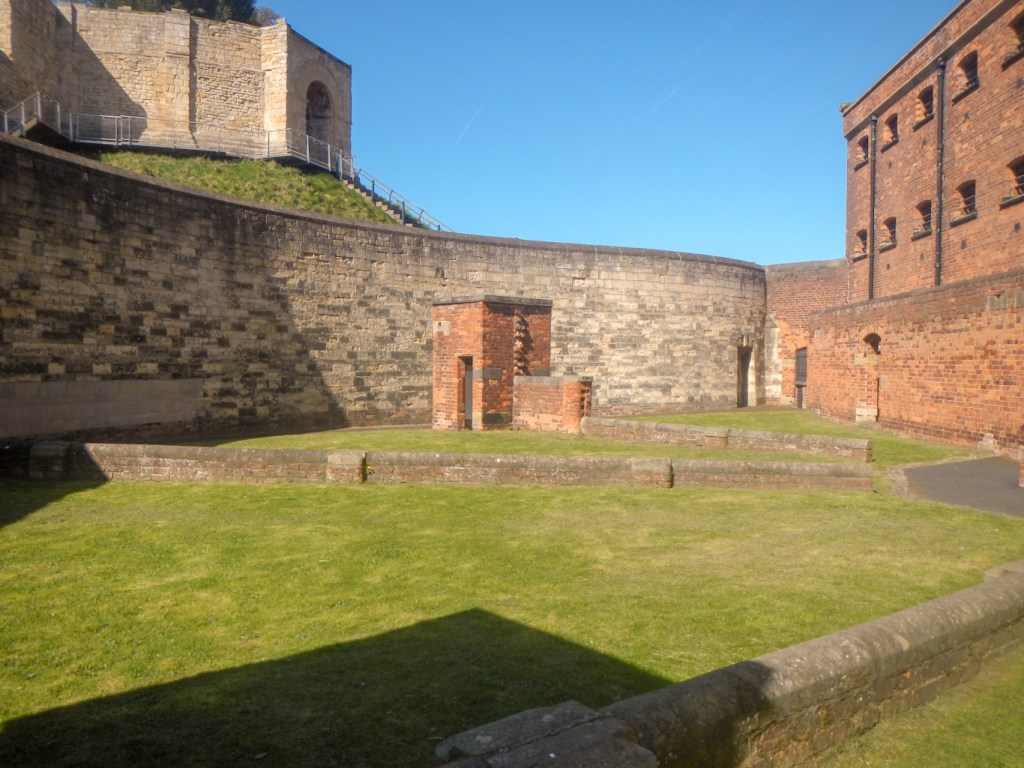
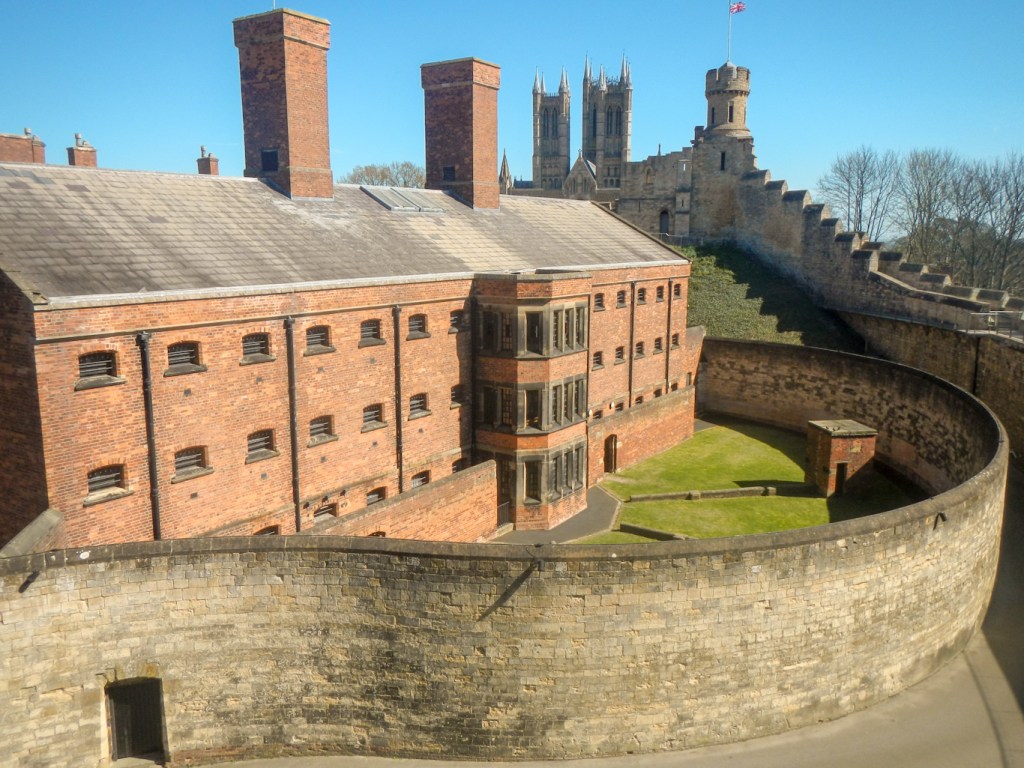
In reality the prison wasn’t run in the way it had been designed, wasn’t successful and was closed in 1878, just thirty years after it was opened.
The courthouse still acts as Lincoln Crown Court where criminal trials are conducted.
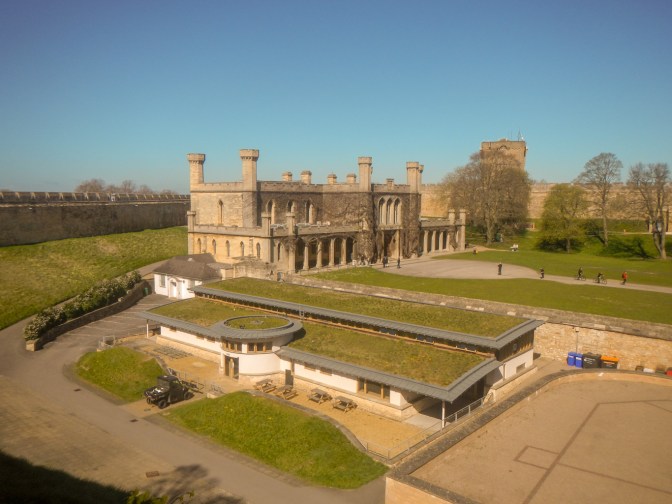
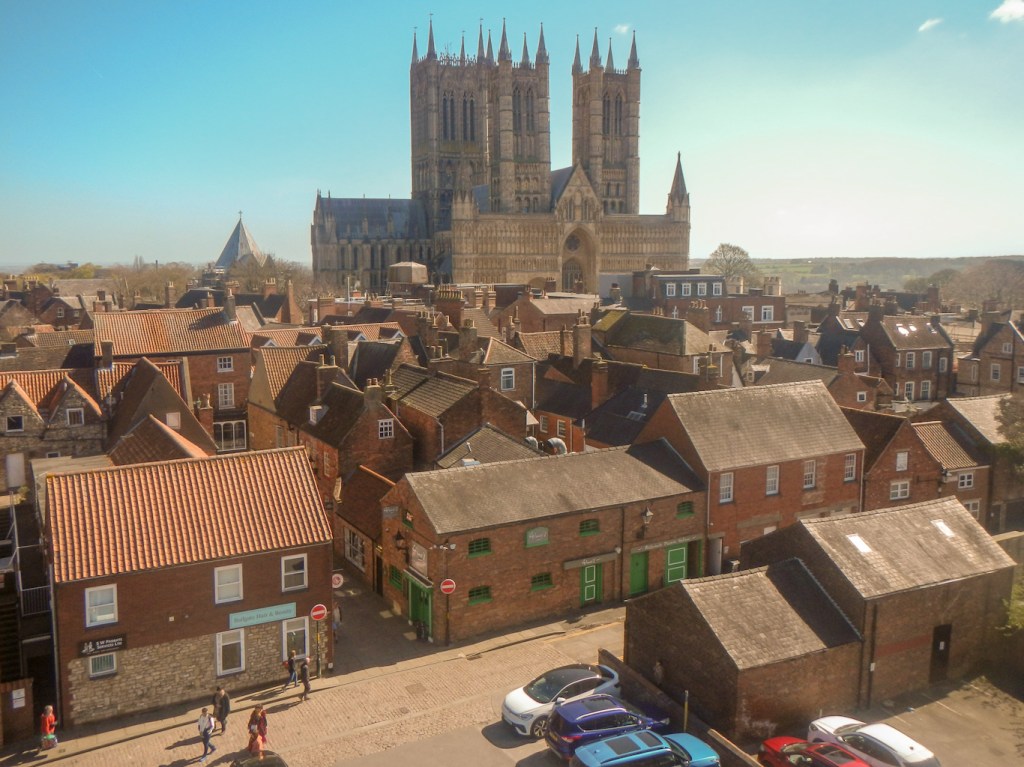
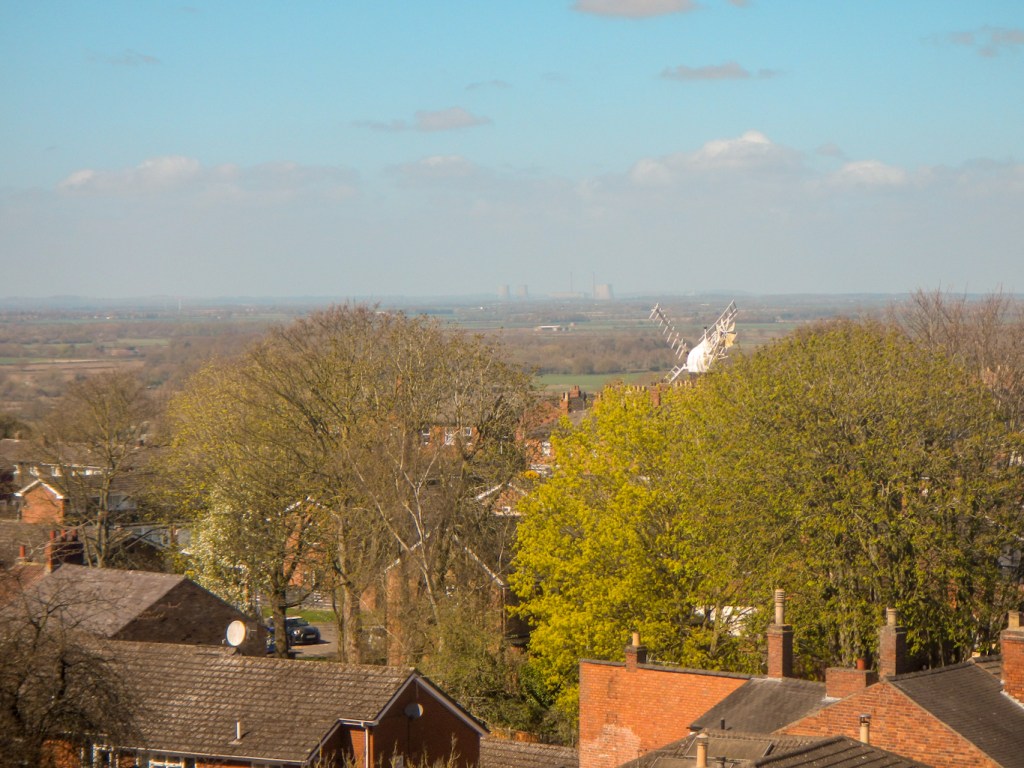
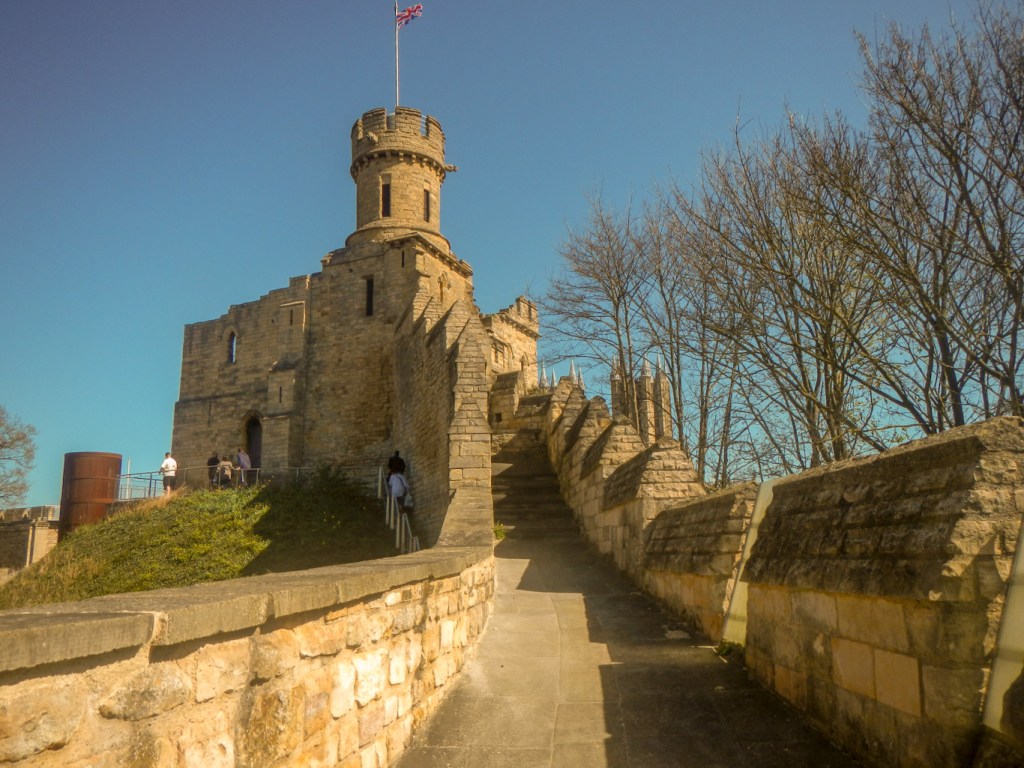
Finally the great stone curtain wall is one of the most dramatic features of Lincoln Castle today and a permanent reminder of its role as a mighty medieval stronghold. It is possible to walk around the medieval walls and take in their magnificent views.

 Where's Kathryn?