10 April 2024
This walk, almost fifteen miles in total, is named after Sir Peter Scott, only son of the Antarctic explorer Captain Scott. It passes the lighthouse on the east bank of the River Nene, where Sir Peter lived 1933-39 and established the foundations for his lifetime of work in wildlife conservation.
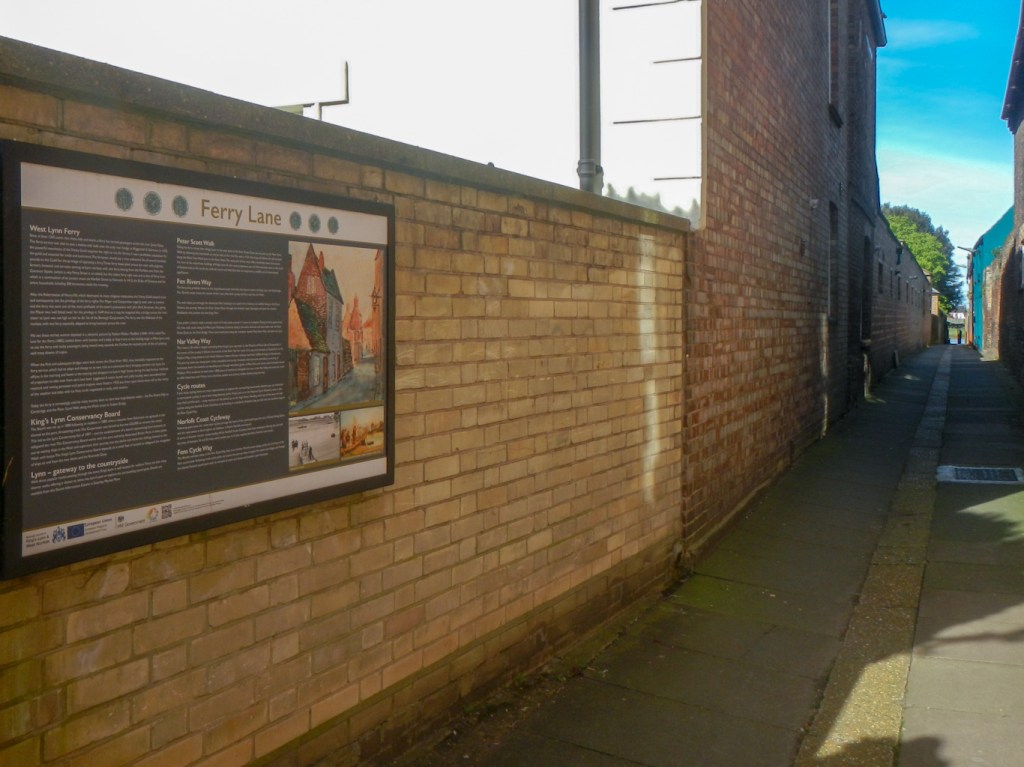
I started from Kings Lynn, walking down a narrow alleyway to the ferry across to West Lynn. It’s a small ferry that runs every thirty minutes during the day and continuously at peak periods. I was fortunate as it was almost ready to leave when I boarded along with only one other passenger and the ferryman. The journey only takes about five minutes – the tide must have been going out as we crossed the Great Ouse because the ferryman was moving upstream in order to reach West Lynn.
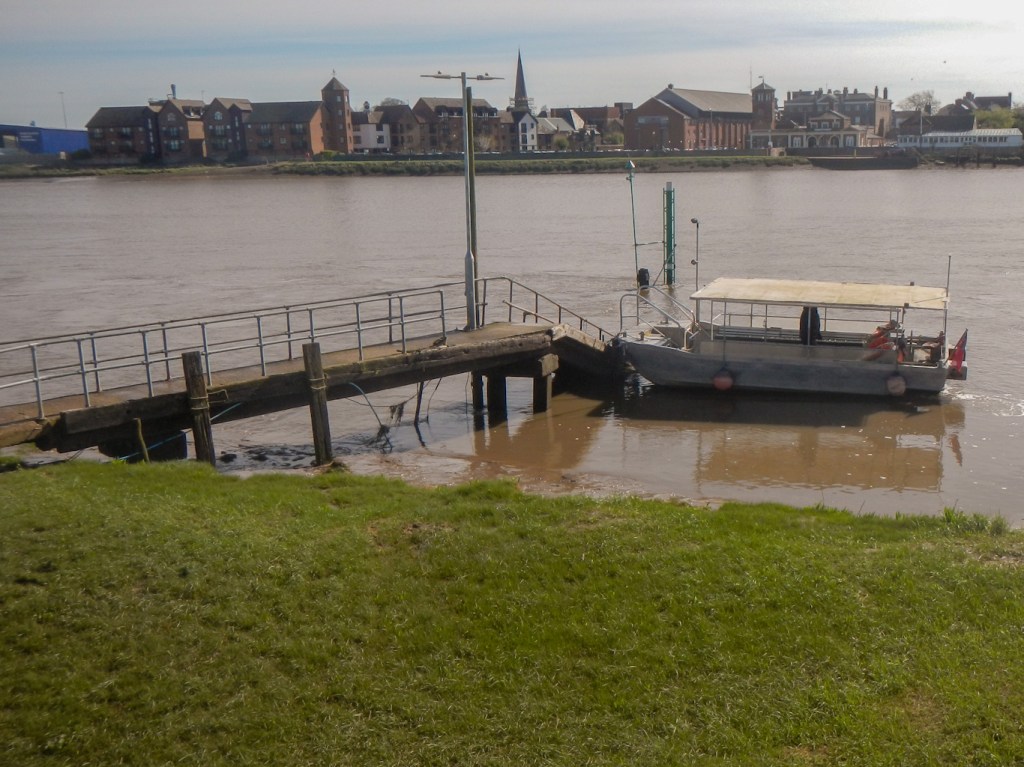
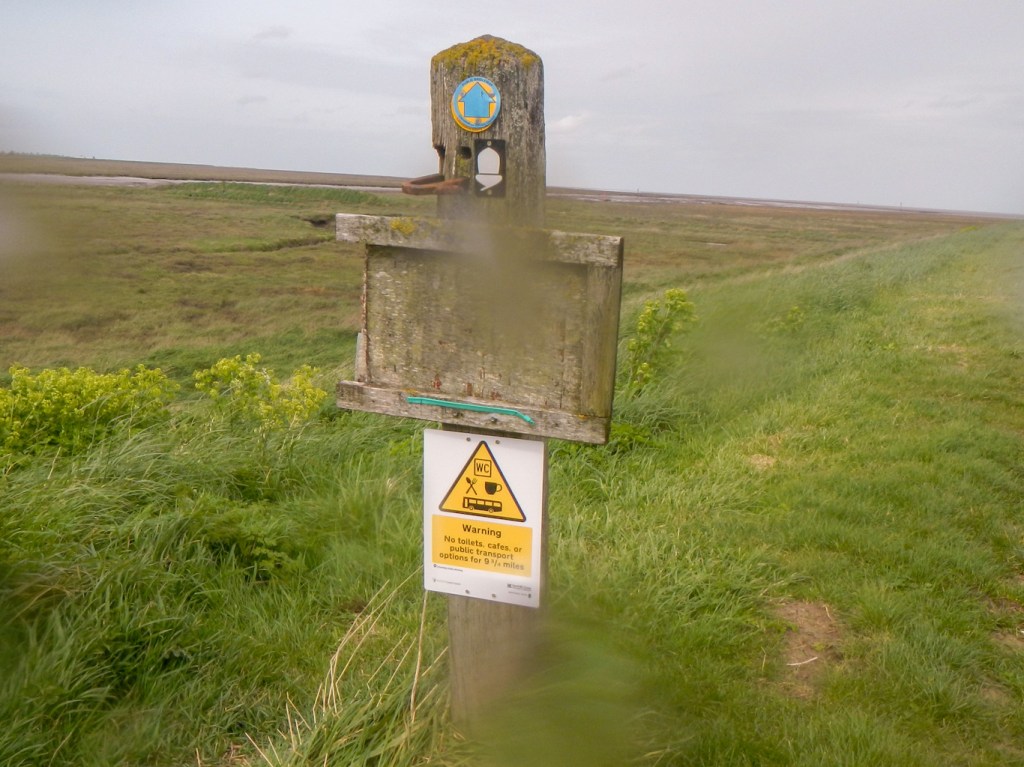
We alighted at the modern looking terminal and soon I had walked past a few houses and was in fields adjacent to the river bank. A sign warned that there would be no facilities on the path until reaching Sutton Bridge. There were a few people walking dogs but otherwise the area was deserted.
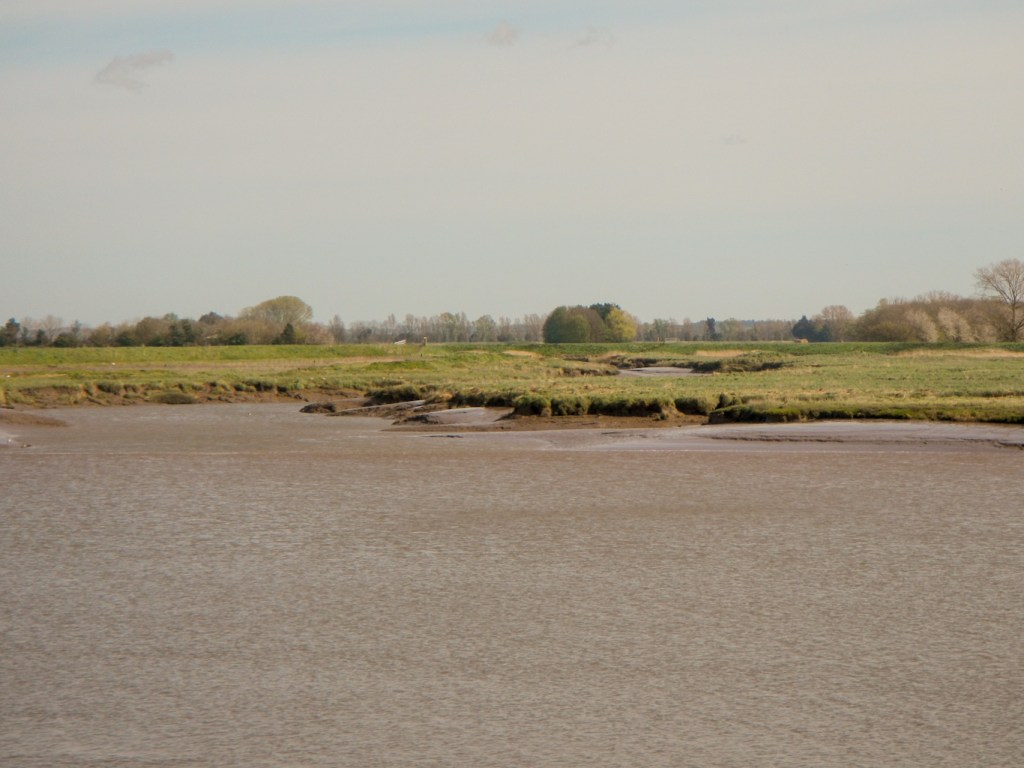
Soon I reached the marshlands to the right of the path and a sign explaining that The Wash National Nature Reserve is the largest in England.
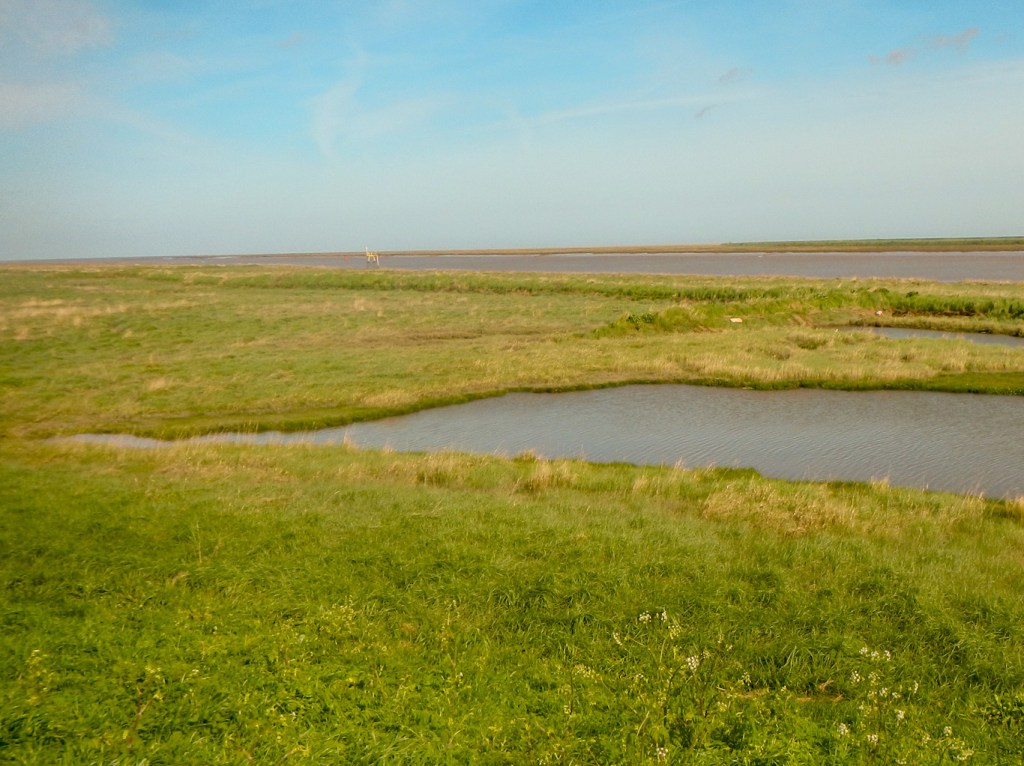
The flat landscape meant that there were views stretching a long distance and huge areas of sky visible too.
I followed the path on the top of the dyke. There were enormous fields to my left and large expanses of salt marsh to my right.
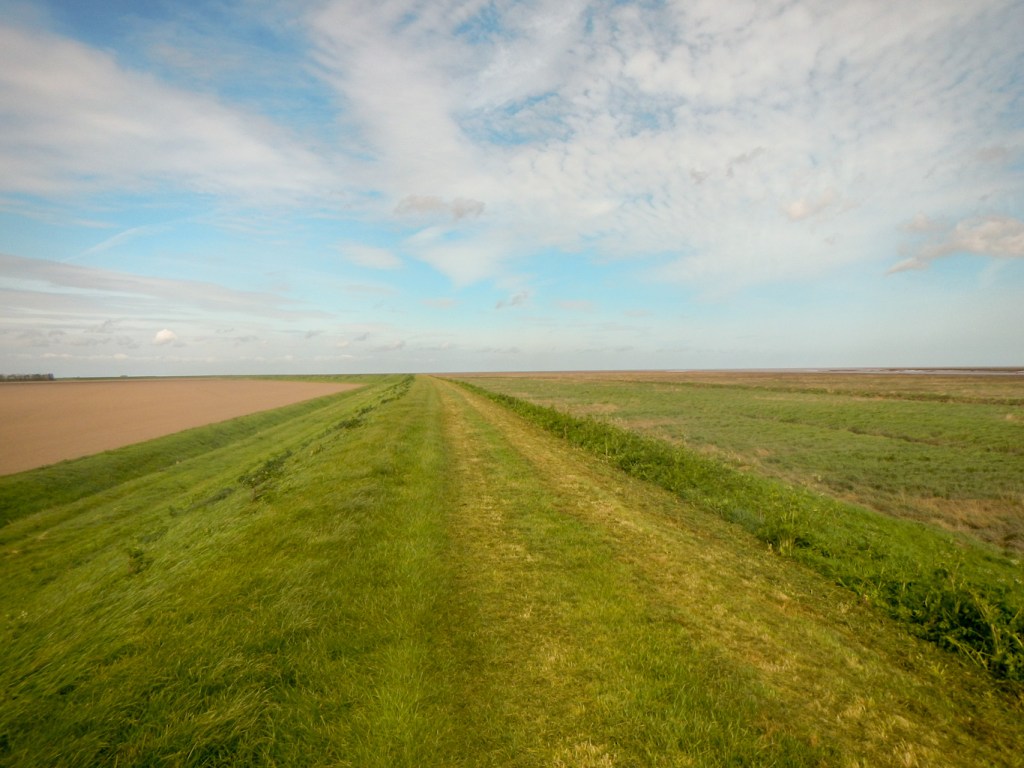
I passed a large mower cutting the grass on the top of the dyke. The land to my left was reclaimed marsh land and the risk of flooding is mitigated by the large bank that I was walking on. Small wonder that notices warn of a £5,000 fine for anyone caught damaging the flood defences. Old maps show that when Peter Scott was living in the area, much land that has now been drained was marshland. He wouldn’t have walked the path that now bears his name.
After passing The Wash National Nature Reserve sign, apart from the man driving the mower and some farmers and walkers spotted in the distance, I only saw a single person. This was a woman walking her dog; she explained that she had moved from London, fallen in love with the fens and would never choose to return to the metropolis.

Rabbits frolicked on the path ahead of me, muntjacs appeared in the distance both on the fields and on the marshes, skylarks were flying and diving over the farmland, egrets were patiently waiting for fish at the waterside and flying overhead too.
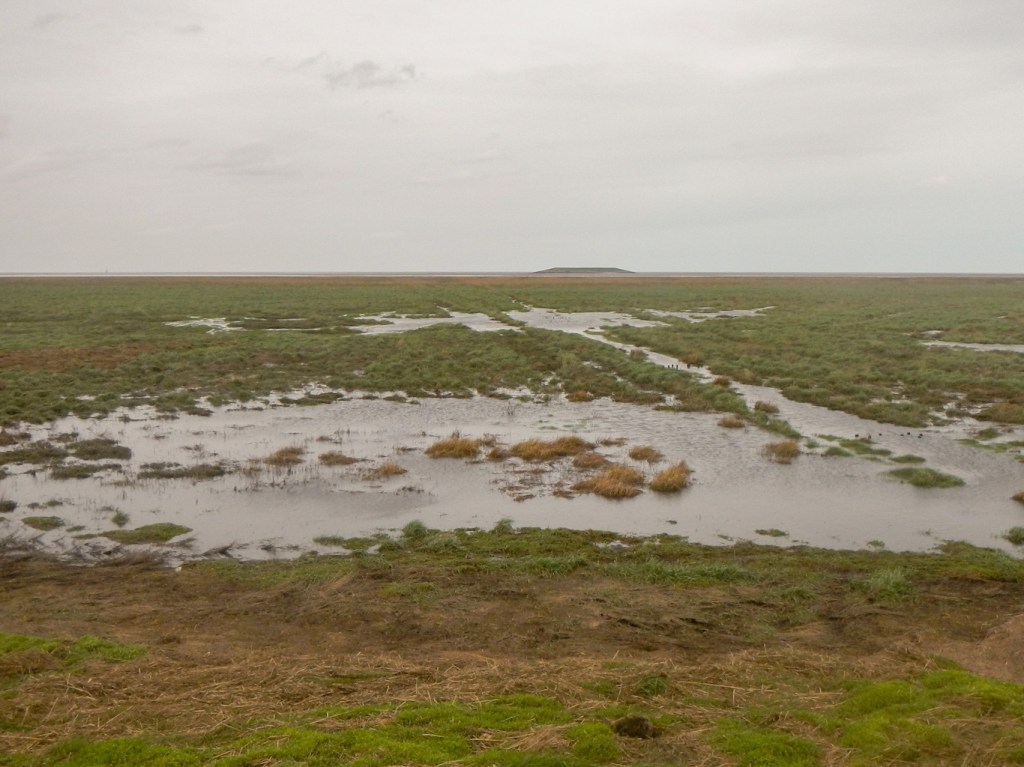
I could see what appeared to be two circular islands. These are the Inner Trial Bank and the Outer Trial Bank which were constructed in the 1970s as part of a study to assess the feasibility of building a tidal barrage across half of the Wash. The whole thing turned out to be too costly and the “islands” now provide nesting areas for thousands of seabirds. Suggestions and plans have resurfaced again over the last couple of years but conservation agencies have made a strong case against them.
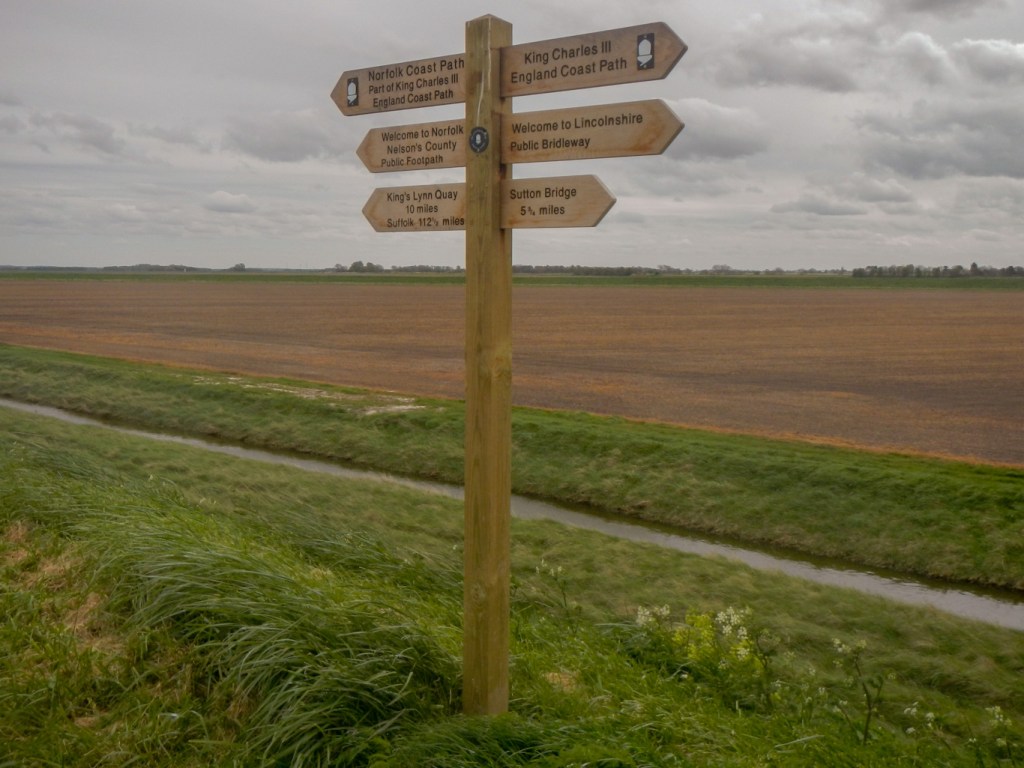
I crossed from Norfolk into Lincolnshire.
Soon I reached the River Nene, where the path turns sharply south to follow the line of the river bank. I could see two lighthouses ahead, one on the east bank where I was walking and one on the west bank. These lighthouses are now inland but when built in 1830 they marked the entry to the sea, as daytime beacons for shipping. East Lighthouse was built right at the end of a new three mile long sea wall running out into the marsh.
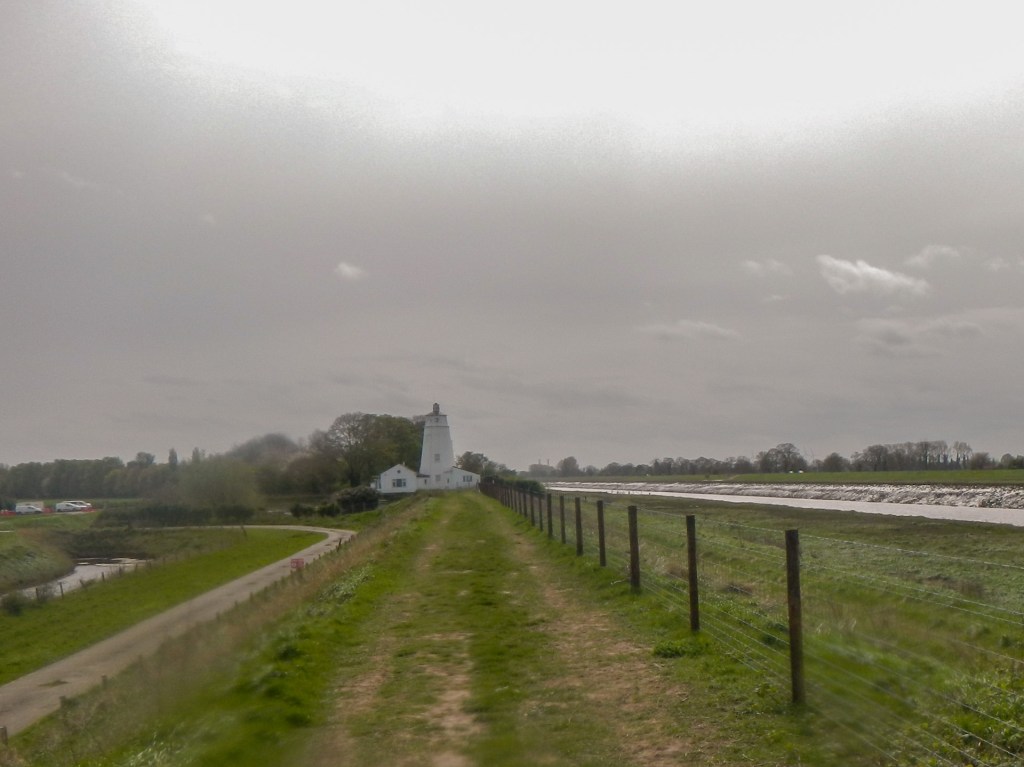
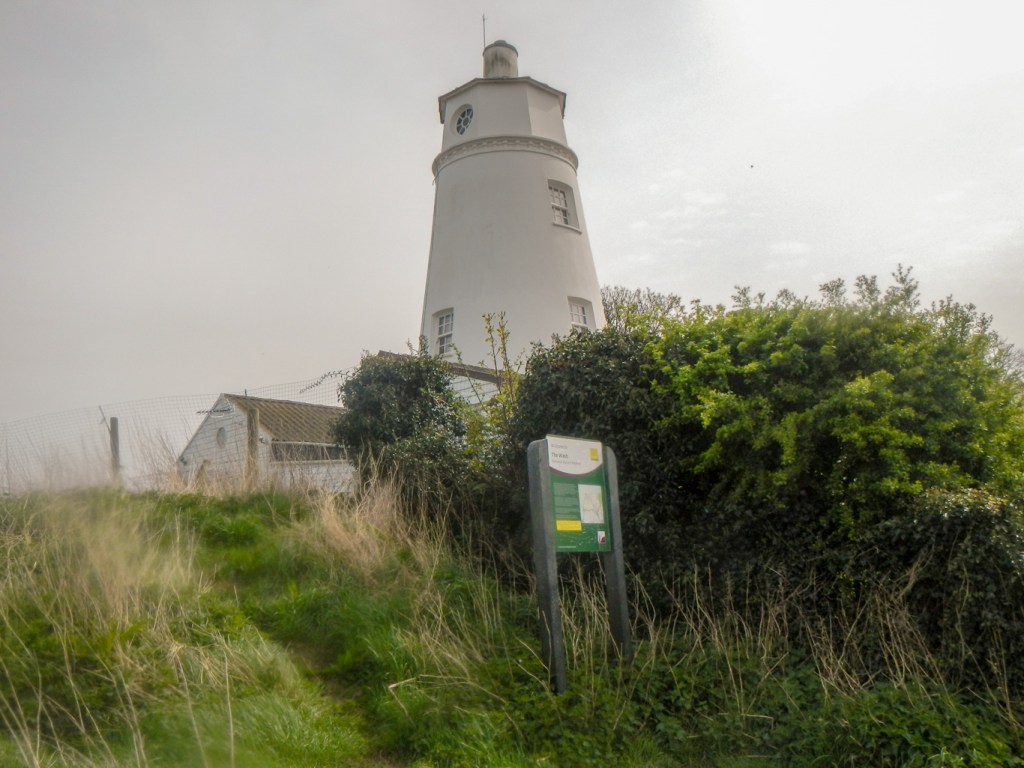
In 1933 the east lighthouse became home to the young Peter Scott whilst he took time to decide what to do with his life. He had trained as an artist and developed his skills here. He also wrote and illustrated his first two books: Morning Flight and Dawn Chorus. Moreover he began a wildfowl collection, collecting rare birds from all parts of the World, and keeping them on what were tidal ponds near the lighthouse. He began to realise the devastation man’s activity was having on the living environment and to understand the need for conservation on a global scale.
The Second World War intervened, but after the war he was a prime mover to establish the World Wildlife Fund – the first ever global conservation charity. He went on to initiate and develop the Wildfowl and Wetlands Trust, which has its headquarters on the Severn Estuary at Slimbridge.
Hence the Sir Peter Scott Lighthouse has been said to be the most important building in the history of global conservation.
All that remained was for me to trek along the quiet three to four mile road to Sutton Bridge with views of the bridge and the mothballed power station ahead of me almost all the way. It seemed to take an eternity before I came closer to the bridge and the huge lorries passing over the bridge appeared small and distant for a long time.
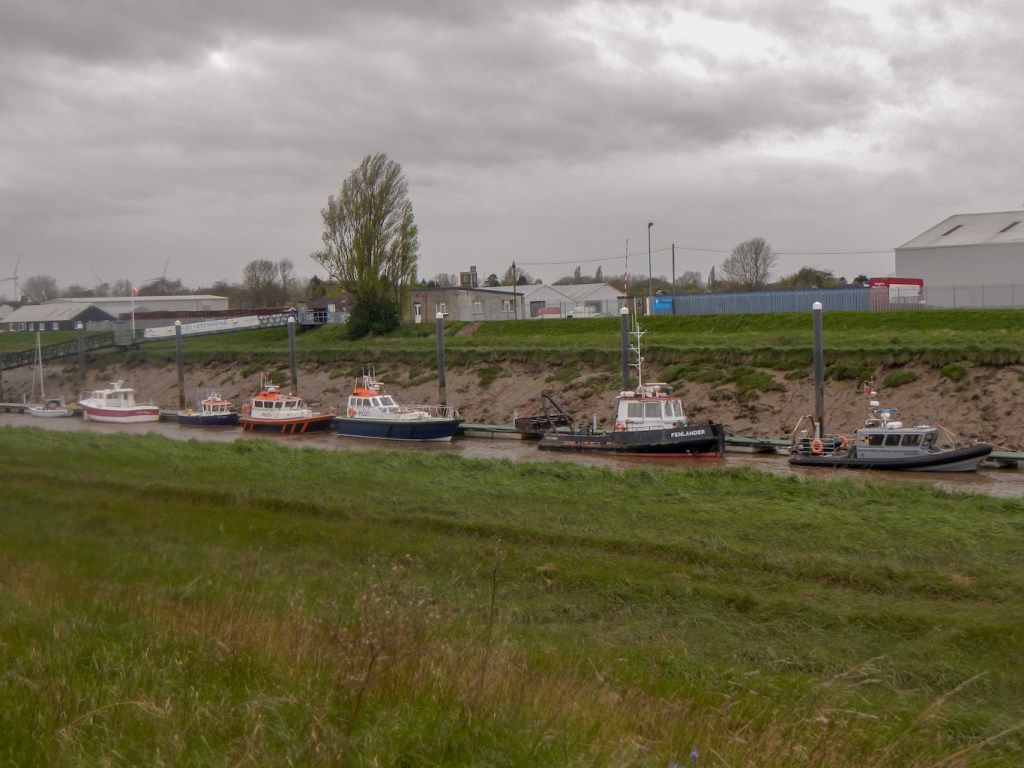
The port and marina on the opposite bank was a distraction towards the end of the monotonous walk along the long straight road.
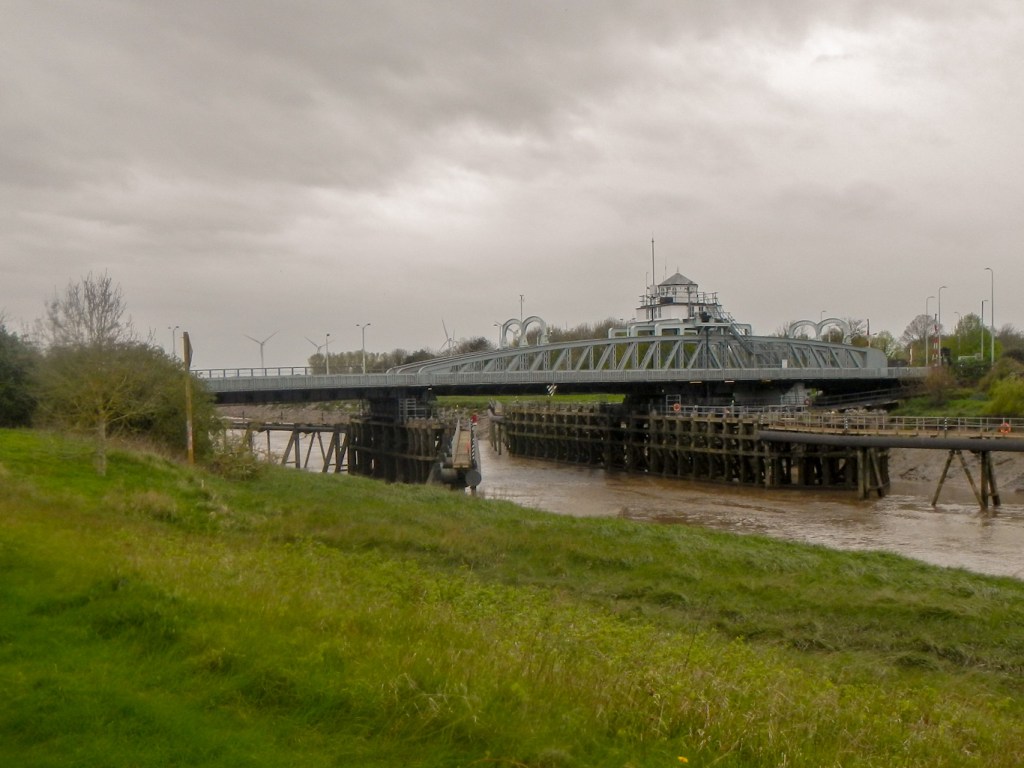
Eventually I reached the huge bridge. It’s an iron swing bridge built in 1897 as a combined road and rail bridge. In 1965 the railway closed and the road expanded on to both spans. I saw that a bus to Kings Lynn passed over the bridge just as I arrived there so I expected a thirty minute wait for the next bus. However, on reaching the village and looking for a convenient café to while away twenty minutes or so, I spotted another bus to Kings Lynn and ran to the nearby bus stop. For once I was lucky that buses come in twos or threes.

Once away from the towns, this area certainly lived up to its reputation as one of England’s last great wildernesses and it’s not surprising that his time living at the lighthouse inspired Sir Peter Scott to spend most of the rest of his life conserving nature and especially wetlands.

 Where's Kathryn?