17 August 2023
I had an amazing experience, visiting this island which is only 1.5km long and 0.5km wide, lying 8km off the coast of mainland Scotland at the mouth of the Firth of Forth. It’s only possible to visit between April and September and the number of visitors is tightly controlled. Visiting is only permitted with one of the official ferry companies and the ferries fill up weeks in advance. It’s not only a National Nature Reserve but also a Site of Special Scientific Interest and a Special Area of Conservation.
As I was staying in Glasgow, I opted to book on the RIB from North Berwick (travelled to North Berwick by train changing at Edinburgh). In retrospect I’m also pleased that I did this as it meant that I was able to visit the Discovery Centre at the Scottish Seabird Centre beforehand to learn a bit more about what I was going to see. The interactive live cameras on the world’s largest Northern gannet colony, the Bass Rock, were particularly fascinating as the RIB passes close to the Bass Rock during the voyage to the Isle of May and the helpful Discovery Centre staff pointed out features that I would be seeing later on. There were also films to watch which provided a helpful introduction. It was so interesting that I had to be careful not to miss the real trip!
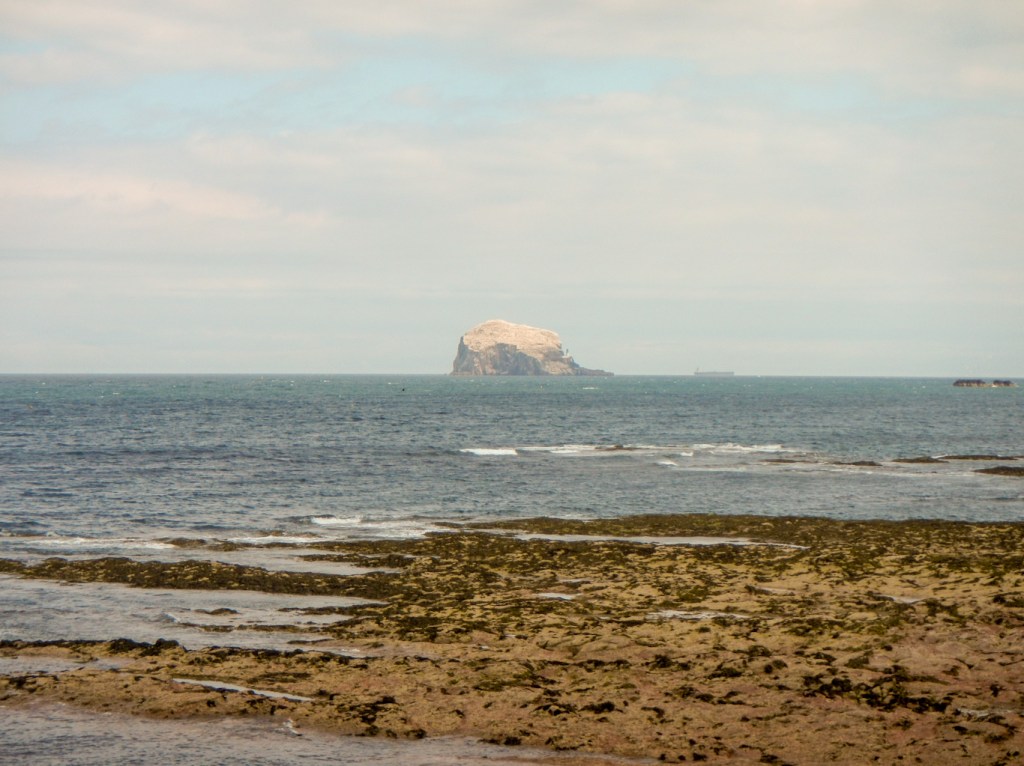
We were a group of twelve booked to travel on the RIB. Pete, our very experienced guide, kitted us out with lifejackets and told us that if we fell off the boat we should assume a star shape and pull the toggle. I volunteered to travel on the outside part of the boat but was too slow and some other people got there first. However, as it happened, there was a very good view from inside and we all went on to the outside for viewing at the Bass Rock so actually being inside meant that I didn’t get soaked with sea water and I didn’t miss anything. As I’m not convinced that I would have managed to float in a star shape and pull the toggle on the life jacket if I fell in the water, it was probably just as well anyway to be on the inside of the boat. We were introduced to Steve who drove the vessel.
The voyage was very rough, but the RIB powered through the water. I was relieved that I’d taken my sea sickness tablets beforehand although in fact there wasn’t too much rolling – it was mainly an up and down motion – so I may have been ok anyway.
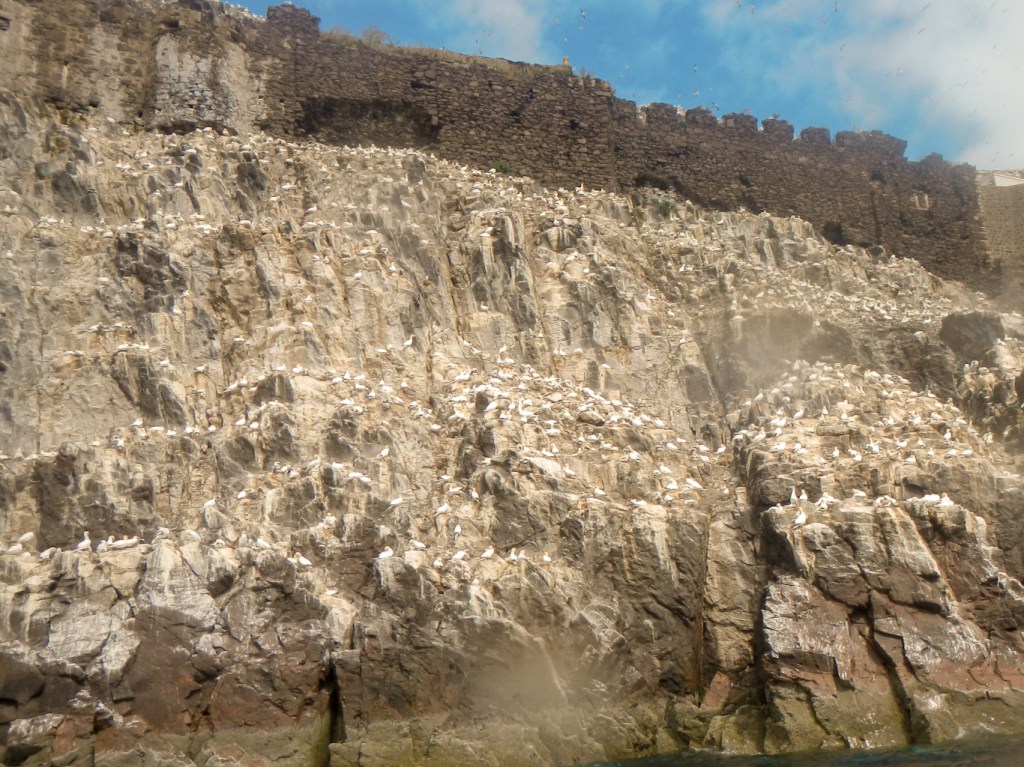
The Bass Rock isn’t on map 59 (it’s on map 67 as is North Berwick) but it is an integral part of this adventure and is the second reason why I’m pleased to have chosen to go from North Berwick; it was totally awesome. Previously I’ve only seen gannetries from a distance, for example at Hermaness off the north coast of Unst in Shetland (or that morning on the live camera) so it was amazing to be so close up in real life.
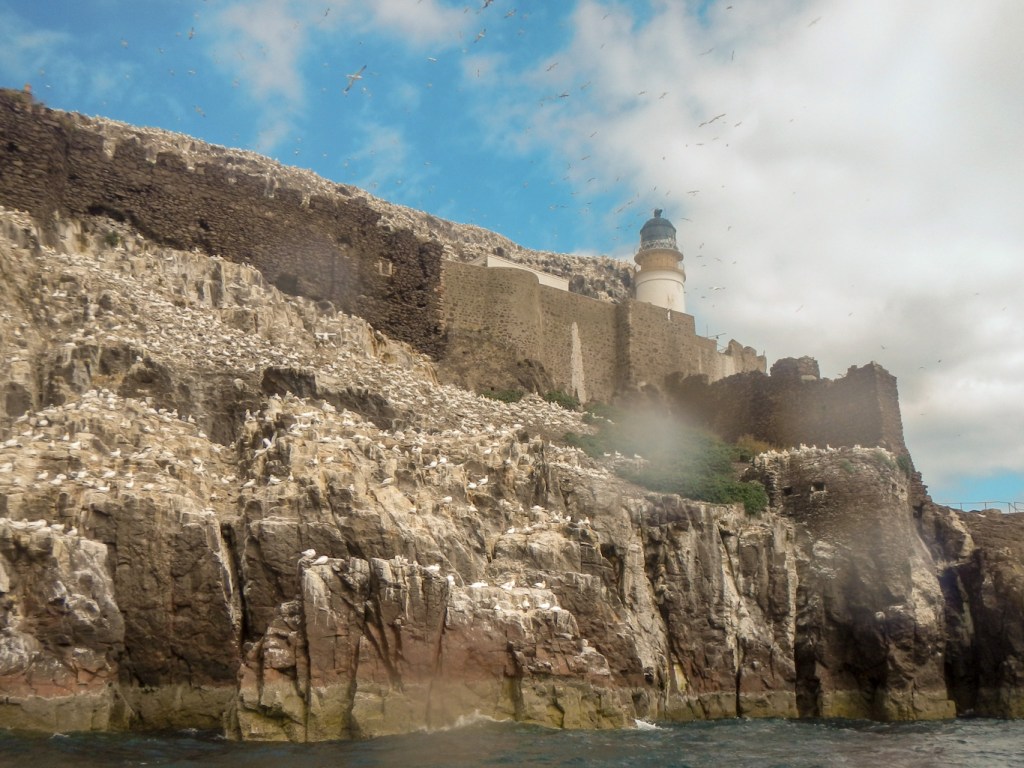
I had thought that the colonies in Hermaness were the biggest in the World but in fact the biggest colony of Northern gannets is at Bass Rock. They filled absolutely every single space and each bird has its own position on the rock. We saw the very downy fledglings and the young birds with black feathers. Adult gannets will fight to the death for their position on the rock so the black feathers of the young gannets are a safety feature meaning that adults will not fight them for position.
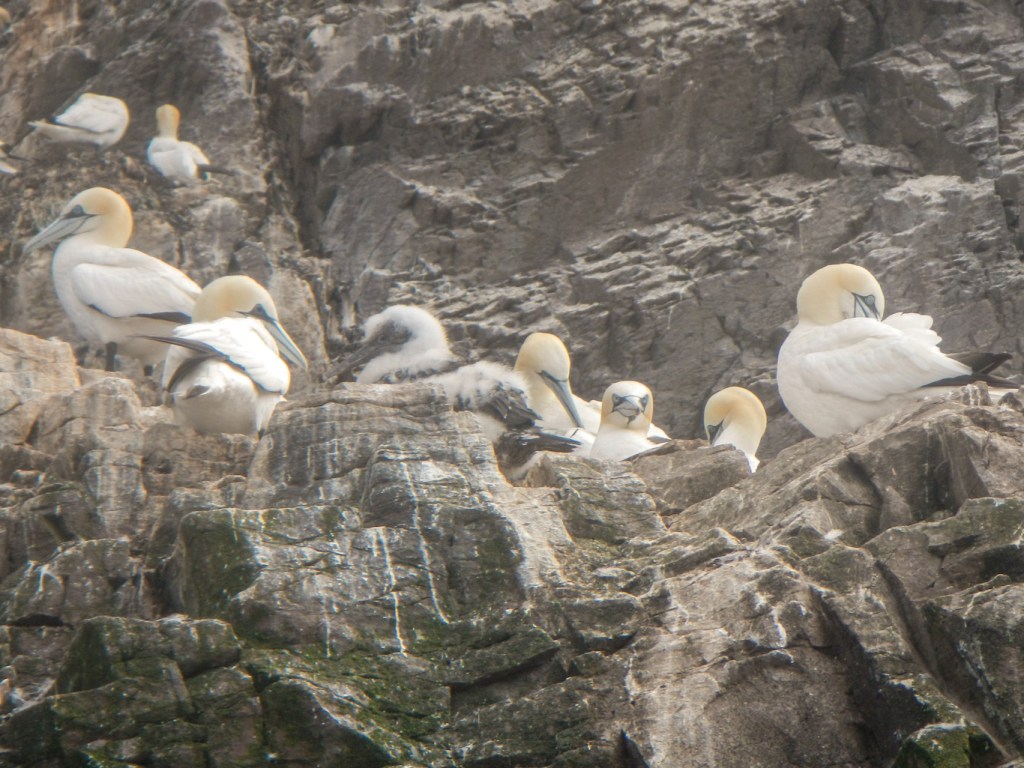
We saw adults pointing their heads upwards as a signal that they were flying off the rock to fish for food and leaving their partner in charge of the chicks. We also saw gannet partners rubbing their beaks together as they re-met. We were given plenty of time to view this awesome spectacle before voyaging on across even rougher water towards our eventual destination: the Isle of May.
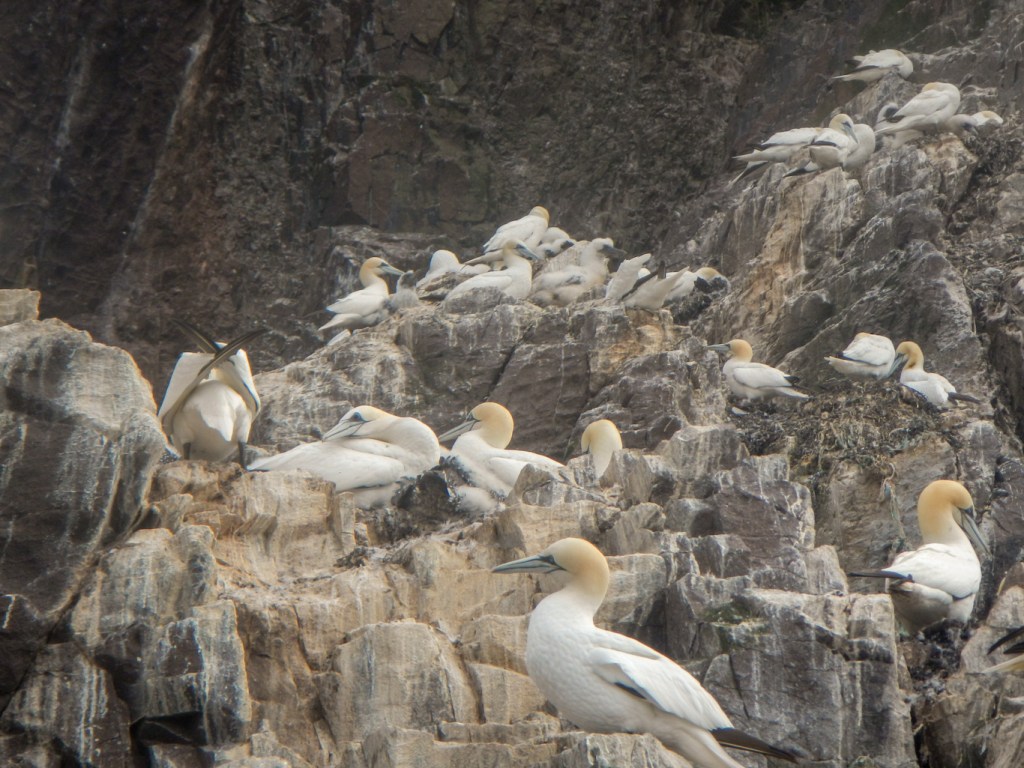
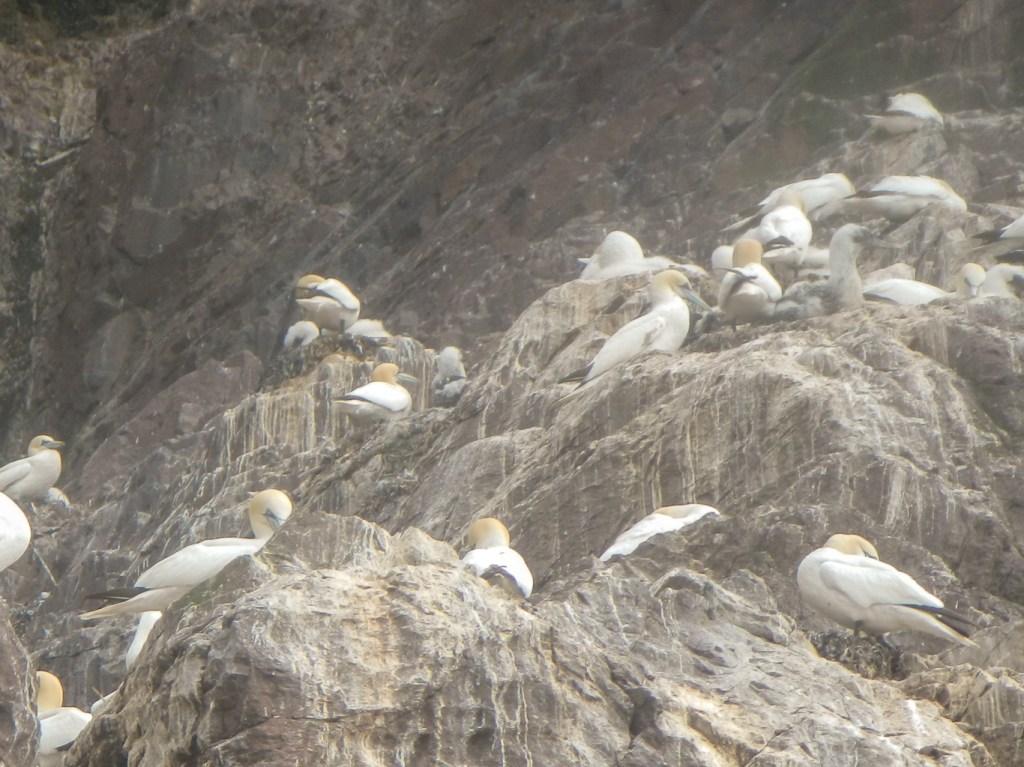
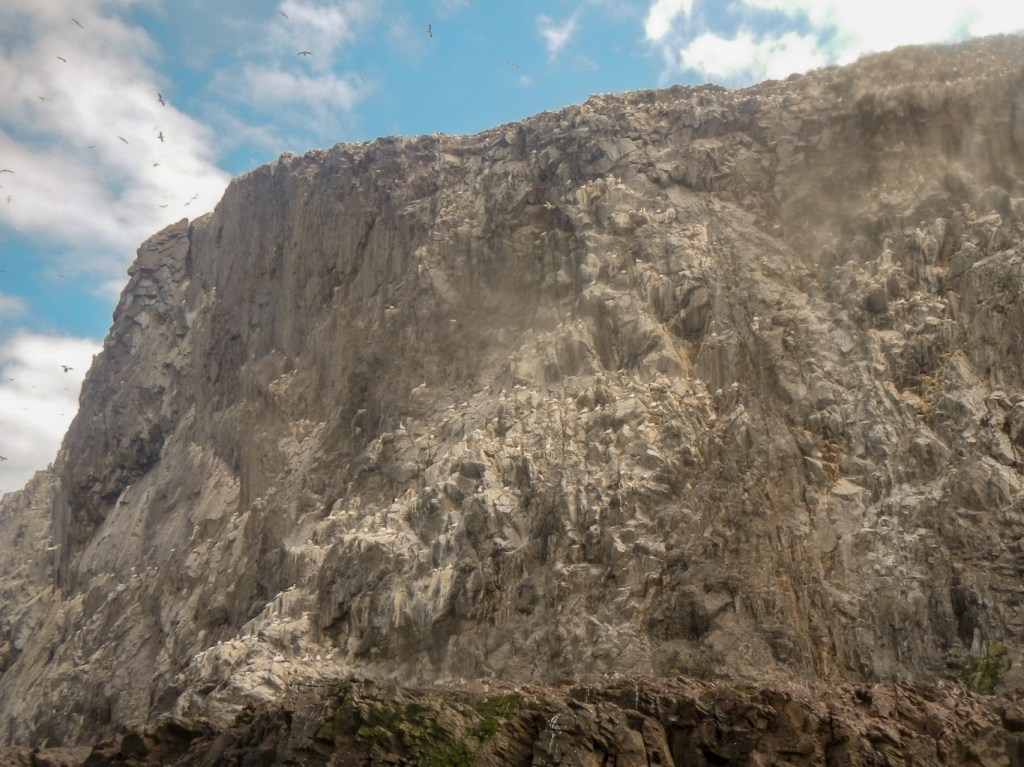
Having arrived close to the island, the next challenge for Steve was steering the RIB into the small harbour; the conditions with easterly wind were borderline for success. However he did this perfectly and we all cheered.
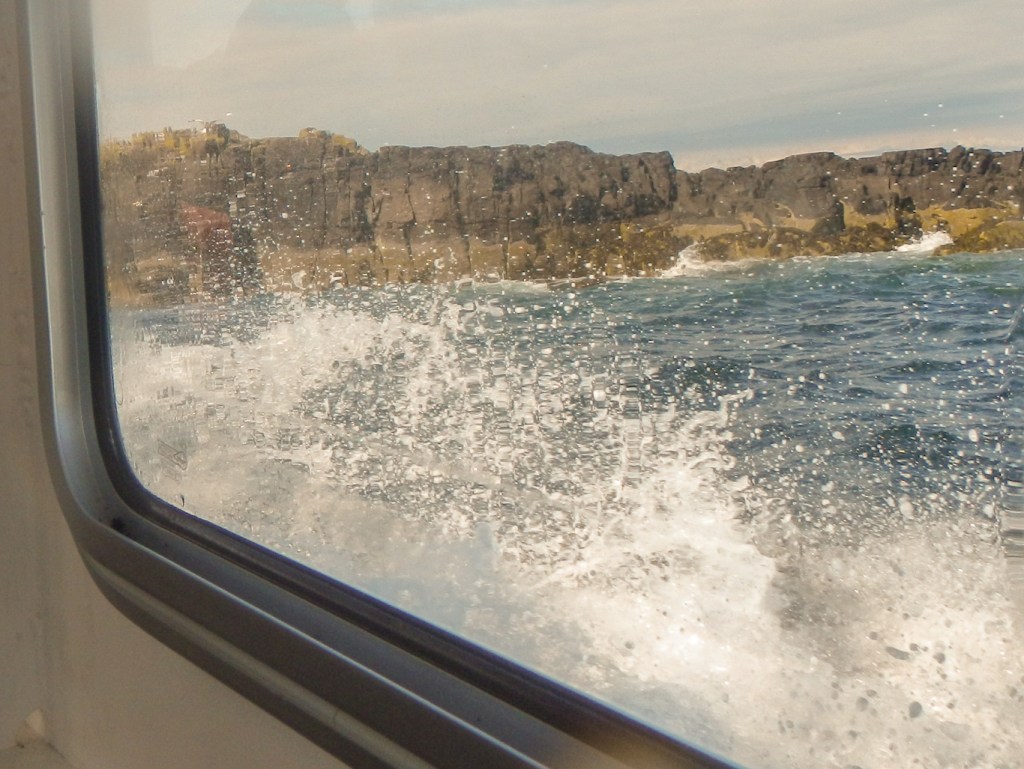
We were welcomed to the island by a NatureScot representative and then taken by Pete on a tour of the north part of the island. This tour in a small group was the third reason why I’m pleased I went from North Berwick rather than on the larger May Princess from Anstruther.
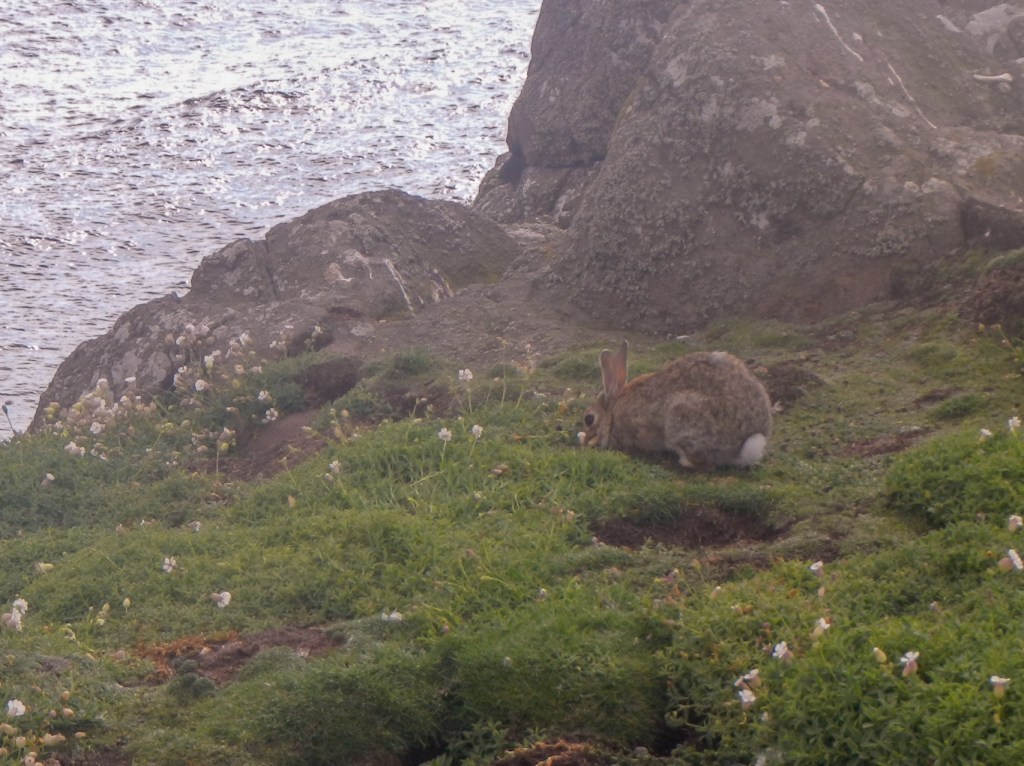
There were puffin burrows everywhere so it was important to keep to the footpaths to avoid destroying this precious habitat. This is the largest puffin colony in UK. They had all left the island as they only spend four months of the year on land to breed, returning to the same burrow and the same partner every year. We did see a few puffins on the sea when we were on the boat.
However we saw lots of rabbits. Some were almost black in colour – a characteristic of the rabbits on this island. The rabbits were introduced to the island by Benedictine monks in the twelfth century.

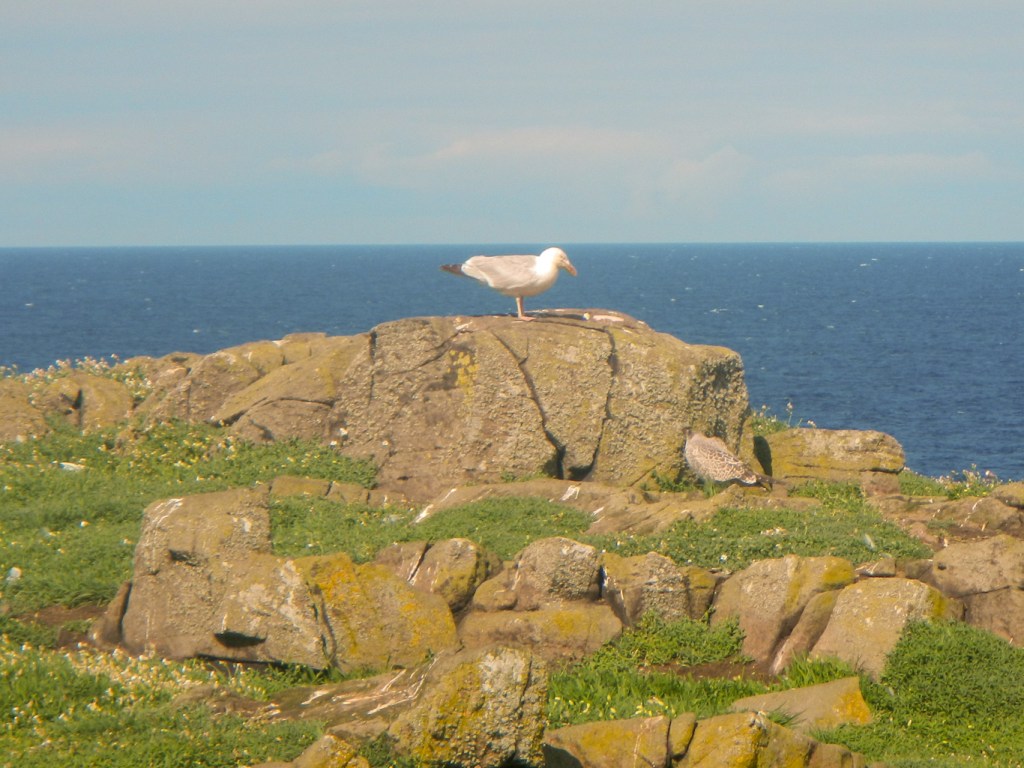
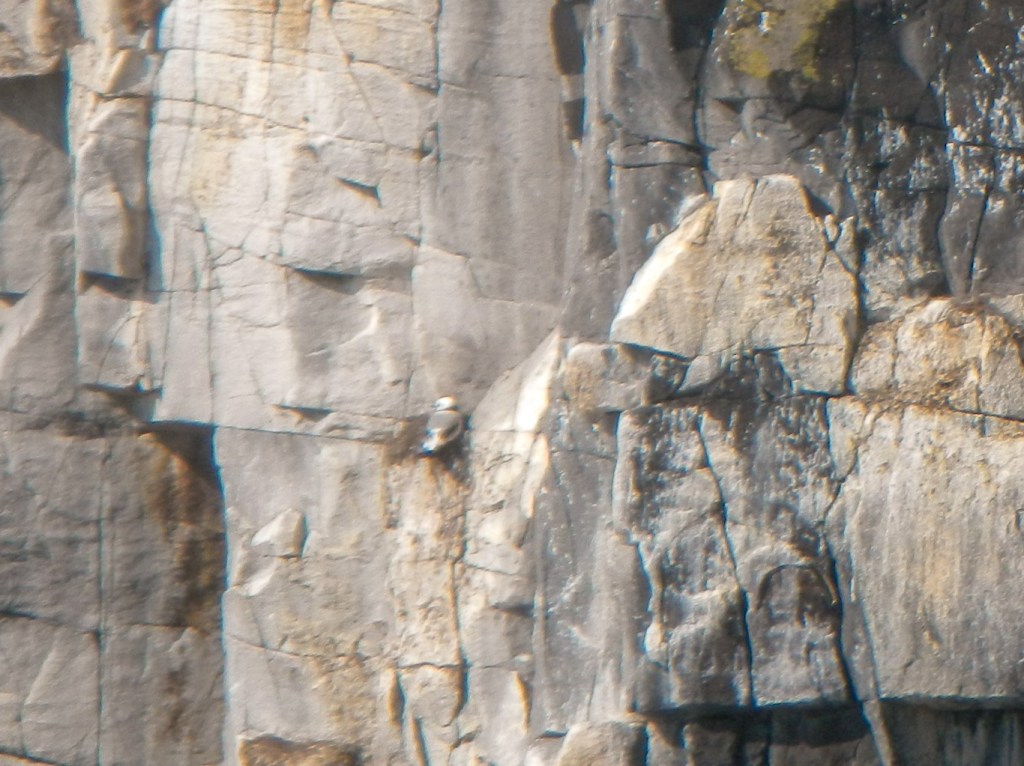
We also saw black backed gulls, fulmars and shags. Pete warned us not to annoy the fulmars as we could get covered with a noxious smelly oil and wouldn’t be allowed back on the RIB!! – the smell can’t be washed away. Pete pointed out a kittiwake nest on what looked to be an impossibly narrow ledge on the cliffs. Sadly the kittiwakes proved particularly susceptible to Avian Influenza and were decimated recently, although the puffins were almost immune.
We walked to the “Low Light”. This lighthouse was opened in April 1844 to act in conjunction with the main lighthouse. As both lights align, ships could avoid the treacherous North Carr rocks. The low light was decommissioned in 1887 when no longer needed following the establishment of the North Carr Lightship.
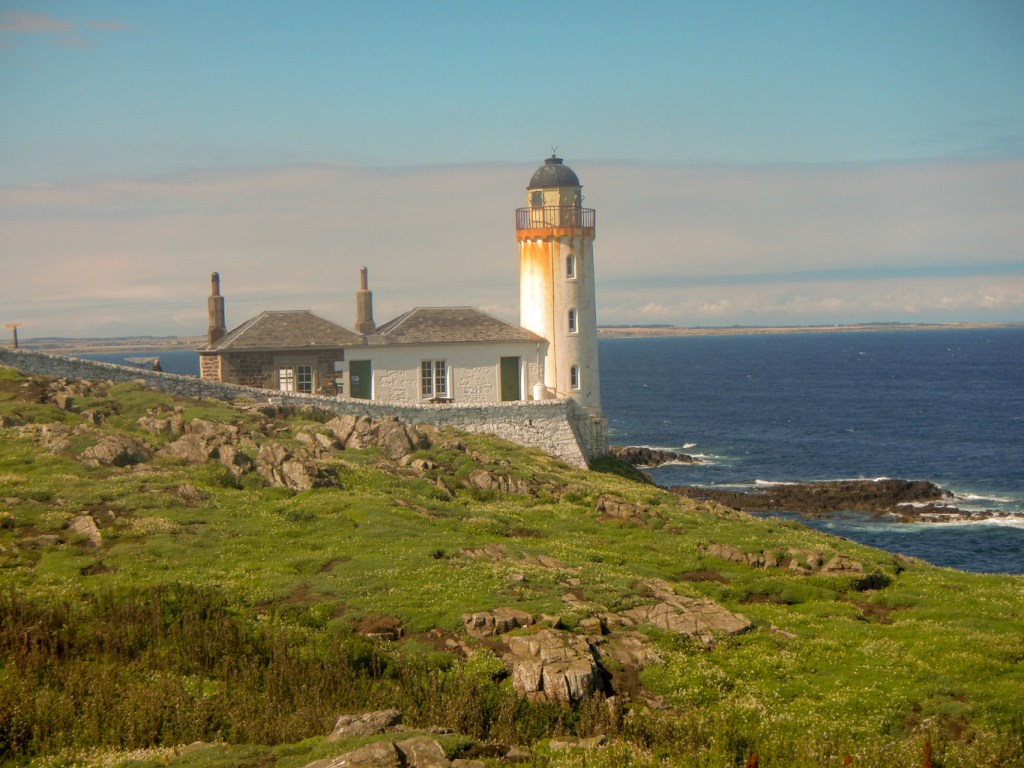
In 1934, a group of ornithologists set up the Isle of May bird observatory in the low lighthouse. This was the first bird observatory in Scotland. It’s still used as such – volunteers monitor, count and record all bird migrants. They also ring birds using the Heligoland traps and the fine mist net traps to capture them for this purpose.
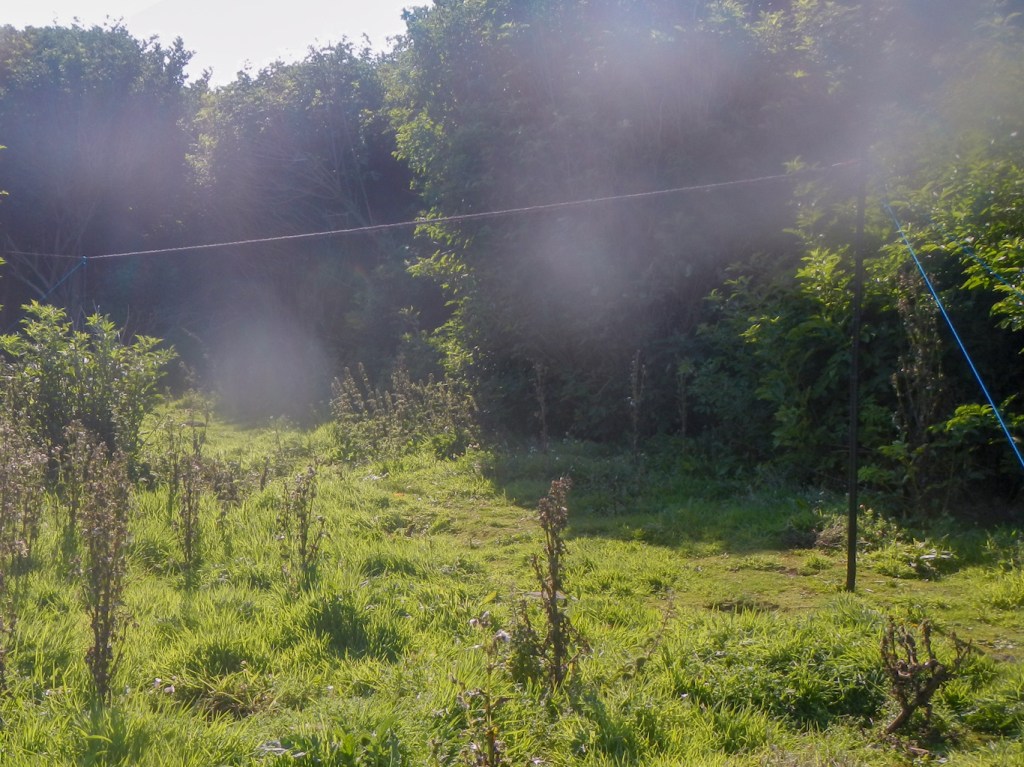
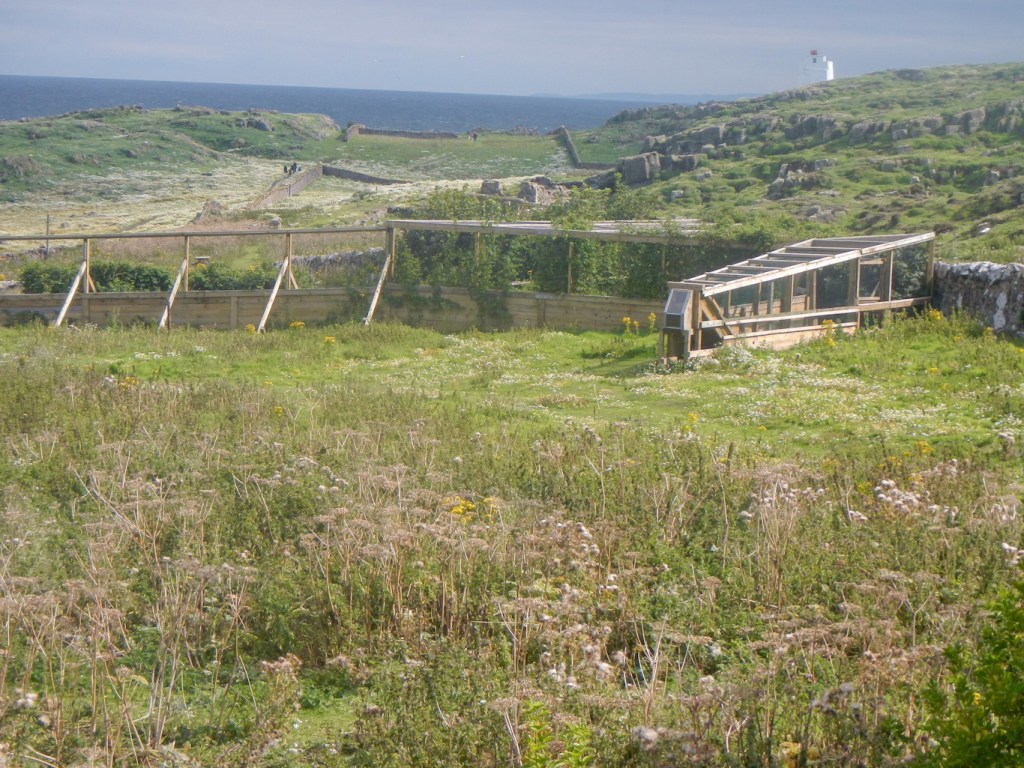
We walked down the low road, towards Burnett’s Leap to look across at Rona and North Ness – these areas aren’t accessible to the public and are important for seabird research.
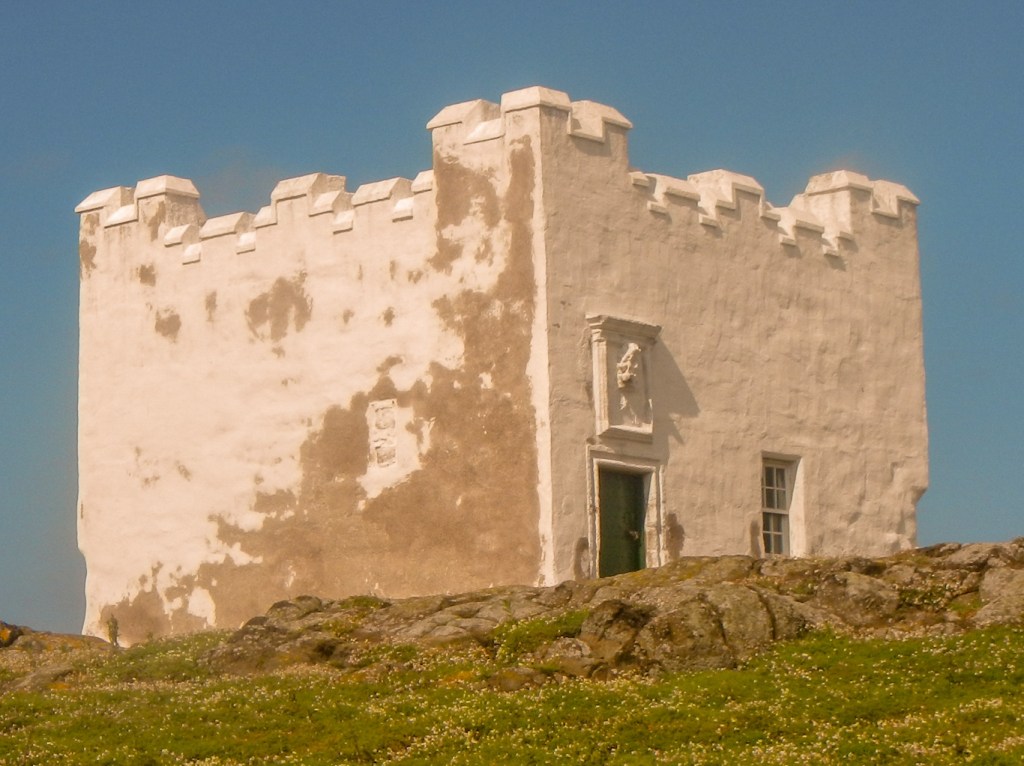
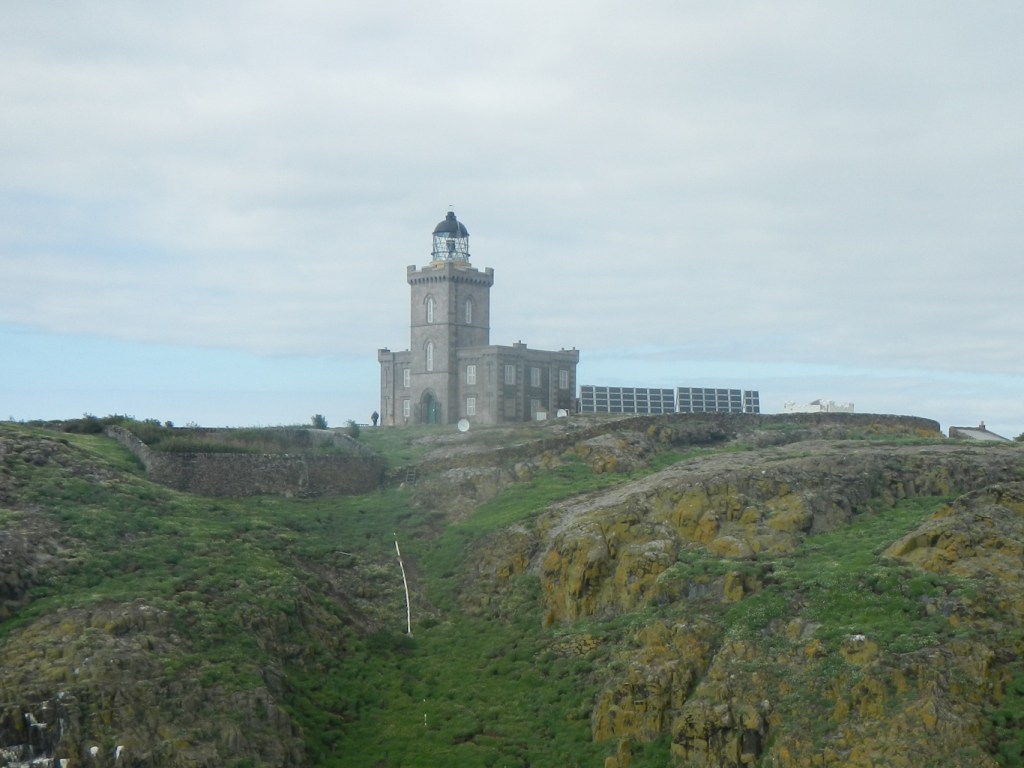
We returned up the hill to look at two more lighthouses – the original lighthouse started operating in 1636 and was a three-floored stone structure topped by a fire basket and coal fire. In 1790, a lightkeeper’s entire family was wiped out due to carbon monoxide poisoning, except for an infant daughter who was found alive three days later. Two floors were removed from the lighthouse when the main Stevenson lighthouse was built in 1816. This main lighthouse was built to resemble a castle and had a grand staircase, carpets and space for visiting officials to stay. It’s now a listed building and is sometimes unlocked for visitors but not on the day we were there.
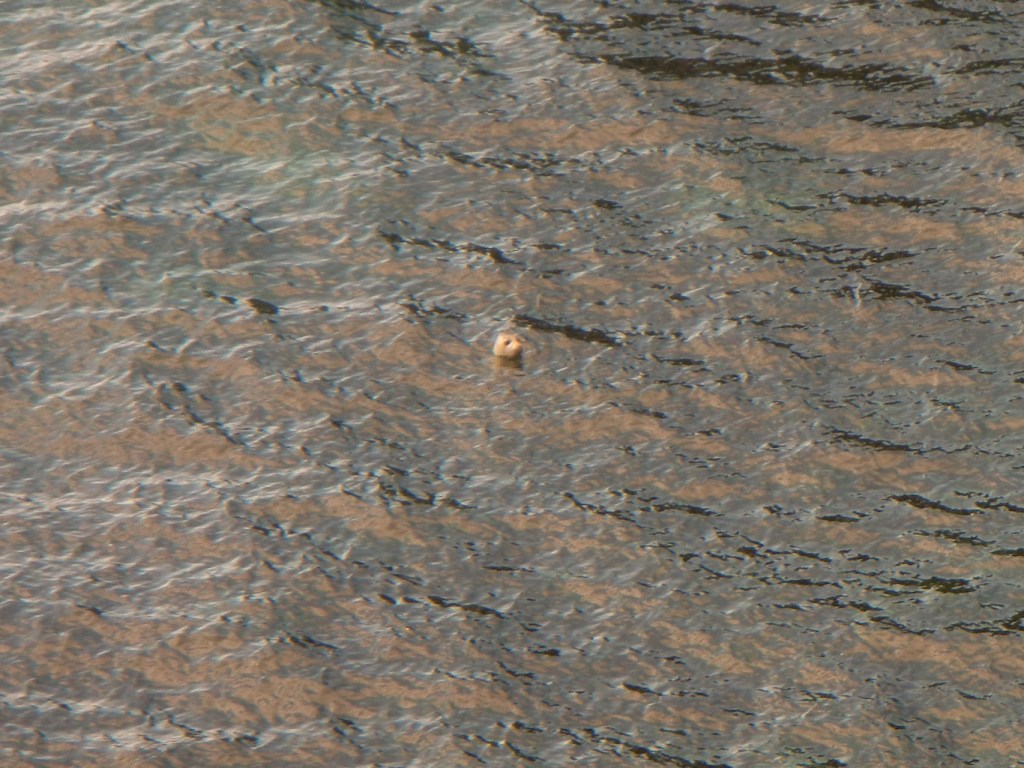
Pete left us to walk round the south part of the island in our own time – for me this included seeing empty shag nests, shags drying their wings, a seal in the water , the old priory and some smuggler’s caves as well as some more superb views of the scenery.

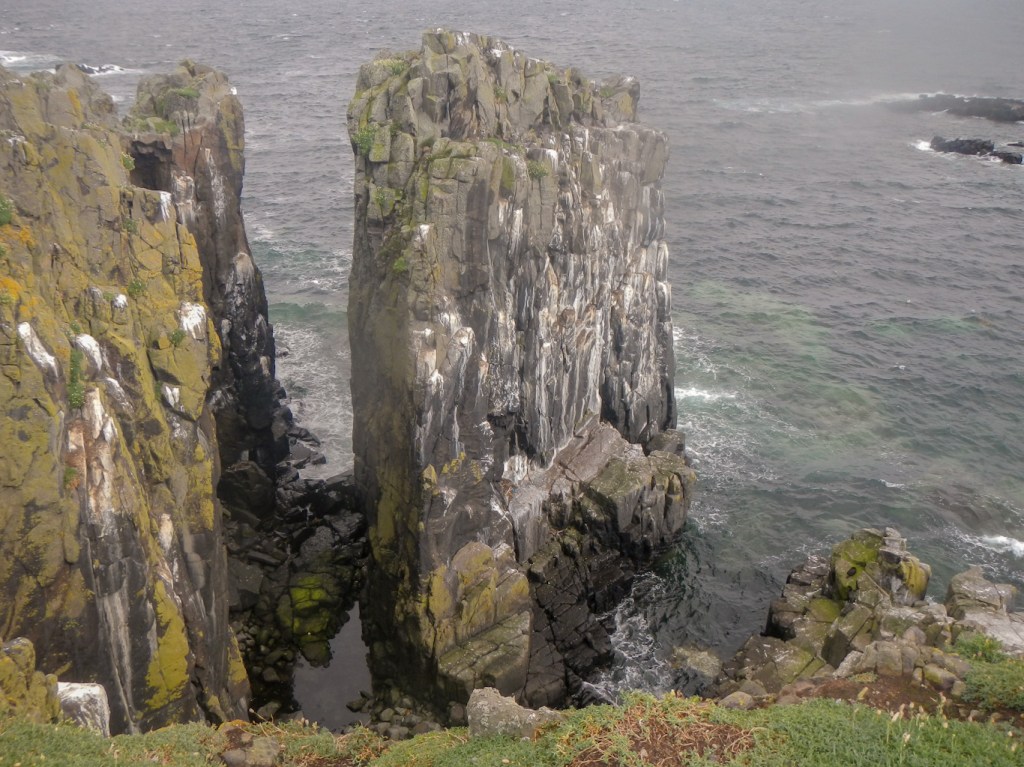
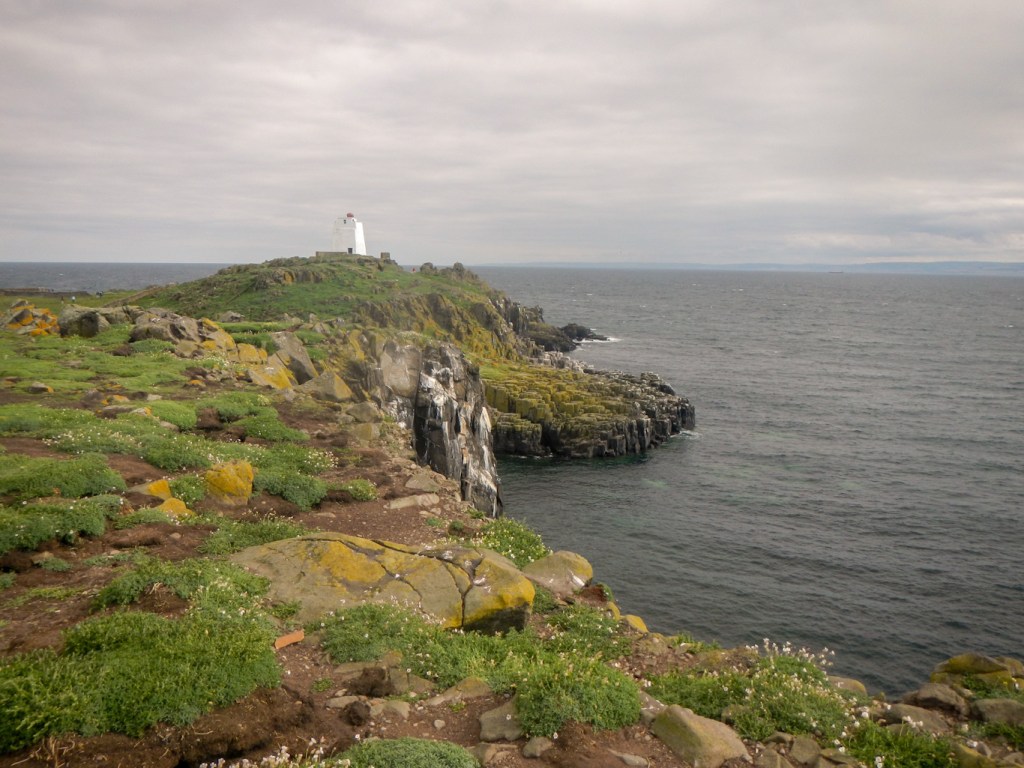
However, all too soon, it was time to return to the visitor centre to board the boat for the return journey. While we were waiting, we were very privileged to be able to meet David Steel who has been reserve manager for the Isle of May since 2015 so he really knows the place inside out (following 14 years as warden then Head Ranger on the Farne Islands!).
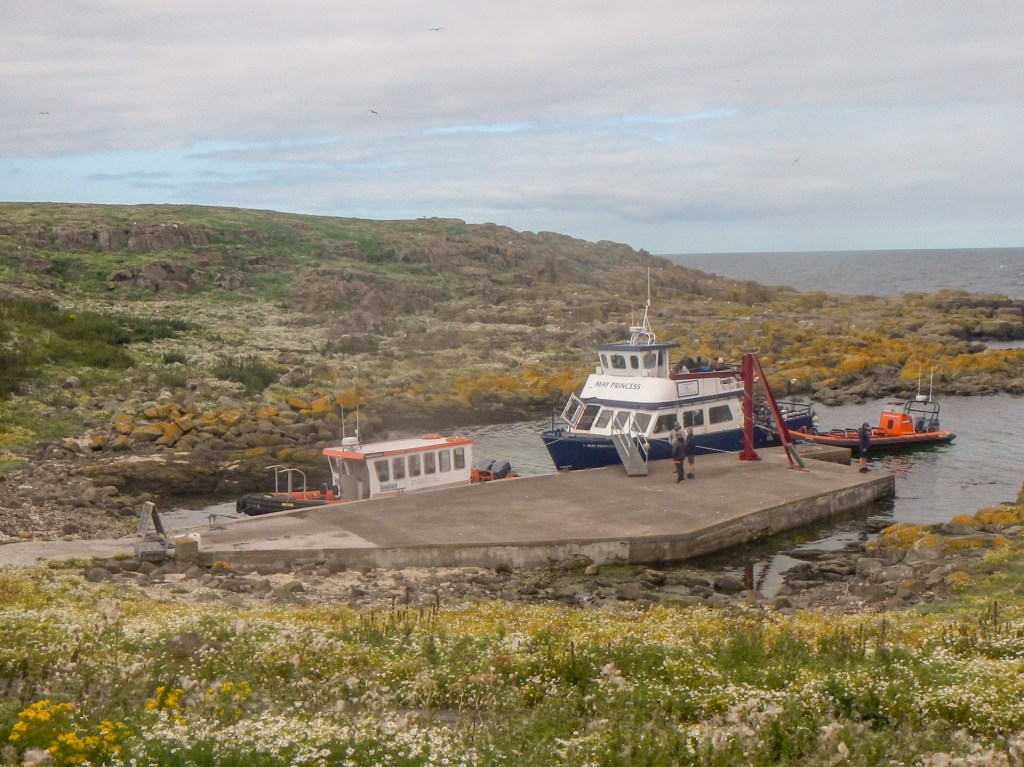
This was certainly a memorable day out! Thanks to the teams from the Scottish Seabird Centre https://www.seabird.org/ and at NatureScot https://www.nature.scot/ for contributing to this amazing experience. It’s possible to volunteer to stay on the island and help with a range of tasks including seabird monitoring and visitor management…….

 Where's Kathryn?