6 March 2023
The plan had been to complete two circular walks with my husband – one near Ditchling Beacon and the second at Devil’s Dyke. However after walking over the shingle at Dungeness then the hills near Birling Gap on consecutive days, he announced that his knee hurt and he didn’t want to walk especially as it was hilly. This gave me the opportunity to be dropped off at the car park high on the South Downs near Ditchling Beacon and walk to Devil’s Dyke car park to be picked up.
The car park is above the 230m contour line so it’s only a trivial ascent to the fine viewpoint of Ditchling Beacon the highest point in East Sussex (248m). The weather was cold and windy with a fair bit of cloud but good views. The summit is surrounded by the rectangular outline of an Iron Age hill fort.
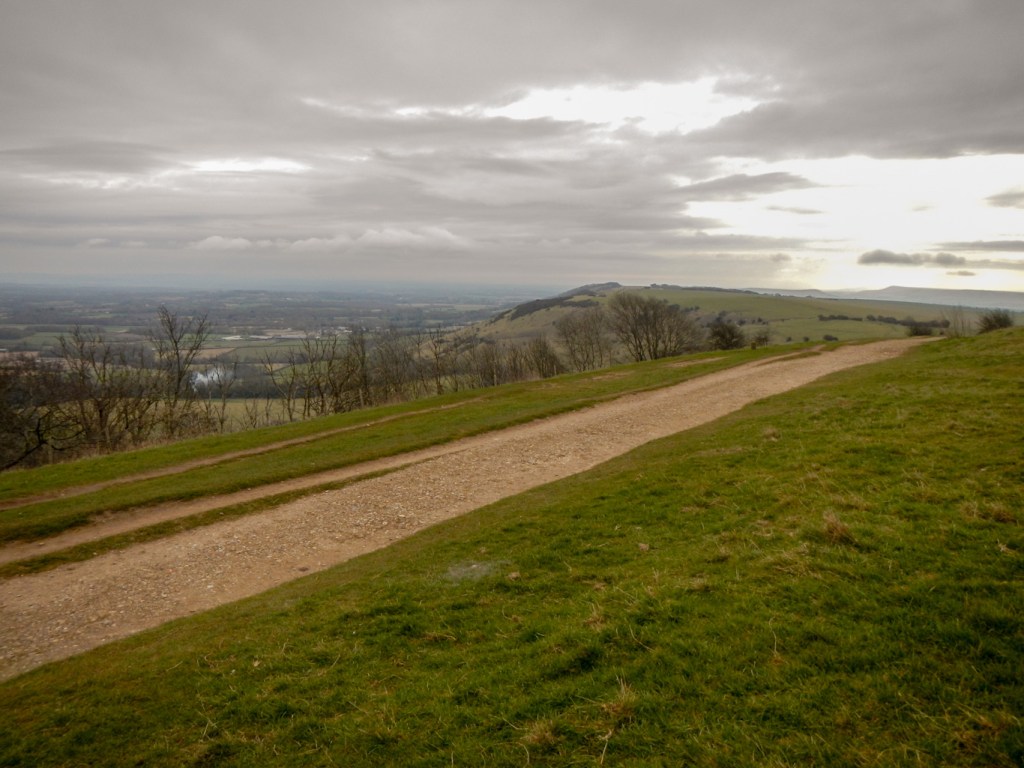
After walking for 15-20 minutes, I saw a band of rain approaching. it was heavy and I rushed to get full waterproofs on. However, despite initially looking as though it would rain for a long time, it all stopped within ten minutes. I kept my waterproofs on as they helped to protect me from the biting wind but in fact I went on to complete the walk without further rain.
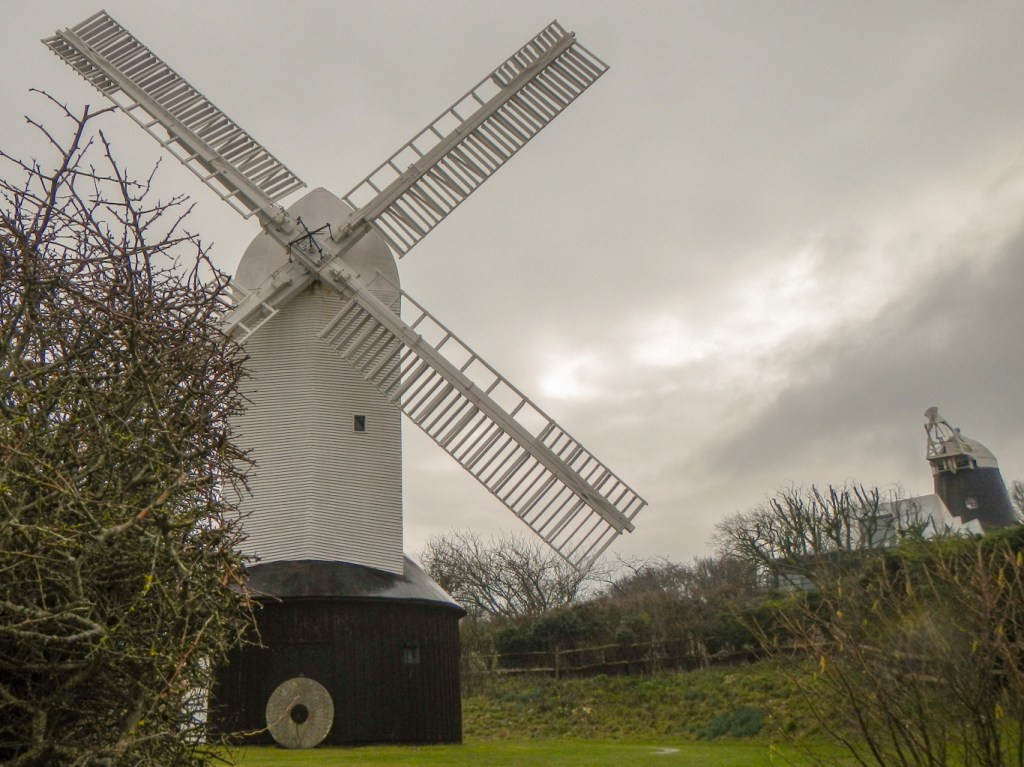
I made the short diversion to look at the famous pair of Jack and Jill windmills. Jill has been restored to working order as a corn mill by volunteers of the Jack and Jill Windmills Society but Jack is in private ownership and stands forlornly without sails. Jill is sometimes opened to the public at weekends in the summer but of course I was visiting on a weekday in early March so the gates were locked.
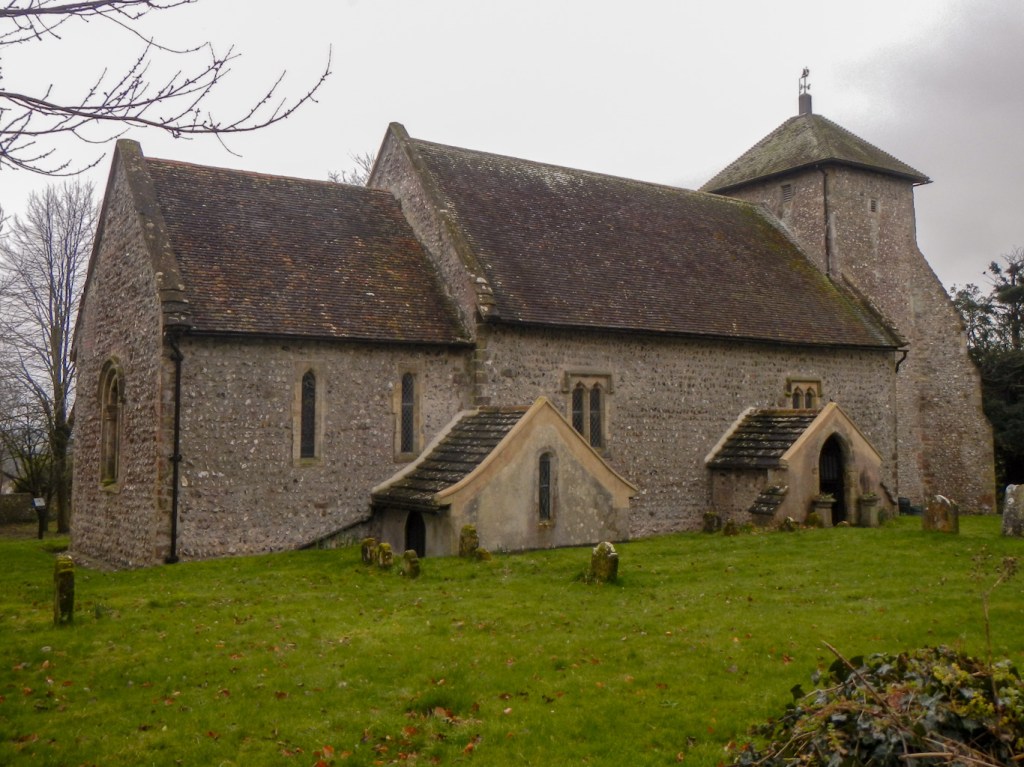
However, the door wasn’t locked at the small church at Pyecombe. It’s a grade 1 listed flint and pebbledash Norman building with a squat 13th century tower. I was welcomed by some parishioners who were discussing the logistics for needed repairs. They directed me to the south extension built to form a trail facility with a kitchen and toilets. Coffee and other refreshments were supplied and easy to prepare as there’s a “boiling water” tap. The church is also open to pilgrims to sleep overnight, although, as I was informed, the pews are hard and all is monitored by CCTV. What an amazing facility though, right on the National Trail!
Suitably refreshed, I proceeded over Newtimber Hill to Saddlescombe. Newtimber Hill is where I spent time on an Acorn Camp in 1979. We were a group of teenagers staying at the village hall in Poynings and doing voluntary work for the National Trust. Our main task for the week was clearing around juniper bushes on Newtimber Hill using a collection of hand tools including scythes and sickles. I’m not sure that any of us were sure what a juniper bush looked like, so hopefully we cleared only the undergrowth and left the bushes.
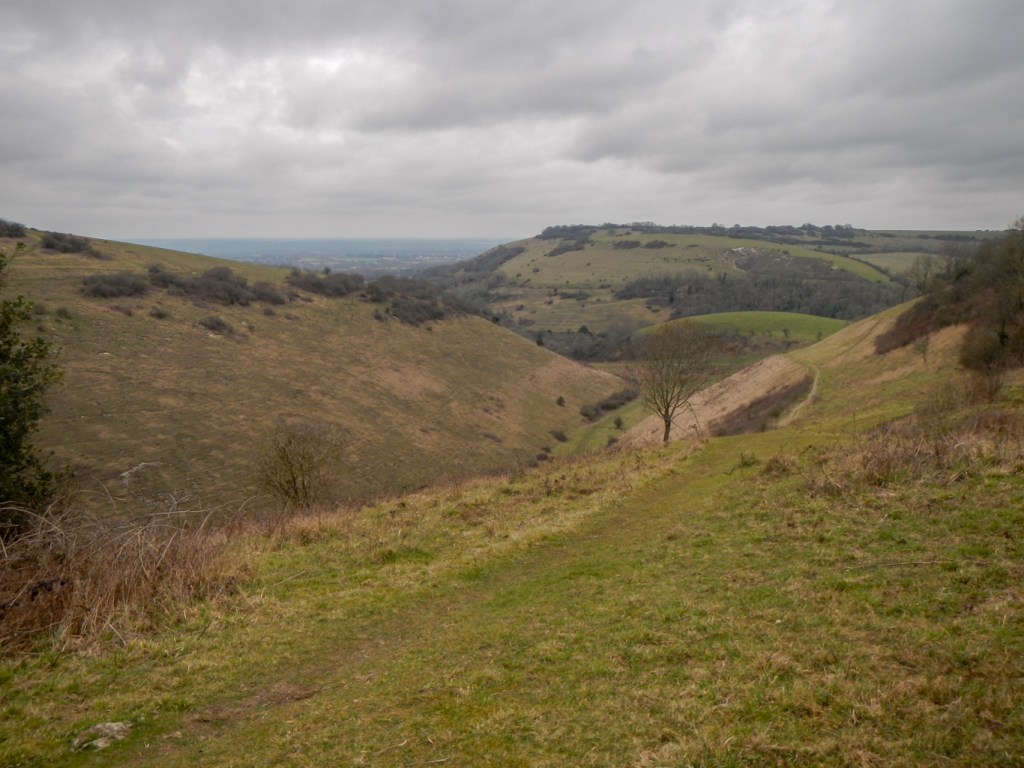
Arriving near Devil’s Dyke, I decided to leave the South Downs Way and descend into the base of the valley. At nearly a mile long, the Dyke valley is the longest, deepest and widest dry valley in the UK.

According to legend, the Devil attempted to carve a dyke through the Downs to enable the sea to flood the churches in the Weald. However he was disturbed by an old lady carrying a candle, which he mistook for dawn.
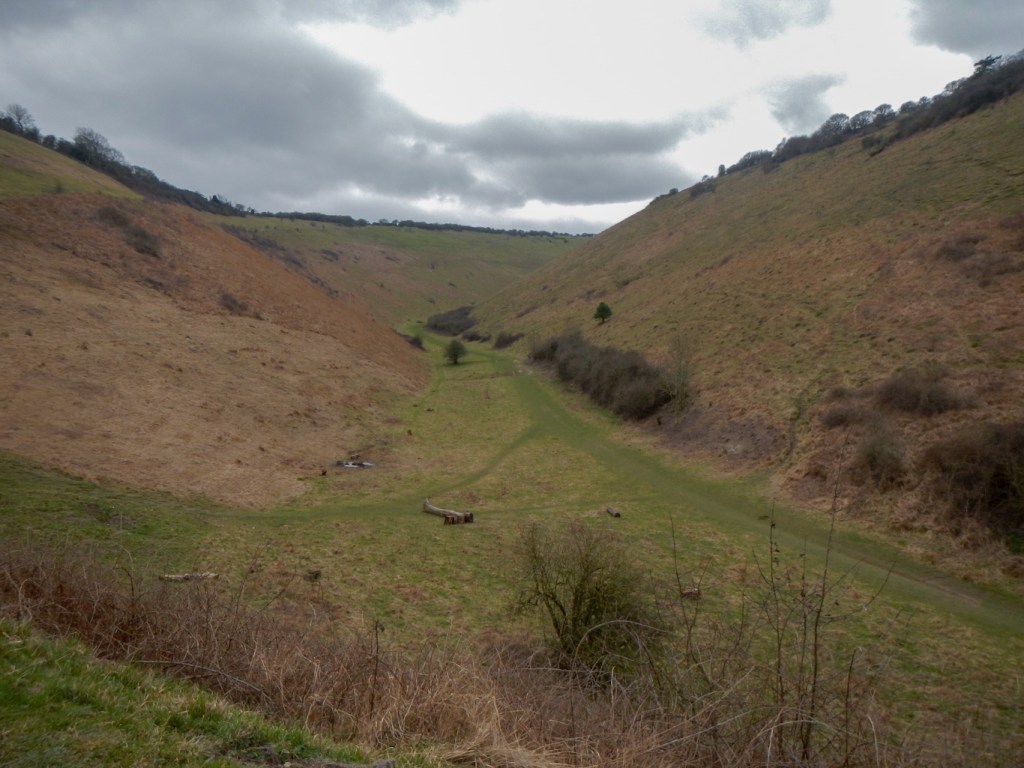
On my walk, as I ascended the other side of the wooded valley to the main car park, I came across what I had hoped to find. This was some wooden step rises built into the ground. Building steps like these was another task I undertook on the Acorn Camp and the area looked strangely familiar. In 1979, I was in the middle summer of my ‘A’ level courses. My husband-to-be who I had not even met at the time was already studying Chemistry at Hertford College, Oxford. He was also an assistant Scout leader with a Scout Troop in Oxford and that summer they were camping in this area. While I was building the steps, I remember having to stop for a group of Scouts to pass through. My husband has told me that he remembers leading a walk and coming across a group building steps. I ended up studying Chemistry as an undergraduate at Hertford College too – if only I had realised then I could have got some advice about the application which I was about to make only a few weeks later! What a phenomenal coincidence that in all likelihood this was the first time that we met and our initial meeting wasn’t at Hertford College after all!
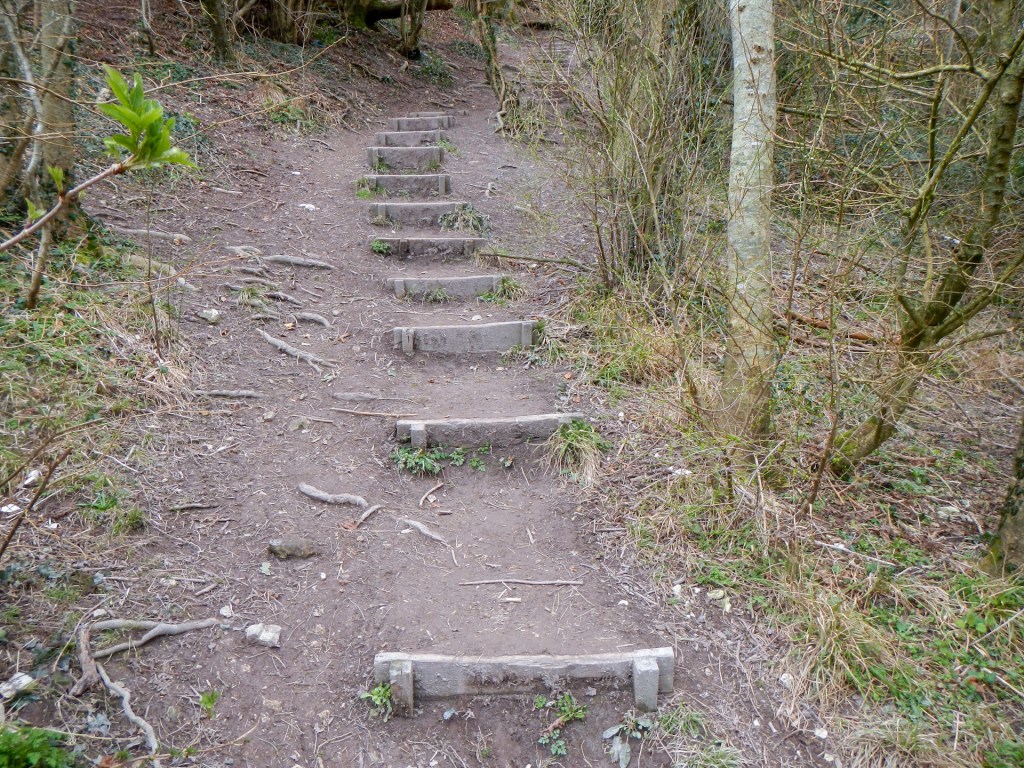
After climbing the steps all that remained was for me to clamber on up the path to the open ridge and walk to the viewpoint and car park. I also strolled up to the trig point where there are excellent views towards the sea. This area is also the site of Sussex’s most iconic Iron Age hillfort.

This was a magnificent walk and, for me, is a particularly special place in view of my memories from that Acorn Camp in 1979.

 Where's Kathryn?