20 October 2022
Lydford Gorge is the deepest river gorge in the south west. It’s in the ownership of the National Trust. I had been waiting for a long time for the full gorge walk to reopen. Much of the trail was closed during the Covid pandemic and the Devil’s Cauldron only reopened about a month ago following an unexpectedly protracted repair of the viewing platform. The full trail closes for winter after 30 October so the window of opportunity in 2022 has been small. Moreover this week the gorge was closed as planned on Monday but on Tuesday and Wednesday it was also closed because of forecast high winds and the risk of falling trees. We were indeed fortunate to be able to visit on Thursday, which turned out to be a beautifully warm and sunny October afternoon, especially as a poor weather forecast meant it ended up being closed on Friday. My husband and I discovered that it was worth the wait!
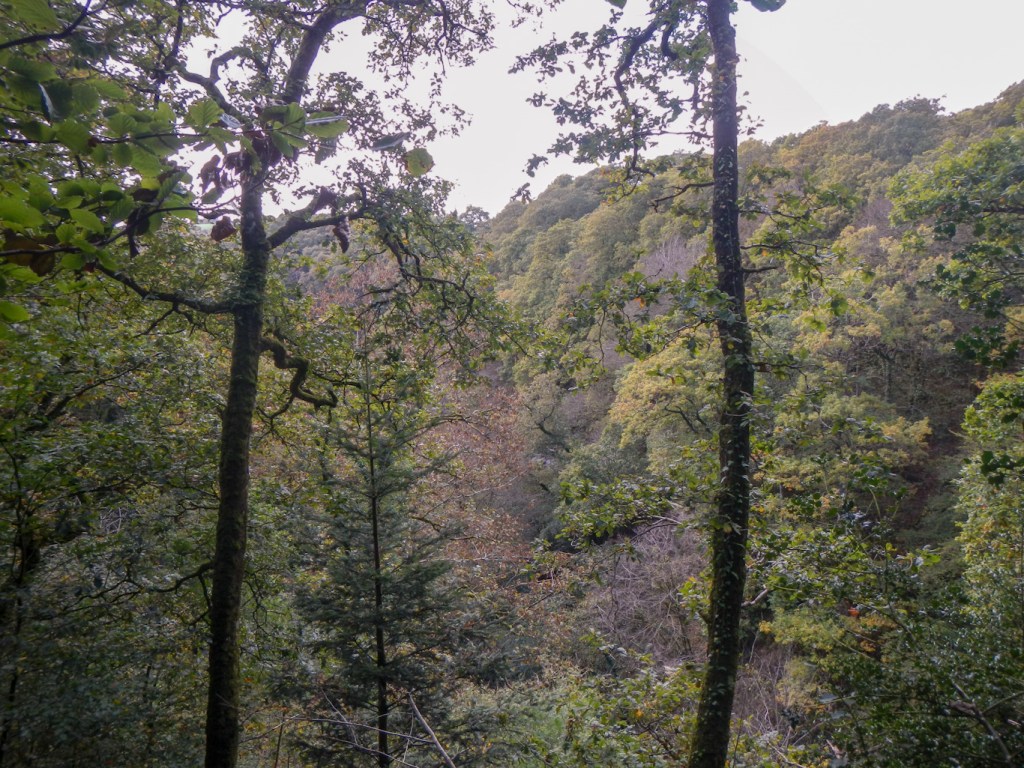
The walk began easily enough along the upper path. We caught glimpses of the river in the bottom of the gorge well below us. A few cascading tributaries tumbled down into the main river. Sunlight penetrated between the trees dappling the ground with patches of light. Luxuriant ferns were growing between the mixture of trees in this ancient woodland. Fallen leaves carpeted the path, along with beech nuts and acorns.
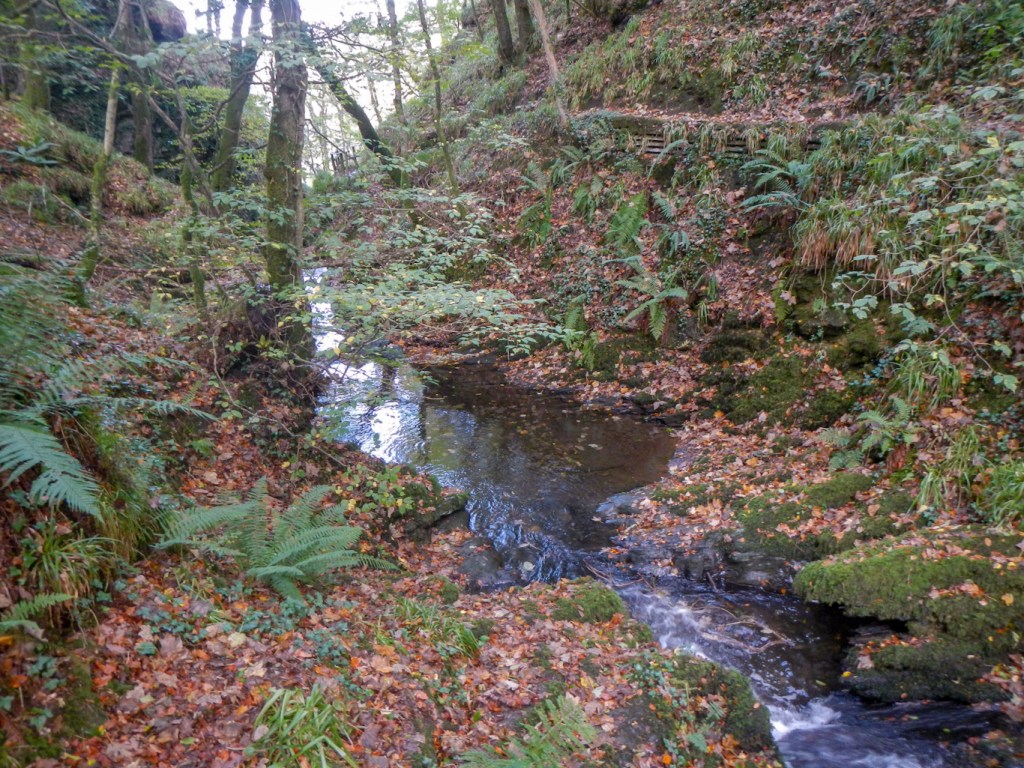
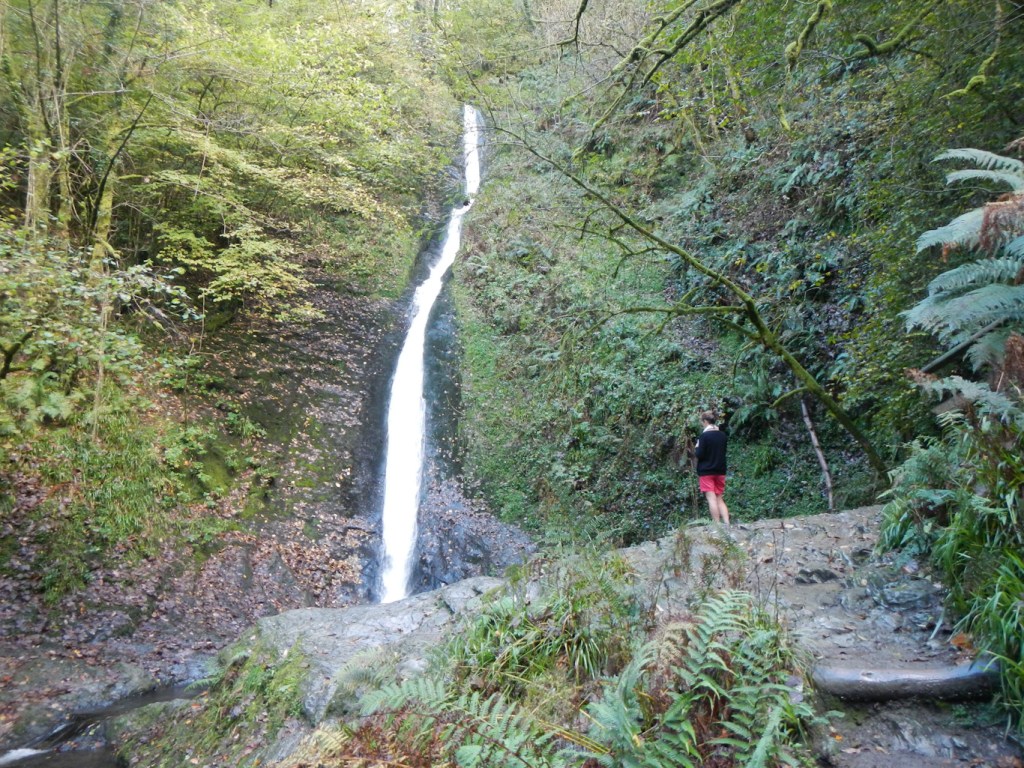
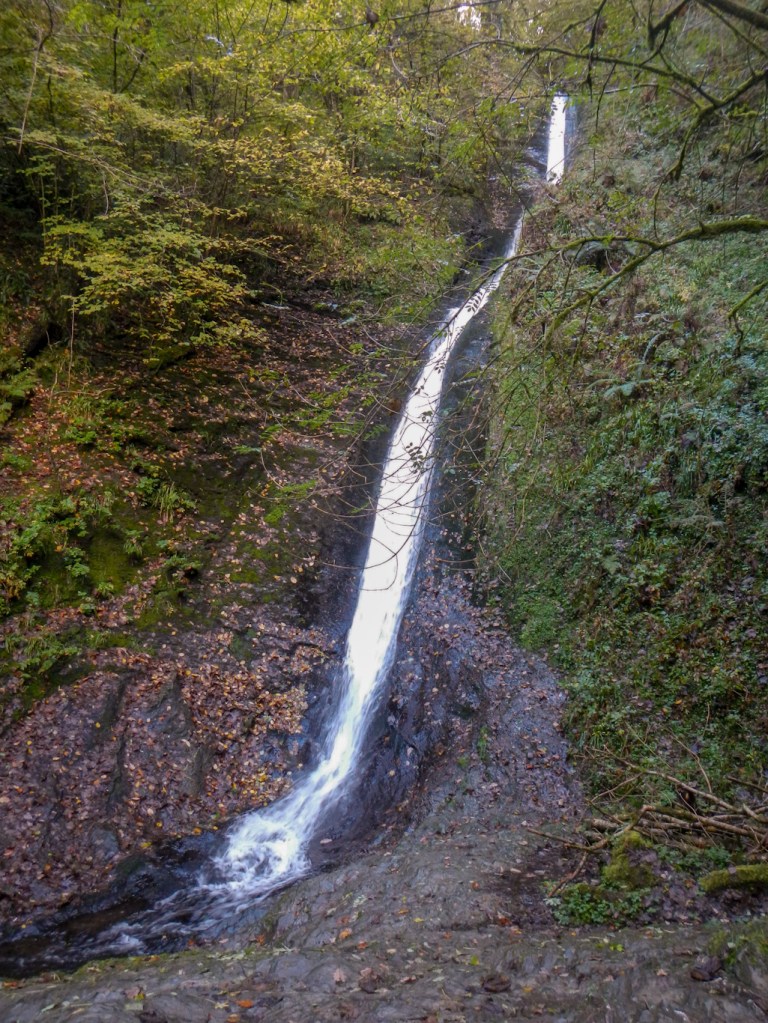
The path descended towards the River Lyd. We followed the picturesque river. Suddenly, an enormous waterfall appeared to our right cascading and crashing down over the rocks. This is the Whitelady waterfall measuring nearly 30 metres vertical drop from top to bottom; the water actually cascades over several rocks and, particularly when looked at side-on, it is clearly dropping diagonally over the rocks rather than a single vertical drop. The water of the falls is part of the River Burn which has its source only about a kilometre away on Black Down. The river flows into the River Lyd almost immediately after the waterfall. The name of the falls originates from a spirit said to haunt them – she is said to be dressed in a long white gown that flows like water. It has been claimed that anyone drowning in the river who sees her will be saved.
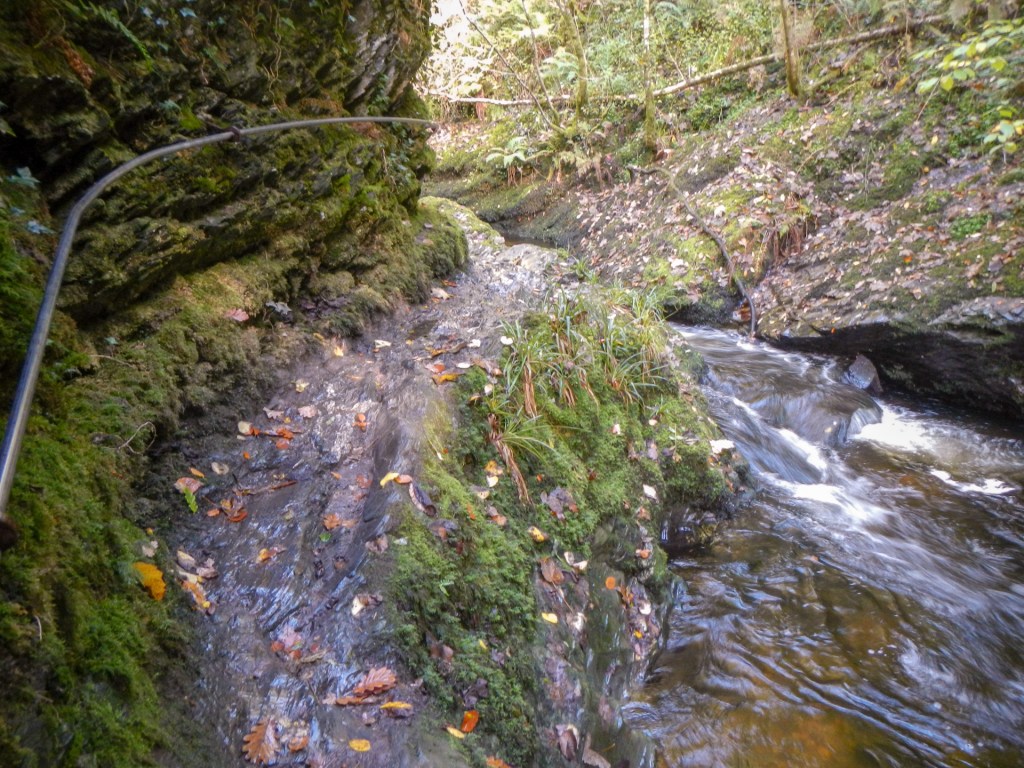
It was much busier at the Whitelady Fall than on the walk towards it, but, after crossing the bridge, was quiet again as only a few people turned out to be walking the full gorge route. This is an interesting and exciting part of the route – the path is narrow in places with drops above fast flowing water as well as many steps. The rocks were wet and we had been warned that they would be slippery so we were very careful. In fact our boots seemed to grip well.
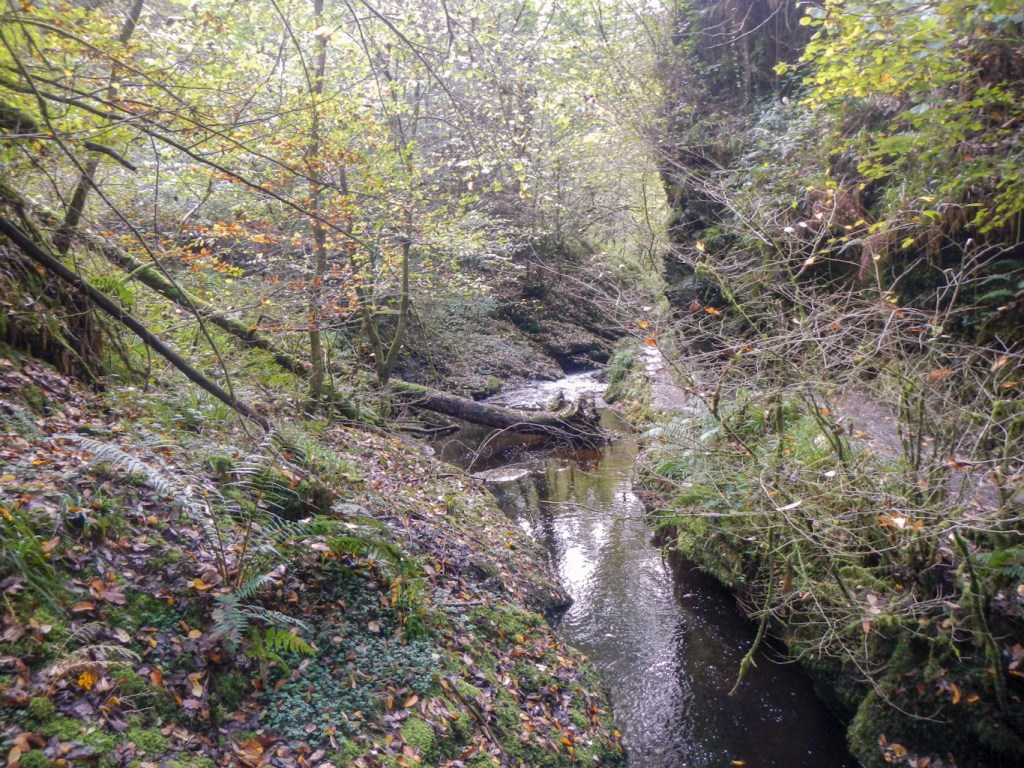
We saw several huge fallen trees, although none that looked as though they had been uprooted during the winds of the previous few days.
At Tunnel falls, the path crosses and recrosses the river over multiple small cascades and rapids. The water was amazingly clear. I kept my eyes peeled for the sight of a kingfisher flitting past but wasn’t lucky to see one. We didn’t see any otters either.
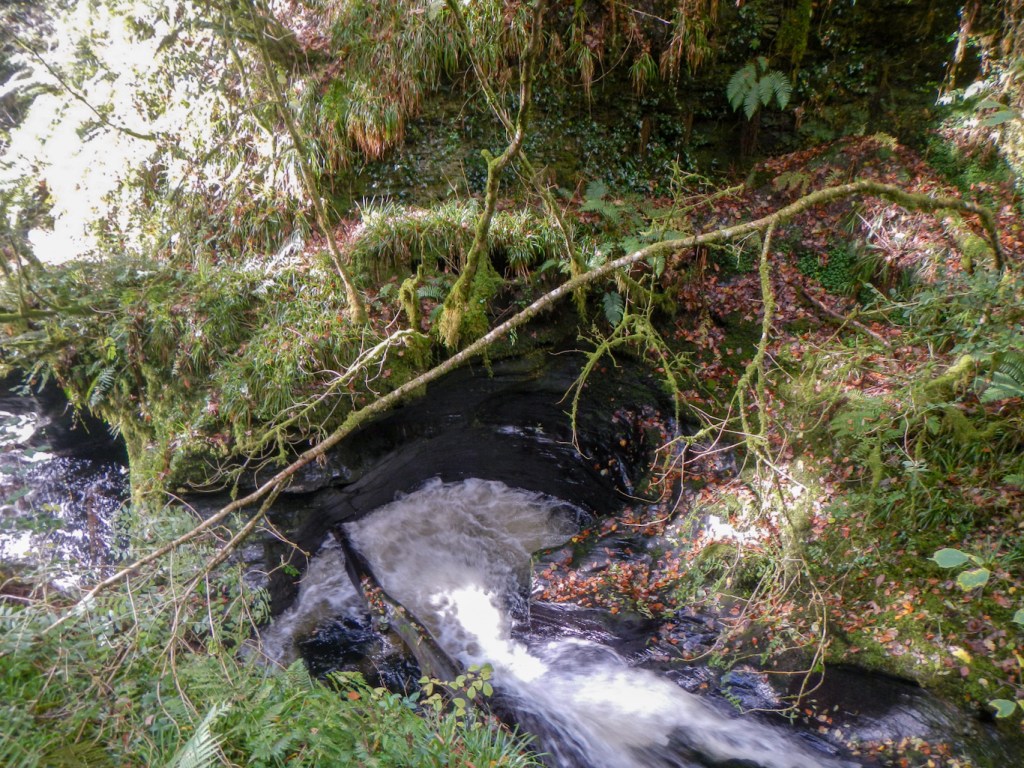
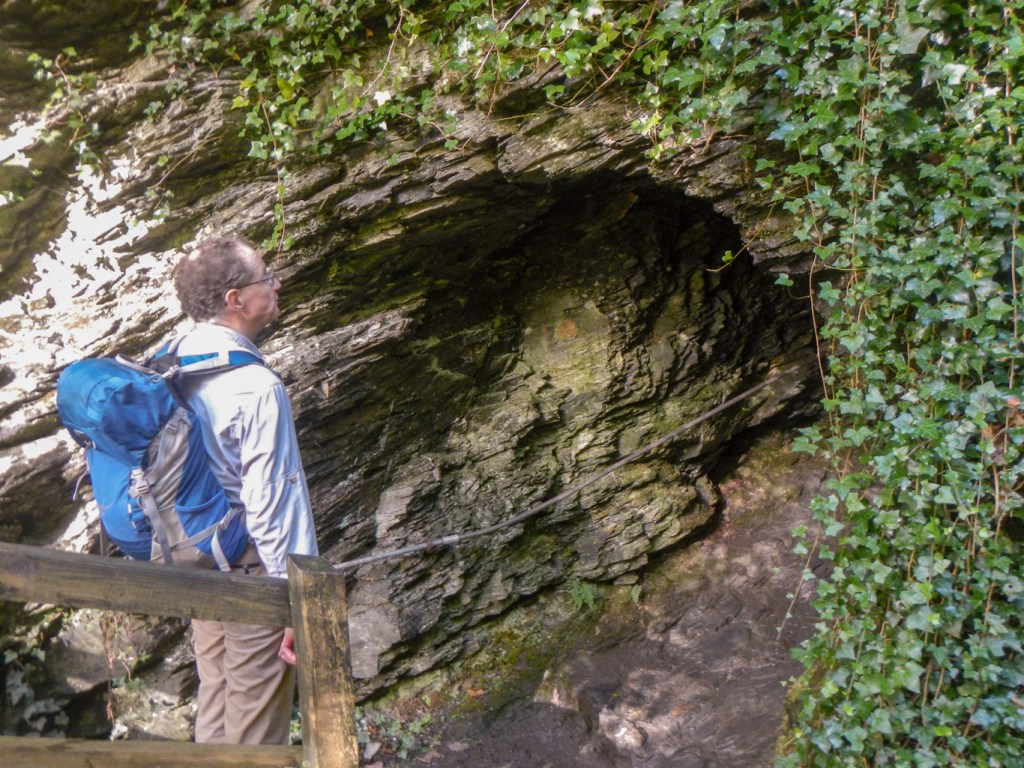
After crossing the second bridge, we entered a small rock tunnel carved out by the Victorians – and giving the falls their name.
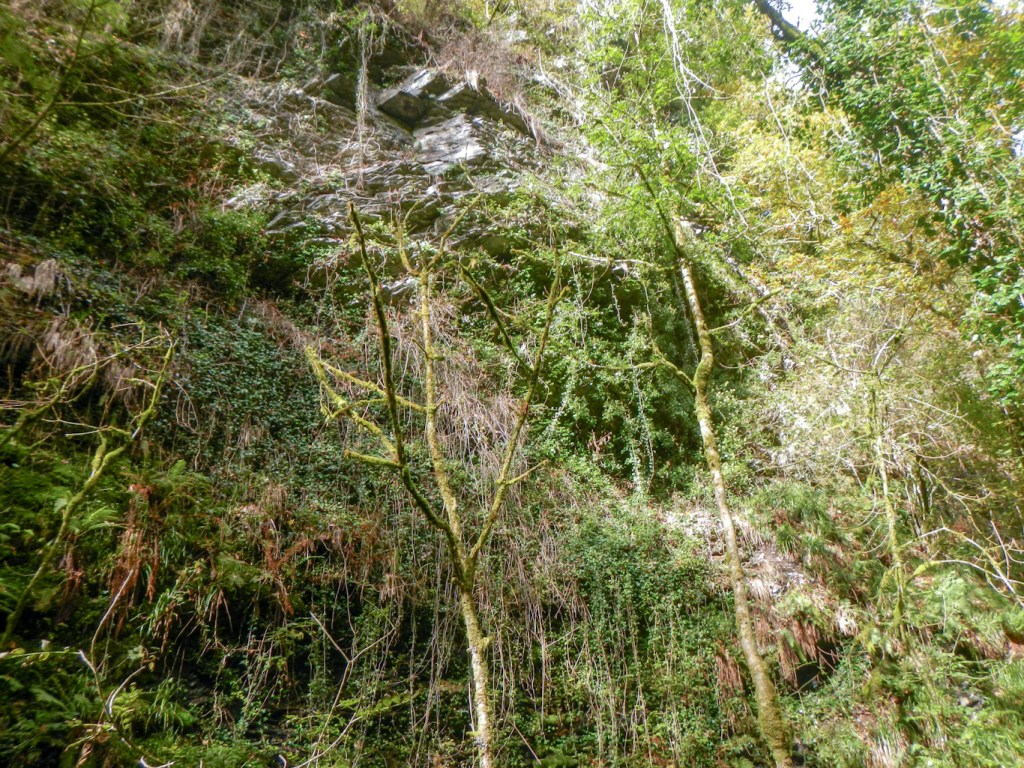
At this point, Ravens Tor towered above us, a tall crag like cliff outcrop of sedimentary rock. Bagging a tor on this walk was a bonus!
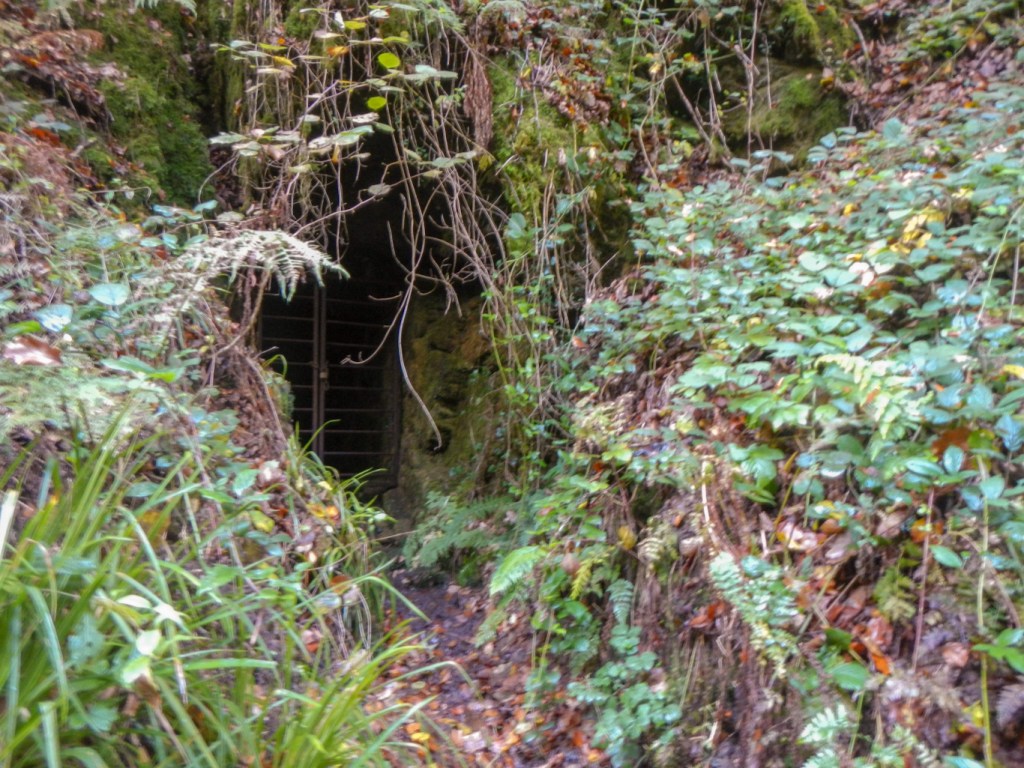
I spotted what appears to be a gated mine entrance or cave – there is one further down the gorge as well. It is said that a gang of outlaws renown for sheep stealing and other robbing made their home in the gorge at one time – perhaps these were caves that they inhabited.
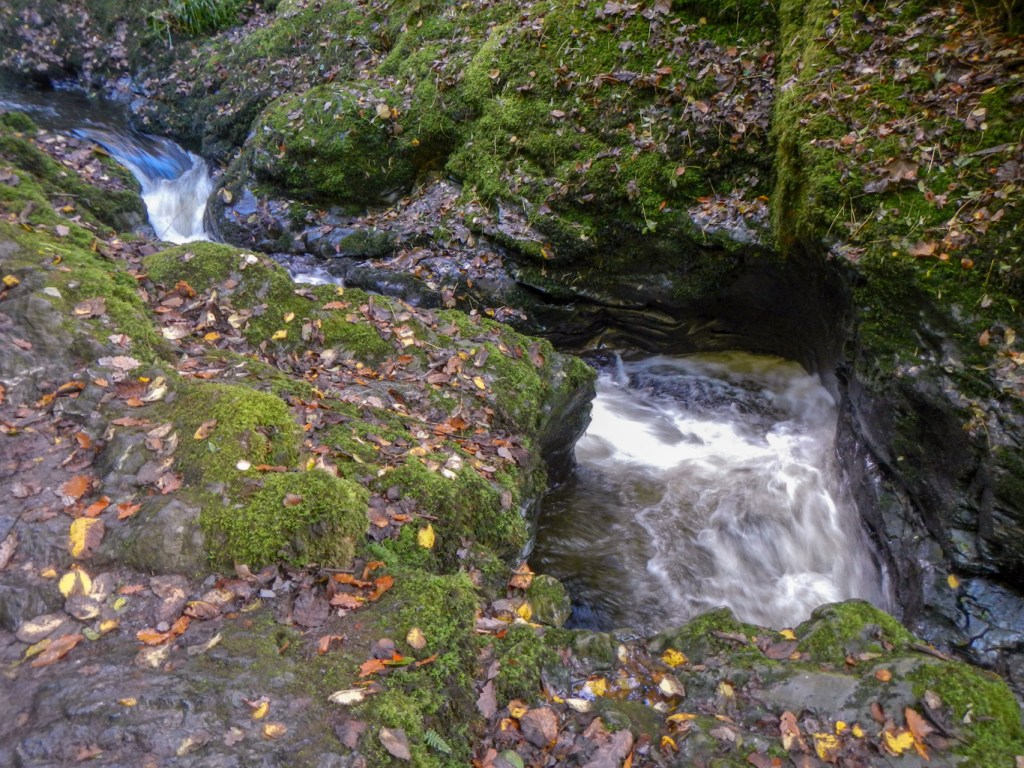
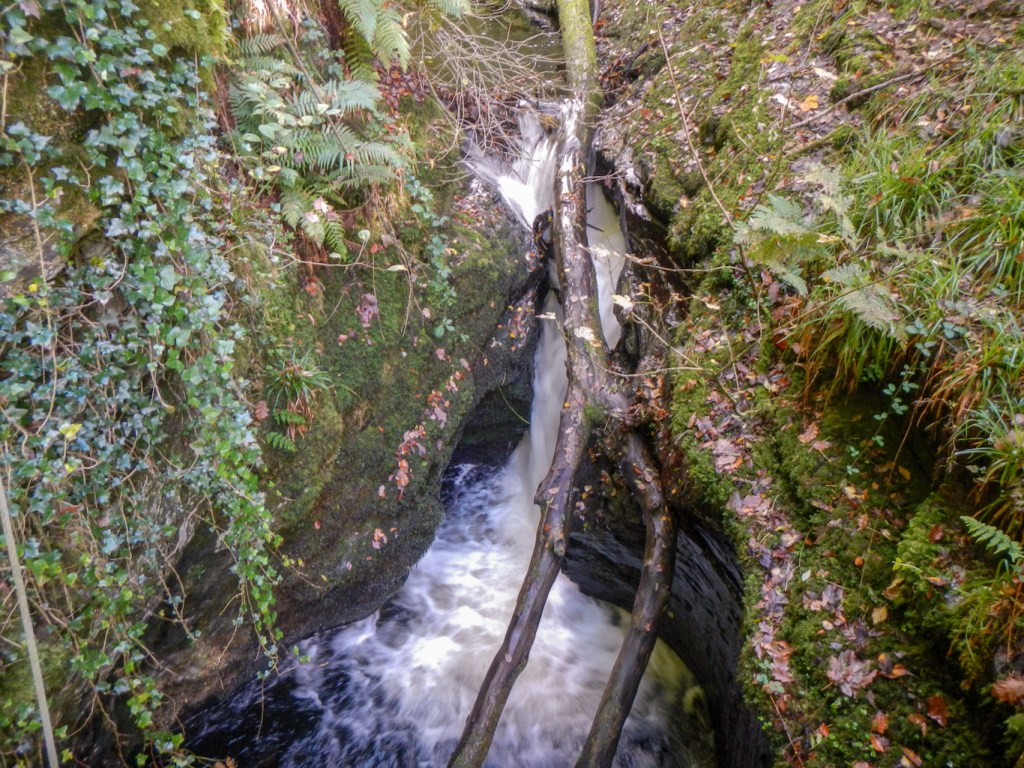
Eventually we reached the top end of the gorge. We took the small path down towards the Devil’s Cauldron. There is a small shut but unlocked gate, beyond which there is no barrier between the path and the turbulent water. Beyond this a few narrow rock-hewn steps with a hand-rail but dropping on the open side to the raging torrent and pools of water lead to a viewing platform (with safety barrier) over the water. Enormous holes in the rock have been carved out by the immense force of the water.
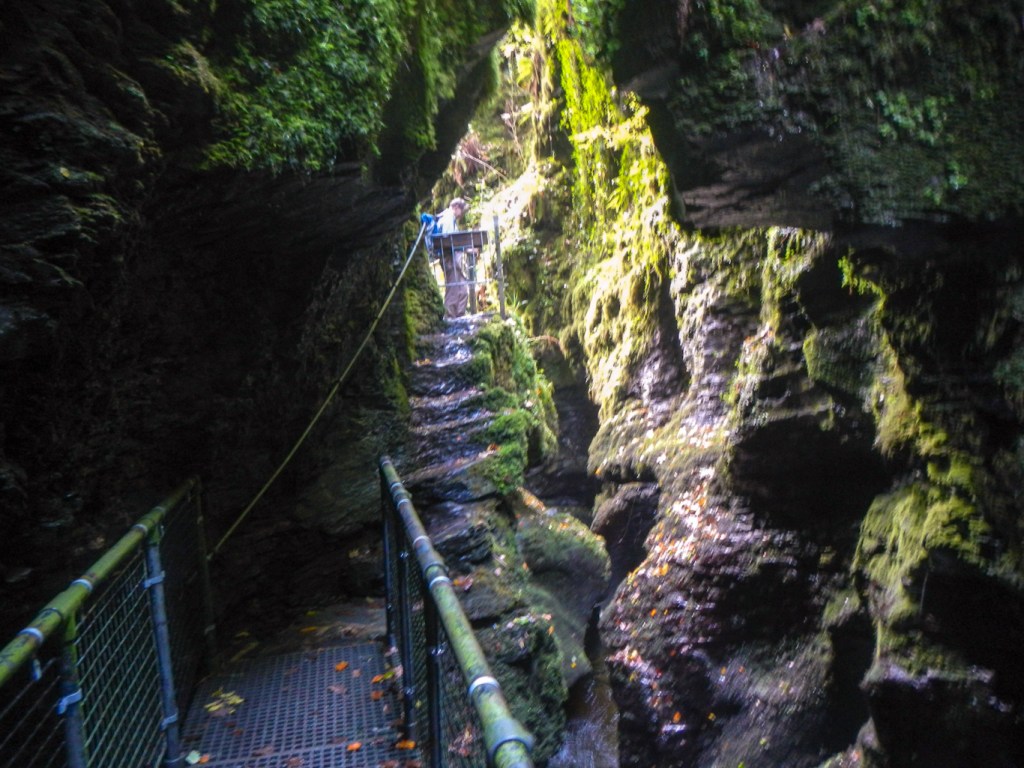
I decided to walk down to the viewing platform – which turned out to be much easier than it looked. The noise of the water roaring and crashing on the rocks was thunderingly impressive. I saw the stream at the far end forcing its way through a narrow cleft into the cauldron.
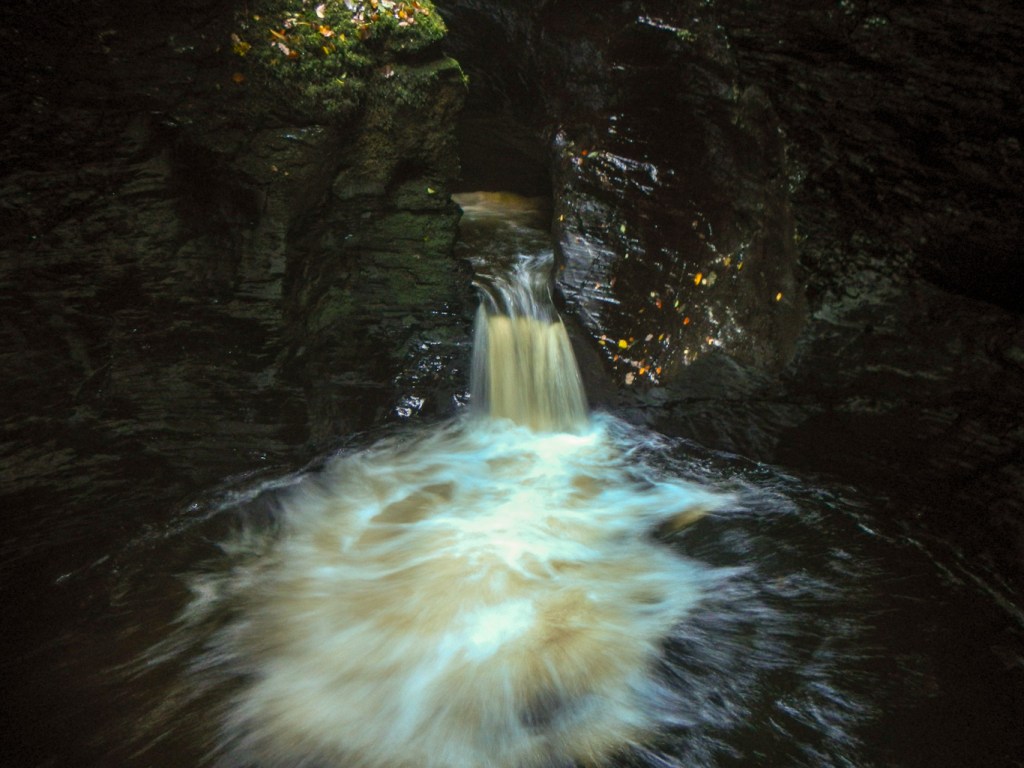
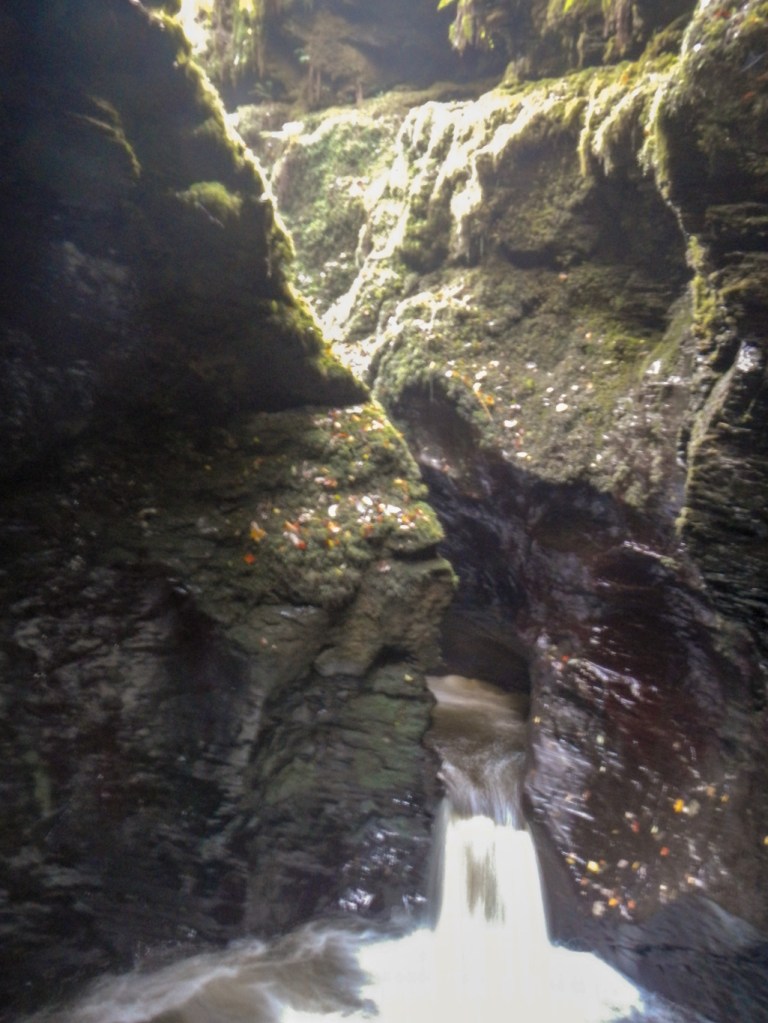
I returned up the steps – and explained to my husband that it felt safer than it looked. However despite my reassurances he declined to go down.
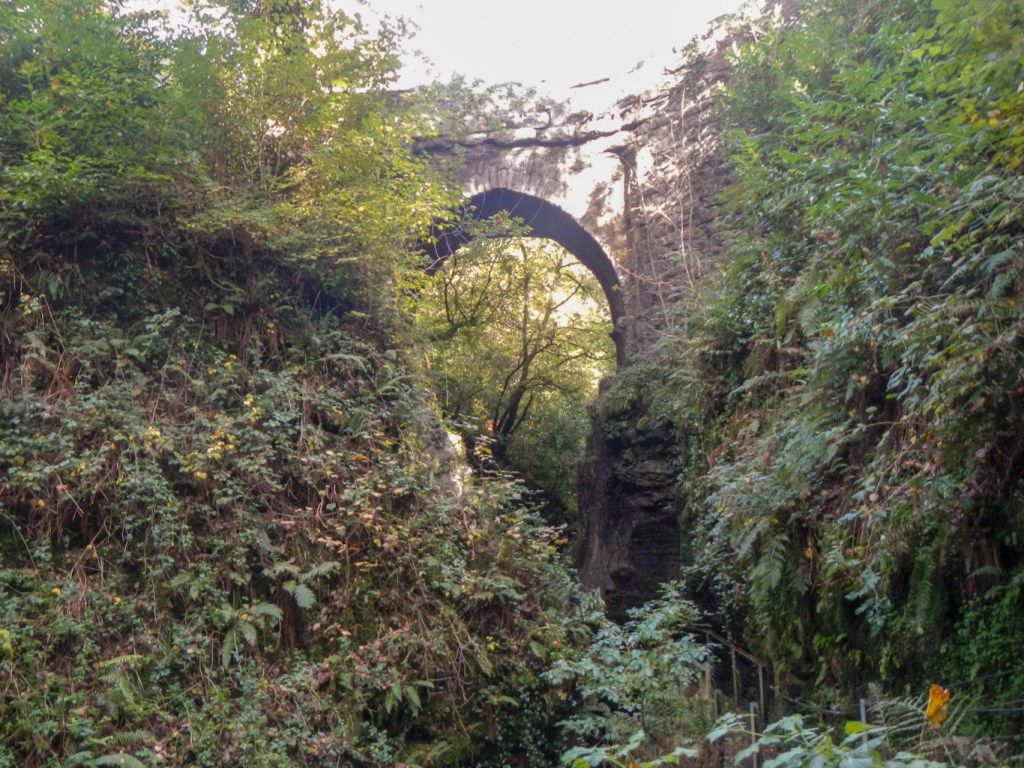
We walked on a little towards Tucker’s Pool, but this remains closed from a point with a locked gate on the path. However we were able to look up and see the arched railway bridge above us, spanning the gorge. The bridge has various folklore tales connected with it – including the amazing “Lydford leap” taken across the gorge by a horse when the bridge had been washed away.
This is definitely an adventure that I would recommend and I thought it was well worth the admission fee to view these awesome water features, considering the amount of maintenance work that must be needed to keep the paths open. It is certainly important, as advised by the National Trust, to wear suitable footwear with a good grip!

 Where's Kathryn?