25, 27, 29-30 September
As mentioned in previous posts, Saturday 24 September was earmarked as the day to complete the Lairig Ghru as long as my graded walks beforehand had been completed successfully and the weather forecast was fine. Both these criteria were met. However unfortunately the morning beforehand a tourist guide eating breakfast at the same guesthouse as me had discovered my plans during an overheard conversation and essentially ordered me not to attempt it. Given that any wilderness walk has inherent dangers, there was no 100% guarantee that I could keep safe and, in view of her comments and possible repercussions if there had been a problem, I felt obliged not to attempt the walk. However, I hope that at some stage I will return to the area and complete this adventure.
It was even worse than expected as, sadly, Sunday 25 September heralded a week of relatively poor weather with wind, rain and even some snow was reported on the higher peaks. Hence there were no high-level walks and I have compiled a small collection of bad weather alternatives.
Sunday 25 September:
Our first expedition involved catching a steam train on the Strathspey Steam Railway from Aviemore to the end of the line at Broomhill.
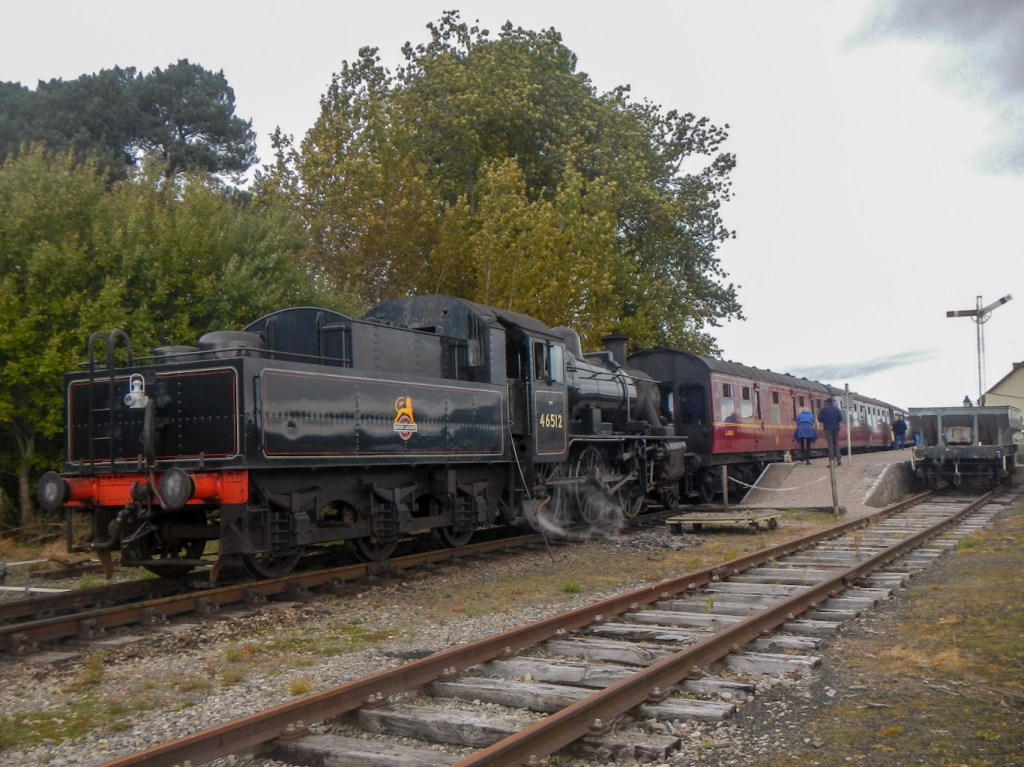
We sat in the front carriage immediately behind the engine. Water was taken on at the intermediate station, Boat of Garten. Many people alighted to take photos. Rather alarmingly, we didn’t stop at Broomhill Station. This was because the train went on past the station to where there was a loop for the engine to be uncoupled and be driven round to the other end of the train, which was now of course the front. On the return run past Broomhill, the train stopped for us and many other passengers to alight. Most were getting into a large coach for their ongoing tour but we started walking along a minor road crossing over the River Spey.
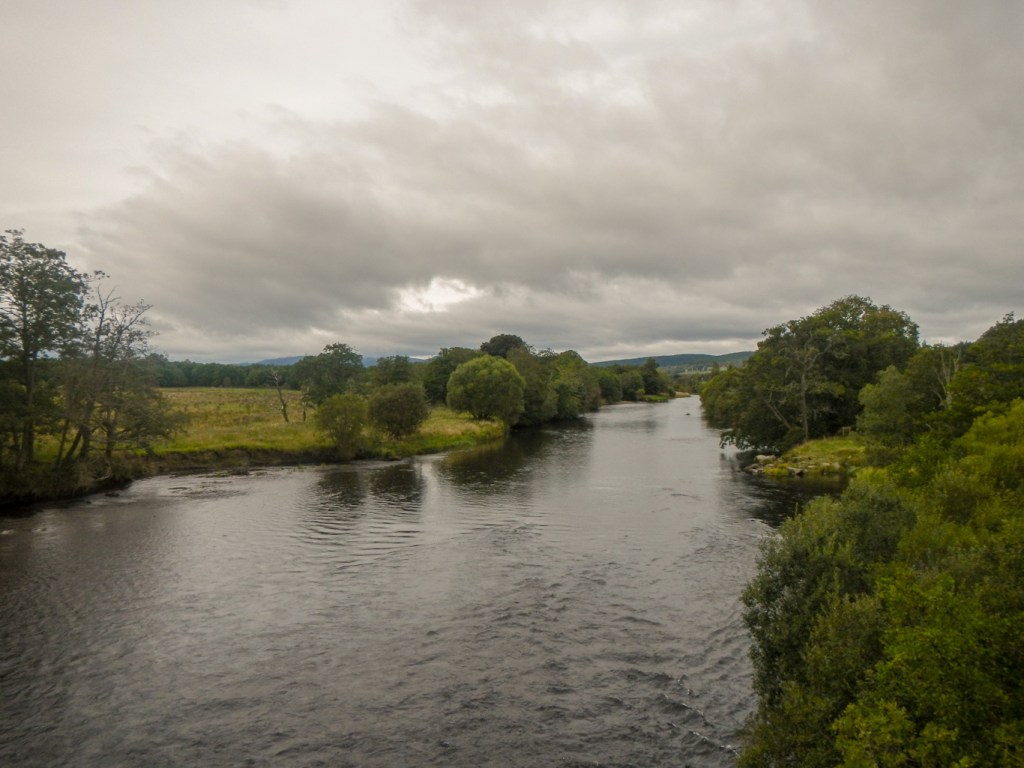
We arrived in the attractive village of Nethy Bridge, crossing the River Nethy (a tributary of the Spey) over a bridge designed by Thomas Telford. I was quite distracted by all the tourist notice boards in the village, showing various activities and walks, so I actually started to walk along the wrong road for our route. However I was recalled by my husband and we joined the Speyside Way. This is one of Scotland’s Great Trails and is waymarked by thistle signs which I had become used to following in 2021 when I walked the Southern Upland Way.
We walked through the Abernethy Forest, keeping an eye open for the shy capercaillie and for crested tits and Scottish crossbills as well as red squirrels. Unfortunately we weren’t fortunate to see any of these. We deviated off the path to walk past Loch Garten but decided not to visit the Osprey Centre as it wasn’t the right time of year to see osprey on their nests.
We returned to the Speyside Way, reaching Boat of Garten Station. The cafe was closed but we received a warm welcome at The Boat Country Inn – the helpful receptionist served us coffee and a delicious pudding in lieu of cake which they did not have.
Suitably refreshed, we returned to the Speyside Way, following a quiet road lined with large and interestingly designed individual houses. We even saw a red squirrel. Eventually the road turned to a track and then a path. It passed close to the steam railway line and as we knew that a train was due we waited by a gap between the bushes so we would see it. It wasn’t long after that we were on the northern edge of Aviemore and soon back at our guest house.
Tuesday 27 September
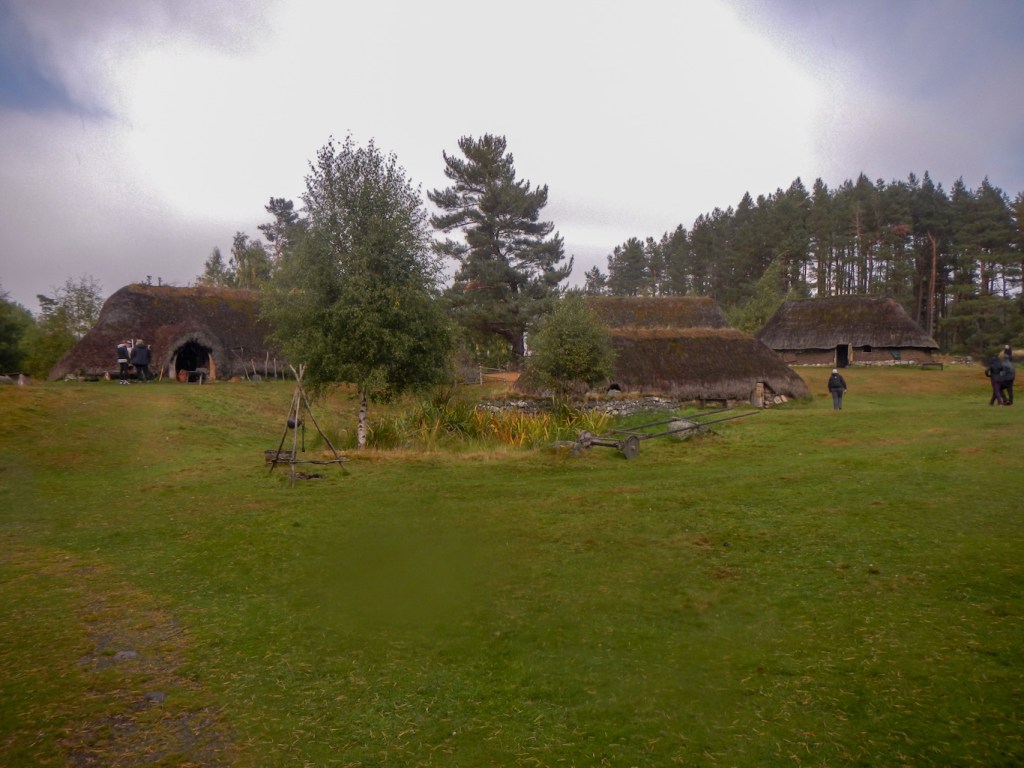
The weather was terrible so we spent most of the day visiting the fascinating Highland Folk Museum at Newtonmore (Map 35). The 1700s township was particularly interesting given our exploration of abandoned townships in Glen Lui and during our day climbing Mount Keen.
We also stopped to look at Ruthven Barracks, the current remains were built after the 1715 Jacobite uprising on the site of previous castle buildings.
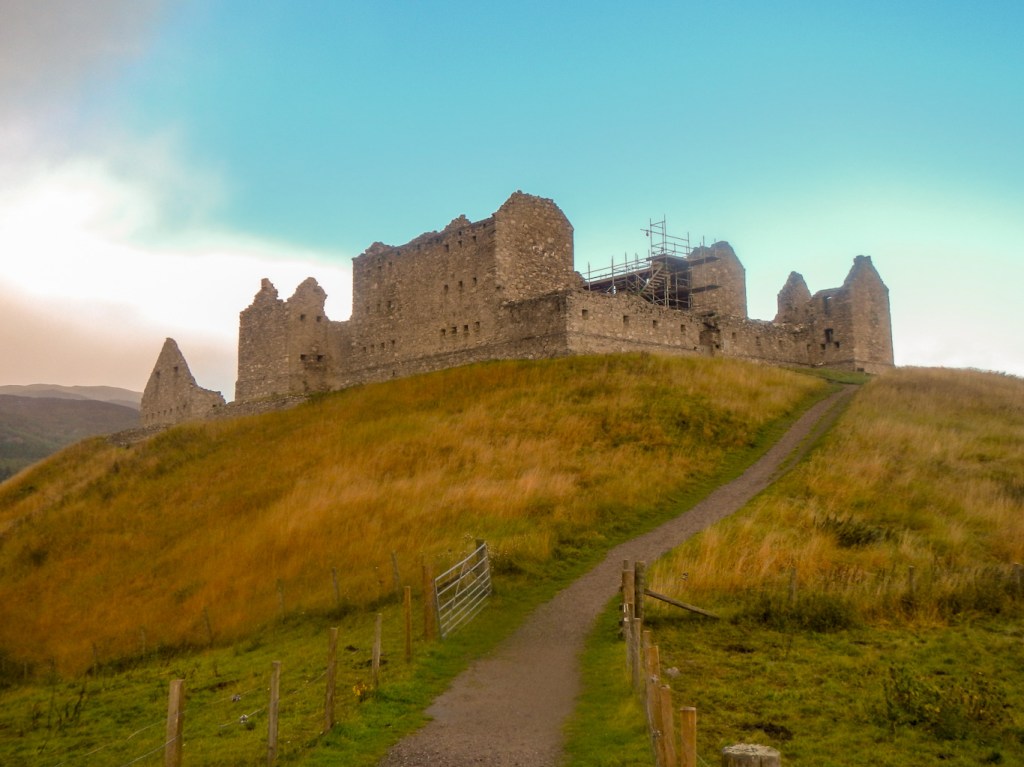
The weather improved marginally by late afternoon and, although I wasn’t able to persuade my husband to join me, he agreed to drop me off by the camping and caravan site at Alvie so I could walk up Torr Alvie. I could follow the Speyside Way afterwards to return to Aviemore.
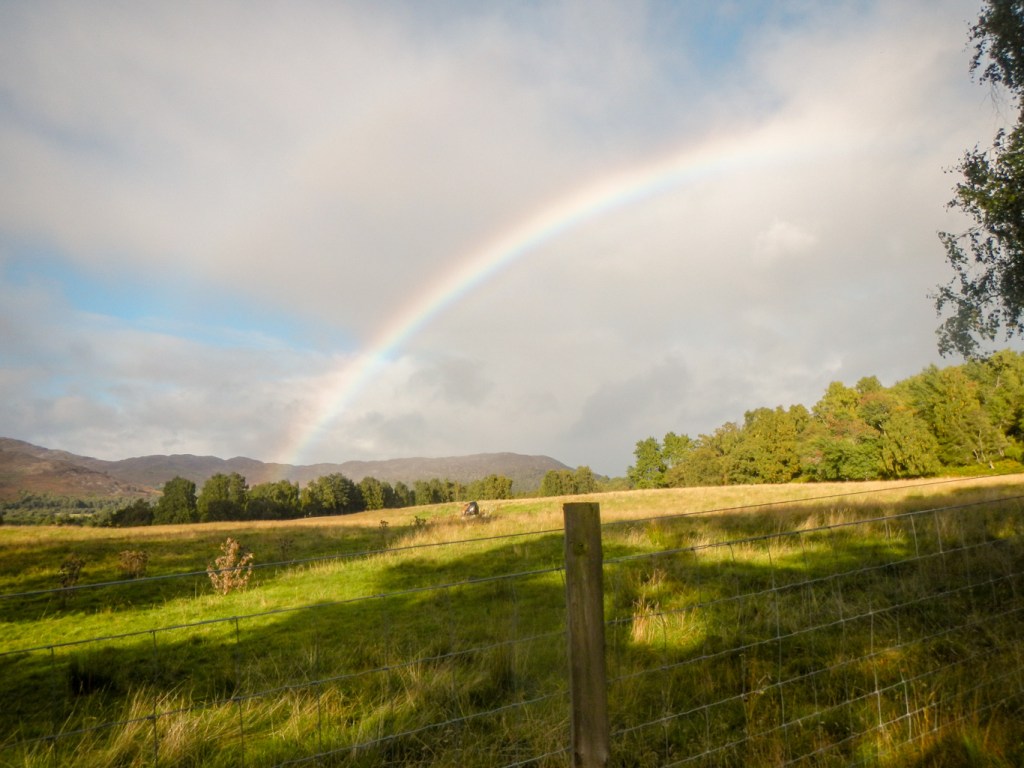
Although there was some rain initially – and sight of a rainbow, once I reached the Waterloo Cairn, I enjoyed amazing views over Strathspey. The cairn was erected by Marquis of Huntly in 1815 in memory of officers and soldiers of the Gordon Highlanders and the Royal Regiment who fell at the Battle of Waterloo. A couple arrived at the cairn as I was leaving and we commented on the improvement in the weather.
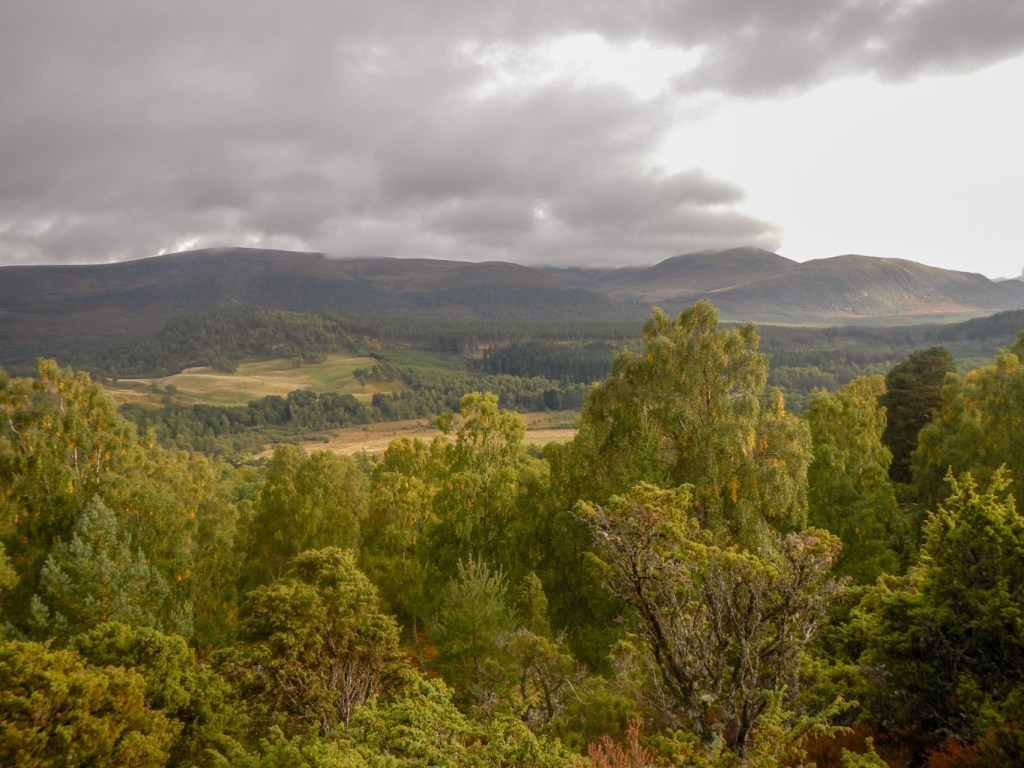
I returned to the main path to reach the massive pillar of the Duke of Gordon monument, commemorating the last Duke of Gordon who died in 1836. The views to north Strathspey were superb.
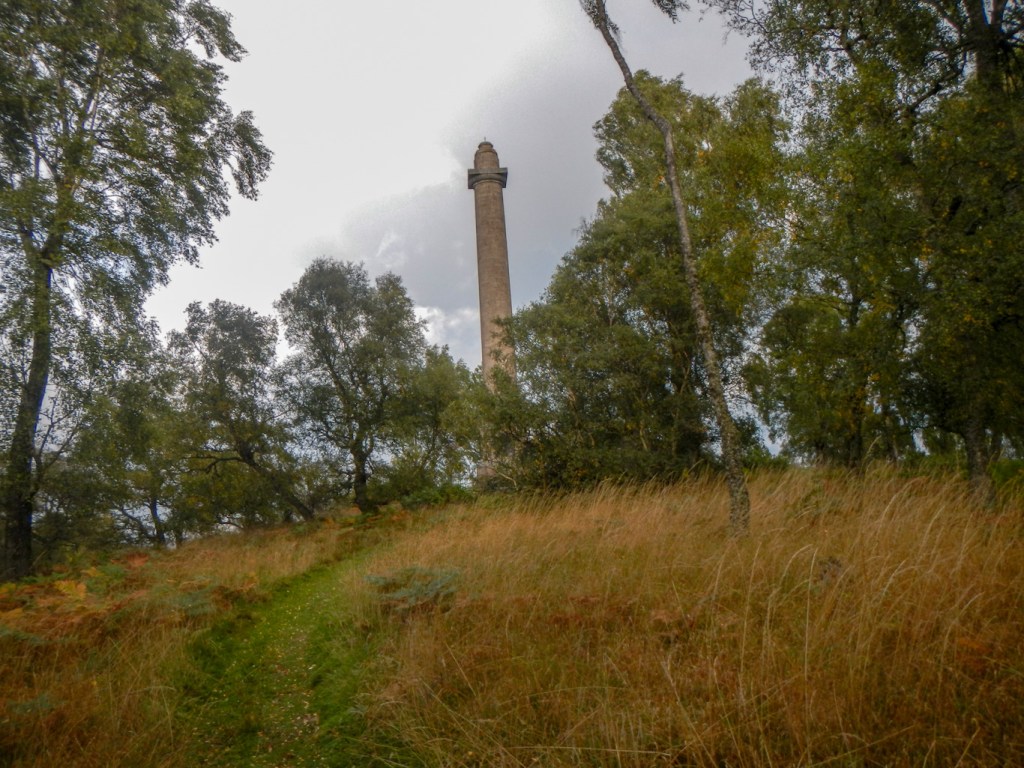
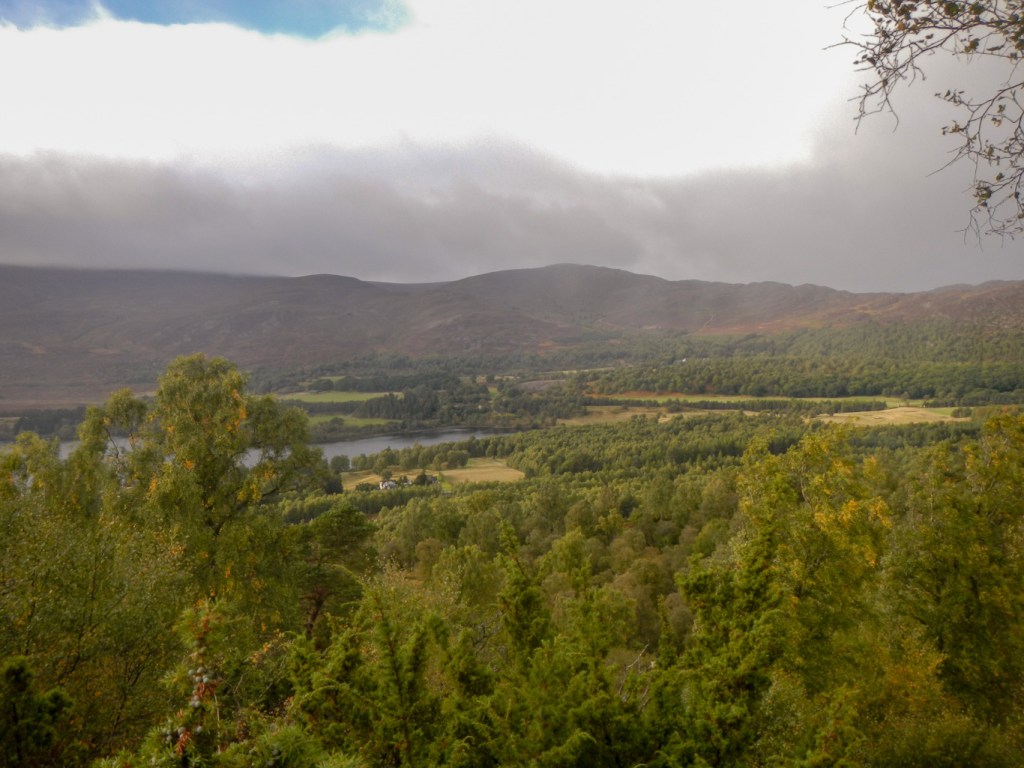
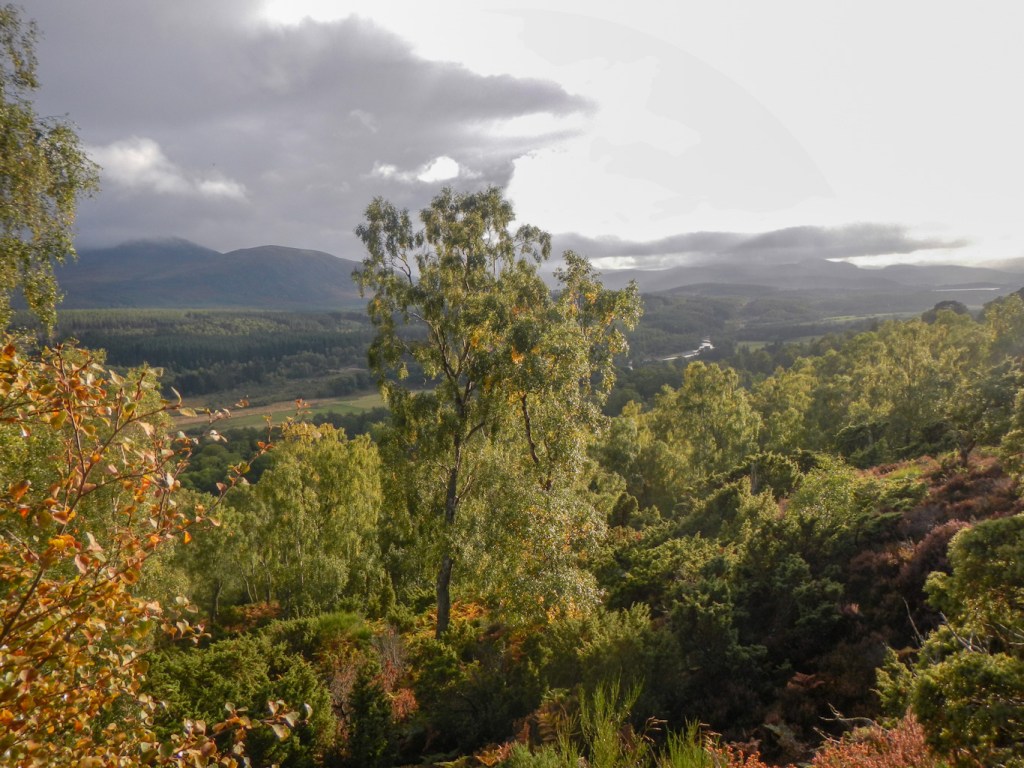
The ground drops steeply to the east with no path so I returned the way I had come to join the Speyside Way and return to Aviemore.
Thursday 29 September
The weather was better than every other day that week, although remained windy higher up. In consolation for missing out the Lairig Ghru walk, we decided to walk through the Rothiemurchus Forest to catch sight of the pass and the surrounding mountains.
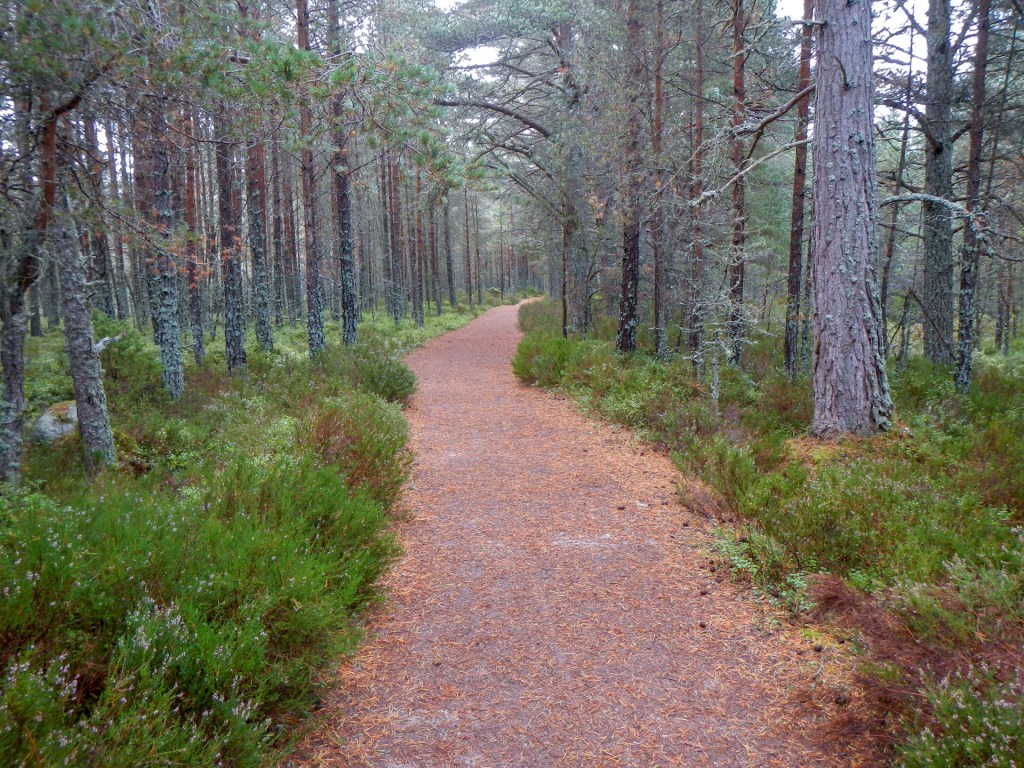
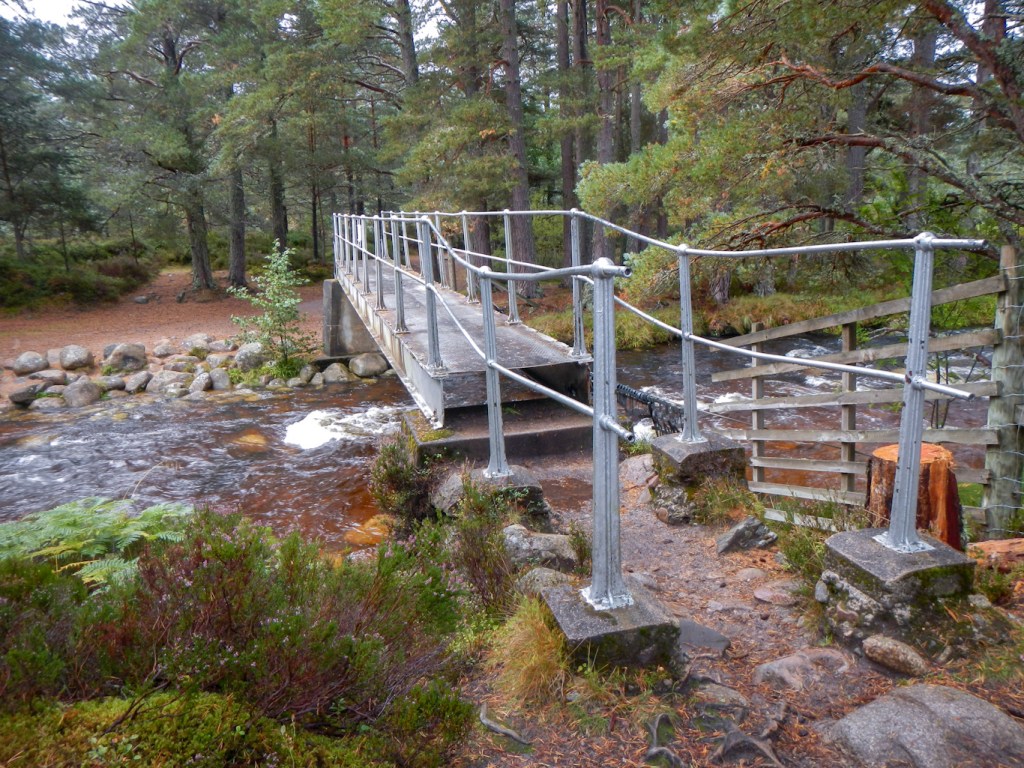
We crossed the famous Cairngorm Club bridge, named after the climbers’ club who built it in 1912.
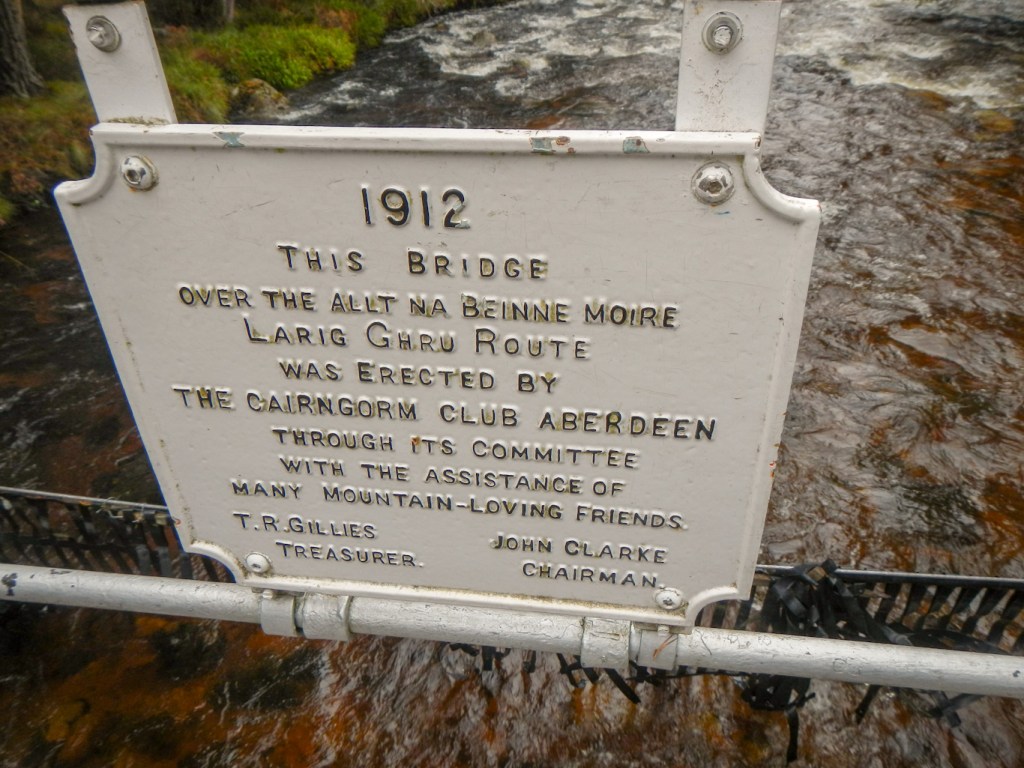
At a cross roads of paths (known as Picadilly) we left the main path and gradually gained height. it was surprising how high we had climbed, assessed by seeing the Allt Druidh River far below us.
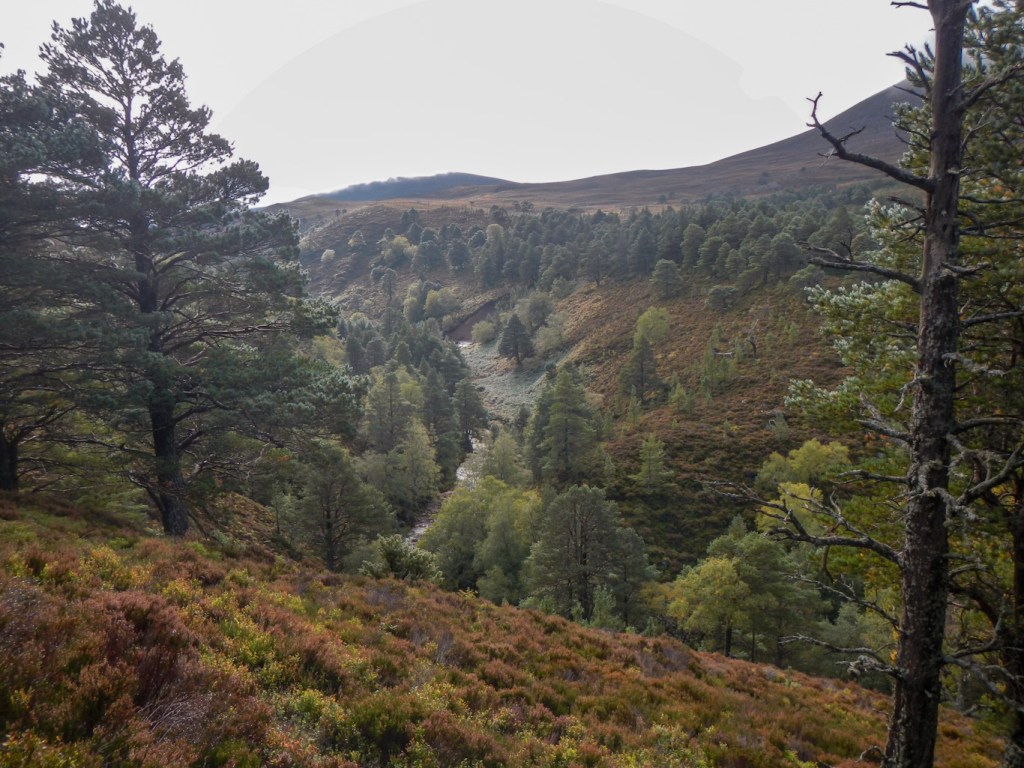
We emerged from the forest, the trees gradually thinning. The path continued across an open area.
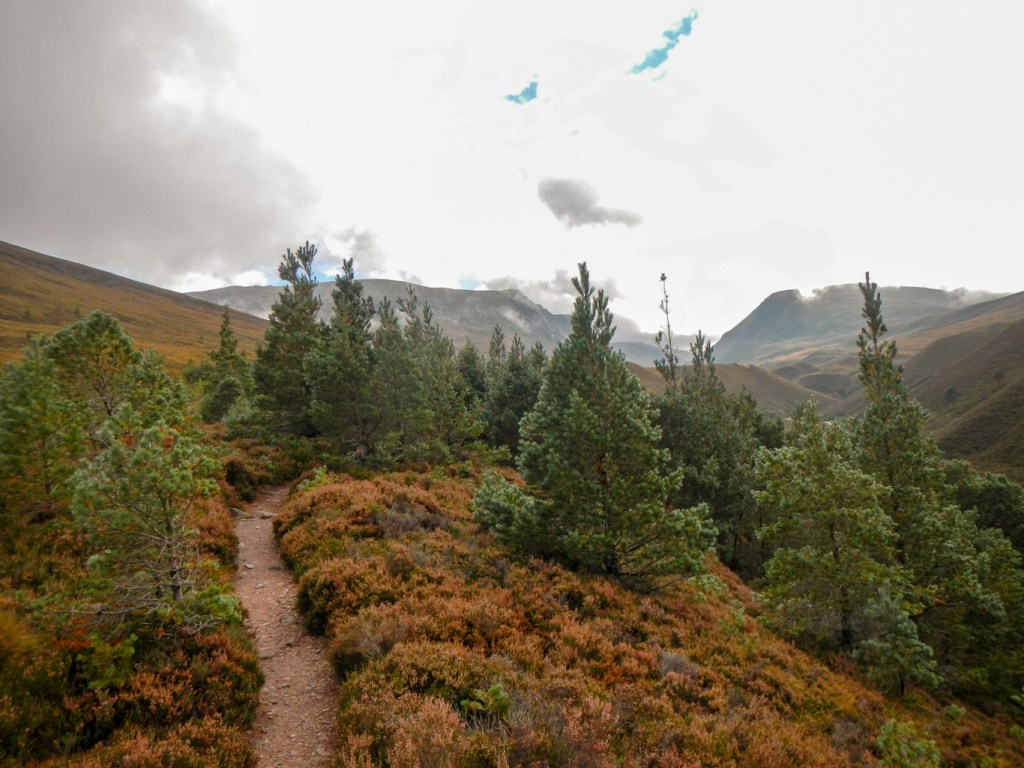
The heavy rain over the last few days made for extremely wet walking and at times the path was reminiscent of a stream bed as the normally small stream nearby had burst its banks. We could see the huge mass of Lurcher’s Crag ahead. My husband called “time” on the walk as we could see that the wet ground continued as far as the eye could see. It was also cold and windy, so we retraced our steps feeling that there was little point struggling on when every step further was also a step to return.
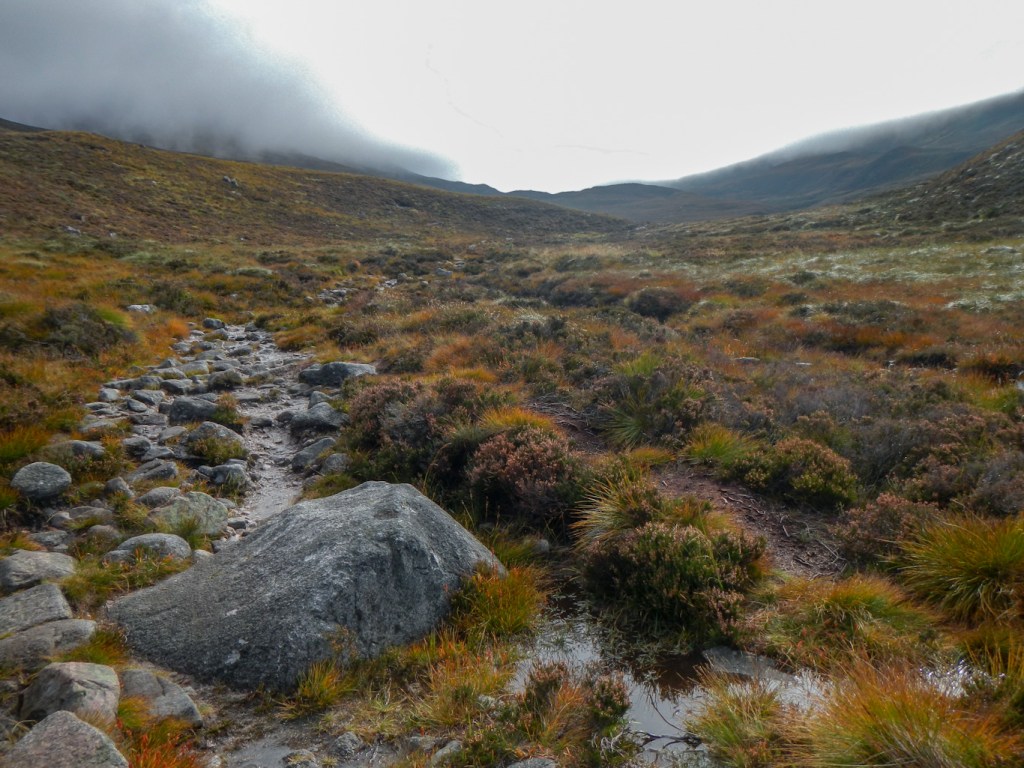
I still haven’t seen the enormity of the boulder field – that will have to wait.
Friday 30 September
My husband claimed he had an overuse injury to his ankle – perhaps in sympathy with my ankle injury. The weather looked terrible with rain and wind forecast all day. My husband decided to ride the steam train again – both ways. However it was our last day and I was keen to be outside whatever the weather. Obviously the weather precluded anything other than a low level walk.
I walked from Aviemore to Inverdruie crossing a footbridge over the River Spey. The route I took to my first main objective at Loch an Eilein was rather circuitous but did mean that I passed an enormous monument to James Martineau, a British religious philosopher influential in the history of Unitarianism. It turns out that he’s also related to Princess Catherine of Wales.
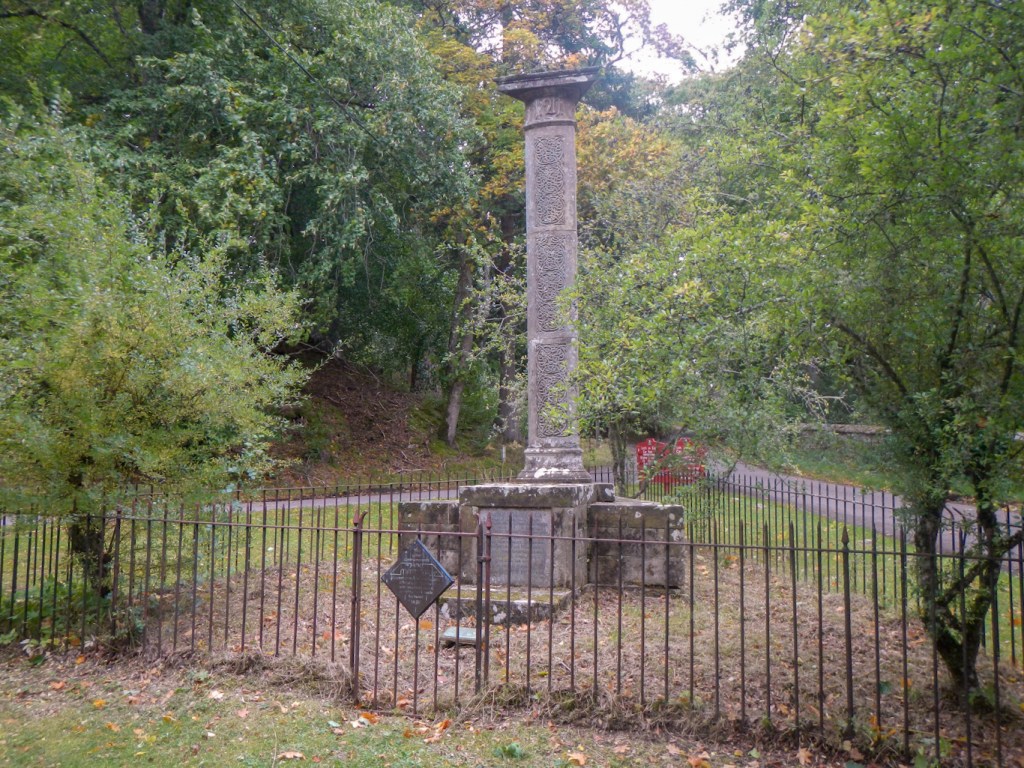
I left the road to walk towards and round part of Lochan Mor before following a track to Loch an Eilein.

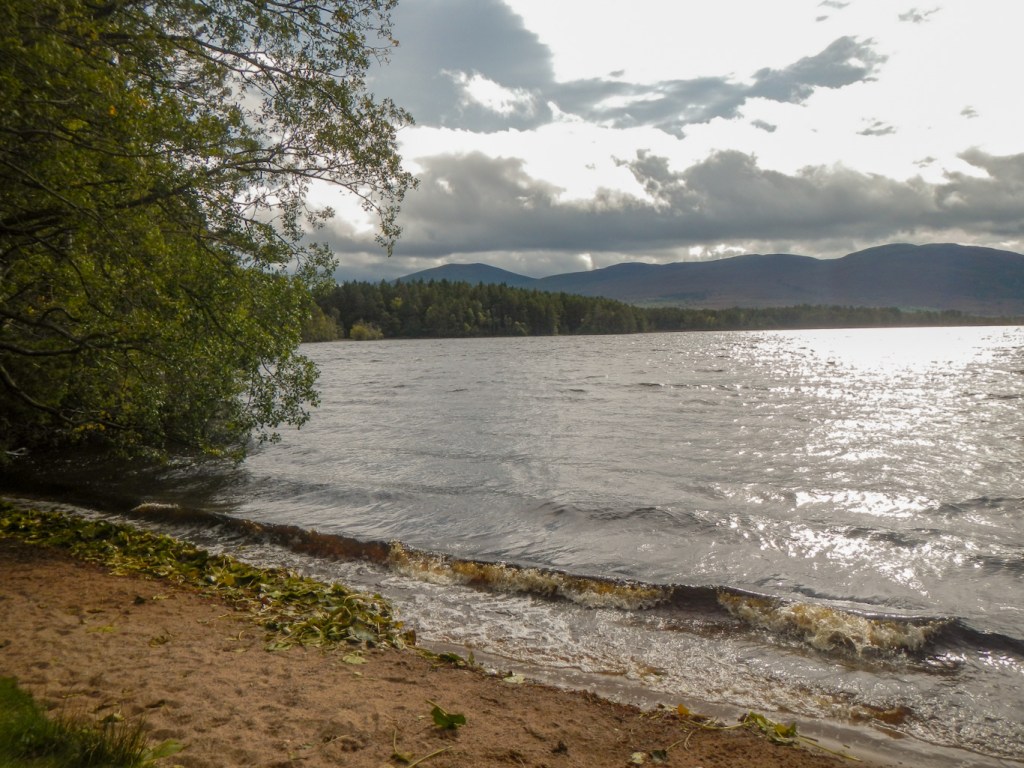
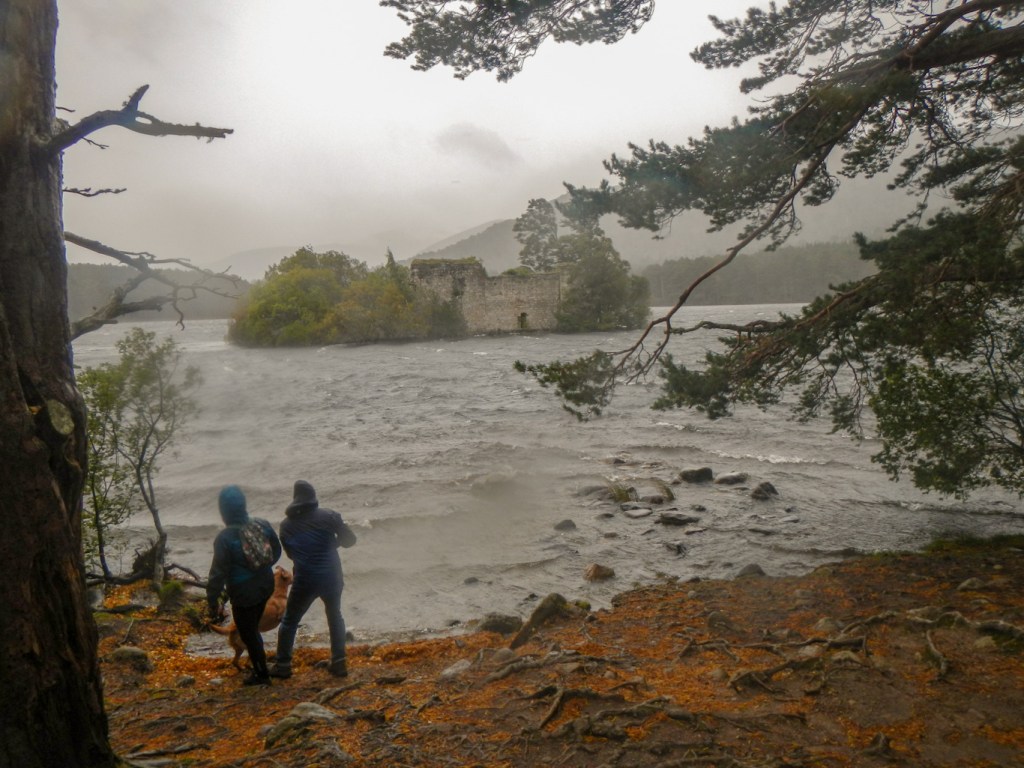
At Loch Eilien it seemed to be particularly windy with driving rain. The surface of the loch rippled with waves being blown by the wind.
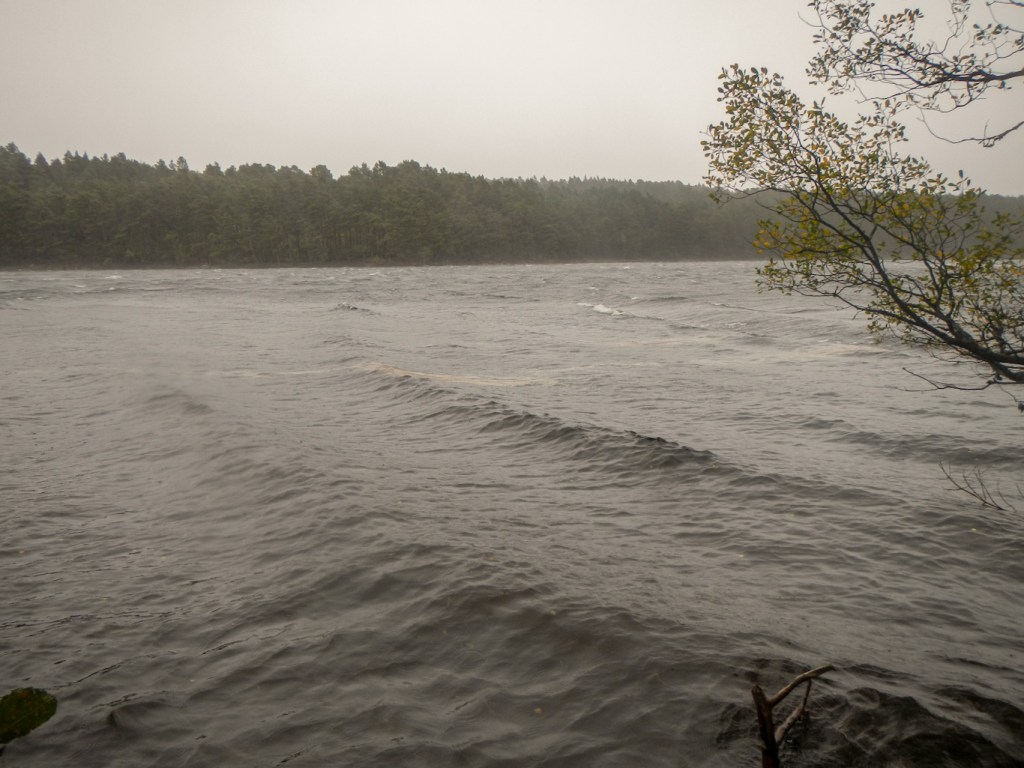
I managed to get glimpses of the castle. It didn’t look anything like the calm scenes on the tourist information leaflets. Despite the bad weather, it was still a tourist trap including people walking wearing plimsolls on their feet and polythene bags in lieu of waterproofs!
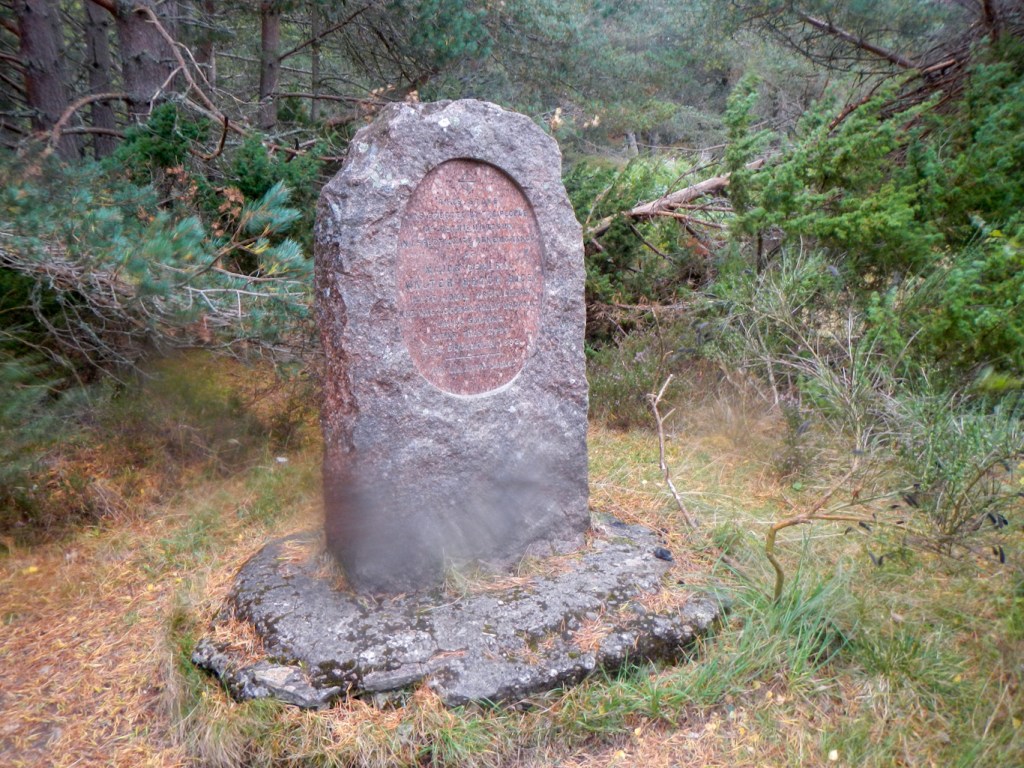
I discovered the memorial stone to Major General Walter Brook Rice. With the bad weather, I read it initially that he had drowned while sitting by the loch in 1892. On a day such as this, that would be believable although still fairly incredible. In fact on looking more carefully, it states that he was skating on the loch. Still rather an unfortunate end for a presumably distinguished soldier who started his military career with the Royal Artillery in 1858, served in the Indian Mutiny and retired from the army with the rank of Major General in 1885.
I continued my perambulation of the loch but diverted off on the non-maintained path around Loch Gamhna and saw the Creag an Fhitheach (crag of the raven) looming above me on the right. The weather was still very wet as I reached the far end of the loch. There was a stream with a very unsafe looking footbridge so I forded it instead.

Soon I was back again on the maintained main circuit round Loch an Eilein and had glimpses of the island on the loch once more.
The weather had improved so I texted my husband to explain that I was extending my walk by following the track leading to Glen Eanich. I managed to walk through the woods and reach the path to follow the Am Beanaidh up the glen. The river in spate was impressive and it would have been lovely to have followed the path right up to Loch Eanaich. However, as I had set out really only to visit Loch an Eilein and Loch Gamhna, time wasn’t on my side.
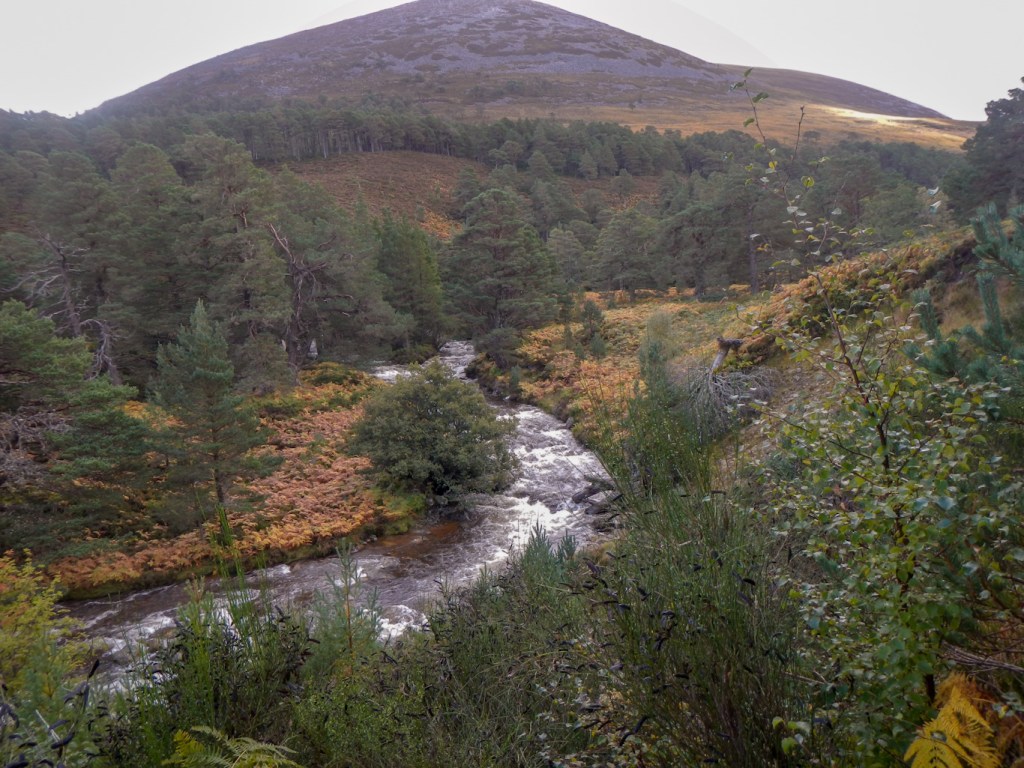
I returned back down the glen. Initially I had thought that I would need to exit the forest at Coylumbridge but then spotted an obvious path off the main track to reach the minor road above Upper Tullochgrue and walk more directly back to Inverdruie and then Aviemore. The weather got better and better with lots of blue sky. I was surprised to have walked over eighteen miles.
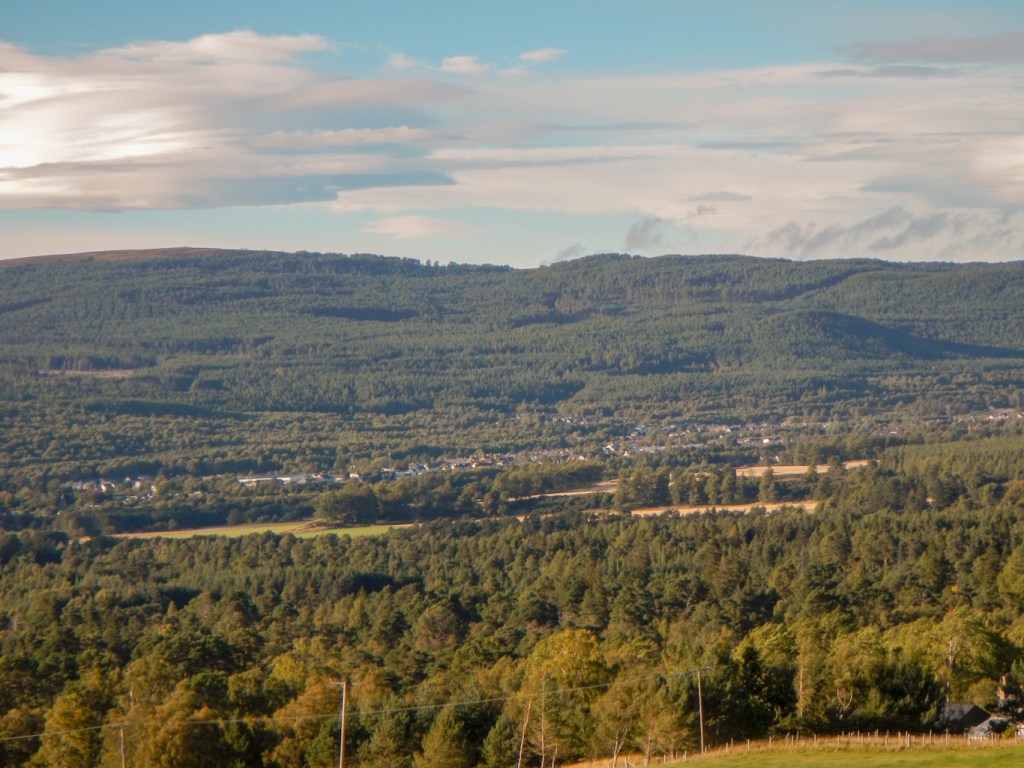
I hope to visit the area again in better weather – the traverse of the Lairig Ghru is of course unfinished business for me and it would also be great to have a chance to walk up some of the Munros in the main Cairngorm area.

 Where's Kathryn?