26 Feb to 9 March 2022
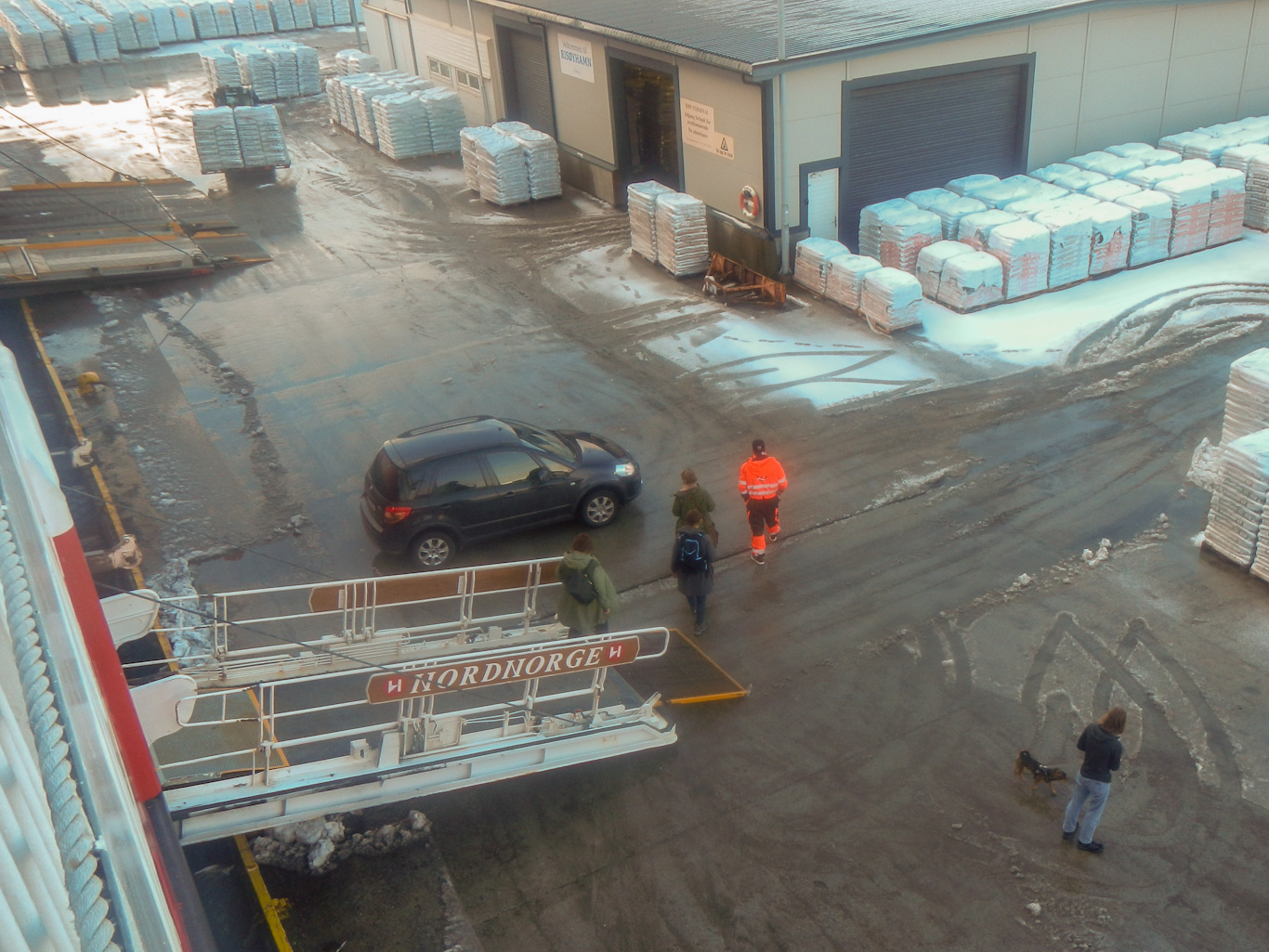
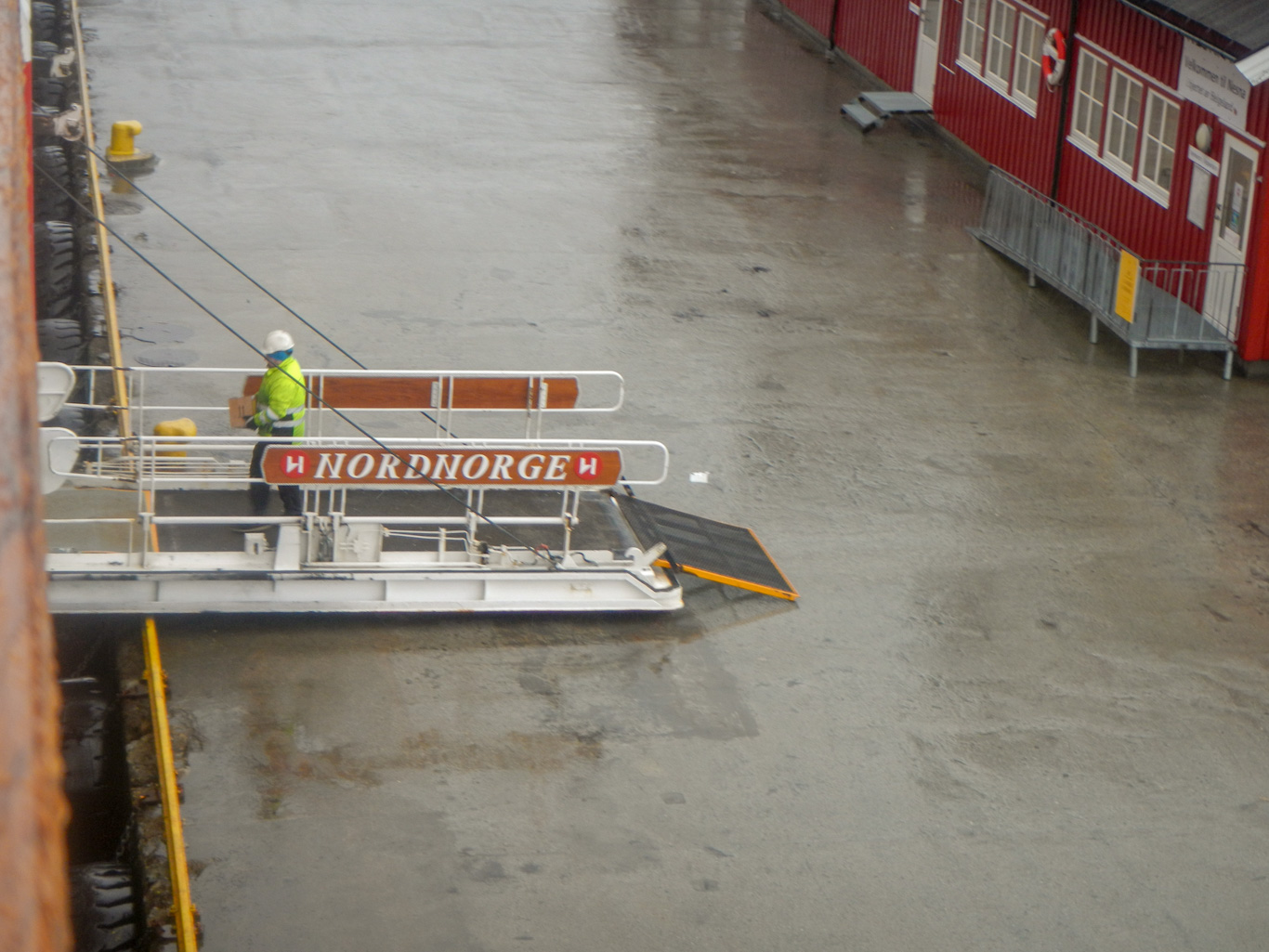
Excited anticipation about the expedition was tangible as we arrived along with a few hundred fellow passengers to board the MS Nord Norge on 26 February and begin our journey into the Arctic.
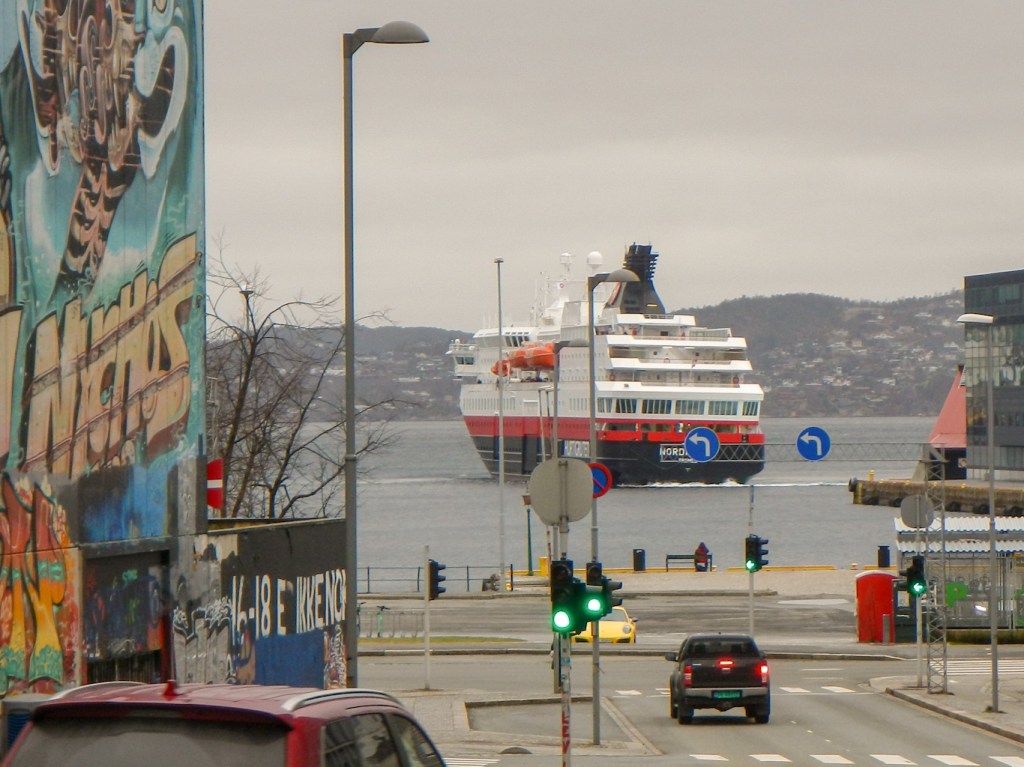
Only a few hours later we were all finding our sea legs as the ship pitched and rolled in the strong winds. The ship was tossing and then plunging down, sometimes with a twisting motion. It was reminiscent of an exciting roller-coaster ride but one to which there was no close end. Fortunately nearly all the passengers were tucked up in bed, but the sudden movements of the ship meant that any unsecured possessions were slipping and sliding. Coupled with the recurrent slamming of inadequately secured wardrobe doors, this meant that most people were woken. We all underwent a rapid learning curve to understand about the importance of shutting the wardrobes firmly and placing possessions carefully. We realised that Eskild from the expedition team hadn’t been joking when he told us to not to stow any items above our heads as they may fall onto us. However by breakfast time the rough seas were merely a memory and it appeared that most passengers were feeling well, tucking in to a hearty meal, including lots of locally sourced fish and other produce.
Once reaching Ålesund, it was too windy for the ship to dock for the whole day at the usual mooring near the town centre so, after depositing us all, it moved off to spend the day in a more sheltered location.
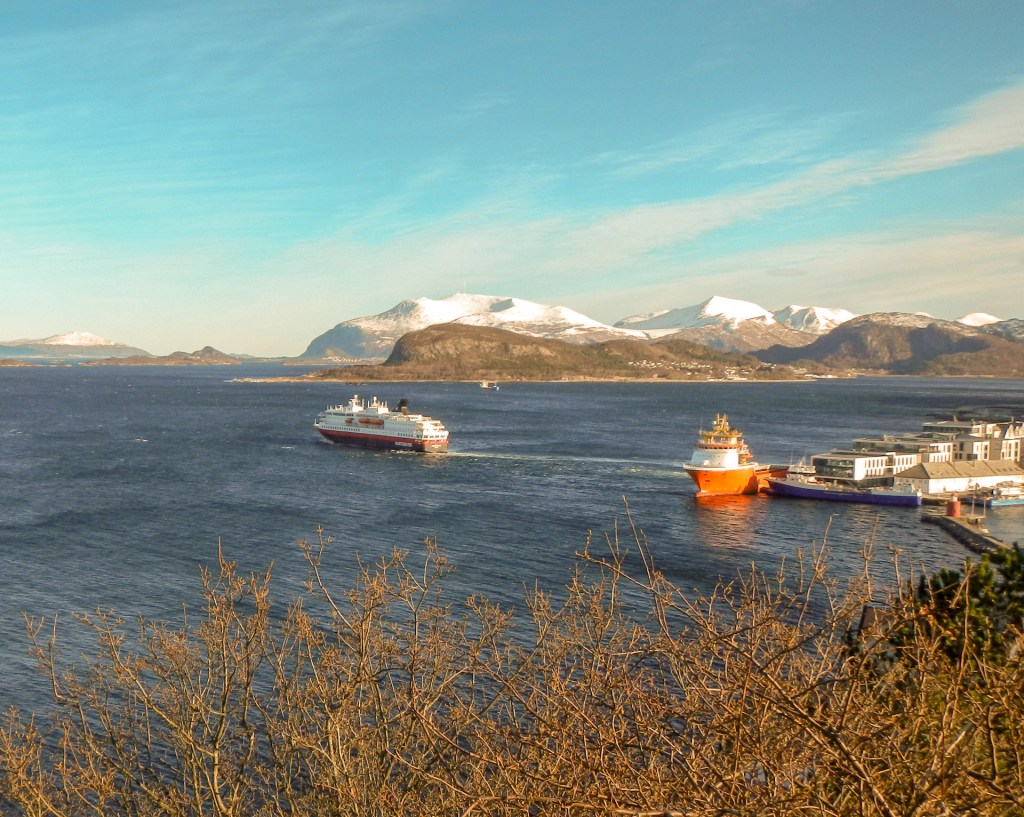
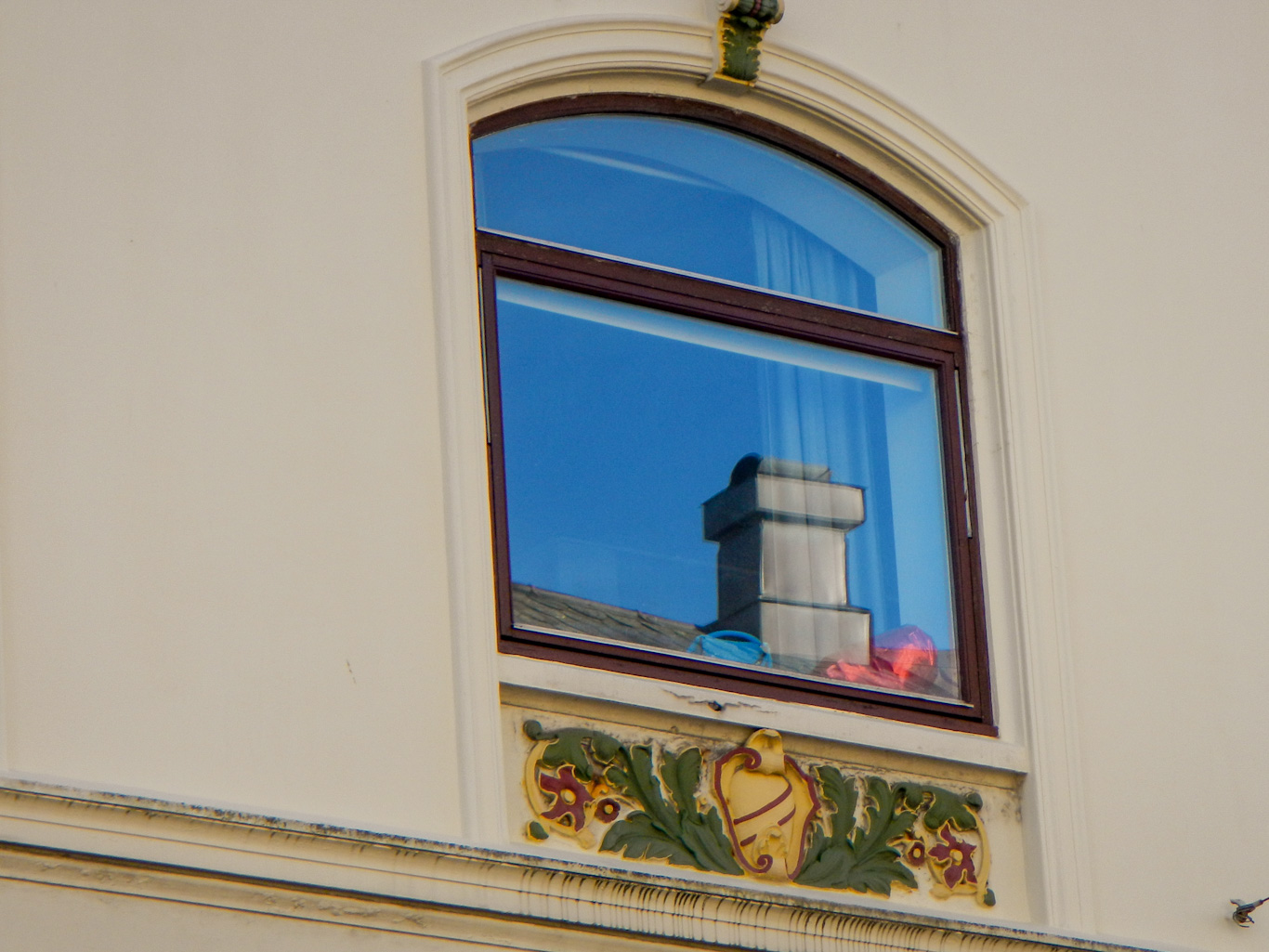
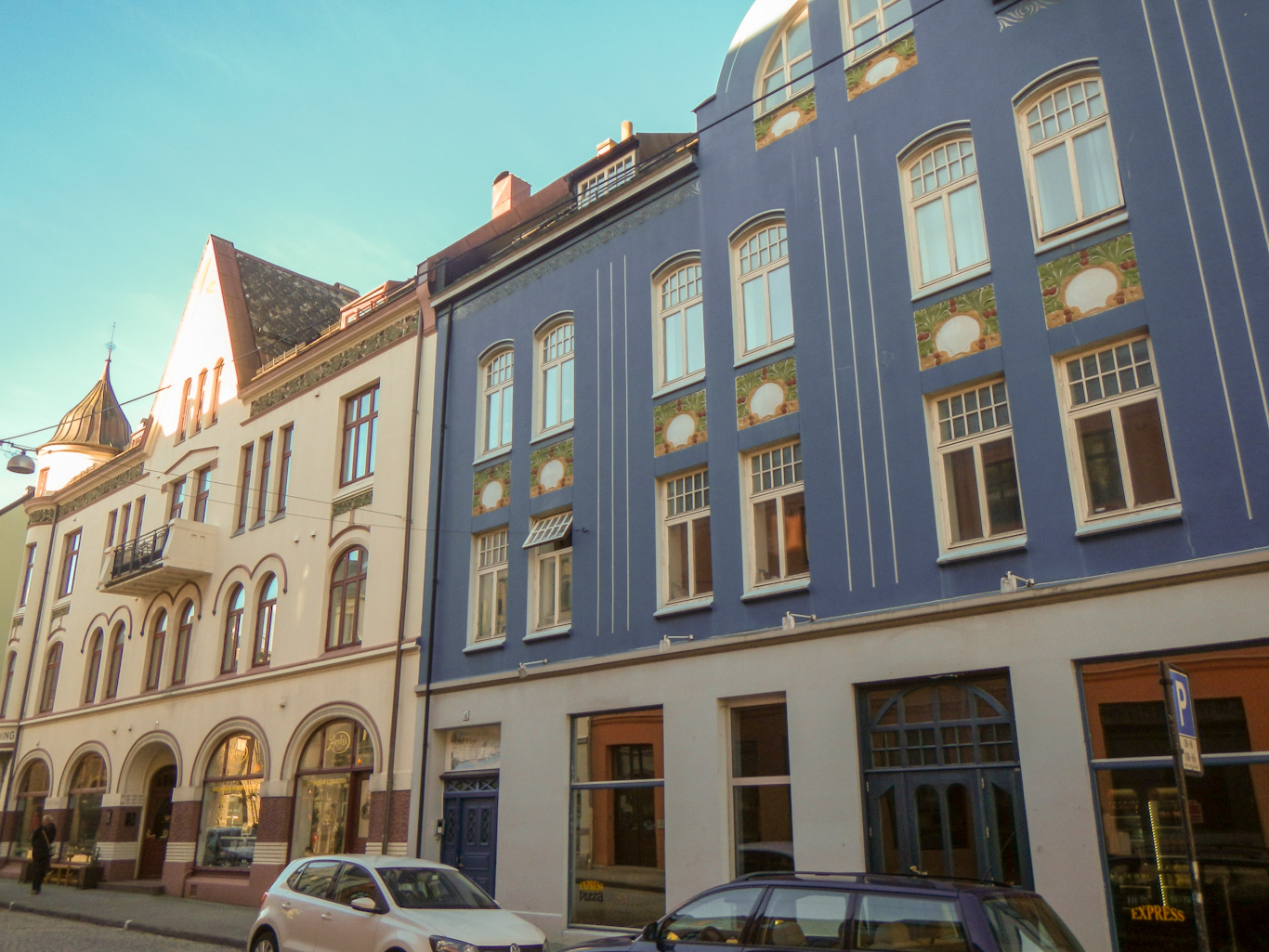
My husband and I opted to stroll around the town looking at the famous Art Nouveau architecture.
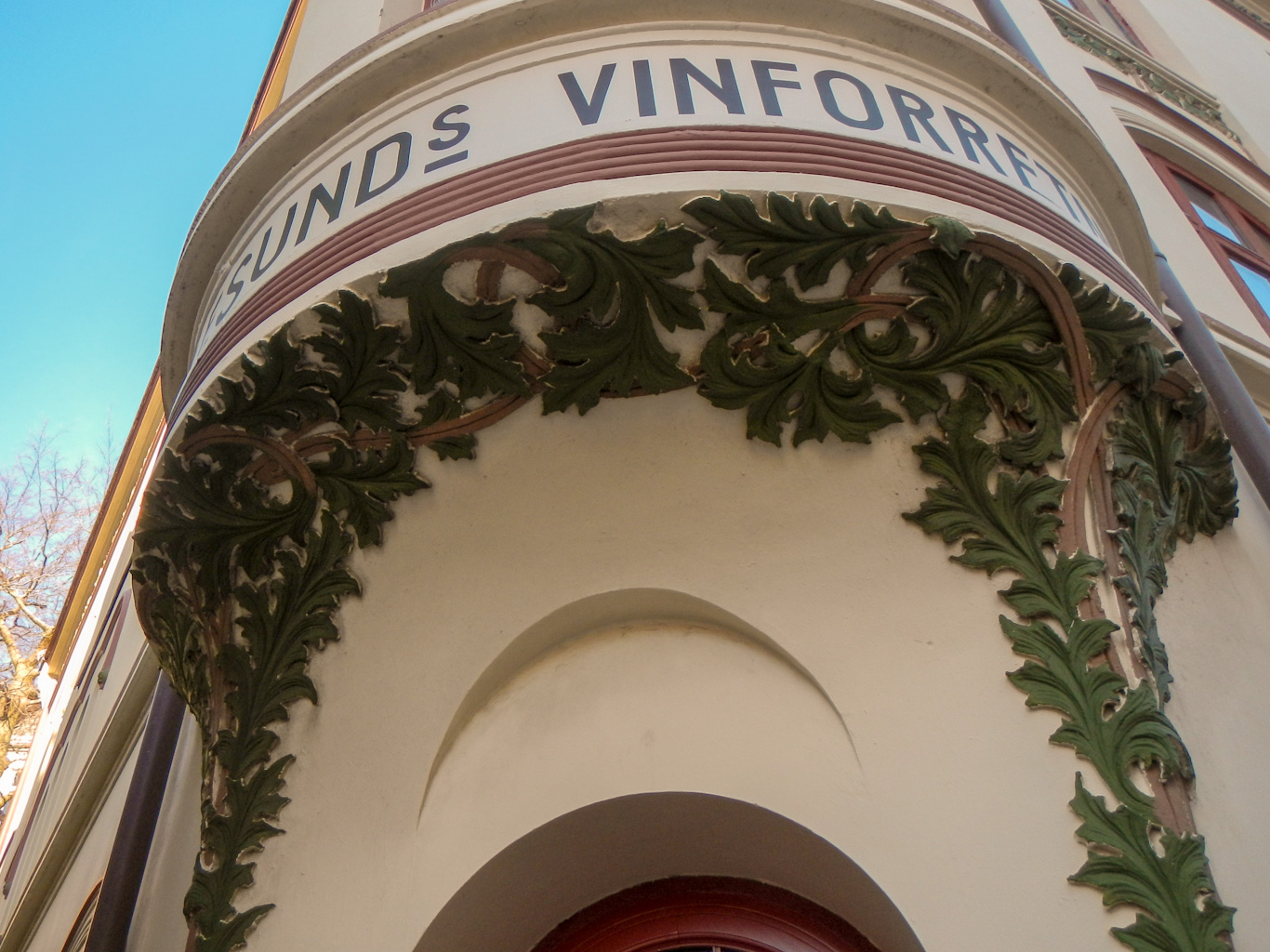


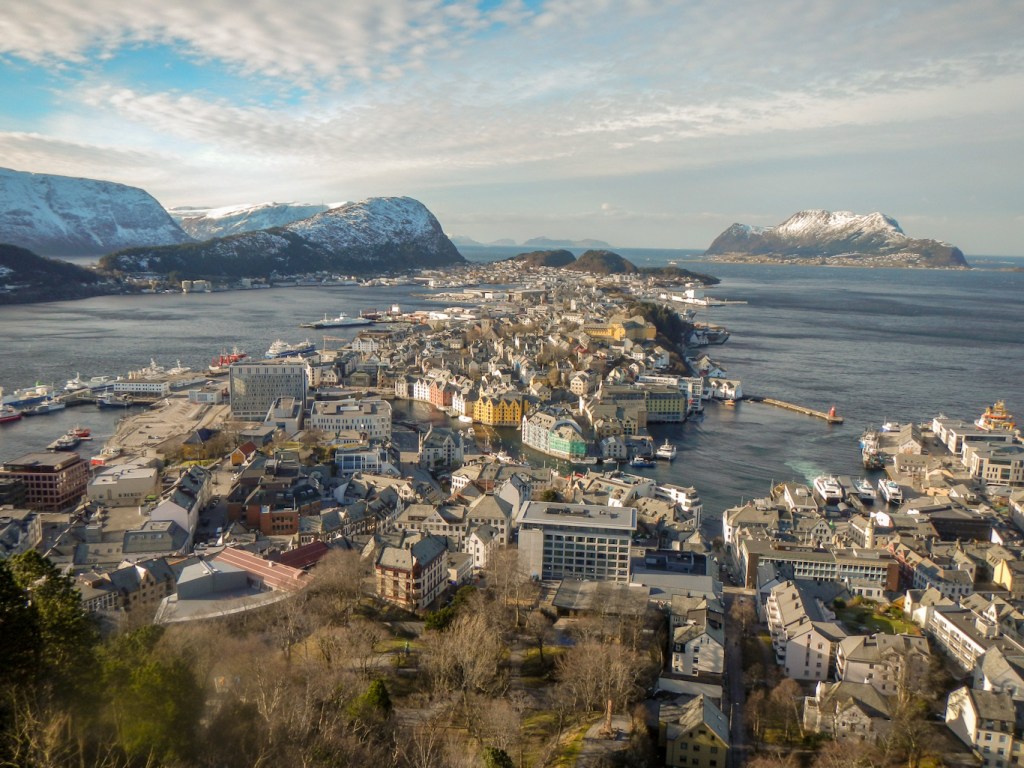
We climbed the hill and 418 steps to the impressive Aksla viewpoint. The mixture of gusty winds and intermittent icy snow underfoot made this quite an adventure especially on the final approaches to the viewing area. We darted across short stretches where there was no hand rail, trying to get to safety in between the strongest gusts, but also watching our foot placements to avoid any apparent slippery areas. We managed to find an easier although longer way back down, bypassing the steps and avoiding the areas most exposed to the wind.
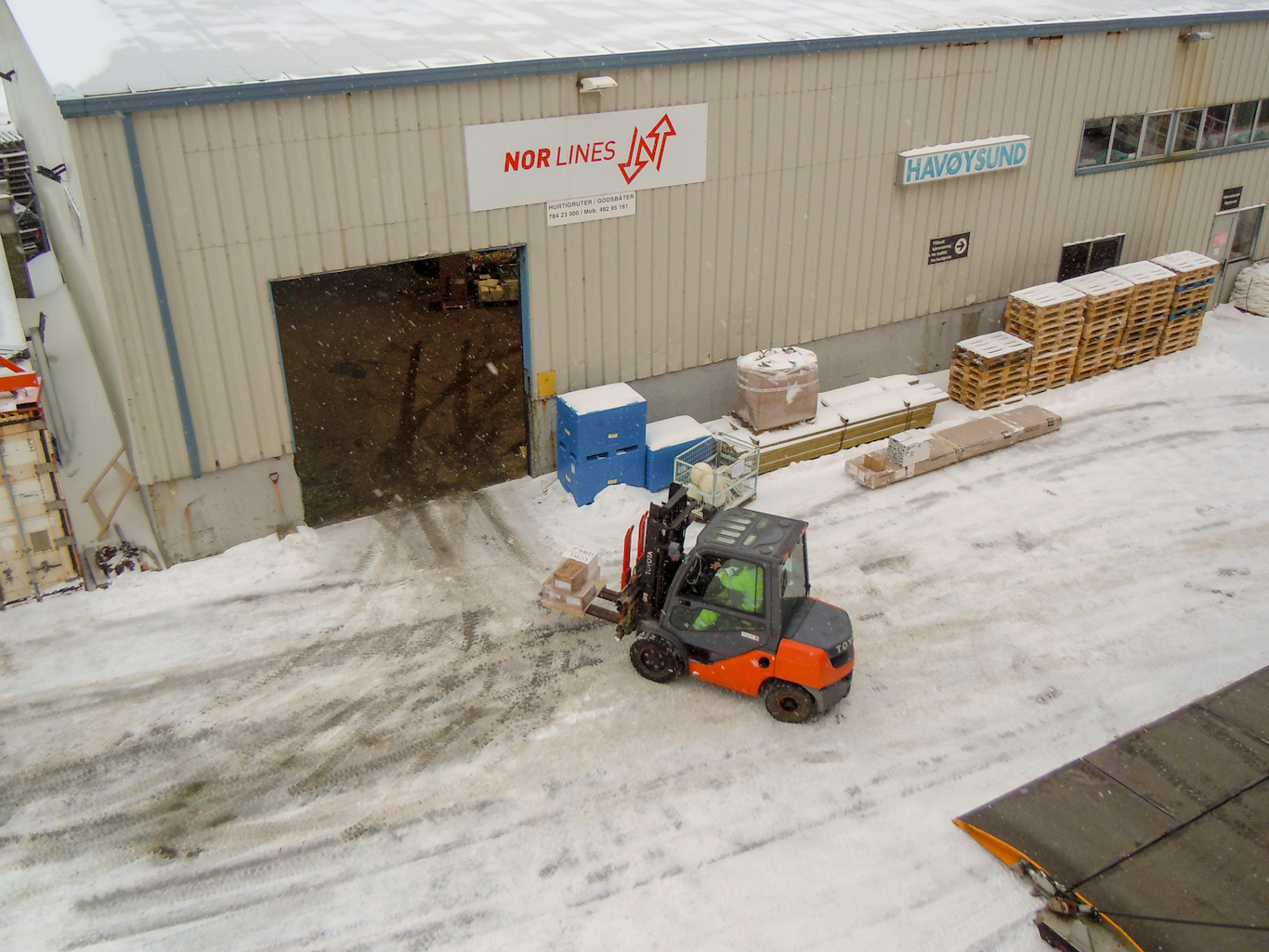
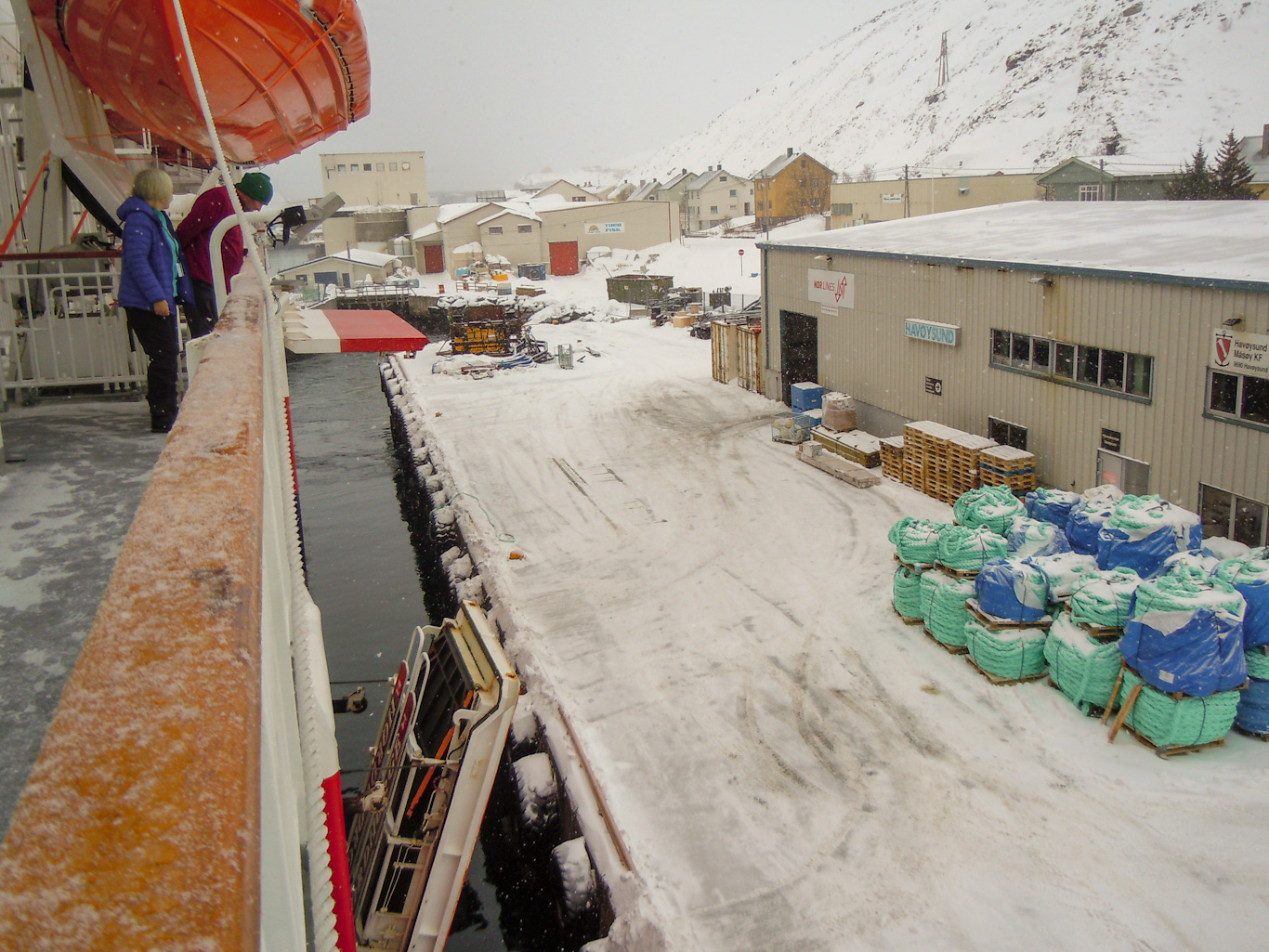
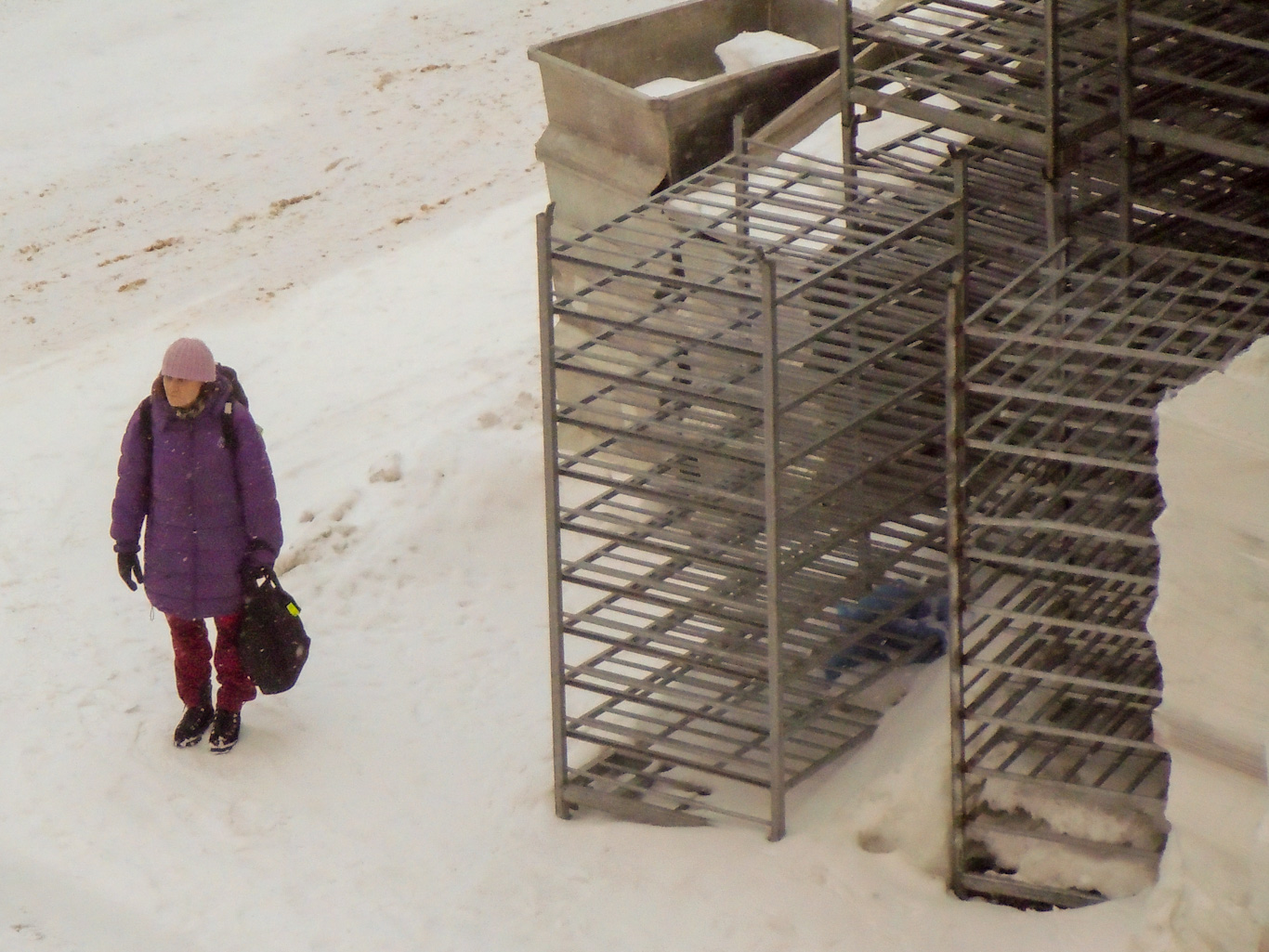
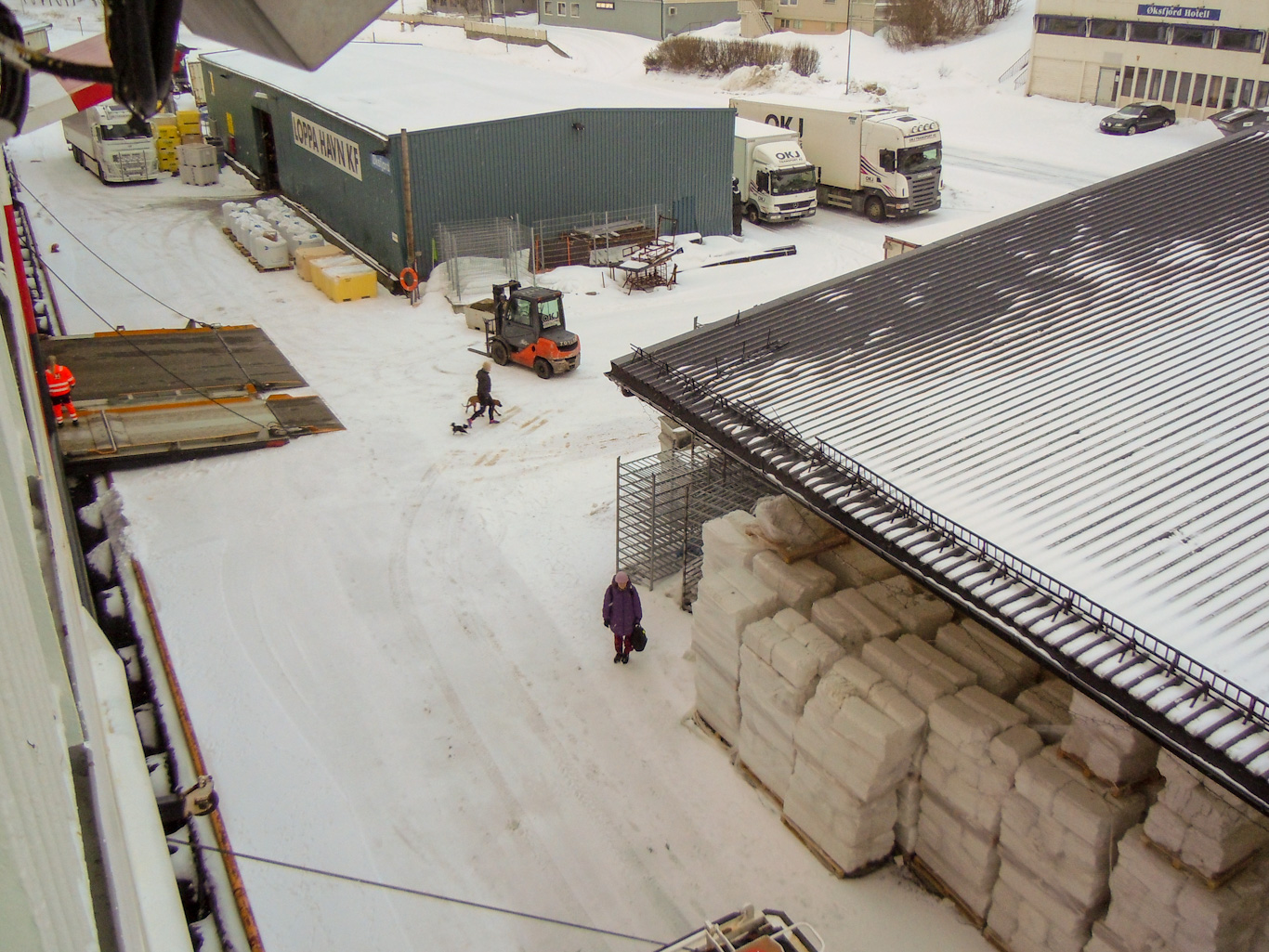
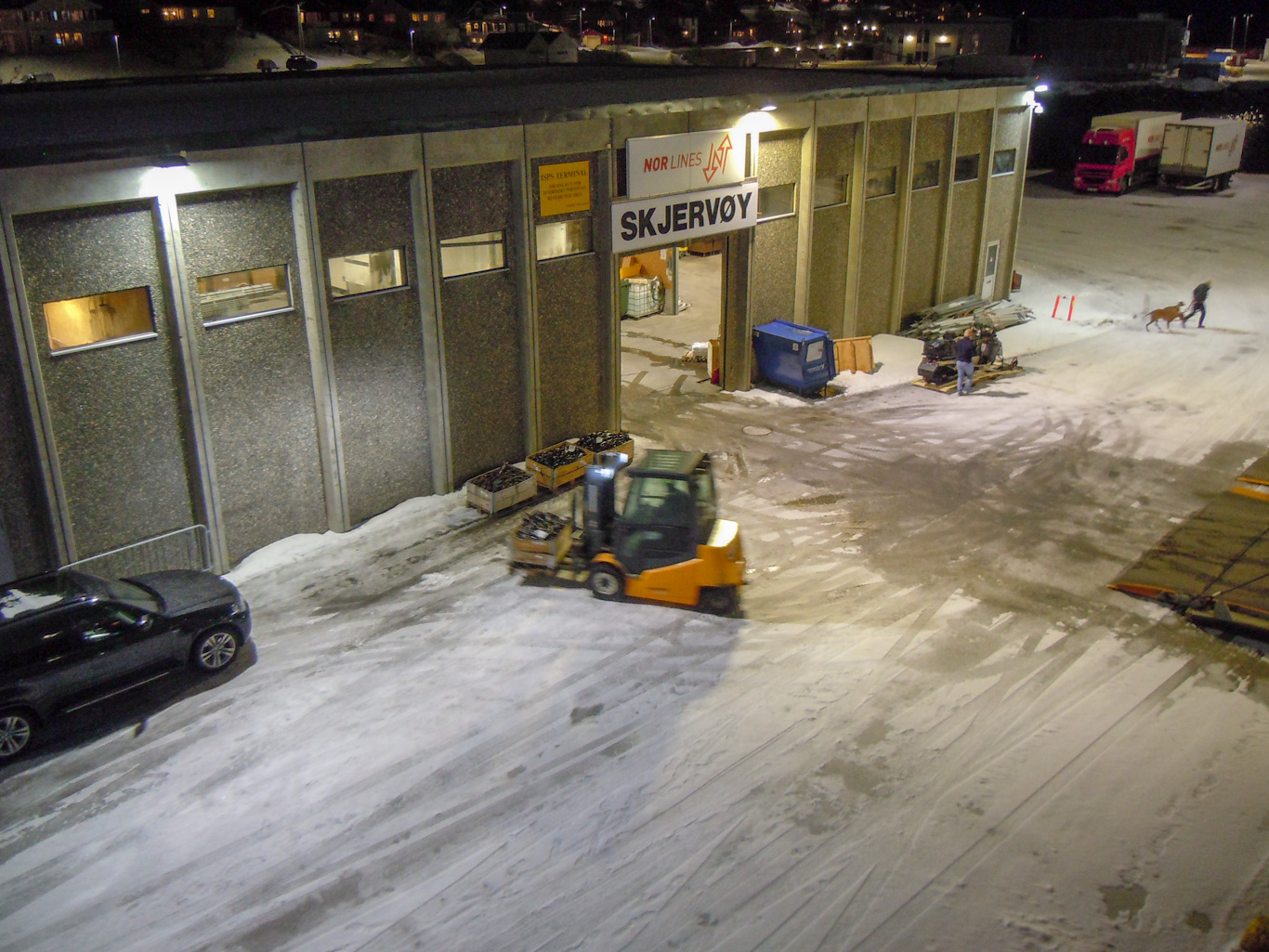
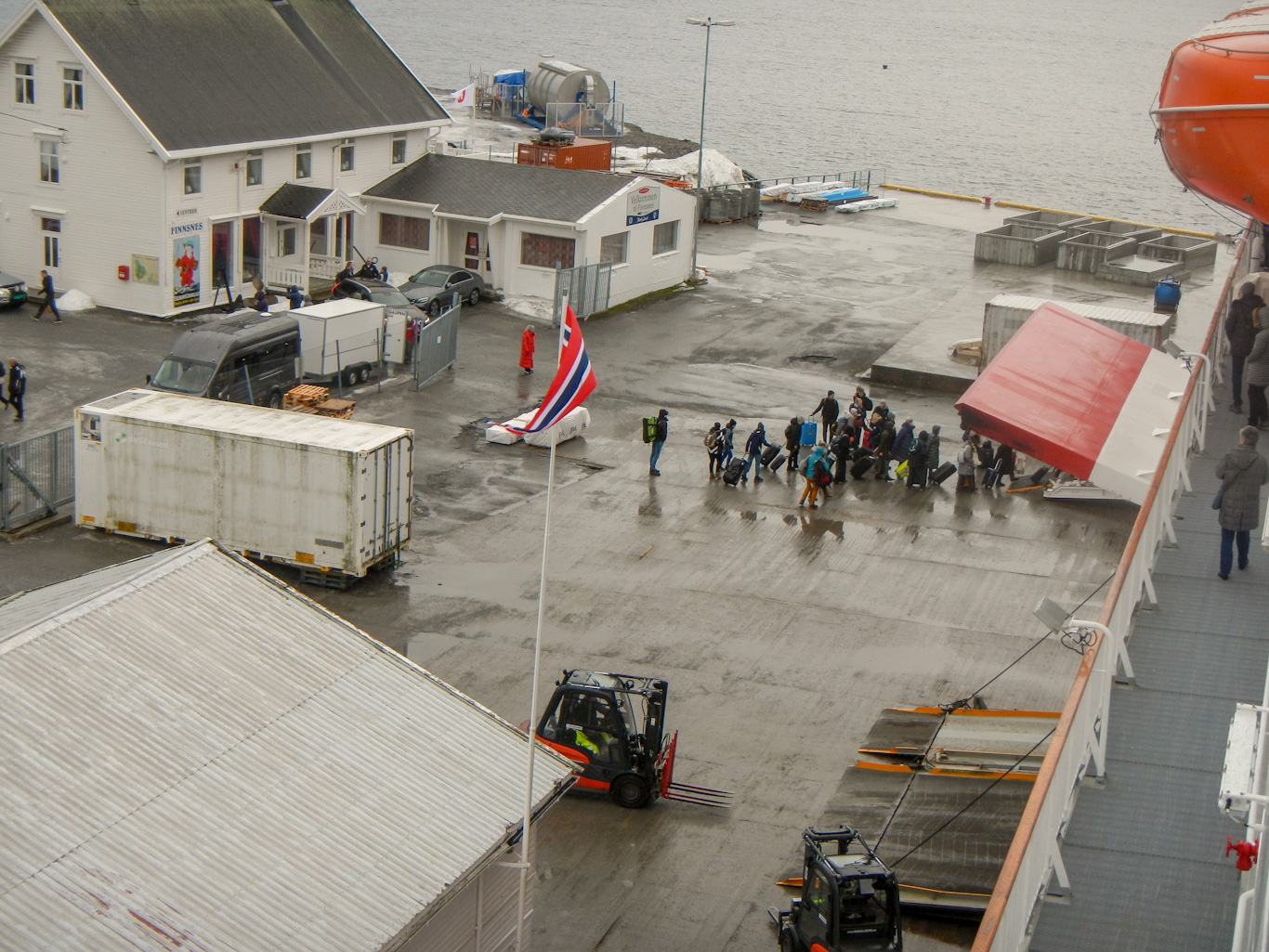
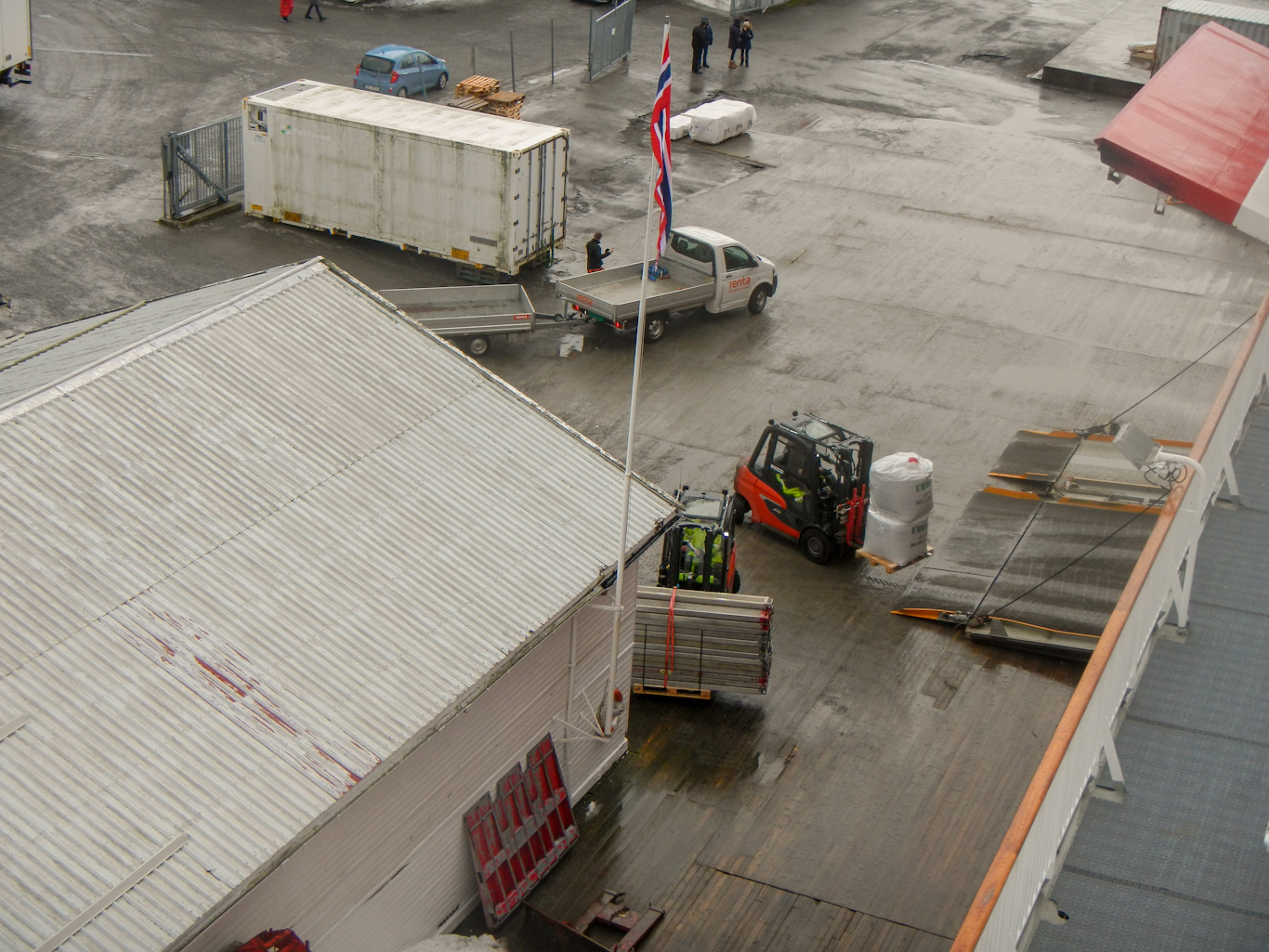
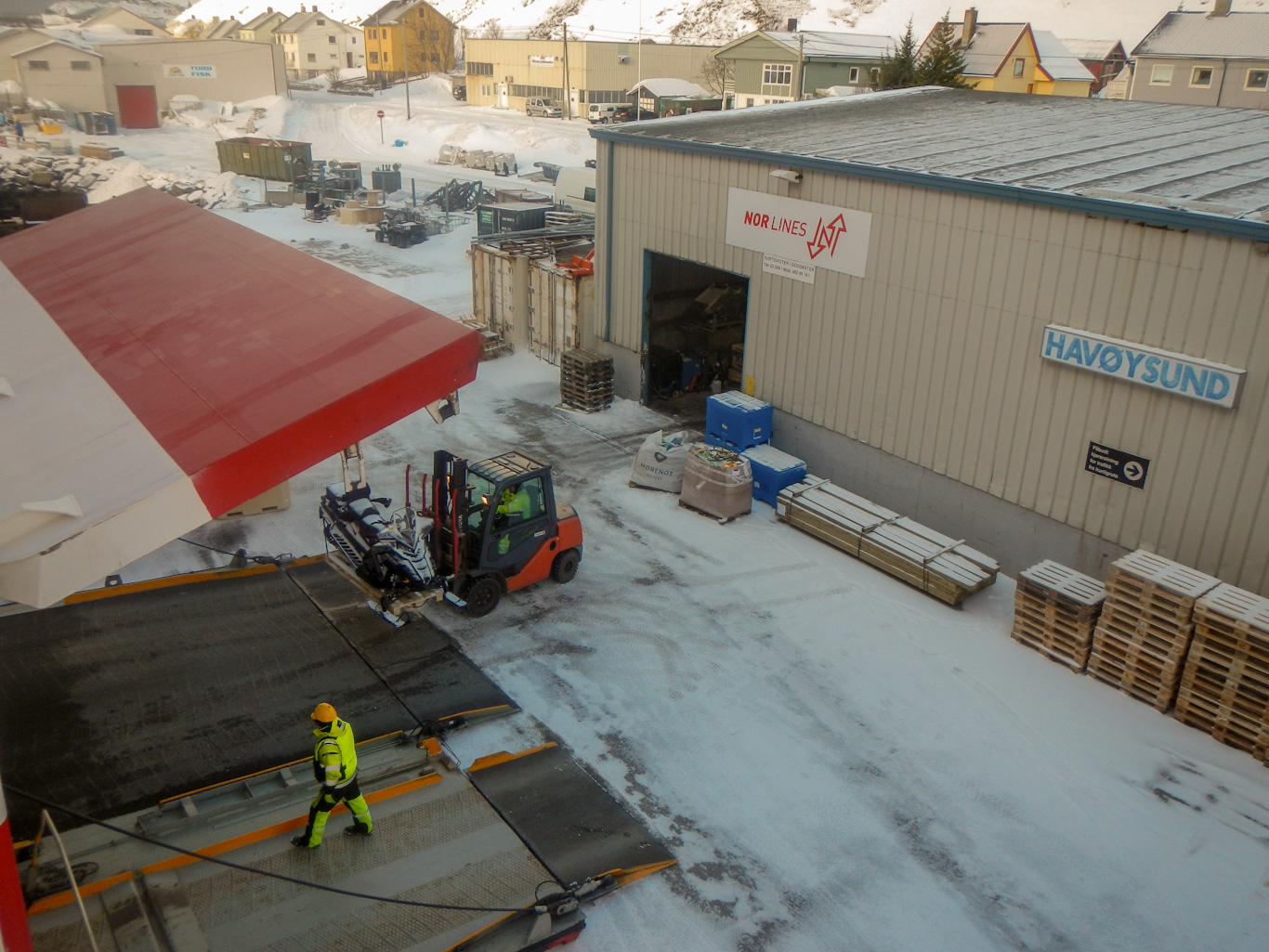
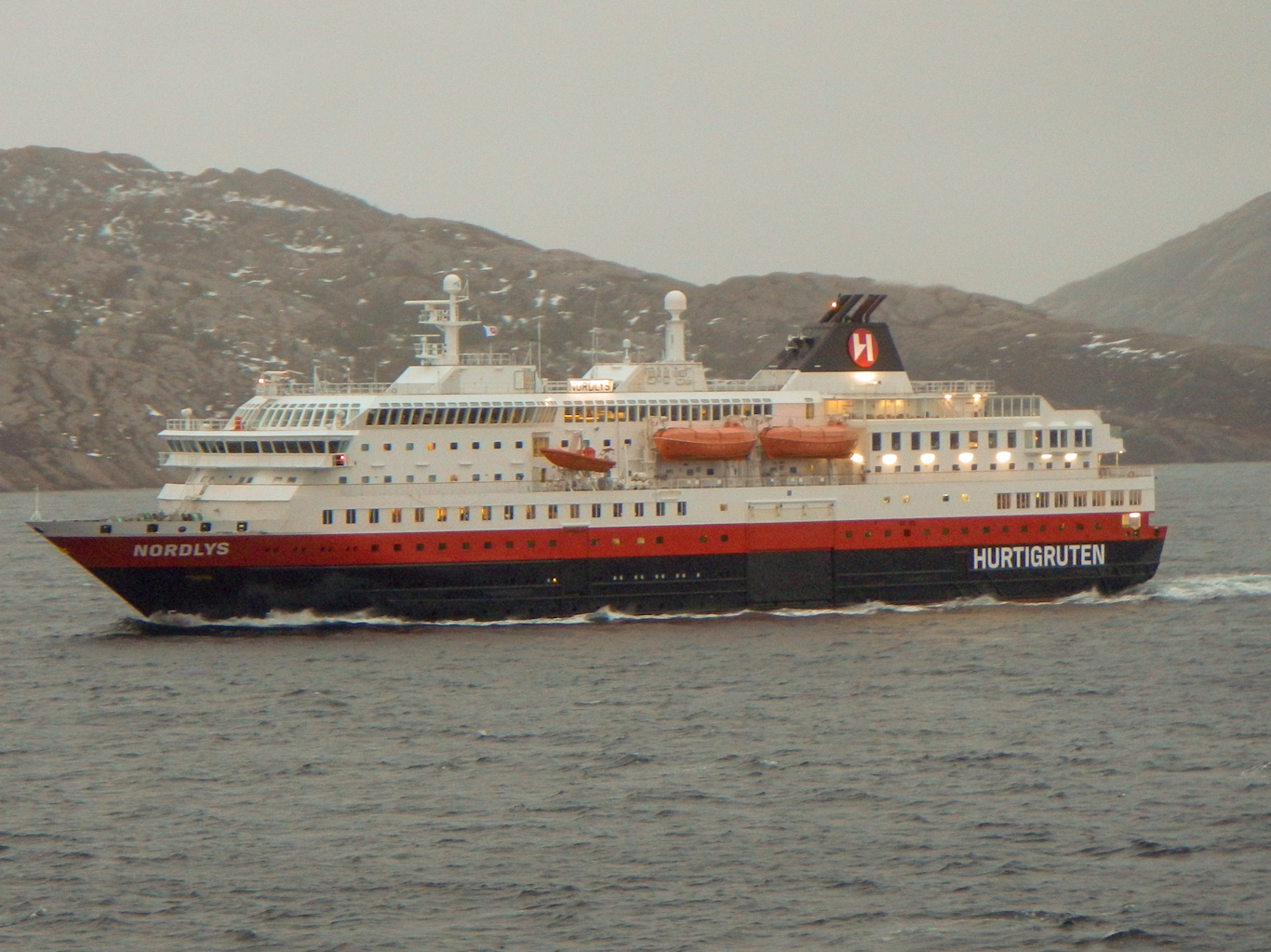
The Hurtigruten boats have been sailing since 1893. The boats continue to support, supply and serve the Norwegian coastal communities. As we travelled further north, cargo was collected and delivered to remote towns and larger cities. In addition the boat is used as an important means of transport for local people. It’s not a normal “cruise” ship sailing only for the pleasure of the holidaying passengers and it is important to remember that many Norwegian people depend on the boat both for their work and social life.




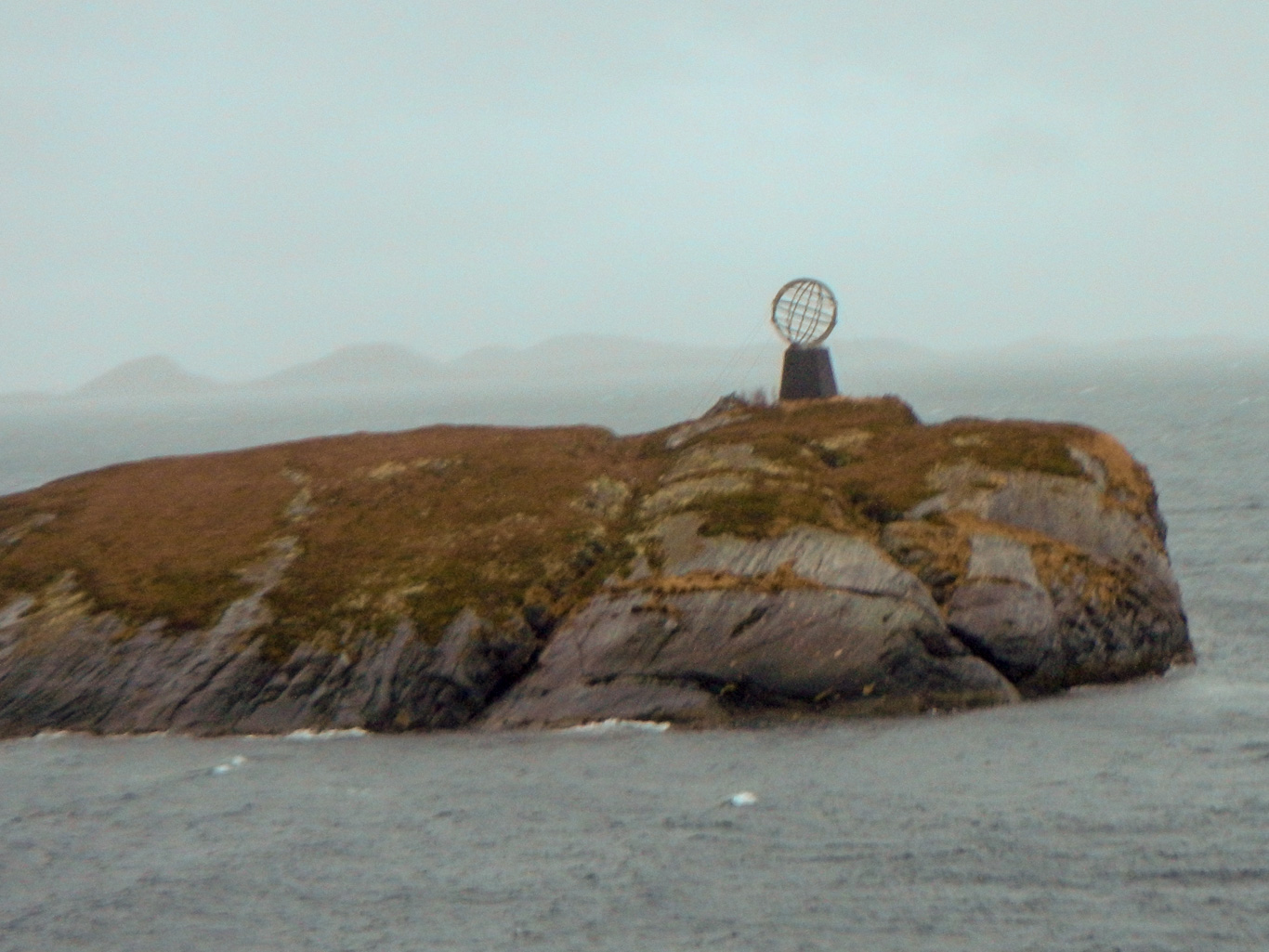
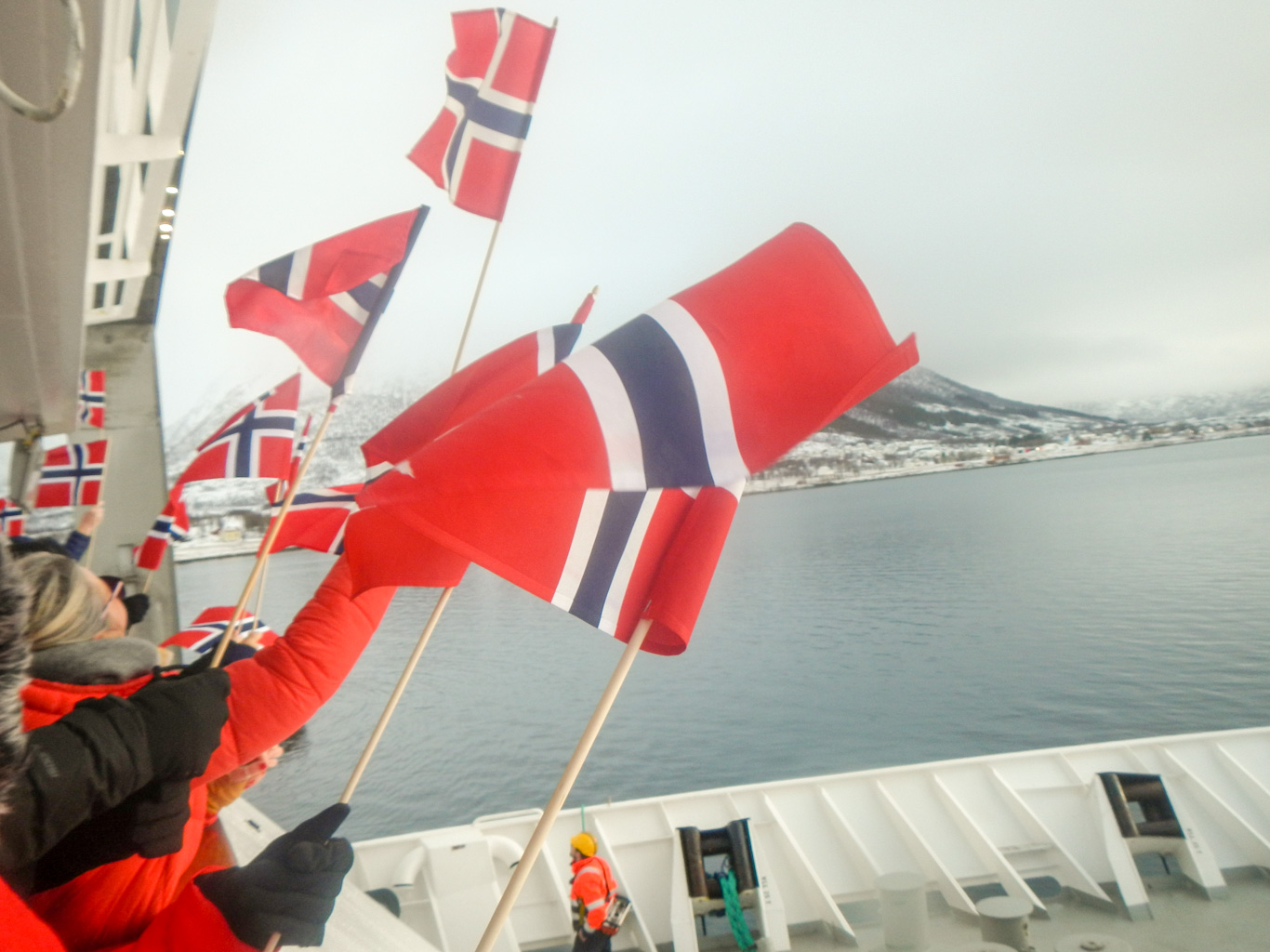
We crossed the Arctic Circle at precisely 08.00 on 1 March. One lucky passenger guessed exactly the right time and won the Hurtigruten flag that had been flying on the ship for the eleven days since the previous north bound crossing. Those who were brave enough sat in the chair to have ice poured down their backs by King Neptune. I knew this happened in the summer but didn’t expect it in the winter. I definitely had at least two ice cubes as they emerged from my clothes later when I was inside the boat – I fed them to one of the plants on deck 5! I did have a tot of cloudberry wine and didn’t give that to the plant – it was fully inclusive for all those who had the ice so my husband missed out as he had decided to avoid the ice ceremony.

The weather remained windy and this meant it wasn’t possible to visit the Lofoten Islands on our north bound journey. Some Norwegian passengers boarded at Bodø to make what they had hoped would be a four hour journey to Stamsund or six hours to Svolvær. Instead they were on the boat for at least nine hours and ended up far from their intended destination. It’s reminiscent of island travel in Shetland – the first challenge is getting there and the second is getting home!
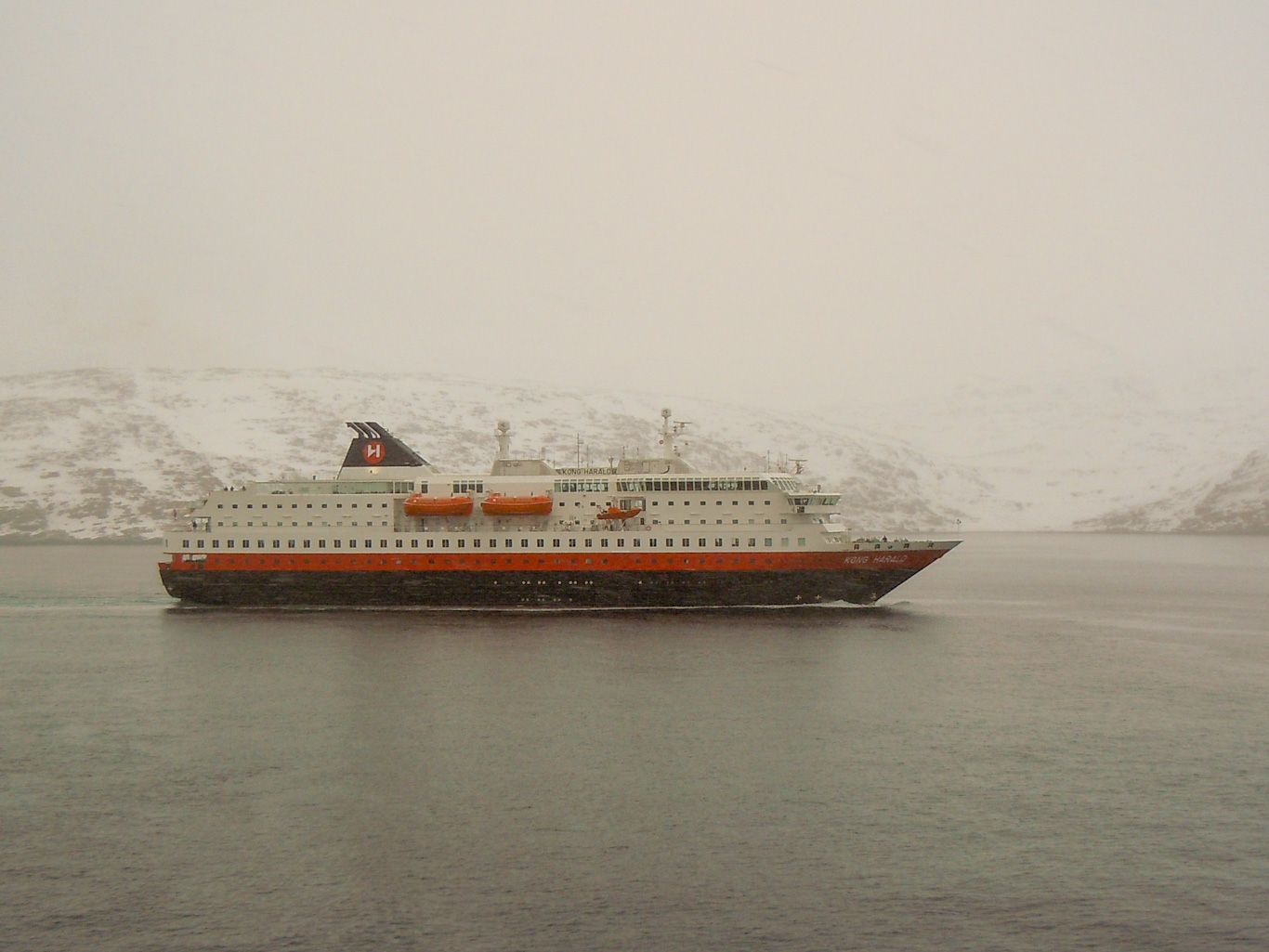
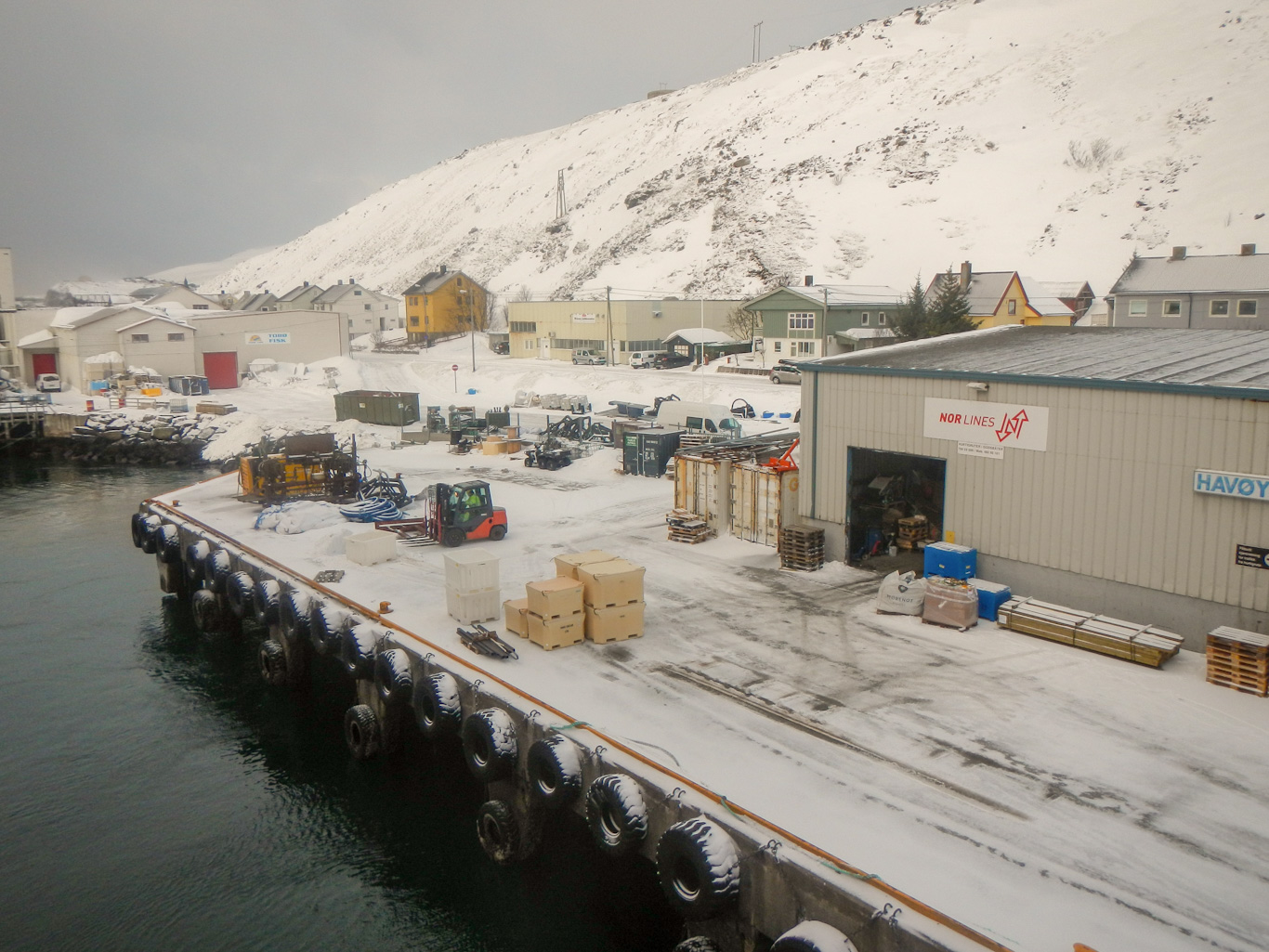
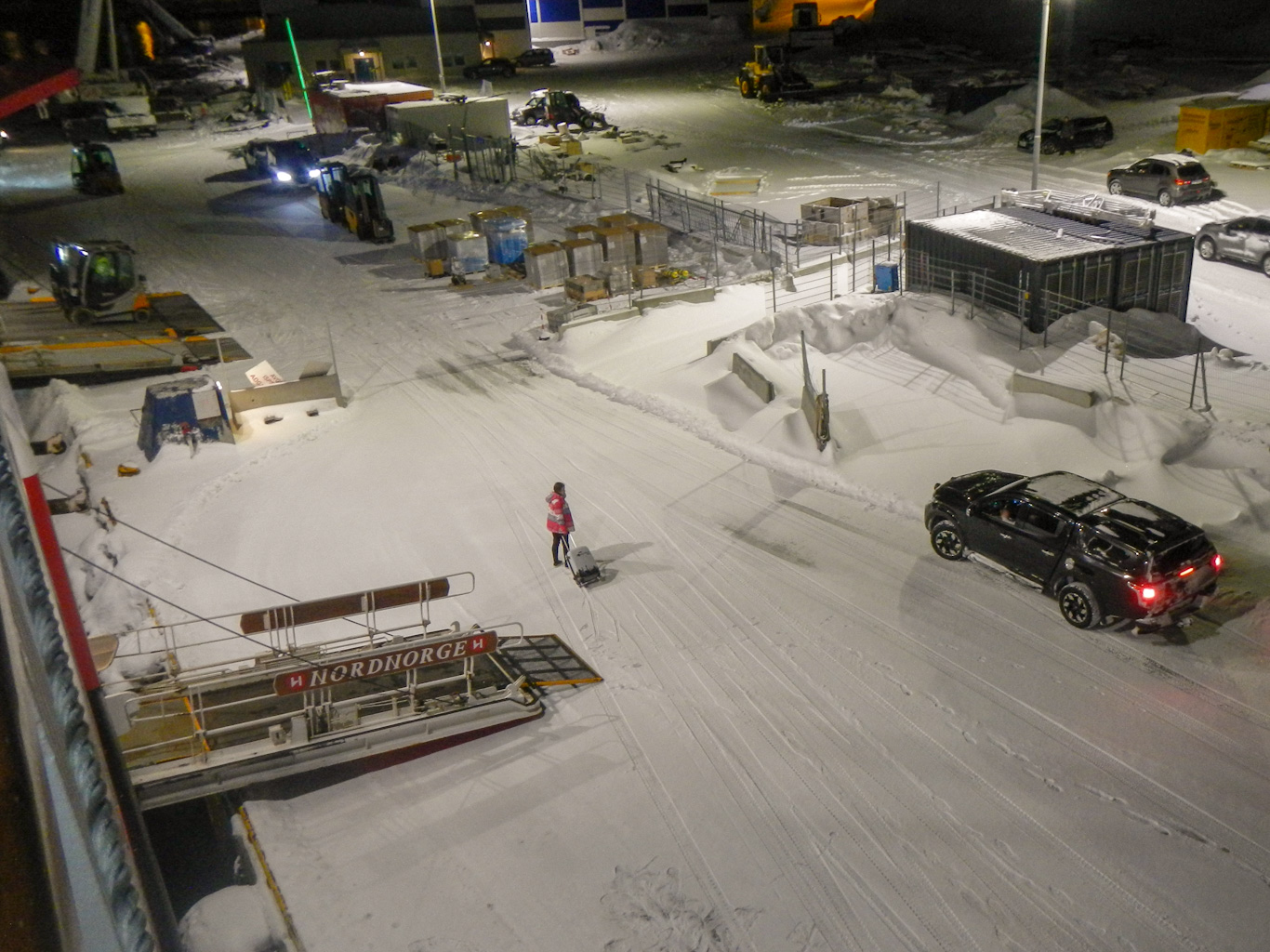
As we travelled north, the weather became more cold and we became accustomed to wearing gradually increasing layers of clothing whenever we ventured outside, not forgetting gloves and hats. The scenery changed and there was snow right down to sea level. We remembered to attach spikes or chains to our boots on leaving the boat to avoid slipping and sliding on the ice.
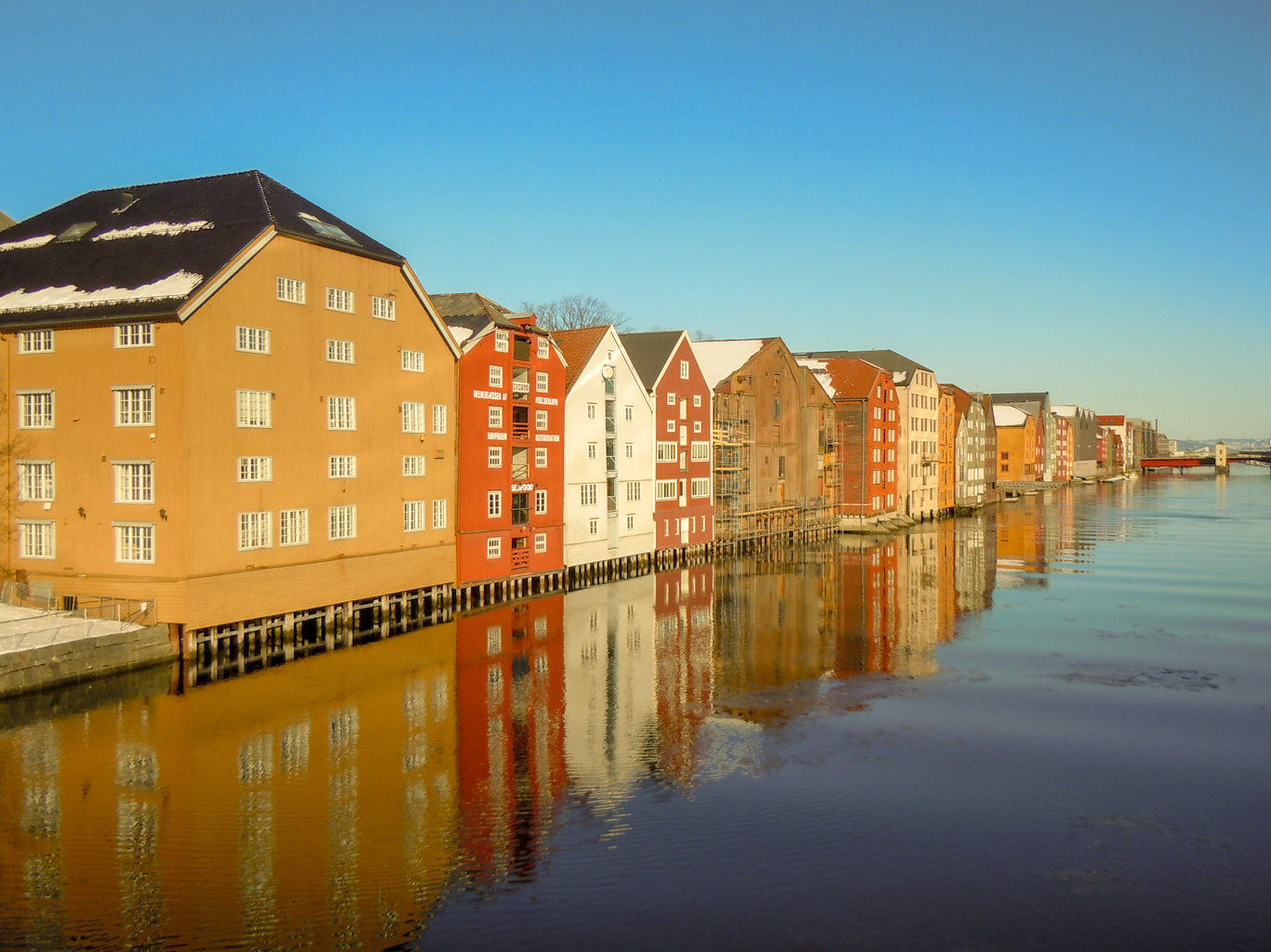
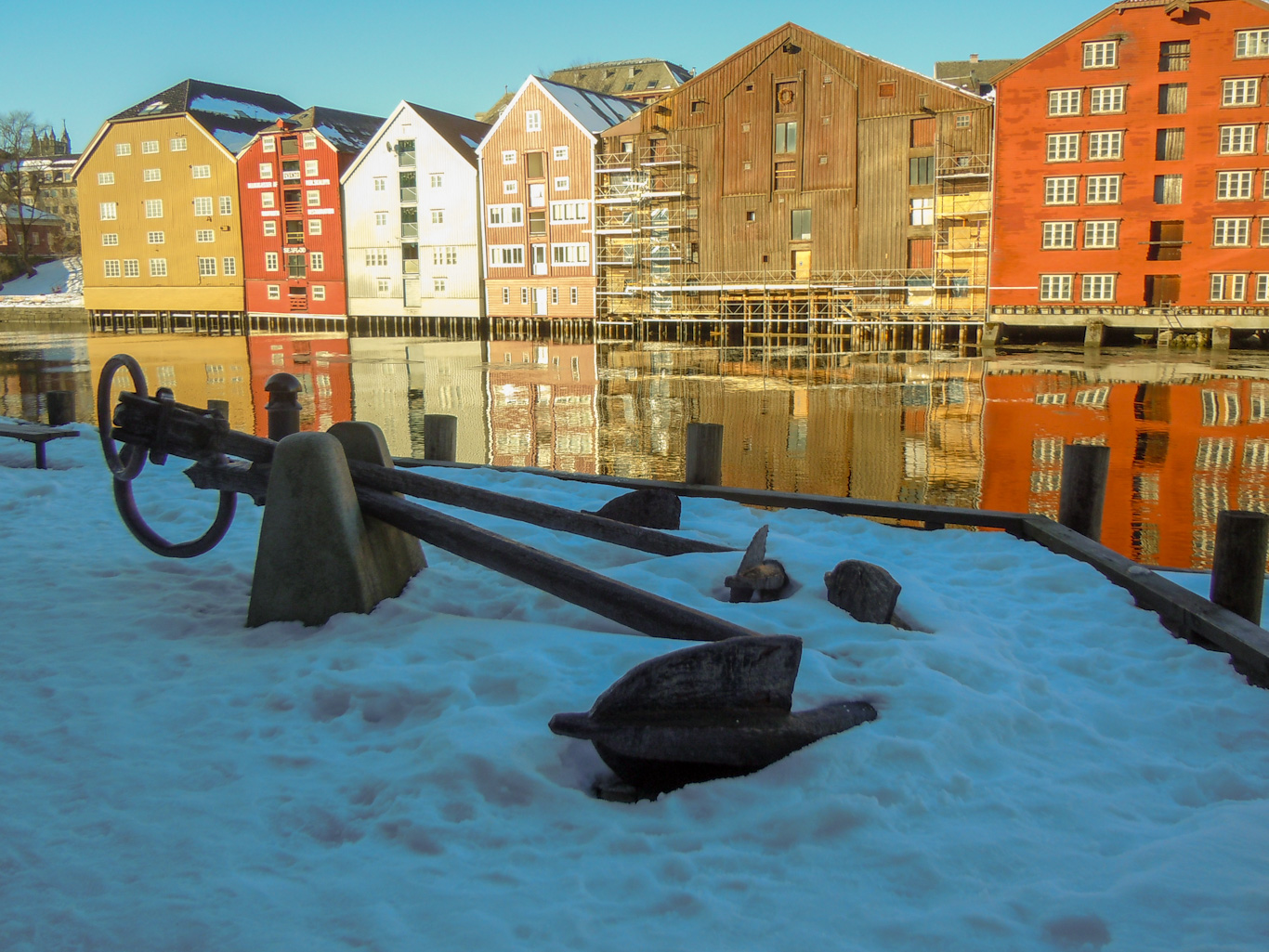
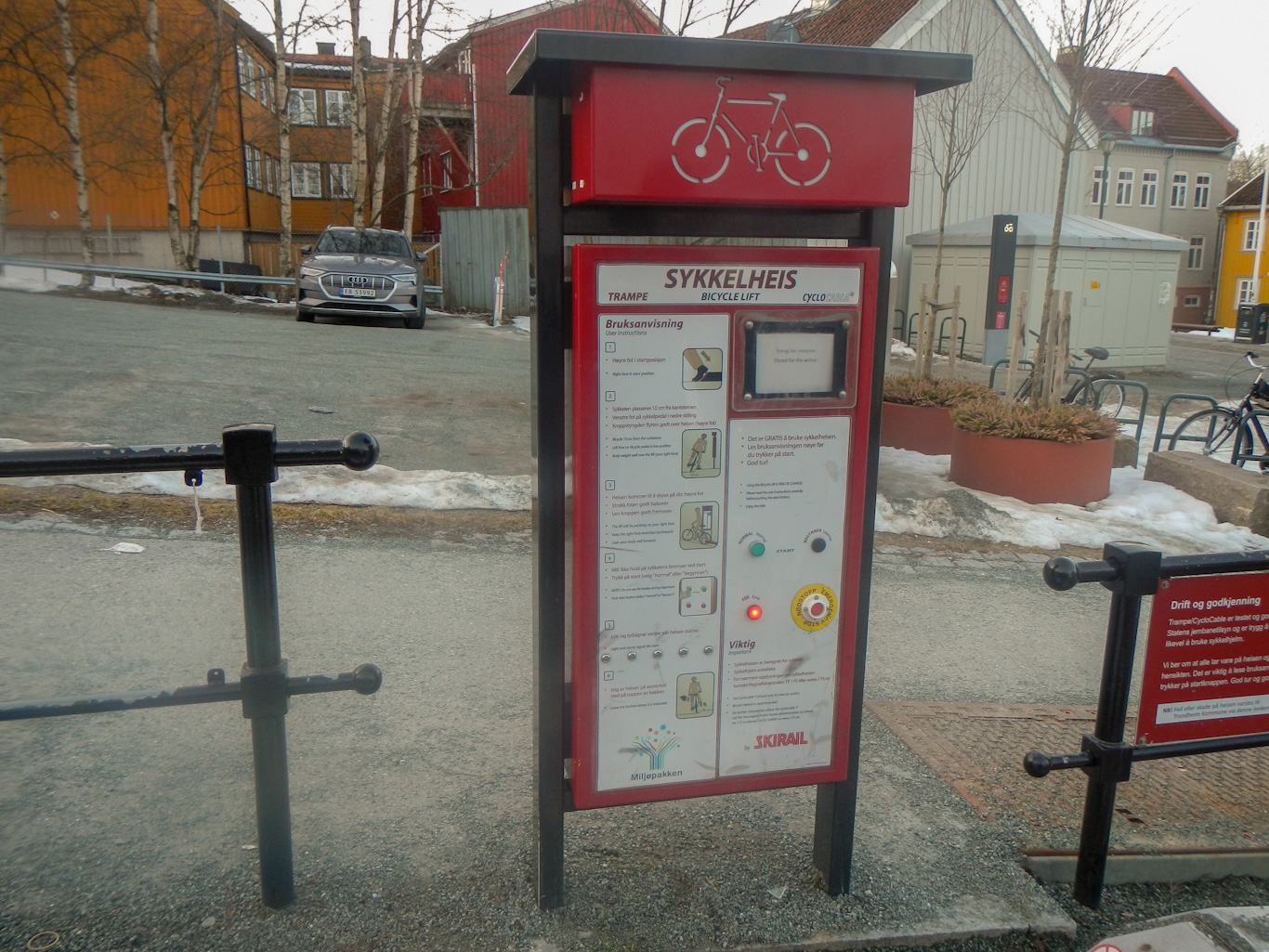
Trondheim is Norway’s third largest city and second largest university city.



Bodø is Northern Norway’s second largest town with almost 38,000 inhabitants. Most of the town was destroyed by a German air raid on 27 May 1940 and was rebuilt after 1945.
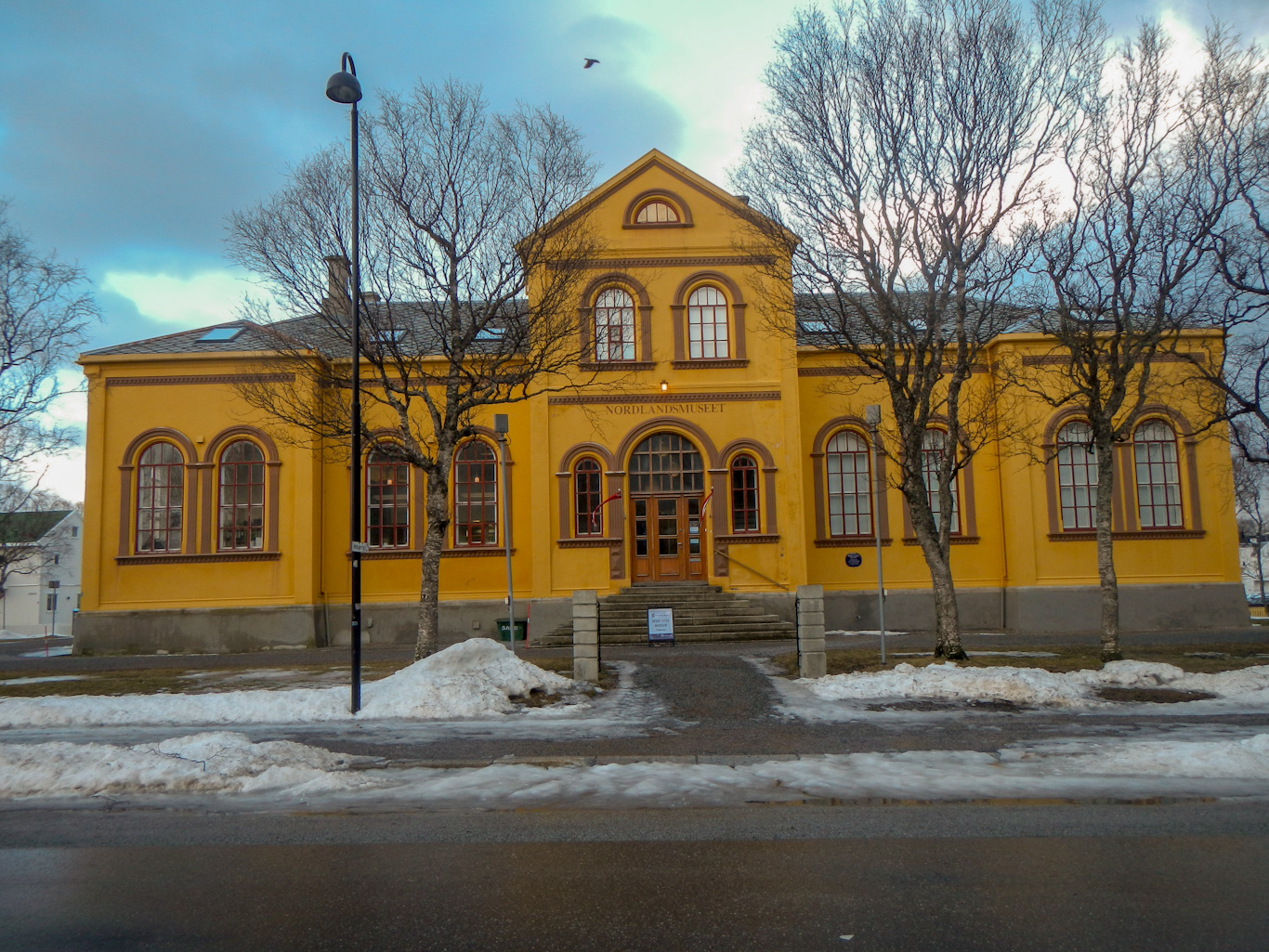
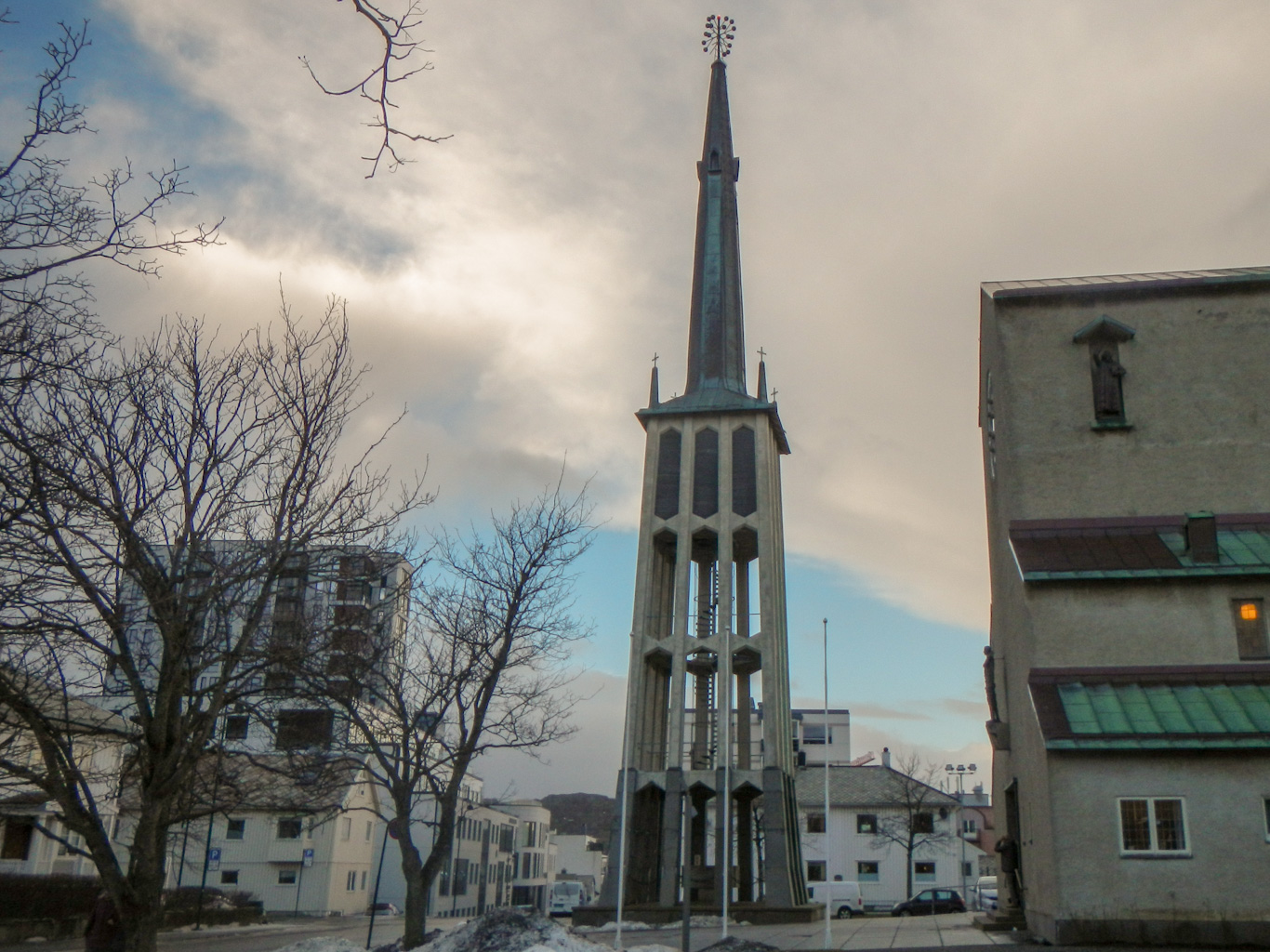
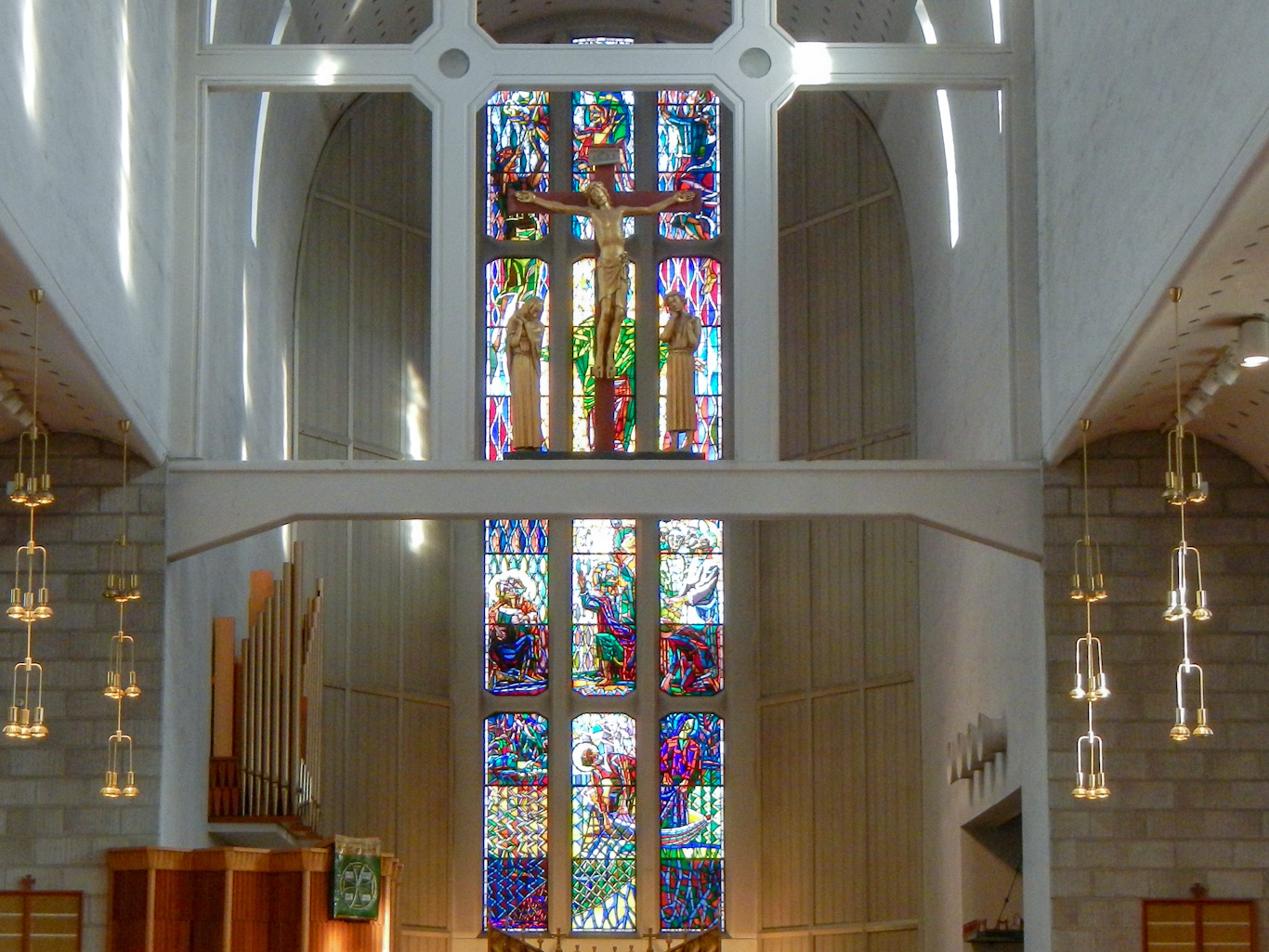
Kirkenes is close to the Russian border. This area has been used for summer residence for Sami reindeer herds for hundreds and possibly thousands of years.


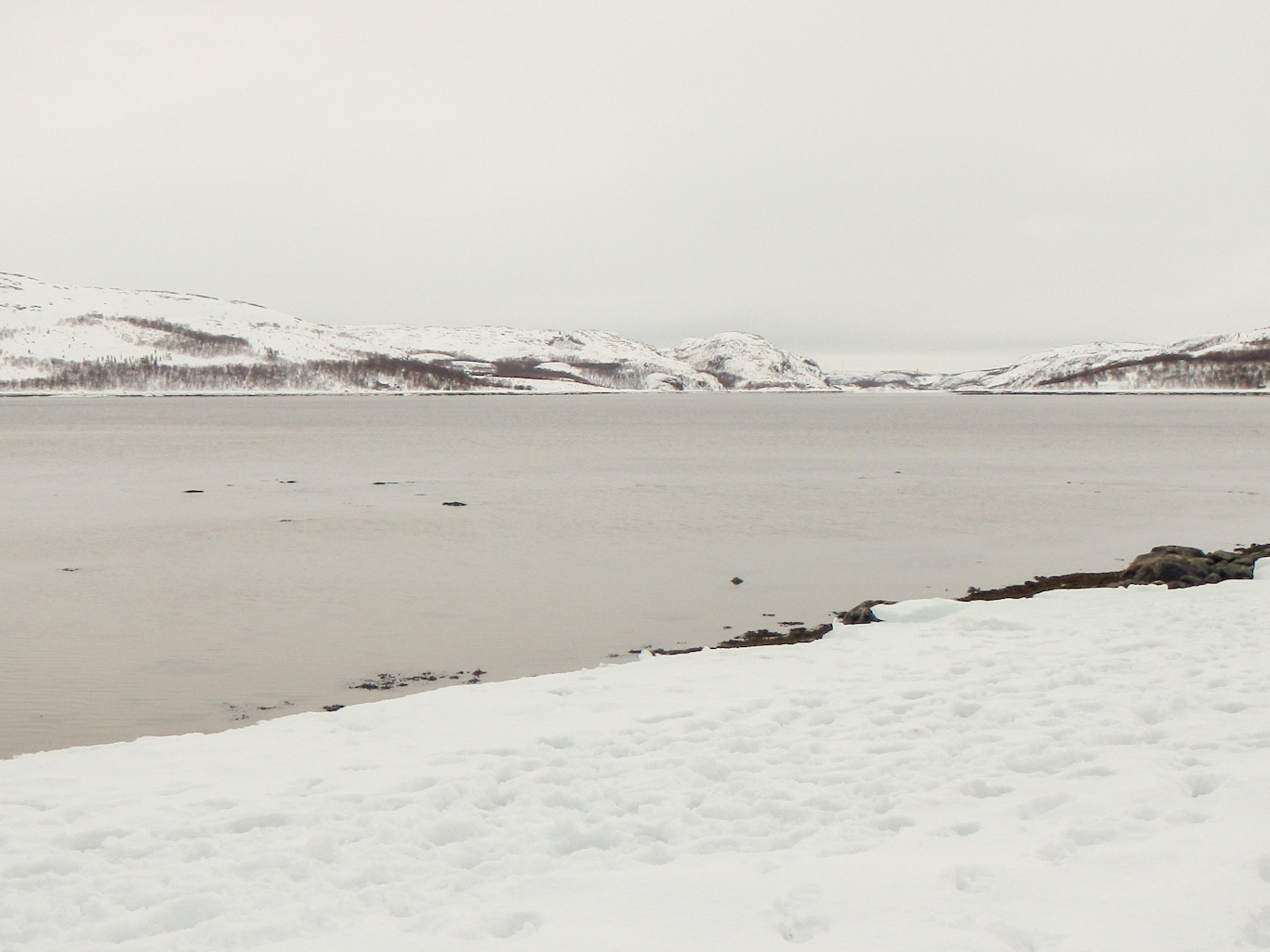
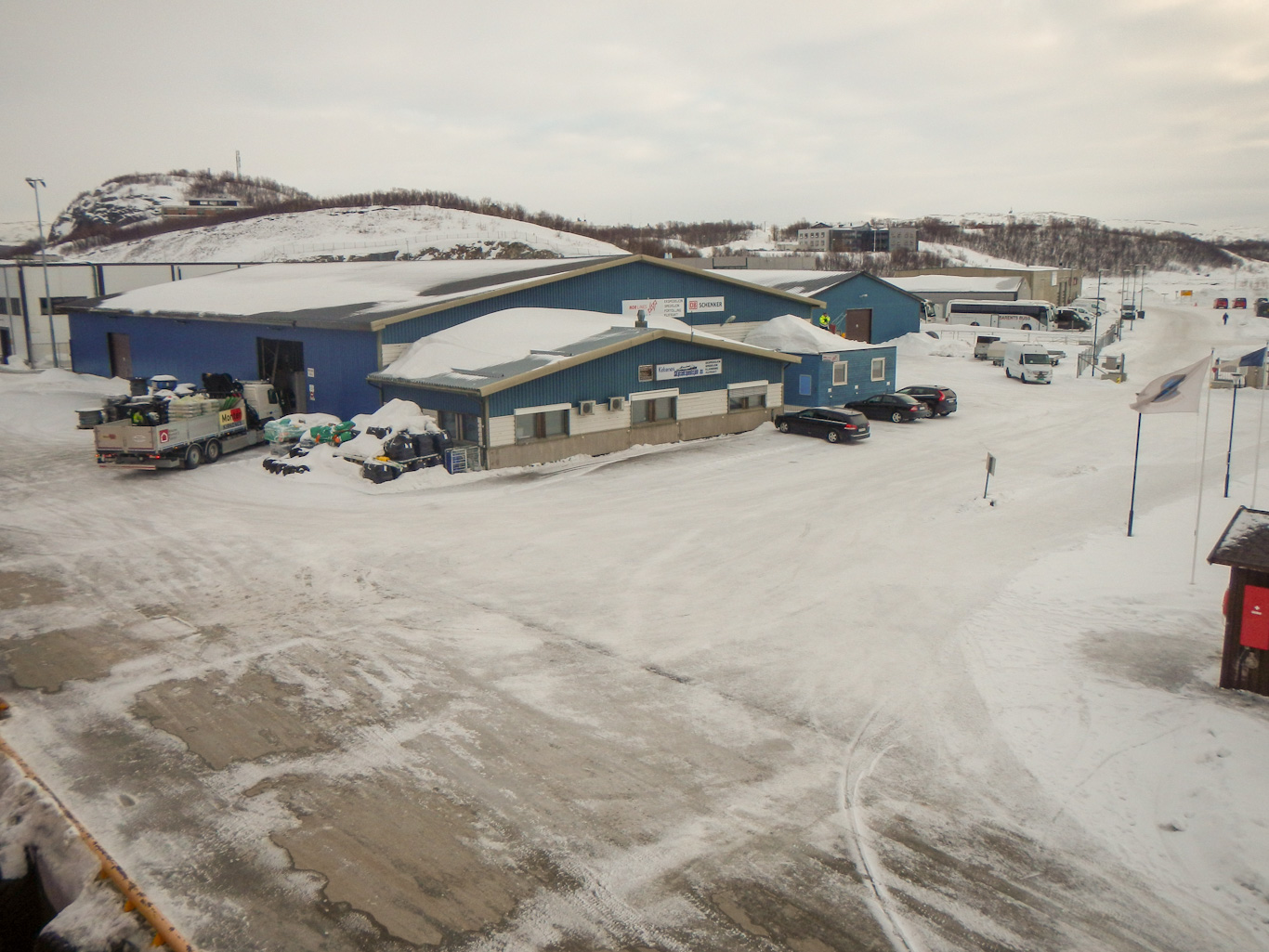
Vardø is Norway’s most easterly town and said to be the world’s most northerly fortified town.
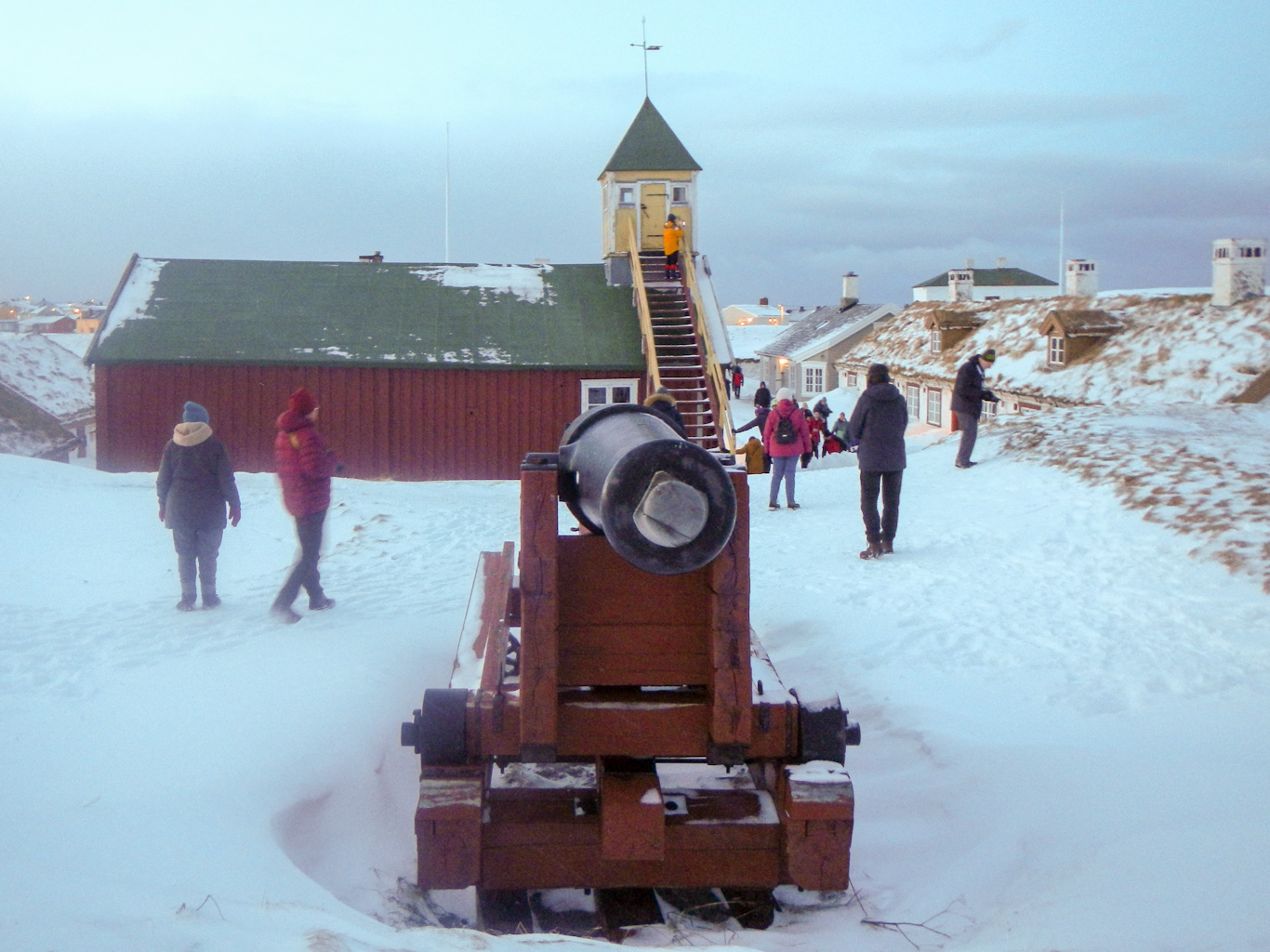
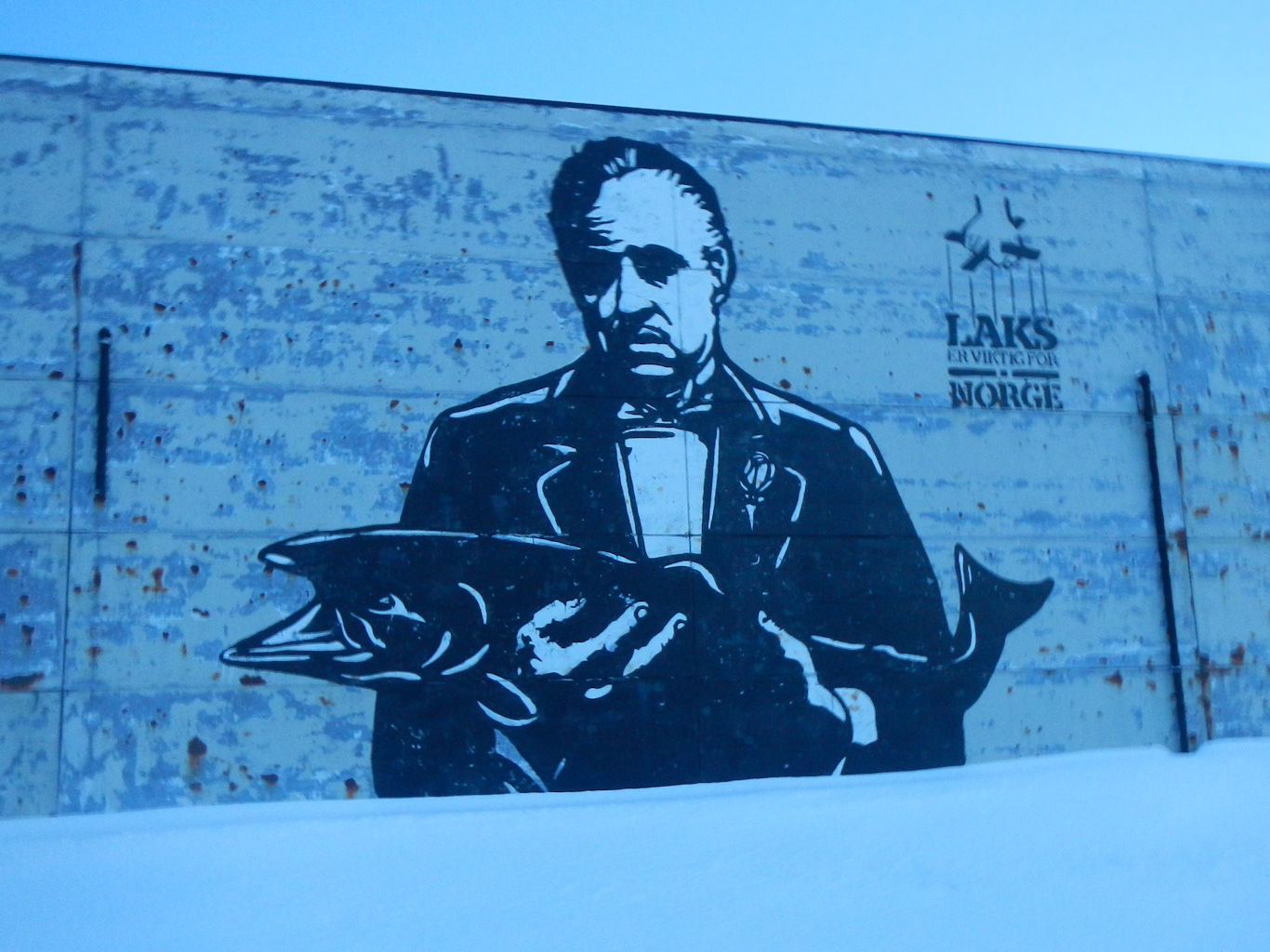
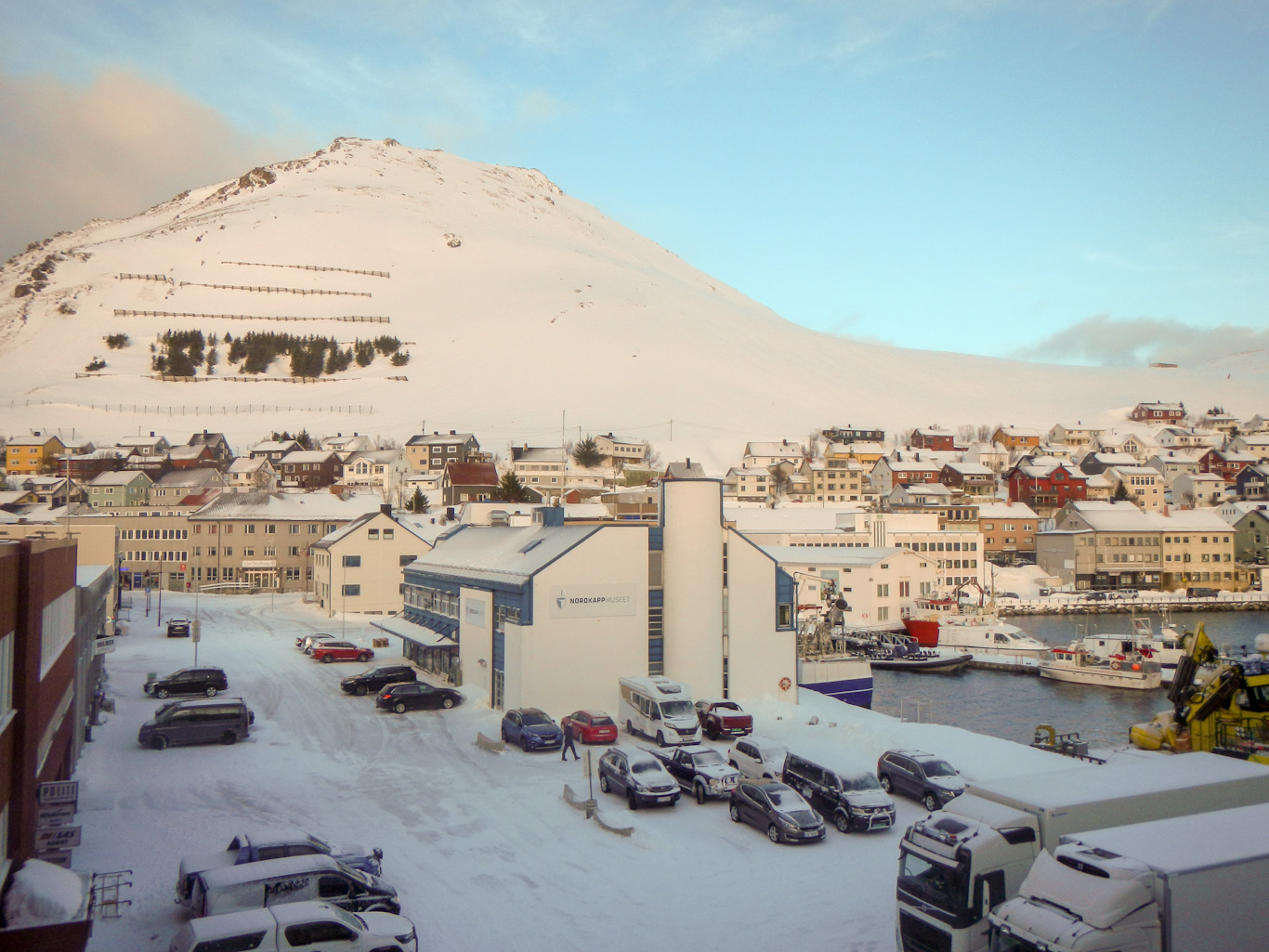
Hammerfest is the regional port for the county of Finnmark and has been a major trading, fishing and commercial centre for many centuries.
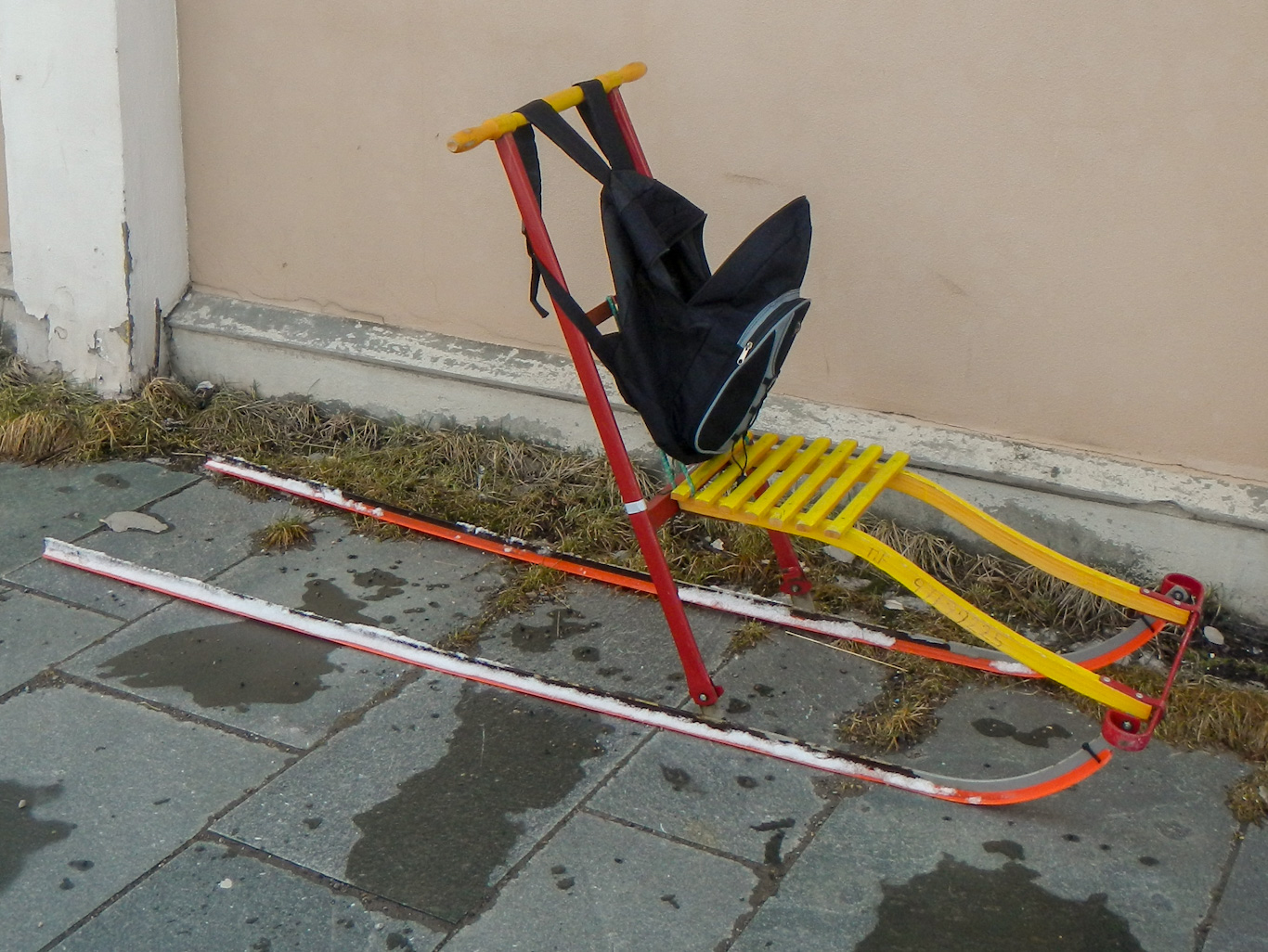


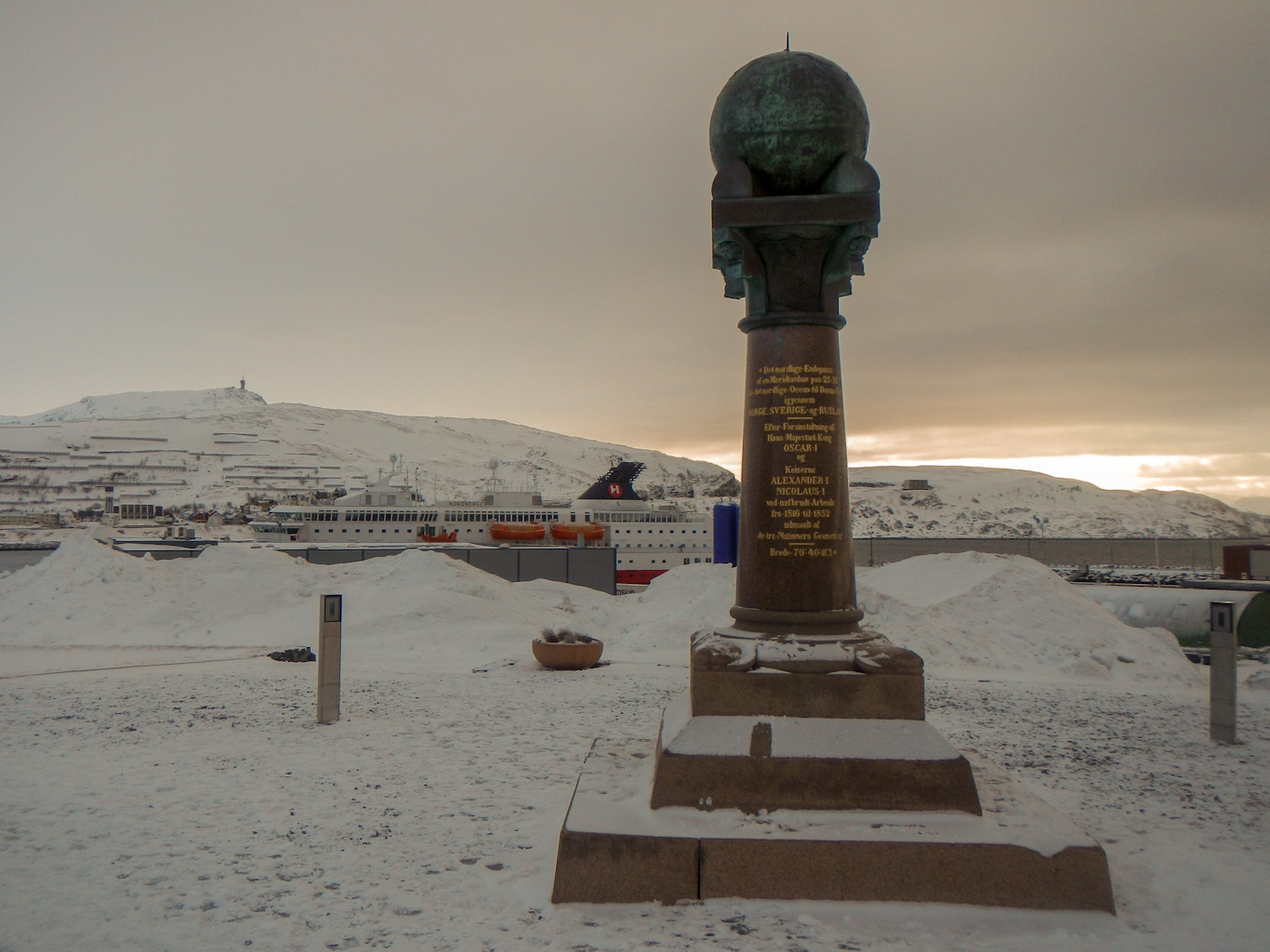
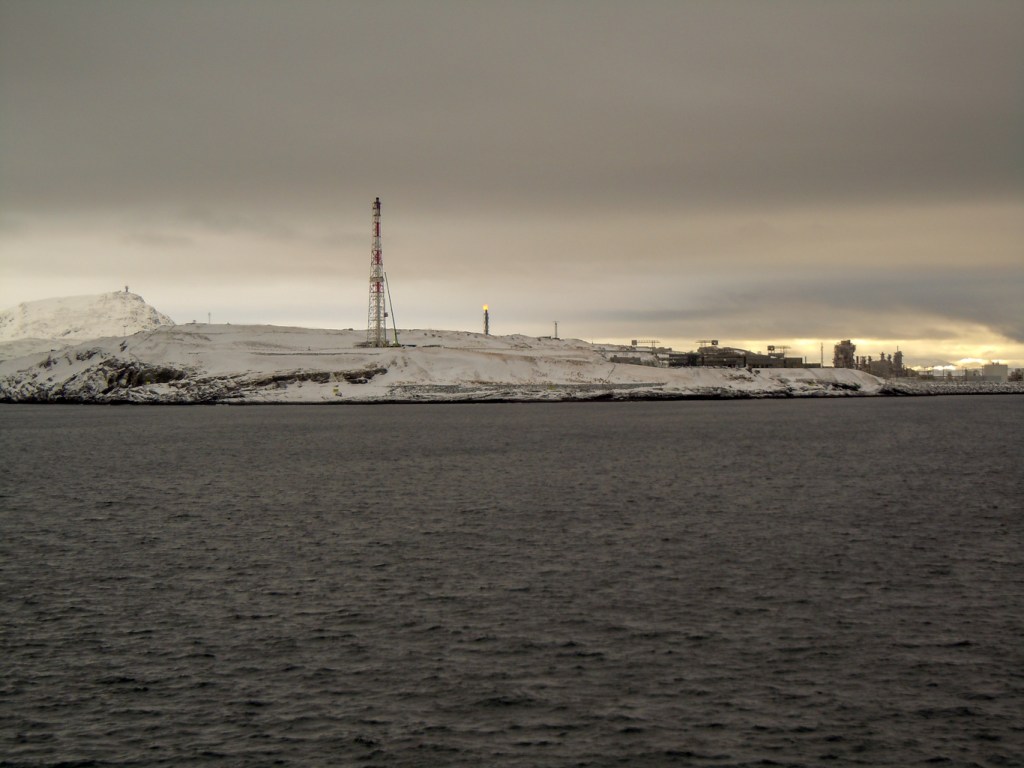
The proximity of Hammerfest to Melkøya which is the first production and export plant for liquefied natural gas (LNG) from nearby major gas fields means that this remains a prosperous area.
A couple of days provided a few “first time” experiences for me:
- First time on skis with a cross country skiing lesson at Tromsø. It was great fun and was very suitable for genuine first-timers like me. I managed to get my skis on and some passable walking and sliding on the flat (at least I thought it was passable). However going downhill was more of a challenge and culminated in falling every time as I couldn’t quite master turning both heels outwards at the same time to slow down! We had a break to drink hot blackcurrant juice and saw about six white ptarmigan camouflaged on the snow – having only previously seen them with summer plumage this was another first.
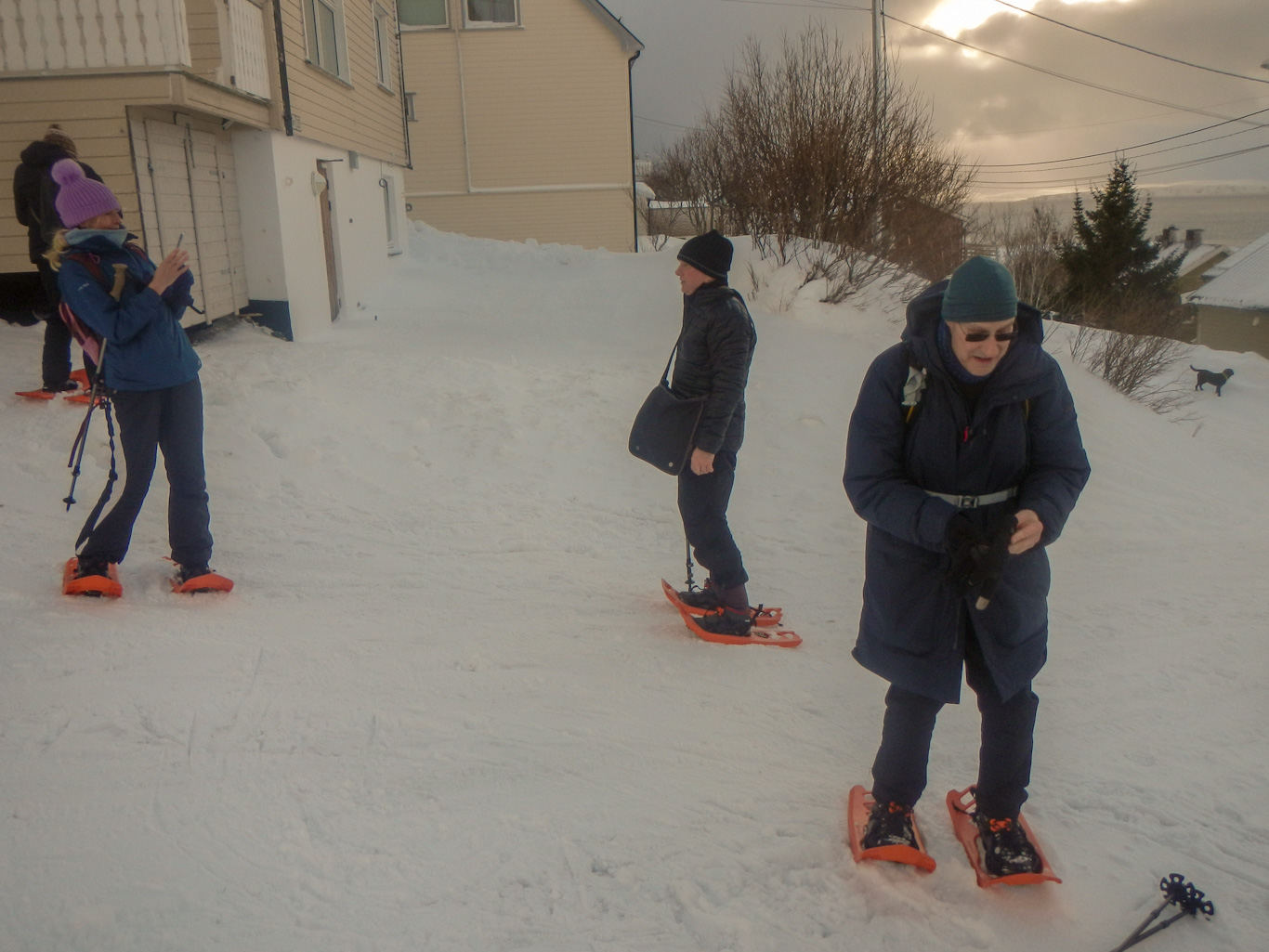
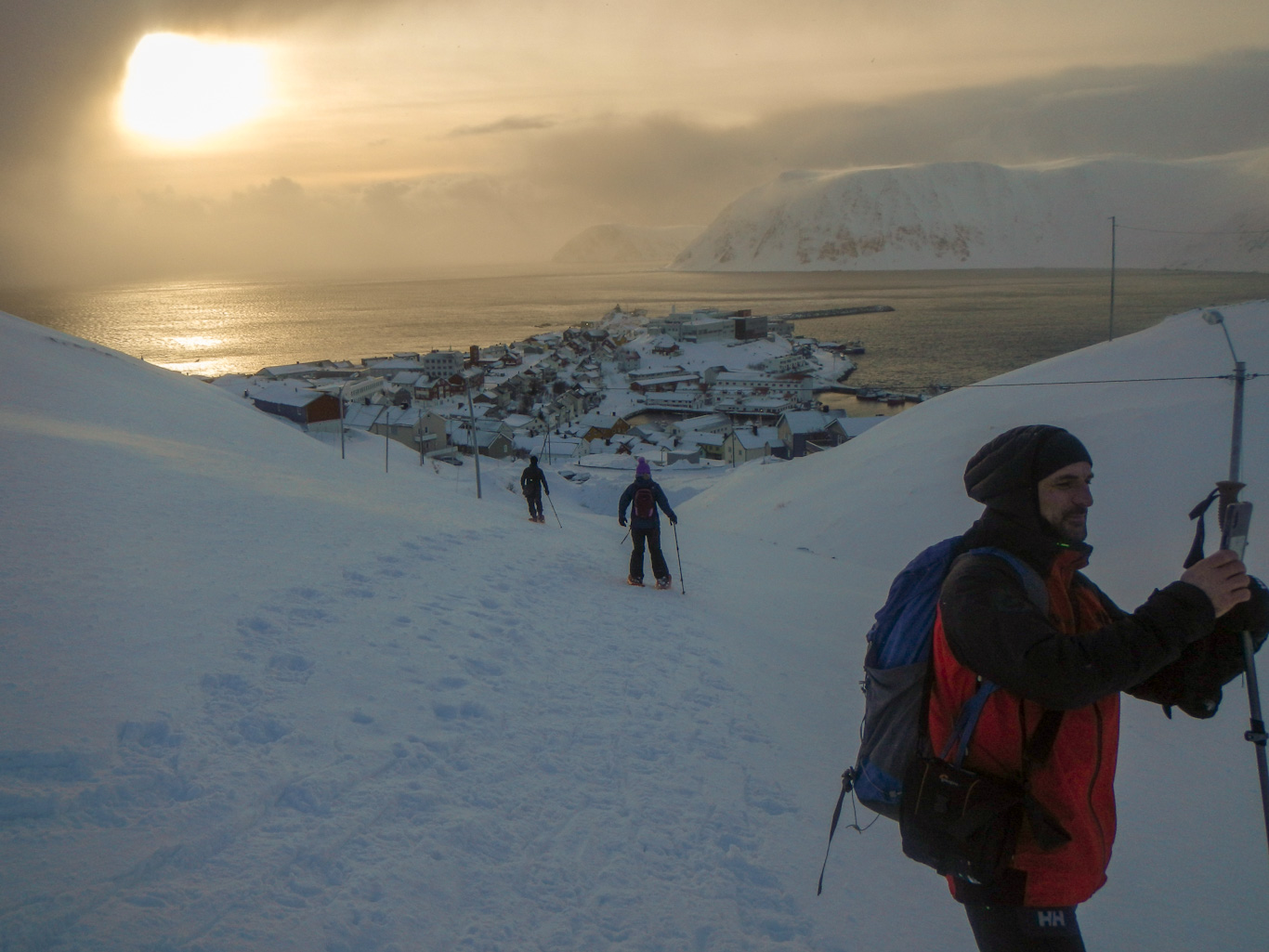
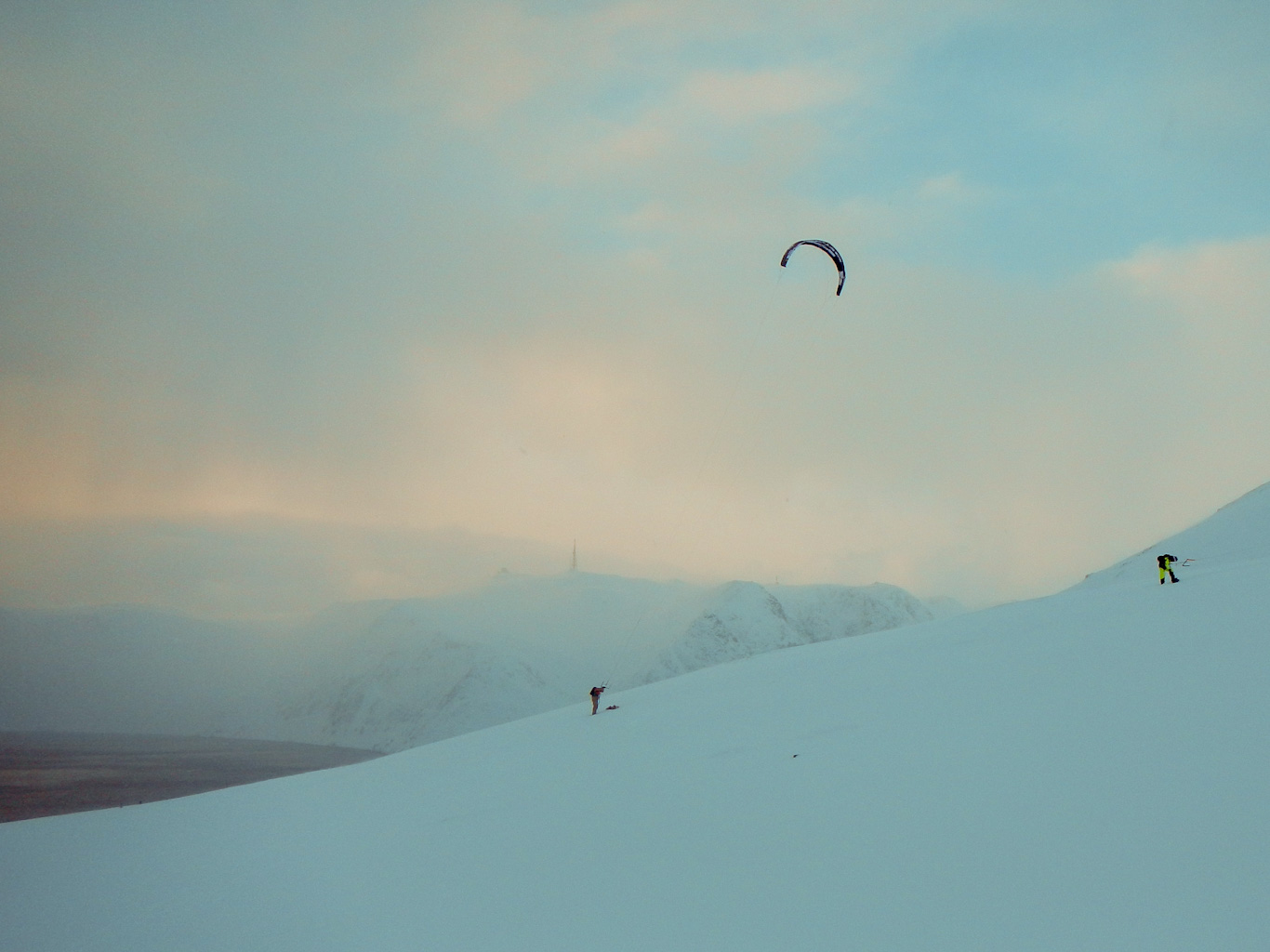
- First time using snowshoes climbing a hill overlooking Honningsvåg. This was much easier than skiing! It was a very windy walk but we found a shelter on the hill to sit in while we ate our Kvikk Lunsj bars and read the information about ten hiking rules inside the wrapper. Ronnie who was leading the walk explained that Norwegians traditionally eat these bars and an orange whenever they go out hiking. As we walked back down, we saw some kite snowboarders taking advantage of the snow and strong winds.
- First time to see the Northern Lights! This was really why we had chosen winter for the journey. The call was made from the bridge just as we were starting dinner. I dashed out without a coat initially as I was determined not to miss it. At first the green light was barely visible and I wondered what all the fuss was about. However gradually the area of green flickering increased. The best place to see it was from the bow of the boat where there seemed to be a dome effect with dancing green lights and multiple twinkling stars between a break in the clouds. My soup was cold when I returned to dinner but that was a small price to pay.
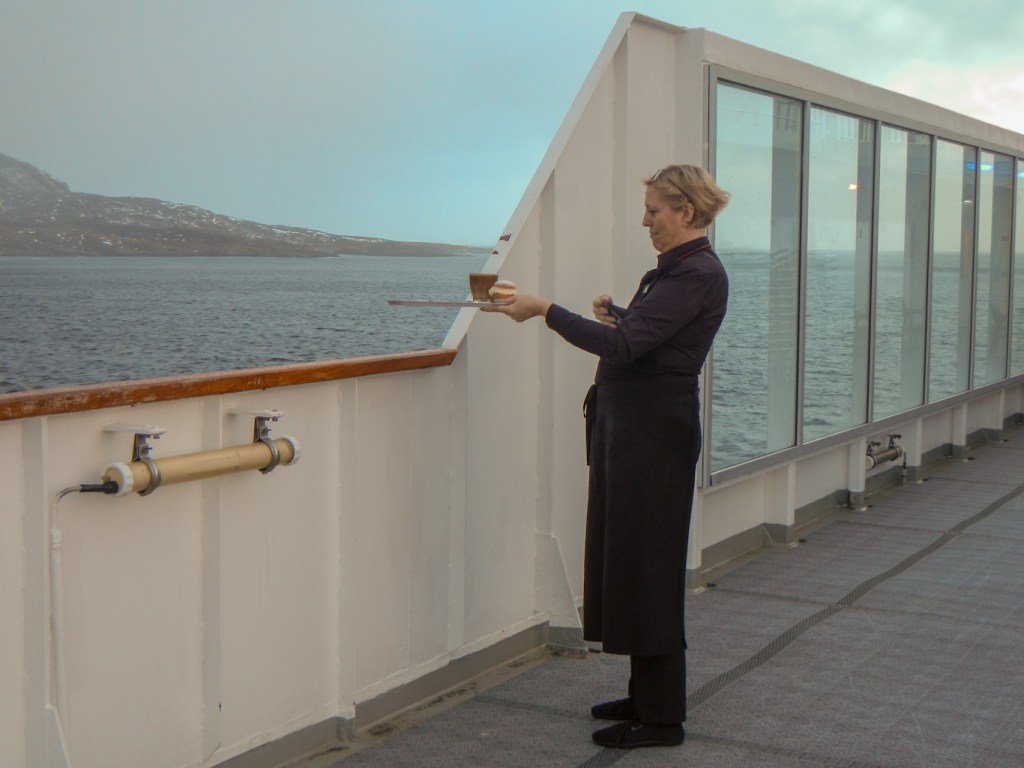
The dancing lights appeared for the next two nights so I was treated to three superb displays in total. The second was also during dinner. It was fortunate that the waiter, Sondre, was also one of the expedition team so he was very understanding of the majority of his diners rushing out as he was serving.
The third night, the lights appeared earlier before dinner. I even decided to try taking some photos – on the previous two nights I had just spent the time enjoying the experience.
There were a few flickers of green on the next night – but no official mention from the bridge of any Northern lights. The expedition team had hastily arranged hot chocolate to be served on deck 7 at 9pm as they had predicted some activity. This had all been planned by our leader David during a “night walk” earlier on up to a viewpoint overlooking Svolvær. David set a cracking pace up the snow covered hill, for a tremendously exhilarating walk that certainly sorted out our fitness levels. I’d walked up that hill and further on a previous summer visit so knew what to expect, but was keen to see what it was like in the dark on snow covered ground. Of course we stopped for a “Kvikk Lunsj” although I saved mine as I had only just eaten a very early dinner before the walk. Later back on board the hot chocolate was welcome even though in the end there wasn’t much northern light activity to see – if only it hadn’t been cloudy!

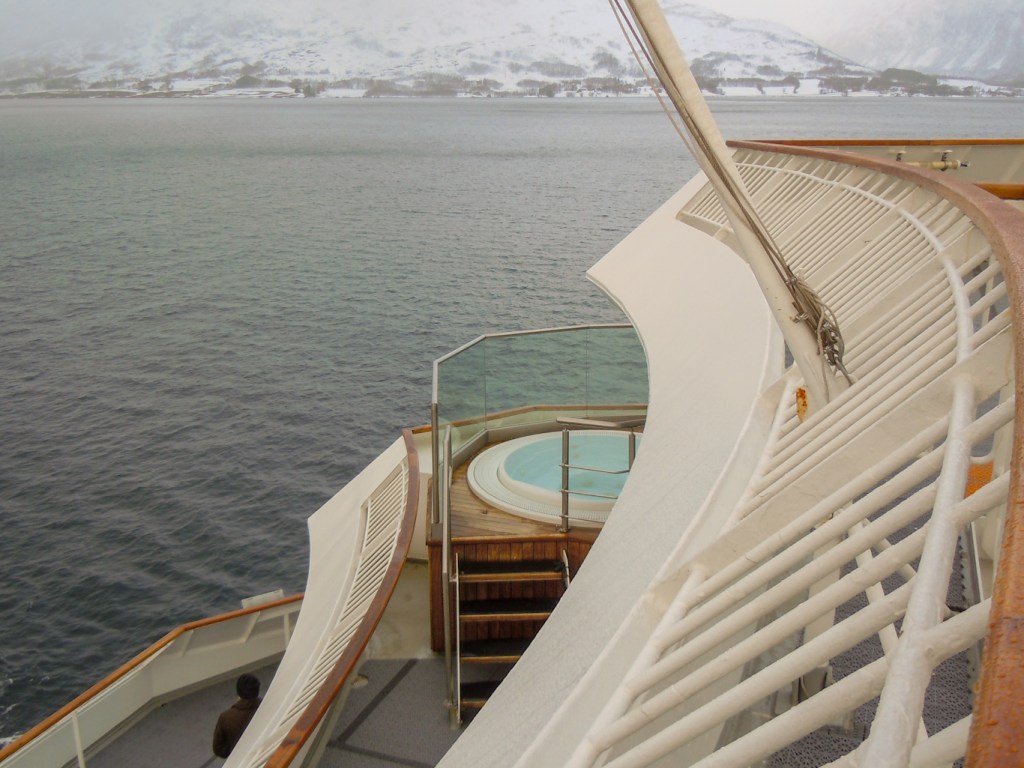
- First time relaxing in a jacuzzi north of the Arctic Circle – the two hot tubs at the stern of deck six were less popular than I expected but all the more for me to enjoy. Having climbed in it was wonderfully relaxing to watch the snow covered hills and mountains slip past while the warm bubbling jets of water gently massaged my back and legs. Surprisingly the gym seemed to be more popular, even though it was virtually impossible to run on the treadmill without holding on unless the sea was particularly calm.
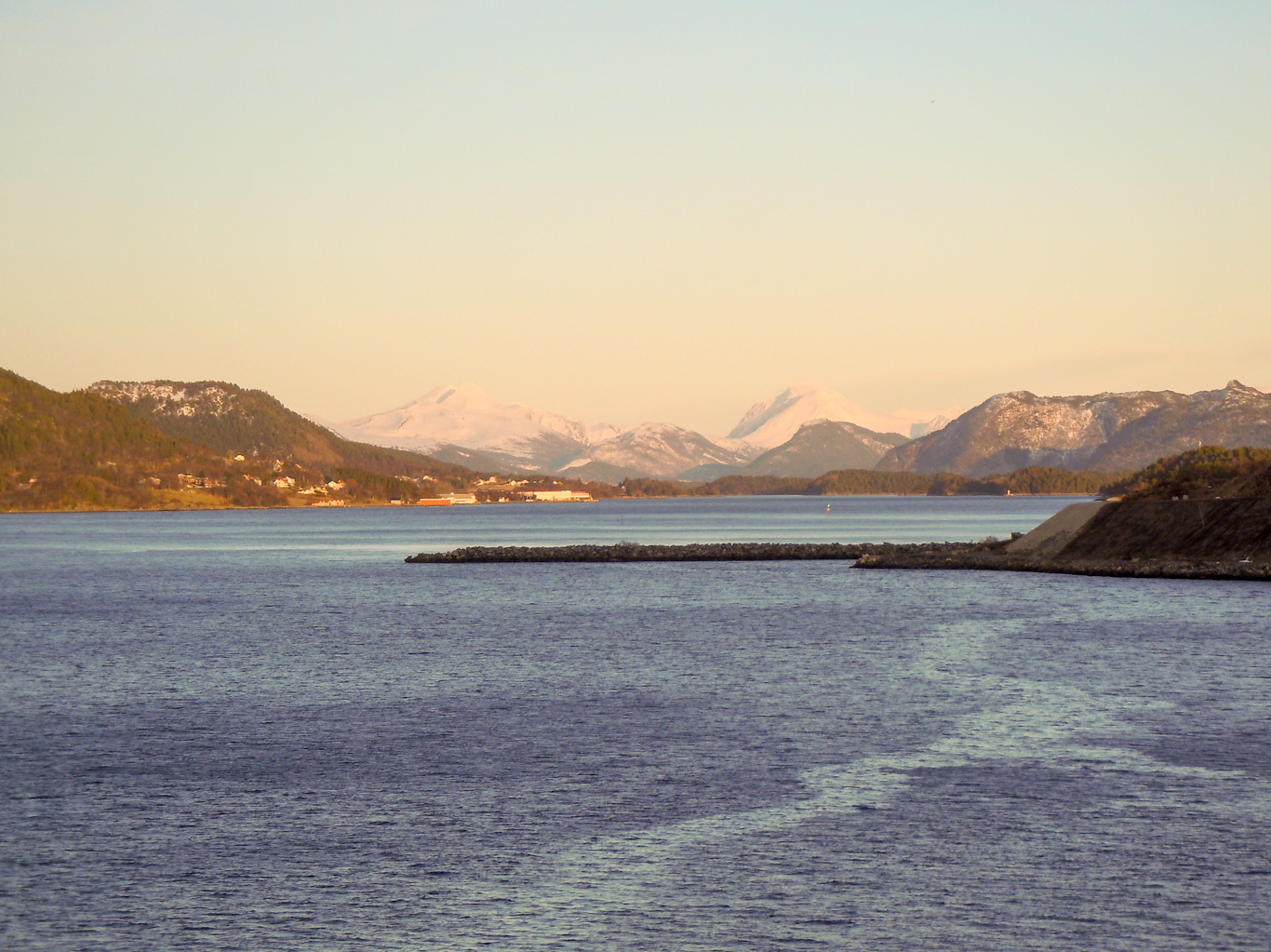
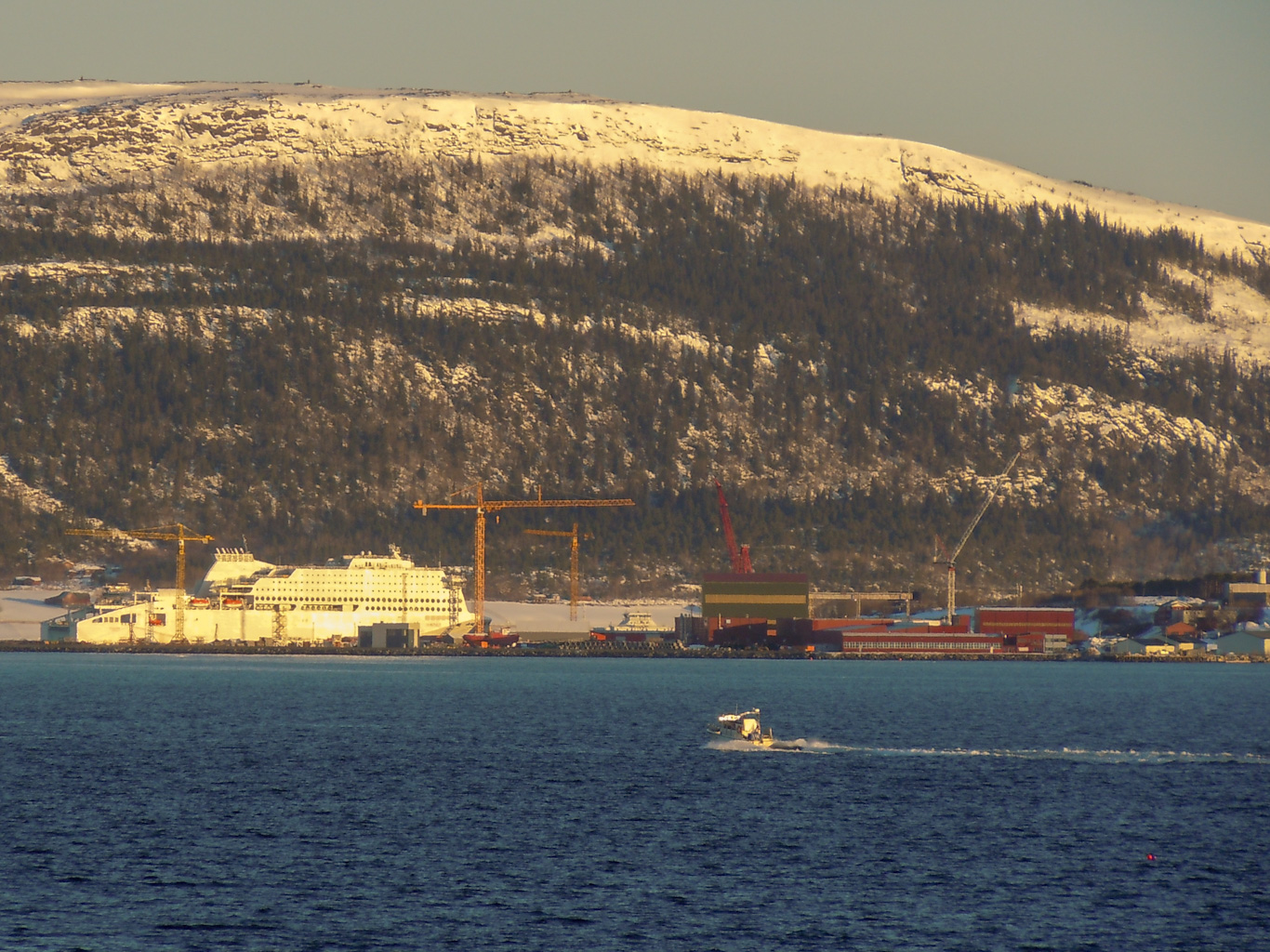
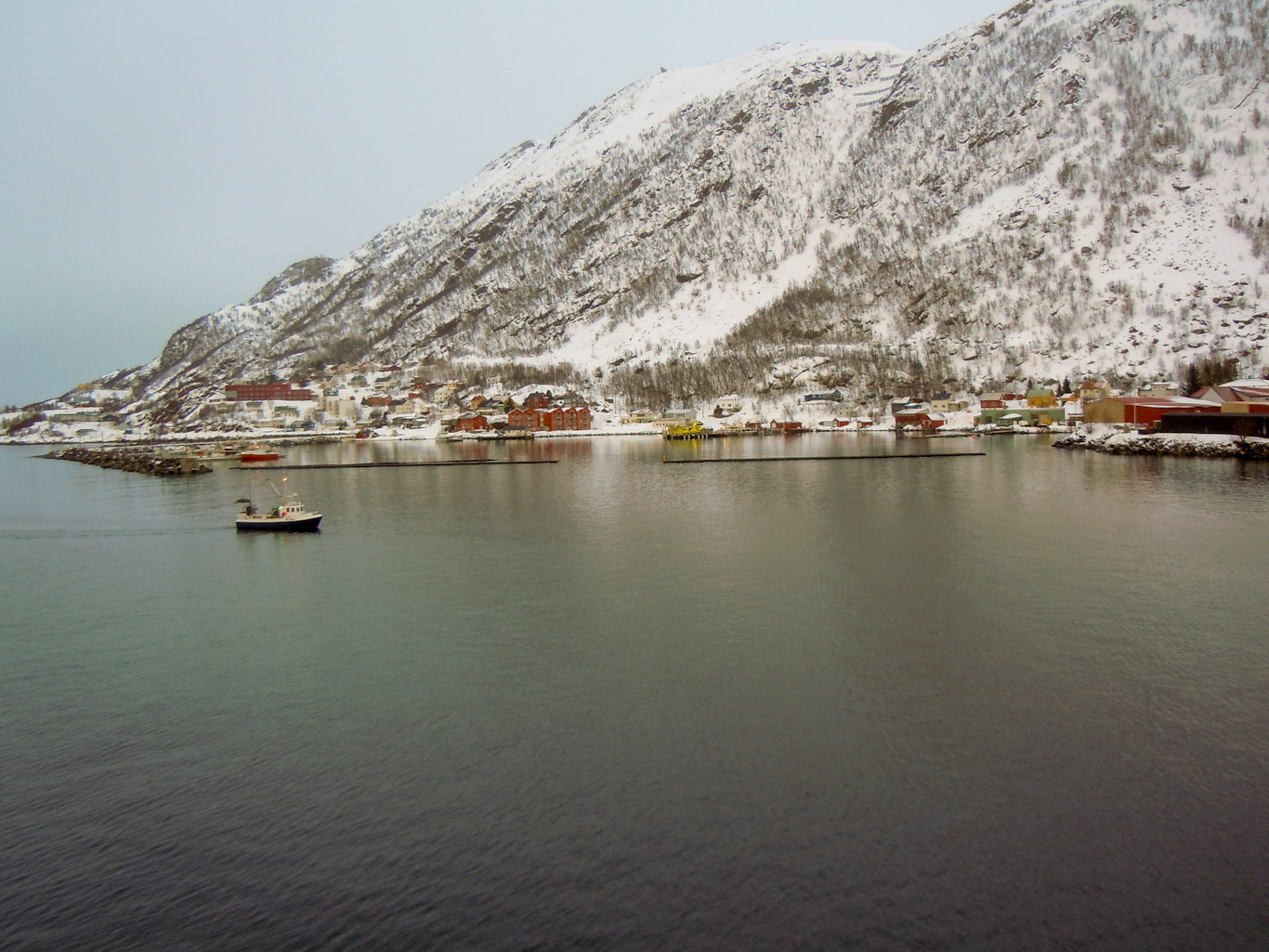
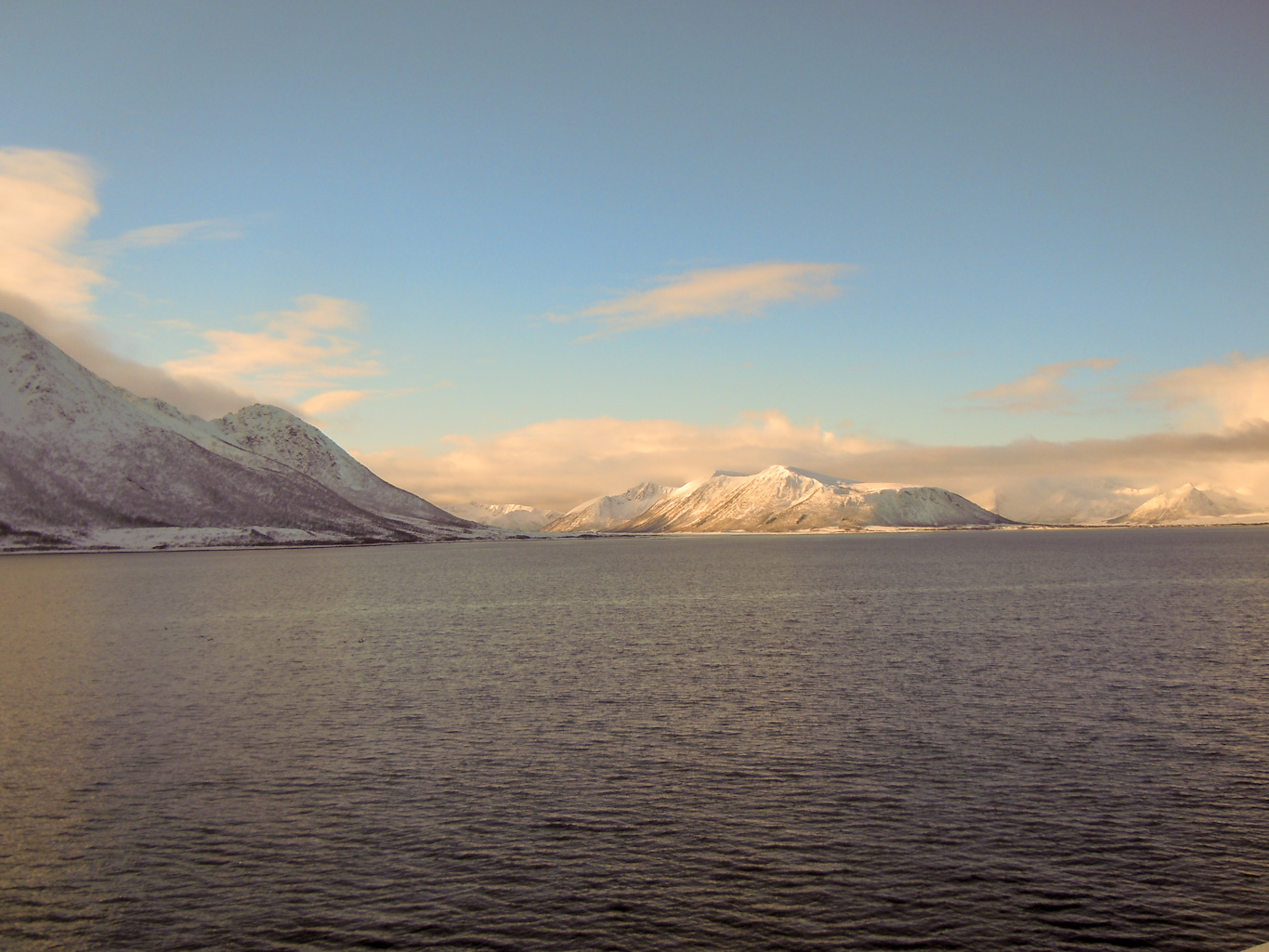
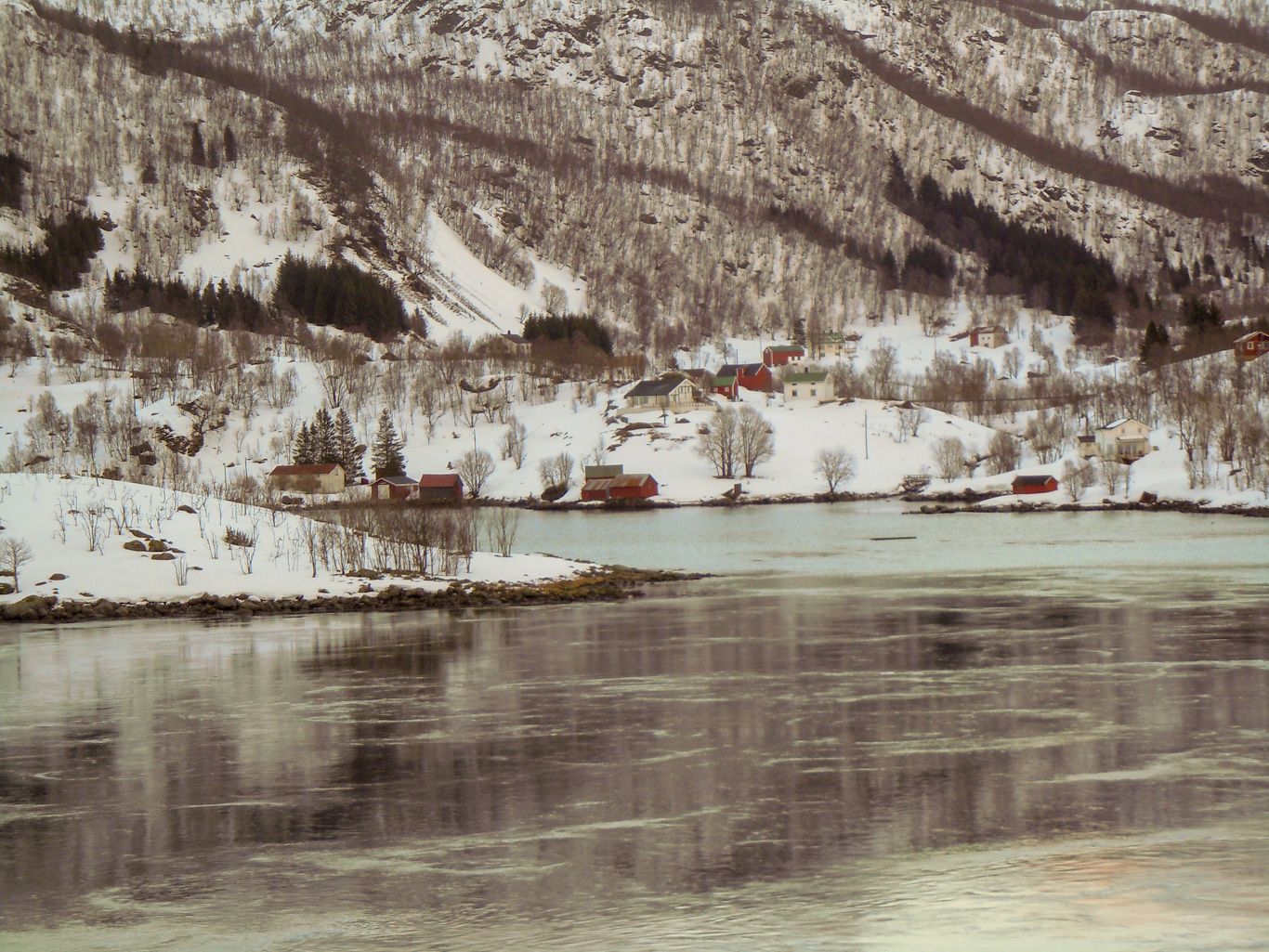
We spent much of the time sailing through magnificent fjords past gloriously deserted or sparsely populated areas with stunning mountain scenery. The part past the mouth of Trollfjord was a particular highlight and the ship halted and rotated to allow everybody a view into this fjord. In summer the boat can enter into the fjord in calm conditions, but in winter the avalanche risk is too high.



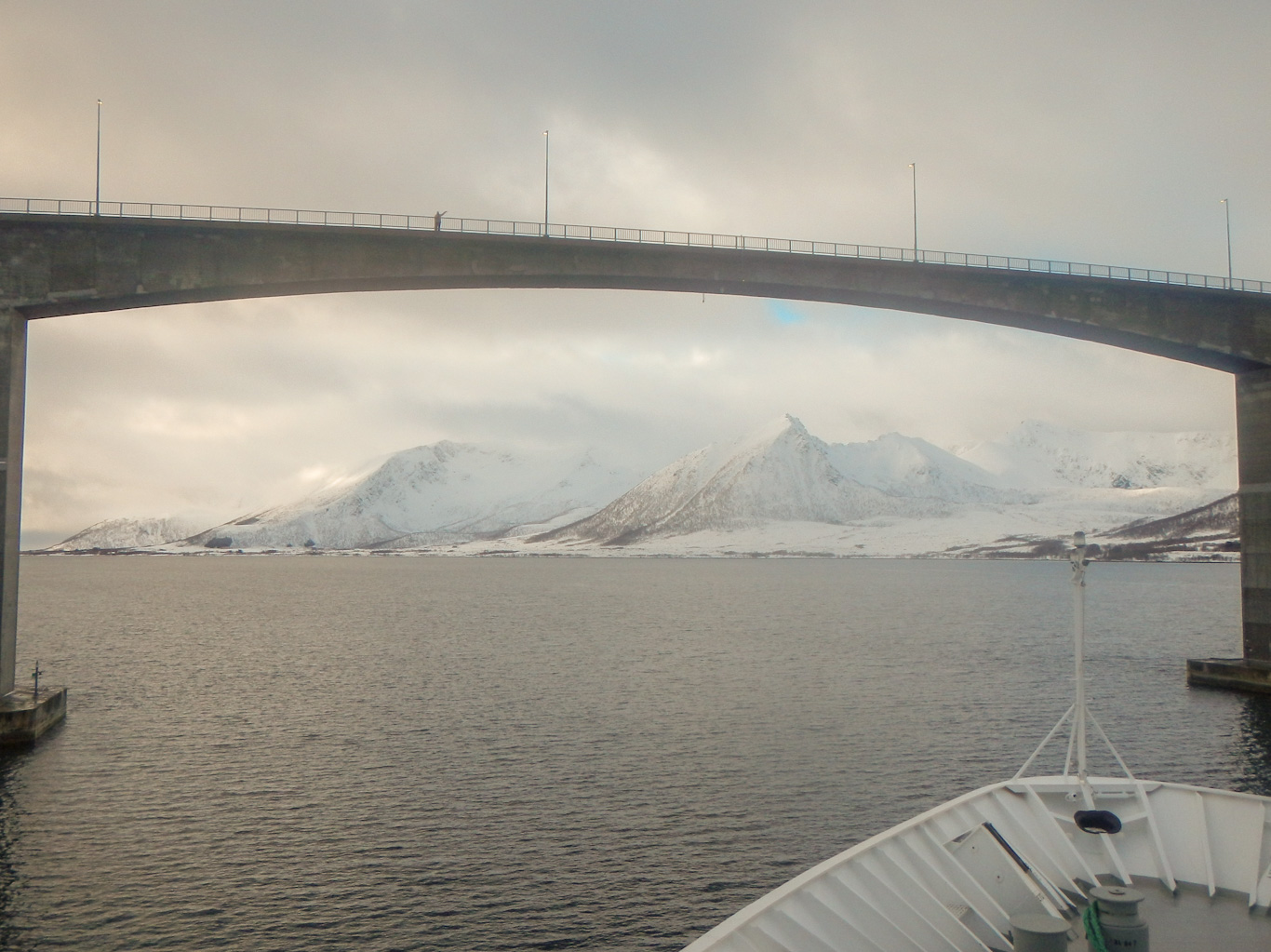

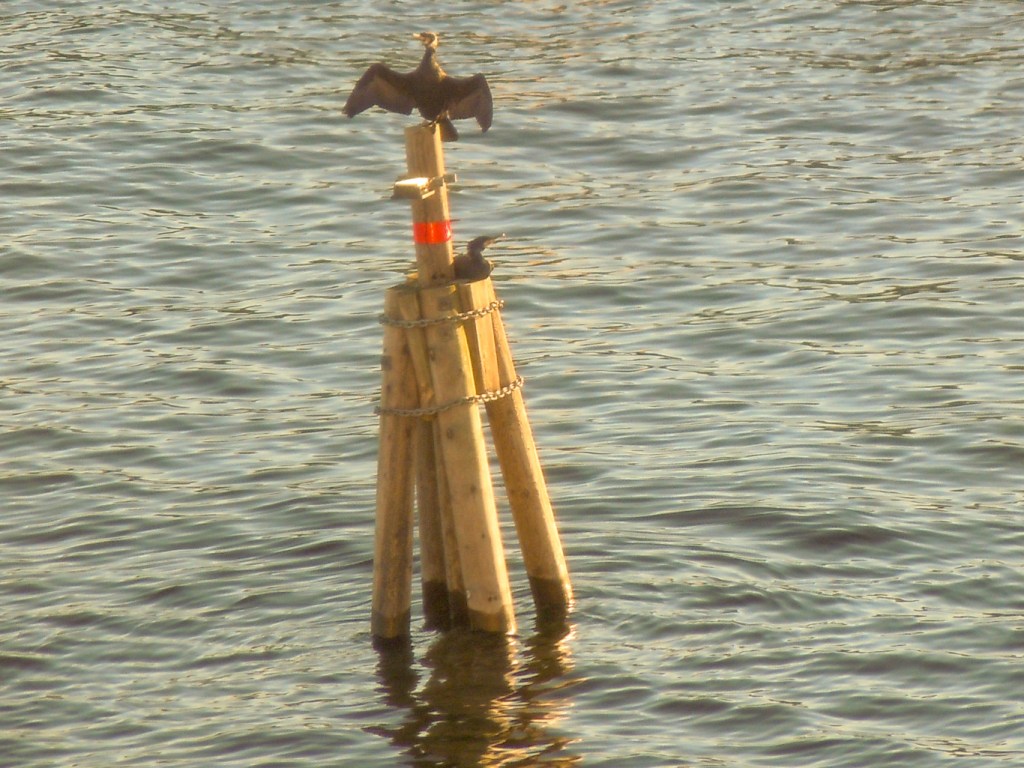
We saw wildlife including many sea birds. I’m sure I spotted a couple of sea eagles. We also saw some seals and a few reindeer in the distance. Some people saw dolphins or harbour porpoises and there was mention of a whale.
The skill of those sailing the ship was highlighted by the passage through Risøyrenna. The channel is 4,850m long, 50m wide and only 7m deep. The draught of the Nord Norge is 5m. There are also two changes of direction during the traverse.
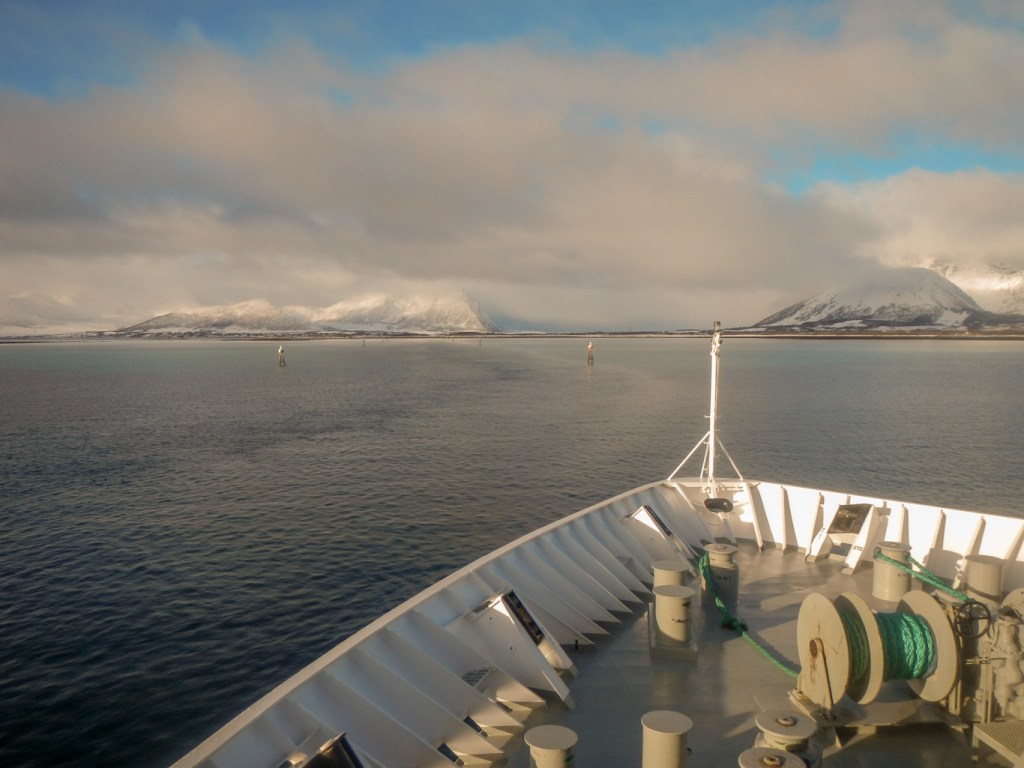
We passed tens of thousands of islands on the voyage – many uninhabited. There were also many reefs visible by the waves breaking over them. These present a huge navigational challenge, aided by the presence of thousands of lighthouses and even more warning buoys. The only octagonal lighthouse in Norway, which is also reputed to be the most beautiful lighthouse, is at Kjeungskjæret.


Throughout the expedition we were treated to local culinary delights at every meal. This certainly isn’t a journey for anyone on a diet!
On our return journey we had a daytime stop at Stockmarkness which has a Hurtigruten museum and remained the headquarters for the shipping company until 1988.

We didn’t have a competition to guess what time we would re-cross the Arctic Circle on the southward journey. However there was an “event” where each willing passenger was given a spoonful of cod liver oil on a souvenir spoon. Some passengers bought a glass of bubbly to remove the taste, but it was early in the morning (and alcohol is very expensive in Norway) so I opted for a cup of coffee.
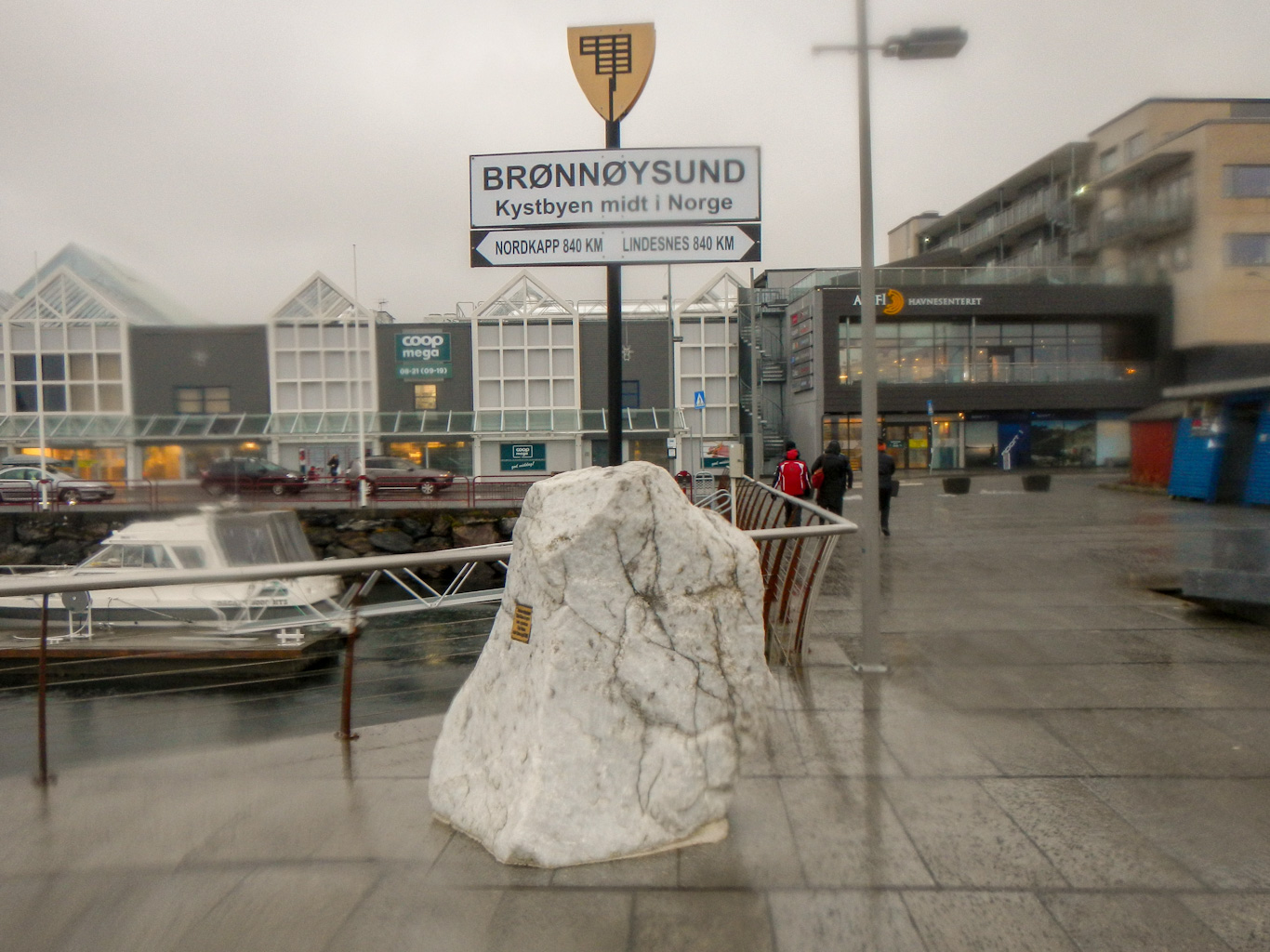
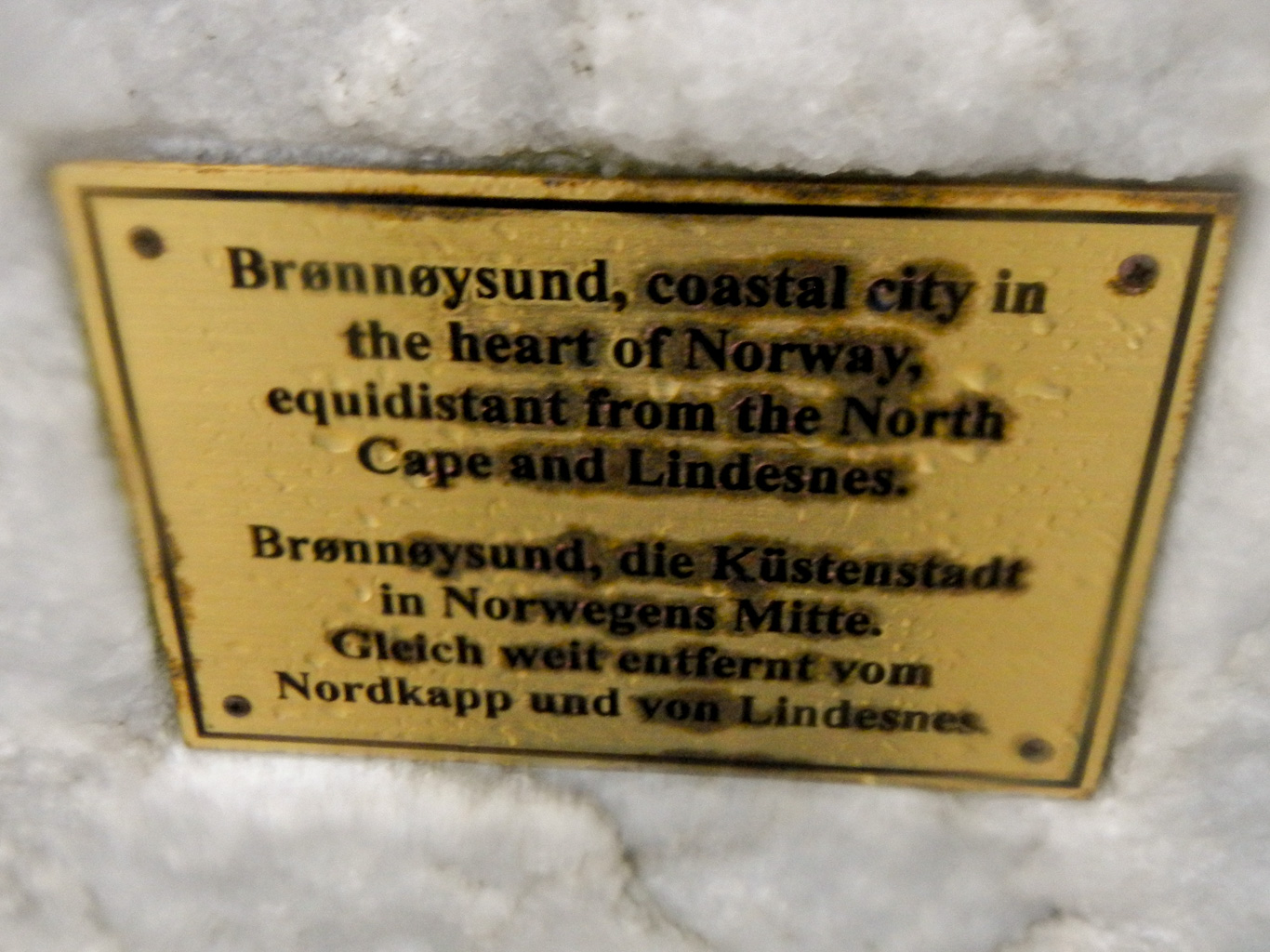
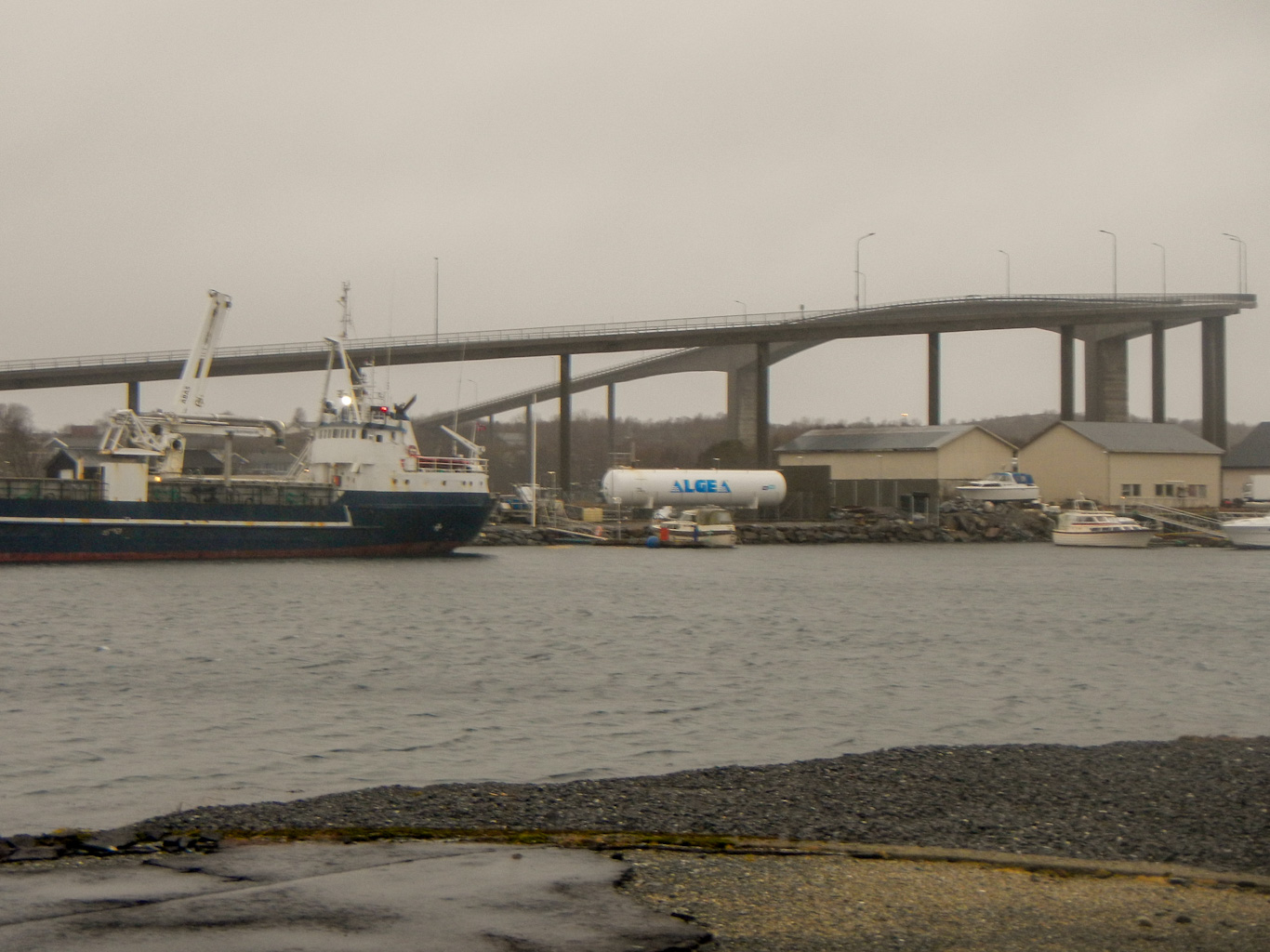
The journey south continued. The timings meant that in the main we saw ports and scenery by daylight that we had missed while north bound as it had been night time. Unfortunately the stop at Brønnøysund was shortened as wind direction and strength meant it took some time to get into the harbour. However despite the rain we managed a walk to a lake. I walked further to look at a huge bridge before panicking that I would be late for the boat and it would go without me. However I partially jogged back and had plenty of time to linger nearer the boat especially when I realised that this is the mid point of Norway.
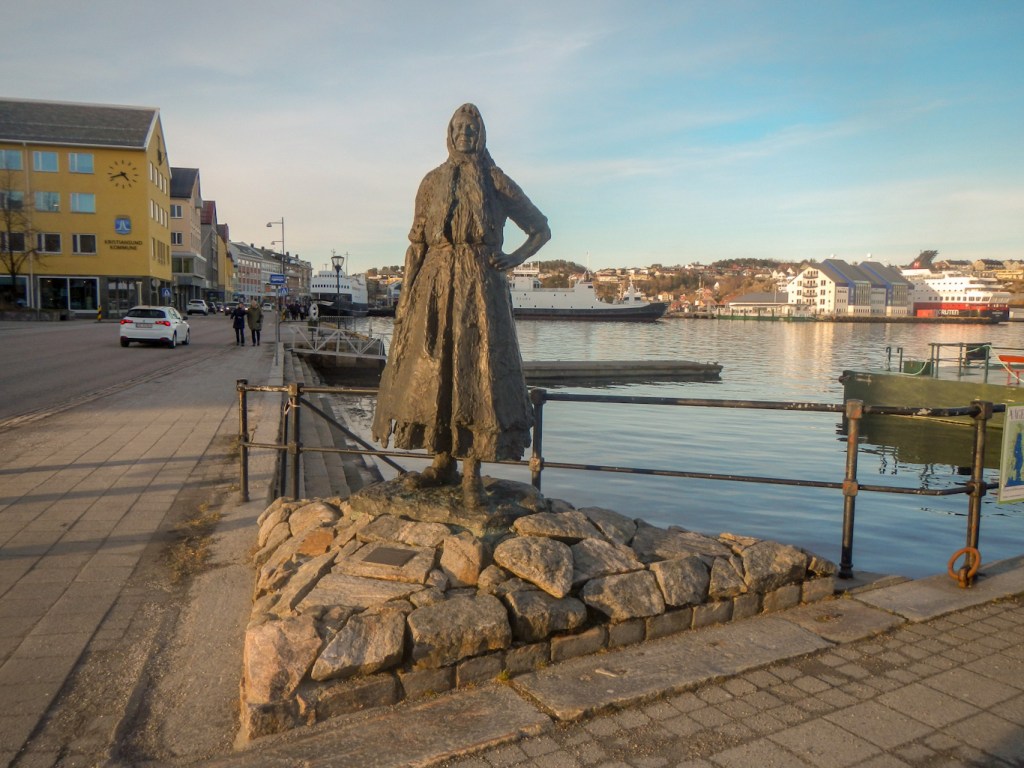
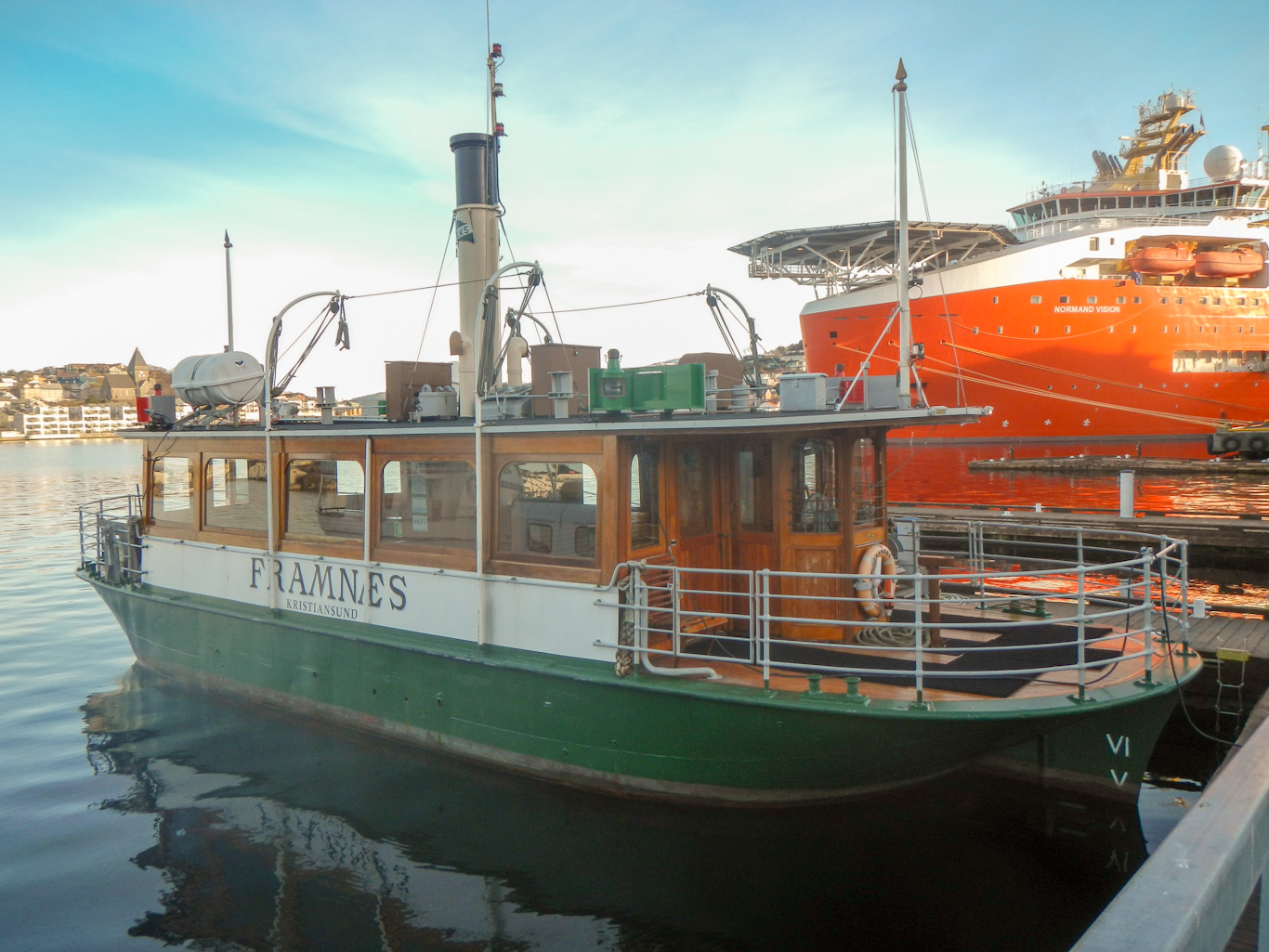
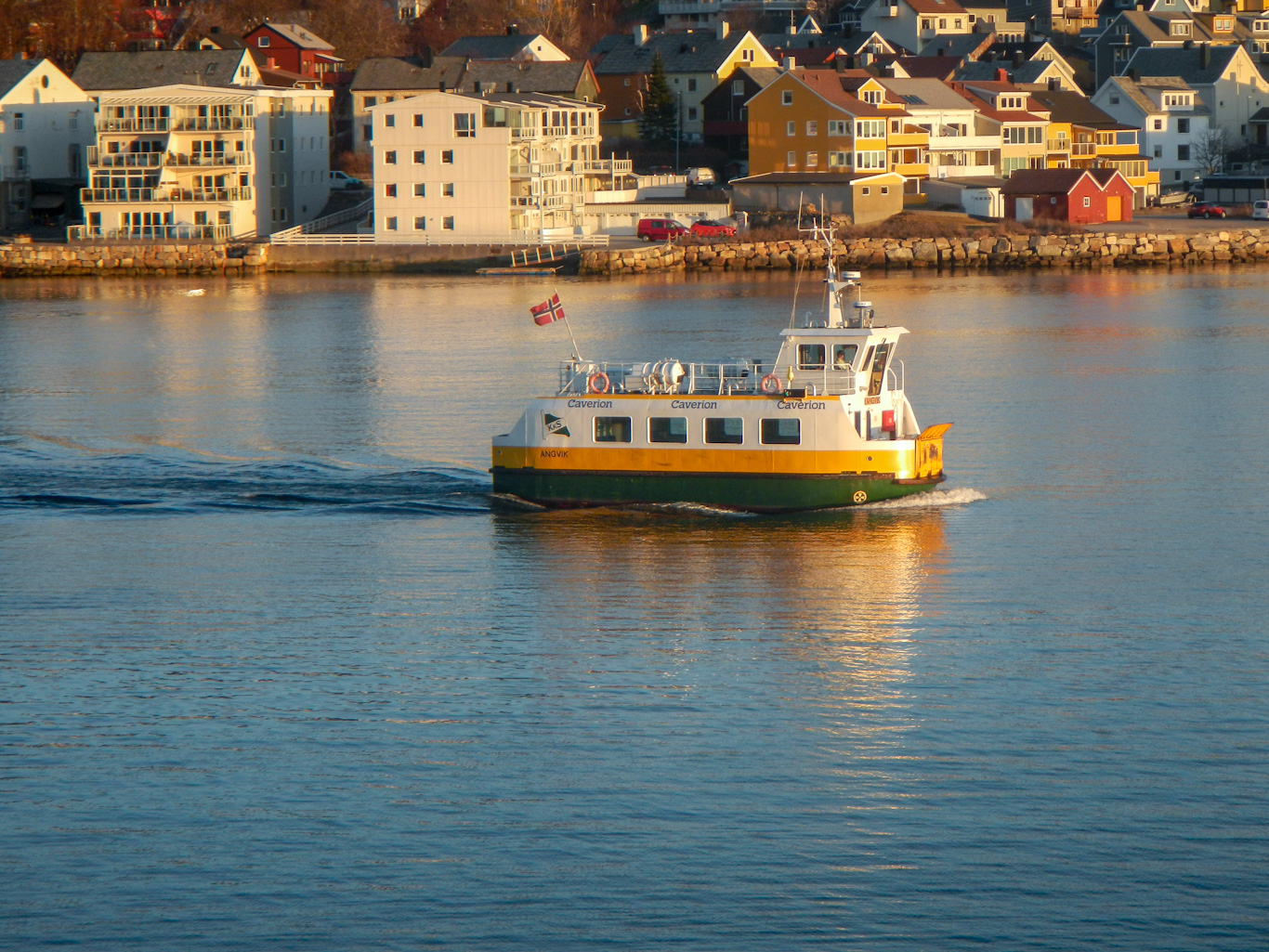
Kristiansund was the final port where we stopped during the day with sufficient time to disembark. This had been the centre of the died cod (klippfish) industry, commemorated by a statue on the quay. It’s also the home of Framnæs – a ferry boat built in 1908. The Sundbåten ferry has been running since 1876 making it the world’s oldest continuously running public transport system.
All too soon the voyage was ending.
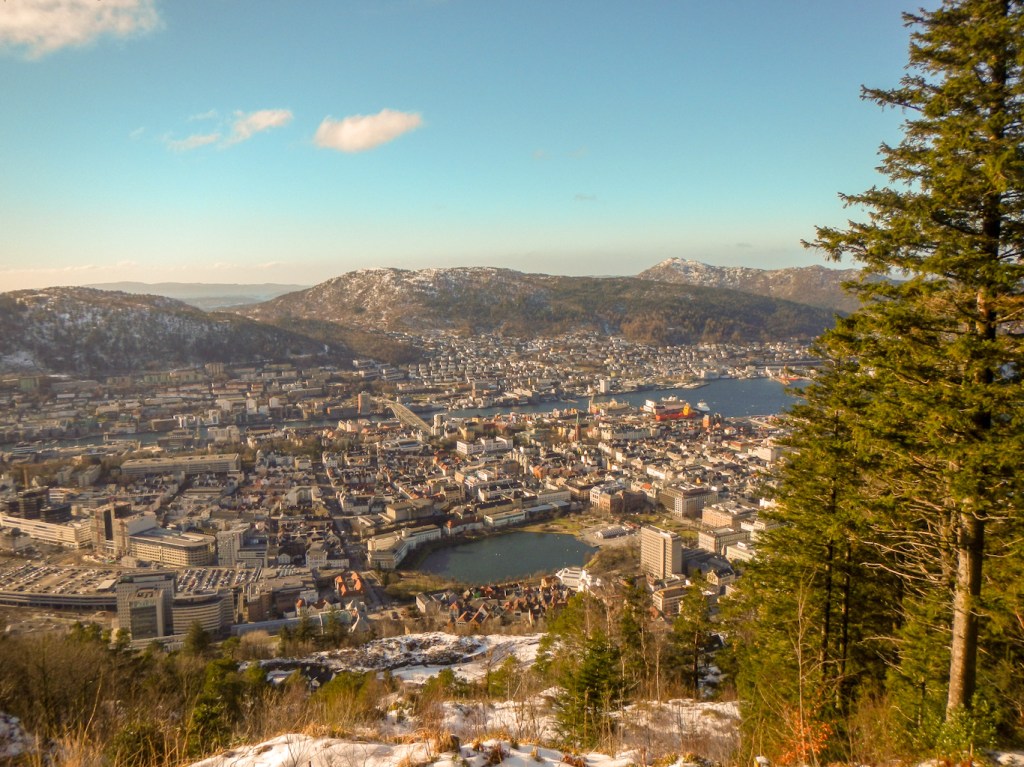
Nord Norge was to travel to Poland to go into dry dock after our journey rather than to make the next voyage north. As a result we all enjoyed some special privileges including reduced price clothes in the shop (so I’ve got some lovely new walking trousers), discounts on ice cream from the café (still not tried fish flavour though!) and we didn’t have to leave our cabins as early as usual (gave me time for one more session in the jacuzzi). We returned to see Bergen on a wonderful spring day, having left it on what felt like a very cold winter day. It was warm enough to run from the town up to Fløyen wearing shorts – nearly all the snow and ice had melted while we had been away.
Two days later, back in UK, I still had my sea legs and felt the ground wasn’t quite stable below me. However I gather that’s quite normal and it has settled now. I don’t think I’m converted to cruises as I prefer to make my own adventures and not be so constrained by time. However this was more of a journey than a conventional cruise. I’ve definitely relished the opportunity to note many places where I would like to return for more adventures. I’ve also been able to tick off several “firsts”, which always feels a positive.

 Where's Kathryn?