This is a personal list of what I carry for a typical UK expedition. I might leave out some items depending on the situation – for example omitting chargers if I only have camping nights, no sunglasses or sun cream if the forecast is poor, no midge net out of the midge season.
I use multiple dry bags to put all my kit in. Some people prefer to use a large waterproof bag to line their rucksack as equipment will tend to squash into the rucksack better. The reason I use multiple dry bags is that I find it is easier to keep everything organised in the tent overnight; moreover some of the bags stay closed most of the time and hence the equipment doesn’t get damp from condensation either. I can use my phone even when it’s inside the waterproof Aquapac bag.
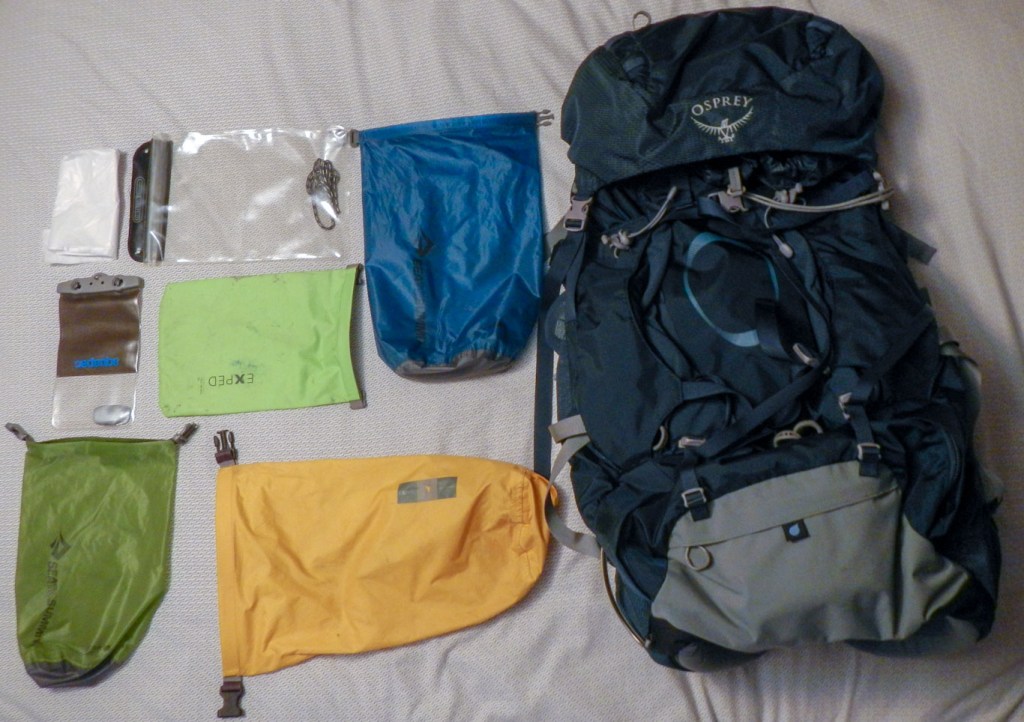
My new Osprey rucksack has a “floating” top which means the rucksack can expand easily to its maximum of around 70-75 litres. The top also doubles as a small day sac! My previous rucksack, which I managed to wear out after many years, was similar in it’s expansion, although the top didn’t convert.
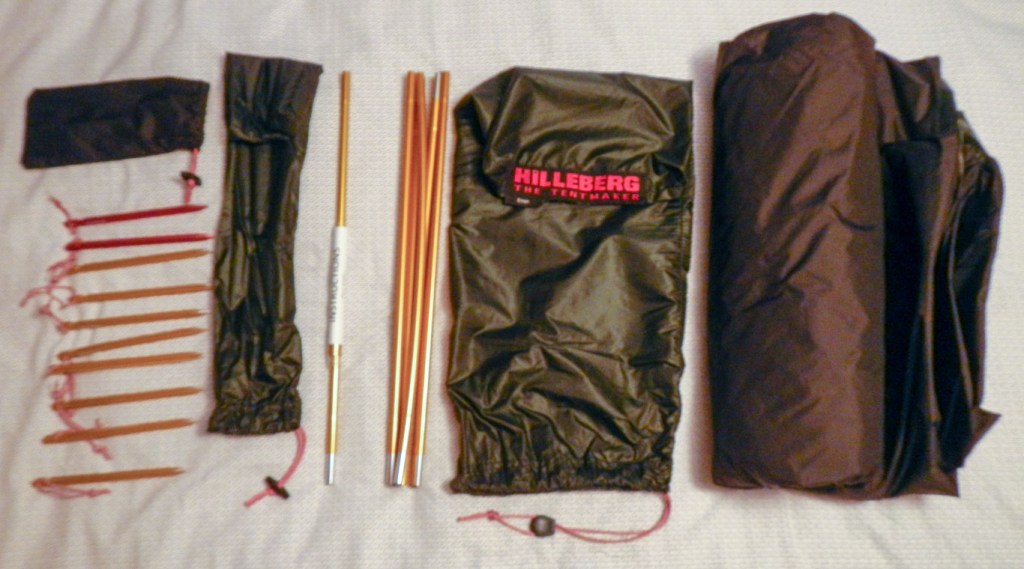
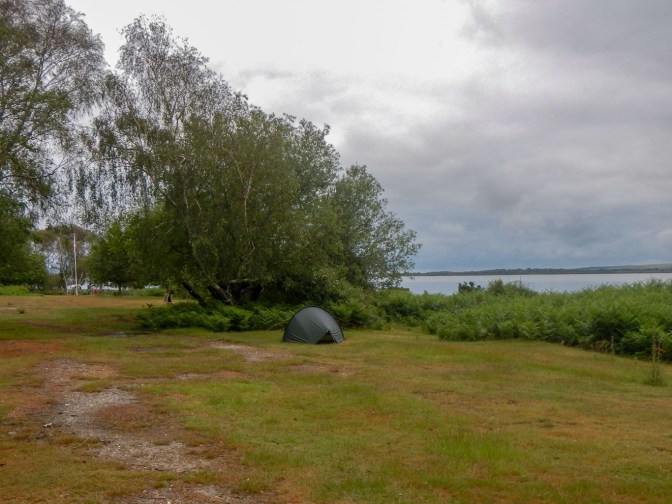
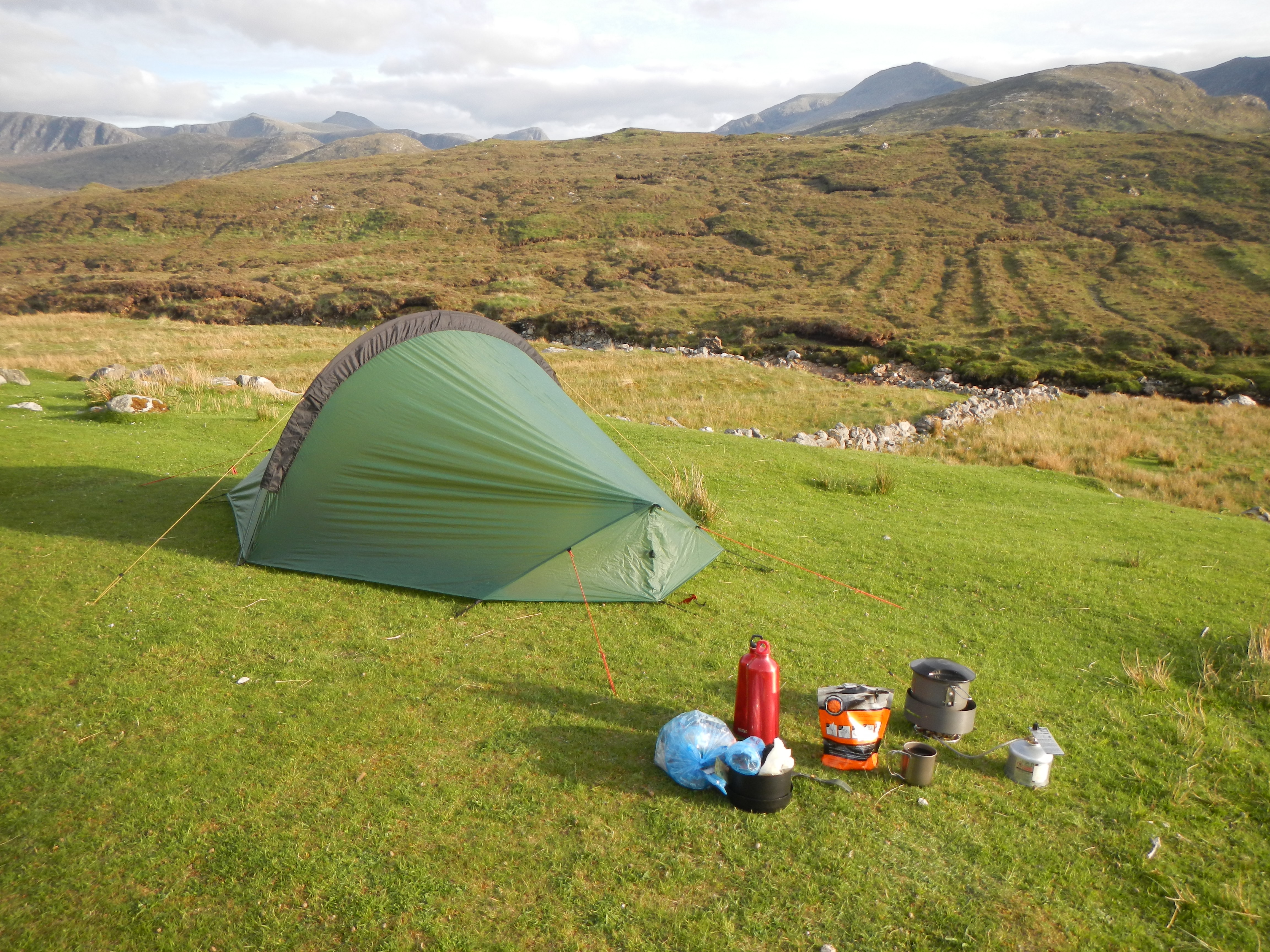
I had a new Hilleberg tent for the 2021 season – and managed to spend twenty-eight nights in it during the year. It’s the Enan one-person tent with a footprint. It’s light, easy to use and still looks as good as new. My previous tent (almost worn out) was a Terra Nova Laser Competition 1 – I was very happy with this but the Hilleberg is a step improvement, although of course much more expensive.

Overnight in my tent, I use a lightweight self inflating mat. My current sleeping bag is synthetic but will soon be replaced by a lighter and lower volume down alternative. In my sleeping bag, I wear tracksters and a merino base layer. In emergency these could be used as day clothes. I use a dry bag partly filled with clothes as a pillow.
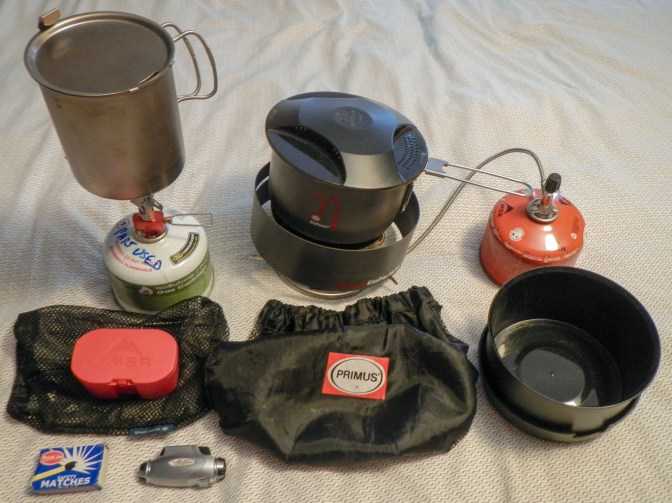
I use a gas stove and have two to choose from. The lightest weight option is a small burner and a titanium pot, but this is unstable and has no wind shield so it can waste fuel as well as tending to fall over. Usually I use a heavier but more stable alternative with a wind shield. The entire set packs together well although isn’t as compact as the small burner with pot. It can be used more easily if the ground isn’t flat and I can manage to operate it a foot or so outside the tent while I stay in the tent and lean out – useful in rain or if there are a lot of midges. The set lights with a piezo but I still carry matches and a lighter. These don’t weight much and it wouldn’t be great to be in the middle of nowhere with all the equipment but no means of lighting the gas.
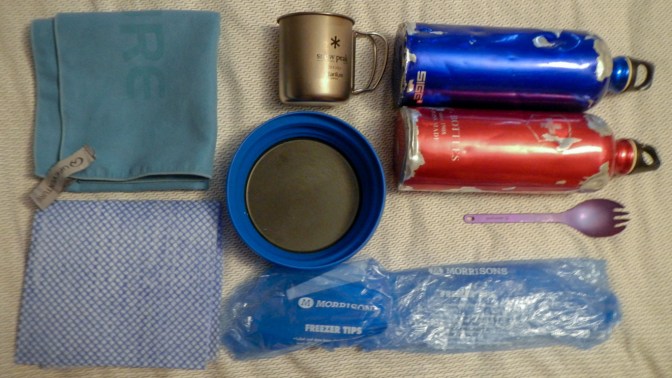
My bowl, mug and cutlery (a titanium spork as the plastic ones are prone to break) along with a dish cloth and a lightweight towel to use as a tea towel. I carry two times one litre water bottles which I use to drink from in the day and as water carriers at the camp site. A supply of food bags is useful and I keep reusing the same bags until they fall apart.
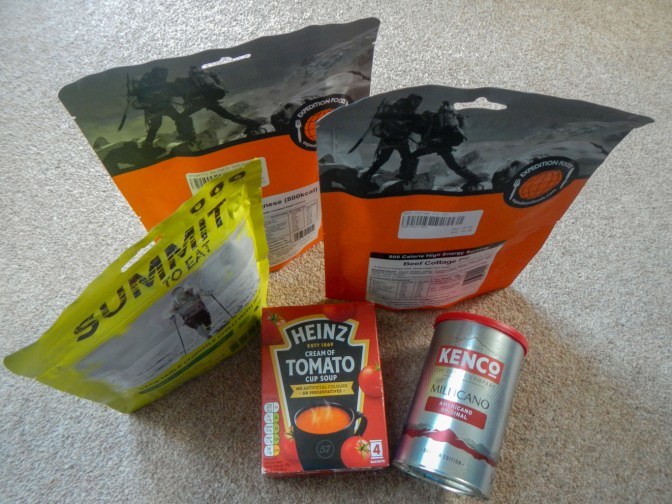
Typical food – see separate post.

Considering footwear, I still like to wear boots rather than shoes on most walks, especially as I often walk away from paths over open moorland when it’s permitted. Meindl leather boots appear to fit me well. I’ve found that the solid “Grangers G wax” works to keep them waterproof and the leather in good condition; it does need more effort to rub in than the liquid products. Under my boots I wear thin sock liners (easy to wash and dry) and thicker socks over these – most of the socks I have at the moment are Bridgedale. I usually wear gaiters to avoid the lower part of my trousers getting muddy and to decrease the risk of water getting into my boots over the top of them. I started using poles a few years ago – they are particularly helpful to me for walking downhill and for finding holes and “testing” bogs. Mine are very light as they’re made of carbon fibre.
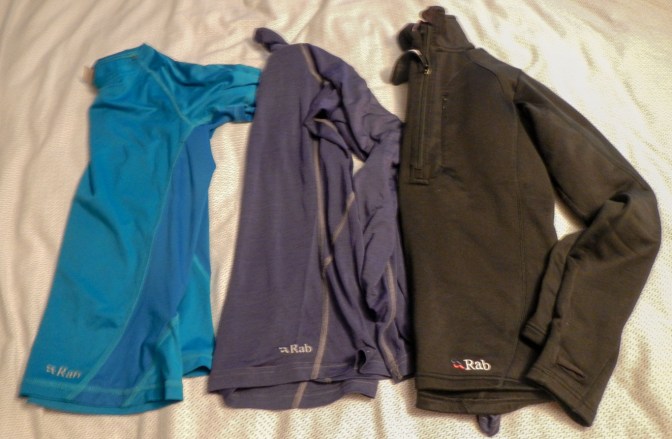
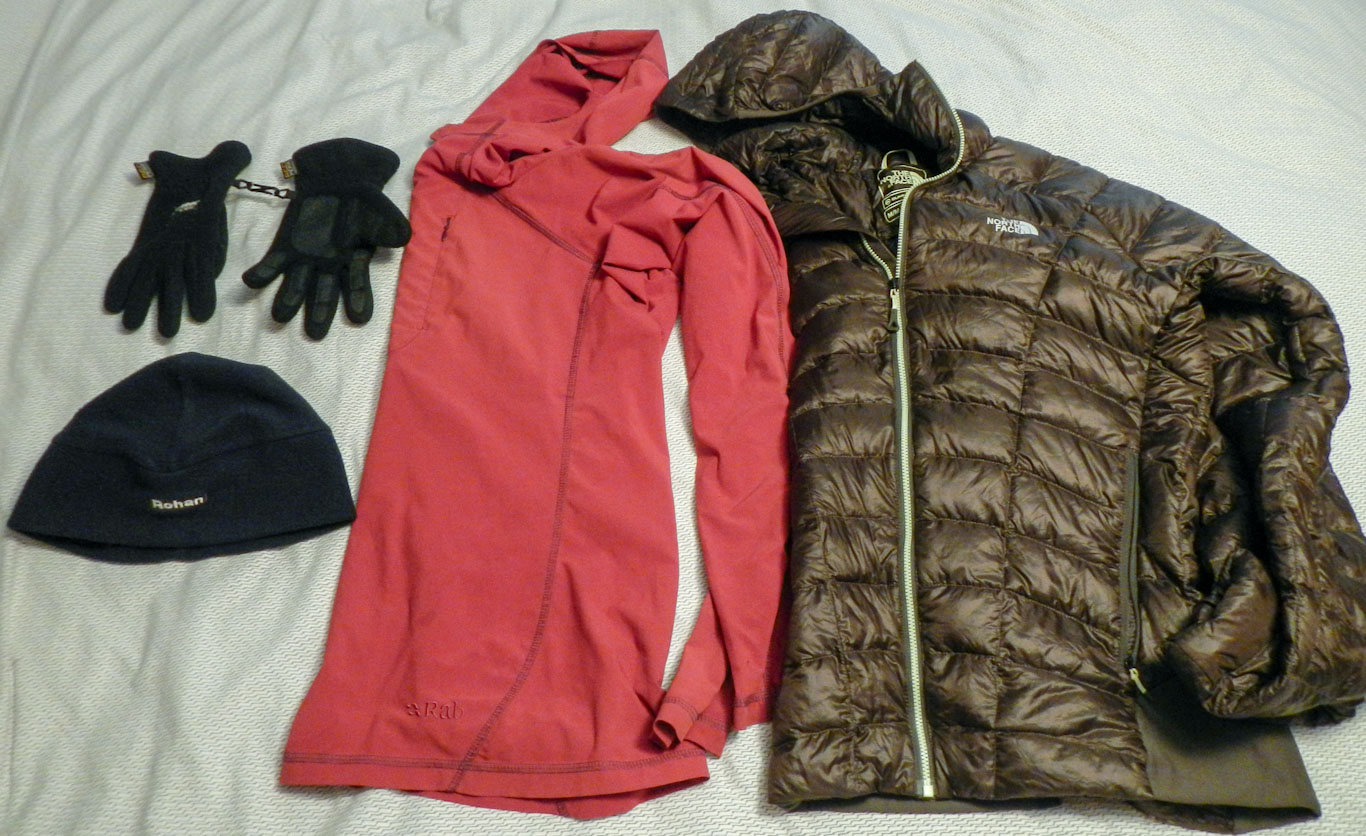
My clothing is all lightweight and easy to dry. My base layers are made from wicking fabric and various ways it is supposed to dispel odours when worn for several days. The combination worn varies with the weather conditions. The components on top are a short sleeved base layer, long sleeved base layer, mid layer fleece, outer warm down jacket layer and wind resistant layer. Usually in UK, while I am moving, the base layer(s) and wind resistant layer are the most I need, sometimes with the mid layer fleece as well. My wind resistant layer also has a hood and a useful zipped breast pocket big enough for my hand held GPS or a very folded Lightweight waterproof Harvey’s map – they are virtually indestructible! Of course I have a hat and gloves as well. I rarely need my down jacket while walking but it fits between my mid layer and outer wind resistant top. However I wear it more often in the evening once I am at the camp site.
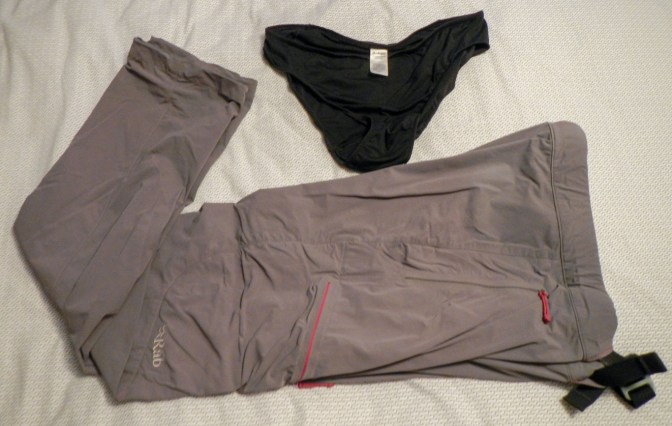
I have lightweight wicking underpants (easy to wash and dry) and my walking trousers have plenty of zipped pockets.
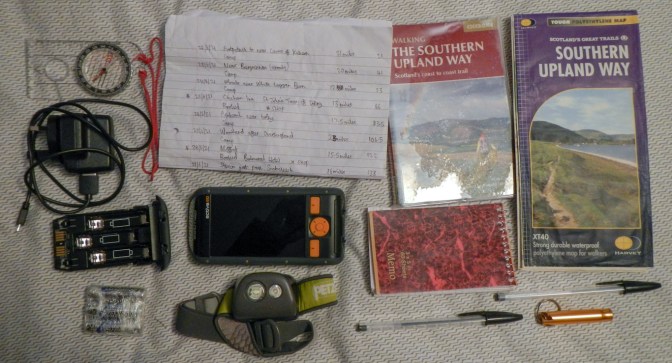
For navigation, I have maps and compass. Many areas especially those which are mountainous are covered by the lightweight, waterproof and almost indestructible Harvey’s Maps. These also cover many trails as “strip maps” and mean multiple maps aren’t needed. The Ordnance Survey 1:50,000 and 1:25,000 maps are also available as laminated “Active” maps but are heavier and can’t be “scrunched up” into a pocket. I replaced my handheld Garmin with a Satmap after the touchscreen stopped working. Obviously these depend on battery power to work, so if I am away from access to electricity for recharging then I carry it with the power off but could use it for reassurance to check my position or if I felt that I was totally “lost”. If there is a Cicerone Guide for the trail then I carry that for the description (and there is mapping included). I make a list including where I am planning to be each night (and leave a copy with someone at home). I have a notebook and a couple of pens to use to write down points of interest or any information needed if there is an emergency. My headlight is useful if I need to walk in the dark (and of course in my tent). Whistle to summon help – there is also an integral whistle on the chest strap of my rucksack.
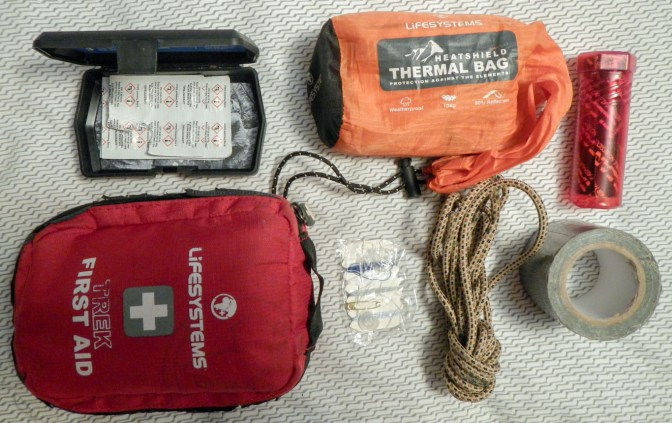
Although I have a tent, I still carry a survival bag as it might not be possible to pitch the tent in emergency. I also have a first aid kit for minor injuries. I have a needle and cotton, duct tape, tenacious adhesive repair material and spare boot laces. All of these I have used at some time or other. I’ve also included my water purifying tablets in this block, although these are used on a daily basis when there isn’t access to drinkable tap water supplies

In terms of personal necessary items, I have included prescription medication, over the counter medications for self-care, washing things – towel and soap wafers, toothbrush and toothpaste, clothes wash wafers, comb, lip moisturiser as I always seem to get chapped lips when I spend so long outside, sun protection, insect protection – spray and head net, tissues, sunglasses, glasses case for when I’m not wearing my prescription spectacles and a lightweight bag to keep most of these items in one place. There’s also the lightweight trowel for burial of organic human waste – all other waste such as food packaging needs to be carried back to “civilisation”.
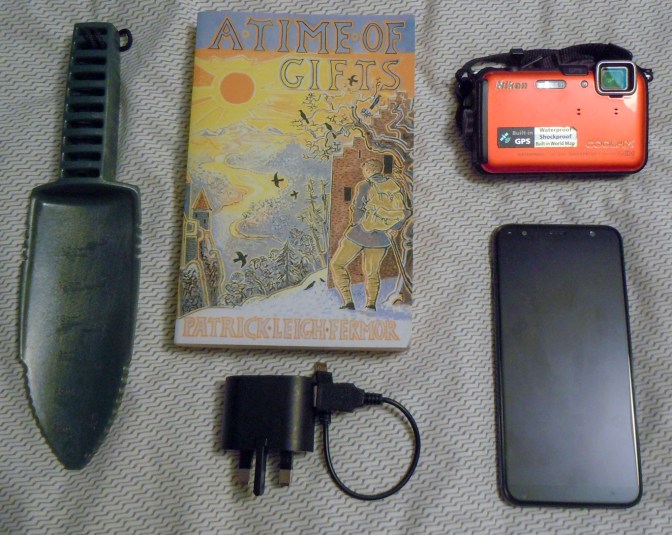
Finally a mix of other bits and pieces. At this stage of the 21st century, I suspect that not carrying a smartphone might count as “irresponsible”. However many remote places have very patchy reception so it can’t be relied on for emergency use. I only turn it on for short periods of time so I preserve the battery power in case needed. I keep it in a completely waterproof Aquapac. My camera is waterproof and shockproof; it also has a very long battery life. I like to carry a book to read in the evening although it is remarkable how little I actually manage to read during my expeditions, especially when the hours of daylight are long and it isn’t raining much. I prefer to read a book rather than an electronic device!
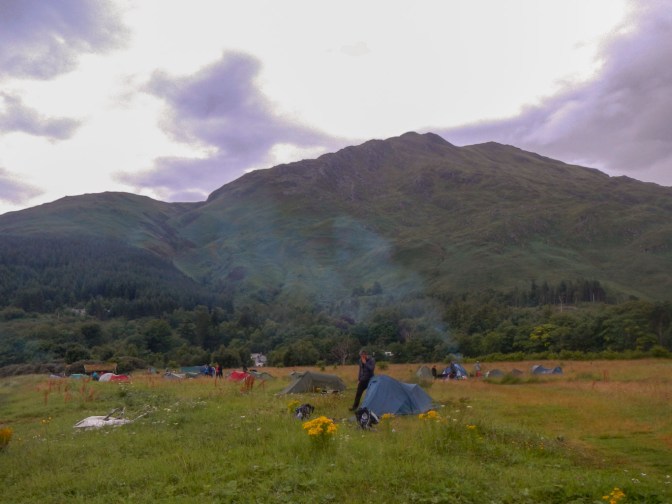
I have summarised my standard list below – it’s something I’ve formulated as a useful basis to ensure I don’t forget anything important. If I omit something from my list then at least I’ve thought and decided I don’t need it. Quantities of items where I need more than one depend of course on the length of the expedition, availability of supplies and how much washing I might do while I’m away.
- 60-75 litre rucksack with attached but detachable rain cover
- One person lightweight tent including two spare pegs
- Trekking poles – lightweight carbon fibre
- Walking boots
- Gaiters
- Sleeping bag
- Sleeping mat
- Survival bag
- Stove and pan
- Isobutane / Propane gas canister
- Mug
- Bowl
- Spork
- J cloth
- Lighter / matches
- Small first aid kit including scissors
- Hand held waterproof GPS and spare batteries
- Paper maps / trail guide as appropriate
- Route plan
- Small note book and two pens
- Mobile phone – in waterproof bag
- Wrist watch – includes alarm to wake me up!
- Whistle
- Silva compass
- Glasses and glasses case
- Sunglasses
- Head torch
- Trowel
- Water purifying tablets
- Washing / soap wafers
- Sun screen cream
- Insect repellent
- Comb
- Toothbrush and toothpaste
- Lip moisturiser
- Lightweight towel
- Tissues
- Duct tape
- “Tenacious” mending tape
- Sewing kit – just a couple of needles and a few lengths of thread
- Spare boot laces
- Reading book or charged e book reader
- Waterproof camera
- Prescription medication
- Over the counter analgesia, antihistamine, anti diarrhoeal
- Lightweight waterproof jacket and waterproof trousers
- Hat and gloves
- Lightweight “down” jacket
- Light wind proof top
- Fleece
- T shirt
- Long sleeved merino top
- Walking trousers
- Tracksters and lightweight top to wear to sleep
- Lightweight underwear
- Sock liners
- Thick “woollen” socks
- Bin liner for dirty washing
- Food bags
- Food
- Two times 1 litre Sigg bottles
- Lightweight shoes / trainers / crocs to wear in camp and / or river crossings (I don’t usually take these)



 Where's Kathryn?