17 November 2021
I caught the train from Paddington, where we were staying, along the start of the railway line to the south west and familiar to me from journeys to and from Exeter. However this was a “stopping” train and I alighted at West Drayton with the plan to walk to Cookham along the waymarked footpath called Beeches Way.
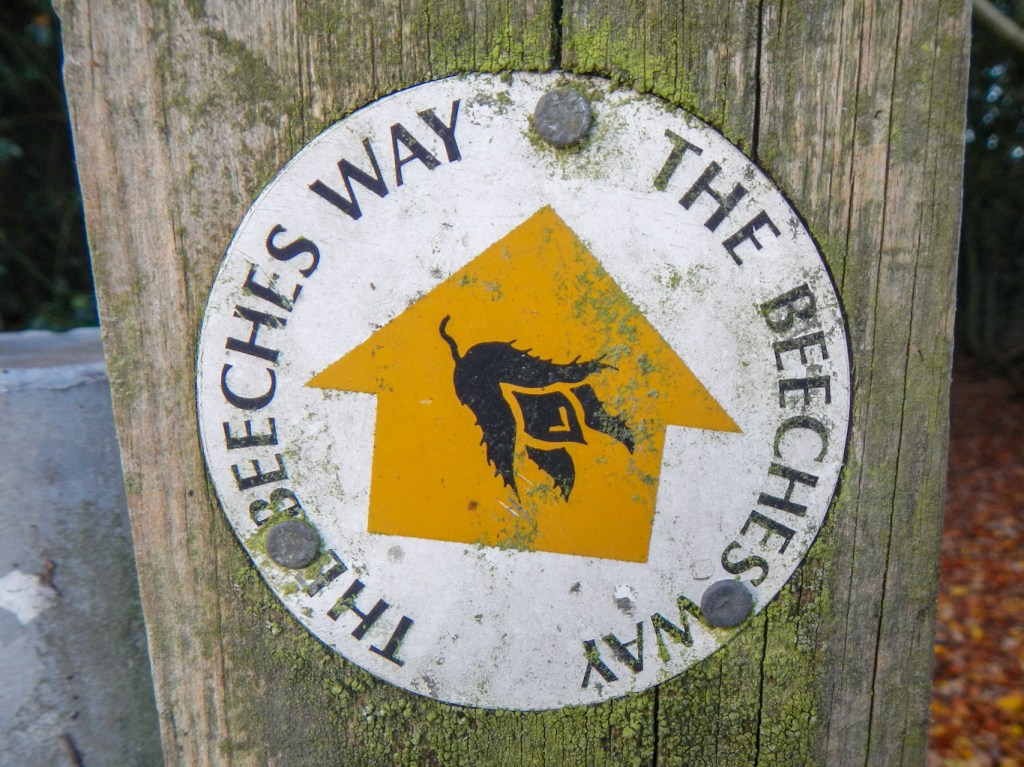
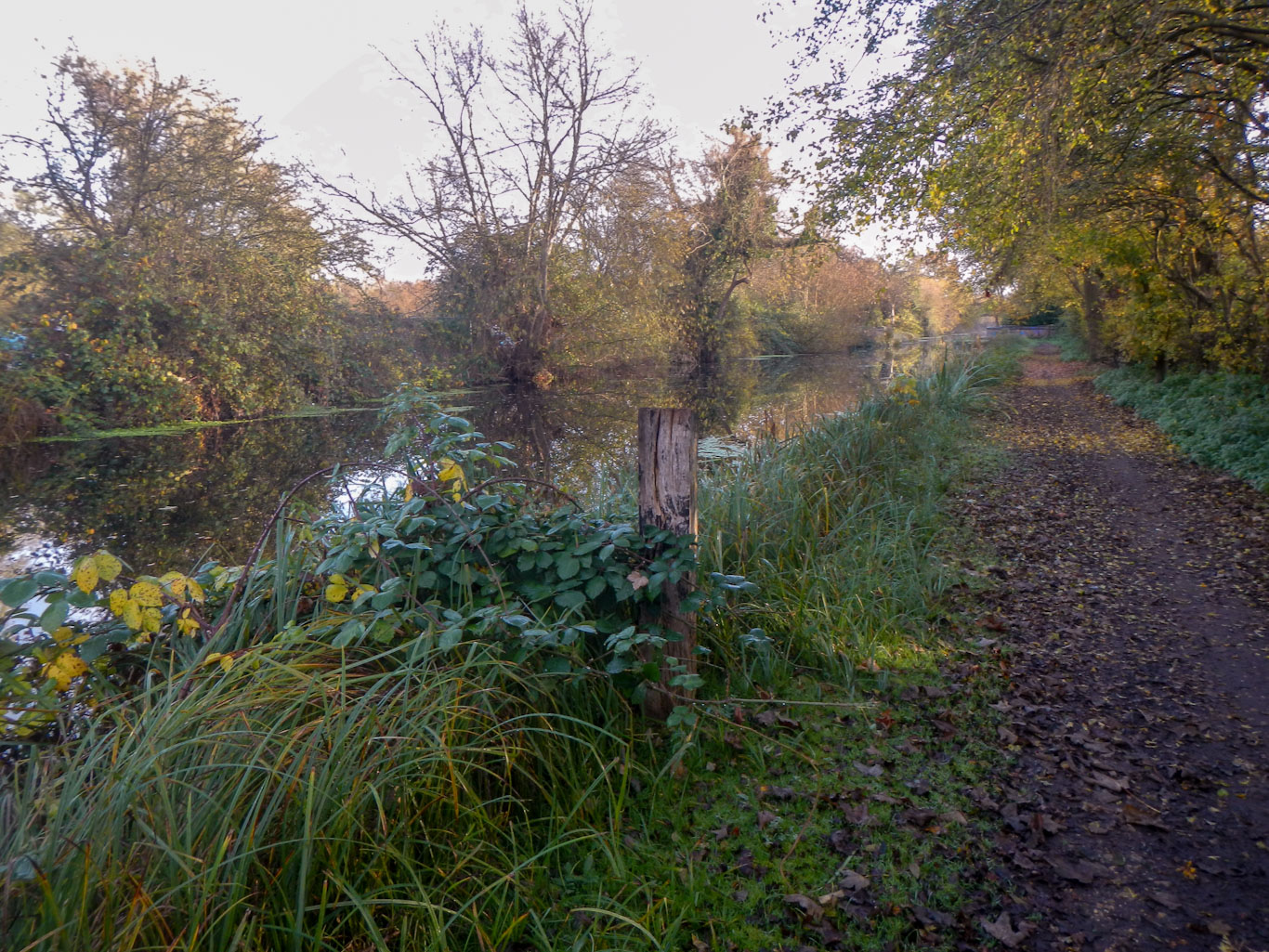
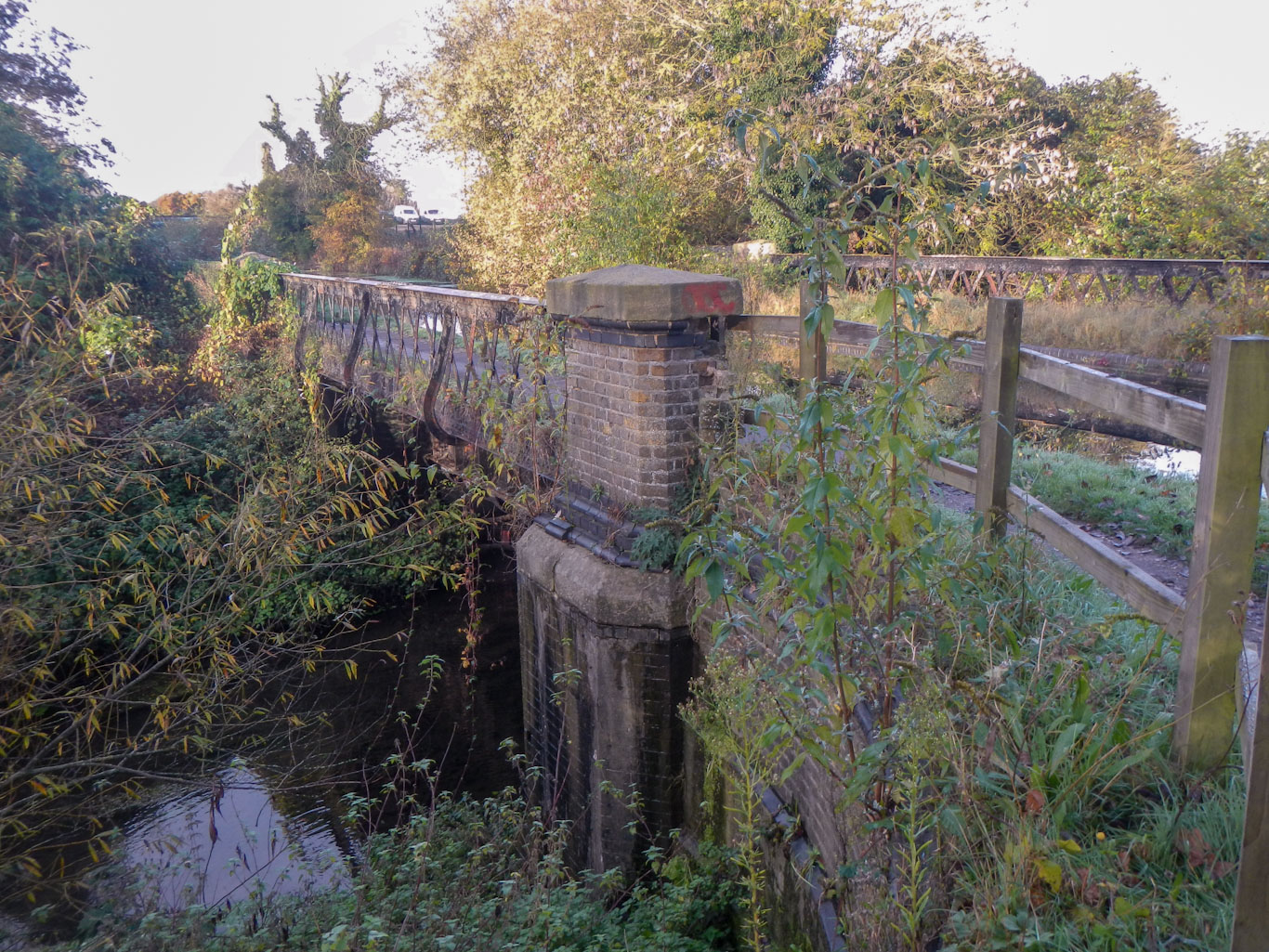
I left the pavement within a few yards of the railway station to descend on to the towpath of the Grand Union Canal. I reflected that I could have walked along to here all the way from Little Venice. I turned away from London to follow the towpath, seeing the now familiar scene of moored narrow boats. I saw my first “Beeches Way” fingerposts and some metal waymarking discs, reassuring me that I was on the right route. Signs were sporadic in places and it was certainly important to carry maps.
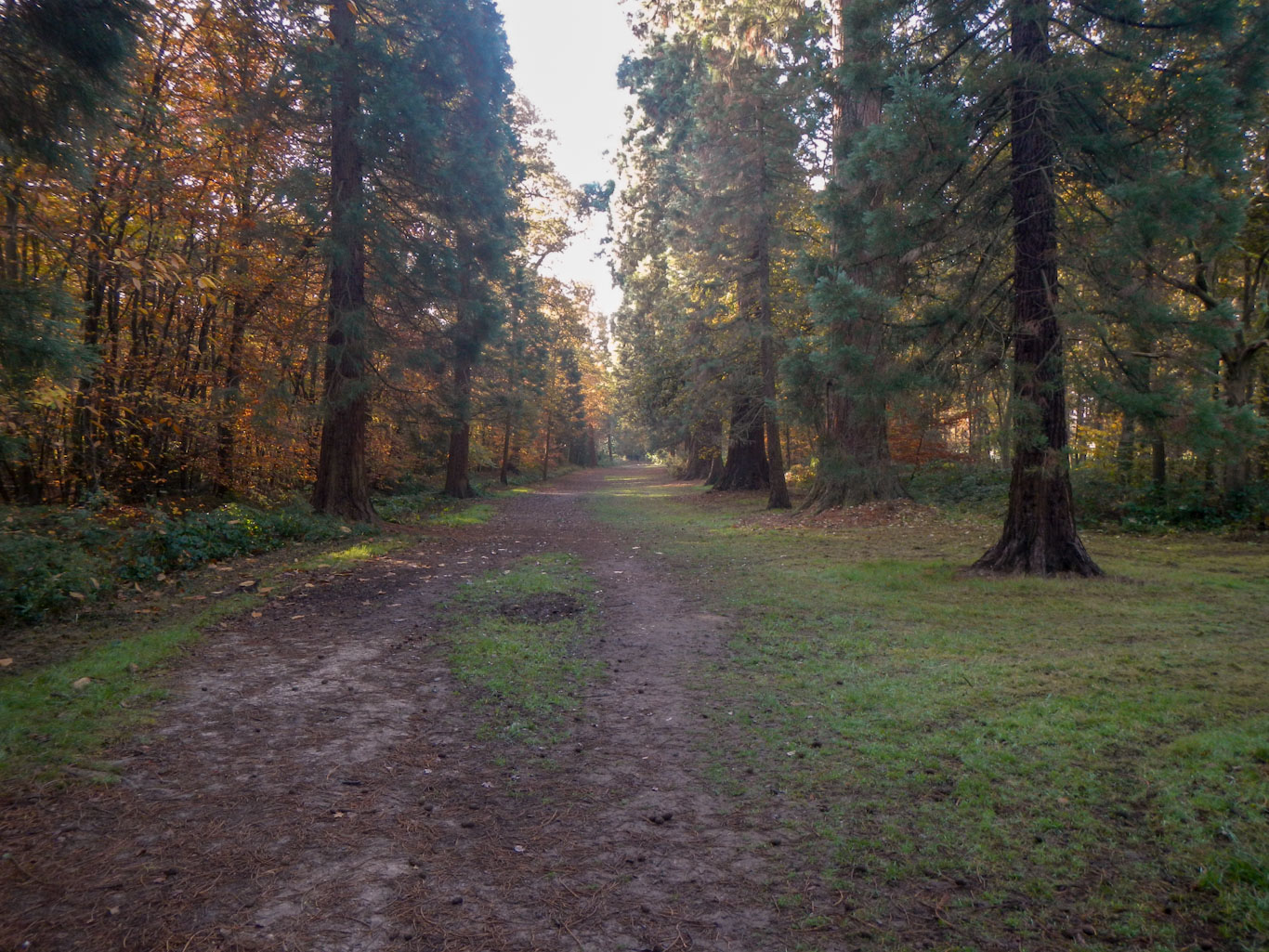
Once away from the canal, I followed various footpaths and pavements before arriving at Langley Country Park. I strolled down an avenue lined with giant redwoods. I arrived at a carpark and a café which was open so stopped for coffee. This was near the Temple Gardens, an extensive area of rhododendrons, which must constitute a colourful sight in season.
After Langley Park, a road crossing led straight on to footpaths in Black Park, eventually going round part of a lake and past a few remnants of lowland heath.
After I left Black Park, the route passed a stud farm and through the architectural conservation area of Fulmer village. There are many large houses in extensive gated grounds, no doubt worth a small fortune.
Stoke Common is designated a site of special scientific interest (SSSI) and is the most extensive area of lowland heath in South Buckinghamshire.
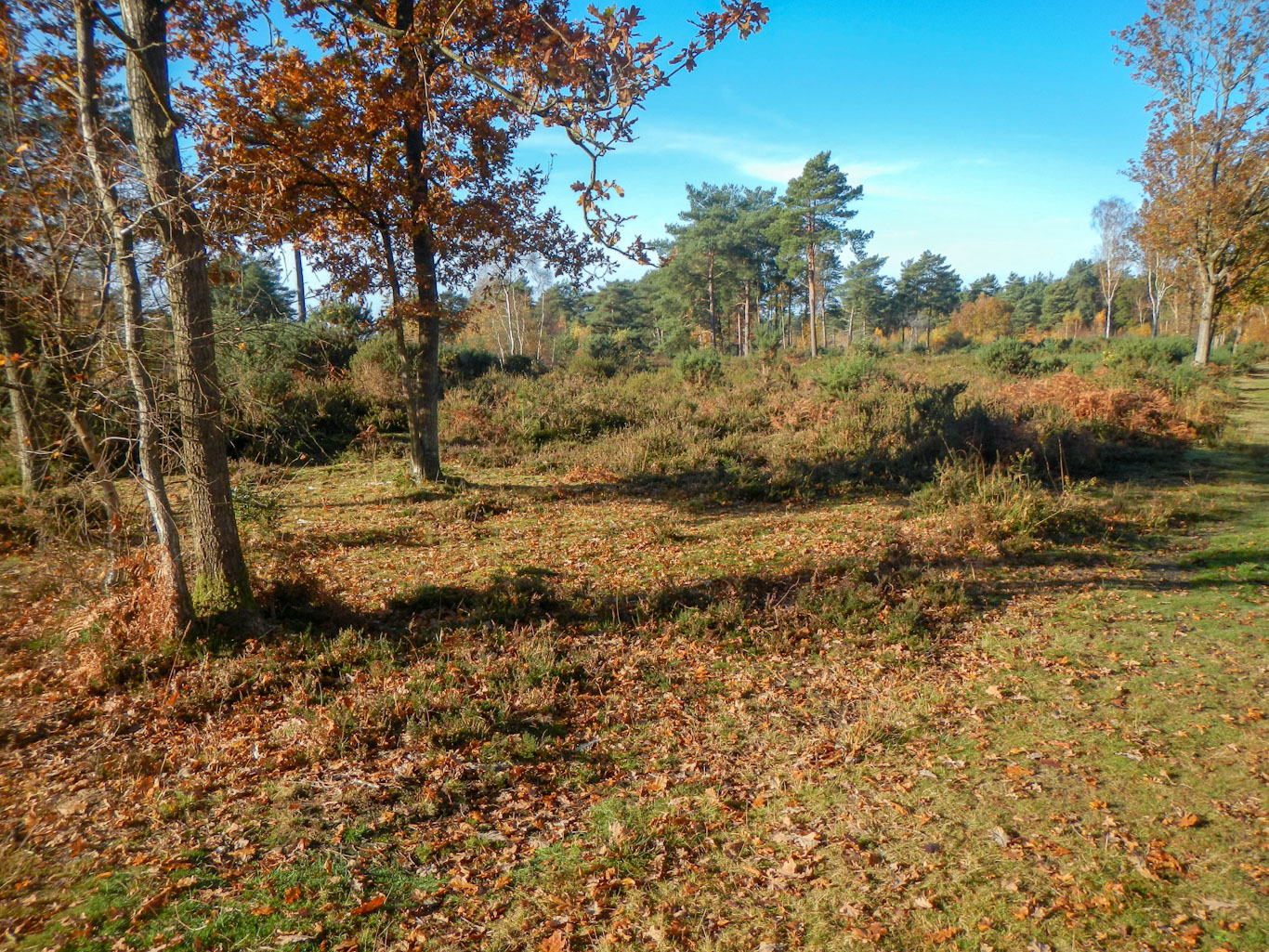

I walked through Farnham Common just before lunch and realised I could have bought my lunch there rather than carrying it all the way from central London. A very short walk led on to Burnham Beeches which is a very large area designated as SSSI and of National importance as well as being the highlight of my walk.
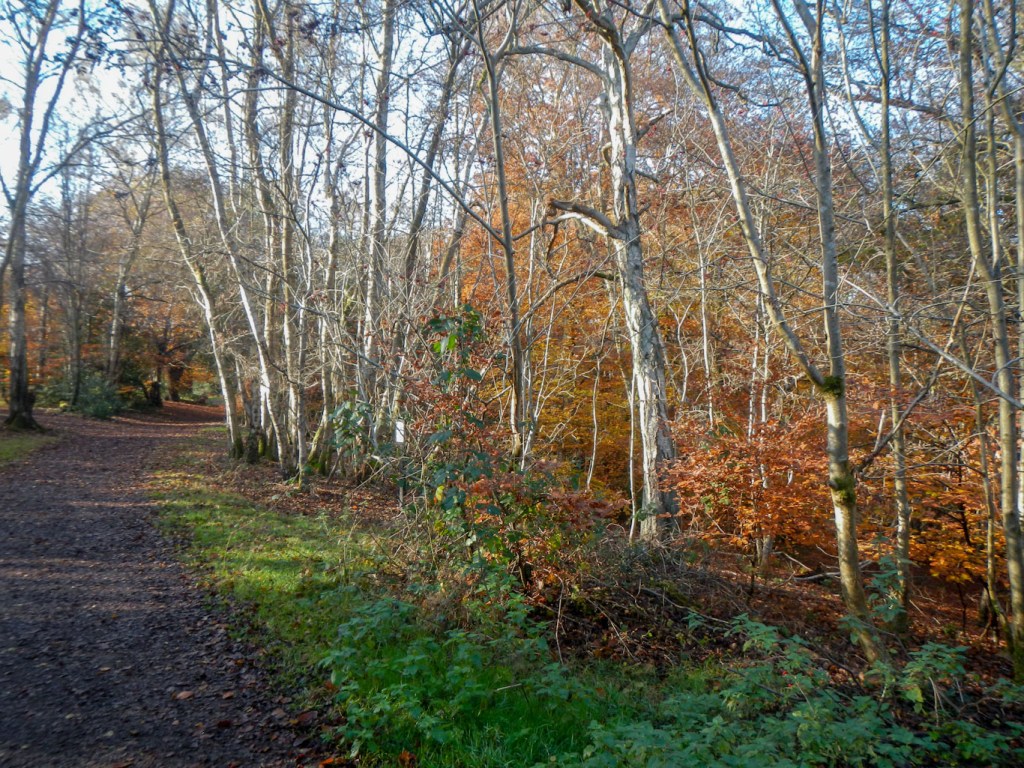
It is unsurprisingly very popular for visiting, walking and running even on a weekday in November. The ground was carpeted with colourful autumn leaves, but there were still sufficient leaves on the trees to appreciate the glorious colours to the full.

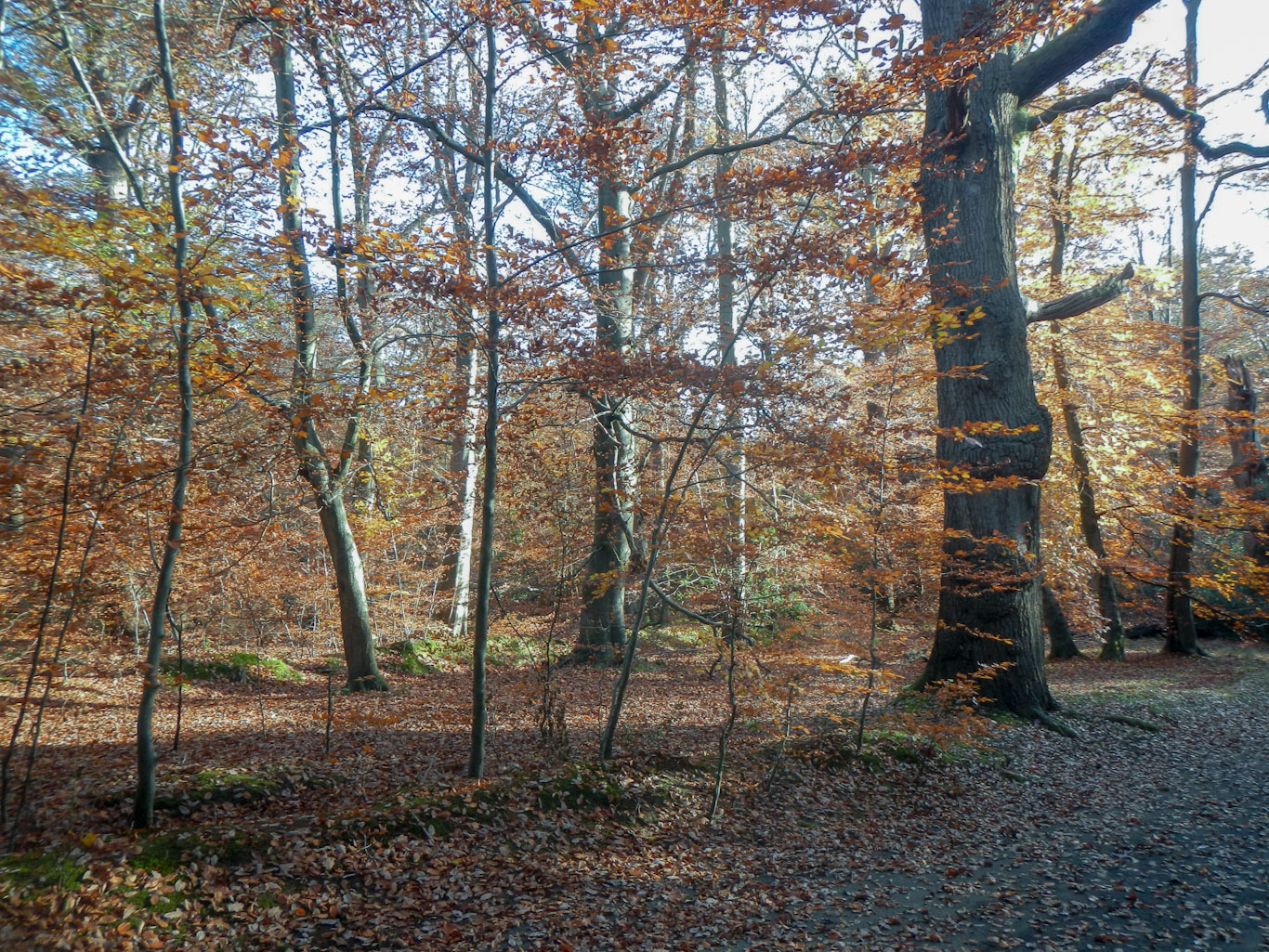
For centuries, much of Burnham Beeches was used as wood pasture. The trees were managed as pollards and the animals grazed under them. Pollards are trees cut at just above head height. When new shoots begin to grow, they are beyond the reach of grazing livestock and the tree can continue to produce wood, which is harvested at intervals. regular cutting makes the trees live longer and provides a wonderful habitat for many species.
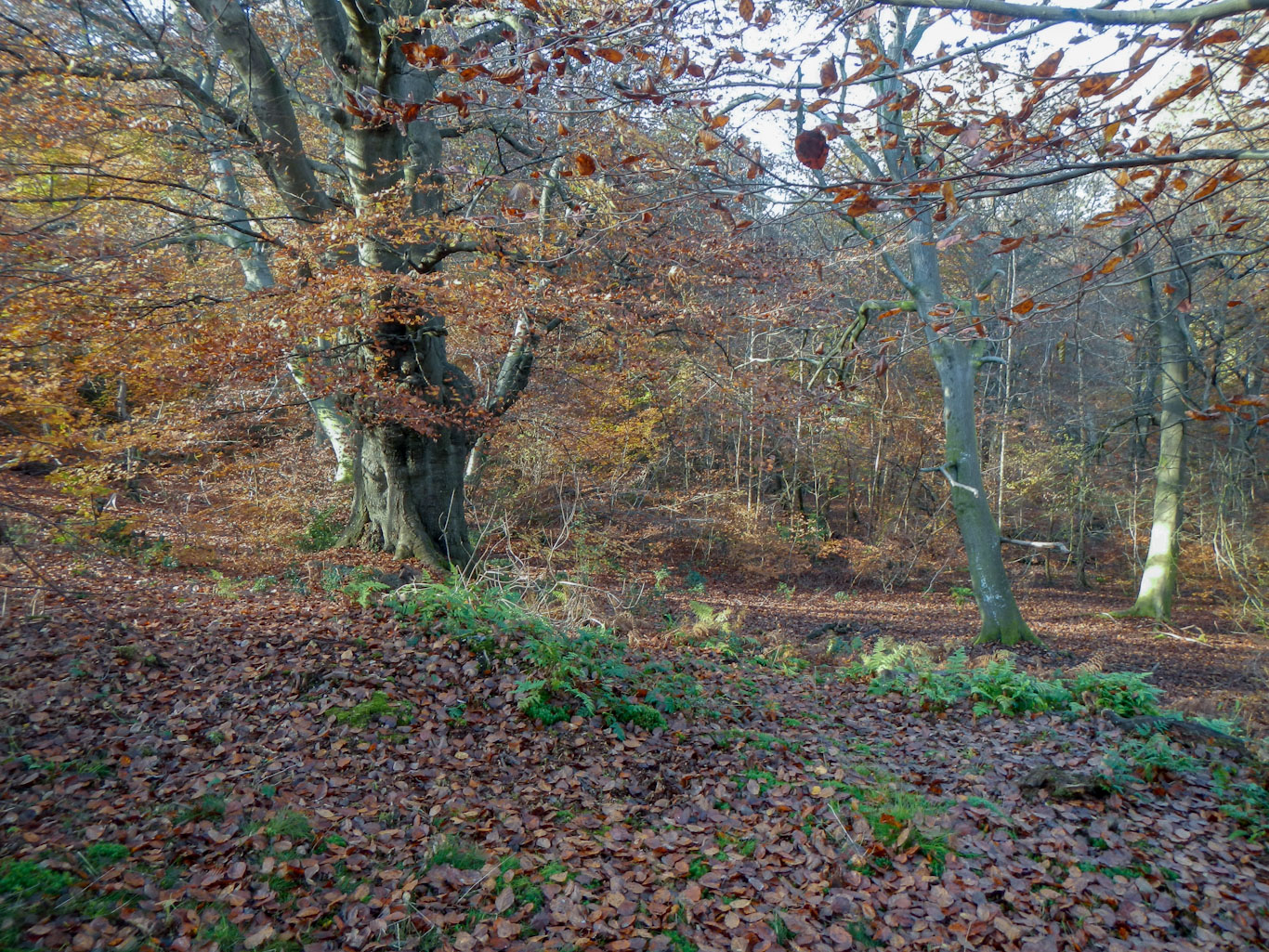

In 1880 the area was put up for sale as building land. Fortunately, in a far-sighted move, it was bought by the City of London Corporation to permanently protect and manage it. In 1993, Burnham Beeches became a National Nature Reserve. Wood pasture, heath and mire habitats have been restored. Grazing livestock has been reintroduced. The ancient pollards are being managed again. The area stretches out to Dorney Wood, notorious as a haunt of thieves in the time of Henry VIII and to Littleworth Common, another remnant of lowland heath.


I followed some more waymarked paths. It wasn’t long before I emerged near the River Thames, crossing the river over a road bridge.


I followed the river bank through some meadows before turning off to reach Cookham with its station on the railway line back to London via Maidenhead.

 Where's Kathryn?