16 November 2021
I’m not quite sure how I managed to wander out of the St Albans City railway station in the wrong direction and have to turn on my SatMap in order to locate the city centre! While I was doing this, a man approached me and asked the way to a certain street – I explained that I had only just arrived so didn’t know, but didn’t try asking him if he knew how to find the city and cathedral.
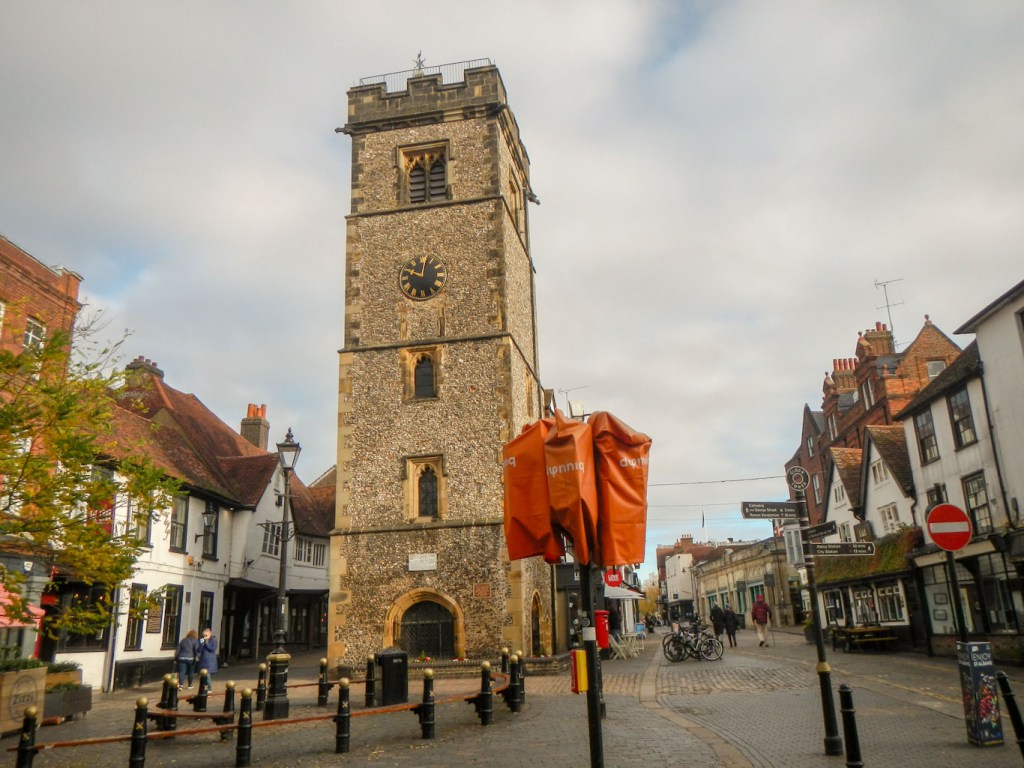
Fortunately it didn’t take me too long to find the right way and I was soon walking along a quaint street to reach the medieval clock tower just as it struck 10am. It’s the only surviving medieval town belfry in England and is designated as a Scheduled Ancient Monument. The people of St Albans built the tower, which was completed by 1405 as a symbol of their resistance against the power of the abbot of St Albans. Unfortunately it’s only open to visitors on summer weekends so I had to be satisfied with the view of the tower from the street rather than the view of the city from the top.
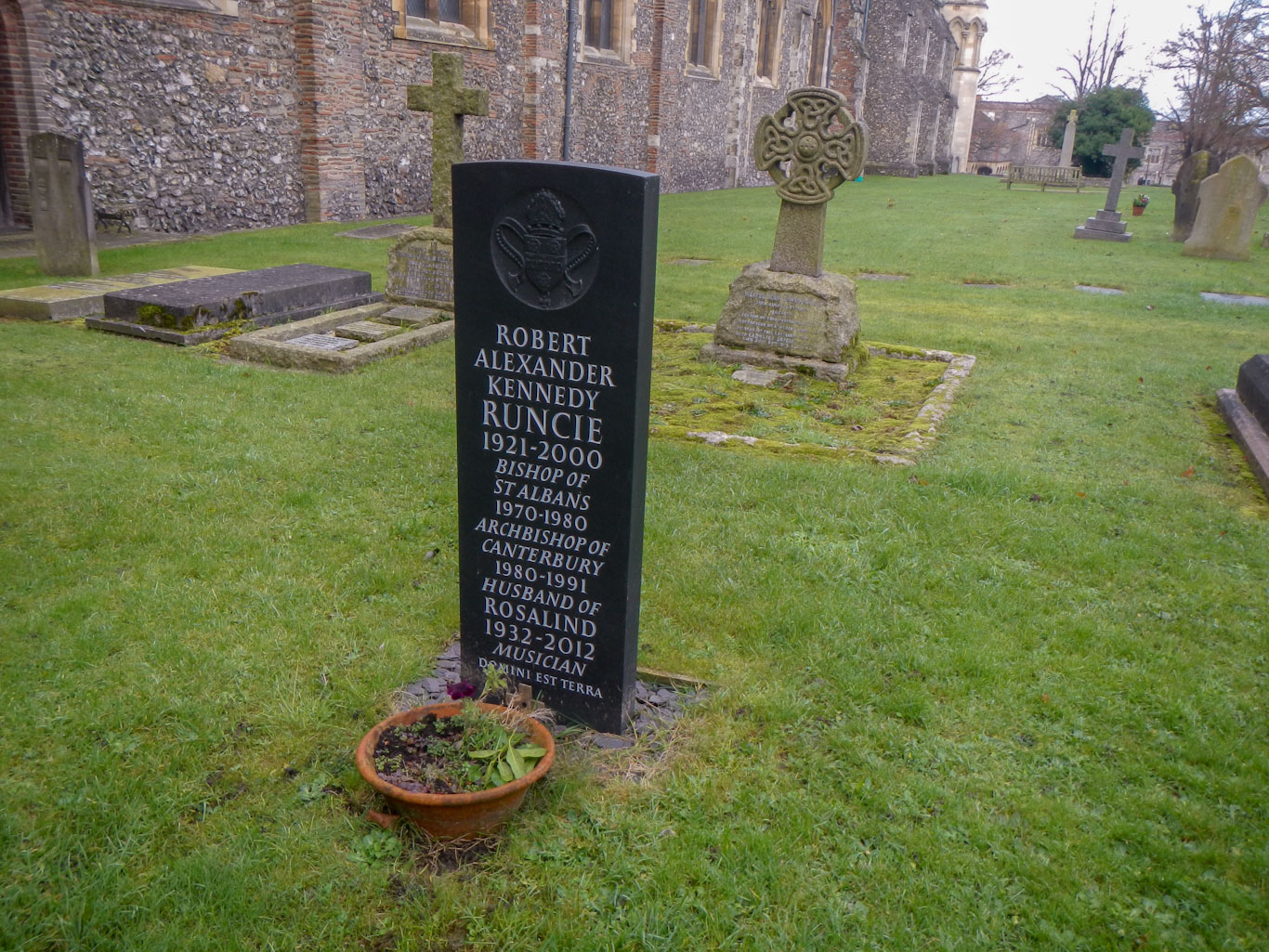
From the clock tower, it’s only a short way to the cathedral. I wandered past, discovering the grave of Robert Runcie – previous Bishop of St Albans and then Archbishop of Canterbury – in the grounds. However I didn’t look in the cathedral just then – leaving that for later in the day.

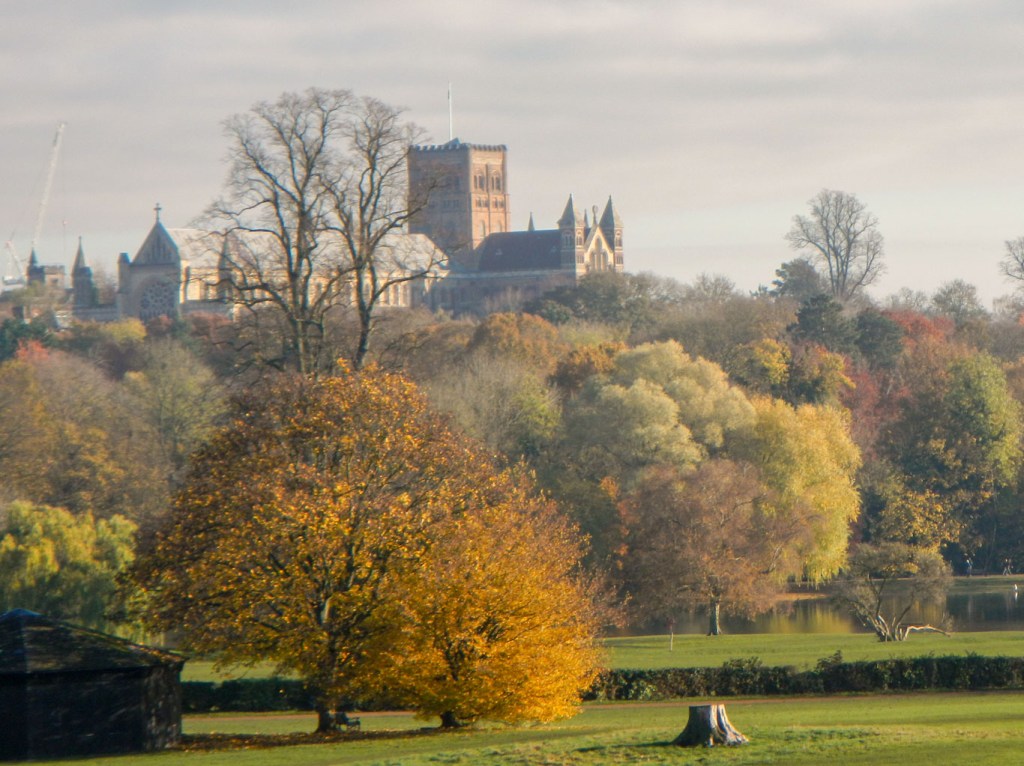
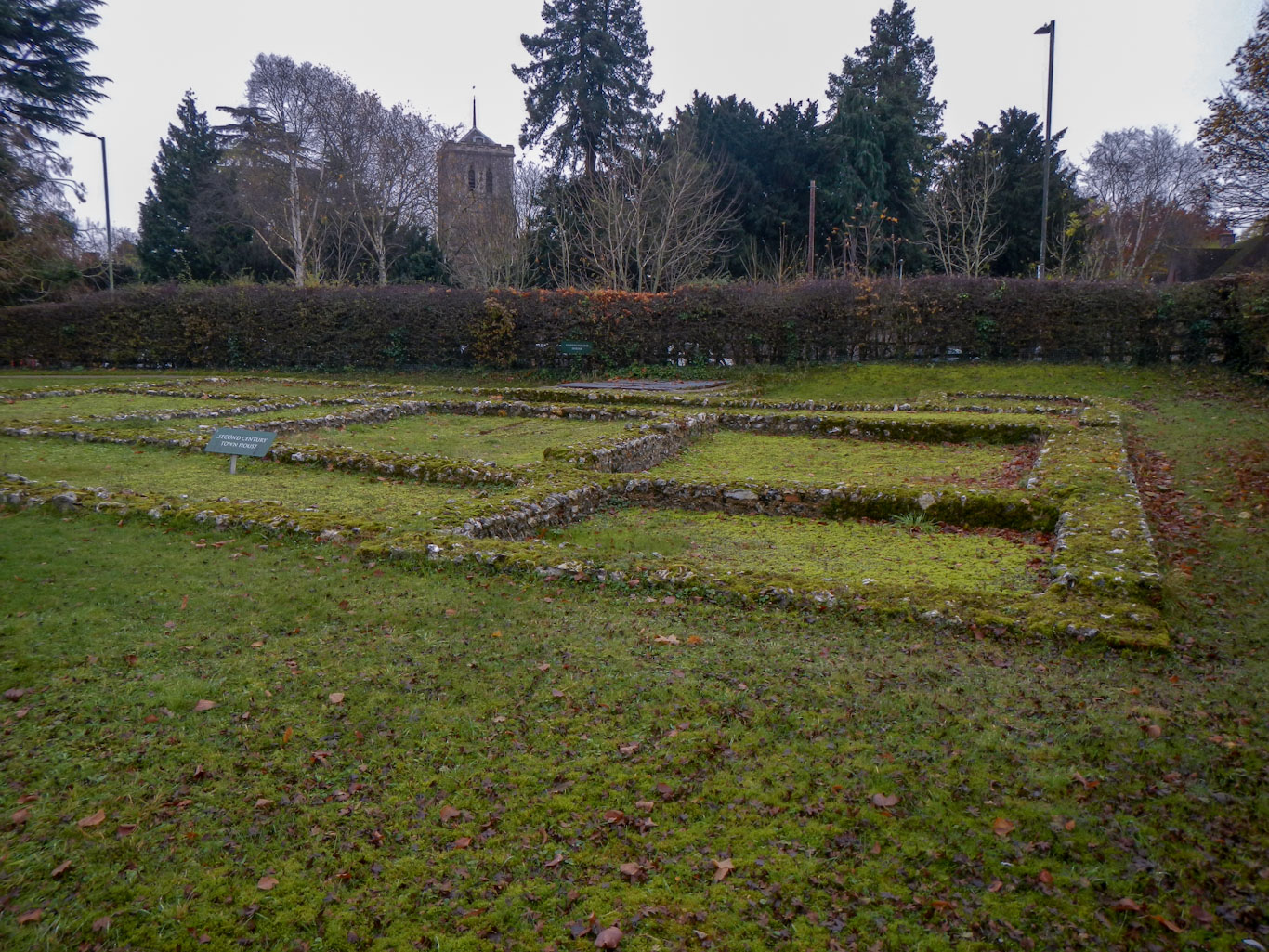
I walked through the Abbey Orchard towards the River Ver and Verulamium Park. Beneath this park lie the remains of the third largest city in Roman Britain. This Roman city is uniquely special in that the later city of St Albans was not built over the Roman city but alongside it. However bricks from Verulamium were used to build later buildings including the nearby St Michael’s Church and the Abbey (now incorporated into the cathedral). Much of the Roman city lies below agricultural land and has not been excavated.
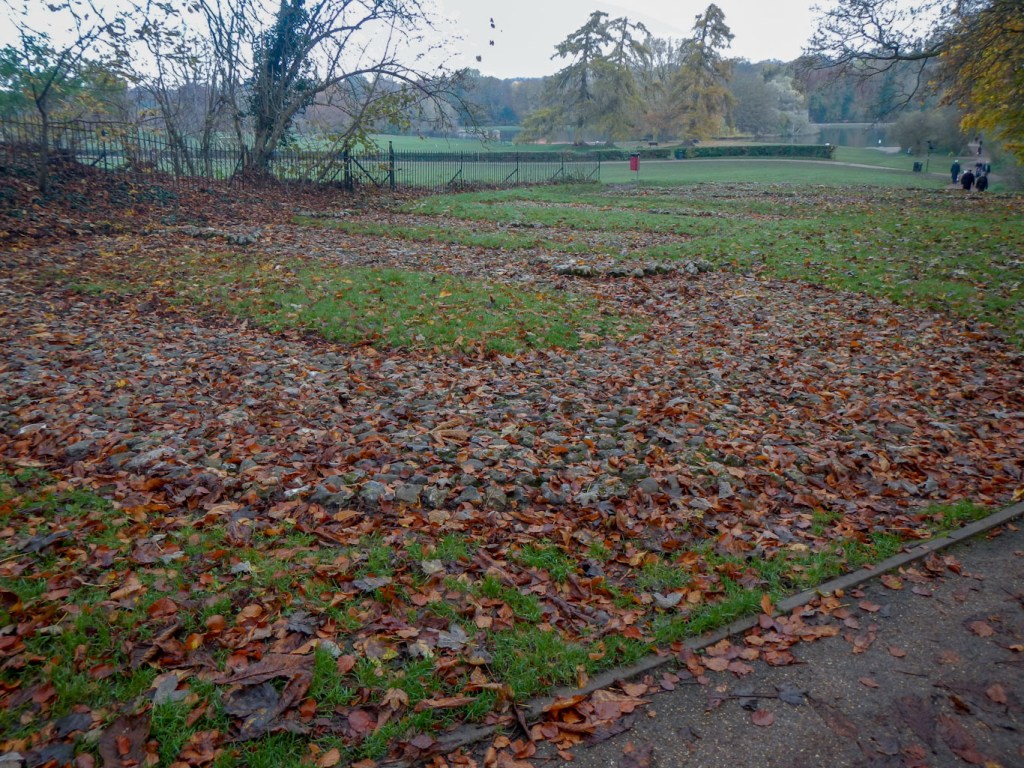
I reached the site of the London Gate which would have been on Watling Street (the route from Dover to Chester via London). The “footprint” of the gate helps with an understanding of just how huge the structure would have been.
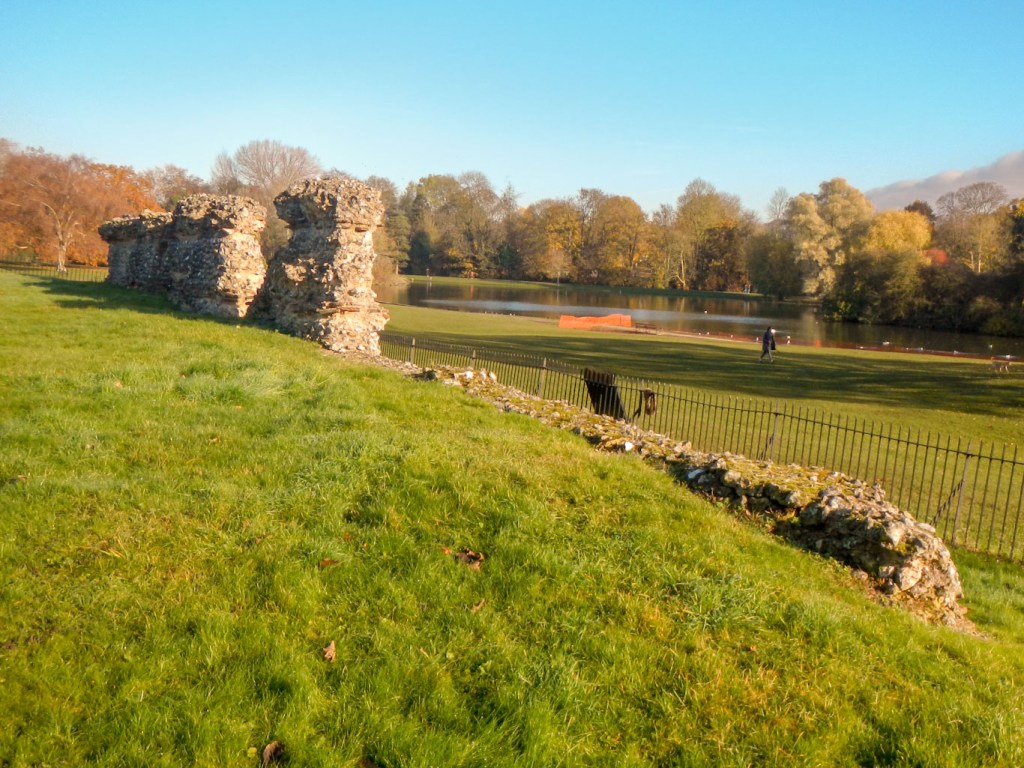
I walked alongside part of the Roman wall – this part near the London Gate probably survived because it is in a wooded area. Parallel to it and outside what would have been the Roman city wall is part of a huge ditch which surrounded the earlier Iron Age settlement.


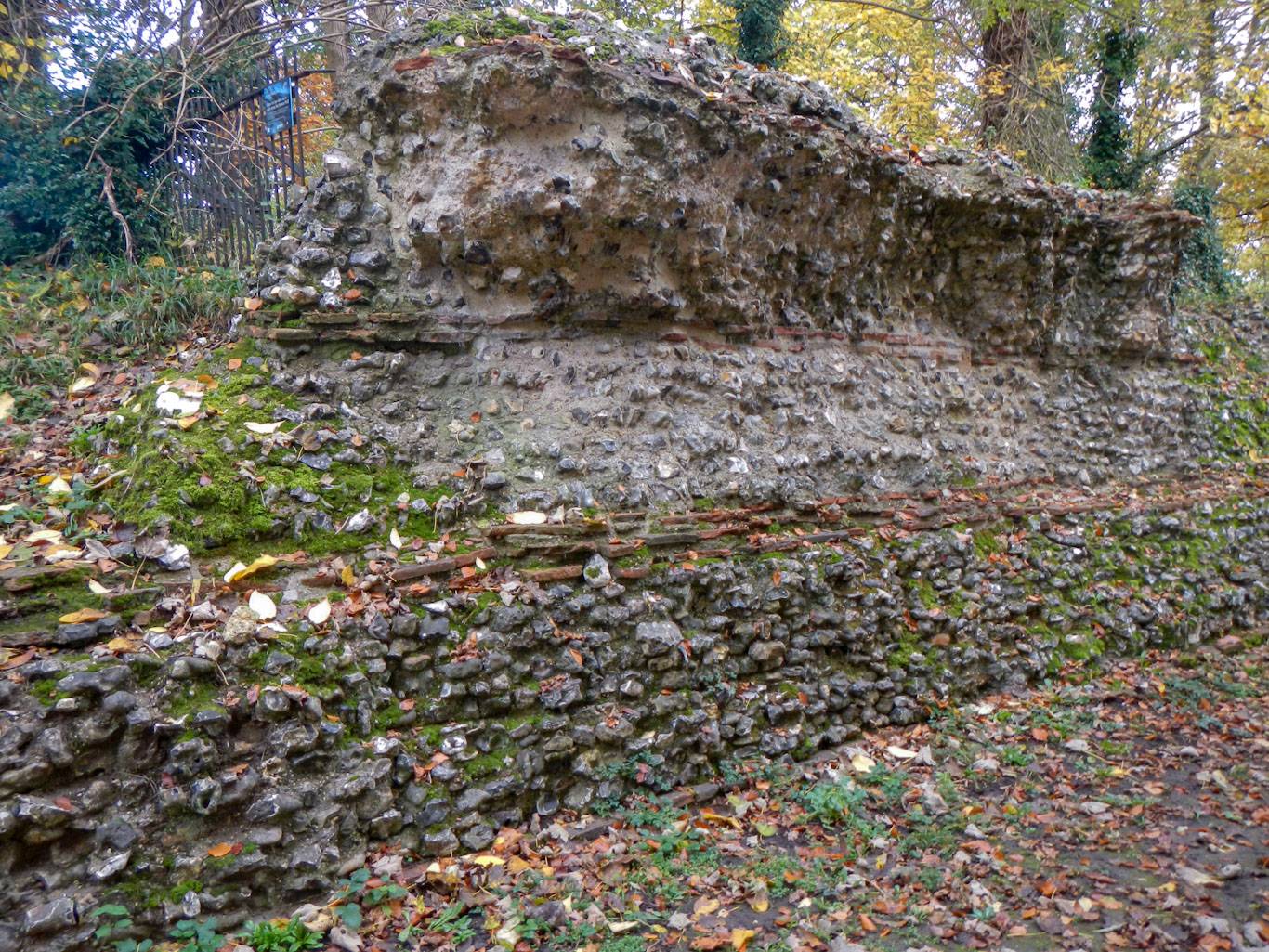
There is a further surviving fragment of Roman wall which probably survived cannibalisation to build the Abbey tower because it was made part of the enclosure of the 12th century St Germain’s chapel.
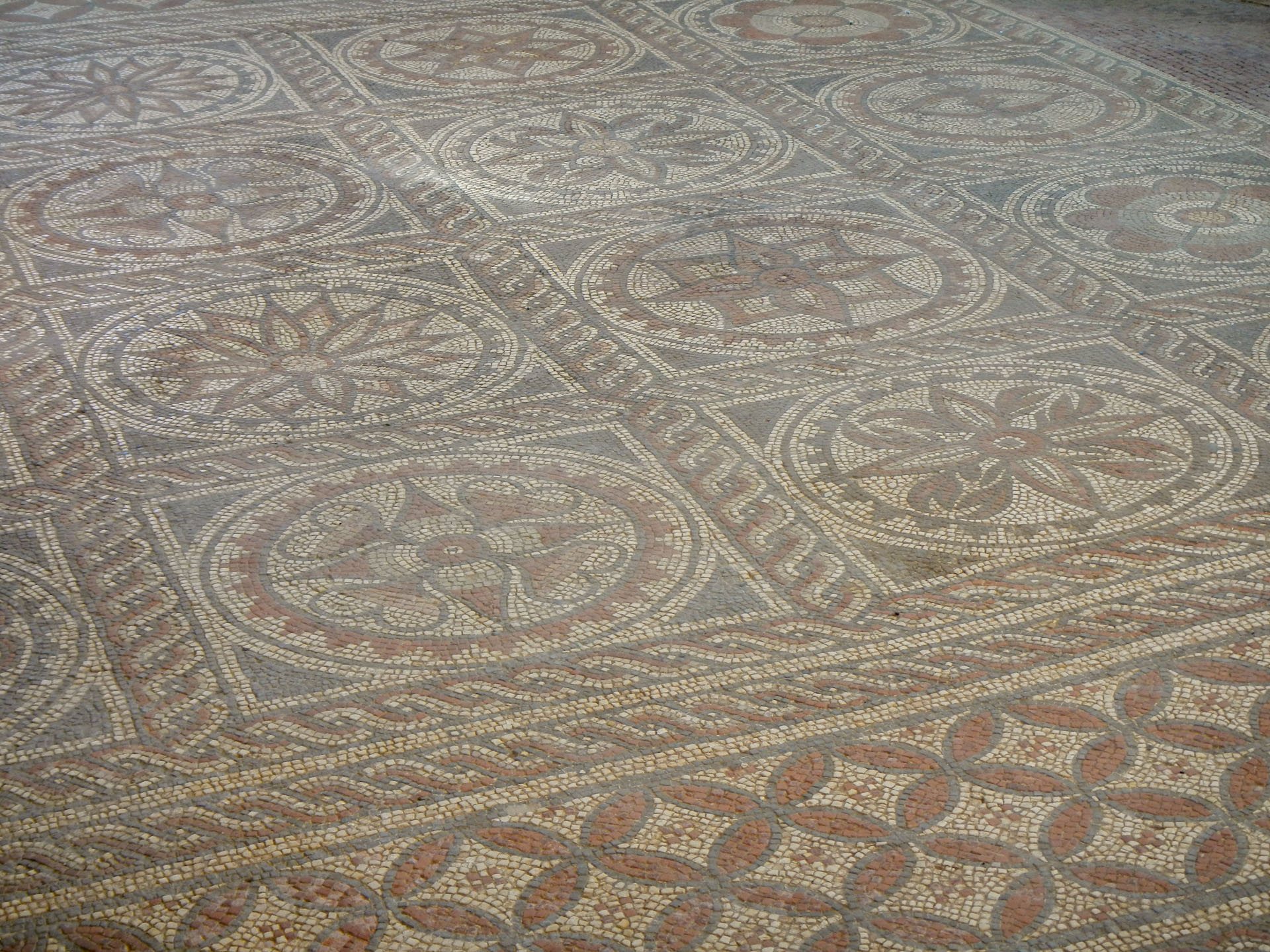
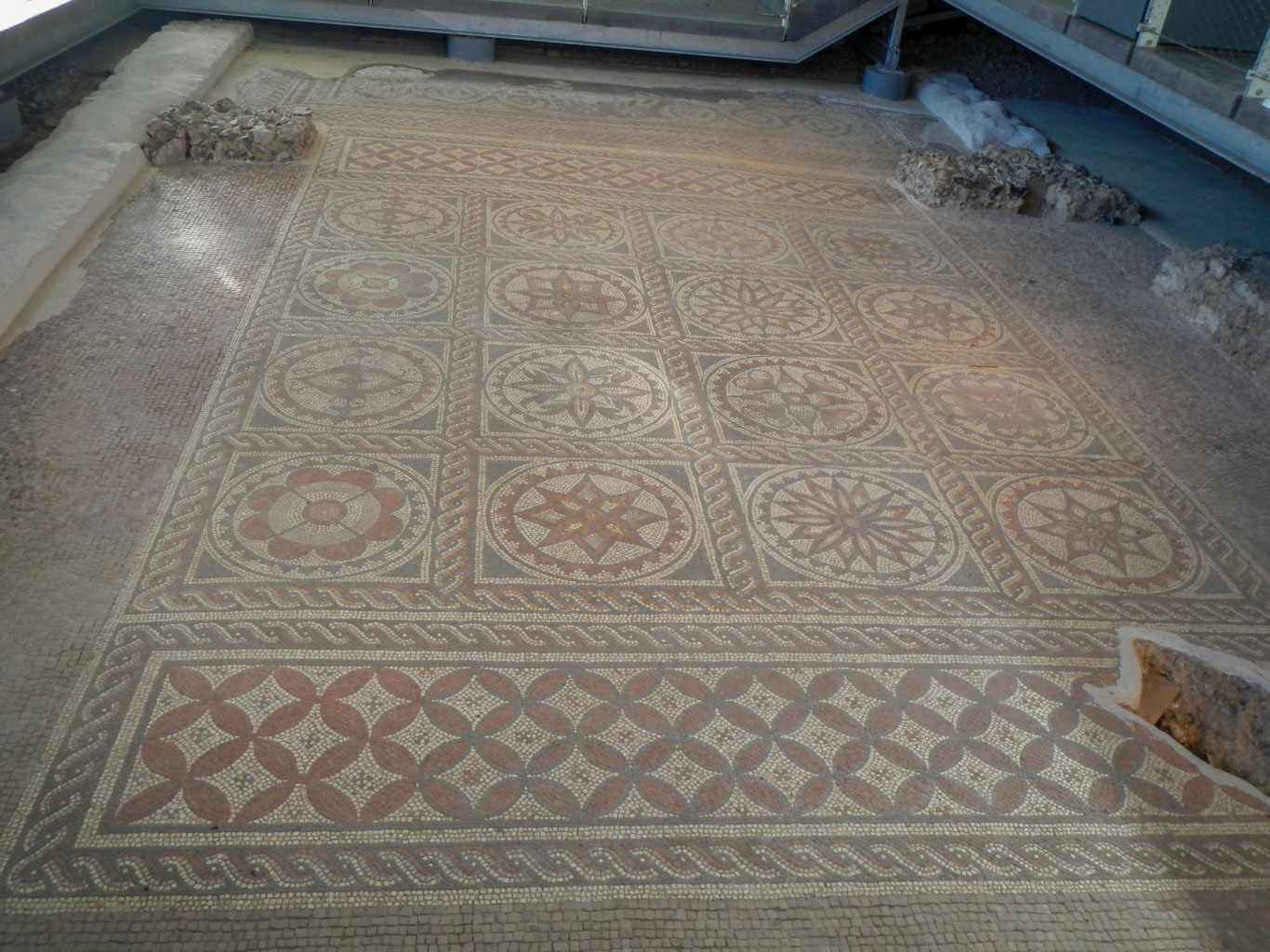
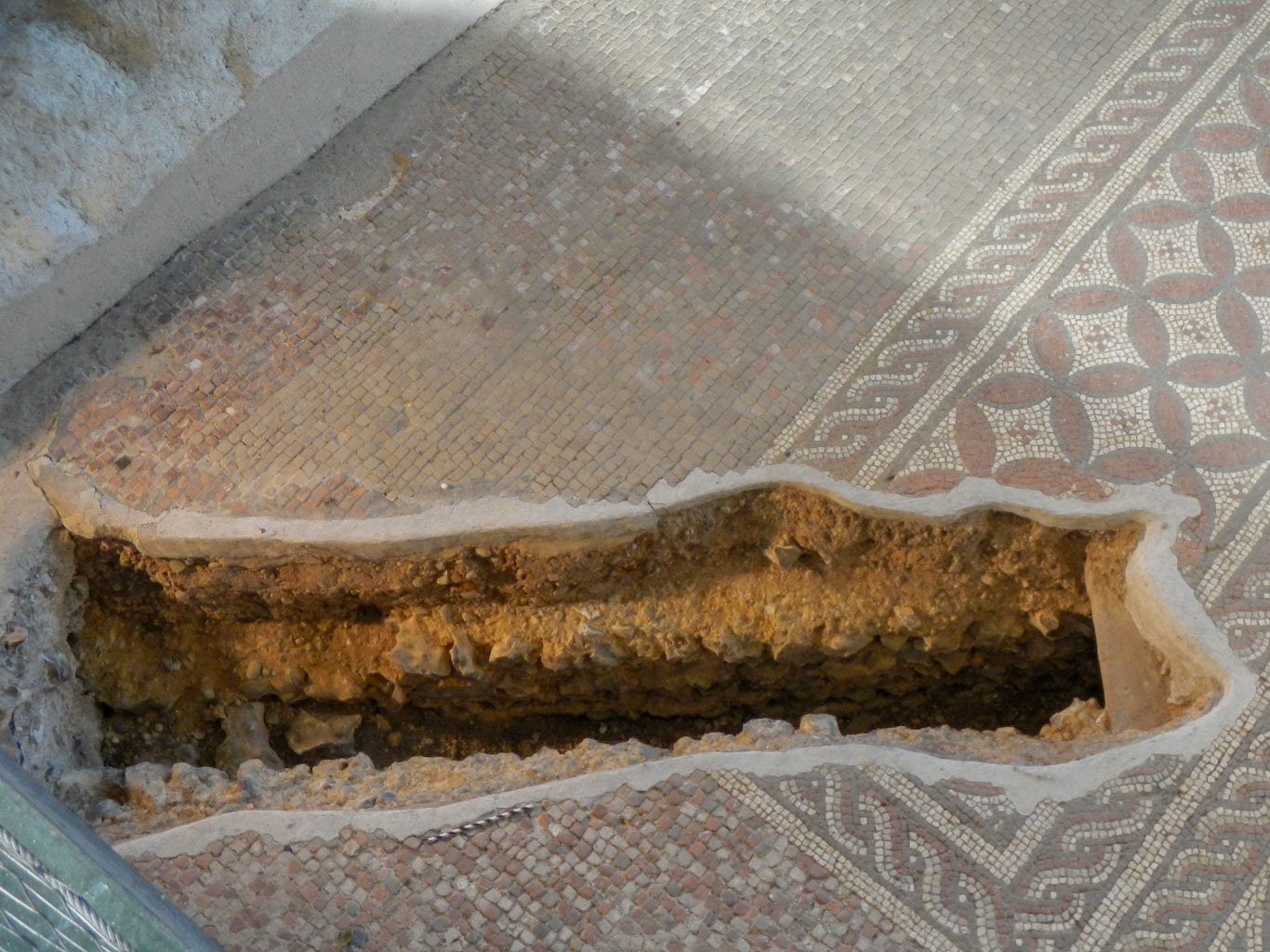
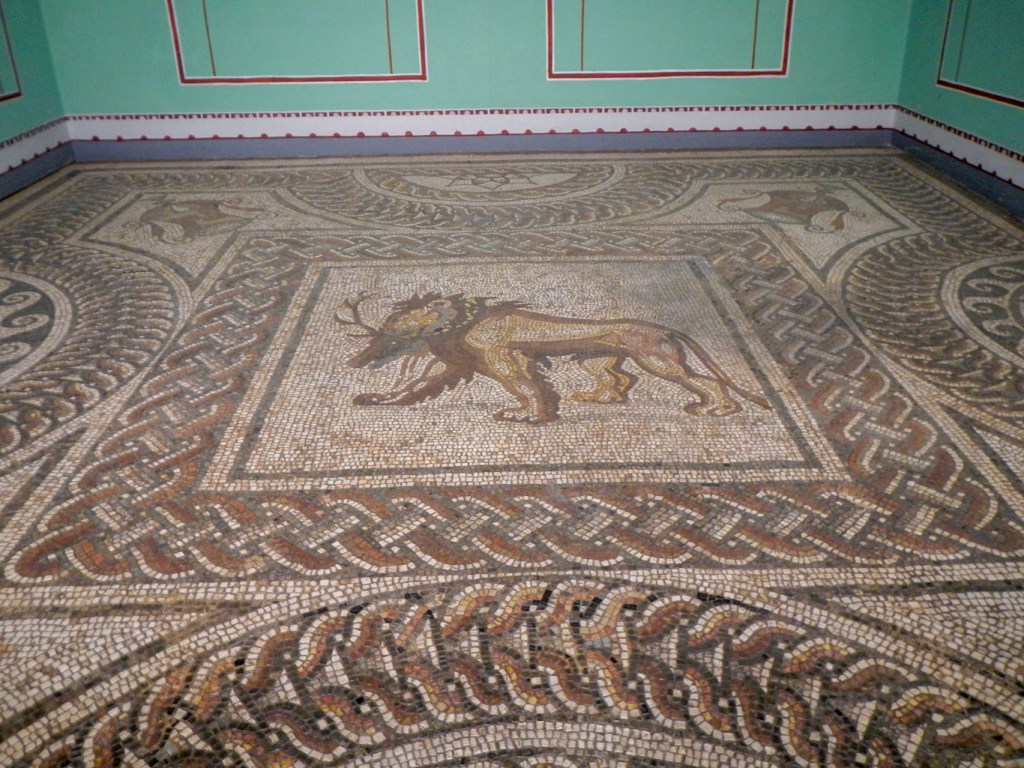
I walked up the hill from the Roman wall fragment towards a building which houses an impressive Roman mosaic on top of a hypocaust. Roman hypocaust systems allowed hot air to circulate beneath the floor and through the walls of buildings. In this building, trenches were cut below the floor to allow the hot air through. The mosaic covering the hypocaust is made of small cubes of cut stone or tile set into a thin layer of fine mortar which was spread over a concrete floor. The floor was left in its original location after it was discovered in the 1930s and is thought to have been part of the reception and meeting rooms of a large town house, built around AD 200.
Next I headed for the fascinating museum where I got a concessionary over 60 admission for a combined ticket to this and to the nearby Roman theatre. I was a bit disappointed that the receptionist trusted me and didn’t want to see the driving licence I proffered as proof of age. An excellent video explained about the context and history of the town and there were many artefacts to see of day to day life including more mosaics and a hoard of 159 gold coins discovered in a site north of St Albans in 2012. This is one of the largest hoards of Roman gold coins found in the UK and dates from the late fourth to early fifth centuries. During the Roman occupation of Britain, people buried coins for two reasons, either as a sacrifice to their Gods or as a form of secure storage. In the latter case, this would be a temporary measure to protect their wealth when faced with a threat of war or while undertaking a long journey. In any case the hoard represents a huge sum of money – gold coins, known as solidi, were so valuable that they were not traded or exchanged on a regular basis in Roman Britain. They were used only for large transactions such as buying land or goods by the shipload.
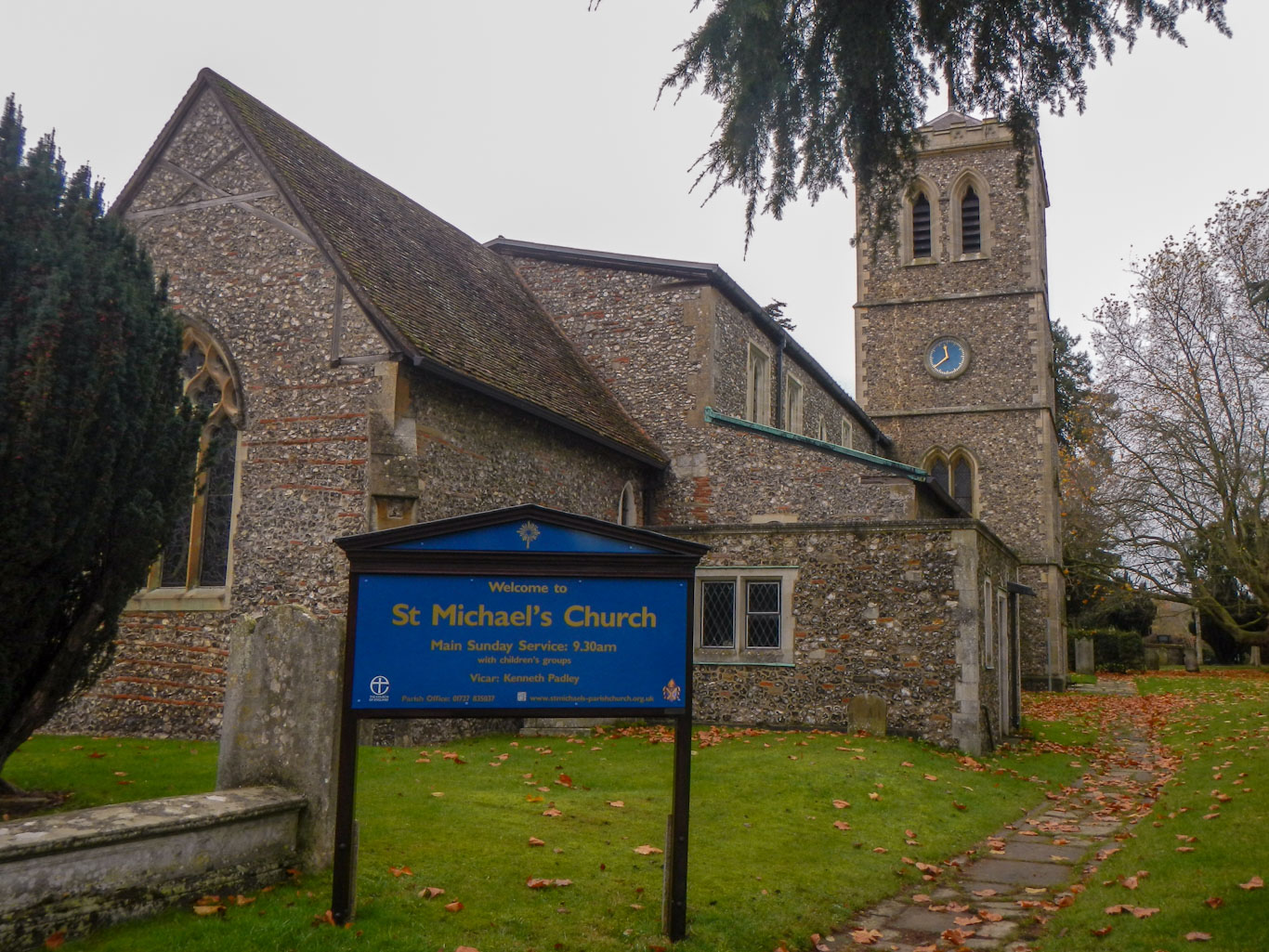
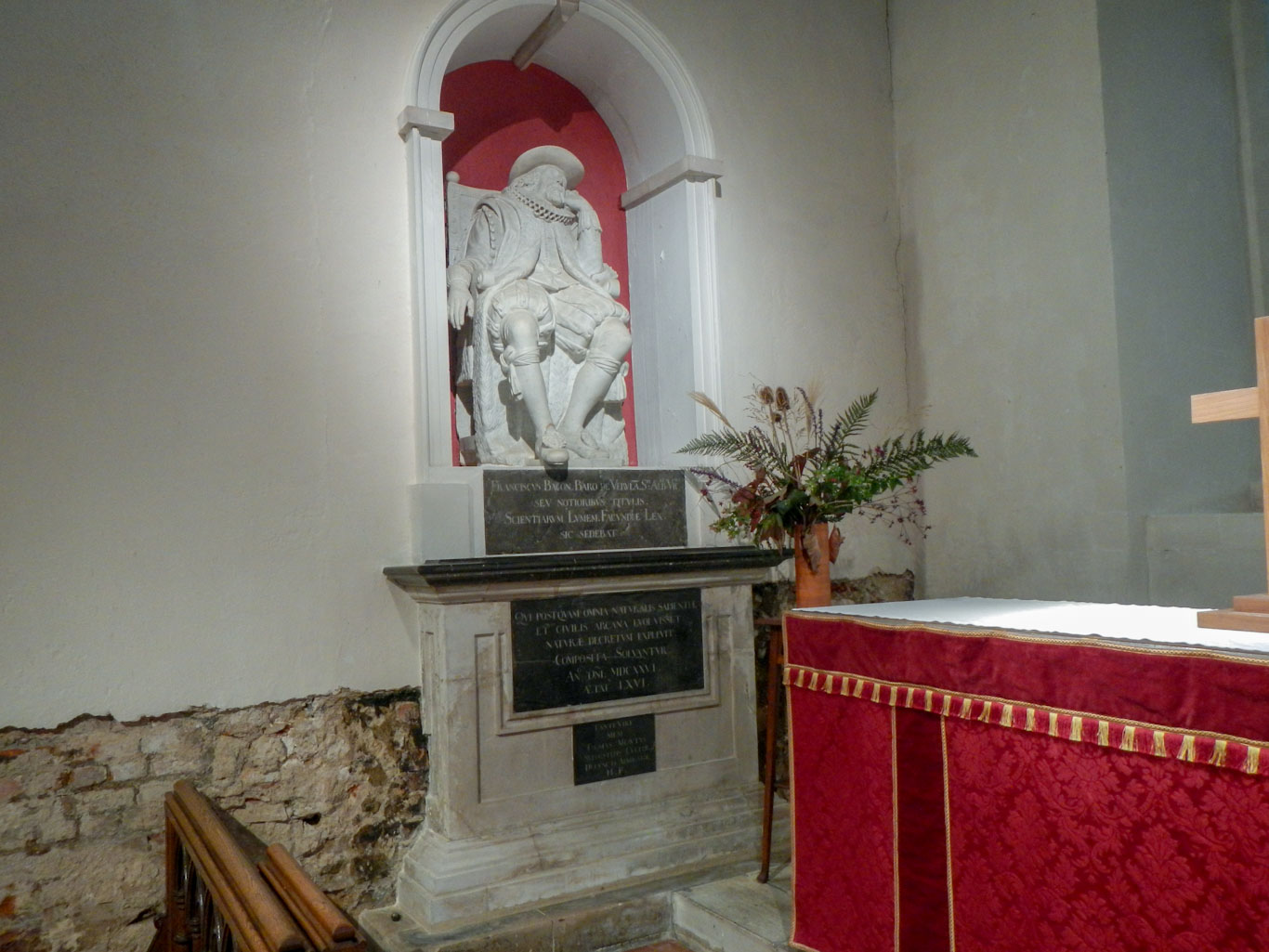
On my way to the Roman theatre, I took a look at St Michael’s Church. I could see Roman bricks that had been used to help with the building. Inside the church, I saw the monument to Francis Bacon as this church is his burial place.
The Roman theatre, just across the road, is in the grounds of the Gorhambury Estate. Built in about 140AD it is the only example of its kind in Britain, being a theatre with a stage rather than an Amphitheatre. Initially, the arena would have been used for anything from religious processions and dancing, to wrestling, armed combat and wild beast shows. From about 180AD the stage came into greater use and the auditorium was extended. By about 300AD, after some redevelopment work, the Theatre could seat 2000 spectators.
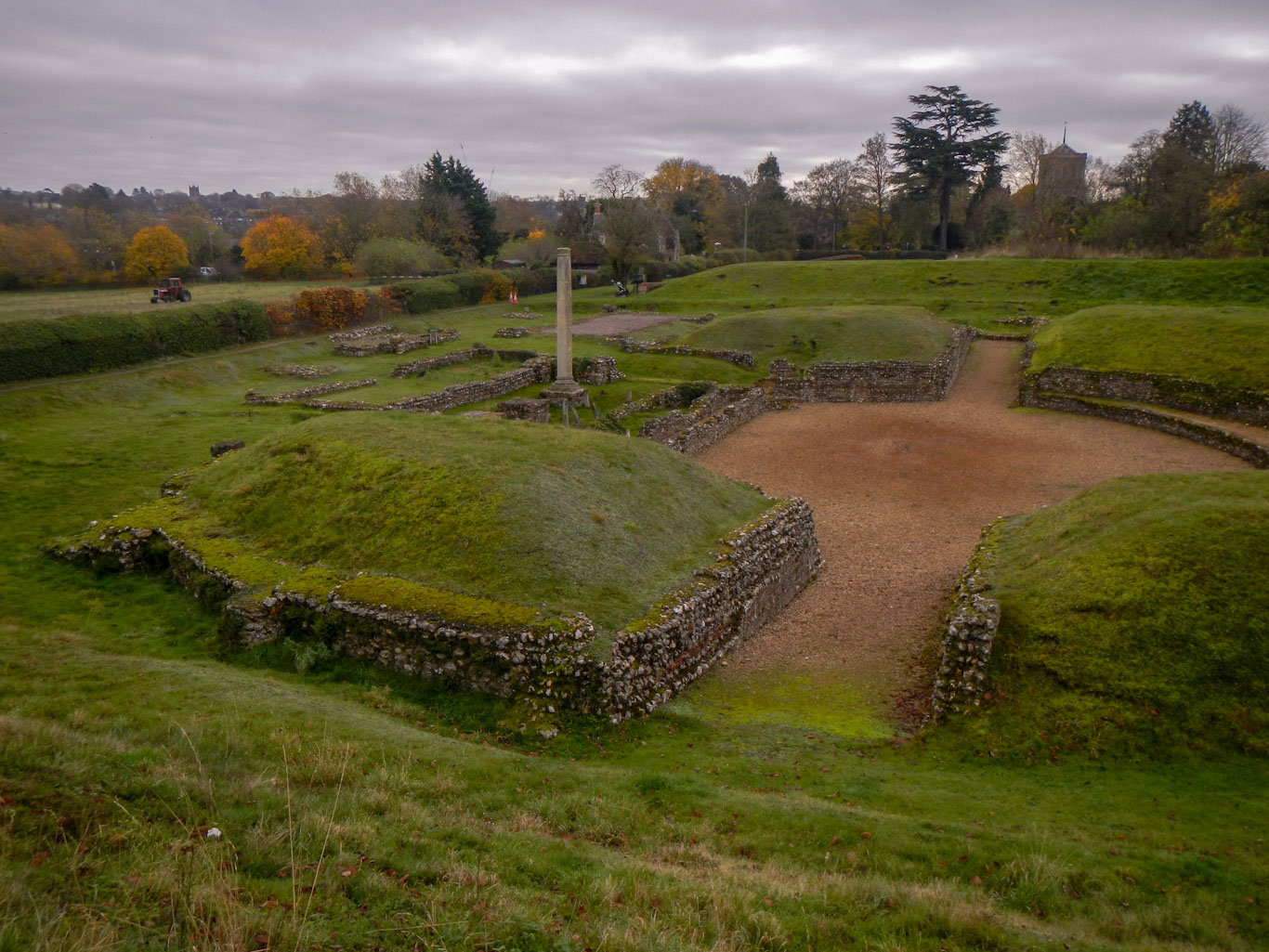
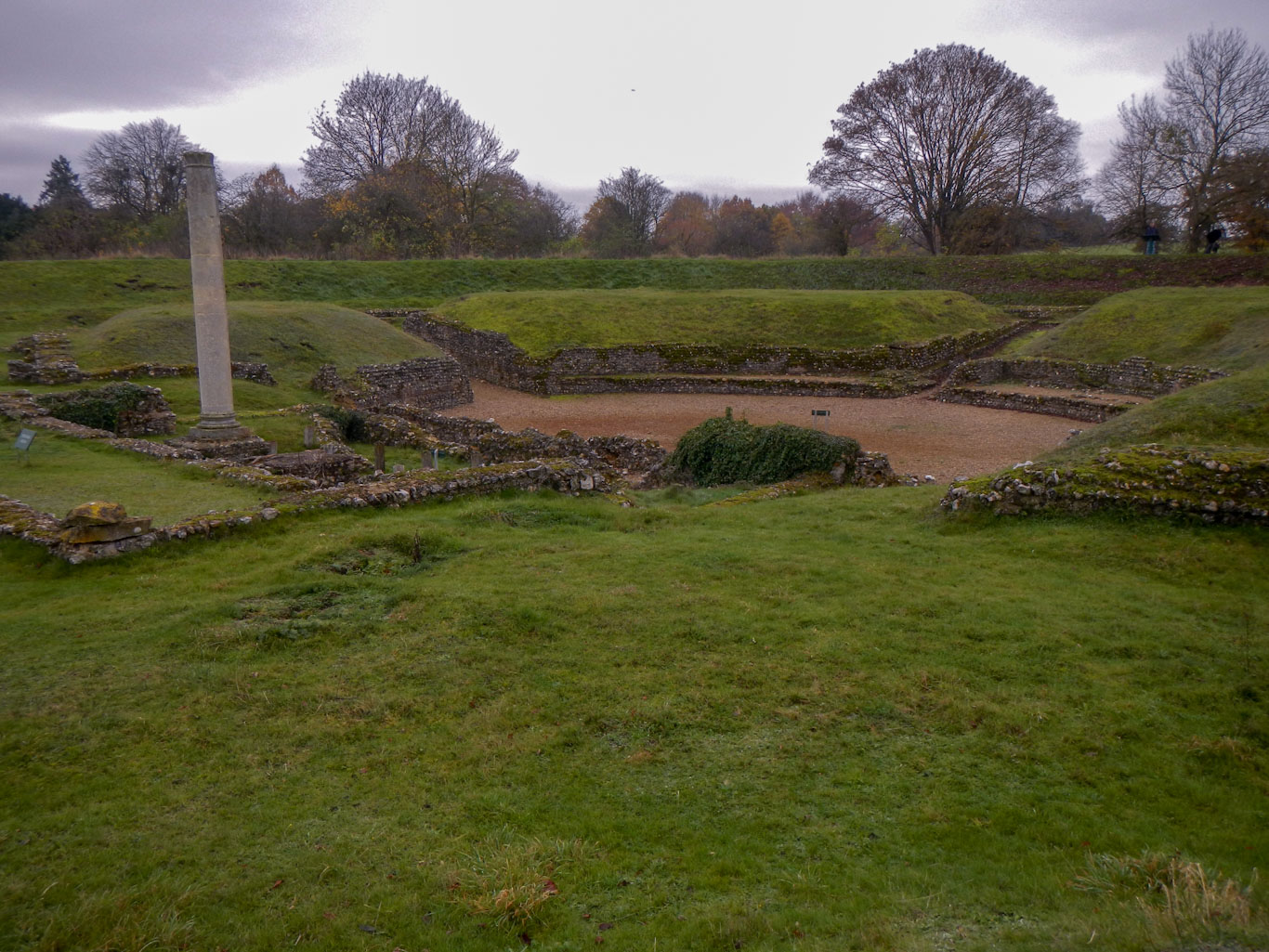
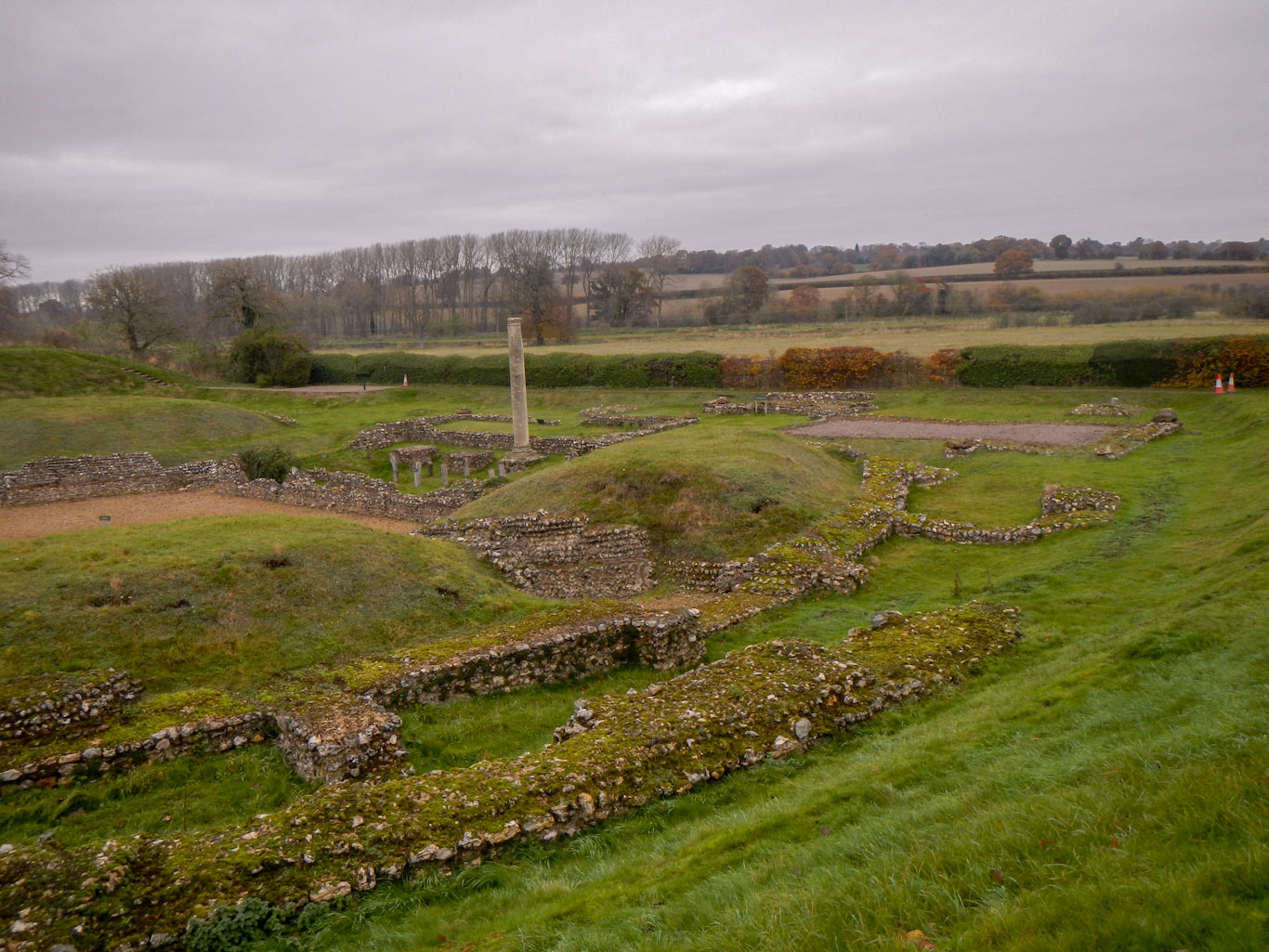
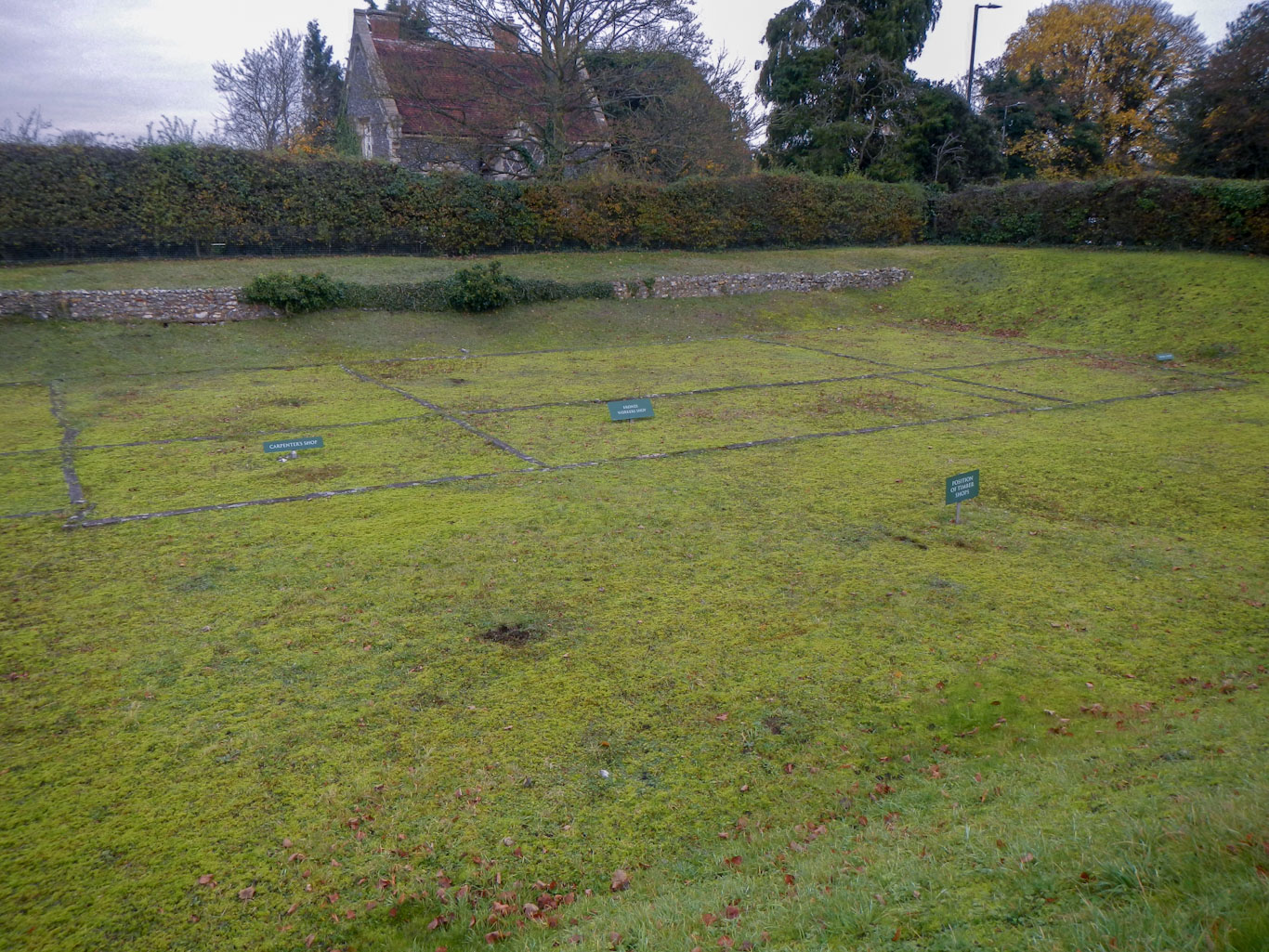
Subsequent excavations in the area revealed a row of shop foundations, a Roman villa and a secret shrine, all thought to date from the First Century.
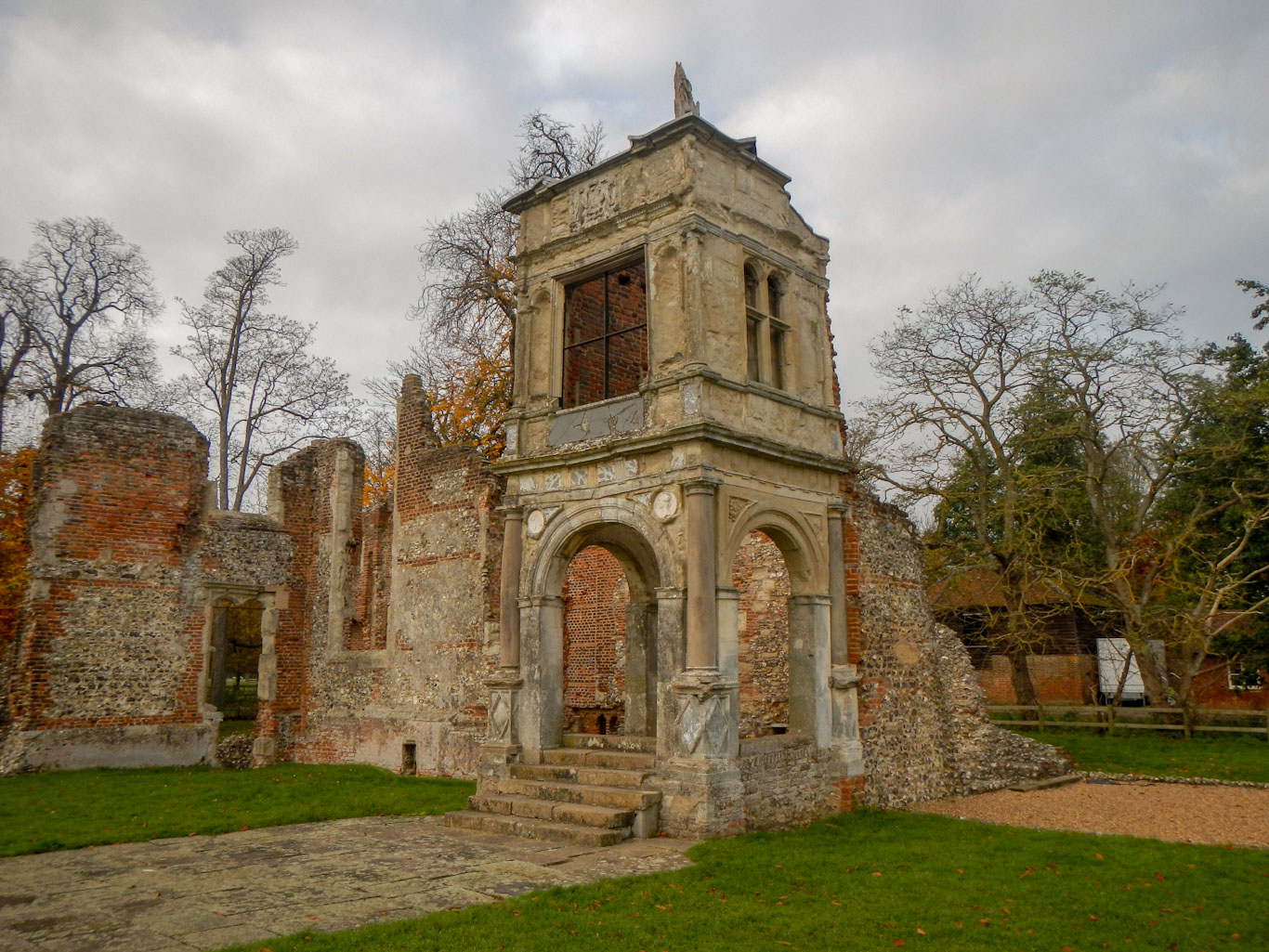
From the theatre, I walked on up the long Gorhambury Drive and past the big “new” house to Old Gorhambury. The ruins give some idea of the grandeur of the mansion constructed in 1563-68 by Sir Nicholas Bacon, the Lord Keeper of the Great Seal. The porch was the focal point of the house and still stands. Sir Nicholas added a long gallery to the house in 1577 in time for a visit by Queen Elizabeth 1. Queen Elizabeth visited at least four times and was entertained lavishly. On one visit of five days the cost of food, entertainment and gifts was reputedly £577, equivalent to over £86,000 at the time the English Heritage information board was erected. After Sir Nicholas’ death in 1579, the house was inherited by his youngest son, the philosopher and scientist Sir Francis Bacon, who spent his last years here carrying out scientific experiments and writing philosophical works.
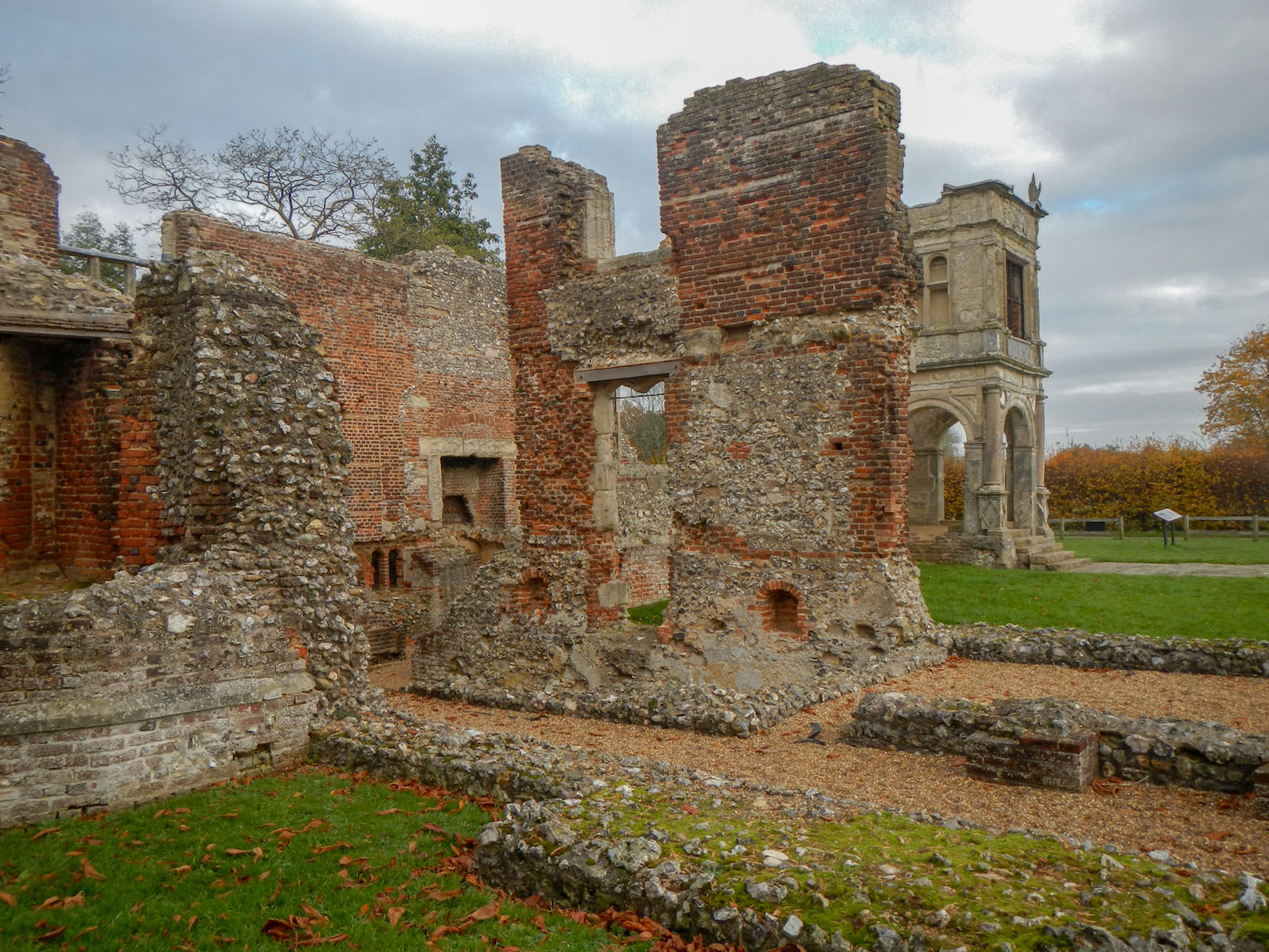
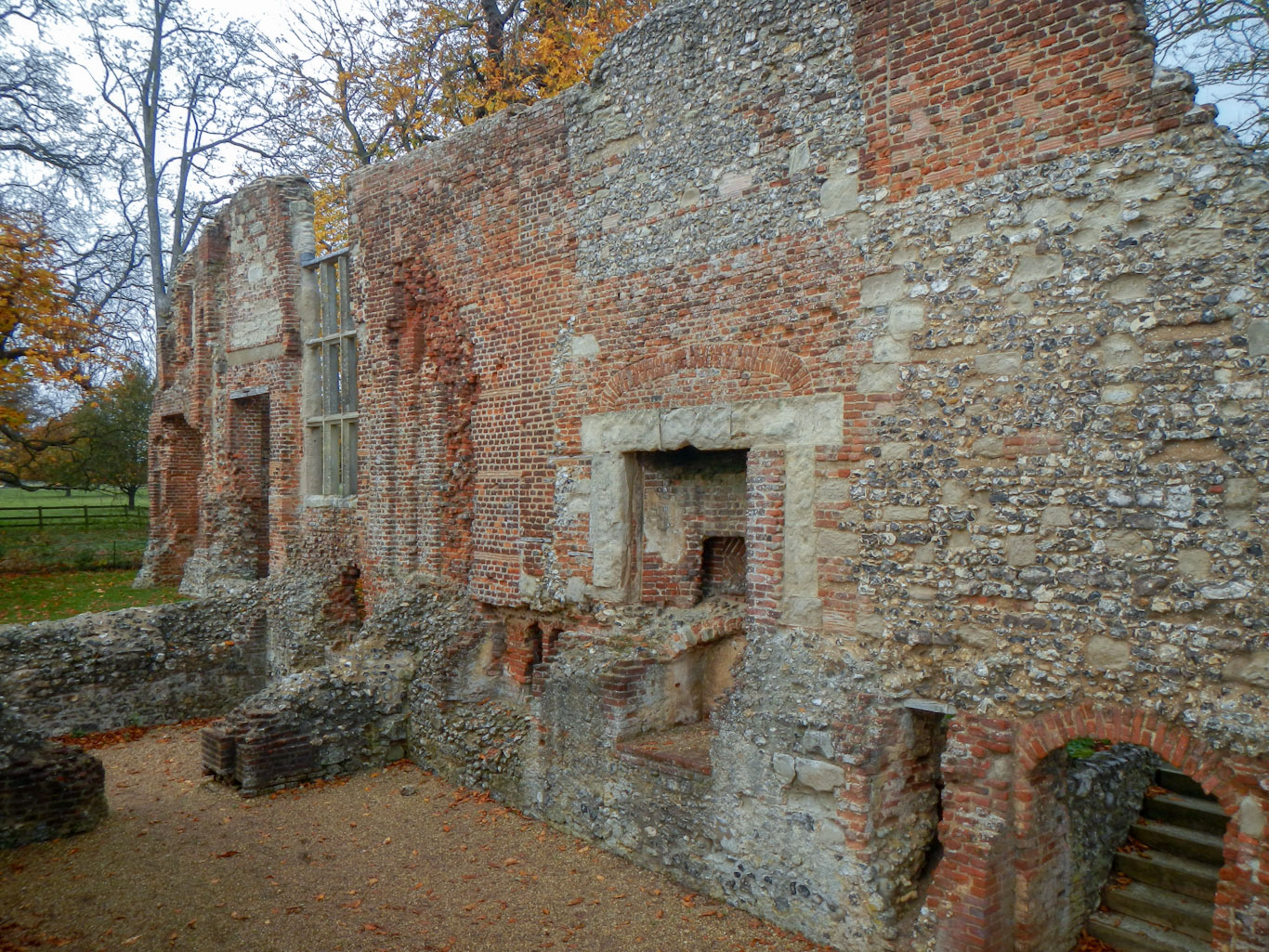
Several decades after Sir Francis Bacon had died, the house was bought by the Grimston family. Although initially extending it, the poor state of repair led the family to abandon it in 1784 to move into the new house built nearby, which is where the descendants live nowadays.
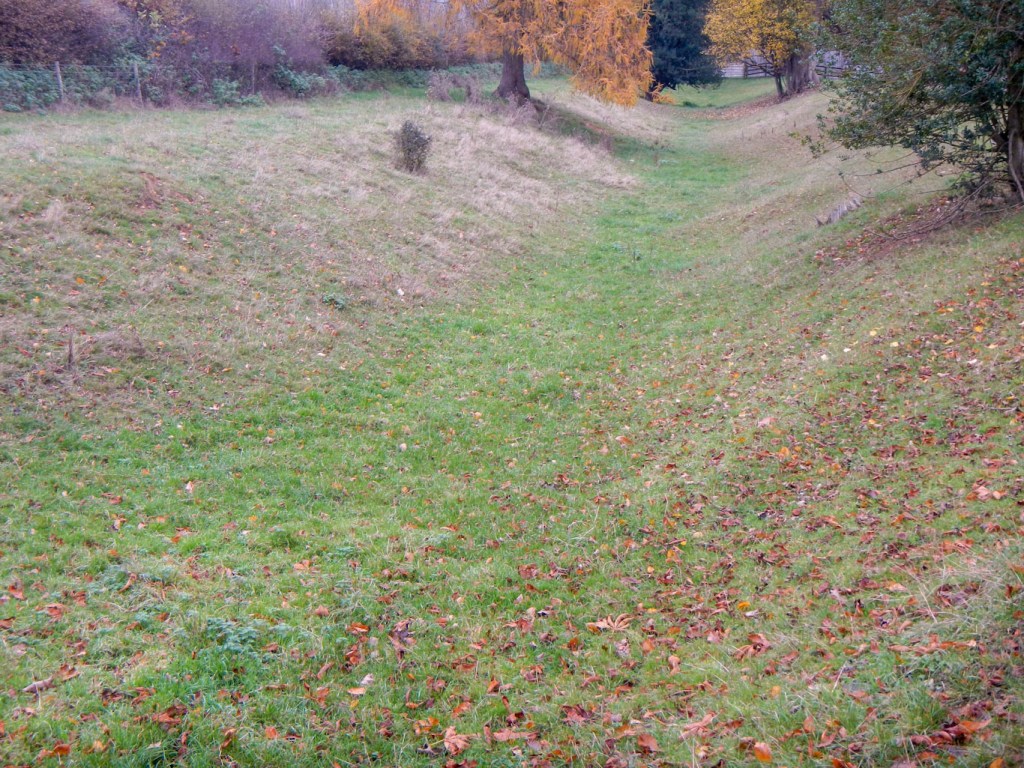
I walked back down the drive, noting a bank which I thought was of possible archaeological significance and was delighted to confirm on my map that it was indeed denoted as “Devil’s Ditch”.
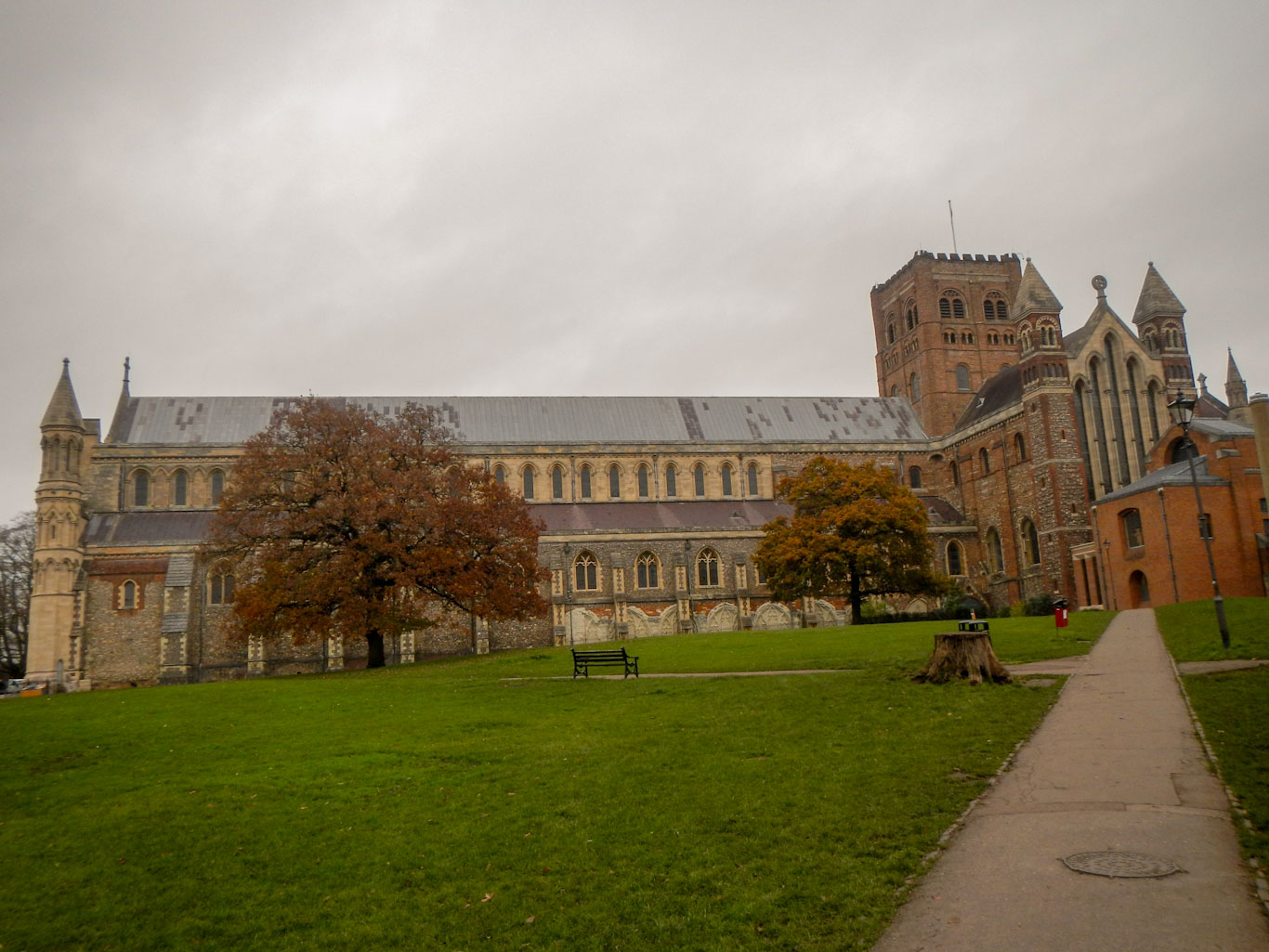
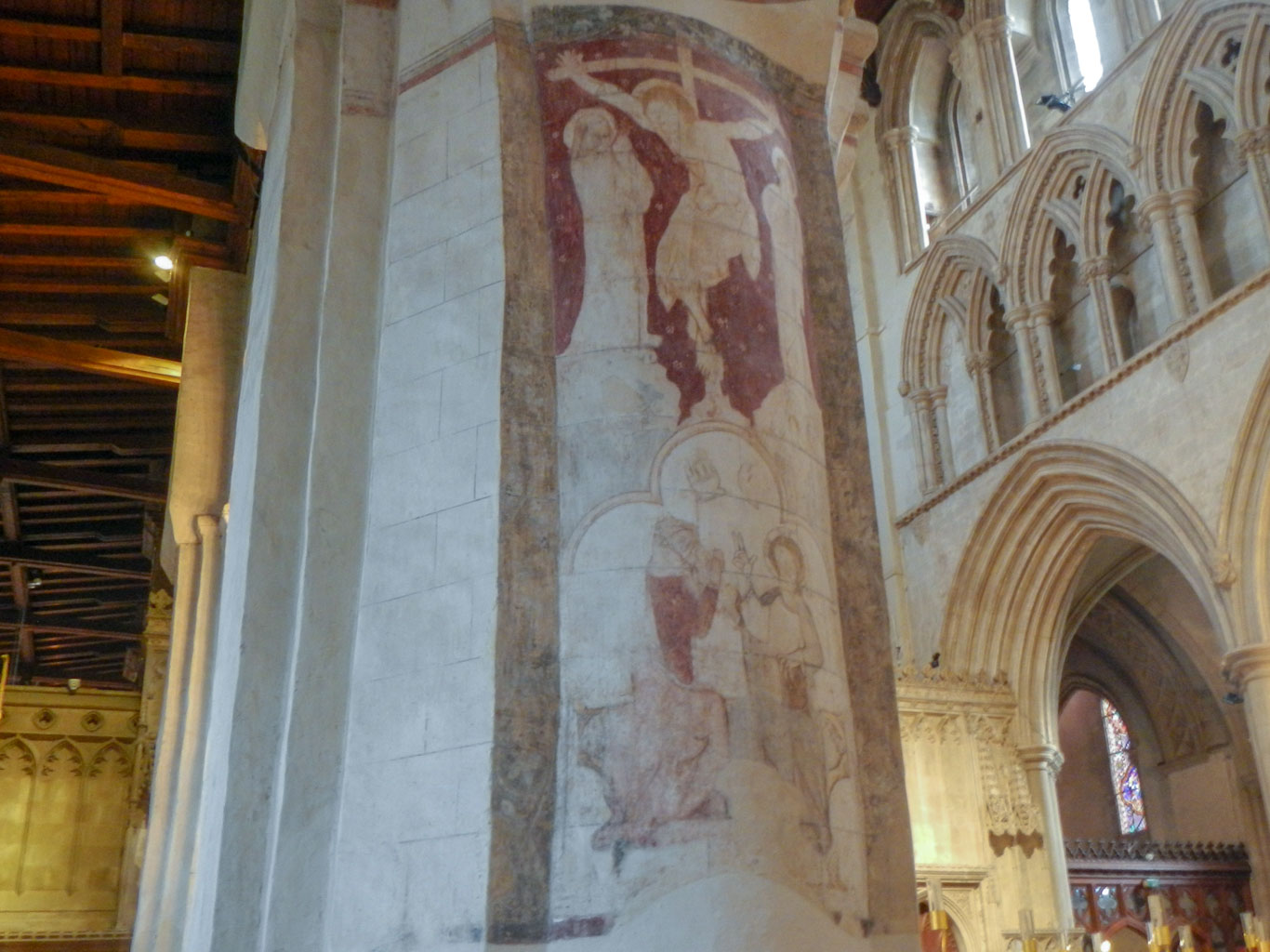
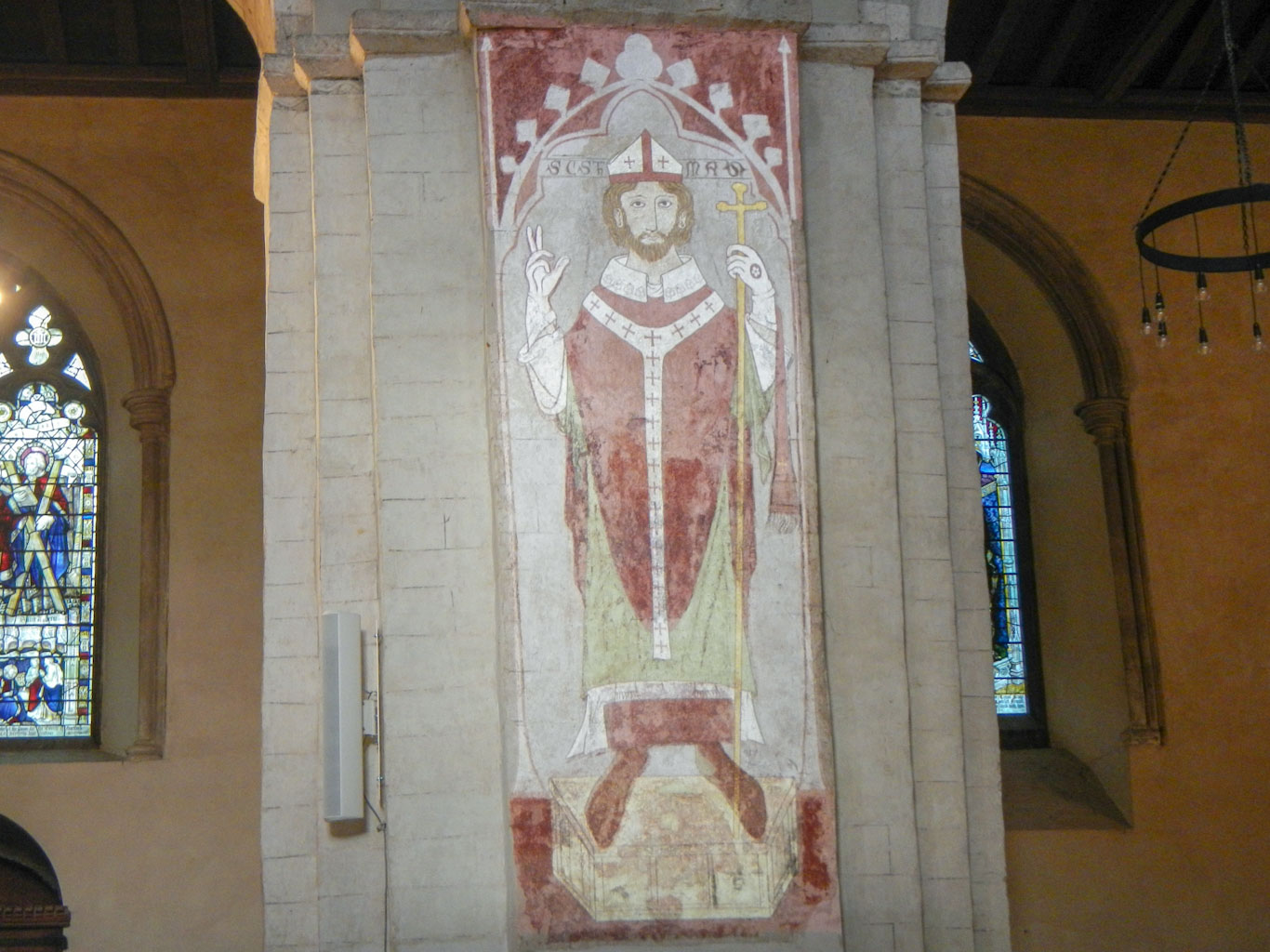
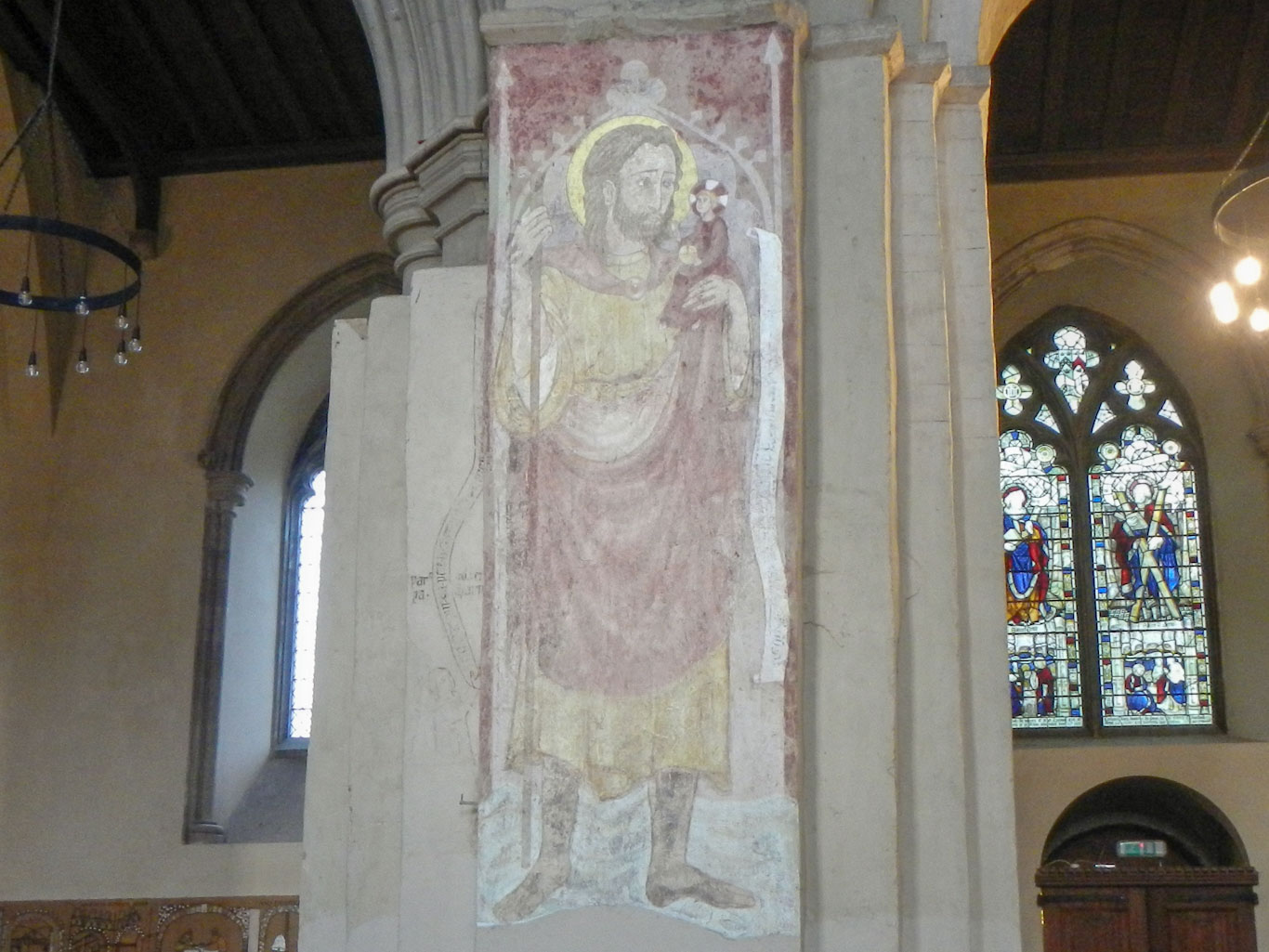
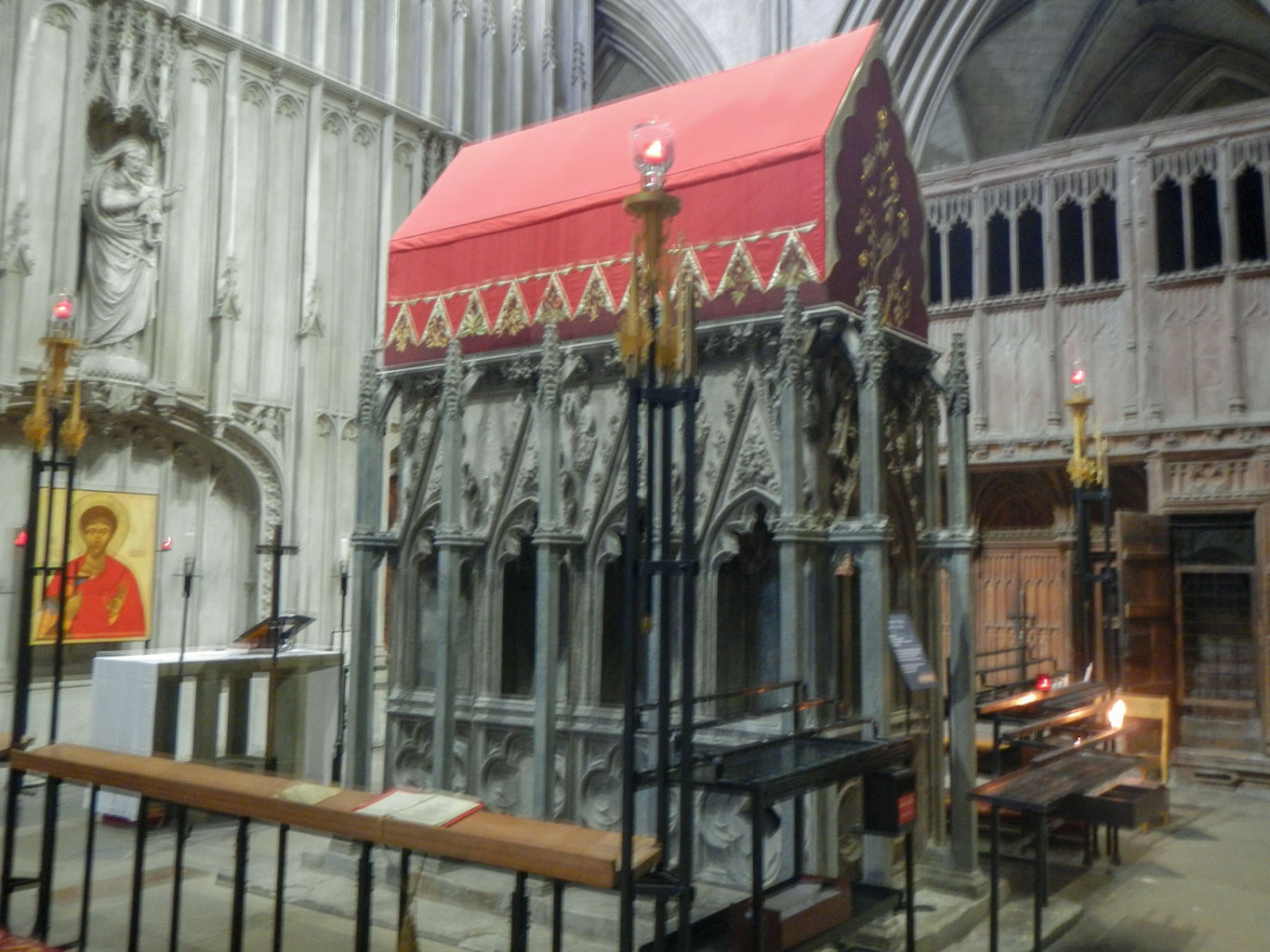
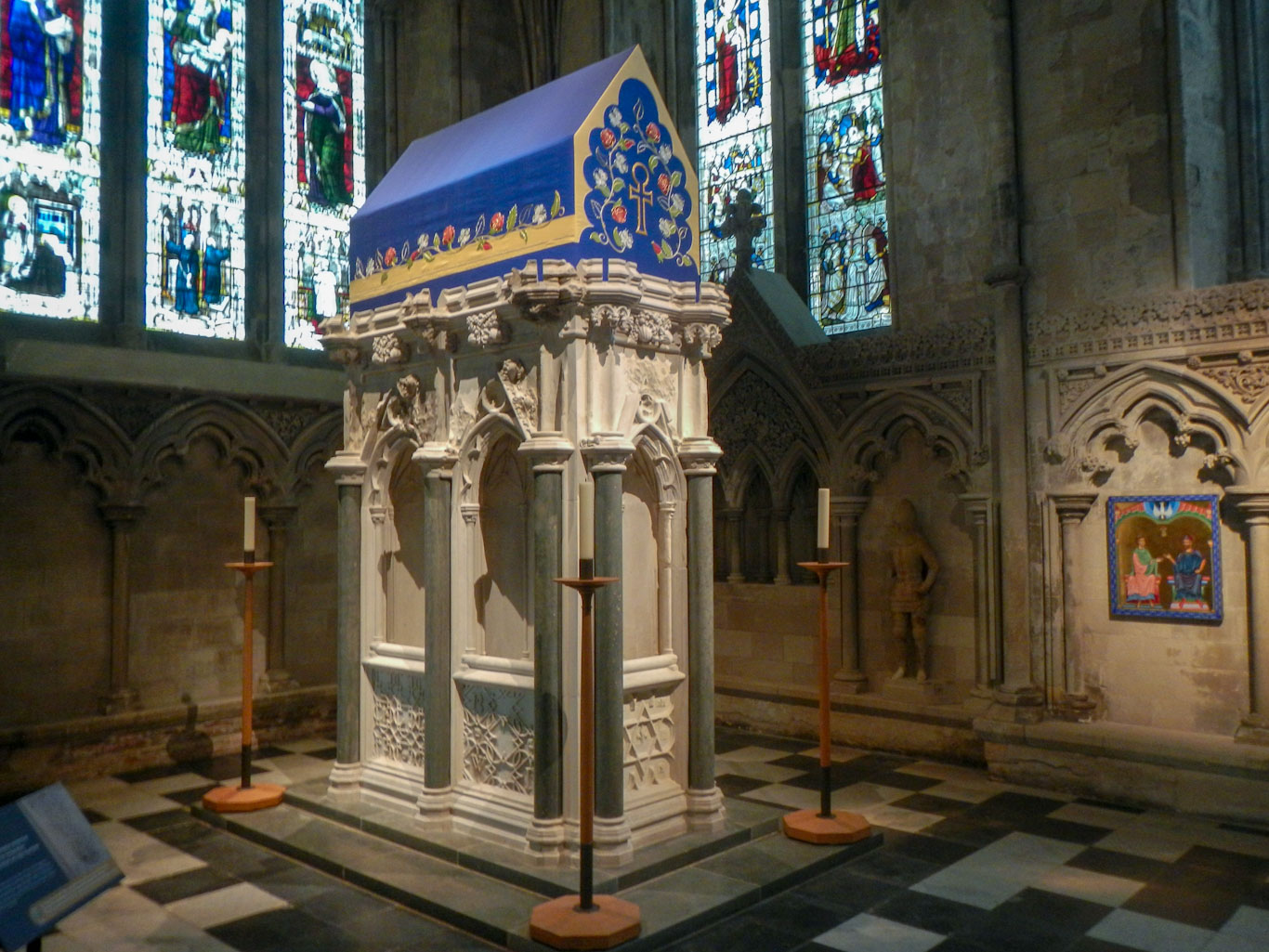
I returned to the City area to visit the cathedral. Notable features include the longest nave in any English cathedral (85m), impressive medieval wall paintings dating from 1215 and it is the only English cathedral to house two medieval pedestal shrines: St Alban – Britain’s first saint – and St Amphibalus.

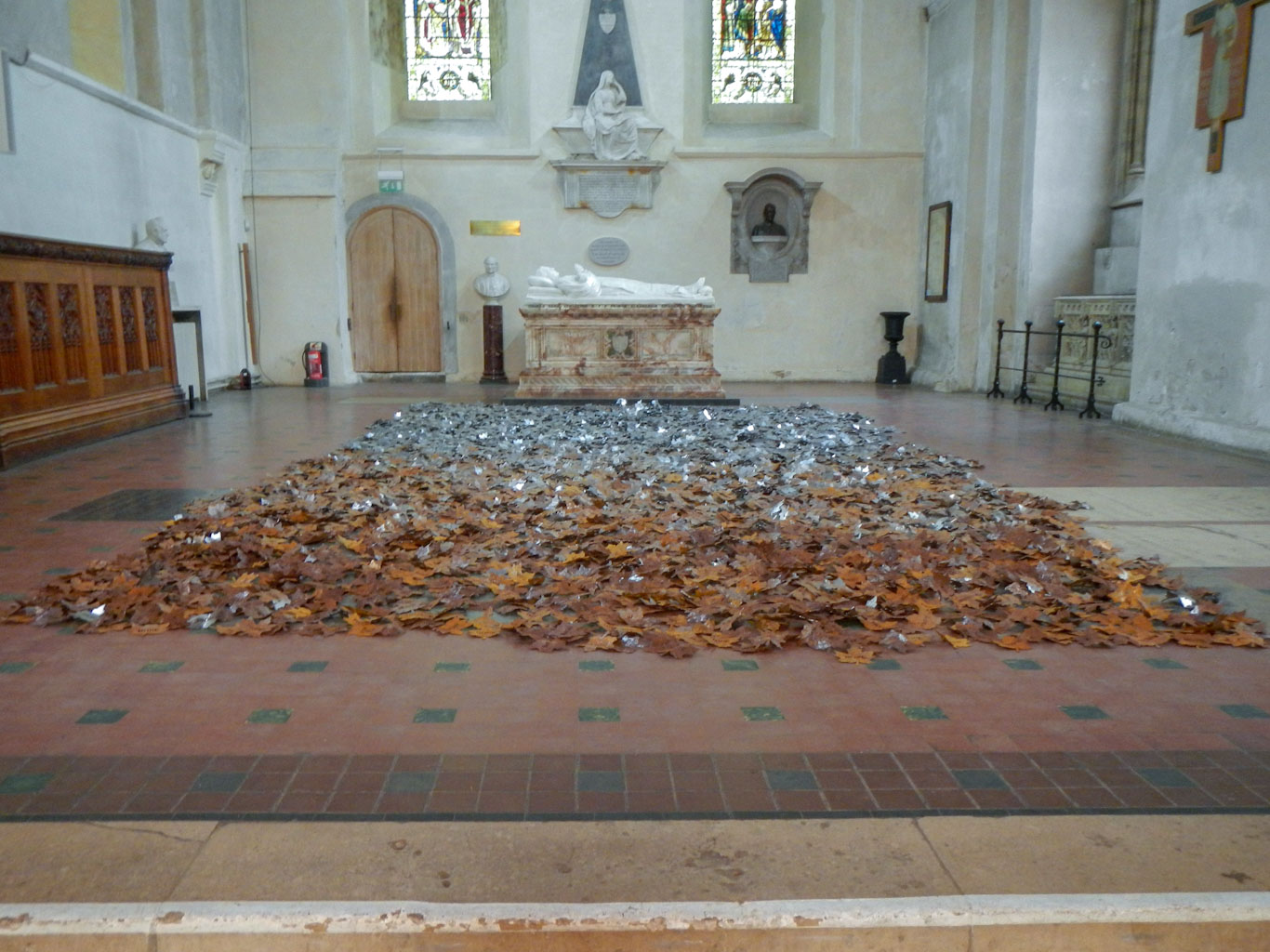
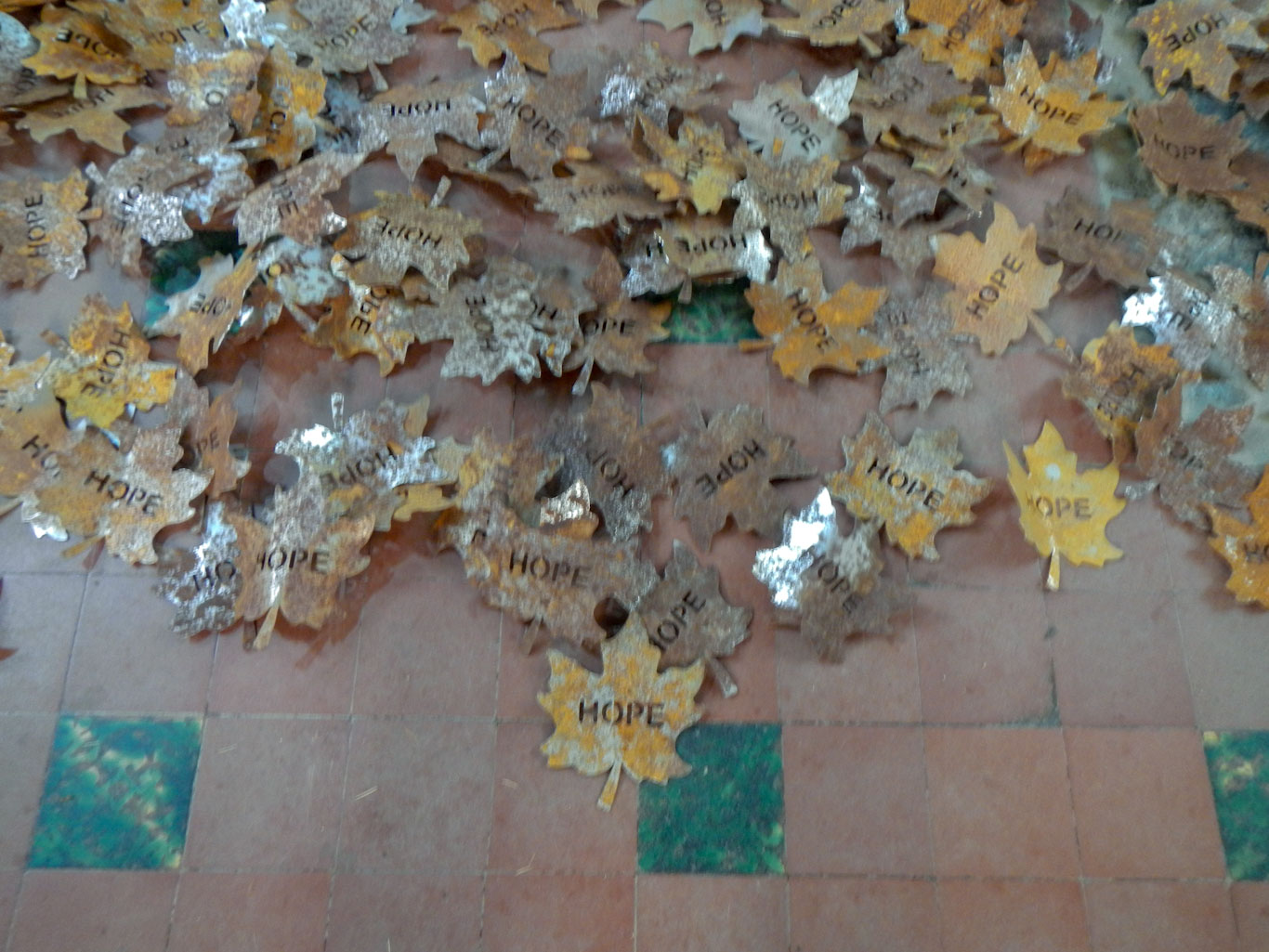
A further special feature at the time I visited was the “Hope” sculpture – “The Leaves of the Trees” designed by Peter Walker and visiting various venues round the country. It was conceived to honour those who have died during the Covid19 pandemic and consists of 5,000 leaves with the word “HOPE” on each. The steel from which each leaf is made symbolises our resilience and collective strength. The shape of a sycamore leaf denotes strength, protection, eternity and clarity, symbolising this period of time during Covid and our hope for the future.
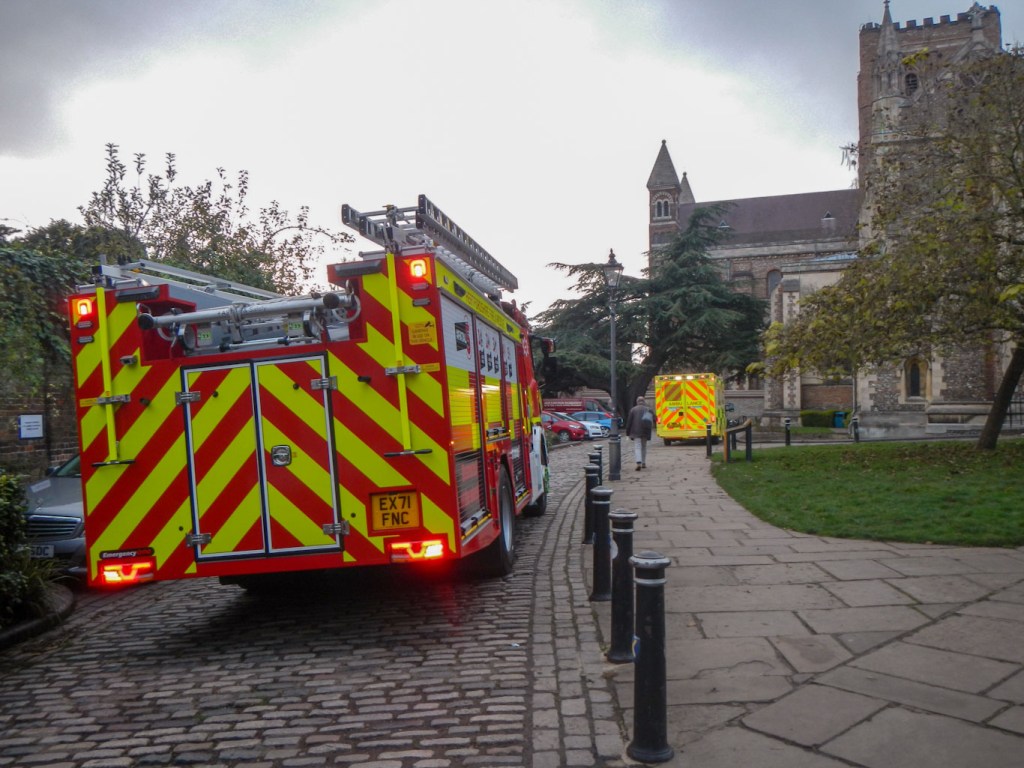
After my visit, I retired to the café next to the entrance for coffee and cake. Unfortunately the fire alarm sounded and we were all asked to evacuate the building. I left with my coffee. Eventually two fire appliances arrived to join the ambulance in front of the cathedral that had already been called to manage an elderly lady who had fallen in a prior separate incident. There was no panic – everyone assumed it would be a false alarm. Fortunately that was the case so I was able to return to the café and finish my cake – the best bits with lots of icing so I was pleased to get back!
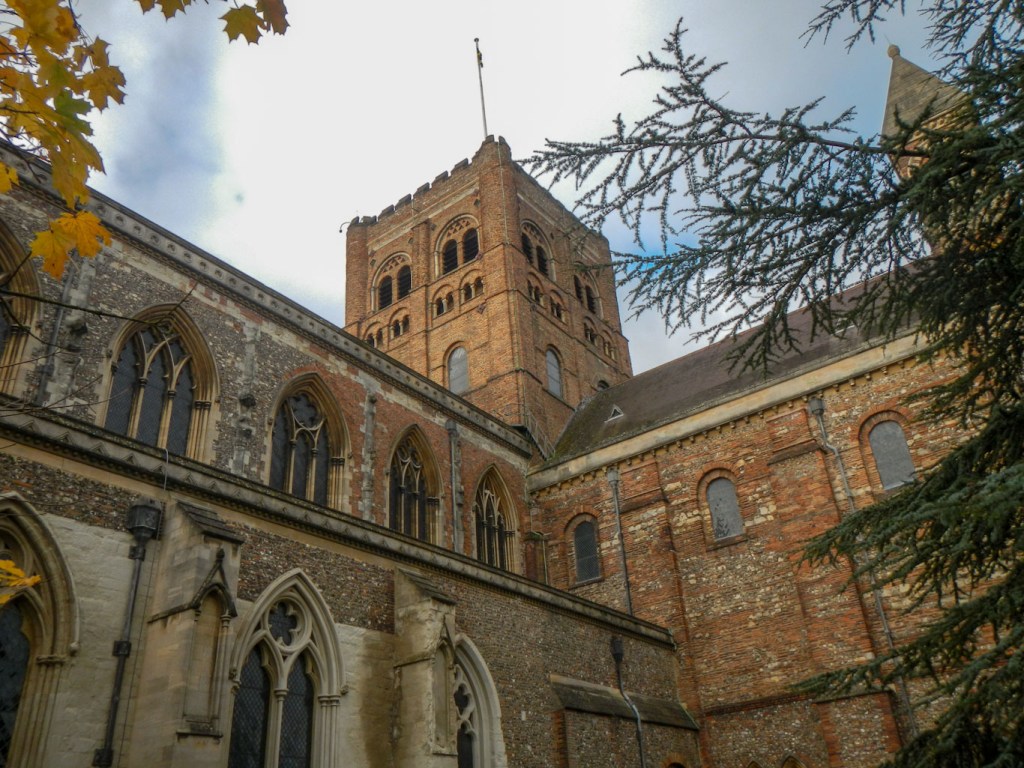
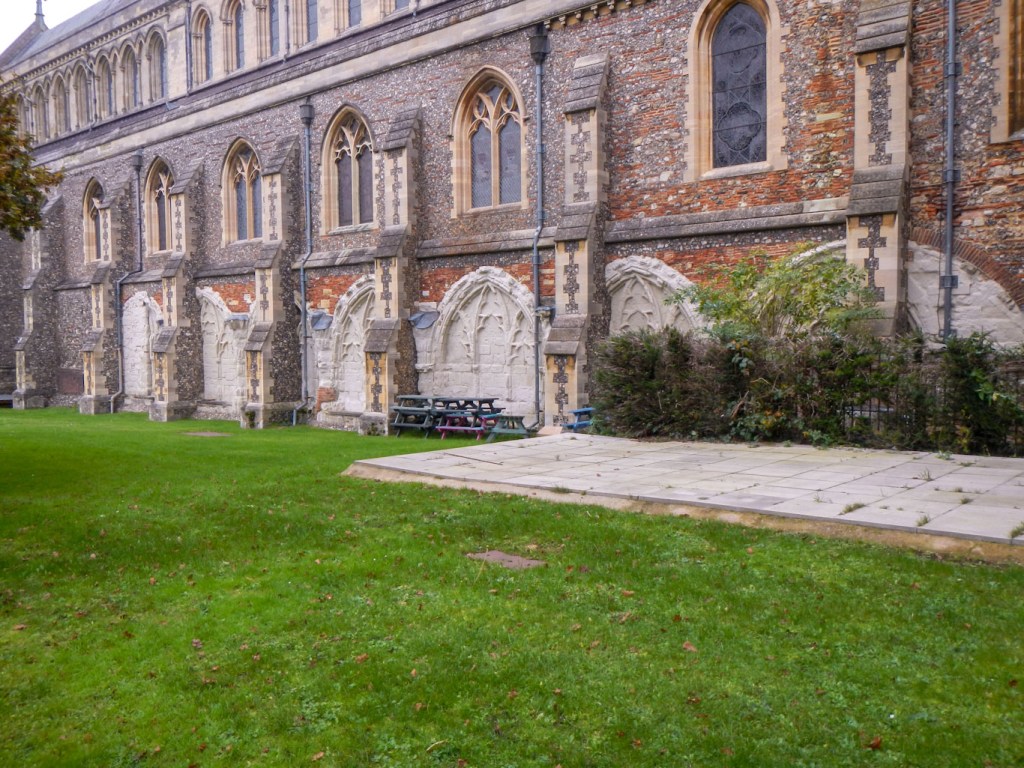
During our time outside, I noted a Cathedral Guide who had been leading a tour of the interior at the time of the alarm; with the utmost professionalism she continued to talk but about the exterior of the building as we waited to return into the Cathedral. The enforced time standing outside did give me plenty of time to look at the brickwork including all the Roman bricks which had been reused. I could also see the outline of the white stone cloister arches on the wall – a legacy of the cloisters of the medieval abbey on which the cathedral was constructed.
The false alarm was an unusual end to my fascinating day exploring this historic city – in particular the unique situation where the medieval city grew up on a separate location to the older Roman settlement which had been built on the earlier Iron Age settlement. Although many of the Roman bricks were removed to build the new settlement, this relocation did mean that Verulamium’s remains were relatively well preserved and readily accessible for archaeological excavation in the twentieth century.

 Where's Kathryn?