It seems ironic that I look around to buy ever lighter (which usually means more expensive) equipment and then have to pack a considerable quantity of food depending on how many days I will be away without access to shops. Given the amount of energy expended on a backpacking expedition, this needs to provide a high energy intake. Many backpackers spend a considerable time looking at energy content per gram of food. For any hot food there is also the consideration of cooking time – ideally food that just needs to reach the temperature and does not need simmering is preferable in order that it is not necessary to carry large amounts of stove fuel. Over the years I have tweaked what I take and I am sure this will go on changing as I discover new options.
I’ve got a very light stove to use with a titanium pot but it is unstable. I like my other stove which is more stable and works better in the wind. It’s a bit more bulky although all the components do nest together but it is quite a lot more heavy.
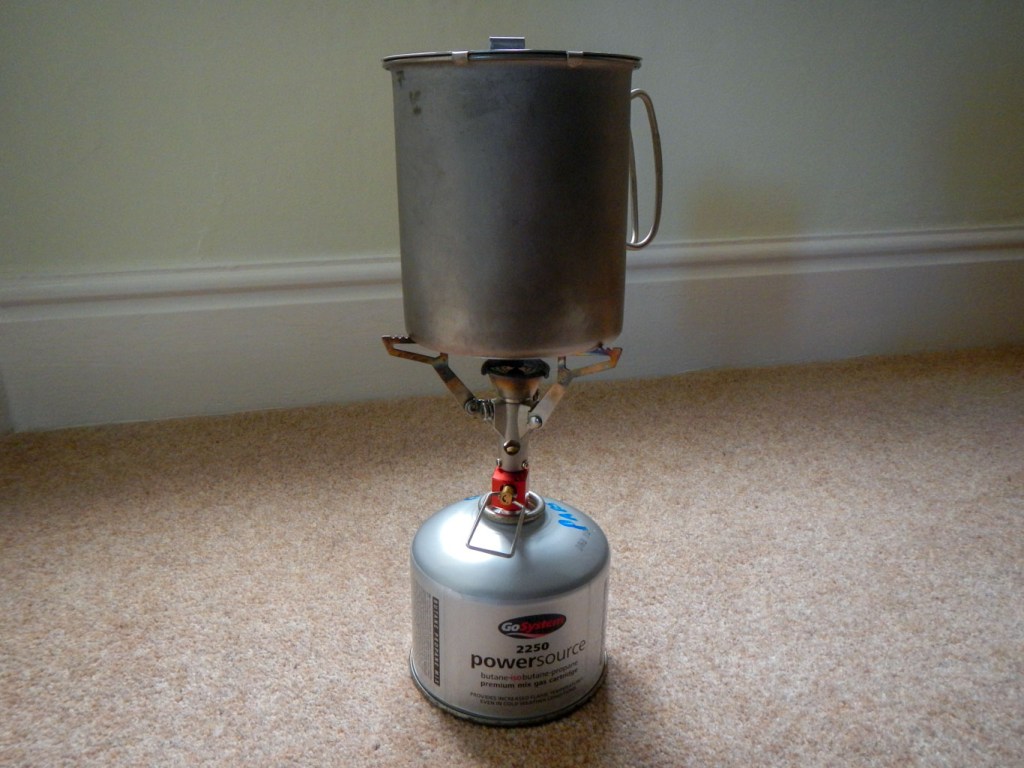
Very lightweight with titanium pot but a bit unstable 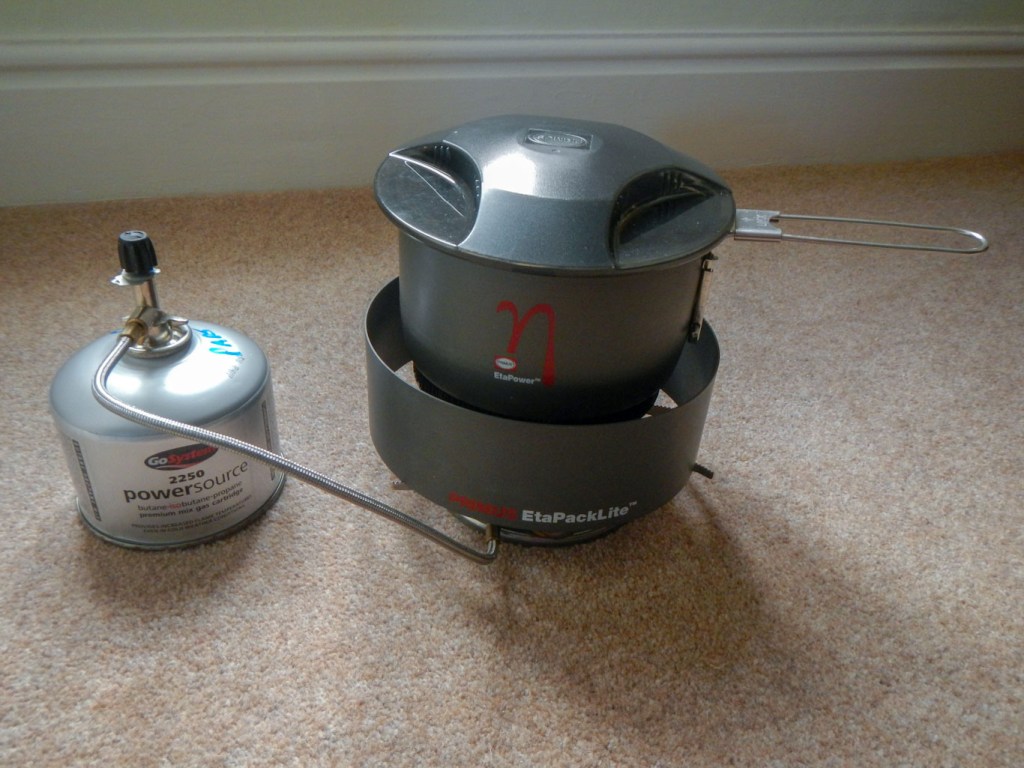
A heavier option but more stable. Good wind shield reduces fuel use
In terms of buying food, it’s amazing how many shops are open early in the morning and late in the evening even in very rural locations. Co-op is particularly good. I also like to support community shops if I pass through a village and see one open – there’s a superb one at Cockburnspath near the end of the Southern Upland Way and they even gave me a free cup of coffee when they found out I’d just completed the trail. When I camped at Inverie on Knoydart, I frequented the village shop on a daily basis.
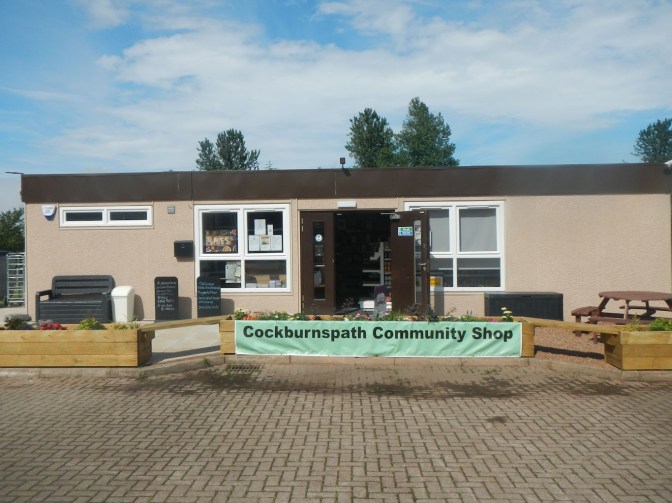
Cockburnspath Community Shop 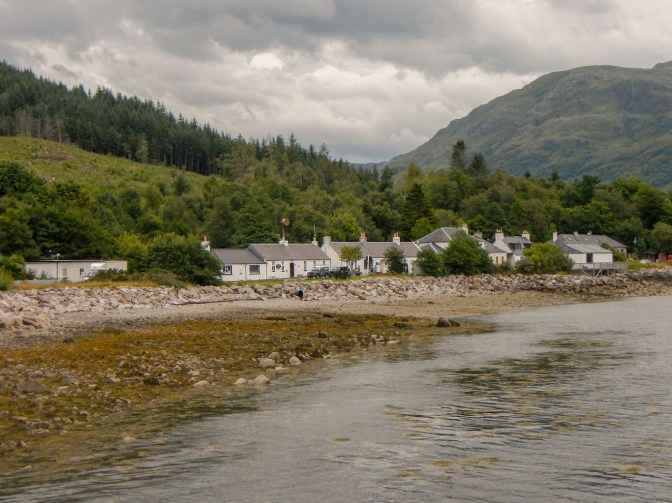
Inverie Village with Shop
Breakfast:
Instant porridge in sachets – just add boiling water. I usually have 2 or 3 sachets each day. A sachet of instant custard powder can be added to the mix adding to the flavour and the calorific value. Foraging for wild fruit – bilberries, blackberries etc. is possible and these can add some more flavour and vitamin content. However you need to be sure that you know what you have picked before you eat them to avoid being poisoned!
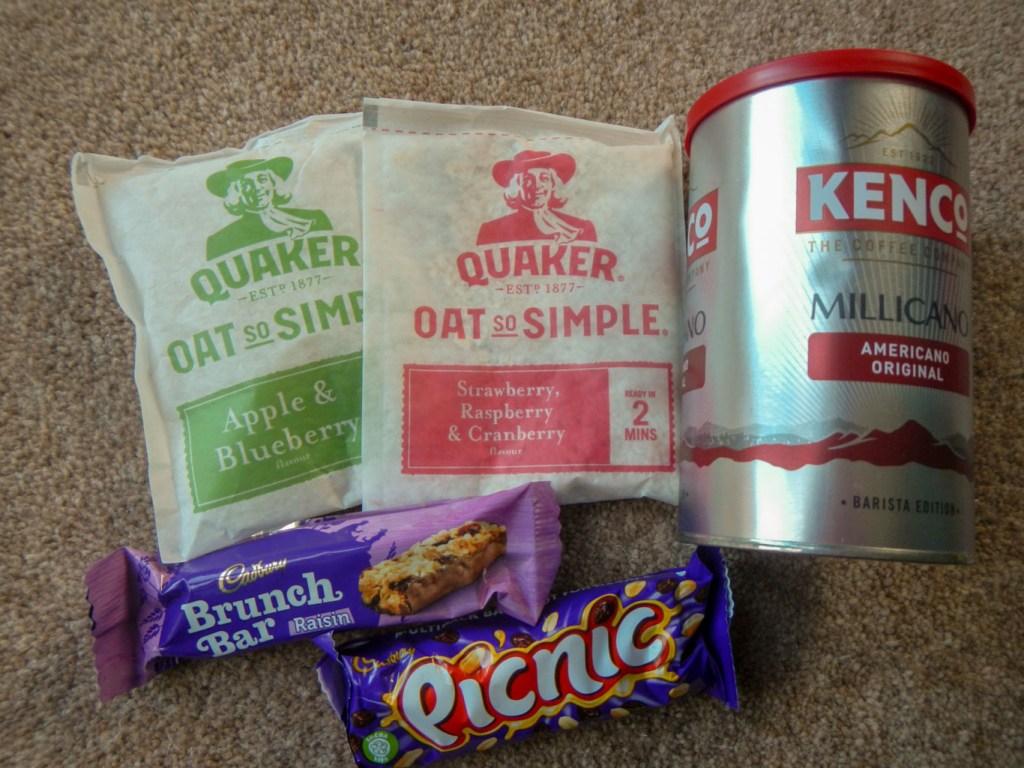
Breakfast 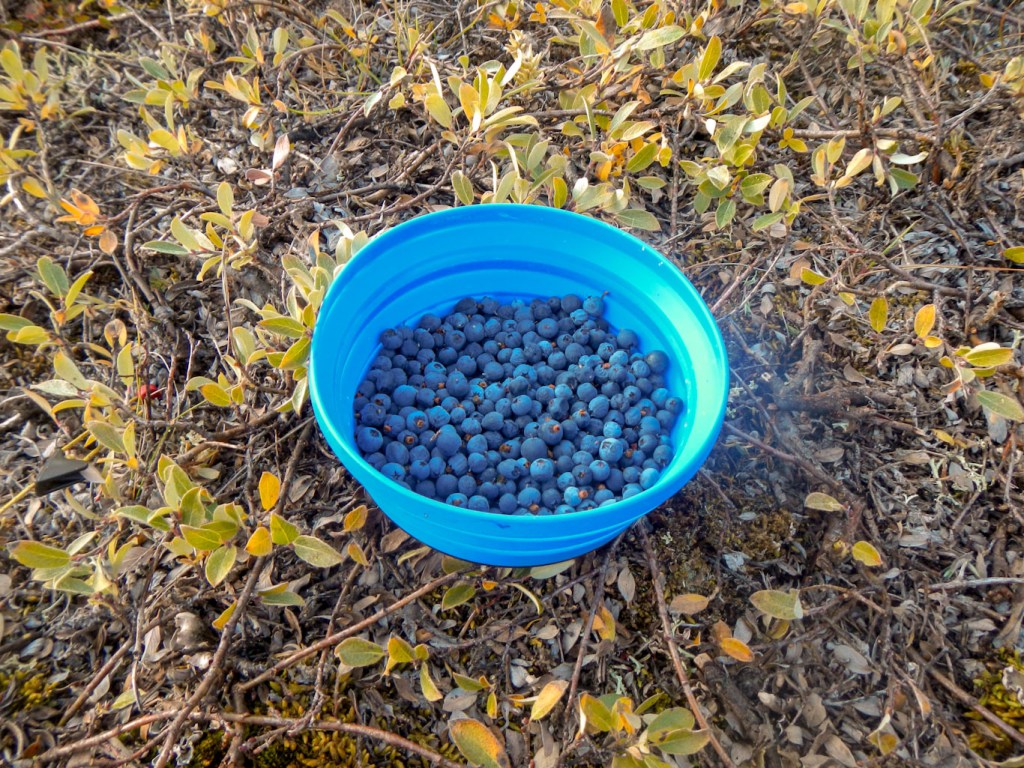
Blueberries on the Arctic Circle Trail – Greenland
Instant coffee – I use either sachets or a 100g tin. (or tea bags if tea preferred).
Chocolate or cereal bar.
Lunch:
Oatcakes.
Cheese spread in tubes.
Chocolate or cereal bars.
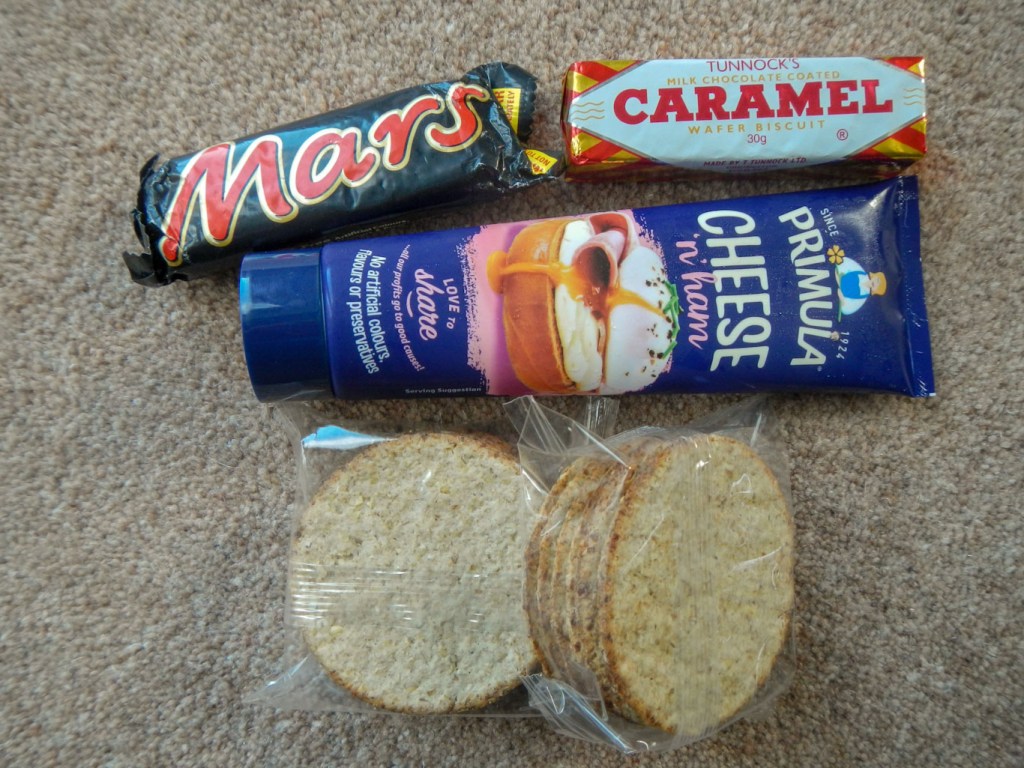
If I am in or passing a place with a shop near the time I will be eating then of course I would buy bread / sandwiches / fruit or even a special item like a sausage roll or pork pie.
Cafes can pop up in the most unexpected places and I often pop in for a special treat. For example I have particular memories of Ravenseat Farm in the Yorkshire Dales for a cream tea (that’s where the Yorkshire Shepherdess is based!) and of the café next to St Mary’s Loch on the Southern Upland Way.
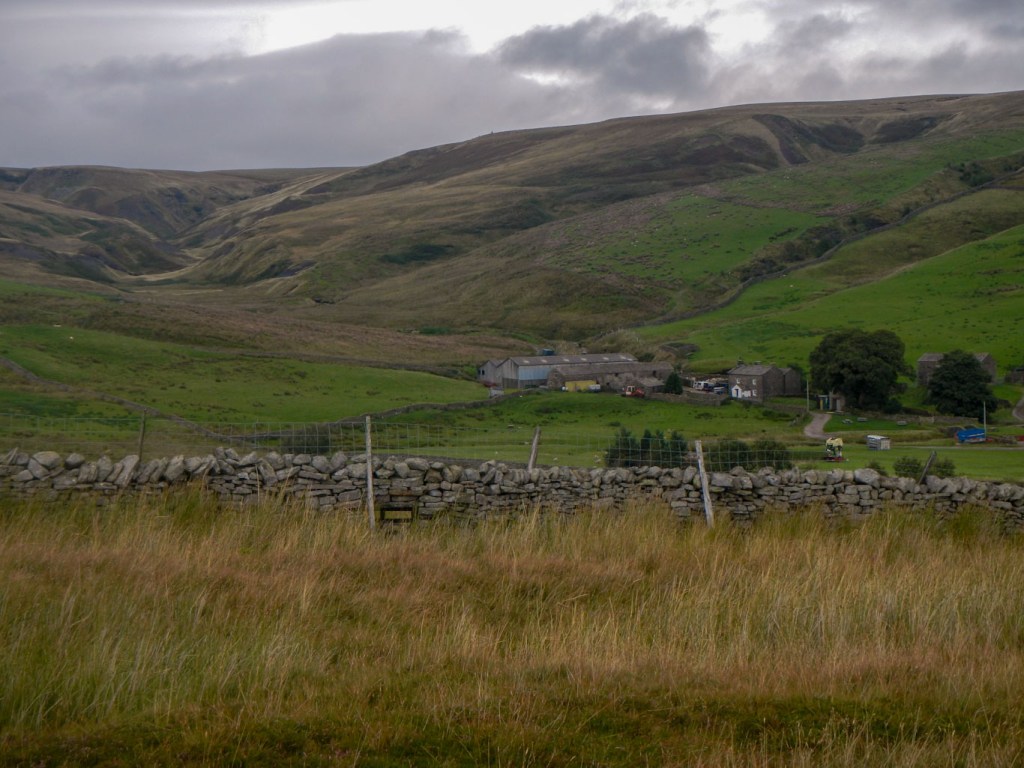
Ravenseat Farm 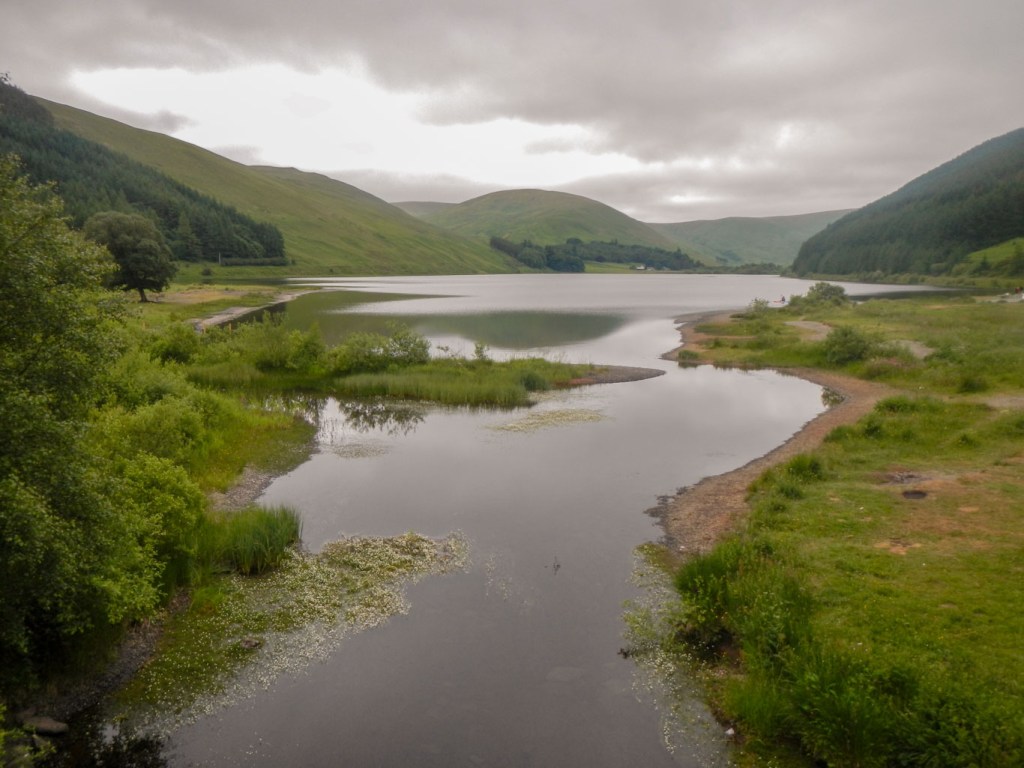
St Mary’s Loch
Dinner:
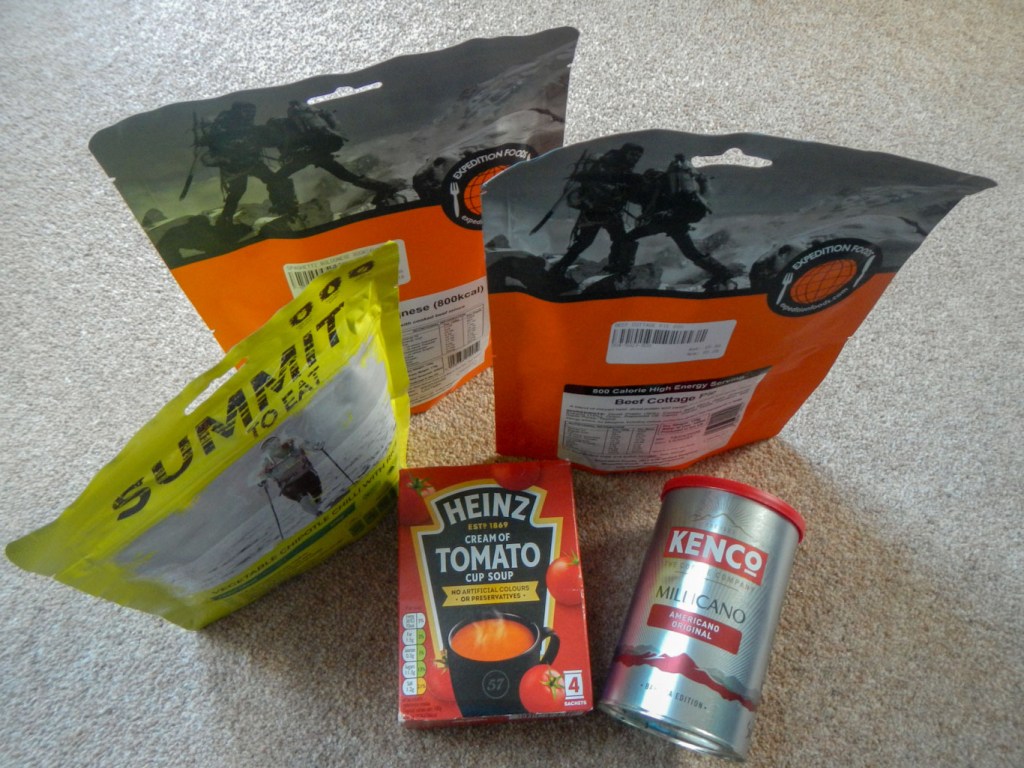
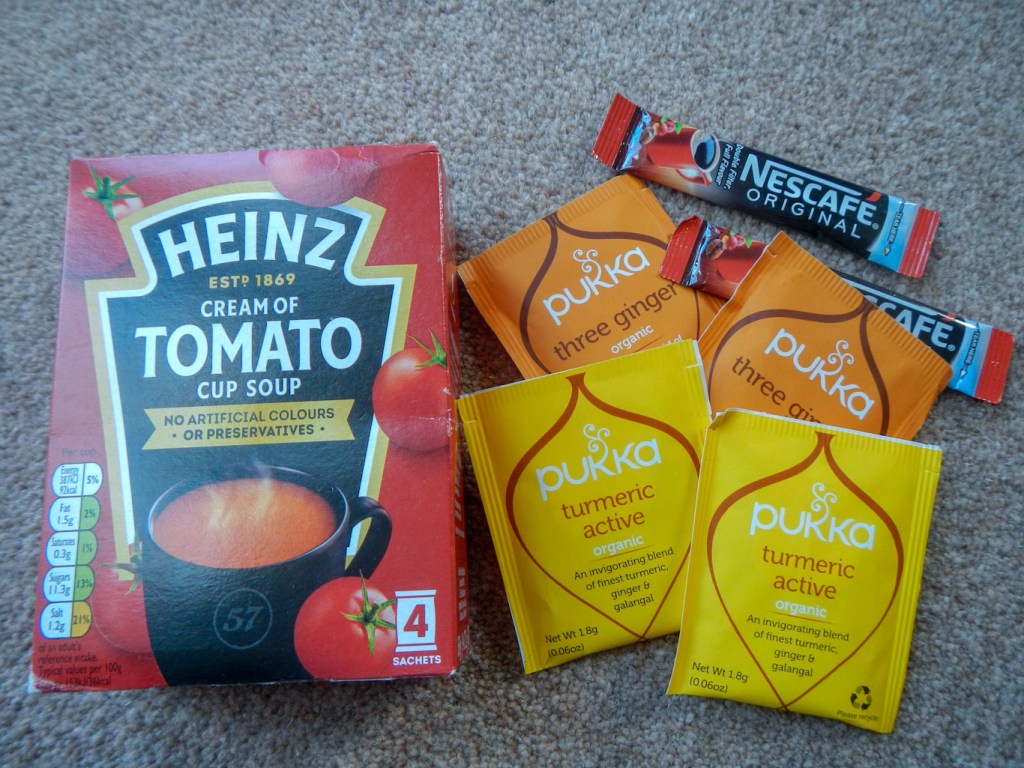
Instant soup in a cup to start.
Commercial freeze dried meals made by adding boiling water, waiting 5-8 minutes and eating from the bag – many options with calorific values ranging from around 500 to 1,000 calories -e.g. Summit to Eat, Expedition Foods, Adventure Food. These are relatively light to carry, the packaging isn’t at risk of breaking in the rucksack and they are quick and easy to prepare. However they are expensive and on a long expedition to top up supplies they are available only from outdoor shops and not from supermarkets and village shops. If you run out of fuel, they can be rehydrated with cold water but it takes longer – I’ve not tried this and suspect it isn’t pleasant but at least it’s food!
Couscous is sold in sachets and with different flavours.
Noodles sold in sachets and with flavourings.
Quick cook rice in sachets and with flavourings.
Quick cook pasta in sachets and with flavourings.
These carbohydrate options are usually available even in small village shops. I add a protein source – options include ready prepared grated cheese, tinned tuna, tinned meat, dried soya chunks. Fresh cooked meat or fish is a possibility if eating it the same day and so there isn’t a need to refrigerate it. Clearly the precise items purchased depend on what’s available and there’s often not much choice.
Remember that some supermarket dried meals like Vesta foods need quite a long simmer so it isn’t a good plan to buy them as you will need to use a lot of fuel to cook them.
Also remember if buying tins that, like all rubbish, you will need to carry it out until you find a rubbish bin.
Instant custard powder sachets. If it isn’t far to carry it then buy some fruit to eat as well soon after any shopping expedition.
Instant coffee as at breakfast. I usually carry some decaffeinated sachets to use if I am drinking it soon before bedtime. Tea bags or herbal tea bags also easy to carry.
Snacks:
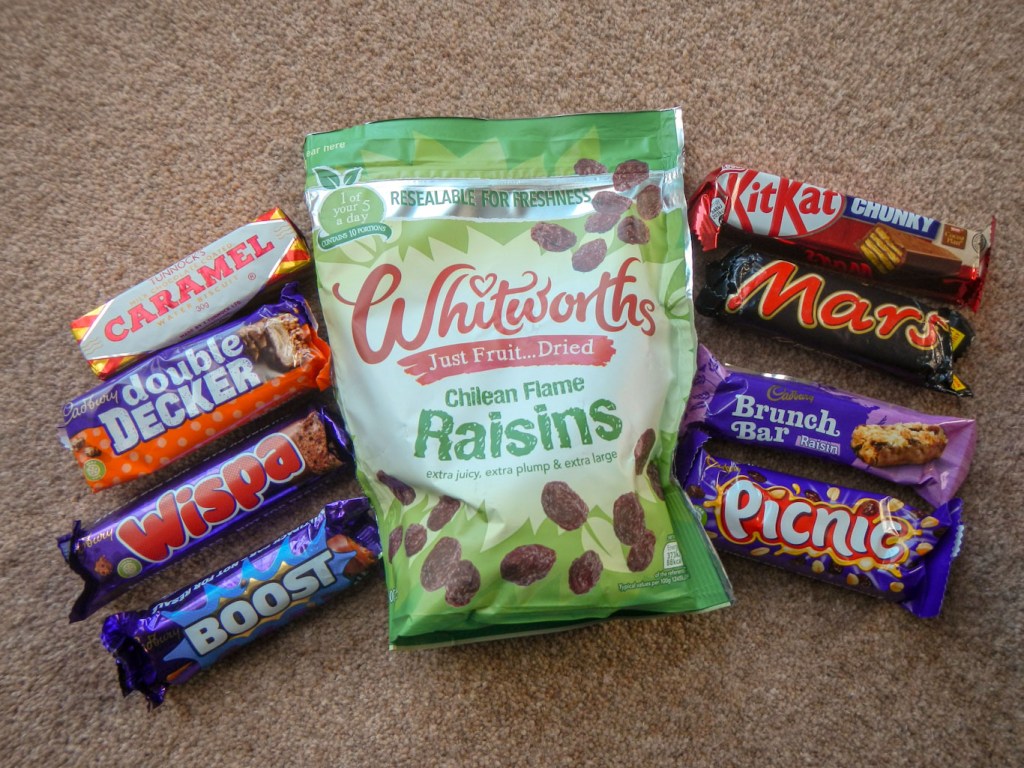
Chocolate, assorted chocolate bars and caramel wafers as long as it’s not hot weather and I can avoid them melting.
Cereal bars.
Meat jerky.
Dried fruit.
I find it’s best to look at my food stock each evening and move what I am planning to eat over the next 24 hours into a separate bag. That reduces the number of times I am opening my longer term food storage bags and reduces the risk of damaging the packaging. It is also a good way to make sure that I keep a daily stock take so my food will last until the next time I can buy some more or conversely that I don’t buy too much and just carry it home.
Nowadays many shops and cafes are very willing to refill a water container, which is helpful. I’ve only asked when I have bought something and not been refused yet, even during the pandemic. Some of the long distance trails such as the South Downs Way and the Ridgeway have intermittent public drinking water taps which are marked on the Harveys trail map. However these aren’t places where it’s permissible to wild camp and, as I usually start with two litres, I have sufficient for the day unless it’s very hot weather. In terms of stream water, I know that some people are confident to drink it straight from the stream. I do always use sterilising tablets – chlorine dioxide or chlorine, following the usage instructions on the pack – as there seem to be some animals however high up you are. Various filter systems are a non chemical alternative.
Ultimately, it’s possible to take virtually anything to eat as long as you are content to carry it, have the means to cook it, and can carry out all the rubbish. For example, I have noticed many people carrying beer over the hills and moors whereas I am happy to forgo the alcohol and just enjoy my beer when I’m near a pub or shop in the evening. The above is very much a personal choice and everyone will have their own parameters as to how much they carry and the type of foods that fit into that weight range.
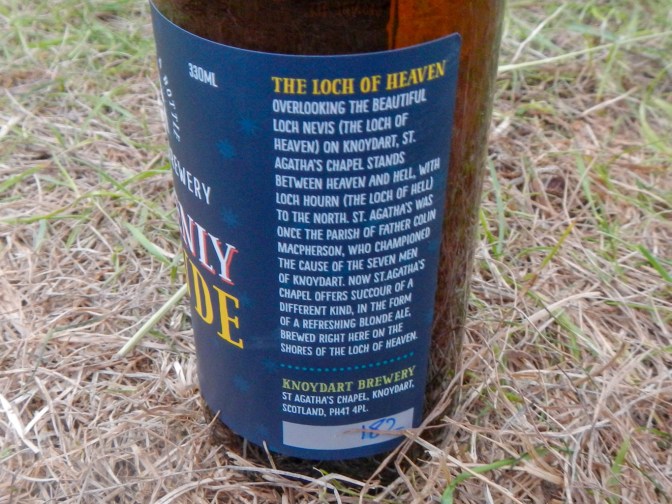
Knoydart Brewery 
Knoydart Brewery 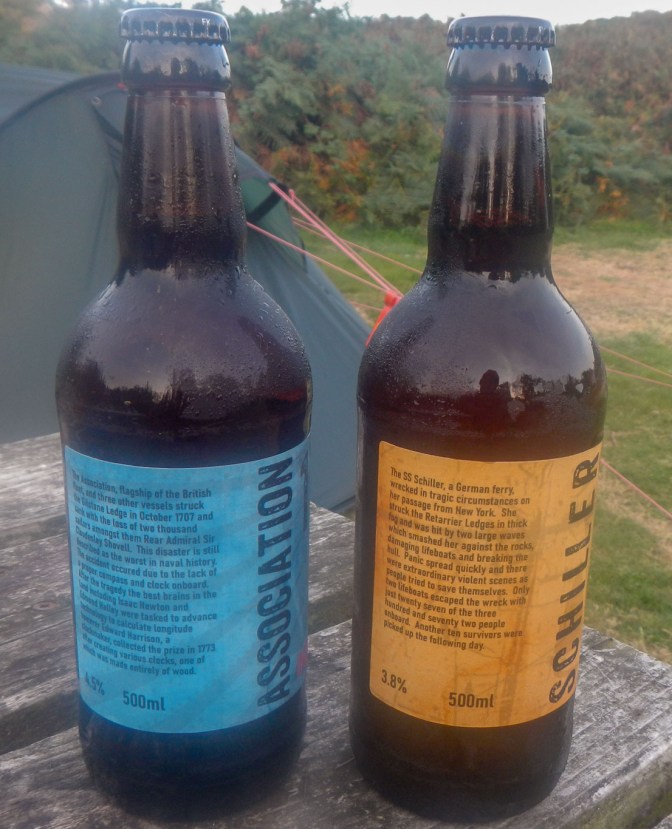
Local Isles of Scilly Beer

 Where's Kathryn?