6 October 2021
I caught a packed train with standing room only from Nuneaton to Birmingham New Street – totally my fault as there really wasn’t any need to reach Birmingham before 09.00 when I only had about sixteen miles or so to walk on what would be good flat paths with little route finding difficulty. As I waited at Nuneaton, I noticed several long freight trains of shipping containers passing through – in the absence of rail (and good roads), this type of transport would all have relied on the canals in the past.
Once arriving at Birmingham New Street, the station was spacious, pristinely clean, modern and, surprisingly for a railway station, exuded a feeling of being a calm place. I sat on a seat and took my time to set my Satmap – which of course I didn’t actually need for finding the way along a canal towpath.
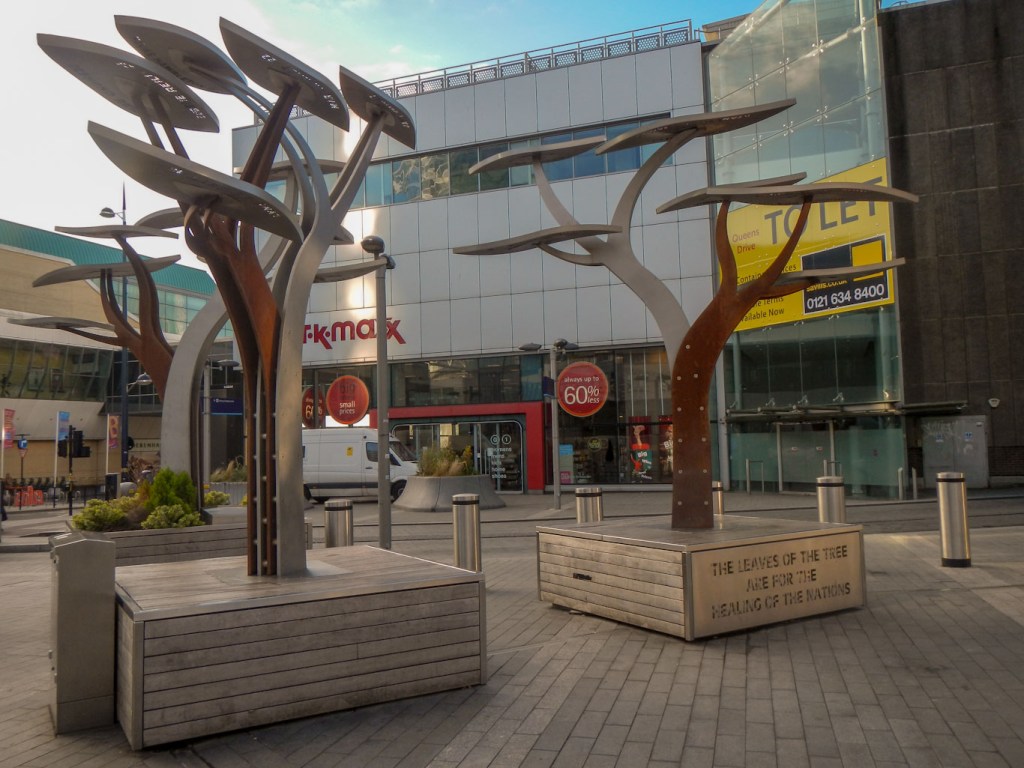
Once out of the station, I was overwhelmed – many huge modern buildings, interesting sculptures, large illuminated signboards and spacious squares. Not really knowing which exit to pick, typically I was diametrically opposite the place I needed to be and had to wander around what could have been loosely described as the perimeter of the station. Lots of building work is still going on especially in Victoria Square and near the tram lines. Some of this appeared to be in preparation for the 2022 Commonwealth Games.
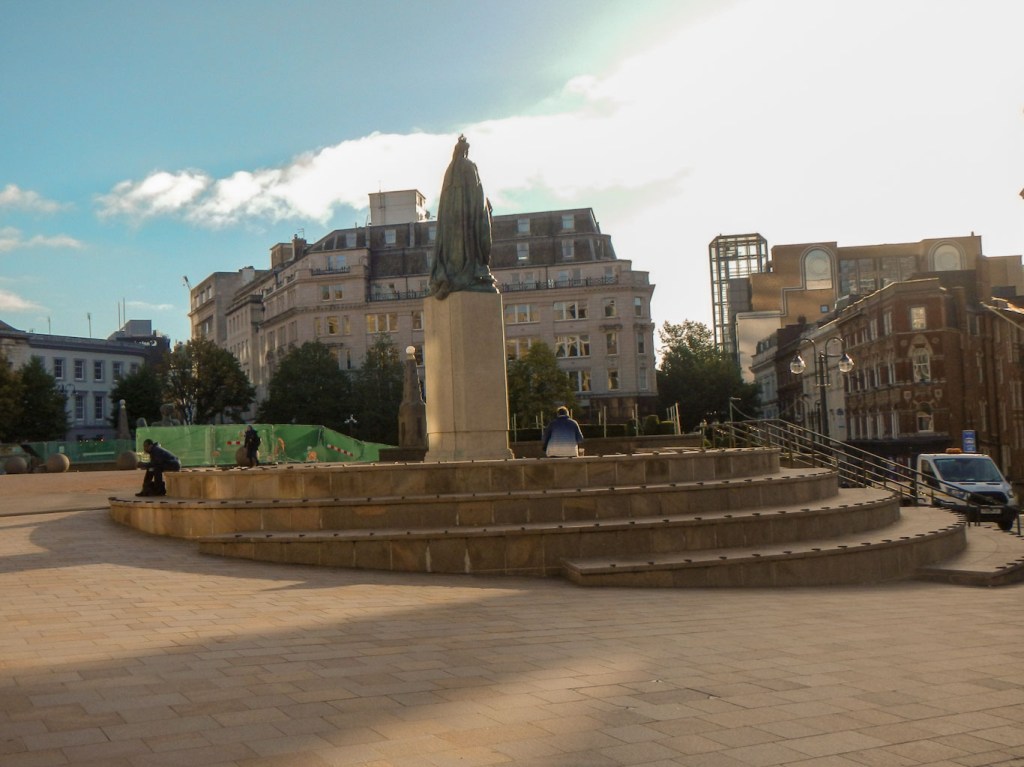
Victoria Square 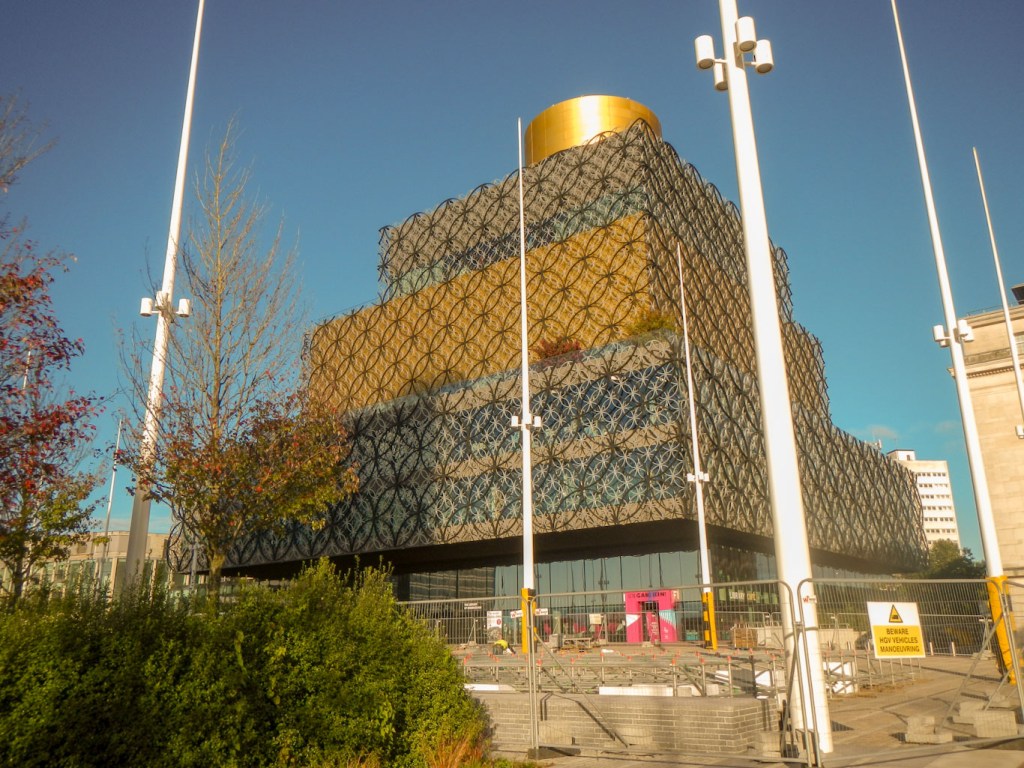
Huge building works
I spotted the Birmingham City Library and the International Conference Centre. I was just wondering how I would ever find the canal, when I arrived on a bridge and saw a canal below me. The impressive Black Sabbath Bridge is a tribute to the Birmingham superstar heavy metal band of the same name. A bench on the bridge means fans can sit next to their heroes.
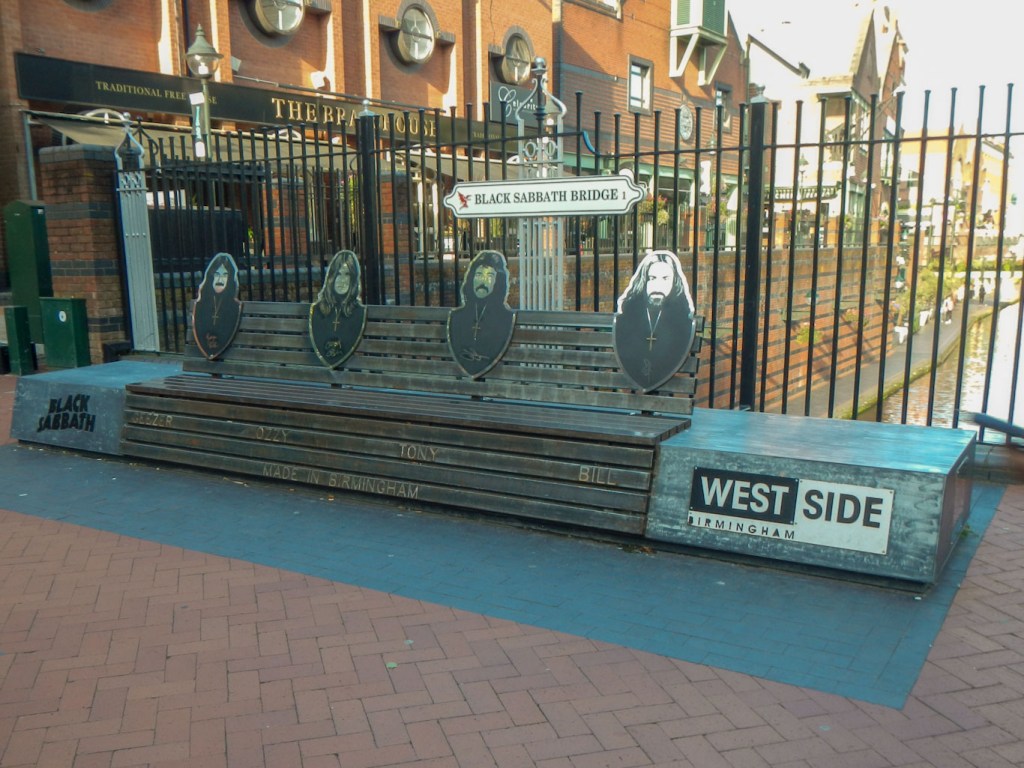
Anyway, I was there for the canal, not for Black Sabbath so I descended the steps with little delay, discovering that Birmingham brands itself as the “New Venice” but eschewing the opportunity to take a guided narrow boat ride. A large canal junction followed and the sign stated it was 13.5 miles to Wolverhampton, leaving me in no doubt as to my route. The only decision was which side of the canal to walk as at that point there was a tow path on both sides. There were several moored narrow boats and one underway.
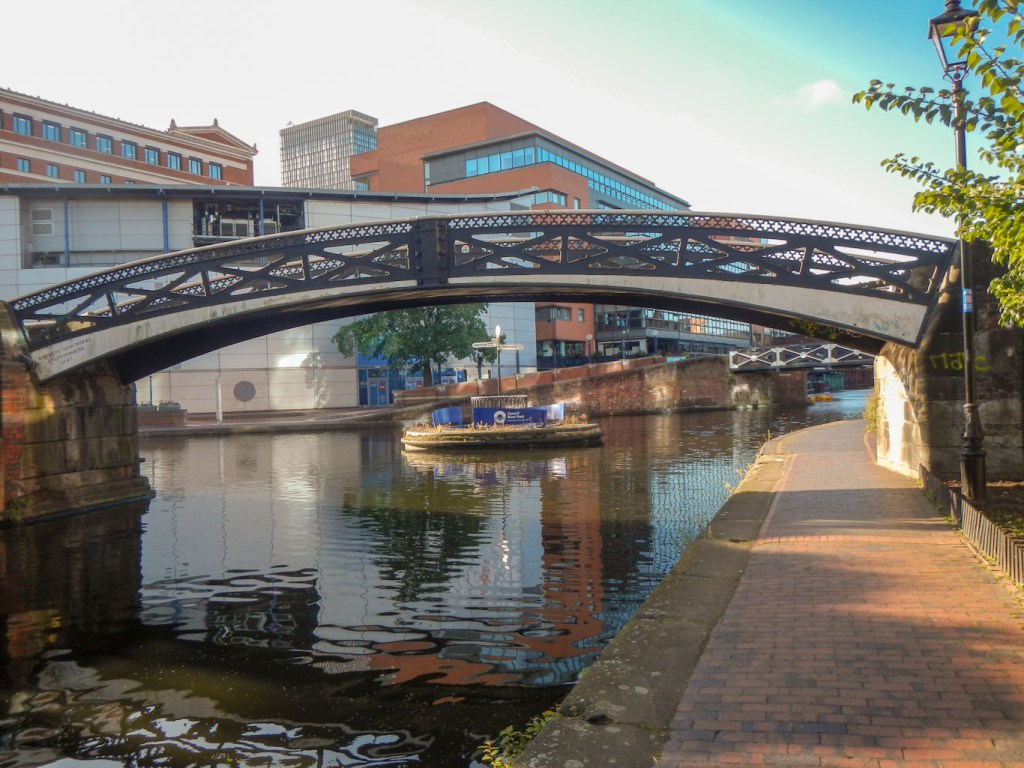
The canal junction and signs the other side of the bridge 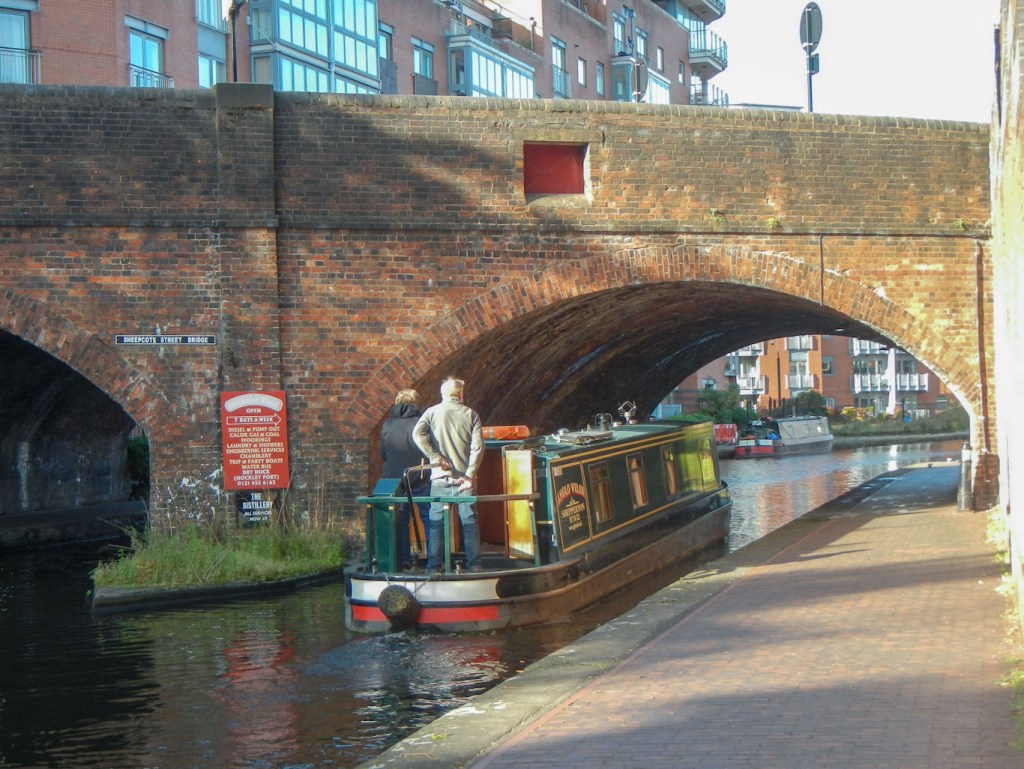
Narrow boat on canal
The trendy modern canal side pubs soon give way to derelict factories with chimneys sprouting grass. However the path had been maintained and improved as a major cycleway to Wolverhampton. There were many cyclists on machines ranging from expensive modern lightweight road bikes downwards. I also saw multiple dog walkers, a few runners and even some people who, like me, appeared to be walking some distance.
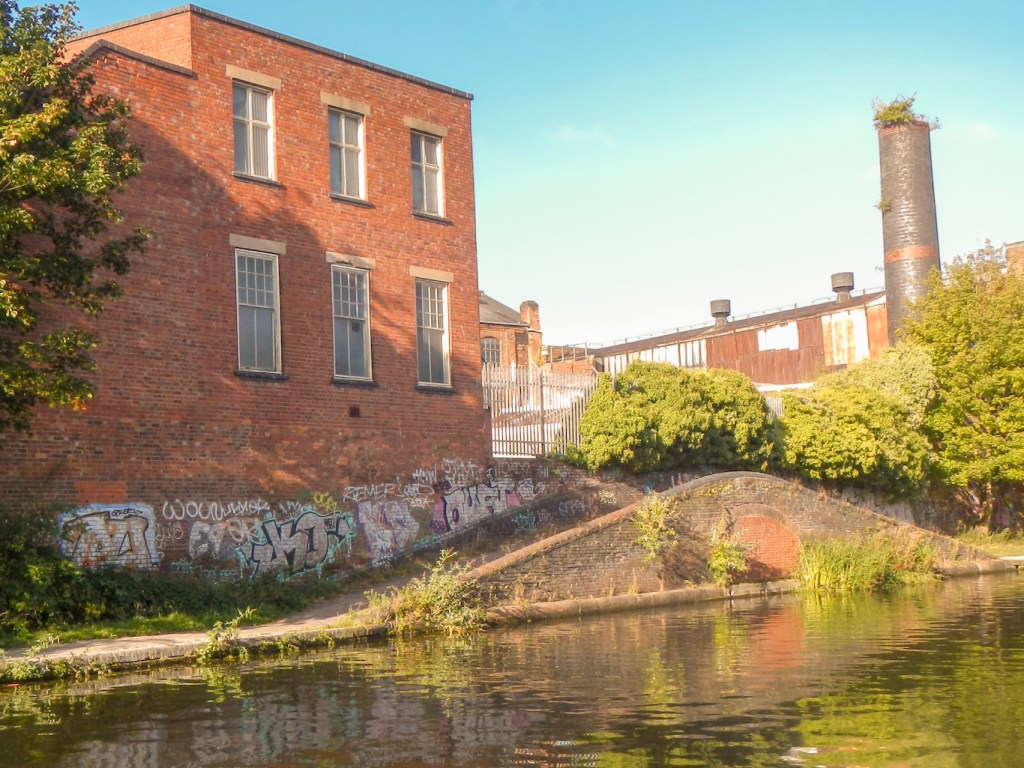
Initially I followed the right hand canal bank but soon crossed to the lesser used left path. There were still paths on both sides, although further on there was only a passable path on one side – which swapped at times, crossing bridges. Some of the bridges curved around so that anyone crossing would curve backwards and end up on a ramp the same side of the bridge but the other side of the water before going under the bridge – this was a way to allow a horse towing a boat to cross the canal without being unhitched when the towpath changes sides. The ramps of the bridge are generally studded with alternating rows of protruding bricks to prevent the feet of the horse from sliding.
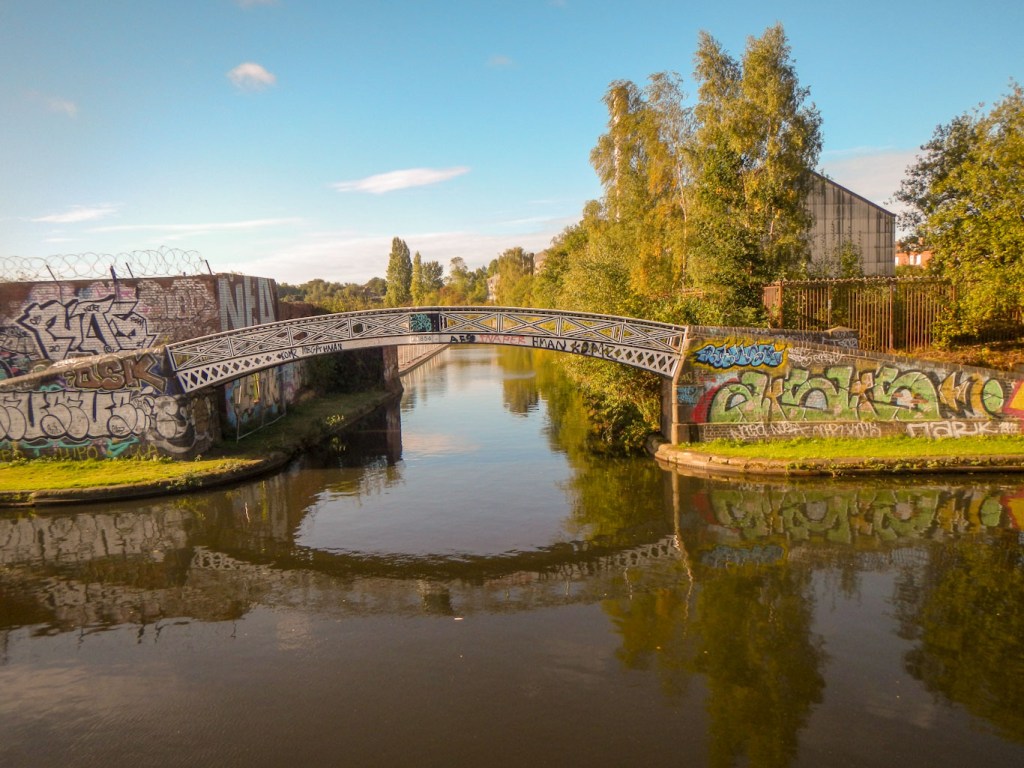
Canal junction 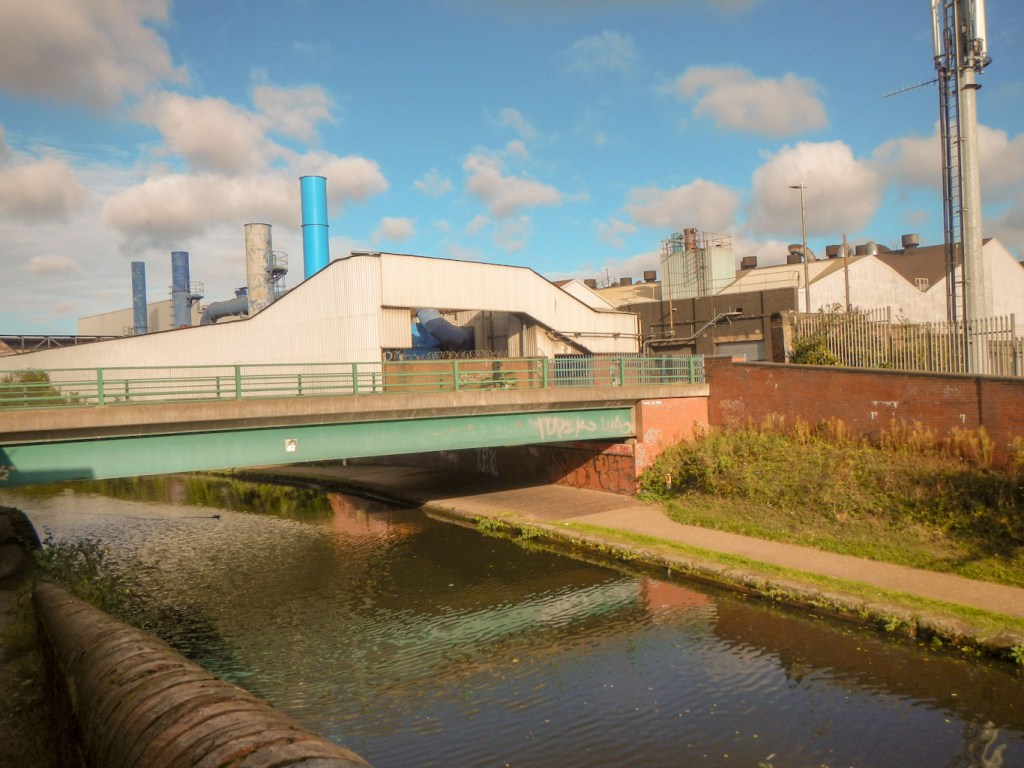
There is still industry in the area today 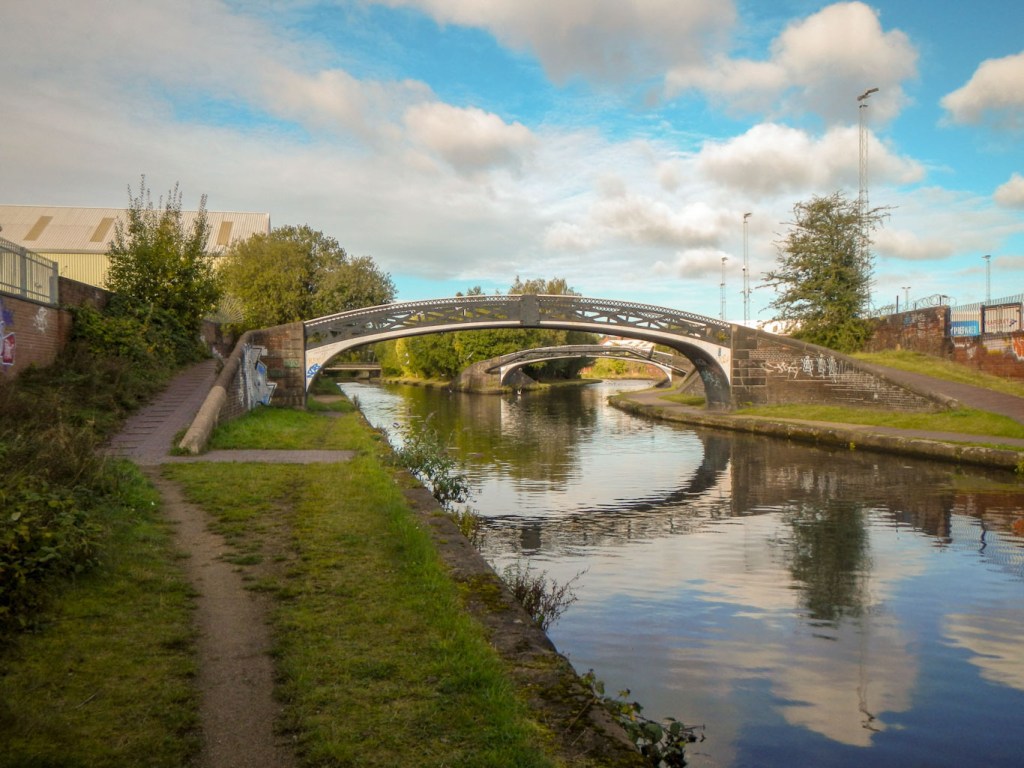
Canal bridge with both ramps the same side to facilitate towing horses changing to opposite bank
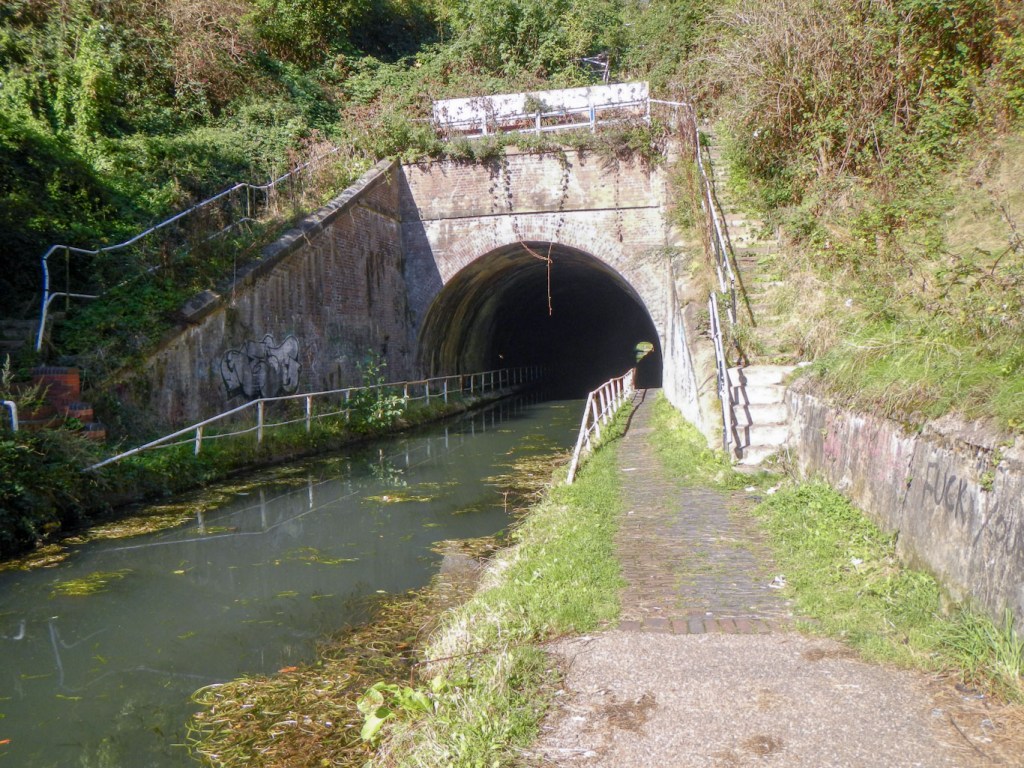
Information boards explained about a couple of loops off the main canal. It is amazing to think that this enormous network was all dug by hand. Near Sandwell, I had to decide whether to follow the shorter New Main Line or the longer Old Main Line, opting for the former as it meant I would walk through a tunnel, although see fewer locks. Engineered by Brindley in 1768-69, the Old Main Line solved the problem of getting over a hill by building locks whereas Telford in 1827-29 solved it by building a deep cutting and the 330m long Coseley Tunnel, with only a short flight of three locks needed near Tipton. This speeded up traffic by taking seven miles off the journey as well as being quicker because of fewer locks.
Seeing a boat pass through just one of the flight of three locks made me realise how long and tedious it must be to get through a long flight of locks – as well as being an enormous amount of hard physical work manually opening and closing the lock gates.
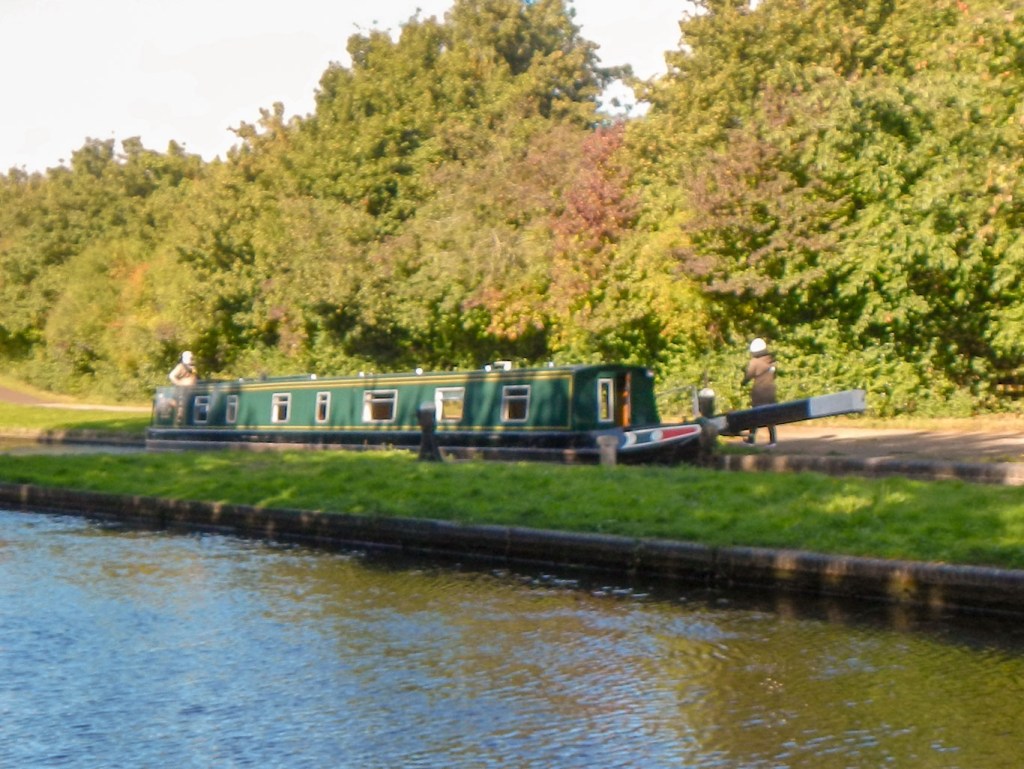
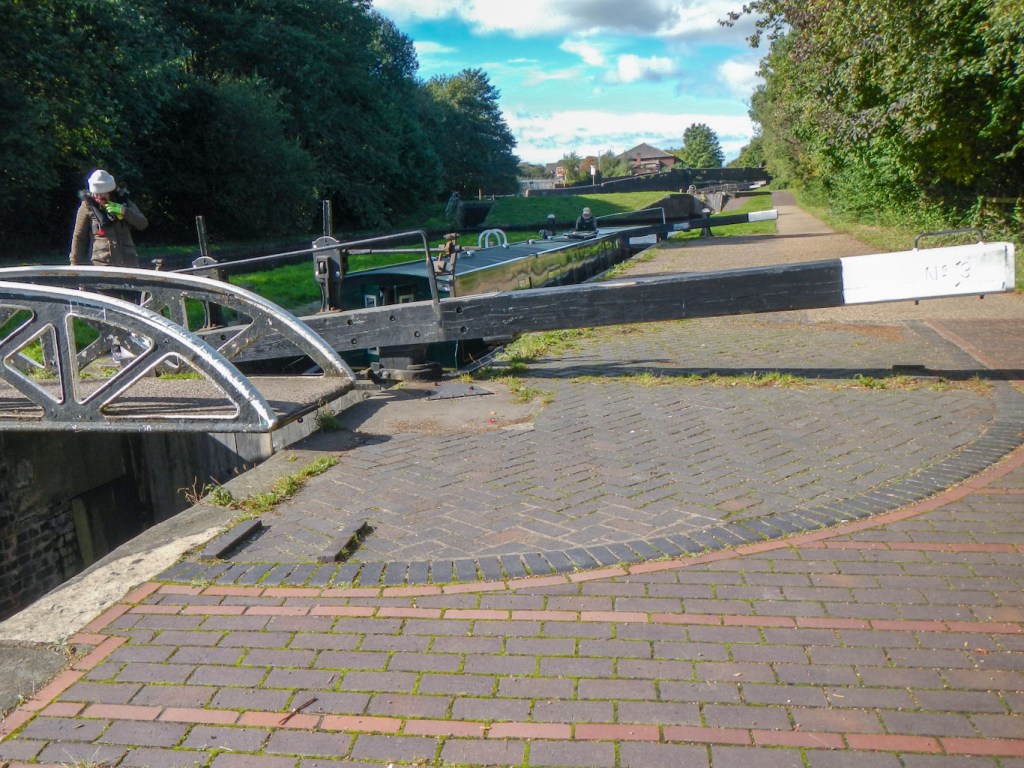
The Coseley Tunnel is long, dark and wet, although the far end can be seen from the start. It definitely wasn’t as spooky as walking through the half-mile long Falkirk Tunnel in Scotland.
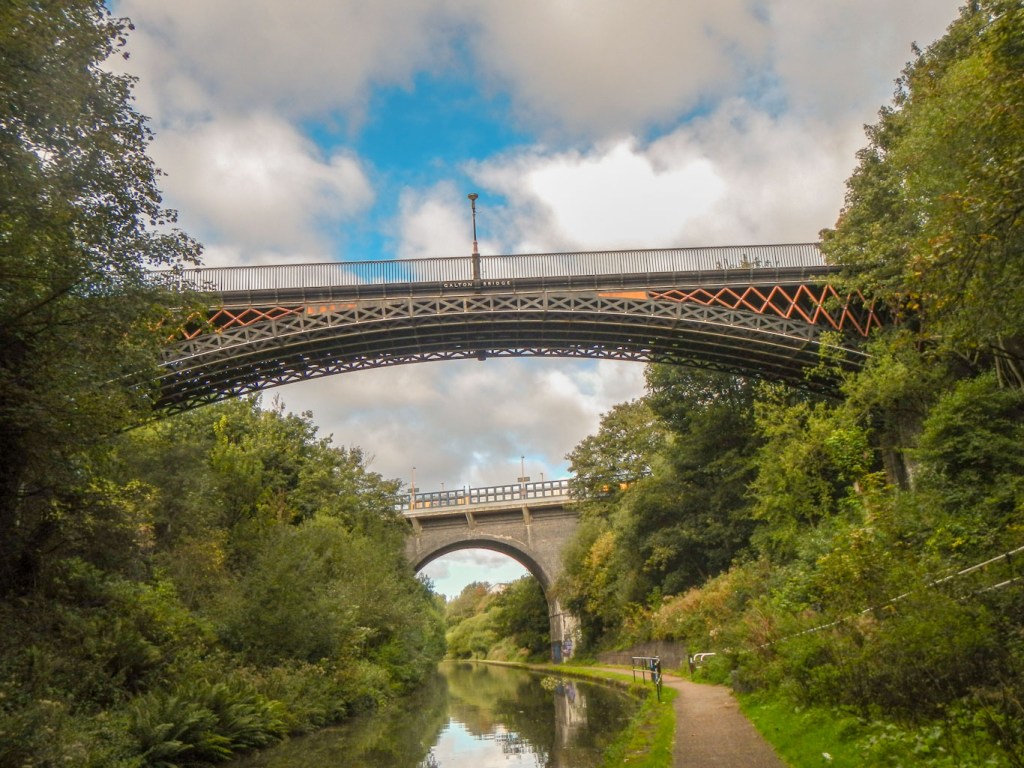
The area is home to some of the most important industrial architecture in Britain. Galton Bridge was built by the famous British engineer Thomas Telford in 1829. When it was constructed, its single span of 151 feet (46 metres) was the highest in the world.
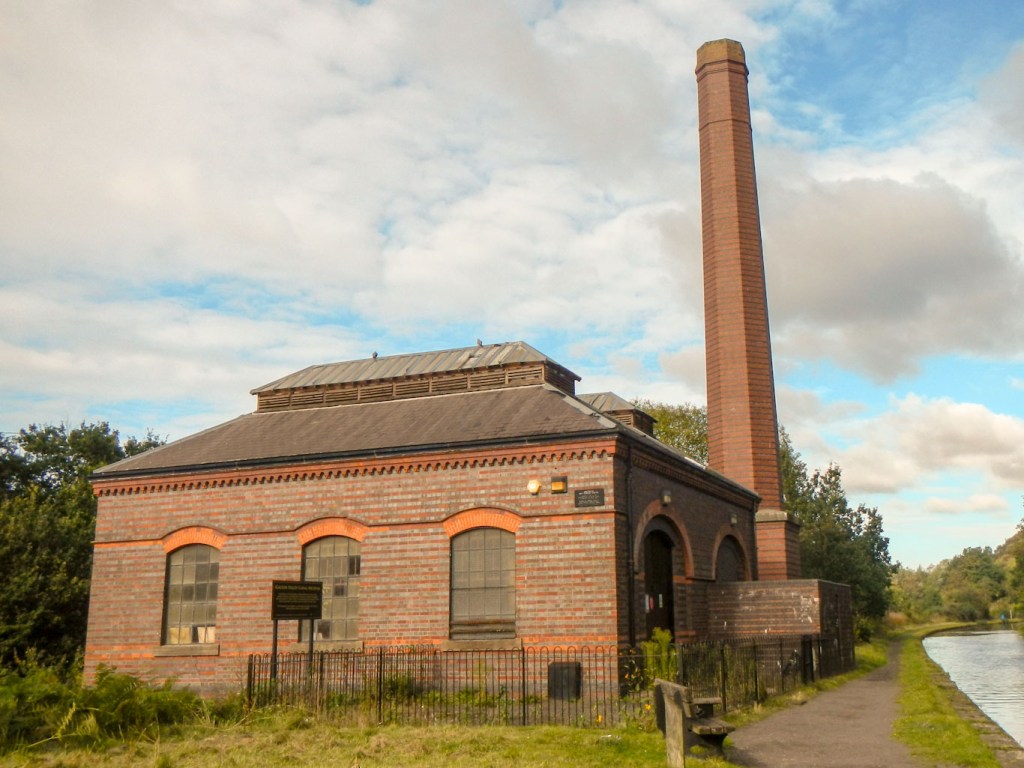
Nearby Galton Valley Pumping Station first opened in 1892 with the purpose of pumping water from the lower Birmingham New Main Line to the high Old Main Line Canal. This was to replace the water lost from the higher level when boats went through the Smethwick locks. However the station only had a short working life, closing in the mid 1920s due to reduced traffic on the canals.
I noticed that, like the previous day in Nuneaton, the modern railway follows the canal routes so I kept seeing trains all day. On my journey by train back to Birmingham, I saw many bits of the route I had walked as the train sped past.
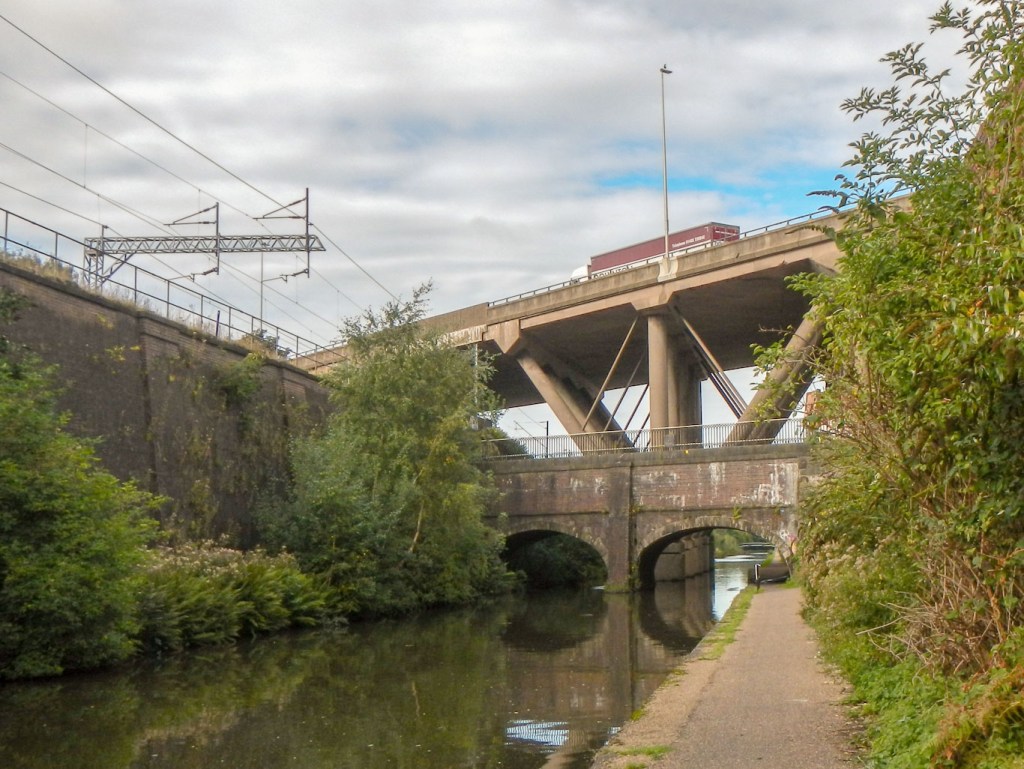
Canal, railway and modern motorway 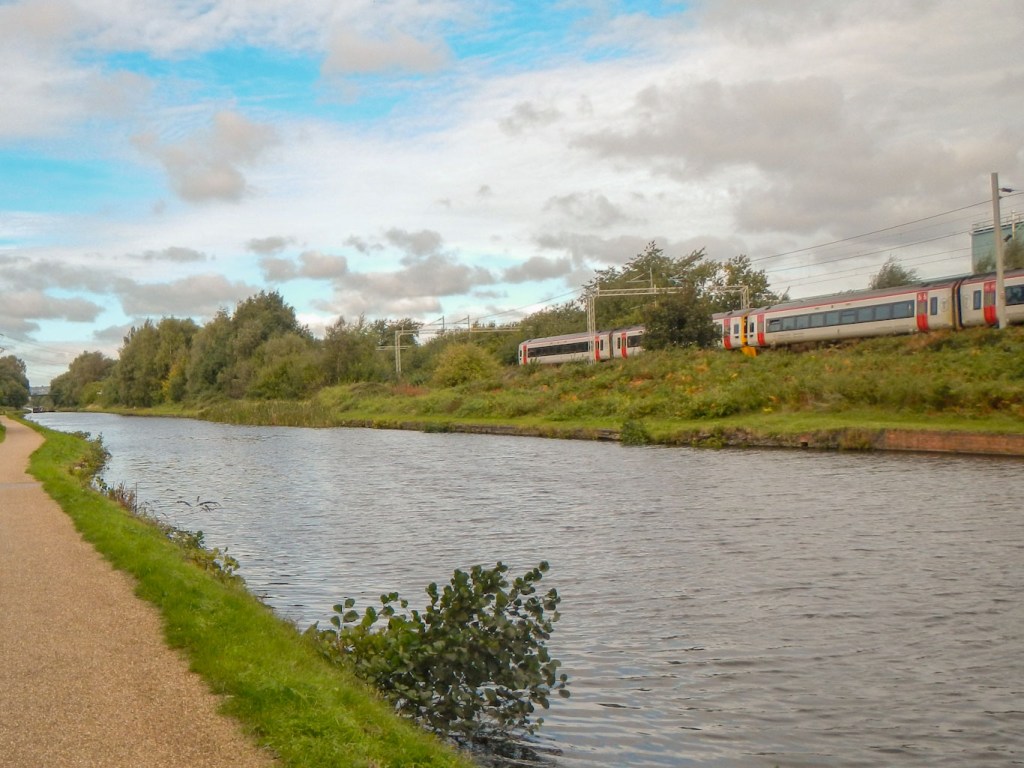
Railway line following the canal between Birmingham and Wolverhampton 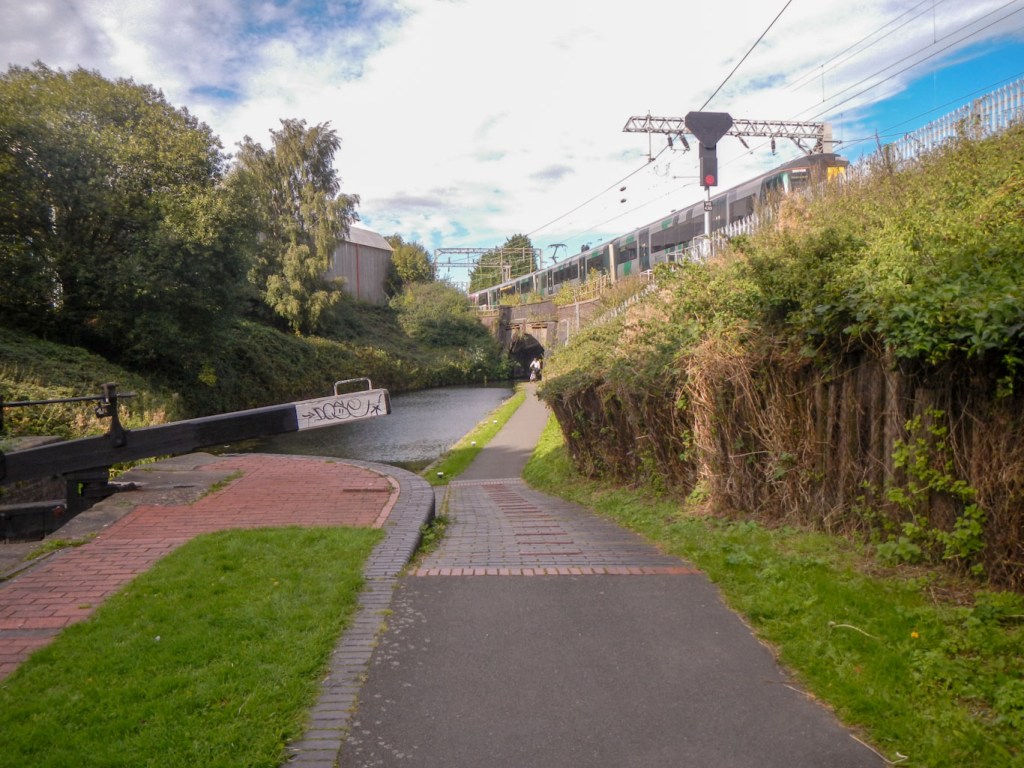
This is actually near the locks after Wolverhampton
I saw many canal junctions, crossed a few aqueducts and spotted multiple iron bridges, the latter bearing plaques denoting the foundry which had built them. I even passed under the 1825 engine arm aqueduct built in 1825 by Thomas Telford to carry water from Edgbaston Reservoir over the New Main Line to the parallel Old Main Line. It’s a Grade II* listed monument. When I passed under it, I was impressed enough to take a photo but didn’t realise until I found it on-line later that it is an aqueduct carrying an eight-foot wide waterway rather than merely yet another bridge.
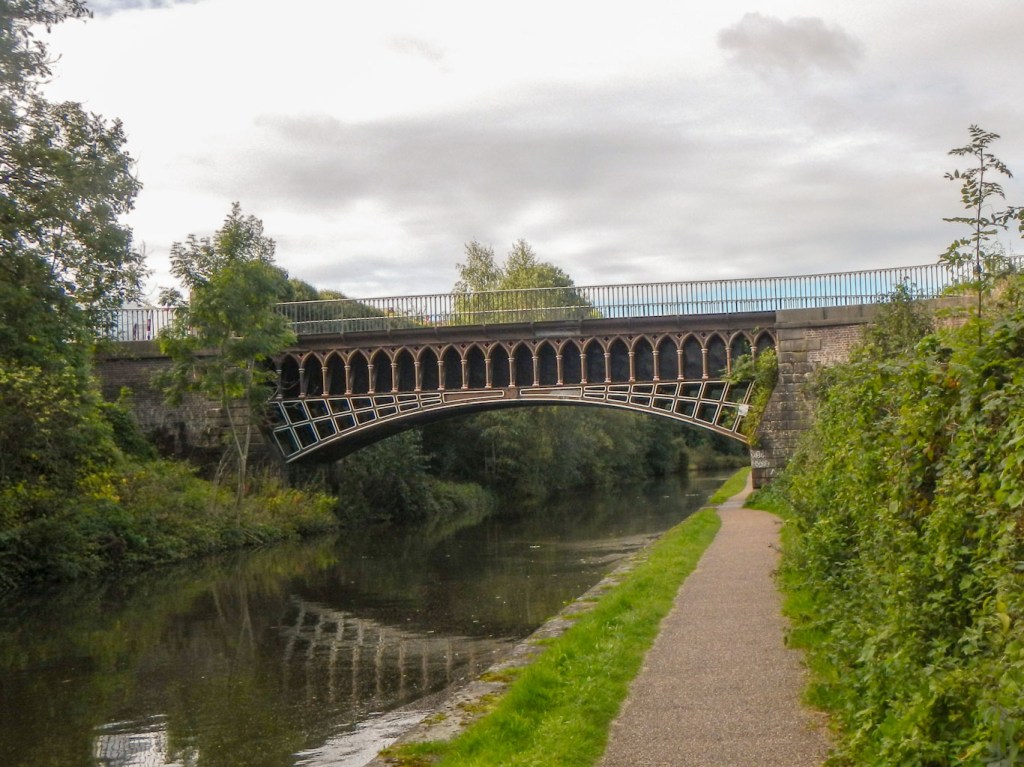
1825 aqueduct 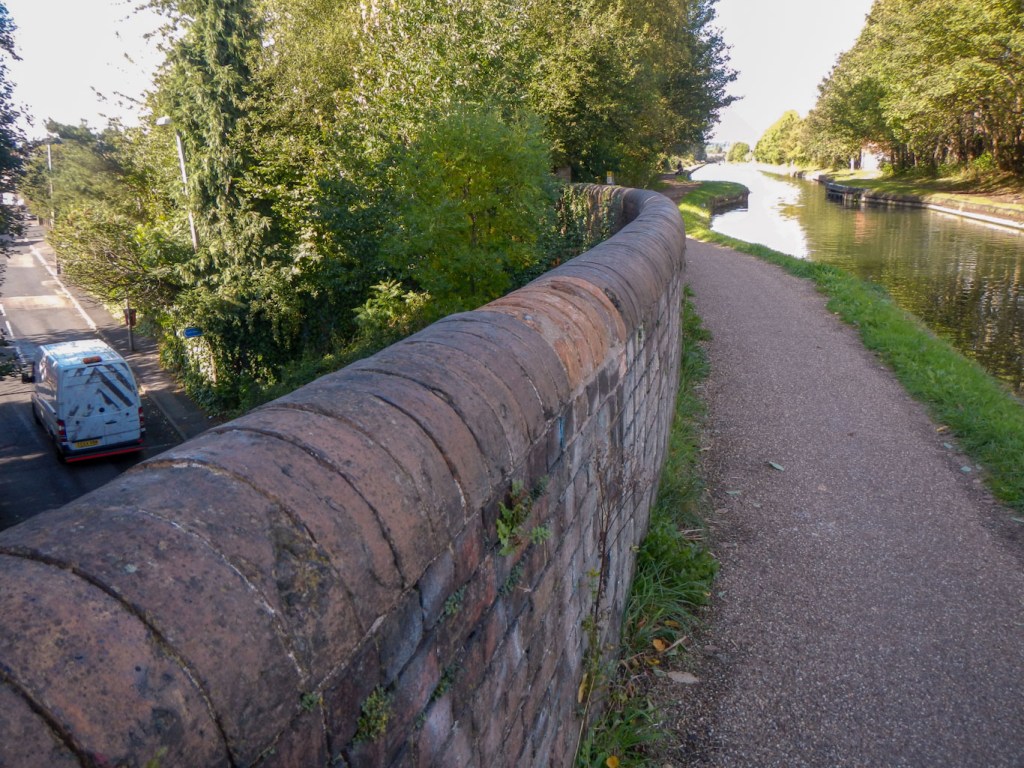
Aqueduct over the road
Not only is this an area with significant industrial architecture but the canal serves as an important haven for wildlife within the extremely built up conurbation. The many grey heron that I spotted waiting patiently to catch passing fish suggest this is a significant marine habitat. I saw swans, mallard ducks, Canada geese, coots and moorhens as well as damselflies and a grey squirrel.
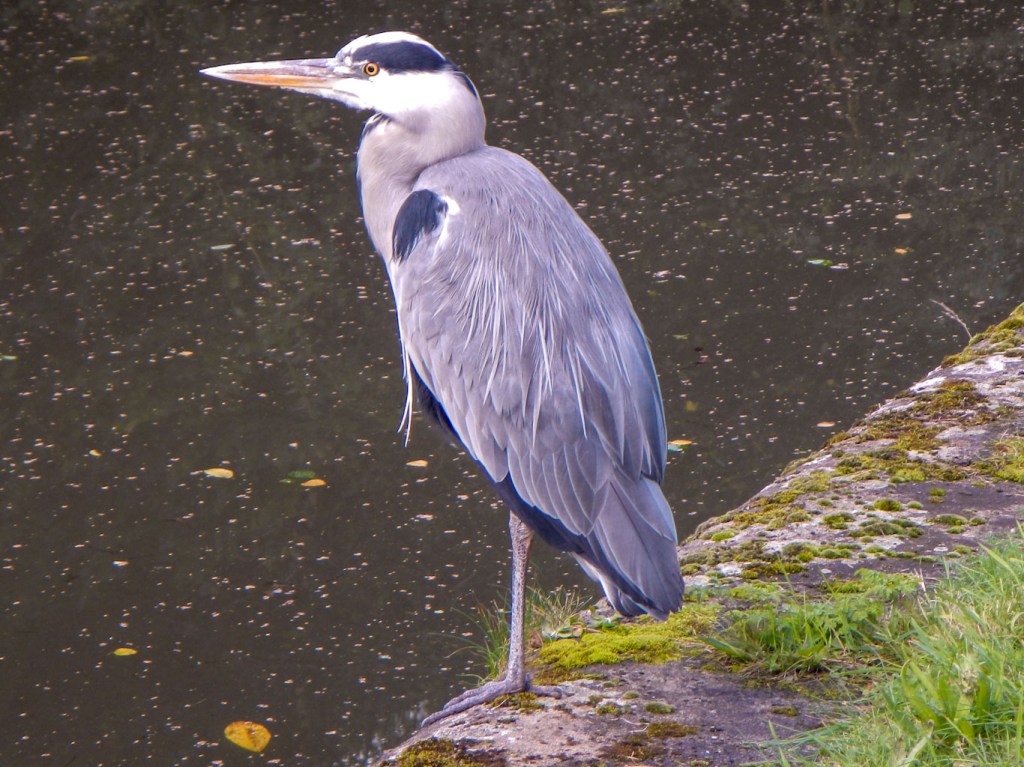
Grey heron 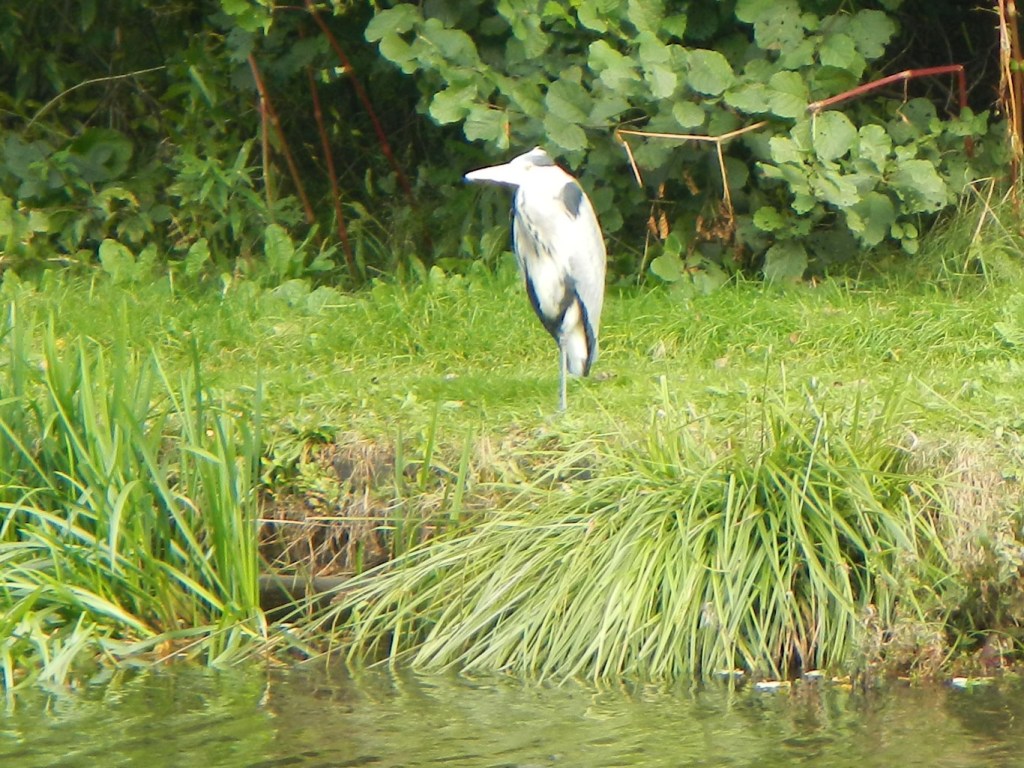
Grey heron 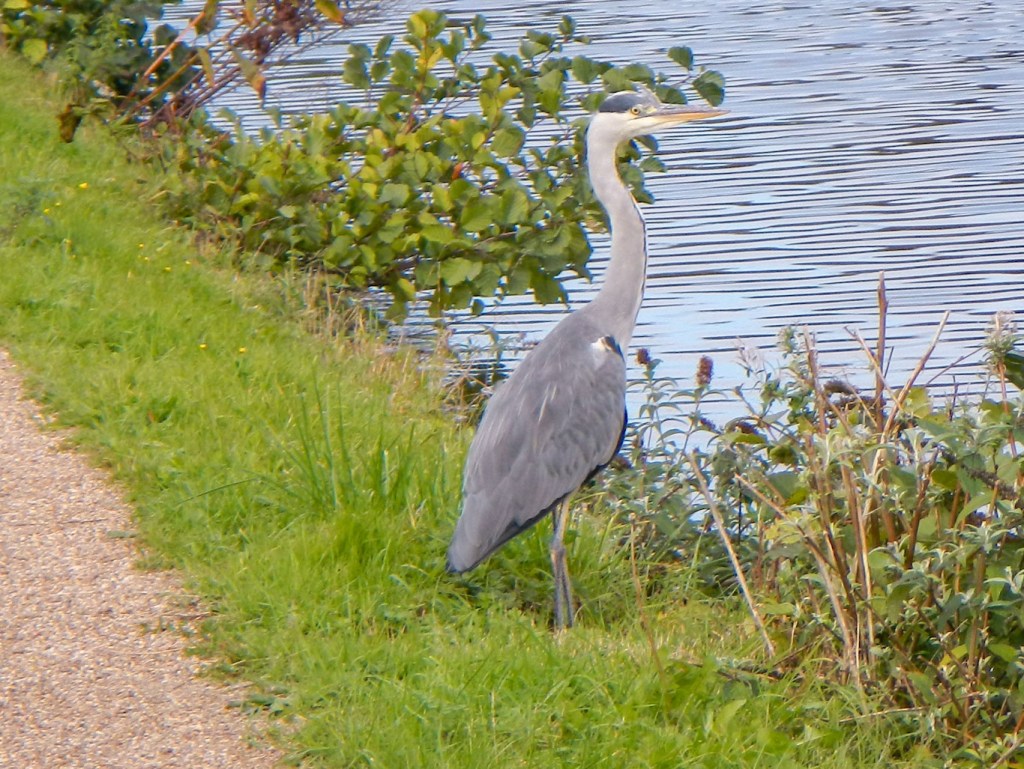
Grey heron 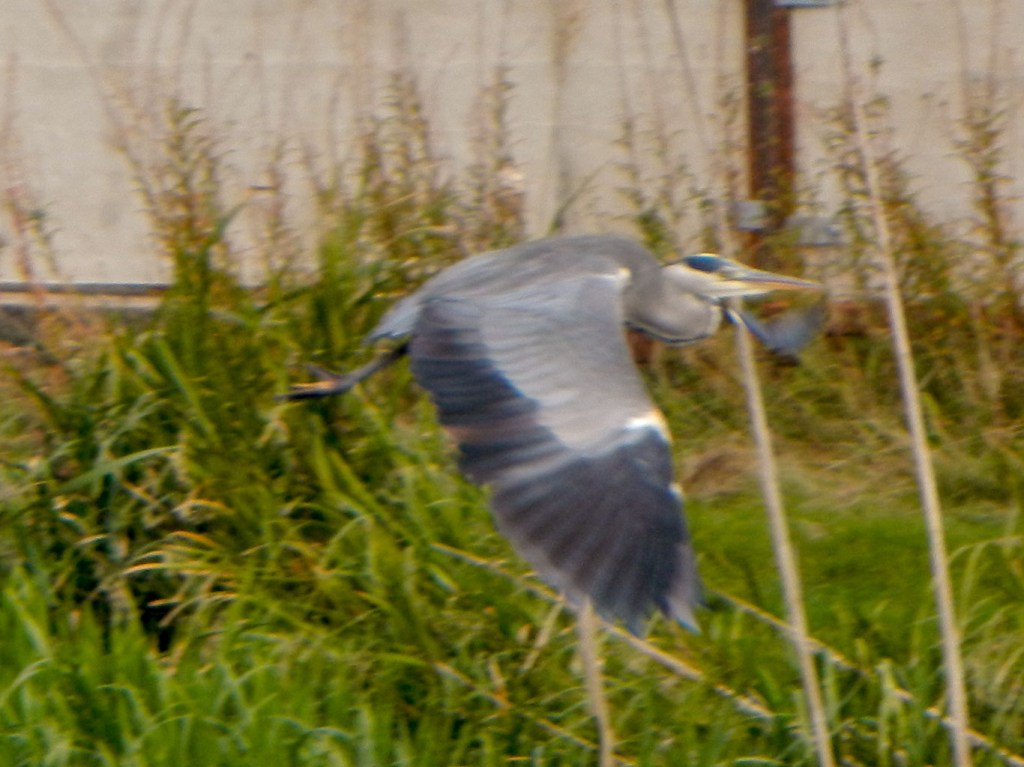
Grey heron 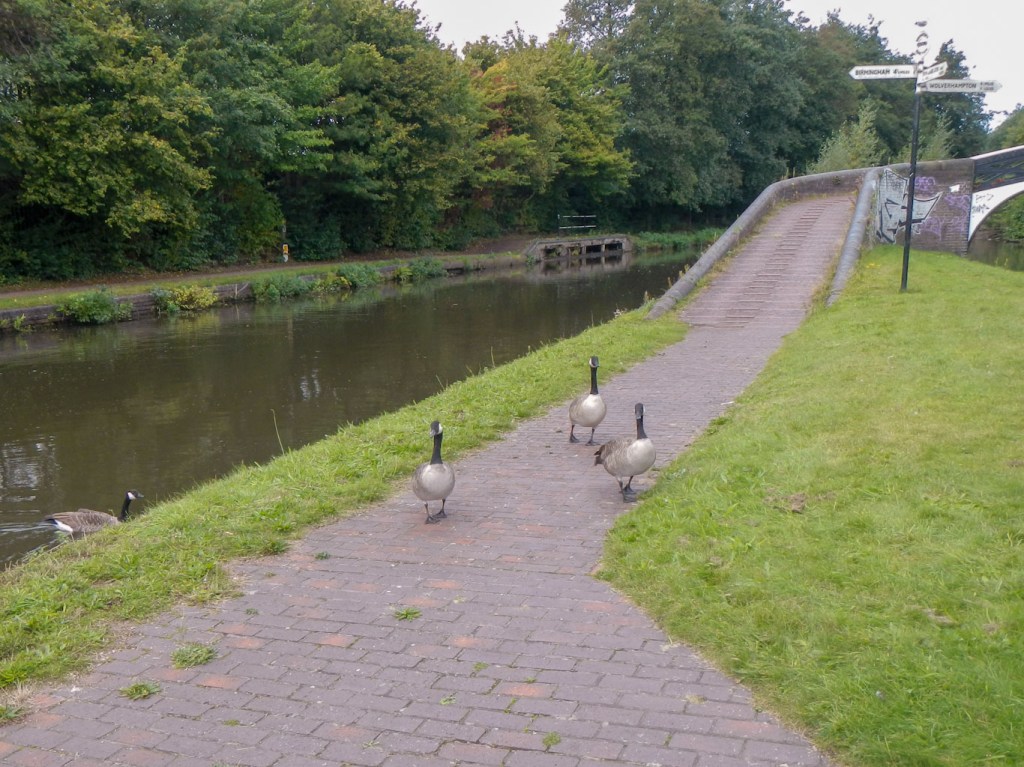
Canada geese 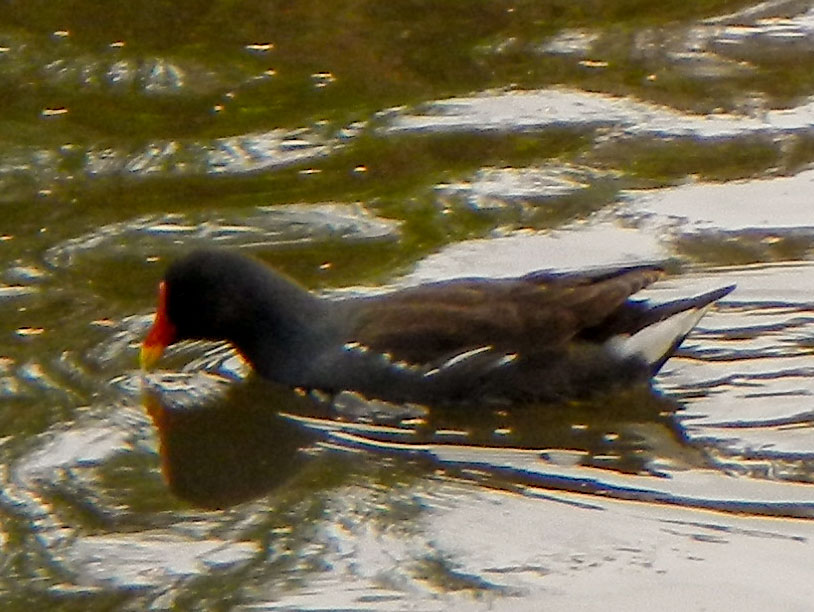
Moorhen 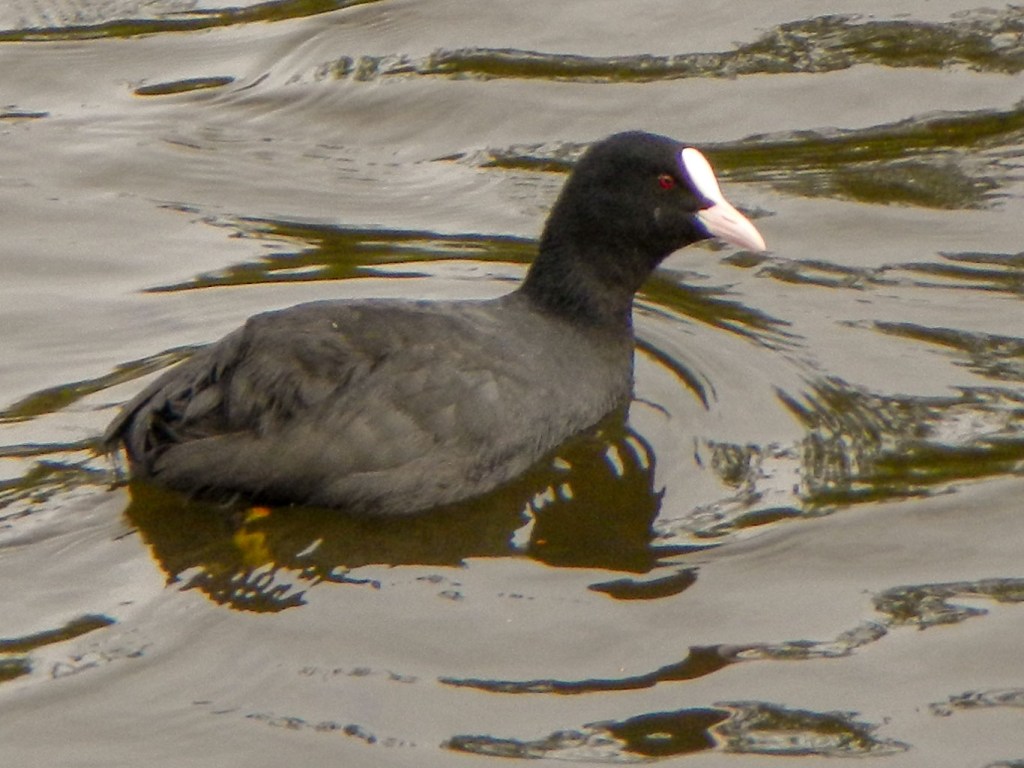
Coot 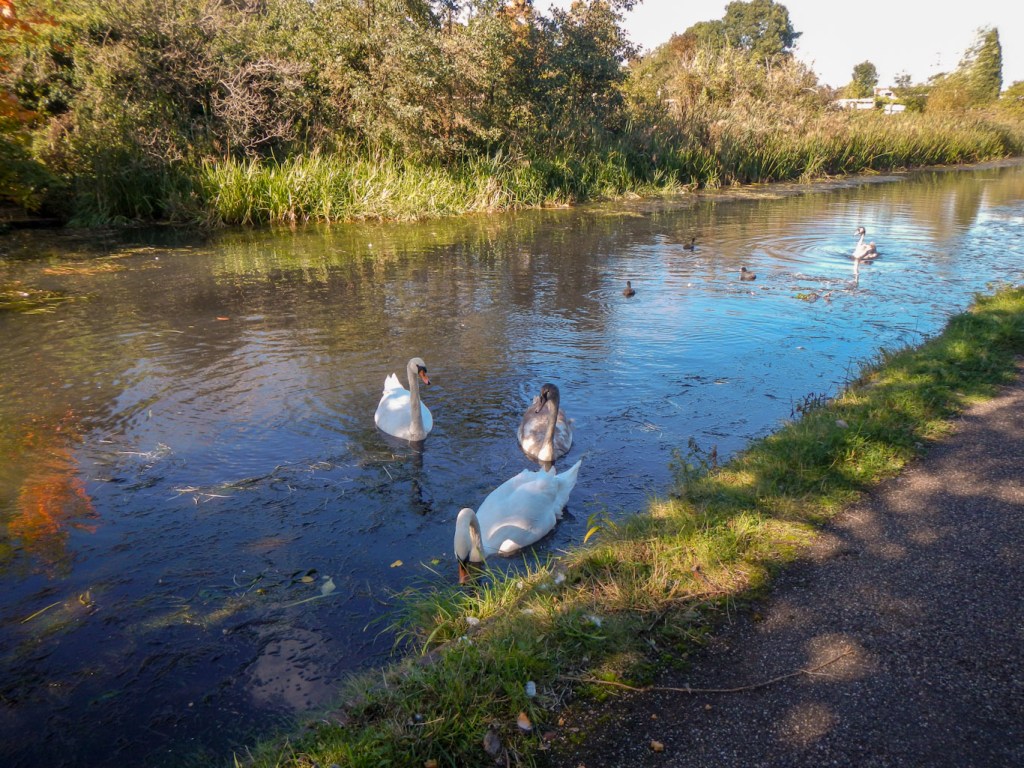
Swans 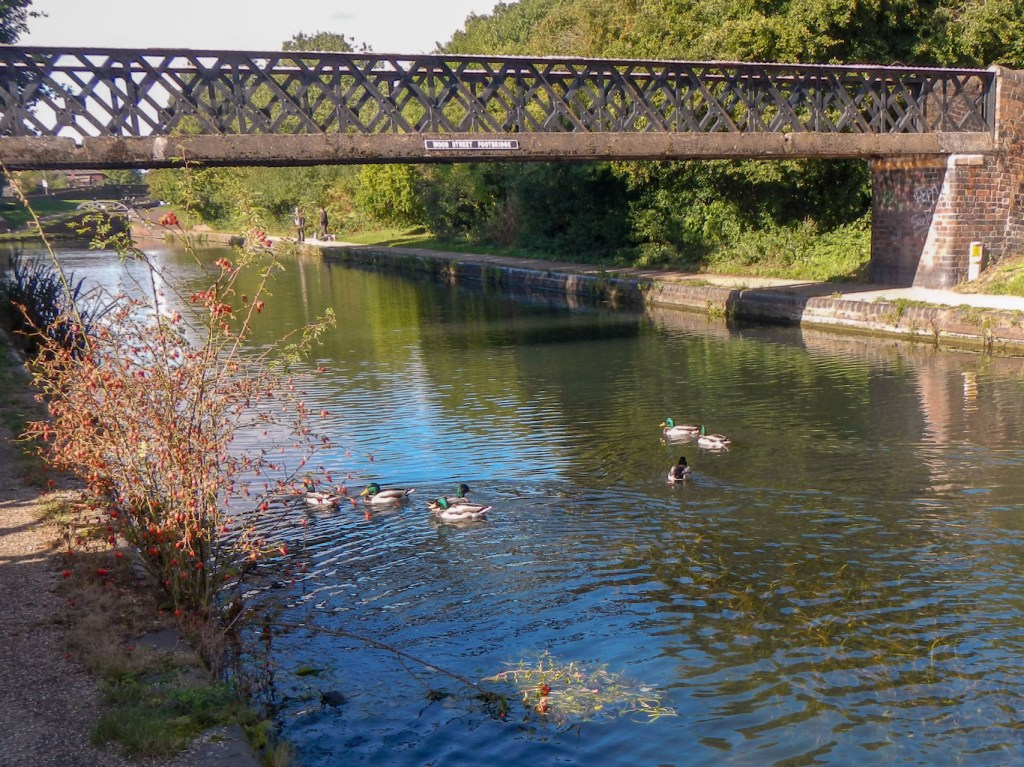
Mallards
On the approach to Wolverhampton, there are places where modern apartment blocks have been built facing on to the canal. An old warehouse building appears to have been preserved within one such area.
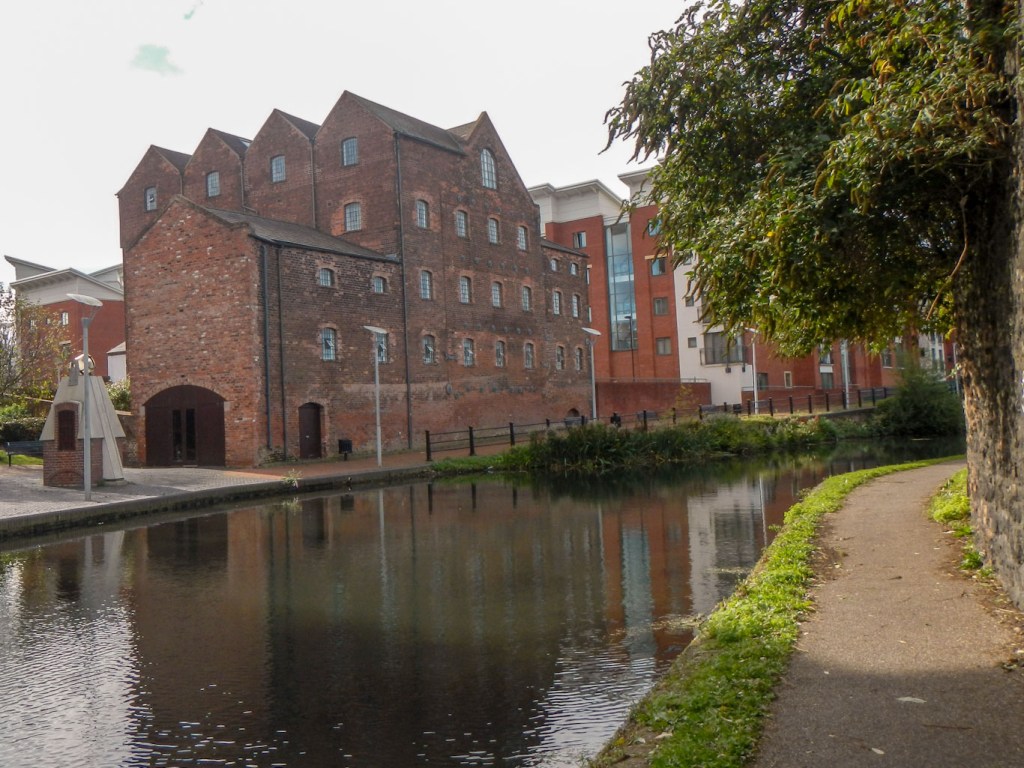
There are also parts with evidence for current light industry, including a sprawling BOC site with thousands of gas cylinders of multiple descriptions.
Having reached Wolverhampton, I noticed that I was extremely close to the top of the long twenty one lock fight of locks. I walked down as far as the third lock and then returned back towards the city. The chances of anyone attempting to traverse this flight of locks in a narrow boat during the second half of the day seemed unlikely as passage through all of them must take a long time; hence I wasn’t fortunate enough to see any passing through. I noticed, near the first lock, the late eighteenth century Top Lock cottages. These are rare surviving examples of canal side architecture. They would have been the home of the lock keeper who would also have collected tolls. The Little Lane Bridge nearby also dates from eighteenth century. This area with the bridge, lock and cottages had won a National Award in the 1990s, with the plaque still proudly displayed on the cottages.
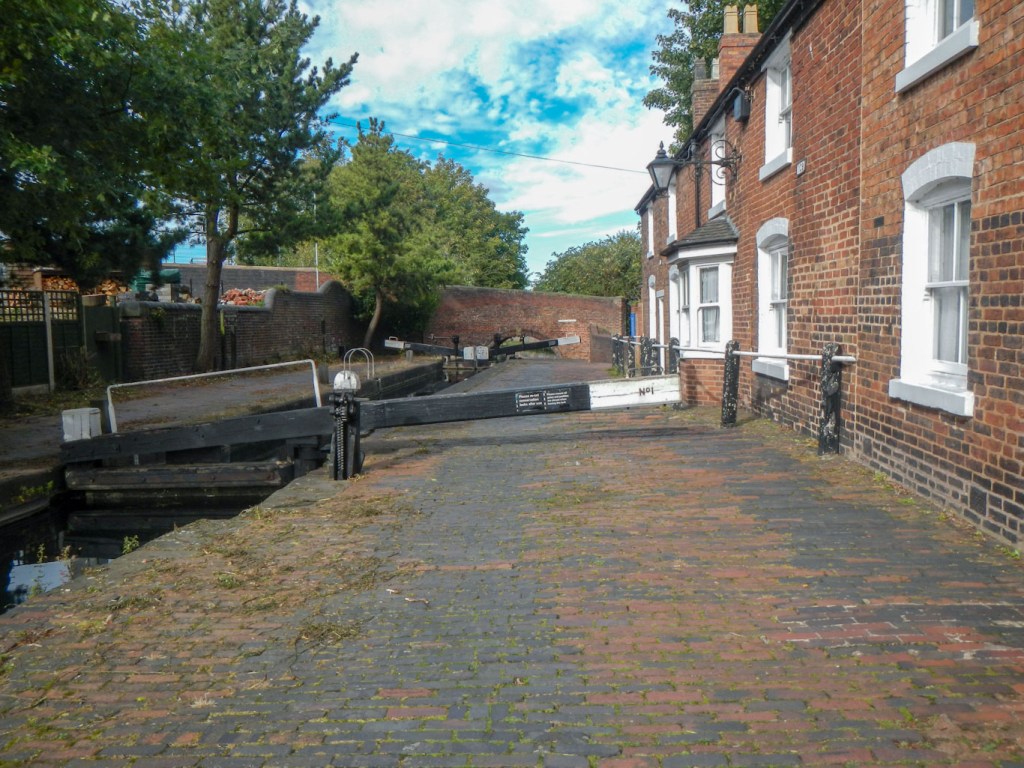
Reluctantly, I left the different world of the canal side to return to twenty-first century reality and catch the train to Birmingham (keeping an eye open to spot the canal) and then to Walsall, where I was booked to stay overnight.

 Where's Kathryn?