23 May 2021
I guess that on a two centre holiday designed to be packed with adventures if there is to be a rainy day, then I would choose it to be the day travelling. Unfortunately I had also designed this as a day of adventure, although with a slightly different twist. Initially I discovered a walk on the Walk highlands website: Walkhighlands: Scotland walks and accommodation to view the Archnabreck Cup and Ring carvings near Cairnbarn. Ironically, in view of the adverse weather, we never saw these although we did spend time in the pouring rain and driving wind exploring some of the other significant historical artefacts in the Kilmartin Glen area. It is astounding that in this small area within a six mile radius of Kilmartin there are over 850 sites of significant historic interest and even more amazing that this appears to be such a little known area. We will definitely return on a drier day!
At Kilmartin itself, we left the car despite the rain and walked past some of the more obvious sights. There is an interesting 2km line of cairns. These five burial monuments all date to about 5,000 to 3,500 years ago, and are associated with the many other ritual monuments of the area, such as Temple Wood Stone Circles. These two circles date from some time before 3000 BC and were used into the Bronze Age, ending about 1000 BC. In that time it was used as a place for ritual ceremonies and funerary activity.
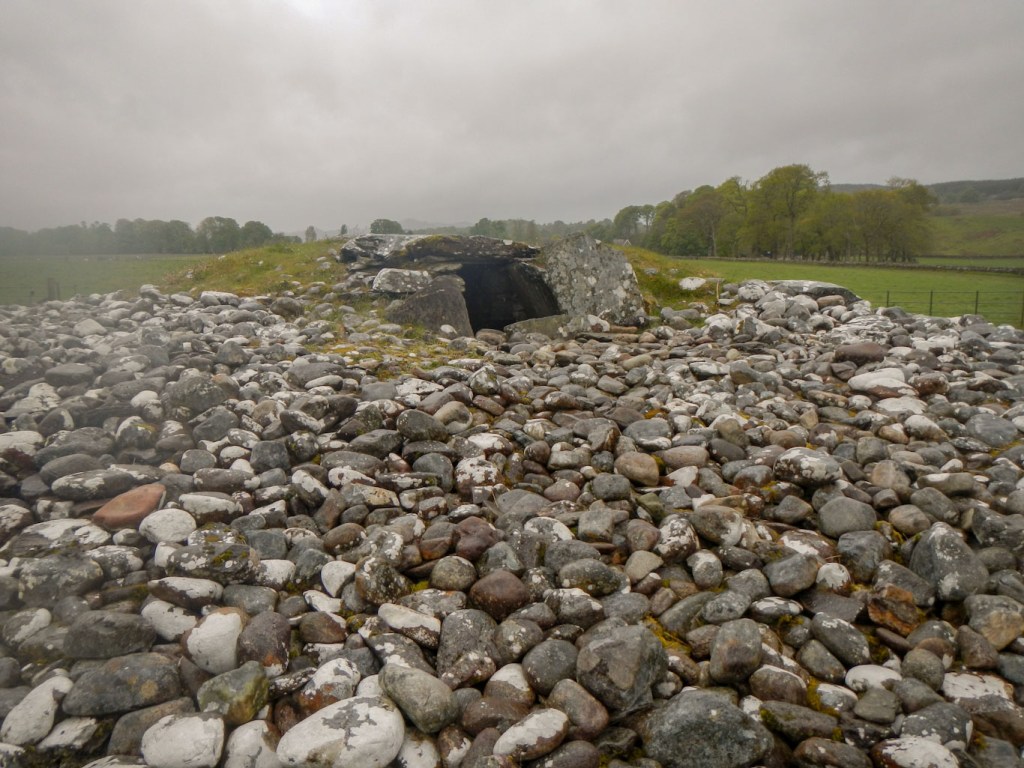
Nether Largie South Cairn 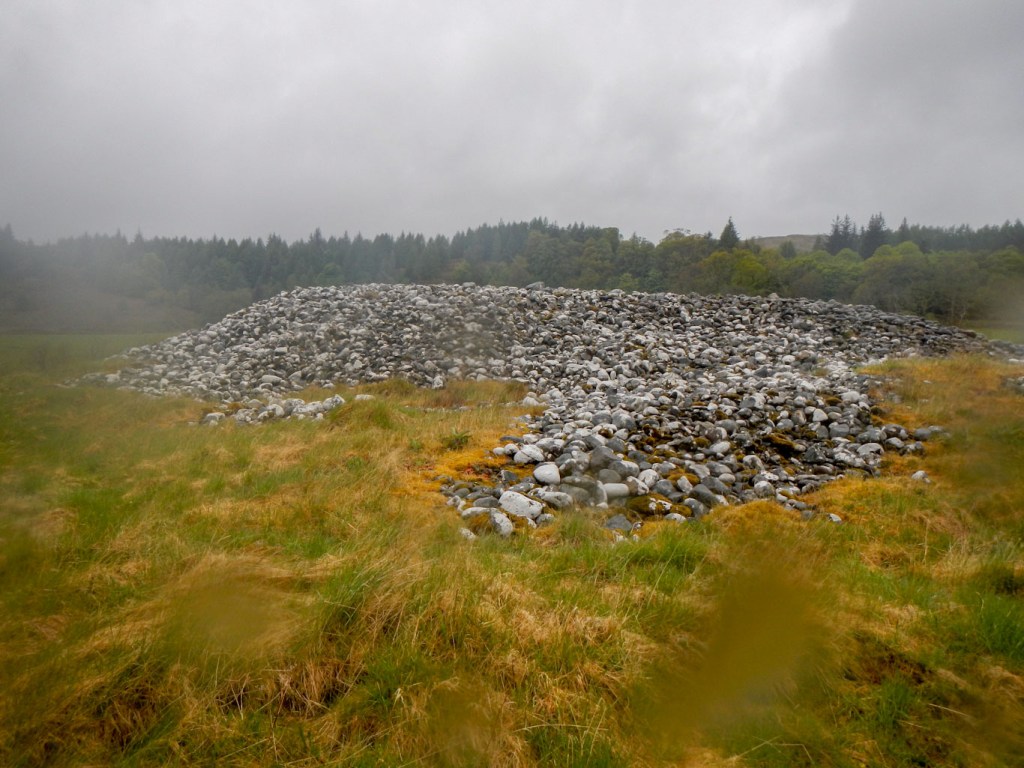
Glebe Cairn 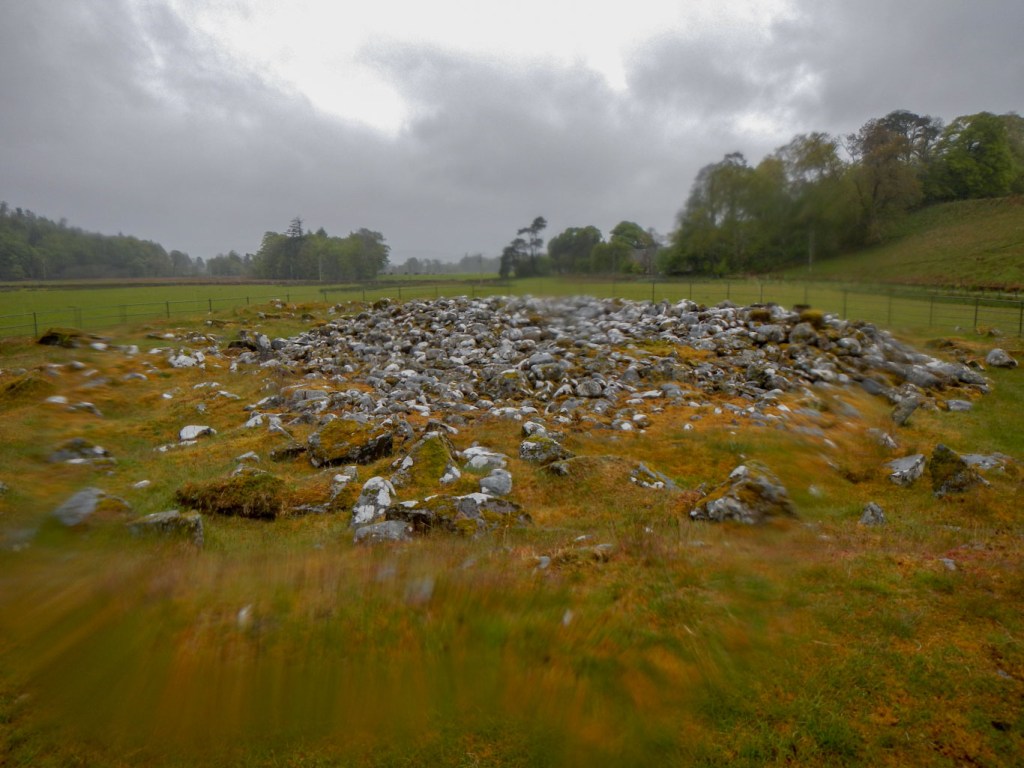
Nether Largie Mid Cairn 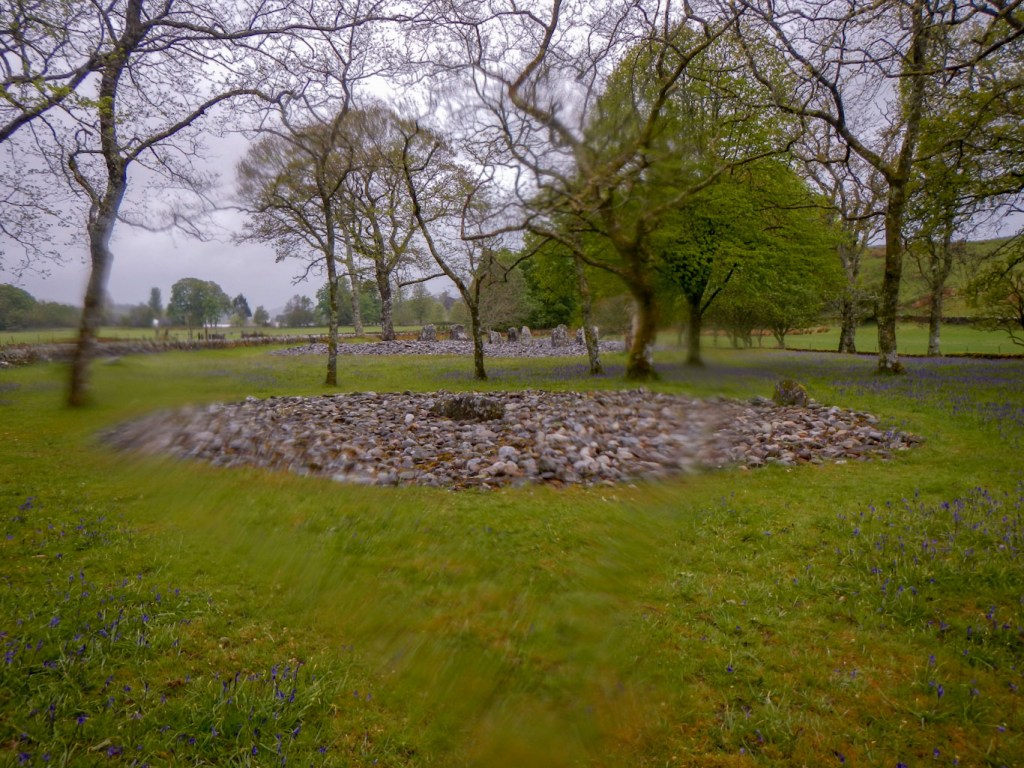
Two Temple Wood Stone Circles
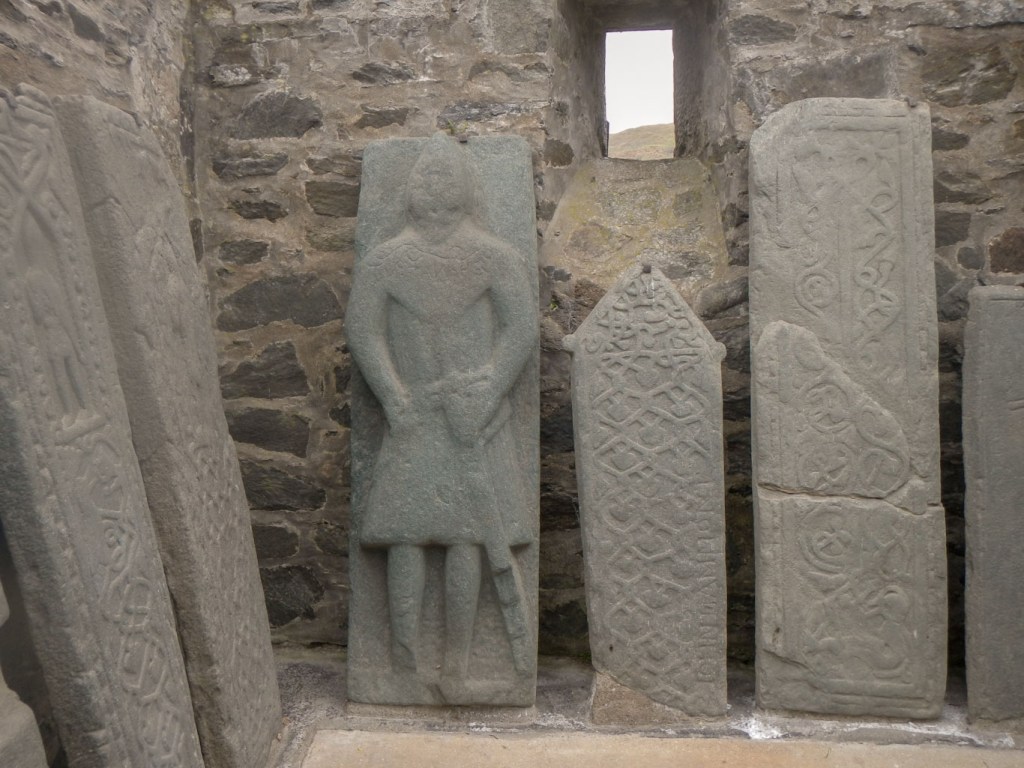
We also took time to look at some mediaeval and early Christian carved stone slabs in Kilmartin Churchyard.
South of Kilmartin we visited what now appears to be an insignificant small collection of buildings, not even a village and scarcely a hamlet. This is Dunadd. Between AD500 and AD900 this was one of the most important places in what has since become Scotland. The original Scots were migrants from Ireland (“Scotti”) who from about 500 settled across Argyll in ever greater numbers, founding the Kingdom of Dalriada. Dunadd was the capital of the kingdom and was the place where its Kings were anointed. Sadly it was raining so much that my husband didn’t even leave the car to make the short ascent to the fort. I did but actually missed seeing the imprint of a foot carved into the rock. It is thought that, following Irish tradition, the King of Dalriada was inaugurated by placing his foot into the rocky imprint. I also missed the nearby inscribed ogam text (an alphabet of straight lines), whose meaning is unknown, and a carving of a boar. We will have to return in better weather.
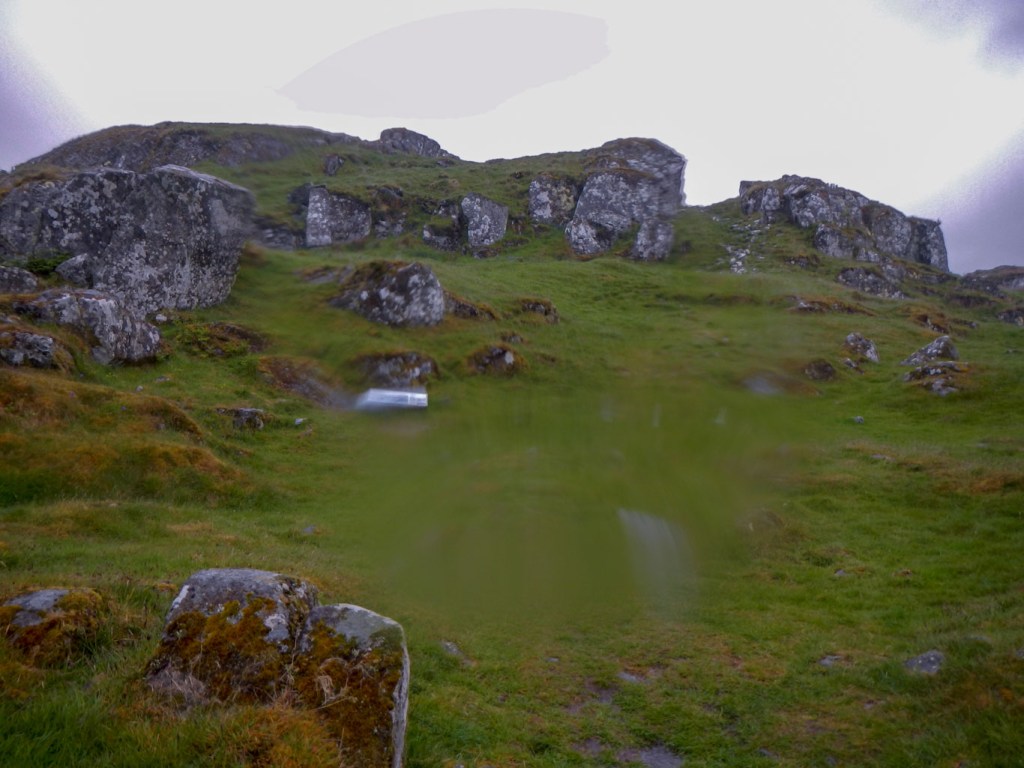
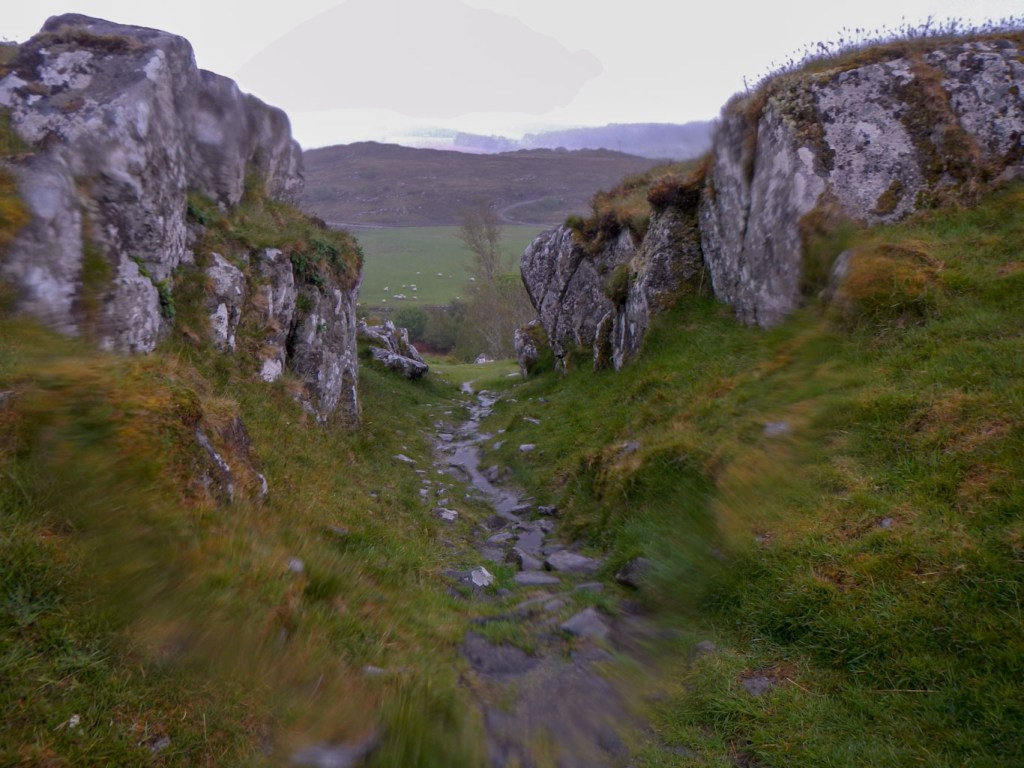
I made a further foray in even worse rain at Kilmichael to view an example of the many Cup and Ring marked rocks found in the area. These are an unbelievable 5,000 years old. Among the cup and ring marks at this site are several keyhole-shaped carvings, which aren’t found anywhere else in the area. I did manage to make these out although by then despite waterproofs I was absolutely soaked through. The precise meaning of these carvings is unknown, but they remain a fascinating subject for study.

Sadly we never made it to any further artefacts. I was frozen and soaked through, the car was full of condensation and I needed to have the heated seat at full power in an attempt to feel warm and less wet.
We definitely intend to return to this area, perhaps spending a whole day cycling between the various points of interest. It is definitely a part of the country steeped in thousands of years of significant history, including many freely accessible artefacts of interest. There are plenty more adventures here!

 Where's Kathryn?