14-19 December 2020
This adventure started from Hartland Point, which is actually on map 190. In fact I had already walked within a hundred metres of the “heliport” when I completed my adventure on map 190. The helicopter provides a shuttle service over to Lundy during the winter months. I was on flight four out of five flights. As the flight time is under ten minutes, the waiting time soon passed watching the helicopter leave and return. Soon I was bundled into the helicopter along with five other passengers, for the short flight. which I had been looking forward to for so long.

Hartland Point 
Lundy
Despite the wind, it was a smooth journey. The highlights were taking off and looking down on the North Devon cliffs and then, a few minutes later, seeing Lundy below. In next to no time we were all out of the helicopter and ready to explore Lundy for the next few days.
After watching the helicopter take off to return to the mainland and then registering my arrival at the small island office, I set off walking north away from the village. The wind was with me, the weather a mixture of sun and showers. There are stone walls across the width of the island at roughly quarter intervals heading between south and north. Just after the halfway wall, there was a herd of highland cattle including a bull, so I gave it the usual respectful wide berth.

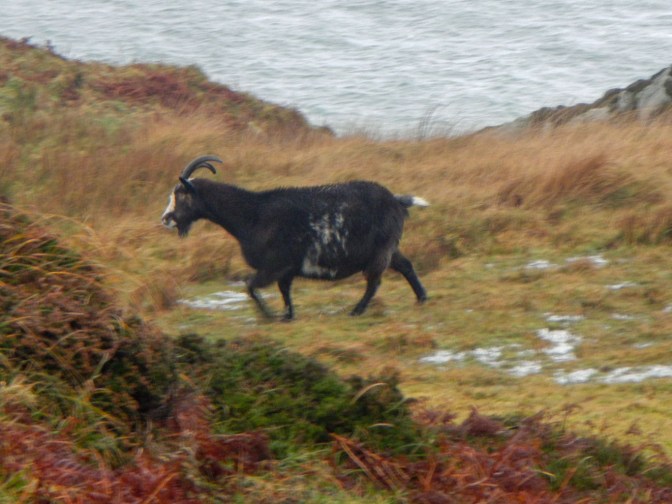
The most northerly “quarter” is the longest and most remote section. As I approached it, I saw a magnificent rainbow and then, from the slightly higher ground I was on, the land ahead of me was bathed in sunlight. I saw a few Soay sheep and a small group of feral goats, before reaching the northern end and the aptly named ruin of John O’Groat’s House where I sheltered from the wind to eat lunch. John O’Groat’s House is thought to be the remains of a post-medieval watch house, possibly associated with a gun battery. Recent survey work has suggested that it was built on the remains of a bronze-age cairn. After lunch, I descended the steep steps towards the North Light before heading back to the village along the windy west coast.
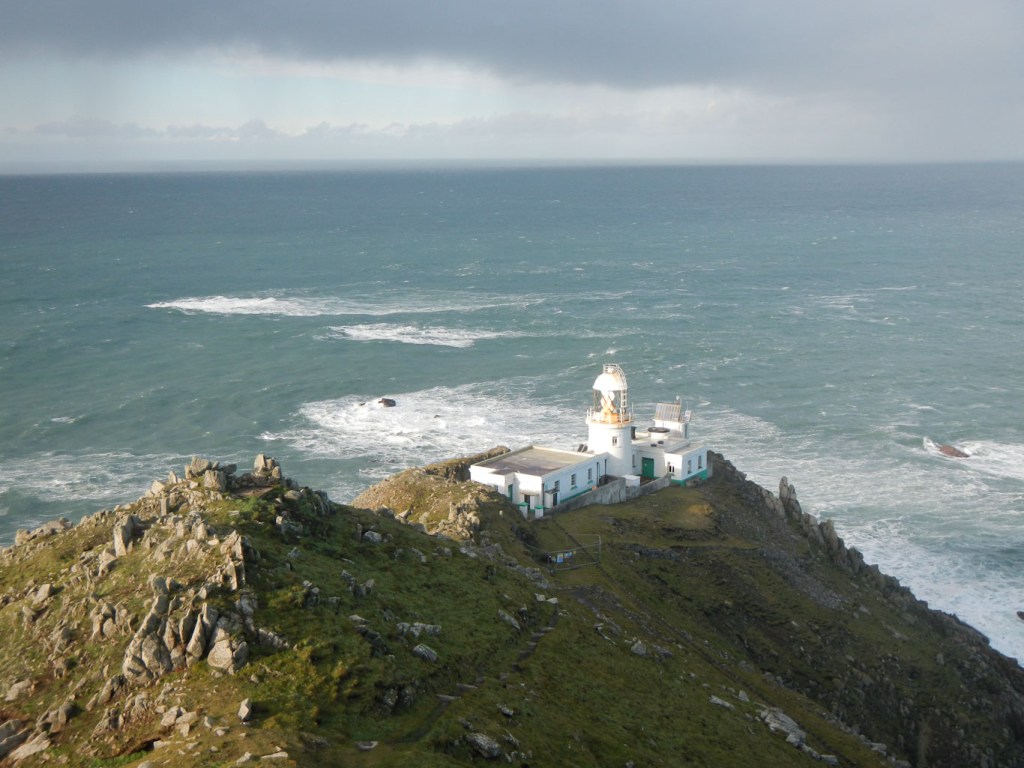
North Light 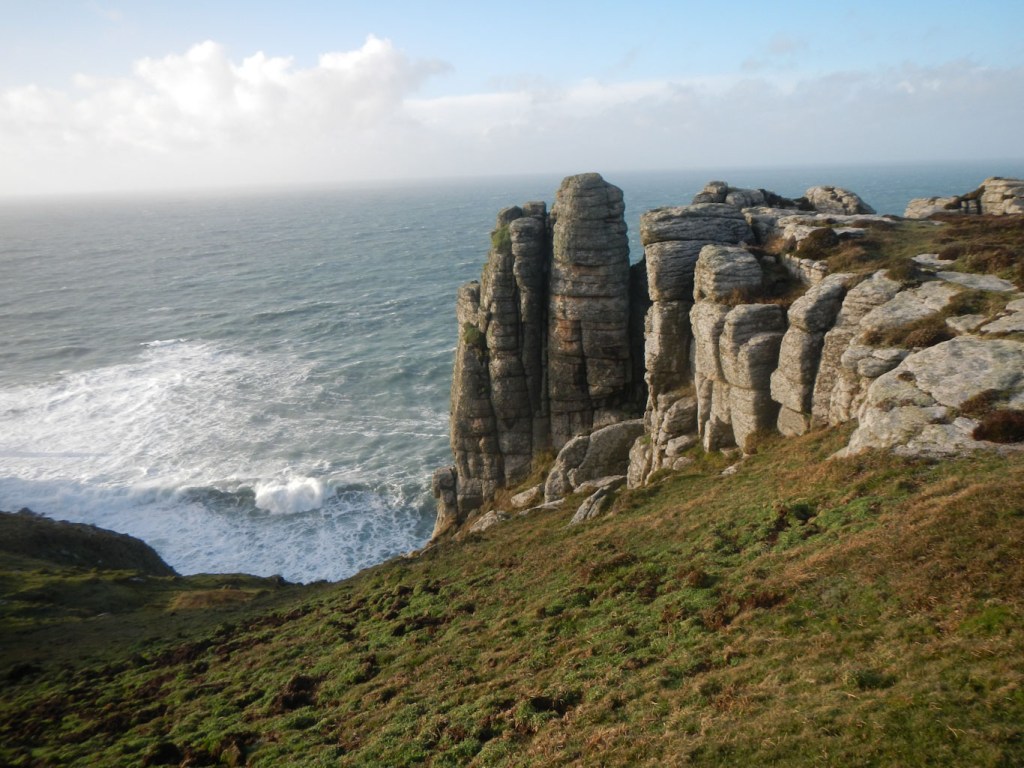
Cliffs on West Coast
I passed impressive stacks and other rock formations, and was soon back in the village. I discovered that my “cottage” next to the old lighthouse was ready for me. This was to be my base until leaving on Friday 18th but in fact I was fortunate to get a “bonus” day – the helicopter was fog bound at its base in Liskeard on 18th so I was able / had to stay until Saturday 19th.
The site for the old lighthouse was surveyed in 1819 following agreement with the then owner of Lundy Sir Aubrey de Vere Hunt. The light tower and keepers’ house were designed by Daniel Alexander, the consultant engineer to Trinity House. The light started working on 21st February 1820 but the height (highest above sea level in Britain) meant that it was often obscured by clouds. This was why the Fog Battery at Battery Point was built in 1863 and then in 1897 the Old Light was replaced by two new lights close to sea level at the north and south ends of the island. Anyway the Old Light buildings are now all used as holiday cottages. The area comprises a listed monument. While I was there, the old light staircase was closed as some workers were repairing parts of the spiral staircase. My cottage was actually originally the lightkeeper’s store building!
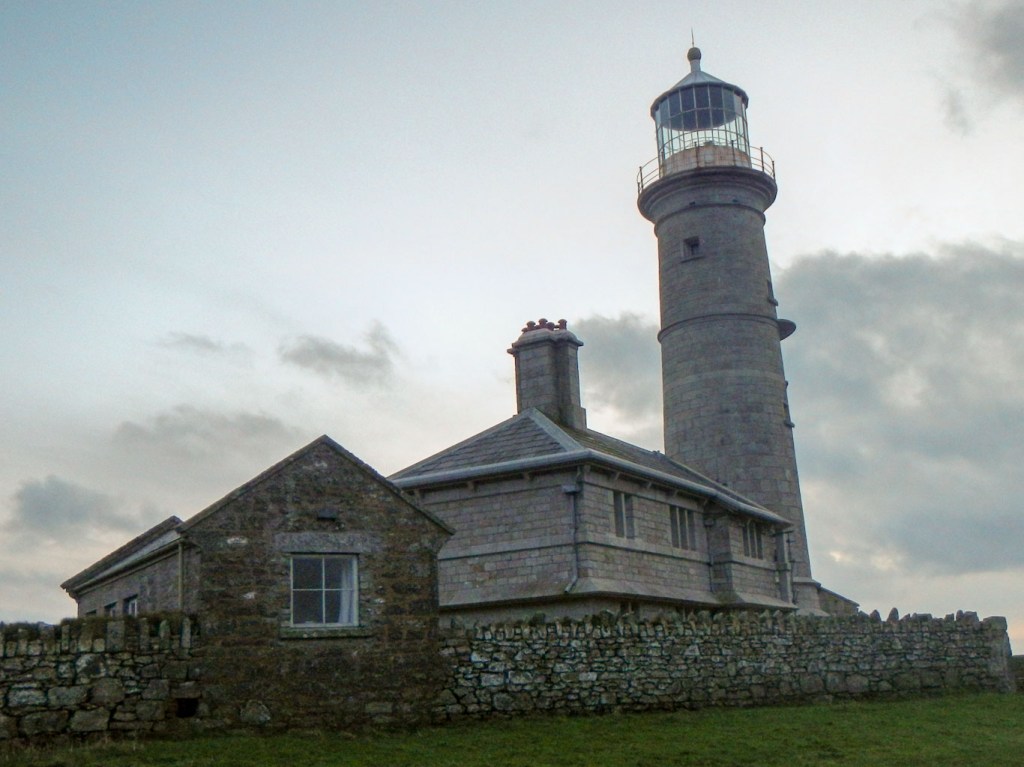
The cottage was brilliant, including contents that were all I could possibly need and more. There had been no need to pack any reading material as there was a small book case with a specially selected variety of fiction based on the area and the island and an impressive array of non-fiction all about the history of Lundy, the wildlife I might see etc. Should I be bored or housebound there were even jigsaw puzzles plus a pack of cards together with a book of ideas for solo card games. Needless to say, these weren’t required! There was also an enormous log book of accounts of previous visitors to the cottage – into its second huge bound volume.
Refreshingly internet and mobile phone signal is minimal – intermittent texting seems to work but voice calls are more difficult.
That first evening, I had pre arranged to eat at the Marisco Tavern. With a new moon and a rainy, windy evening, my head torch and a second hand torch proved to be essentials on what seemed to be a much longer walk from the cottage to the village than the earlier walk village to cottage in daylight. However I headed in roughly the right direction and got there (and back afterwards) in the end. I enjoyed a socially distanced chat with a couple from Cornwall who are regular visitors. In fact most of the guests had been before and I was a relative “newby” on only my second visit.
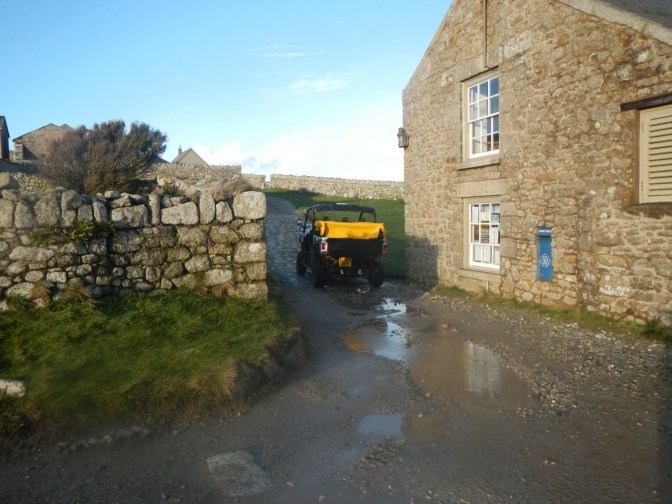
Village and the island coastguard vehicle 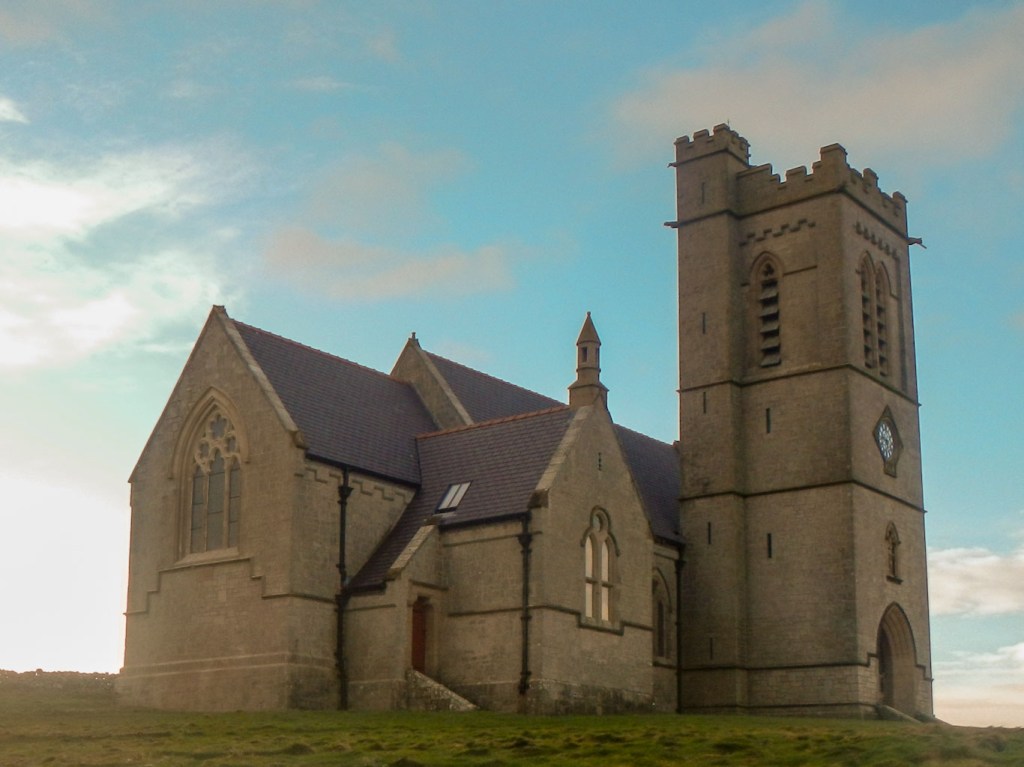
Lundy parish church
Lundy is really a special place. Despite the expected for the season constant windy weather and intermittent showers most days, I was out of my cottage more or less from first light to twilight. I spent much of the time tracking down the often elusive “Lundy letterboxes” hidden in various locations. There are 28 altogether each with their own rubber stamp and a notebook to record the names of people who have found them. It’s a brilliant way to spend the time and means that the island gets explored from top to bottom.
I met another “letter boxer” as I was searching for the box near John O’Groats house ruins. Just on the point of giving up, we found it! It’s surprising how often they “appear” just as you think you are giving up.
There is a letter box on Rat Island which is a tidal island to the south of Lundy. It’s accessible at low tide (realistically only enough time during spring tides) and only safe to try to get there with someone else. I had no thought of trying until I met another visitor as I was heading towards the south jetty (there’s a box there too). He had the tide times and thought we might get to Rat Island. We did manage to scramble over the slippery rocks between the rock pools to the east of Rat Island but then decided against trying to climb on to the island – we thought the tide was turning. This is probably a box better suited to search for in the summer. The box on the Oldenburg is only possible when the Oldenburg sails (that’s the way to get to Lundy in the summer). Hence of the 28 boxes, there were really only 26 to find during my few days.
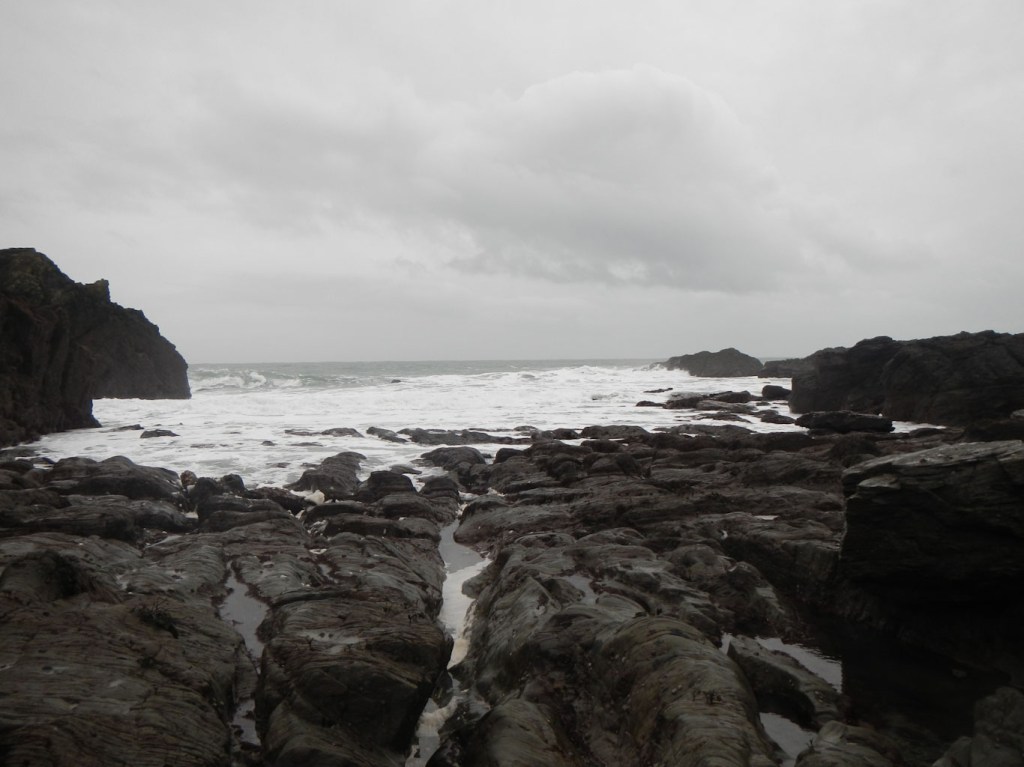
Tide coming in – east of Rat Island 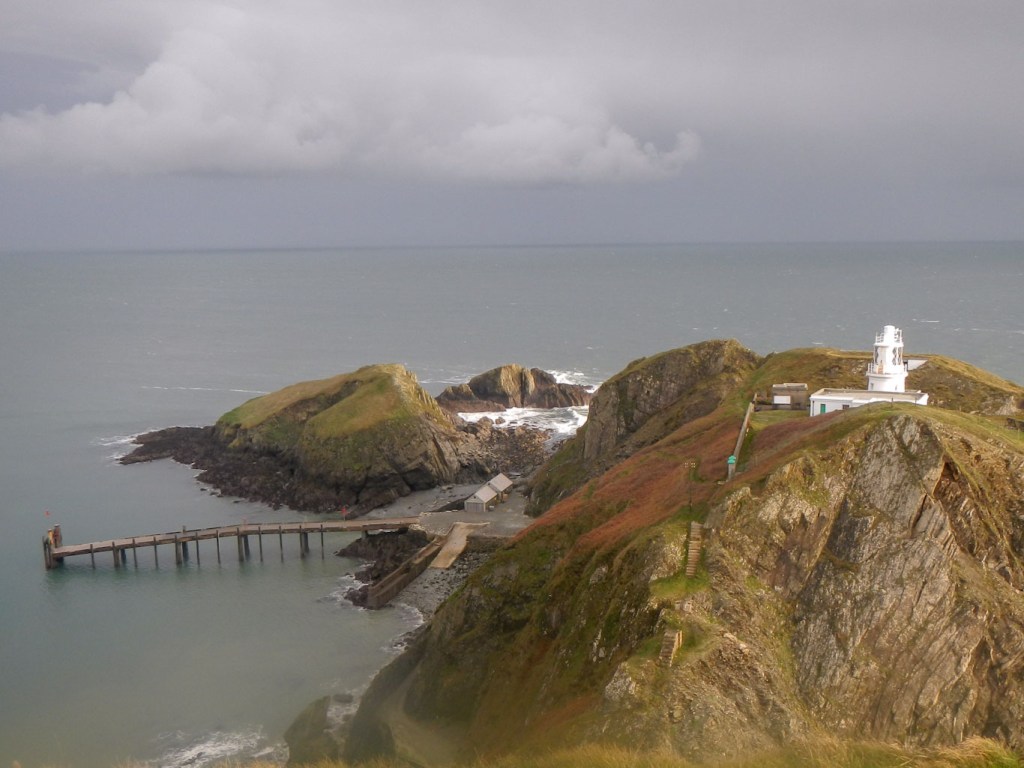
The south jetty and south light
My fellow letter boxer ended up finding 25, just failing to find “Pilot’s Quay”. Sadly I had to settle for 22 – I couldn’t find “Pilots Quay” either but I was also missing three others even though I spent ages looking, kept returning and felt sure I was looking in the correct areas. Even right next to them, they are camouflaged (mainly green) and partially covered by loose stones when the previous finder has re-hidden them at the spot.
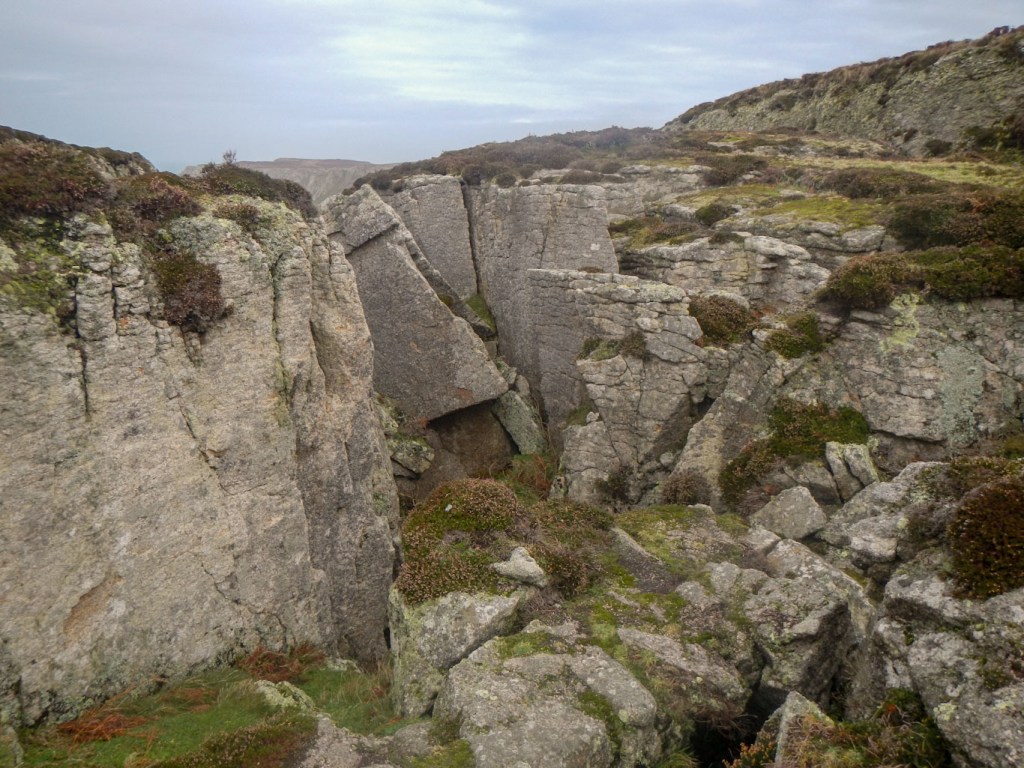
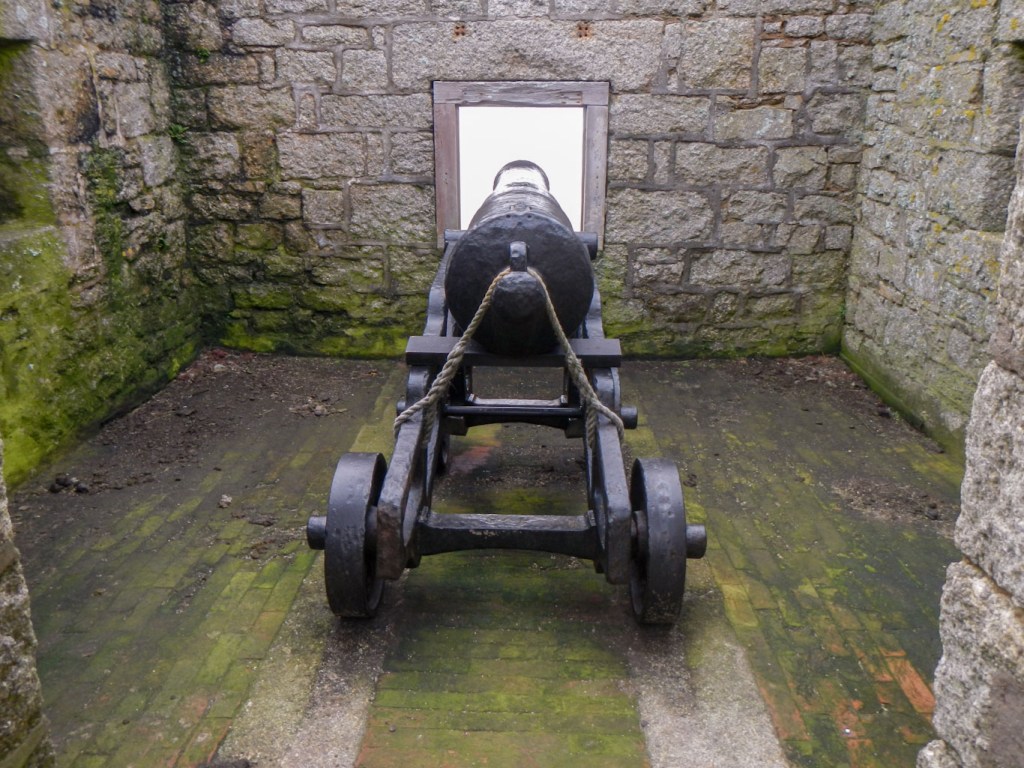
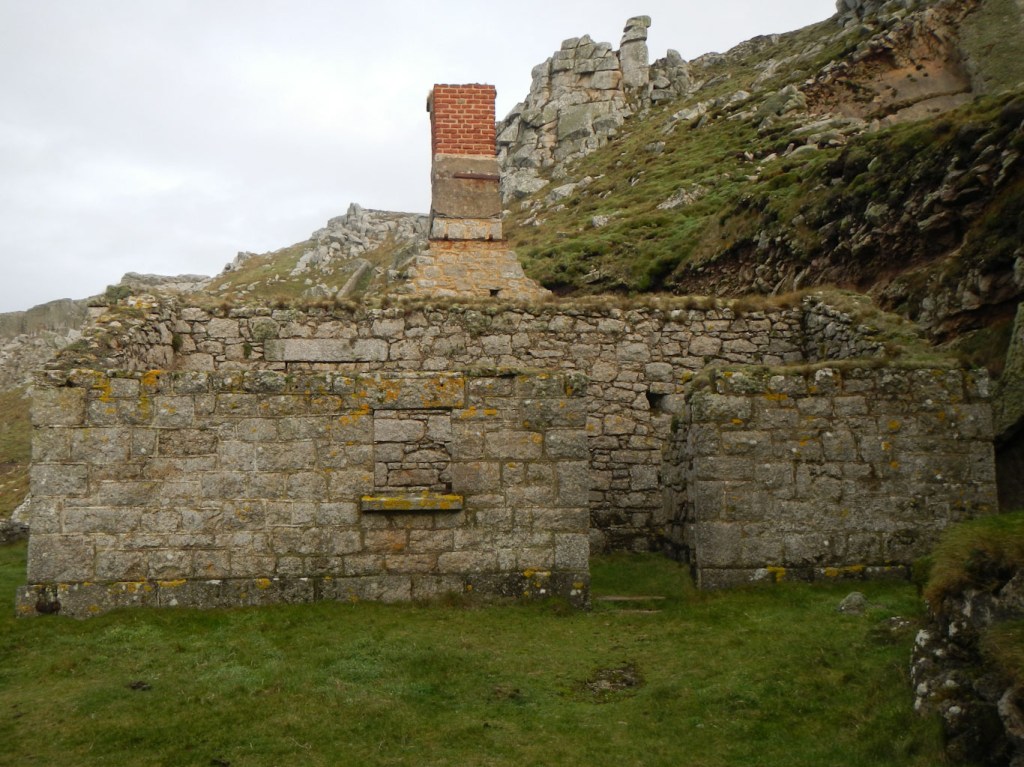
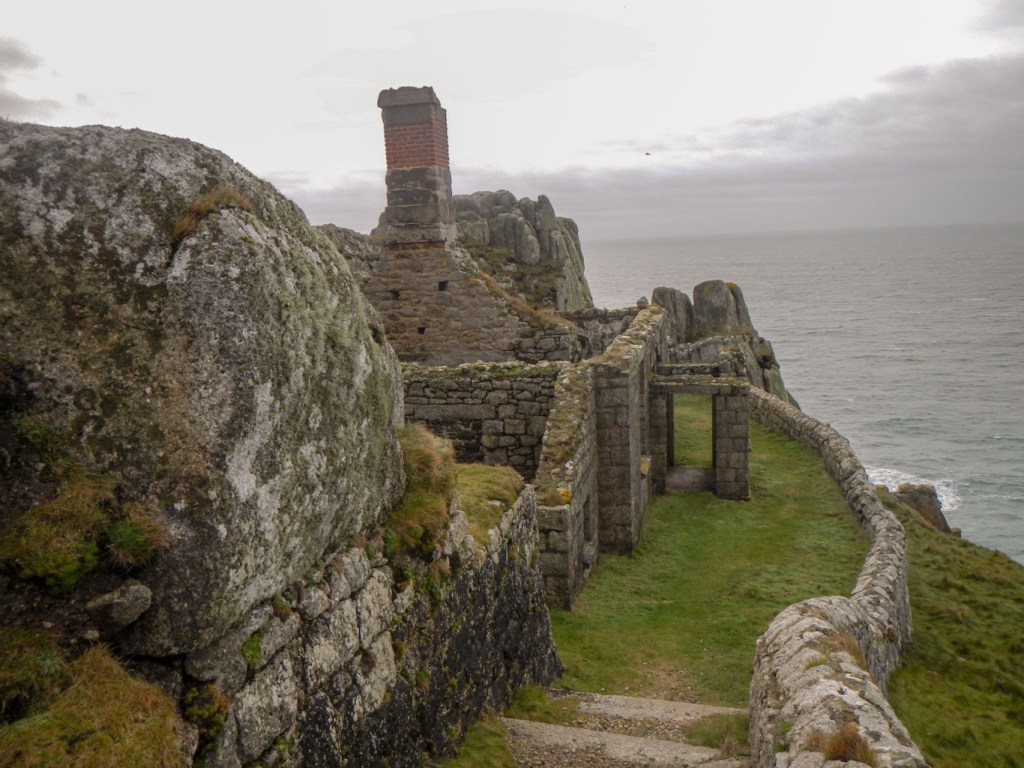
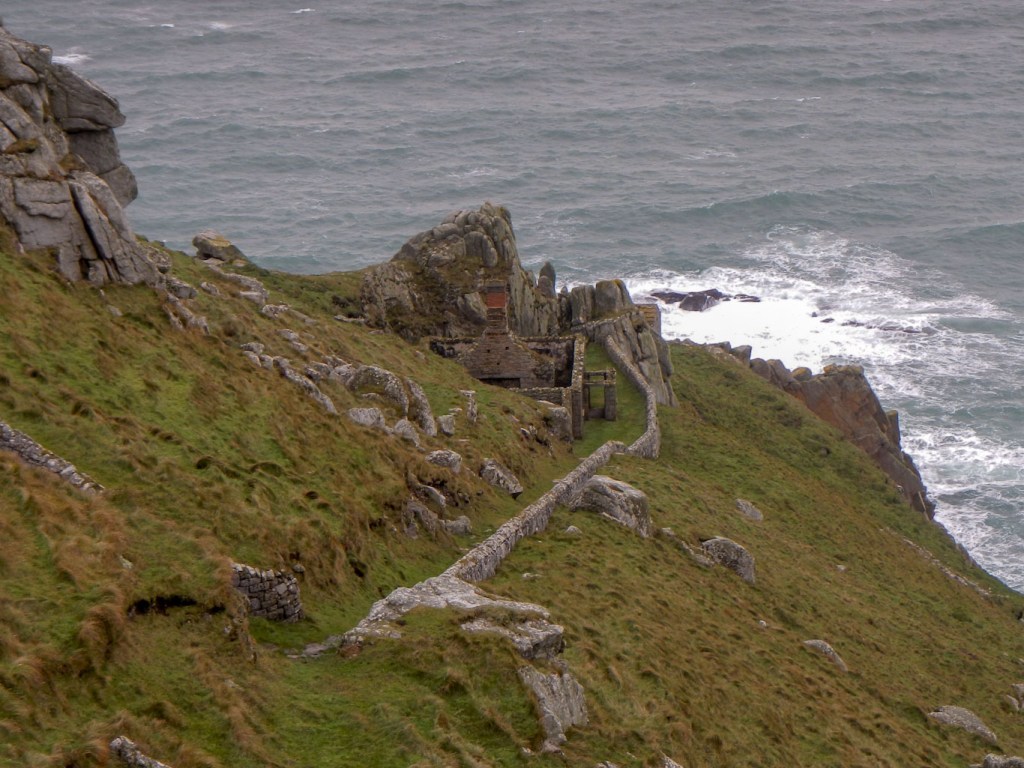
Apart from finding letter boxes, there are lots of other things to explore and see on the island. Some of these are associated with the letter boxes. Hence I found the way down to “The Battery” below the rocky Battery Point where I was unable to find the letter box. The fog battery is actually a rare survival with most of its components still visible. Together these give a clear impression of how the fog battery operated, as well as illustrating the relations between domestic accommodation and the work place in a marginal coastal environment in the late-19th century. The most impressive bits are two 18-pound cannon on a sloping floor of brick. The wheels of the guns are set in grooved granite setts and the recoil of the discharge was absorbed by the slope of the floor. The guns are of iron and bear the royal cypher GR showing that they belong to the reign of George I. They were therefore obsolete when the battery was constructed.
I also descended towards Brazen Ward on the east of the island. This is the best preserved remains of an early gun battery on Lundy. It is often assumed to date from the Civil War but excavations by the Lundy Field Society recovered pottery which appeared to be earlier and suggested an Elizabethan date. When the Queen visited Lundy on the Royal Yacht Britannia, she actually landed near this spot and not at the usual landing point.

Mousehole and Trap 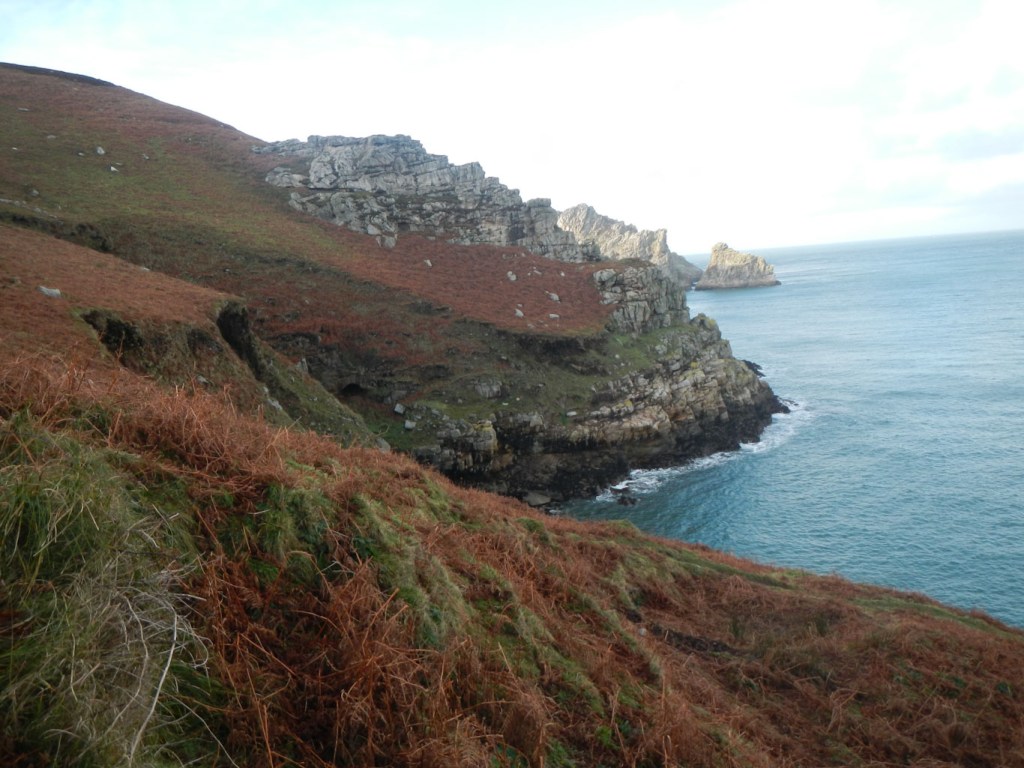
Cliffs on East side 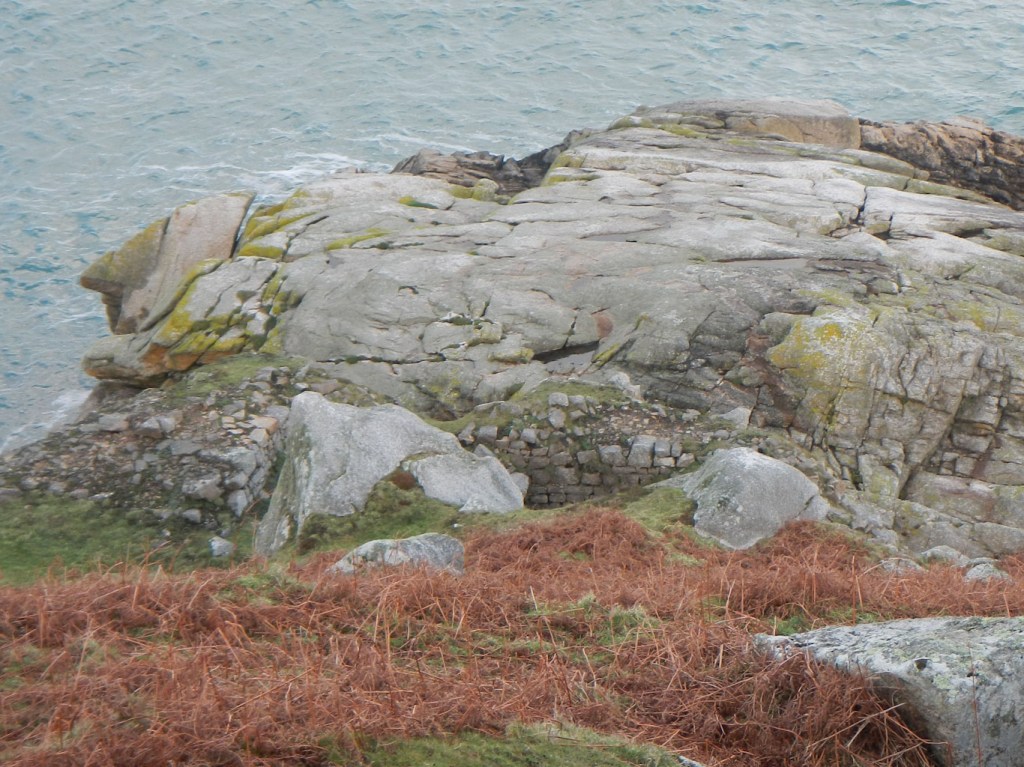
Brazen Ward
Tibbetts is a distinctive building on a mound between the half and three quarter walls. The admiralty built it as a signal station in 1909 and now it is the most remote of the holiday cottages. The location was also the site of a bronze age barrow which was opened in 1922. Just south of here, I was delighted to discover the letter box for Gull Rock – apparently one of the more difficult ones to find and it did take me a couple of visits before I found it.
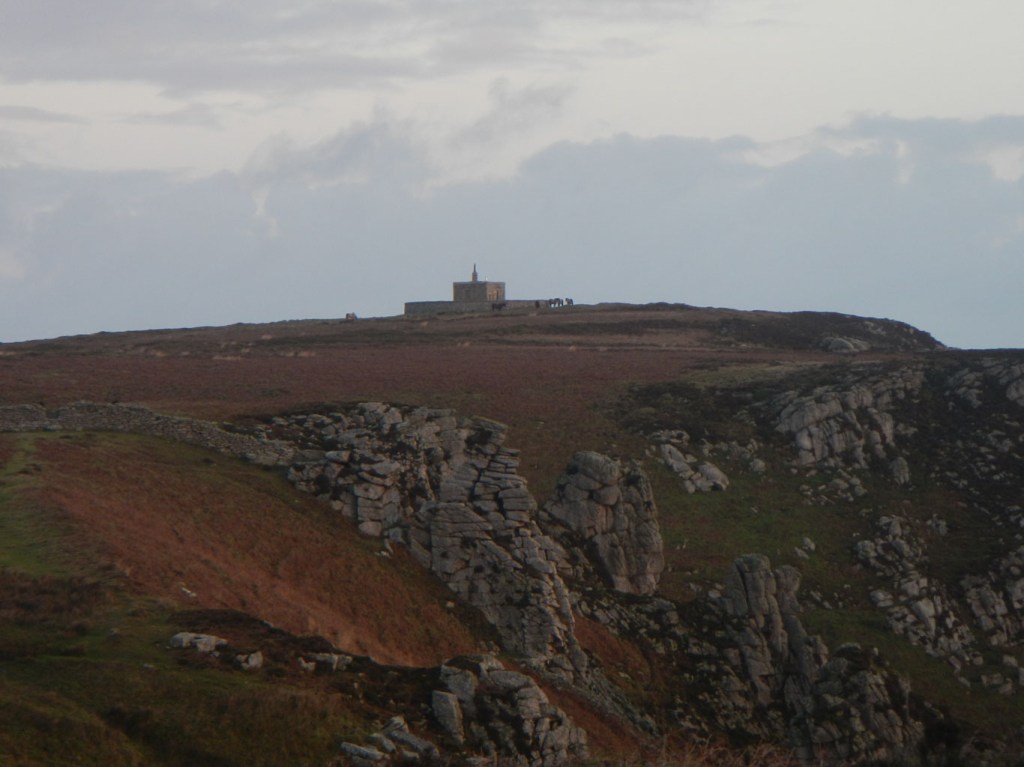
View towards Tibbutts 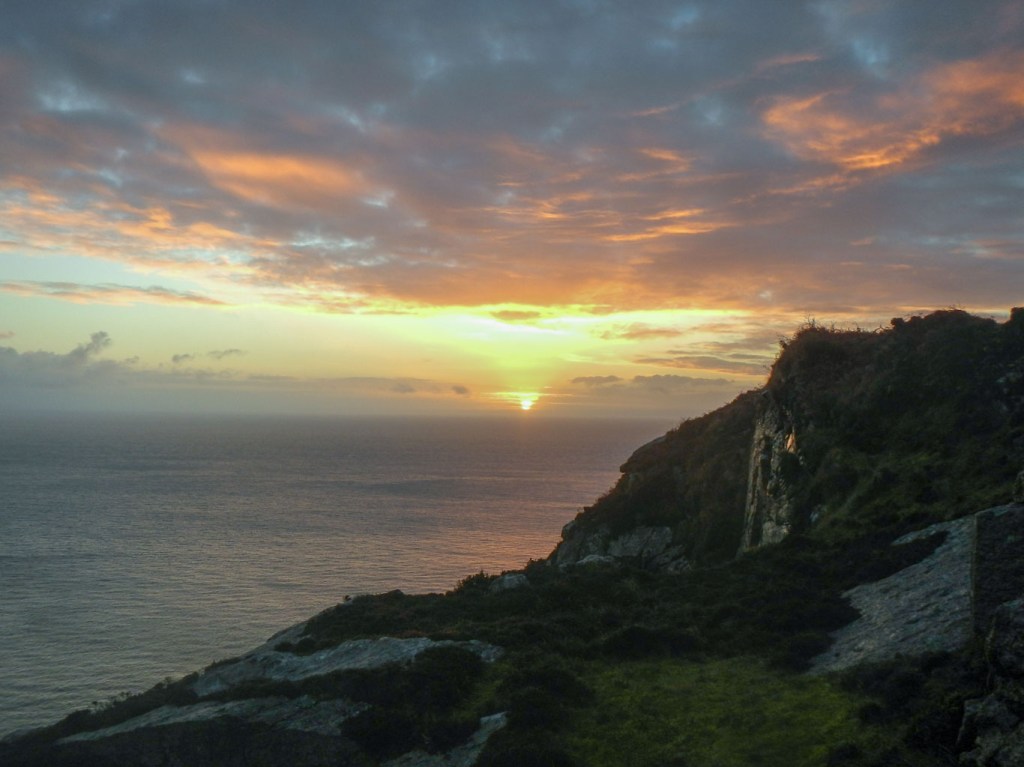
Sun rise east coast near Tibbutts
I discovered Benson’s Cave, below the Castle. The cave was easy to see from a vantage point after climbing 127 steps to the South Light, but it was more difficult to find the path down to it from the castle. It’s a man made chamber with a high rounded roof, possibly originally used as a gunpowder store and probably later for concealing smuggled contraband.
I found two aircraft wrecks, both of German Heinkel 111 bombers which crash landed on Lundy in 1941.
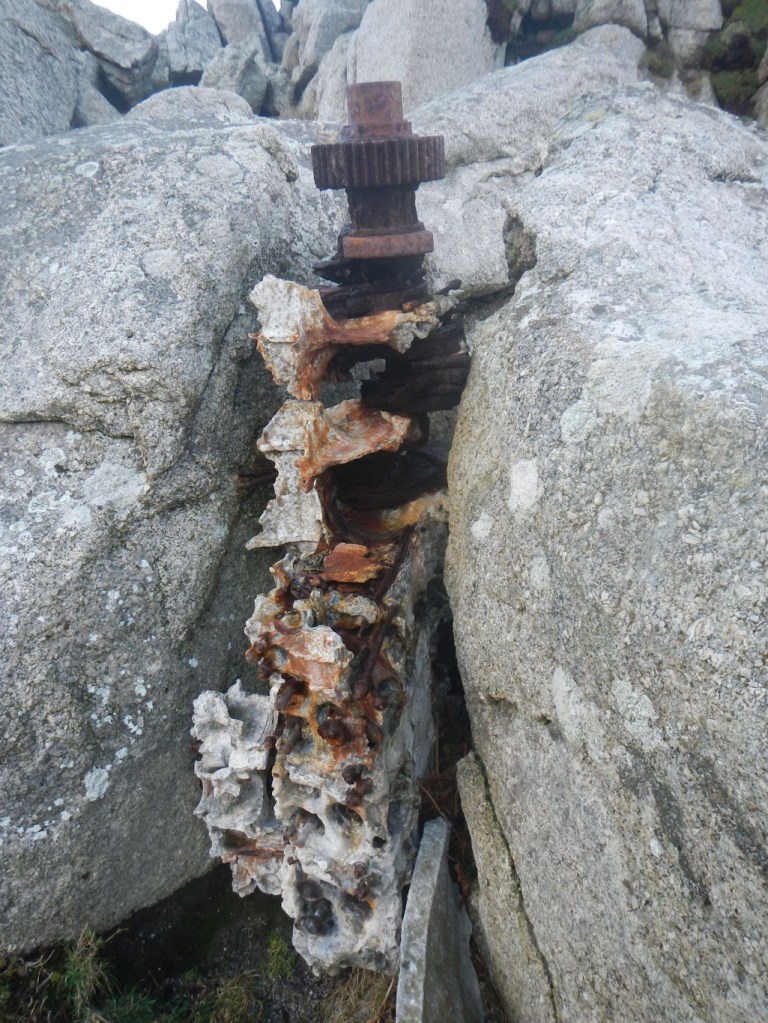
The Forgotten Heinkel 
The Lost Heinkel
I sheltered in the hut on the east side of the island, dedicated to the former agent to Lundy, Felix Gade. He died on Lundy and I also saw his grave stone in the small cemetery next to The Old Light.
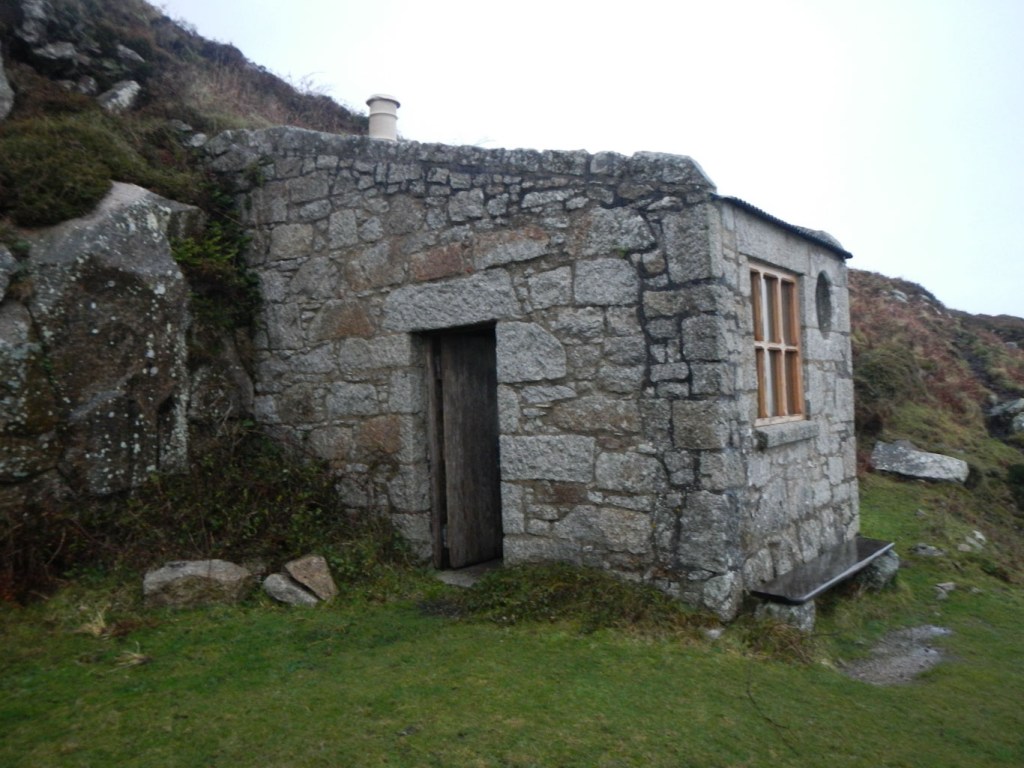
Felix Gade Hut 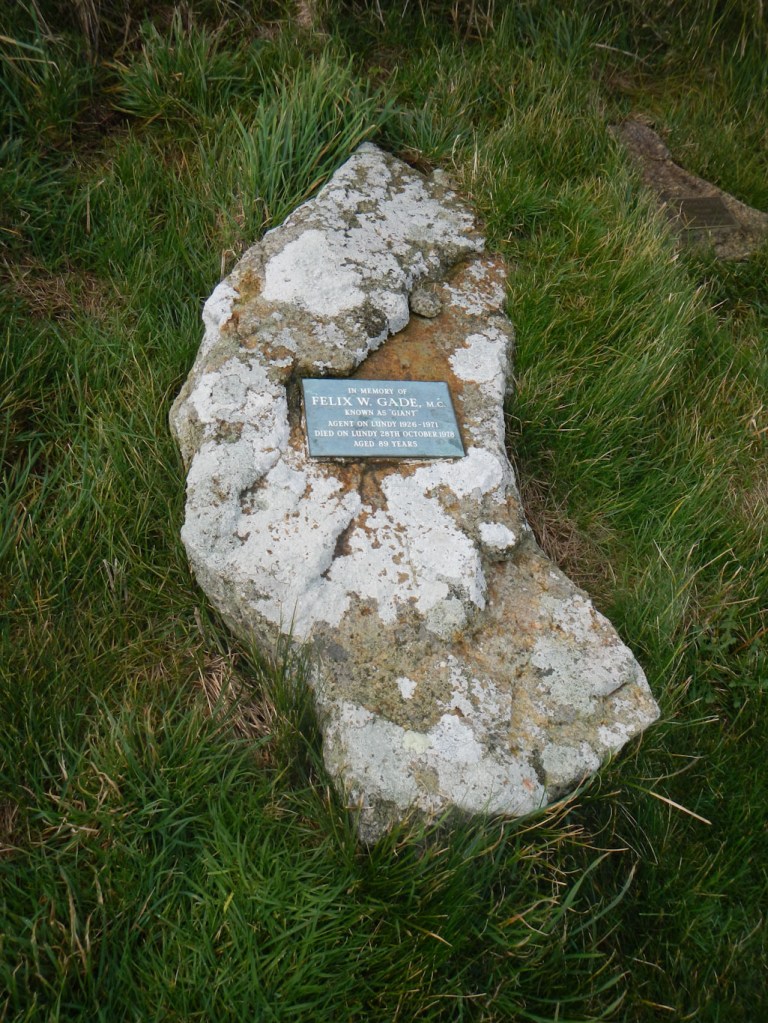
Felix Gade gravestone
I enjoyed a very muddy and windy run up to the north end of the plateau and then all the way back down and through the village to the castle before turning north again towards “home” at the Old Light.
The only indigenous Lundy mammal is the Pygmy shrew. These tiny insectivores can be seen in and around many of the buildings. On my second evening, I realised that I was sharing my cottage with one. For a couple of hours made intermittent forays across the floor but, to my relief, settled down later in the evening and didn’t keep me awake.
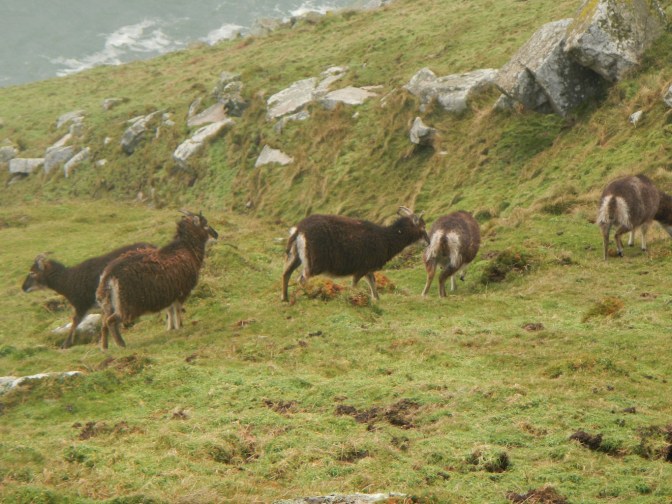
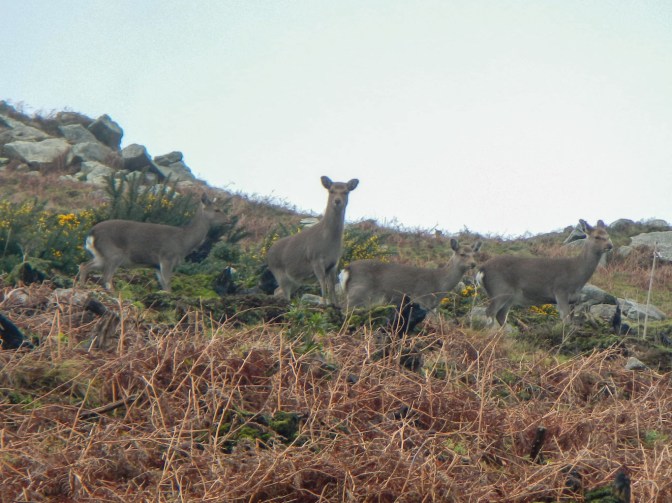
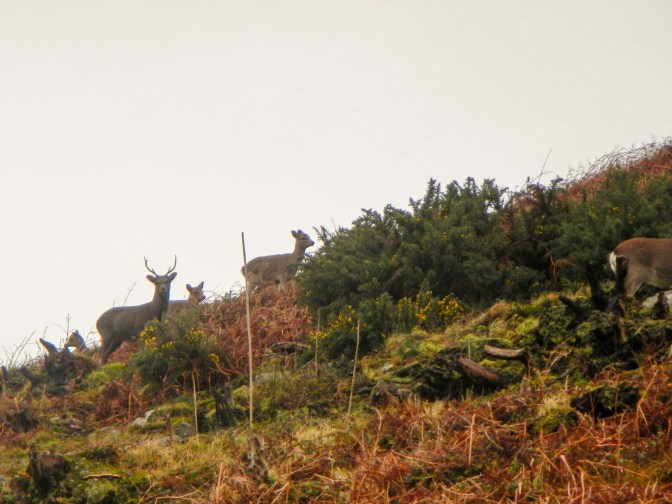
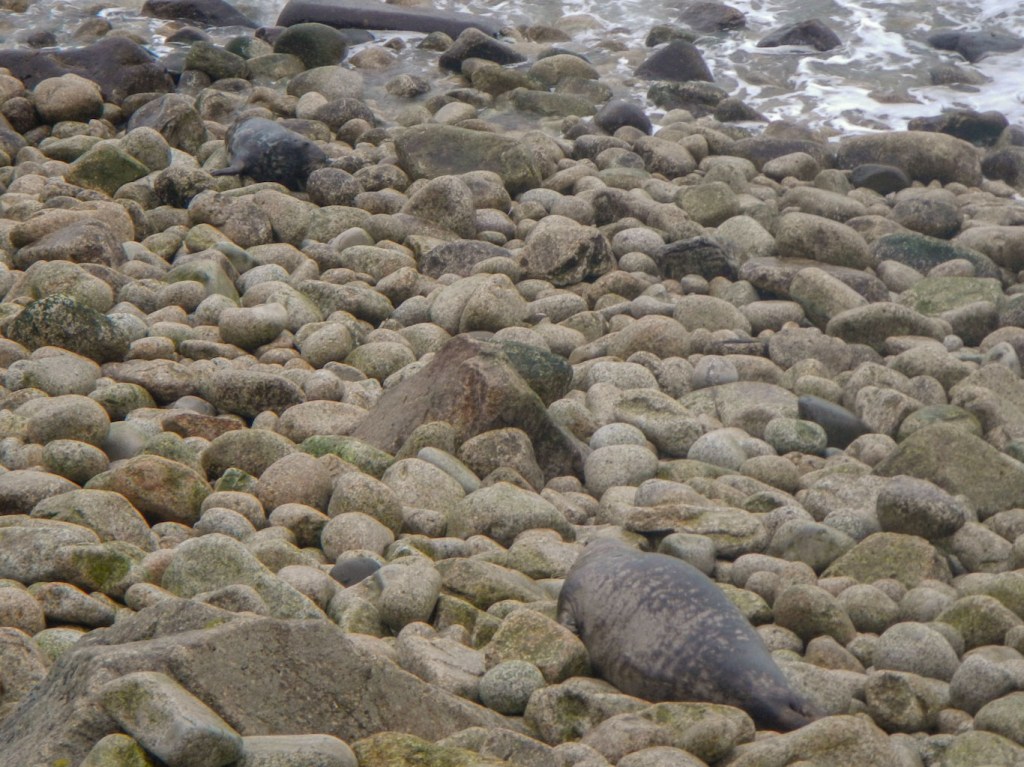
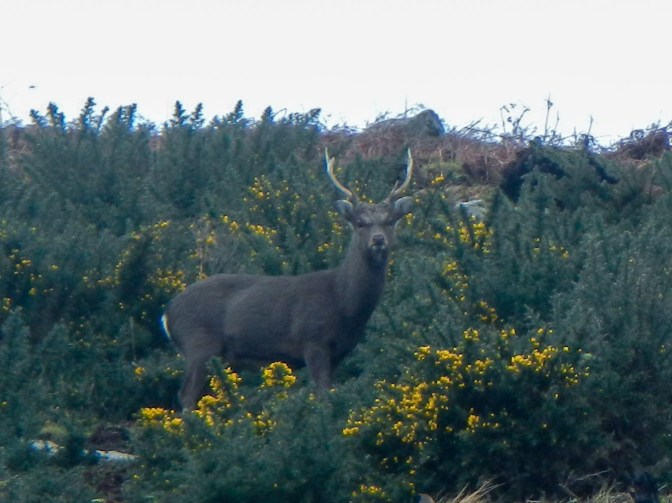
During my wandering I made multiple sightings of the Sika deer (introduced to Lundy 1927), Soay sheep (introduced 1942) and goats. Descending on to Quarry Beach on the east side, I spotted at least three grey seals. I’m also sure that I had a fleeting encounter with a bat in the dark.

There is so much to explore and so many adventures waiting to happen. Hence on Saturday morning I was disappointed to discover that the weather conditions meant that the return helicopter flight would be taking place. The adventure on Lundy was ending. However there’s plenty to return for and I hope I will turn into one of those people who are more regular visitors – perhaps going when the daylight hours are longer giving more exploration time……

 Where's Kathryn?