25 November 2020
It was a beautifully sunny November day and there was no rain. I parked in the car park at the traditional Dartmoor village – Widecombe in the Moor where surprisingly the car park is completely free during the winter. The church tower is particularly large; hence has been dubbed “the cathedral of the Moor”, and it was prominent in many of the views I saw as walked over the moorland downs rising to the west and east of the village. It is also well known for Widecombe Fair, still held annually in September (except in 2020 because of Covid19) and celebrated by a folksong, featuring “Old Uncle Tom Cobley and All”.
Initially I headed east to Bonehill Down, visiting five tors in rapid succession – Bonehill Rocks, Bell Tor, Sharp Tor, Chinkwell Tor and Honeybag Tor. I saw one man walking a dog but no other people at all. There were some Dartmoor ponies that I spotted grazing as I dropped down from Honeybag Tor.
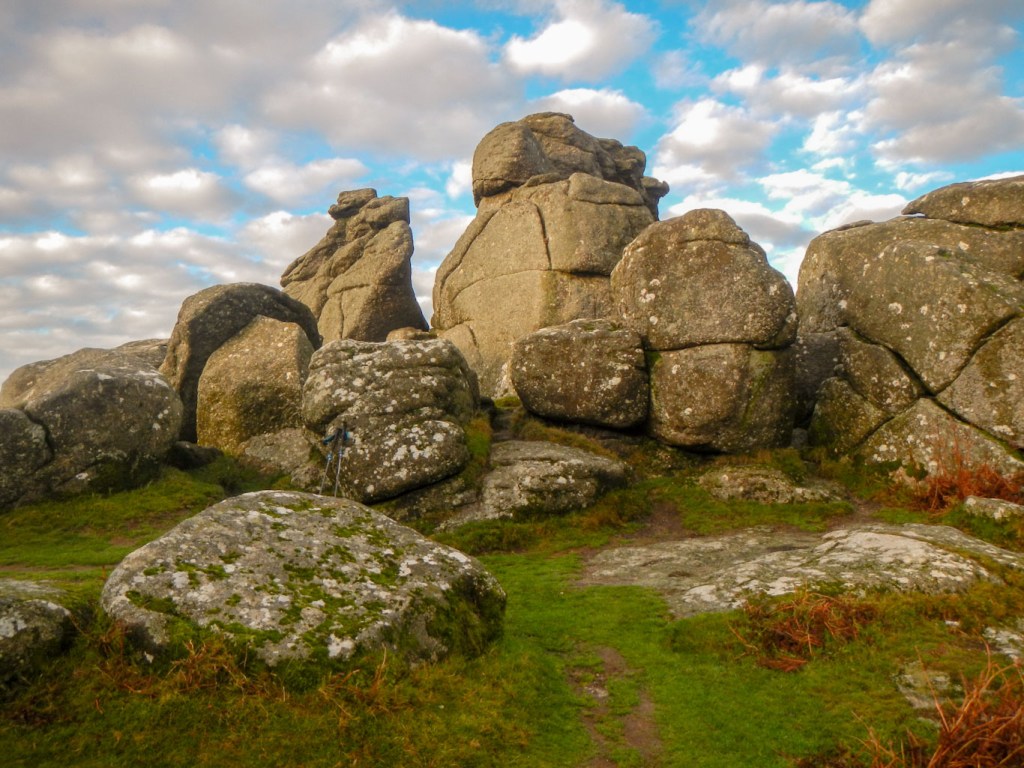
Bonehill Rocks 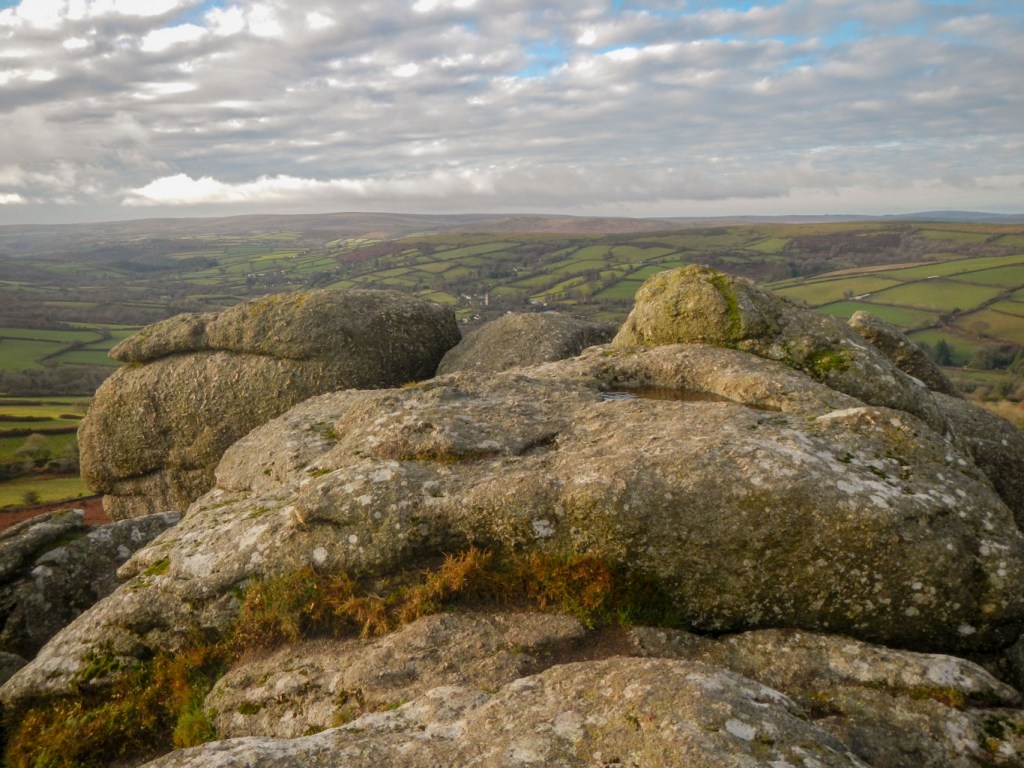
Bell Tor 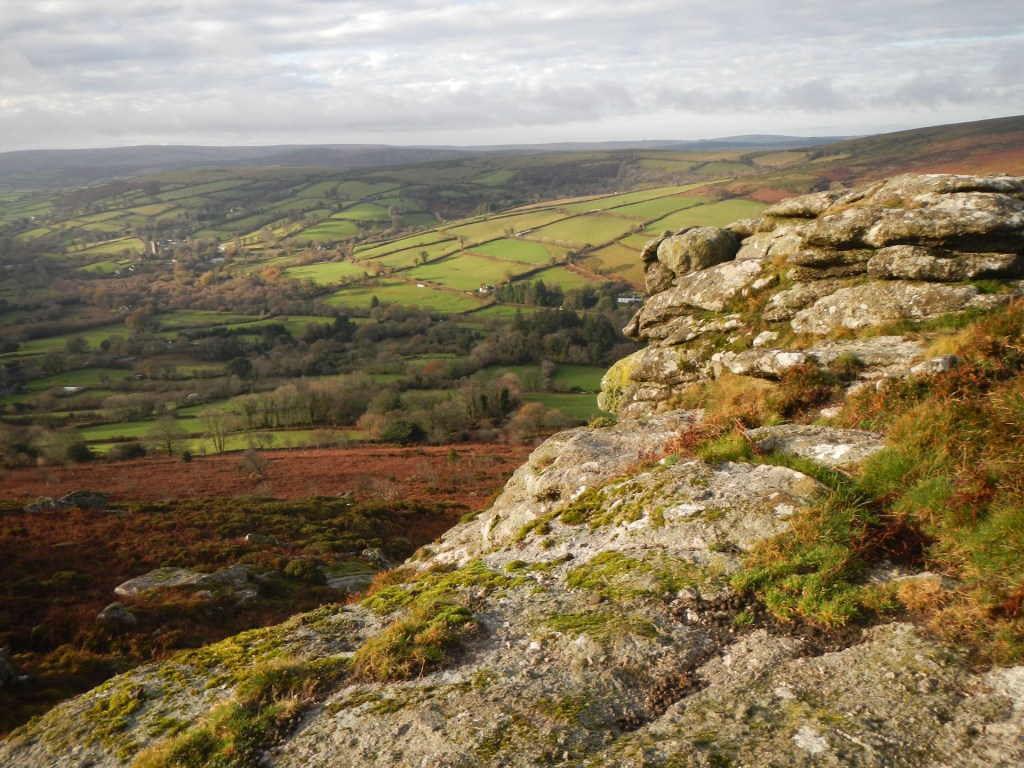
Sharp Tor 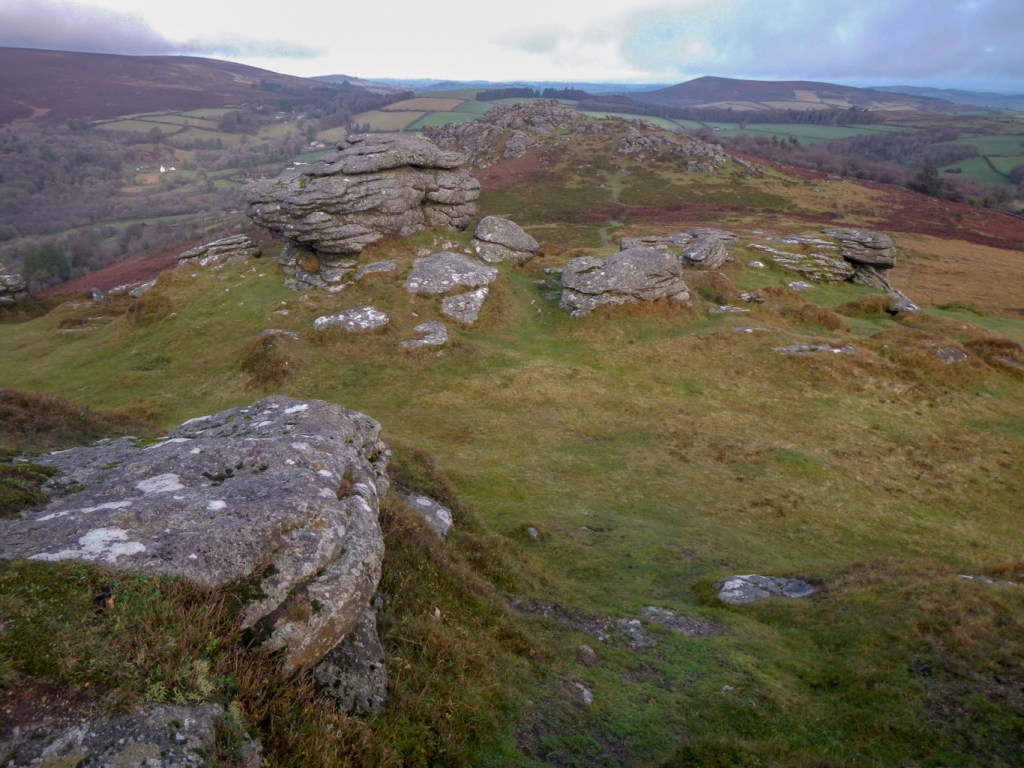
Chinkwell Tor 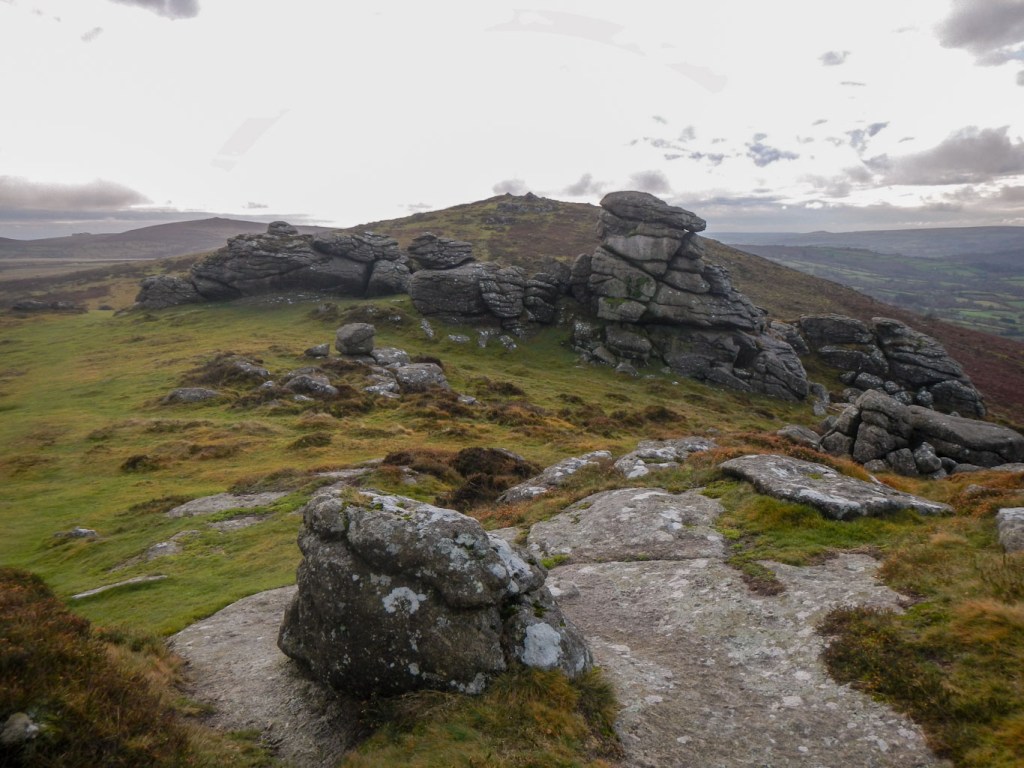
Honeybag Tor
It wasn’t far to walk up a narrow lane to reach an access point to Hamel Down. I climbed up an initial grassy track passing a memorial to airmen from World War 2 whose aircraft had crashed and they had been killed on the moor. Soon I was heading north (now on Hookney Down) over tussocks towards King Tor. The round cairn is much more prominent than the tor when approaching from the south so it was helpful to see the cairn as I approached.
I almost gave up on Shapley Tor when I saw that the path was occupied by a large herd of Highland cattle but I decided to walk around them with a large berth. What I didn’t realise was that I went round in the direction the herd was moving – they were still a long way from me but I was worried that these huge animals were moving towards me. At least that meant that I could easily return back down on the path this time to ascend the next hill and reach Hookney Tor. From Hookney Tor, the most impressive sight is of Grimspound. This prehistoric settlement probably dates from the Late Bronze Age (about 1450–700 BC). There is a huge area enclosed by a stone wall. Apparently the remains of 24 houses are enclosed within the wall, and there are further house traces outside the enclosure. Amazingly the whole area is entirely open on the moor and in fact my route to Hameldown Tor went right through the middle of it. I saw some other walkers, passing them as I headed to Hameldown Tor. Before that I seemed to have the moor to myself.
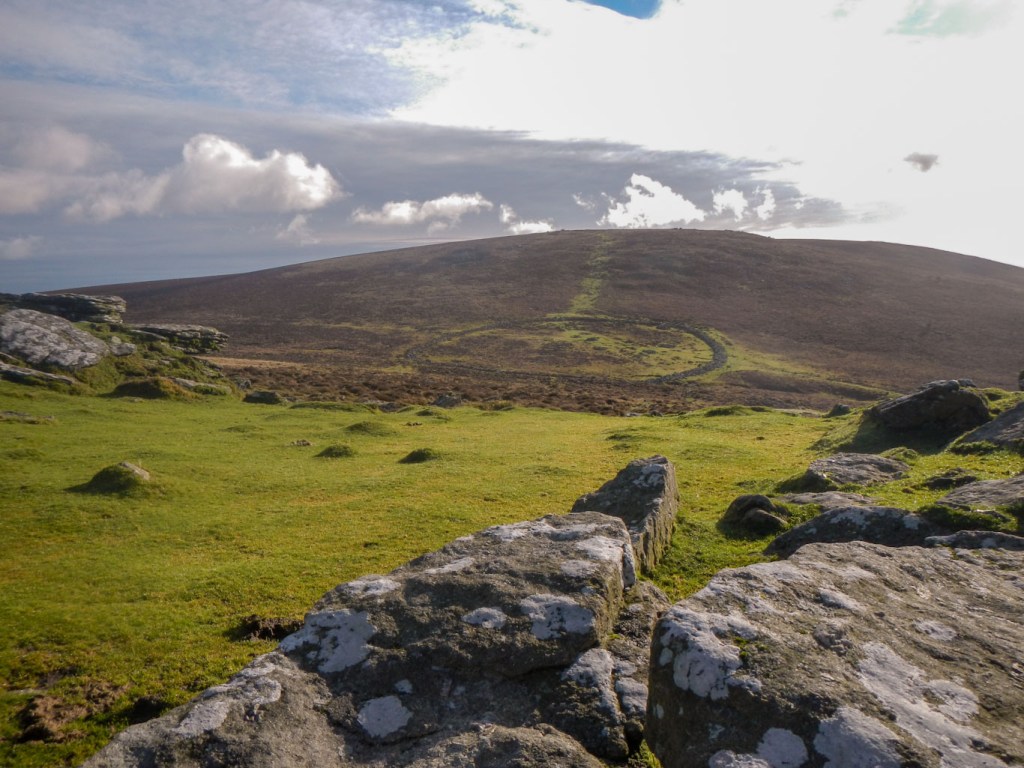
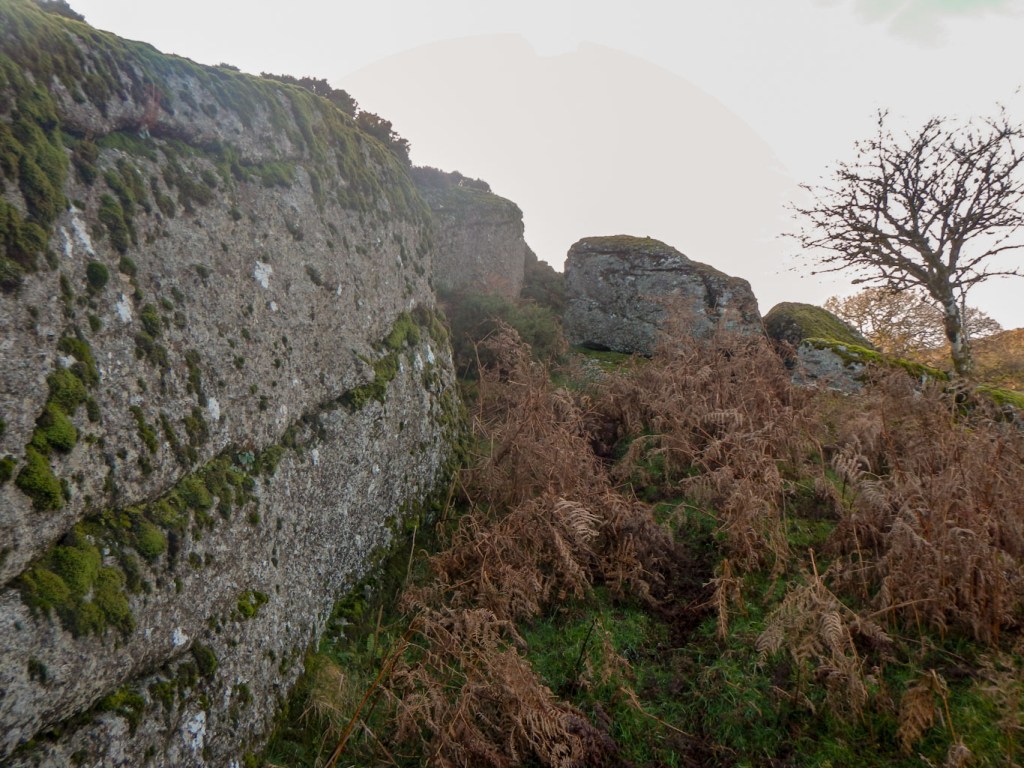
My route, now in a generally southerly direction, continued along the ridge of the Downs and I passed several ancient barrows. I had excellent views particularly to Bonehill Down that I had visited earlier but also further east towards the Haytor area. My next challenge was to visit five tors that aren’t marked on the Ordnance Survey map but are included in the LDWA list. Needless to say, this involved lots of tussocky hummocks, rocky areas and high gorse bushes as they were all off paths to a greater or lesser extent. With the help of having points plotted on my Satmap, I found them all. Wooder Gayle Rocks, perched high above a stream in a small ravine is particularly noteworthy.
The moor had become busy as it was clearly dog walking time. I wouldn’t mind apart from being approached by dogs off leads is always somewhat nerve wracking but more so at the moment when social distancing should mean that I expect not to be physically touched by other people’s dogs. One dog snarled menacingly – all very well for the owner to say it isn’t harmful!
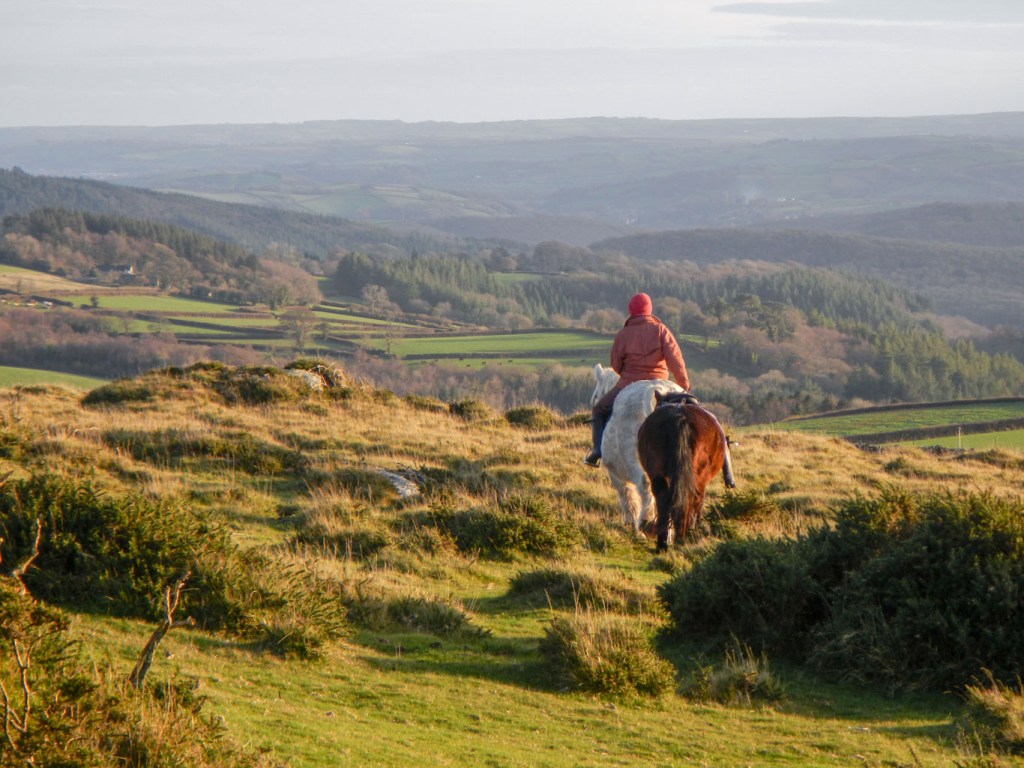
Fortunately I got past and crossed the road to Dunstone Down to visit Wind Tor, my final tor of the day. The presence of cattle and ponies meant I had no further problems with dogs. As I photographed the tor, I saw a lady riding a horse and leading a Dartmoor pony that she was breaking in.
I was pleased as I made my way back to my car. I had managed to find all the fifteen tors that I had been aiming for, including the ones which aren’t marked on the map and are often more difficult to reach.

 Where's Kathryn?